Black Friday for Coaches: 5 Offers Without Discounting Sessions

Coachful
Editorial Team
Should you run a Black Friday coaching offer if you do not want to discount your sessions? Yes, if you have a useful, bounded offer that suits your audience and leaves enough capacity to deliver it. Start with an existing resource, a relevant bundle, a fixed-date workshop, a smaller paid service or a genuinely limited bonus. Doing nothing is better than selling future hours you cannot afford.
The uncomfortable part is rarely choosing a coupon. It is opening your calendar in January and discovering that November's exciting sales were commitments to deliver twice as much coaching for less money. A busy checkout is not the same thing as a healthy practice.
These five Black Friday offers for coaches are selected for clear scope, manageable delivery and honest presentation. They are not a ranking of conversion rates. Choose the one that fits what you already have and what your clients actually need, rather than attempting all five.
Before choosing an offer, calculate what you keep
A seasonal promotion should pass the same commercial test as your normal offer. Write down the price collected, payment costs, direct expenses, delivery hours, support allowance and any additional work created by the promotion. Then check that the remaining contribution is worth the commitment.
Here is a deliberately simplified hypothetical example. A package priced at $1,000 with a $600 delivery allowance leaves $400 before fixed overhead and tax. Reducing the price to $800 while keeping the same delivery allowance leaves $200. Two discounted packages would be needed to match the original $400 contribution, with twice the delivery commitment.

This is not an accounting forecast or a recommendation for your rates. Your time allowance is a planning choice, not necessarily an accounting expense, and taxes, fees, refunds and support costs can change the result. The useful point is that a modest-looking price reduction can create a much larger reduction in what remains.
A bonus has a cost too. A personal audit, extra session or additional month of messaging is not free because you do it yourself. Evaluate its delivery load before deciding that adding value is automatically safer than cutting the price.
1. Offer an existing self-paced resource
Best for: a coach with a complete, useful course or resource that solves a small problem without requiring substantial personal support. A career coach might offer an interview-preparation mini-course. A business coach might offer a planning workbook and recorded walkthrough.
The advantage is that another purchase does not necessarily create another live session. The trade-off is that a resource needs to be useful on its own. Repackaging fragments from a larger program into a confusing folder is not a thoughtful entry offer, even with an attractive seasonal price.

Choose one concrete job the resource helps a buyer do. State the contents, access period, format, prerequisites and support boundaries. Make clear whether feedback is included. If the workbook is self-guided, do not describe it as personalized coaching or imply that completing it guarantees a job, promotion or business result.
An adaptable description could be: “A self-paced interview preparation course with practice prompts and a planning worksheet. No individual review or coaching sessions are included.” This is an original example, not a Coachful offer or a tested sales claim.
If you reduce the price, use a genuine comparison price and explain the actual terms. If the resource has never been sold separately, inventing a large crossed-out value is not a substitute for explaining why it is useful. Check the advertising and consumer rules that apply to your business and audience.
Skip this option when: the material still needs substantial production, buyers will need individualized help to use it safely, or the price would not cover the support you intend to provide. Black Friday is a poor deadline for finishing a course you have not yet designed.
2. Build a coherent coaching-and-resource bundle
Best for: a coach with related services and materials that support the same client decision. A bundle should reduce the buyer's work of assembling a suitable package, not give the coach a place to hide unrelated products.
For example, a hypothetical career-transition bundle could combine a defined coaching package with an existing decision workbook and a preparation course. Each component supports the same engagement. An unrelated productivity library might make the bundle look larger while making the choice harder.

Describe the coaching commitment separately from the resources: number and length of sessions, delivery period, access duration, booking conditions and between-session contact. A buyer should not have to infer whether “complete career toolkit” means two meetings or six months of access to you.
Keep the comparison honest. If you claim a saving against buying the components separately, the individual prices and availability need to support that comparison. If the components have not been sold separately, describe the bundle's actual contents and price without manufacturing a saving.
Consider existing clients before launching. Someone who already owns the course should not discover that their only route to a useful next step is purchasing it again. You might offer a suitable alternative, explain an upgrade route if one genuinely exists, or decide that this bundle is for a different audience. Do not promise automatic credits your checkout does not support.
Skip this option when: the parts serve different audiences, the combined support obligation is unclear, or the bundle price depends on impossible delivery assumptions. More items do not necessarily make a stronger offer.
3. Sell a fixed-date planning workshop
Best for: a coach who can help several suitable participants work through one focused exercise together. A fixed-date planning workshop can offer a clear experience without committing you to weeks of individual follow-up.
A leadership coach might run a manager's planning session for a specific workplace challenge. A life coach might facilitate a structured personal-priorities workshop. Make the intended participant, practical output and coaching boundaries explicit rather than promising a complete transformation in an afternoon.

State the date, time zone, duration, participation expectations and any prerequisites before payment. Explain whether a replay is available, how long access lasts, and what happens if someone cannot attend. Include a realistic minimum-enrollment or cancellation arrangement when appropriate, with terms checked for your circumstances.
Capacity needs a reason. Limit places because of the discussion format, facilitation time or review work, not because a countdown widget looks persuasive. If you close enrollment so you can prepare materials, say that. Do not reset an expired deadline or quietly reopen a supposedly final offer without explaining the change.
Write a short run sheet before selling: opening and boundaries, teaching or demonstration, individual exercise, discussion and close. Decide how you will handle personal disclosures, unsuitable requests and people who need a different kind of support. Group delivery does not remove your professional responsibilities.
A workshop can be the paid offer itself. It does not need a pressured sales presentation at the end. If you will mention a further service, disclose the nature of the event accurately and leave participants free to stop at the workshop.
Skip this option when: your audience is unlikely to attend at the same time, the subject requires confidential individual work, or you cannot facilitate the proposed group safely and competently.
4. Create a smaller service, not a cheaper version of everything
Best for: a coach whose prospects have a concrete, limited decision that does not require the full package. The distinction is scope: a smaller service should cost less because it includes less, not because your normal coaching suddenly became less valuable.
A hypothetical business coach could offer one planning session focused on choosing a next-quarter priority, with a brief preparation form and a defined follow-up note. That is different from selling the entire ongoing coaching relationship at a temporary low rate.
Name the boundaries clearly. State what the session addresses, what preparation is required, what the participant receives afterward and what is not included. Do not imply that one session replaces a longer engagement when you know the problem usually requires sustained work.
Check whether this is an appropriate standalone service. If a short appointment would leave the client with an incomplete or unsafe intervention, choose another format. Coaching scope, competence and referral boundaries still apply when the offer is small.
This option is useful only if the smaller engagement is commercially sensible too. Include preparation, administration and follow-up in its time allowance. A supposedly quick session can become a loss-making offer when every buyer expects extensive personalized support afterward.
Skip this option when: you cannot describe a useful bounded outcome, existing clients could reasonably mistake it for the same package at a lower price, or delivering it would displace work you have already promised.
5. Add a bounded, relevant bonus to the normal package
Best for: a coach whose existing package is already appropriate and whose prospective clients would benefit from a specific additional resource. Keep the normal scope and fee clear, then identify the precise addition available during a genuine promotion window.
The safest starting point is often something already complete, such as a relevant course, guided preparation resource or recorded exercise. “Extra access to me” sounds generous but creates an open-ended delivery promise unless you define it carefully.

Inspect the bonus before advertising it. Check that the lessons, links, instructions and access period match the promise. A course editor shows the material you have prepared; it does not prove that a buyer will receive the right access or understand how to use it.

Explain the bonus in ordinary language: “Enroll in the defined package during the published window and receive access to the preparation course for the stated period.” Replace every vague term with the actual arrangement. Do not present ordinary onboarding or a resource already included in the package as a new seasonal extra.
If the bonus involves a group session, record the date, duration and participation conditions. If it involves individual review, cap the number of reviews and budget the hours. A finite resource is easier to manage than “priority support” with no explanation of what priority means.
Skip this option when: the extra is irrelevant, it creates more administration than value, or you need a fictional monetary valuation to make it sound worthwhile. Buyers can appreciate a helpful addition without a dramatic price tag attached.
Choose one offer using the constraint you actually have
- Plenty of completed material, little live capacity: consider the self-paced resource, provided the support requirement stays manageable.
- Several genuinely related services: consider a coherent bundle after checking overlap and delivery obligations.
- One teachable question and an audience able to attend: consider the fixed-date workshop.
- A specific, bounded client decision: consider the smaller standalone service.
- A strong existing package and a useful finished extra: consider the bonus-led offer.
If none fits, you do not need a Black Friday offer. Continue explaining your normal service clearly. A promotion is an optional commercial choice, not a test of whether you are serious about your coaching business.
Write the campaign so a buyer can make an informed decision
Use the same core facts on the sales page, in the email and at checkout: who the offer suits, the exact contents, total price, payment terms, delivery timing, access period, exclusions and applicable cancellation terms. Explain the real reason for any deadline or capacity limit.

Contact people through channels and permissions appropriate to the relationship and applicable law. A previous enquiry or coaching engagement does not automatically authorize every marketing campaign. Keep unsubscribe routes functional and avoid using private coaching circumstances to make a promotional message feel personally targeted.
An original campaign opening might be: “If you want structured time to plan your next step, I am offering [defined workshop] on [date and time zone]. It includes [specific exercise and output] for [total price]. Read the scope, attendance and cancellation details before deciding whether it suits you.” That is enough to start without promising a life-changing deal.
Do not imply that buying proves commitment or that declining means someone is choosing to stay stuck. A coach can be decisive about an offer without turning a commercial deadline into a judgment about the reader's character.
Test the purchase-to-delivery handoff before announcing it
Review the public presentation on desktop and phone. Then test the relevant purchase and access journey using an authorized test method: offer selection, displayed price, terms, confirmation, booking or resource access, and the next action the participant is told to take. Do not make live charges merely to simulate a test without the necessary authorization.

Check awkward cases too. What happens if someone already owns a component, misses the event, purchases after capacity is reached, or cannot access the course? Decide who handles the issue and what you can truthfully offer before the campaign opens.
Measure the result beyond gross sales. Record money actually collected, refunds where applicable, delivery and support hours, usable access and remaining obligations. A campaign that sells fewer suitable places at a sustainable contribution can be more useful than one that fills the calendar with underpriced work.
Frequently asked questions
Should coaches offer Black Friday discounts?
Only when the economics, positioning and delivery capacity make sense. A discount is not inherently wrong, and a bonus is not automatically profitable. Compare the real contribution and obligations of the offer rather than copying another coach's percentage.
What is a good Black Friday offer for a new coach?
Use something you can already deliver competently with a clear scope. A new coach does not need to build a course, bundle and workshop simultaneously. If the core service is not ready, improve that before adding a seasonal campaign.
Can I use a payment plan instead of a discount?
A payment plan changes payment timing, not necessarily the total price or delivery cost. State the total commitment and installment terms accurately, check applicable requirements, and do not market it as a saving unless there is a genuine saving.
Can I promise a guaranteed result to make the offer stronger?
Do not promise outcomes you cannot substantiate or control. Explain the work, support and deliverables you actually provide. Career, business, health and relationship outcomes can depend on factors well beyond the coaching engagement.
Build the offer around the work you can stand behind
Choose one of the five formats, write its boundaries and calculate its delivery commitment. Then rehearse the buyer experience before writing more promotional copy. That sequence makes the campaign easier to explain and harder to regret.
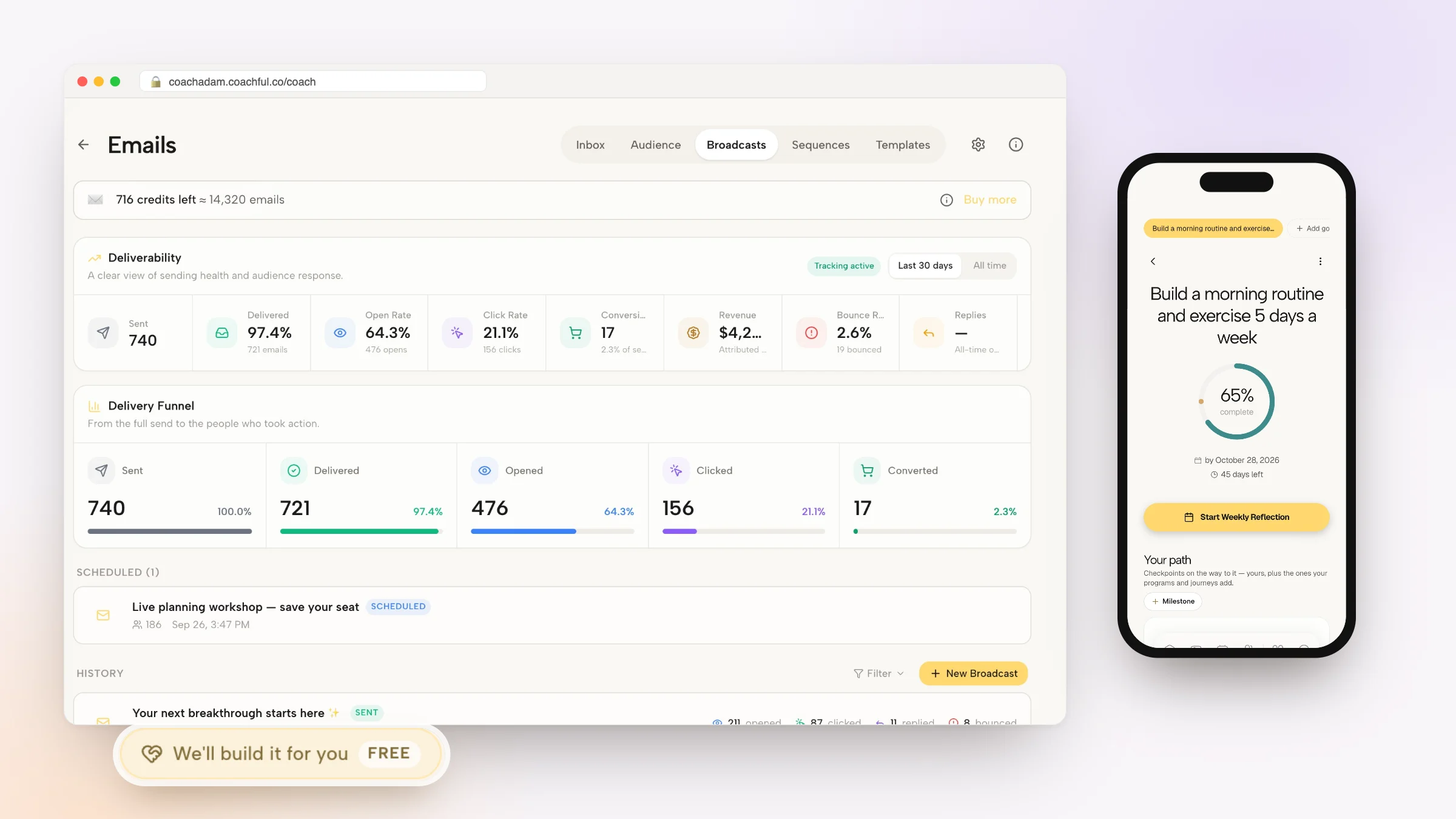
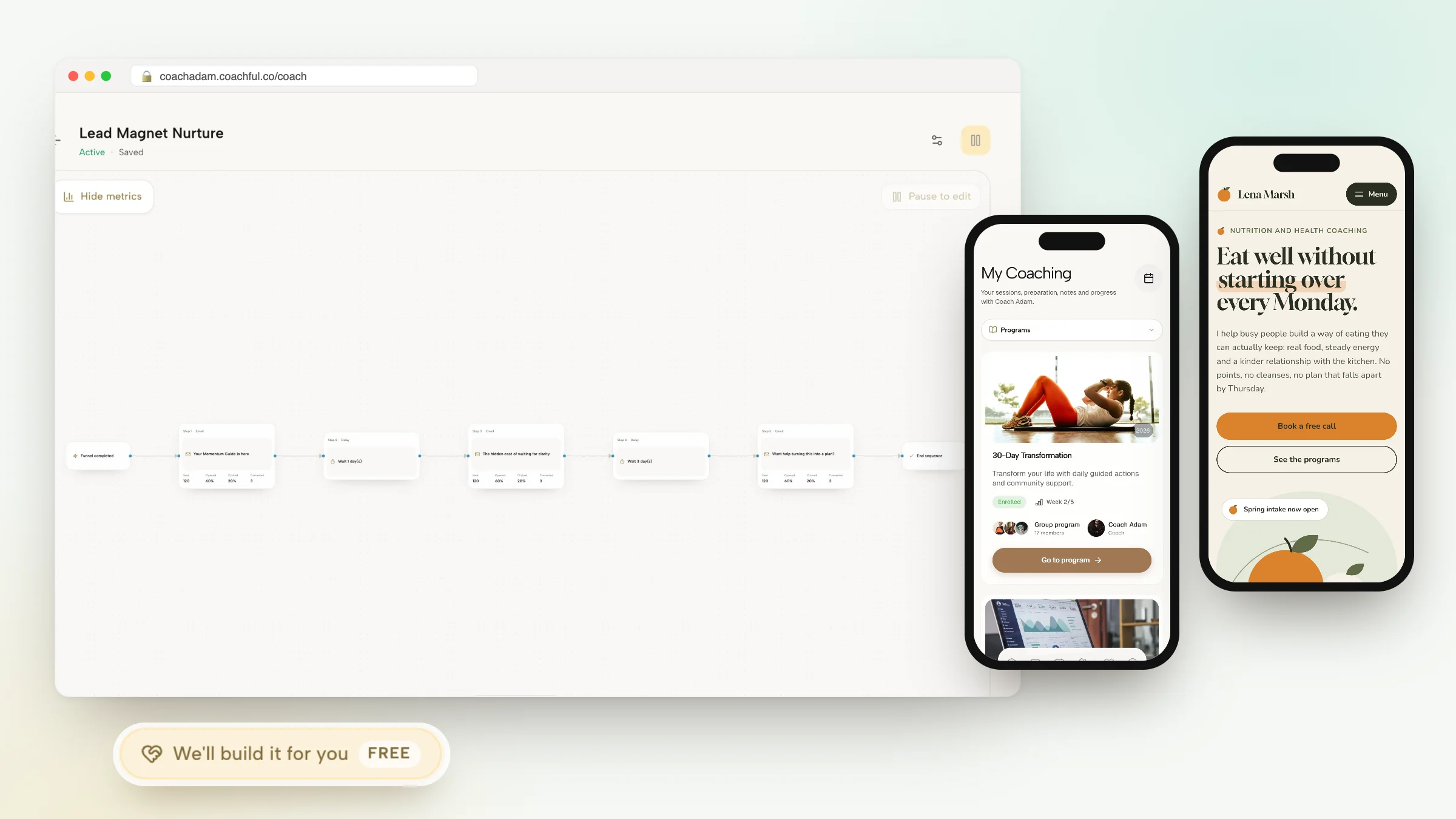
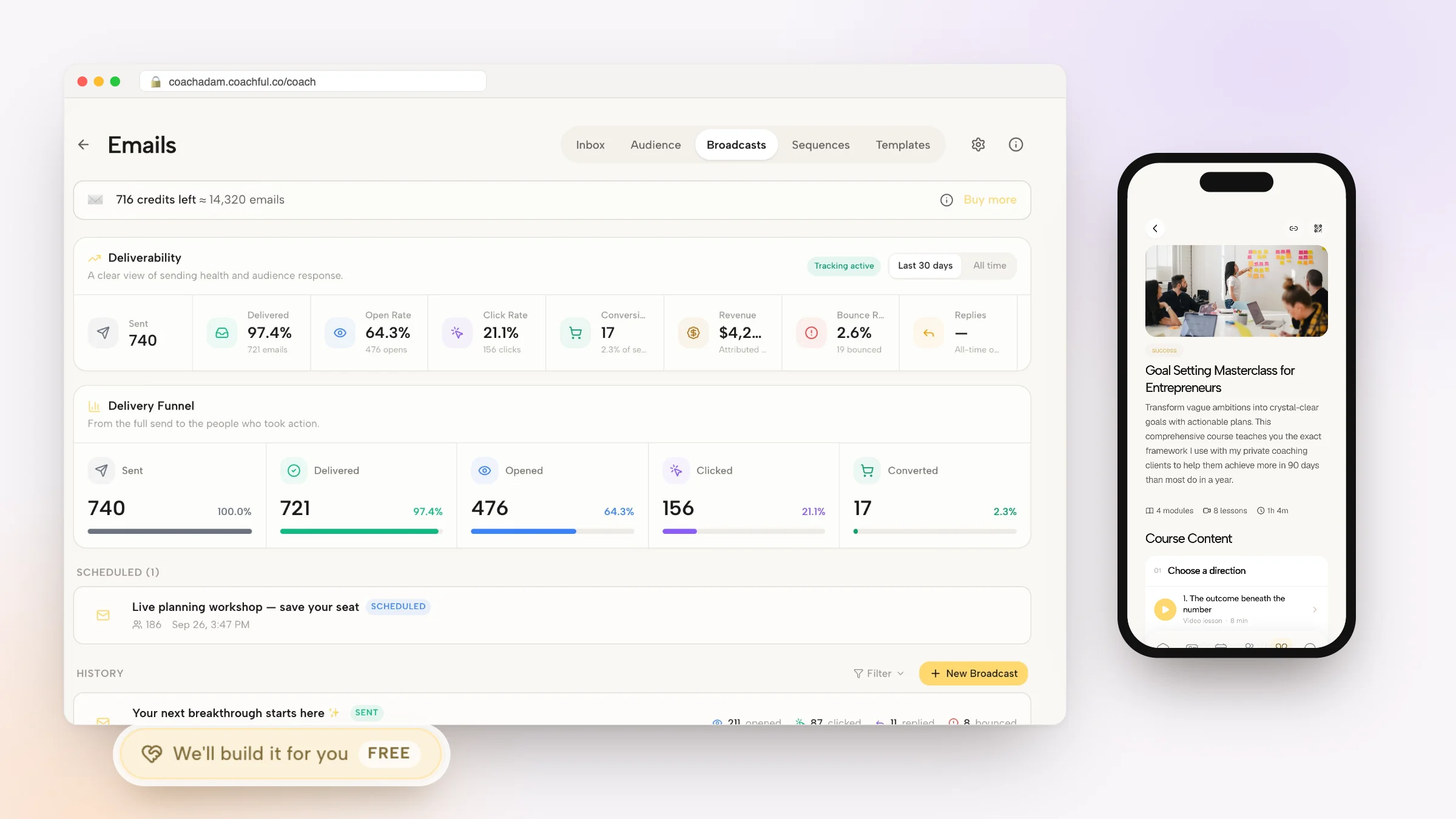
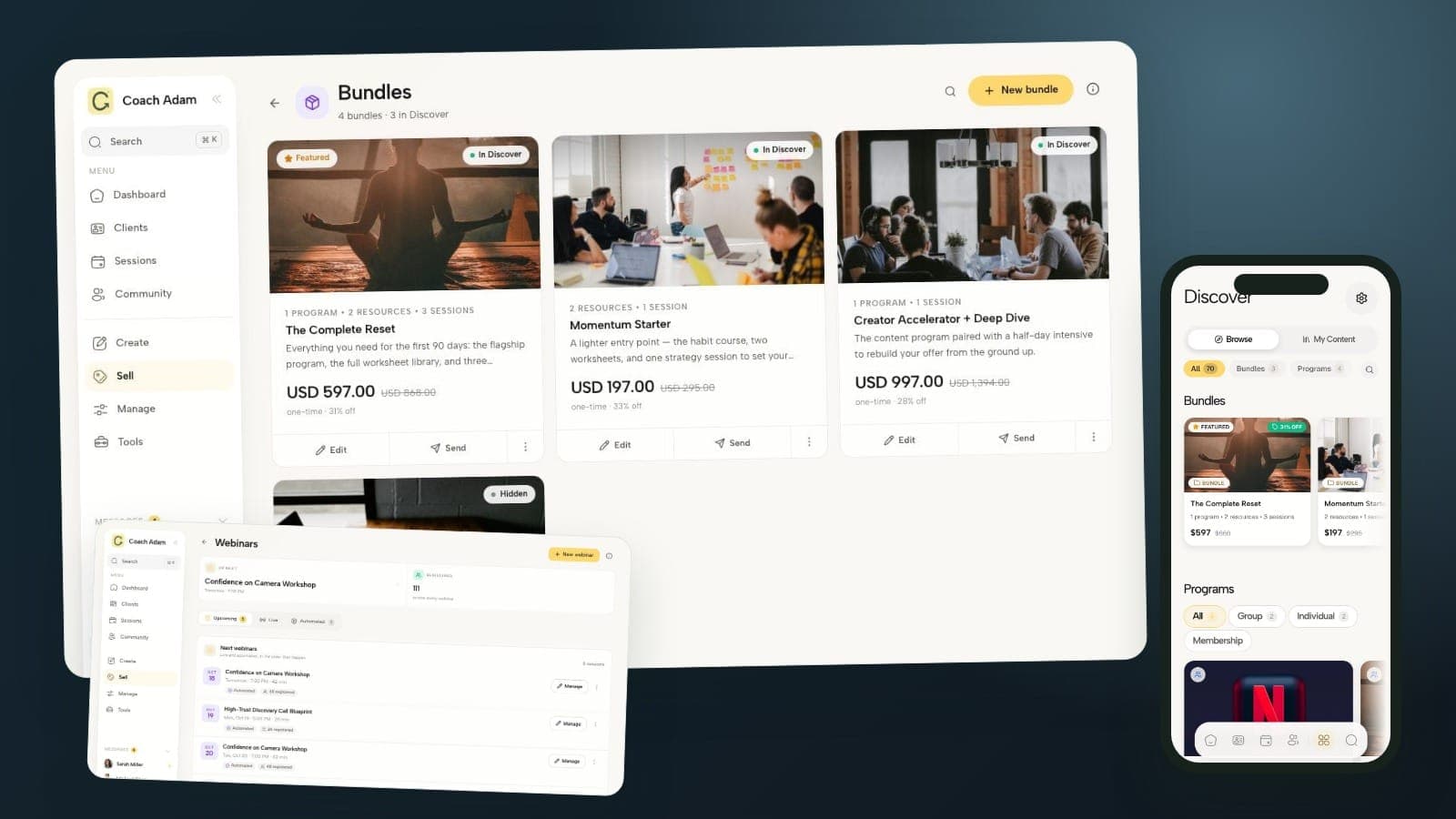
If you want to inspect the practical setup, Try the interactive demo and explore the bundle, course, webinar and email workspaces shown here with fictional details. Evaluate how you would present and deliver your offer. These screenshots do not establish automatic seasonal campaigns, bonus fulfillment or a specific checkout configuration.
Sources and limits: The public Lovely Impact Black Friday offer guide provides evidence that coaches consider discounts, bundles and resource additions. Its suggested discounts are not benchmarks adopted here. Coachful's coupon and promotional-discount guide covers a separate configuration question; this article focuses on selecting a sustainable seasonal offer. Examples and calculations here are original illustrations, not measured results. Check legal, tax, consumer and marketing obligations for your own circumstances.