Group Coaching Programs: The Complete Playbook

Coachful
You're already feeling the squeeze. The 1:1 calendar is full, the next inquiry asks for “something scalable,” and you know a group offer could help, but you also know a sloppy cohort can drain trust fast.
The question isn't whether group coaching can work. It's whether you can design a container that holds attention, protects confidentiality, proves value quickly, and still leaves you with a business model that doesn't rely on your every spare hour.
What Group Coaching Programs Actually Are
The coach's private debate usually starts the same way. You look at a packed client roster and think, I can't keep doing everything one-to-one, but if I move people into a group, will the impact thin out? That fear is rational, because not every “group” is really coaching, and not every scalable offer deserves the name.
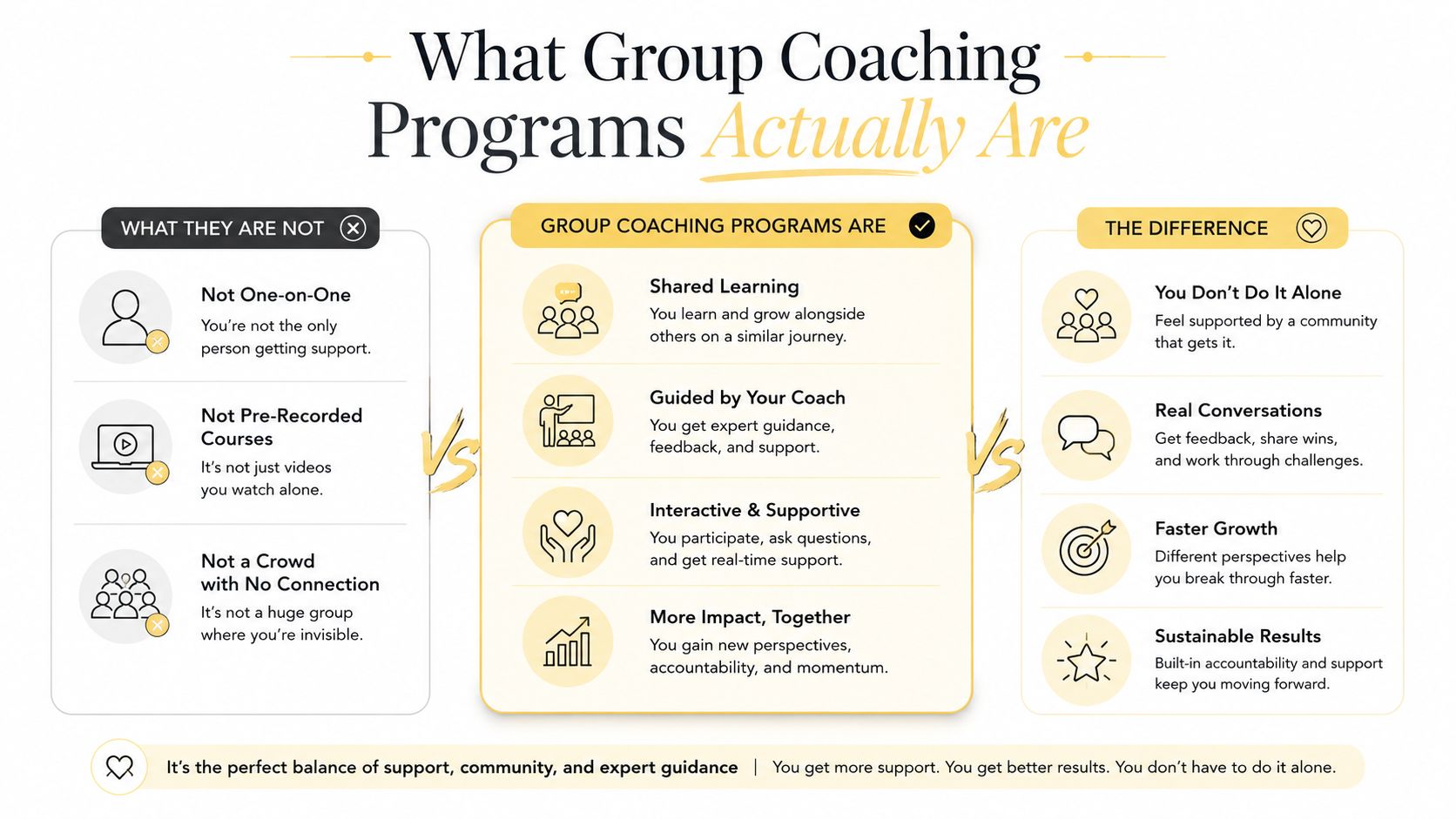
A group coaching program is a facilitated learning and change process where participants work toward a shared outcome, get coached in the room, and learn from one another's examples and questions. That makes it different from a course, where the content can stand alone, and different from a mastermind, where peer exchange may dominate while coaching is lighter. It's also not group therapy, because the frame is coaching, progress, action, and accountability, not clinical treatment.
Three archetypes show the range
An accountability sprint is short and sharp. Think 4 weeks, daily check-ins, and a narrow behavioral goal, like publishing consistently or making outreach a daily habit.
A transformational cohort is slower and deeper. A common shape is 12 weeks, weekly live calls, and peer triads that keep reflection from staying abstract. The live room matters here because the breakthrough usually comes from a participant naming the thing they've been circling for weeks.
A hybrid accelerator mixes self-paced modules with bi-weekly group coaching. That structure works when participants need asynchronous teaching for the basics, but live time for application, decisions, and troubleshooting. It's a good fit when you want the room focused on implementation instead of repeating foundational material.
Practical rule: if your material could be delivered fully through video and still produce the same result, you've built a course, not a coaching program.
The hidden fear, of course, is what happens when one person dominates, someone else shuts down, or confidentiality gets fuzzy. Those aren't side issues. They're the operational core of whether the group feels safe enough for real work.
Designing a Curriculum That Drives Real Change
A strong cohort doesn't feel like a content dump. It feels like movement, with each week giving participants a concrete reason to return, apply, and report back. If the sequence is muddy, the group starts sounding enthusiastic while behavior stays exactly the same.
A six-week arc that actually holds attention
Start with a baseline in week 1. Participants identify their north star metric, define what “better” looks like, and name the first constraint in the way. In a business cohort, that might be booked calls. In a leadership program, it might be clearer delegation or fewer avoidable escalations.
Weeks 2 and 3 should shift into skill-building with homework that forces use, not just reflection. If someone only talks about insight, nothing changes. Make them test the tool, write the message, run the conversation, or track the behavior between calls.
Week 4 is for recalibration. People are usually honest here because they've had enough time to hit friction, and the group can surface patterns the coach can't see alone. That's where pacing gets adjusted, expectations get reset, and the strongest programs protect participants from quiet drift.
Weeks 5 and 6 should move into advanced tactics, peer coaching, integration, and next-step planning. The final session isn't just a wrap-up, it's the bridge into the next behavior cycle. Without that bridge, the group becomes a nice memory instead of a durable change container.
A useful way to think about the balance is simple:
- Live teaching, 20%. Just enough to frame the work.
- Peer interaction, 40%. Enough room for participants to hear themselves think.
- Individual implementation, 40%. The part that changes behavior.
The temptation is to overstuff the curriculum because you're afraid the buyer won't see value fast enough. That's usually a mistake. A minimum viable curriculum is easier to finish, easier to remember, and easier to improve after the first run.
If week 3 feels like a slog, your completion risk is already rising. That's the week where the novelty is gone and the outcome isn't visible yet.
The other decision is structure. Use a linear progression when the audience is newer, the outcome is sequential, or one step depends on the previous one. Use a modular “choose your adventure” format when participants already know the basics and need targeted troubleshooting, not a rigid classroom path. If you're coaching experienced operators, flexibility can keep the group from feeling patronizing.
Pricing and Packaging Your Cohort for Profit
The quickest way to underprice a program is to anchor it to your hours instead of the outcome. That cost-plus trap makes sense when you're scared of rejection, but it usually leaves transformation undervalued and the business underfunded.
Price the result, not the calendar
If the offer helps someone land a valuable client, make the pricing conversation about that change, not about how long you'll be on Zoom. A group program can be a smart buy precisely because it combines coaching, peer learning, and accountability in one container. If that container helps someone move faster or with more confidence, the value sits well beyond raw delivery time.
A simple tiered structure keeps the decision easier:
| Tier | Price | Participants | Revenue | Coach Hours | Effective Hourly Rate |
|---|---|---|---|---|---|
| Core | $997 | mixed cohort | varies by enrollment | shared group delivery | depends on fill rate |
| Premium | $1,997 | mixed cohort | varies by enrollment | group delivery plus 1:1 | depends on mix |
| VIP | $3,500 | mixed cohort | varies by enrollment | group delivery plus async support | depends on mix |
The point of the table isn't to promise a fixed outcome. It's to show that packaging creates choice, and choice changes perceived value. The presence of a higher tier often makes the middle tier feel more reasonable, even for buyers who never touch the top option.
A floor price can help you avoid self-sabotage. One practical formula is (your hourly rate × hours delivered) ÷ 0.4 = minimum viable price. That's not a law, but it's a useful guardrail when you're tempted to discount just to fill seats.
Discounting rarely solves weak demand. Clearer positioning, better packaging, and a stronger bonus stack usually do.
If you want a deeper breakdown of tier logic and payment structure, this practical guide on pricing your coaching program, payment plans, and tiers is worth keeping nearby while you build.
The revenue objection usually sounds like this. What if nobody buys VIP? That's fine if the tier still plays a strategic role. It can make Premium feel like the sensible middle option and give serious buyers a place to self-select without forcing everyone into the same container.
Recruitment Onboarding and Confidentiality Rules
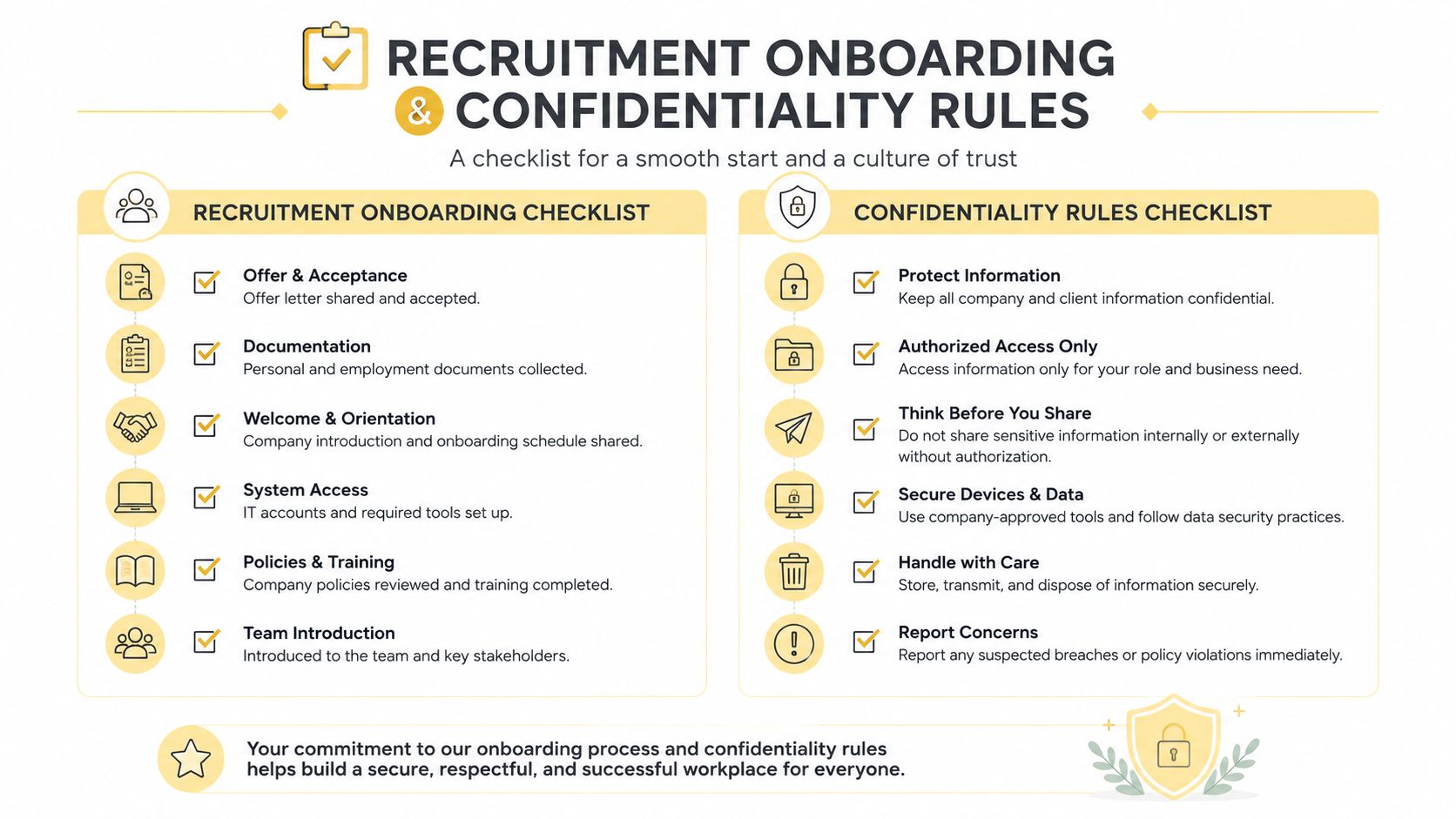
Small cohorts work better when the room is full of the right people, not just warm bodies with a credit card. A rushed intake is how you end up coaching mismatched participants, managing energy leaks, and trying to repair trust after preventable confusion.
Recruit for readiness, not just interest
Application forms do more than collect email addresses. They tell you who understands the problem, who can show up consistently, and who needs a different level of support. A short screening call can catch the mismatch that no landing page ever will.
That matters because structured groups tend to perform best when they stay small enough for real interaction and accountability. Evidence from a group-size guide points to 5 to 8 members as the range where completion, engagement, and peer accountability peak, and it recommends six to eight participants for fixed, curriculum-based programs with weekly assignments and a defined end date (group-size guide). If you're tempted to stretch the roster for revenue, remember that the pedagogical cost usually shows up later.
Onboarding should begin before the first live call. Send the tech setup, session rhythm, communication norms, and the confidentiality agreement ahead of time so nobody is guessing on day one. The group needs to know what happens if someone arrives late, misses a session, or wants to reference another participant outside the room.
Write the boundaries down
Confidentiality in group coaching needs to be a written collective agreement, not a polite hope. One guidance source recommends a clear declaration, explicit rules like no recording and no screenshots, and a reminder that participants can't control what others disclose afterward (client confidentiality guidance). Another ethical-practice source adds that breach planning should be communicated in advance, with secure documentation and restricted access to notes (ethical practice guidance).
That's not overkill. It's what protects the room when a participant wonders whether they can mention another member's story on LinkedIn, in a mastermind, or in a casual conversation with a colleague. The safest answer is usually no unless explicit permission has been given.
A simple breach-response protocol keeps the response calm instead of chaotic:
- Identify the incident quickly and directly.
- Address the breach with the involved party, not the whole group.
- Document the action taken in a secure place.
- Reinforce the norm without shaming the person.
Trust doesn't come from pretending breaches can't happen. It comes from having a clear response before they do.
Refund policy language matters too. If someone drops out mid-cohort, the terms should already say what happens, what's non-refundable, and whether a seat can be transferred. That clarity protects revenue and keeps the group from becoming a negotiation every time someone changes plans.
For a practical checklist on cohort onboarding and engagement structure, this internal resource on engagement strategies for cohort coaching squads is a useful companion.
Keeping Participants Engaged Beyond the Final Session
Most programs lose momentum after the last call because they treat graduation like an ending instead of a transition. Participants go back to old systems, old schedules, and old excuses, and the coach only hears from the ones who already got results.
The retention problem isn't theoretical. Evidence from a 2023 feasibility study found that participants in an employee group coaching program reported progress during the program, yet measures returned near baseline 12 weeks after completion, which is why post-program maintenance support may matter. A broader organizational report makes a similar point, noting that benefits can show up during the program, but retention and maintenance design may matter as much as the coaching itself (organizational report). A good ending can still produce a weak outcome if nothing follows it.
Build the follow-up before the finale
A useful pattern is a 30-60-90 day cadence. The first check-in catches the post-program wobble, the second reinforces habit carryover, and the third surfaces whether the result is sticking or sliding. That cadence doesn't need to be heavy-handed. A short email, a scorecard, or a simple prompt can keep the participant connected without recreating the full cohort.
Peer pairing and alumni pods help here because the coach shouldn't be the only accountability node. When graduates have a small rhythm with each other, they're more likely to notice drift early. The coach's job shifts from constant shepherding to system design.
This is also where a retention lens helps. In subscription businesses, operators often use customer analytics to track where engagement drops and what precedes churn. A practical resource like analytics for SaaS subscriptions can give coaches a useful way to think about post-program behavior, even if the business model is different.
Turn progress into next steps
A strong follow-up system does three things at once. It keeps the participant moving, it surfaces people who need more support, and it opens a natural path to continued work. That might mean a repeat cohort, a lighter alumni membership, or a carefully timed 1:1 offer.
Mid-program pulse surveys help before the finale, not just after it. If someone is disengaging, you want to know while there's still time to intervene. You also want to know which milestones matter enough that participants should record them in a shared space.
The best alumni systems don't feel like upsells. They feel like continuity.
For a working template on post-cohort engagement, this internal guide on engagement strategies for cohort coaching squads is worth revisiting when you map your own follow-up flow.
Tech Stack and Workflow Automation for Coaches
The wrong stack doesn't just cost money, it steals your attention. If you're copying links between tools, chasing missing forms, and reminding people manually, you'll run out of capacity long before the cohort model maxes out.
A lean setup can handle most of the work if the tools are connected properly. For some coaches, a platform like Coachful can cover program structure, cohort space, scheduling, payments, and progress tracking in one system, which reduces the number of places where client data and workflows can break.
Match the stack to the stage
A bootstrapped setup usually keeps to the essentials, like Zoom for live calls, a community space, and one payment layer. A growth-stage setup often adds structured program delivery, better automation, and a more reliable client dashboard. A premium setup may include a deeper course layer, stronger community tooling, and tighter reporting across cohorts.
| Tool Category | Bootstrapped (<$5K/mo) | Growth ($5-20K/mo) | Premium ($20K+/mo) |
|---|---|---|---|
| Live calls | Zoom | Zoom | Zoom |
| Program delivery | basic folders or pages | structured program platform | full cohort system |
| Community | simple group space | Circle or similar hub | branded community layer |
| Scheduling | manual booking links | integrated scheduling | automated booking flows |
| Automation | light Zapier use | layered workflows | advanced multi-step automation |
The five biggest time sinks are predictable. Scheduling, reminders, homework collection, payment plan follow-up, and progress tracking eat the week if they're handled manually. Automate the first contact point, then keep the human work for coaching decisions instead of admin repeat work.
Workflow rule: if a task repeats every week and doesn't require judgment, it should be automated first.
For more advanced orchestration, the current discussion around agentic AI workflow automation is relevant because it shows how coaches can think about multi-step systems without rebuilding every process from scratch.
The risk is the single point of failure. If every reminder depends on one person remembering to press send, one missed week creates confusion for everyone. Build redundancy into the process so no single missed action can derail the entire cohort.
Measuring ROI and Scaling Without Losing Quality
A lot of coaches assume the results are obvious because participants seem happy. Buyers don't always agree. In B2B settings, sponsors want a reason to renew, and participants want proof that their time changed something beyond a nice feeling.
Use a measurement framework buyers can trust
Start with a pre/post self-assessment so people can rate where they are before and after the program. Add behavioral milestone tracking, because self-perception alone won't always persuade a sponsor. Then collect Net Promoter Score at three intervals, mid-cohort, final session, and 30 days post.
The point isn't to manufacture certainty. It's to build a one-page report that shows what changed, when it changed, and which behaviors moved. Buyers tend to trust a small set of well-chosen indicators more than a pile of vague testimonials.
Evidence from the three-country randomized study on rural social protection coaching is especially useful here. Group and individual formats produced no detectable difference in economic outcomes, while group coaching delivered 11% to 21% per-participant cost savings in Uganda and the Philippines and remained more cost-effective on aggregate outcomes and key welfare measures (randomized study). That's the kind of comparison that helps a buyer understand why a group format may make sense without assuming it's automatically cheaper in every situation.
A separate body of evidence on structured life coaching also matters. A controlled study found gains in goal striving, hope, psychological and subjective well-being, with several improvements persisting up to 30 weeks post-intervention, alongside reductions in stress, and a pilot group coaching program improved subjective well-being, openness to the future, hopelessness, stress, depression, positive affect, and optimism (life coaching study). The message is simple. Buyers need outcome language, but they also need the program to be designed for continuity.
Scale with fidelity, not just volume
When demand rises, the temptation is to add more cohorts and hope the quality holds. That's where programs start to drift. The fix is to standardize the session script, use peer observation, and define the essentials so new facilitators don't improvise the core away.
The scaling decision usually comes down to two questions. Can the curriculum still be delivered faithfully by the same coach, or is it time for an associate? And can the measurement process stay consistent across cohorts, or will every group start looking like a different product?
You don't need a giant dashboard to do this well. You need disciplined collection, honest interpretation, and a willingness to adjust when the data tells you the room is not doing what you thought it was doing.
Questions Coaches Ask Before Launching a Cohort
The planning stall usually hides behind a few recurring questions. They sound tactical, but each one is really about risk. If you answer them cleanly now, the launch gets easier and the program feels safer on day one.
What if only a few people sign up
If three people want in, the answer depends on the promise you made. A fixed curriculum with deep interaction often needs enough participants for perspective and momentum. If the group is too small, it can still run, but the experience changes, so the offer should be named accordingly instead of pretending nothing is different.
What if one person dominates the room
Use a parking lot. Let the person know their point matters, capture it, and come back to it later if it still serves the group. The coach's job isn't to mute enthusiasm, it's to keep airtime from becoming a power grab.
What if someone barely speaks
Some participants need time before they talk. Others need a more direct invitation. A simple script helps: “I'd like to hear your take before we move on.” That gives the quieter person a lane without putting them on the spot like they're in trouble.
What if someone asks for a refund mid-cohort
The policy should already exist before the first call. If you allow partial refunds, define the cutoff and the conditions. If you don't, state that clearly in the agreement so the conversation stays factual instead of emotional.
Can you record sessions
You can, but recordings create confidentiality risk, especially when participants speak freely. If you do record, spell out who can access the replay, whether names are anonymized in follow-up notes, and what happens if someone misses a live call. The safer alternative is often a written recap with key themes instead of full replay distribution.
A few other edge cases come up often:
- Romantic or business relationships between participants. Set a norm that side relationships don't pull confidential examples back into the room.
- A participant's needs exceed the group format. Name the limit and offer a private referral or 1:1 add-on.
- Alumni pricing for repeat cohorts. Decide early whether repeat participants get a loyalty rate, a lighter alumni path, or no discount at all.
If you're moving from private coaching into a group model, this internal guide on going from 1:1 coaching to group programs can help you think through the shift without rebuilding your offer from scratch.
If you want a cleaner way to run cohorts, Coachful gives coaches one place to organize programs, group calls, payments, resources, and progress tracking. If group coaching is becoming a real part of your business, visit Coachful and see how a more structured workflow can support the way you already coach.