Business Phone Number for Coaches: 5 Setup Decisions

Nour
Founder, Coachful
Do you need a separate phone number for your coaching business? If you publish a number, return prospect calls or agree to text clients, a separate business line is usually a sensible boundary. You do not necessarily need another handset, and you do not need to make telephone access part of every coaching package.
The important decision is not which app has the cheapest number. It is which conversations belong on that number, who can see them and when you will respond. A second number that rings through to your private voicemail or receives coaching messages all weekend has not solved much.
This guide helps you choose between a separate handset, a second SIM or eSIM, and an app-based business line, then test and introduce the setup. It is for coaches running a practice, not a ranking of telephone providers. Coachful screenshots show separate website, booking and client-contact workflows; they do not demonstrate phone-number hosting, voicemail, SMS or a telephone integration.
1. Decide whether your practice needs a public phone number
A phone number is one contact option, not proof that you run a legitimate coaching practice. If new enquiries can use an accessible form or email and consultations happen by appointment, you may not need to advertise telephone access. Check any business-disclosure or professional requirements that apply where you operate rather than assuming this is universally optional.
A business line becomes more useful when referral partners expect to telephone, corporate buyers need a callback, clients need an agreed way to report a last-minute delay, or your local audience prefers voice contact. The need should come from how people actually contact you, not from the feeling that a website looks unfinished without a number.
Write one sentence defining the job before shopping: “This line handles new enquiries and appointment administration during my published working hours.” That is a different service from unlimited between-session coaching by text. If text support is part of an offer, specify its scope and response window separately.

Consider a fictional career coach, Alex. Most enquiries arrive through referrals and the website. Alex offers scheduled online sessions and replies to administrative messages on working days. A separate business number could protect Alex's private number during callbacks, but a staffed switchboard would add complexity without a clear need. This is an operating example, not evidence that every career coach should choose the same setup.
Also distinguish a public contact route from private coaching delivery. A prospect should be able to ask how the service works without joining a client workspace. An existing client should know where to put an agreed between-session update without wondering whether to leave it on a public enquiry line.

2. Choose the type of business line, not just an app
There are three common ways to separate business calls. Start with the boundary you need, then check provider availability, account terms and the particular plan. None of these options automatically makes a conversation confidential or guarantees uninterrupted service.

A separate handset and mobile plan
This creates a straightforward physical boundary: the work device can stay in your office when you finish. It can suit a coach who wants very clear separation, spends substantial time on calls or needs someone else to handle the business device during agreed cover.
The trade-off is another device to charge, secure, update and carry. You still need a process for backups, loss, voicemail access and departing staff. Buying a second handset does not establish an appropriate data-retention policy or make it safe to leave client messages visible on a lock screen.
A second SIM or eSIM in your existing phone
This can provide a separate mobile number without another physical phone, when your handset and carrier support the setup. Check compatibility, which line handles outgoing calls and messages, international use and how you will identify an incoming business call.
The trade-off is shared hardware. Both lines live on a device that may also contain family photographs, personal notifications and your private accounts. Test the quiet-hours controls rather than assuming that silencing one line will leave the other unaffected.
An app-based business number or VoIP service
This can suit a coach who wants to answer through an app or browser, or who needs business routing and additional users. Features vary considerably. Ask about the exact country, number type, texting capability, account ownership and plan rather than treating “virtual number” as one standardized product.
Google's own Google Voice setup documentation, for example, describes calls, texts and voicemail and notes specific limitations. That is more reliable than assuming a tutorial's “free business number” claim applies to your country, account or intended use. Read the current terms and availability before choosing a consumer or business service.
Internet dependence and emergency calling deserve a separate check. The US FCC explains that VoIP emergency service can have location, power and connection limitations. That source concerns US services, not a worldwide rule. Check your provider's instructions and local requirements, and maintain an appropriate separate way to reach emergency services.
3. Check ownership, privacy and the real cost before committing
A number printed on your website, cards and partner materials becomes a business asset. Do not set it up casually in an assistant's personal account. Identify who owns the account, who can recover it and what happens if the person managing it leaves.
Ask each provider the same questions and keep the answers with your setup record:
- Availability: can I obtain and use this number in my actual country, with my actual business and devices?
- Ownership and exit: who controls the number, can it be ported, and what information or fees would an exit require?
- Calls and texts: which incoming and outgoing functions are supported on this plan, and are any message types restricted?
- Privacy: who can access recordings, transcripts, messages and metadata, and what controls exist for retention, deletion and account security?
- Reliability: what happens during an outage, while travelling, or when the app is signed out?
- Total cost: what are the line, user, usage, tax, international, setup and porting charges that actually apply?
Do not assume a low monthly price includes every function you need. Equally, do not buy a team phone system because you might hire someone eventually. Choose for your current service and a plausible next stage, with an exit path you understand.
Check recordings and transcription before switching them on. A useful transcript is also another copy of potentially sensitive information. Recording and messaging rules differ by location and use; get qualified advice where necessary rather than copying a consent sentence from another coach's website.
Keep a business line separate from your account-recovery strategy. Some services do not accept all virtual numbers for verification. Test compatibility before relying on the new number for an important login, and retain secure recovery options that do not depend on a single phone app.
4. Design the contact route and response boundary
Publish the route you actually monitor. If you offer callbacks on working days, say so. If the number cannot receive texts, say that next to it. A tiny “call only” note can prevent someone waiting for a reply to a message your service never receives.
Use a simple public contact block. The following is original example wording, not a ready-made policy:
For coaching enquiries and appointment administration, contact [business number] during [working days, hours and time zone]. [Calls only / calls and texts, as supported]. I usually respond within [realistic working-day window]. For a consultation, use [named booking route]. This line is not an emergency service.
Only include a response commitment you can maintain. If you coach three days a week, “within one business day” may be unclear unless you state which days you mean. Avoid “call anytime” when what you mean is “leave a message and I will respond when I reopen.”

Make routine next steps easier without removing human contact. A booking destination should explain the appointment and show the relevant next action. A form should collect enough to route an enquiry, not ask a stranger to submit their entire personal history.

For a basic enquiry, consider a name, preferred reply method and a short administrative question. Add a phone field only when you need it, explain its purpose and distinguish any permission needed for different kinds of messaging. Receiving a phone number is not permission to send every future promotion. This guide does not establish which legal consent standard applies to your particular messages.
For existing clients, put the agreed contact route in onboarding and the coaching agreement. Specify what between-session contact includes, what is outside scope and the expected response window. Do not quietly replace paid text support with a different service because you changed your number.

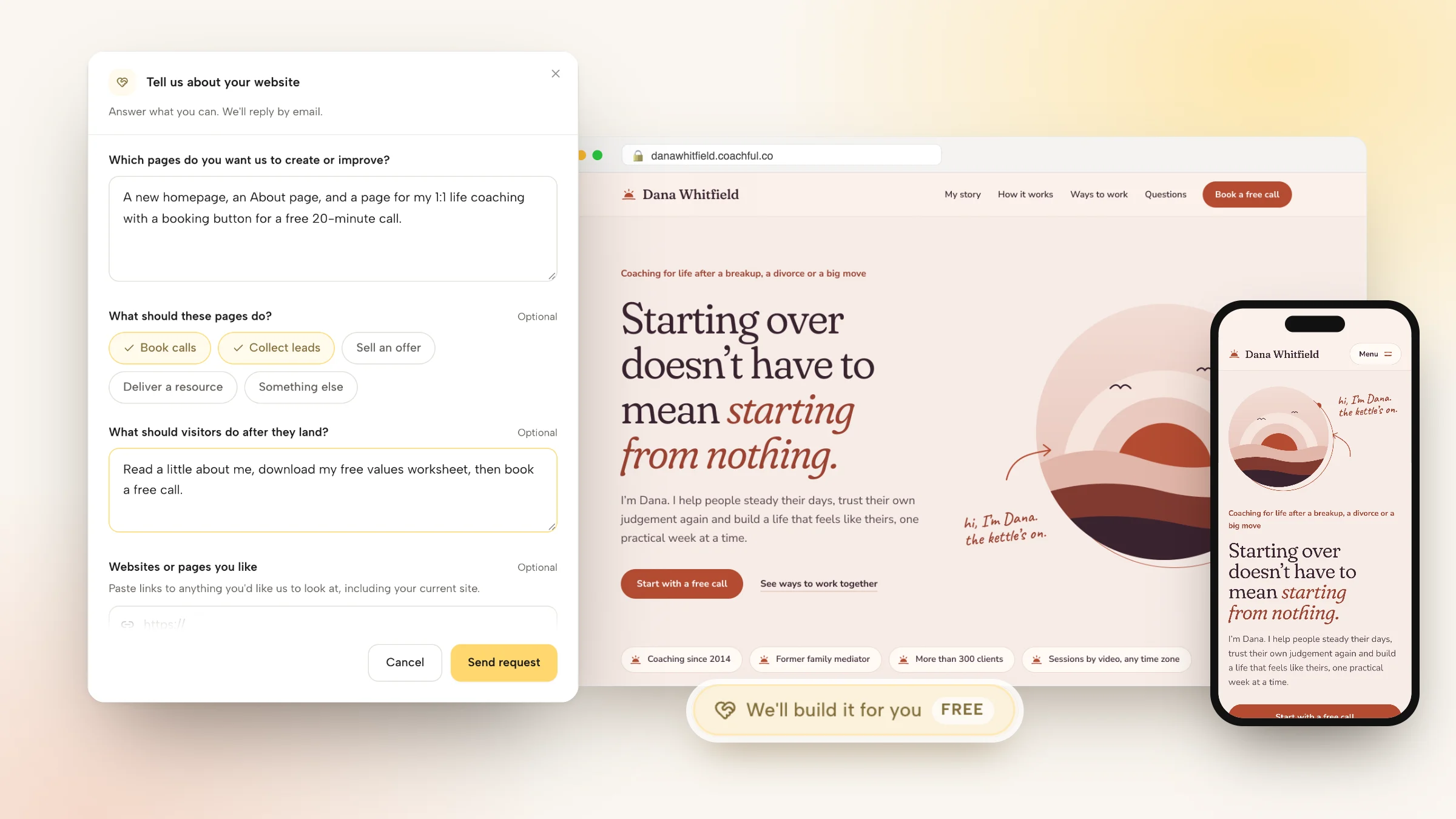
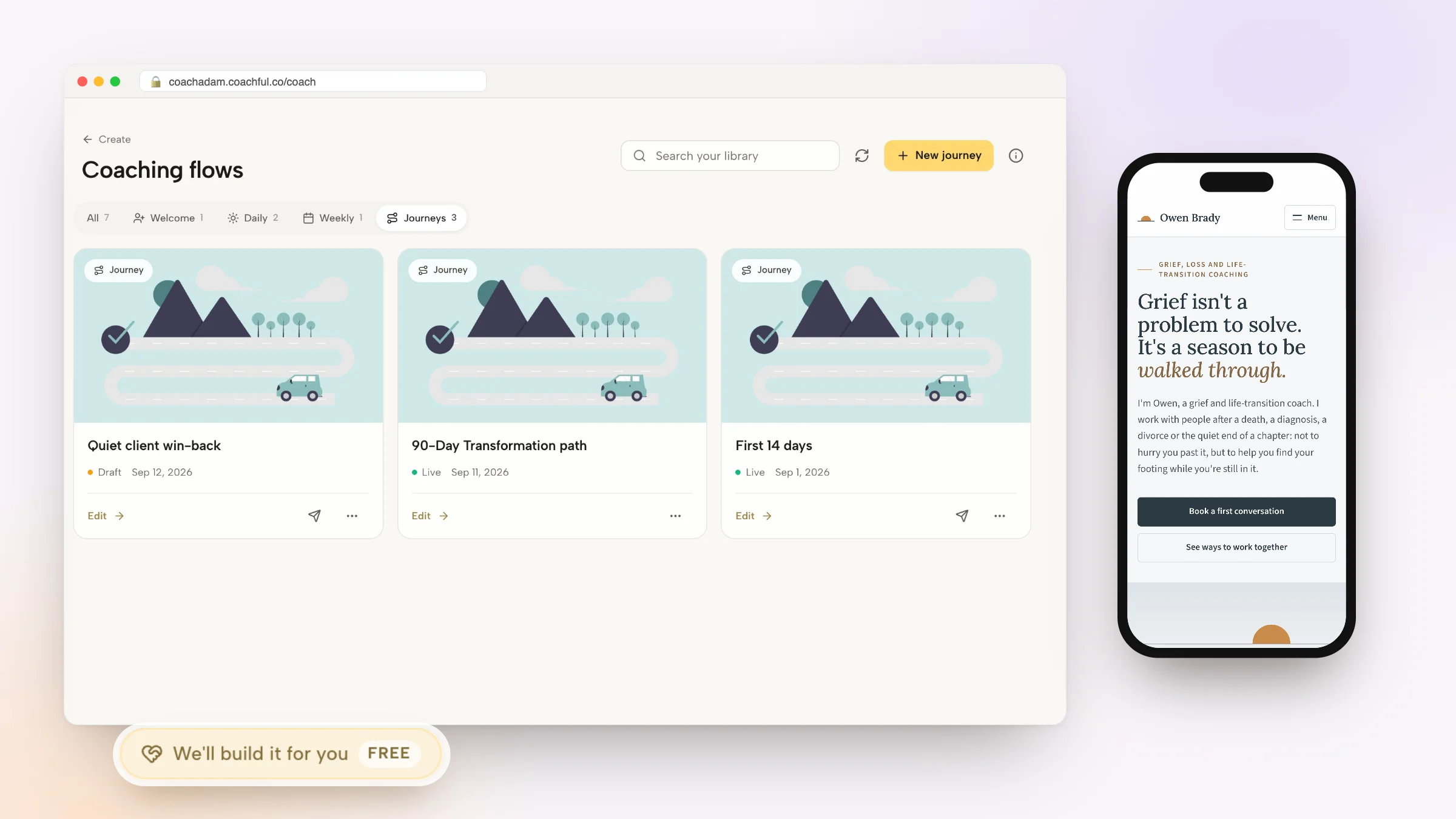
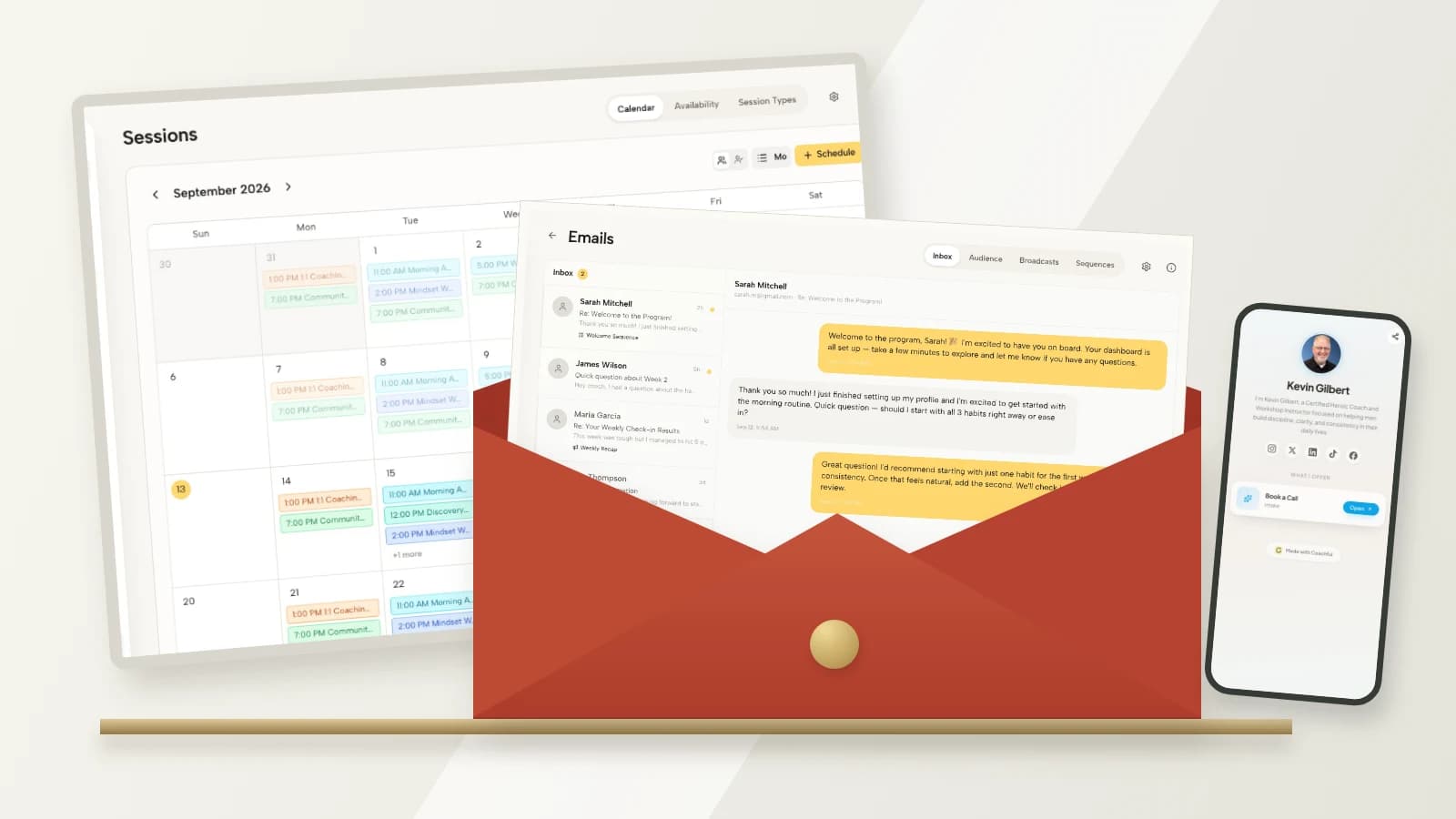
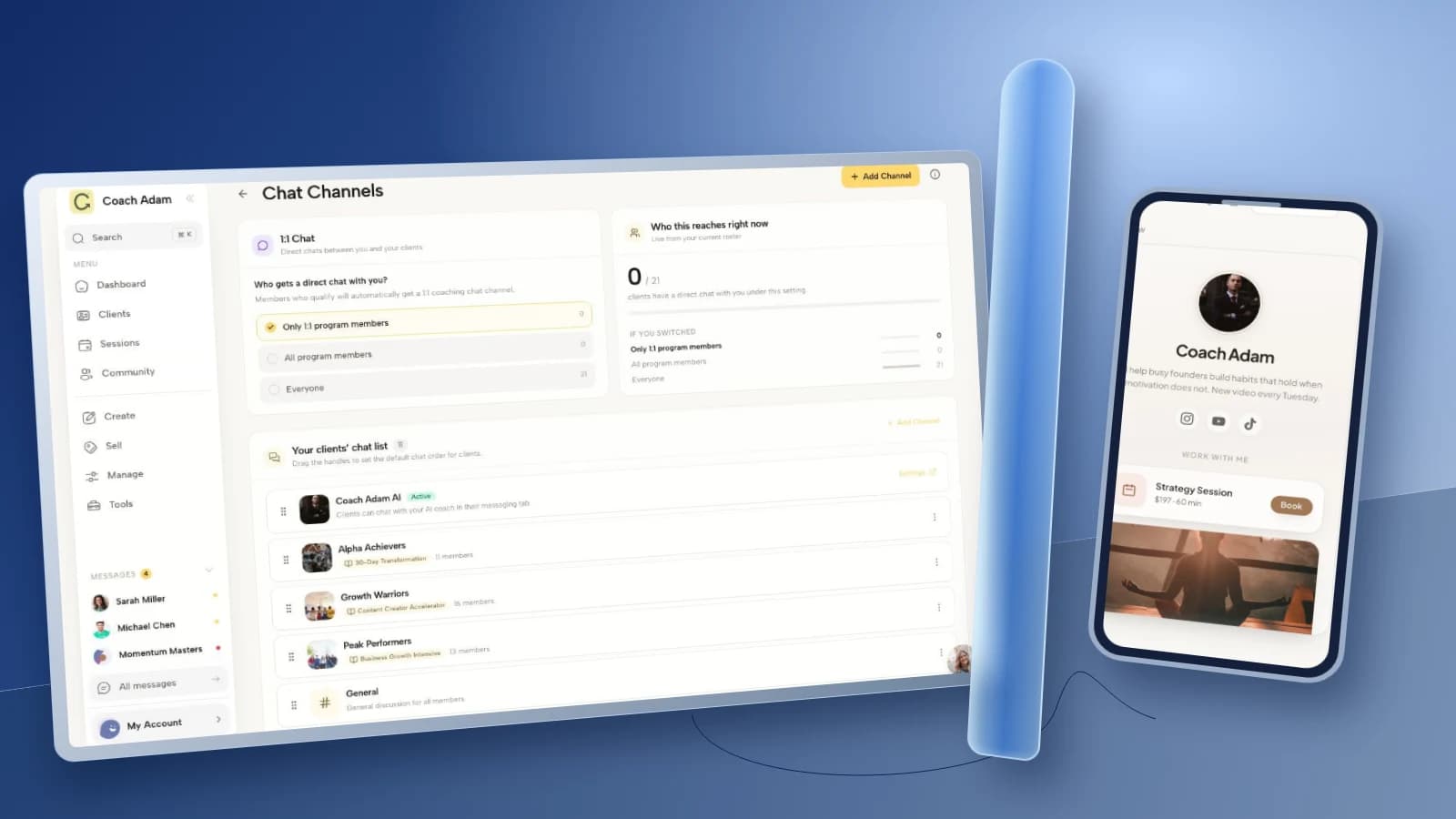
Coachful's pictured calendar, form editor, public links and chat channels illustrate places for specific administrative and client-contact tasks. They are not evidence that a separate telephone provider automatically syncs calls, texts or voicemail into Coachful. Evaluate those workflows separately, and never promise an integration you have not verified.
5. Test the line, then migrate away from your private number
Set up and test the business route before changing public details. Use another person's phone, with permission, so you can see what a caller or recipient experiences. A successful call inside the provider's own setup wizard is not the complete test.

- Incoming calls: dial the public number and check which device or app rings.
- Outgoing calls: confirm the number shown to the recipient. Caller-name display can vary; do not assume your practice name appears everywhere.
- Missed calls: hear the actual greeting, leave a harmless test message and confirm who can retrieve it.
- Texts, if supported: test both directions and identify any restrictions. Do not use a real client's sensitive information.
- Working hours: test the quiet-hours behavior while checking that personal and necessary safety contacts still work as intended.
- Website route: follow the exact booking or enquiry destination you name in your message.
Do not place a live emergency call as a test. Read the provider's emergency-service guidance and follow any authorized testing instructions. Document what you checked, the date and any limitation that affects how you use the line.
Then update your website contact details, email signature, directories, cards and active partner materials. Search your own site for the old number. If a number appears inside an image or PDF, changing the contact page alone will not replace it.

Tell current clients directly rather than expecting them to notice a footer. Use a short message adapted to your existing agreement:
From [full date], please use [business number] for [agreed purpose] during [working days and hours]. My response window remains [existing commitment]. For [other agreed contact], continue using [route]. Please update your saved contact; I will stop monitoring coaching messages on my personal number after [transition date].
If the change affects an agreed support service, resolve that with the client before implementing it. Confirm accessibility and contact preferences too. A move that works beautifully for you but prevents a client from using their agreed support route is not a finished migration.
During the transition, reply briefly on the old route with the new contact details. Avoid continuing substantive coaching there, which teaches people that the old route still works. Do not forward private message histories into a new service without reviewing purpose, permission, access and retention.
At the transition date, check whether genuine enquiries or administrative messages were missed, correct broken destinations and close duplicate monitoring where appropriate. Update the number in your operating notes and give any approved cover person the access they actually need, not your personal account password.
Frequently asked questions
Can I run a coaching business without a public phone number?
Often, a clear email or enquiry form plus scheduled consultations can meet the practical need. That is an operating choice, not a universal legal answer. Check the disclosure and professional requirements that apply to your business, clients and location.
Do I need two phones or just two numbers?
Two phones create a physical boundary; two numbers on one device can be more convenient. Choose based on how reliably you can separate notifications, identify outgoing calls, protect information and stop work contact outside your hours.
Is a free virtual number good enough for a coach?
Possibly, for a limited use that the provider actually permits and supports. Verify availability, business-use terms, recovery, portability, texting restrictions and emergency limitations. “Free” is not a privacy assessment or a guarantee that the service will support your whole practice.
Should my coaching clients have my personal number?
They need the contact route you agreed to provide, not automatic access to your private mobile. If they already have it, introduce a tested alternative and a fair transition rather than disappearing or changing paid support without discussion.
Does a coaching platform replace a business phone provider?
Not automatically. Client messages, calendar management and enquiry forms can reduce some phone administration, but they do not establish telephone, SMS or voicemail capability. Choose and verify a separate provider when those functions are required.
Make the next contact easier to handle
Before buying a number, write down the three routes your practice needs: new enquiries, appointment administration and agreed client support. Choose an owner and response expectation for each. Then buy only the phone functionality that fills a real gap.
If those routes currently end in scattered messages on your private mobile, inspect how a public link, booking calendar, form and client-contact workspace could divide the work. Try the interactive Coachful demo to evaluate those pictured workflows. Keep the telephone decision separate, and test the complete contact experience before inviting anyone to use it.