Coaching Referral Agreement Template: 7 Sections to Adapt

Nour
Founder, Coachful

What should you put in a coaching referral agreement so a friendly introduction does not become an argument about money, confidentiality or who “owns” the client? Define the parties, the service being referred, the introduction process, any compensation, information boundaries, independent responsibilities and the exit terms. Start with a no-fee arrangement unless a paid one has separately passed the relevant legal and professional checks.
A referral agreement is between the coach and the person or business making introductions. It is not the coaching agreement with the client, permission to share session notes, or a guarantee that either side will deliver paying clients.
Below is a seven-section template you can adapt, a fictional filled example and a practical handover method. This is a drafting aid for professional review, not legal advice or a jurisdiction-specific contract. A signature does not make an otherwise prohibited arrangement acceptable.
Before the template: choose which relationship you mean
Three relationships are often muddled together. An unpaid introducer makes a suitable connection without an associated reward. A reciprocal partner may expect introductions in both directions. A paid referrer receives compensation or another benefit connected to the introduction.
Write down which applies. “We will help each other out” is not enough when one practice expects a commission and the other expects occasional goodwill. Even a noncash benefit can create an incentive worth discussing and disclosing.
The ICF Code of Ethics addresses conflicts, confidentiality and compensation or benefits for referrals. It is a professional standard, not a substitute for applicable law. Before adding payment terms, use our separate guide to whether coaches can pay referral fees. This article answers the next question: what the parties should actually write down.
1. Name the parties and define the referral scope
Use the legal names of the businesses or individuals, the relevant contact details and who can approve changes. A brand name alone may not identify the contracting party. Ask your adviser how to describe your business structure correctly.
Then describe the service and audience narrowly enough to recognize a suitable introduction. A career coach and a leadership coach might agree to introduce people whose needs fall outside their own scope. That does not mean either accepts every person sent across.

Adaptable wording: “This agreement is between [referring party] and [receiving coach or practice], effective [date]. It concerns voluntary introductions of people seeking [specific service and audience]. An introduction is an opportunity to consider fit, not a promise of acceptance, purchase, results or a reciprocal introduction.”
Keep clinical referrals, regulated services, employment-placement arrangements and joint program delivery outside a generic template unless specifically reviewed. If both parties will deliver work to the same client, they need clearer service responsibilities than an introduction agreement provides.
2. Specify how permission and introductions work
The simplest route is often giving the prospective client a public link and letting them make contact. Nobody needs to send a personal history to prove that the lead is “qualified.” If the person wants a direct introduction, agree exactly what information can be shared and with whom.

Adaptable wording: “The referrer will normally provide the receiving coach’s public contact or booking link. Before sharing a person’s contact details, the referrer will explain the proposed introduction and obtain the permission required for that purpose. Only the agreed minimum details will be sent through [approved channel]. Neither party will disclose coaching-session content or sensitive personal information as sales context.”
Permission for an introduction is not automatically permission for newsletters, sales sequences or repeated calls. Applicable privacy and marketing rules still need their own assessment. Do not describe a checkbox as universal legal compliance.

A practical question is: “Would you prefer their website link, or would you like me to introduce you by email using your name and this address?” Record the answer accurately. If the person declines, there is no introduction to process and no need to invent a reason in the partner tracker.
3. Make compensation explicit, including when there is none
For a no-fee arrangement, say so plainly. Also address noncash rewards and reciprocal quotas. Otherwise a later “thank you” can quietly change the relationship without either party considering disclosure or conflicts.
No-fee wording: “No referral fee, commission, discount, gift or other reward is payable under this agreement. Neither party promises a minimum number of introductions or reciprocal referrals. Any proposed compensation requires a separate written agreement and prior review of applicable obligations.”

If compensation is permitted, add a separate commercial schedule rather than burying a percentage in a sentence. Specify the qualifying event, which services count, whether existing prospects are excluded, the evidence used to resolve competing introductions, and any attribution period.
State whether the amount is fixed or percentage-based and exactly which collected sums form the calculation base. Address refunds, chargebacks, unpaid installments, taxes, currency, invoicing, payment timing and disagreements. These are choices to negotiate, not universal industry defaults.
Include the approved disclosure wording and who provides it to the prospective client. Do not pick a commission from an online benchmark and assume your margin, profession or jurisdiction permits it. A commercial schedule should document an acceptable arrangement, not manufacture permission for one.
4. Separate referral administration from confidential coaching
A referrer may need to know whether an introduction was received. That does not entitle them to know what the person discussed, why they declined, which difficulties emerged or how coaching is progressing.
Adaptable wording: “The parties will use referral information only for the agreed introduction and necessary administration, subject to applicable requirements. Access will be limited to authorized people. Information shared back to the referrer will be limited to [defined administrative status] where an appropriate basis exists. Client-session content is excluded.”

For paid arrangements, even a status such as “enrolled” can reveal something about a person. Decide how necessary evidence will be provided without giving the partner broad access to the client record. Ask an adviser about data roles, notices, security, retention and rights requests rather than assuming both businesses have identical responsibilities.
Agree an incident contact and a process for correcting a mistaken introduction. “We know each other” is not an access-control policy. Keep partner administration in the appropriate operational record, with coaching notes separately protected.

5. Preserve independent judgment and truthful promotion
The receiving coach should assess fit independently, explain their own terms and be free to decline. The prospective client should remain free to choose another provider or nobody at all. A referral is not a claim on a person.
Adaptable wording: “Each party remains responsible for its own services, statements and professional obligations. The referrer may not bind the receiving coach, promise outcomes, offer unapproved discounts or represent a qualification that has not been verified. The receiving coach decides suitability and contracts directly with any accepted client under separate terms.”
Agree whether names, logos, testimonials or offer descriptions can be used. Permission to introduce someone does not automatically allow a website partnership badge or a public case study. Use approved factual copy and a clear process for withdrawing outdated materials.
For example, an introducer may say, “They offer coaching for people stepping into management.” They should not say, “They will get you promoted,” or imply clinical treatment if the service is coaching. Both parties should know how to raise a concern before another introduction is made.
6. Set review, termination and outstanding obligations
Agree a start date, review point and a method for ending new referrals. Specify the notice channel and any notice period your adviser recommends. Provide a way to stop introductions promptly where safety, confidentiality or serious misrepresentation is in question.

Adaptable wording: “Either party may end new introductions by [agreed notice method and period], subject to any agreed immediate suspension provisions. The parties will confirm the referral cutoff, treatment of introductions already made, any valid outstanding payments and the handling of retained information. Confidentiality and other expressly surviving obligations continue as agreed and required.”
If there is a paid-referral tail, define it precisely: which prior introductions it covers, what event must occur and the final date. Do not assume every future purchase by an introduced person earns commission indefinitely.
Ending this business relationship does not automatically end a client’s coaching engagement. Client services, continuity and changes to their agreement must be handled separately. Never use ongoing client care as leverage in a dispute with a referrer.
7. Add administration, review and acceptance
The remaining legal machinery matters: how changes are accepted, how concerns or disputes are handled, governing law, required notices and any appropriate liability provisions. These depend on the parties and jurisdiction. Do not copy a broad noncompete, exclusivity or non-solicitation restriction without understanding its effect and enforceability.
Adaptable wording: “Operational contacts are [names and channels]. Proposed changes must be recorded and accepted through [agreed process]. Concerns should first be raised with [contacts], without limiting applicable rights or professional reporting obligations. The parties will obtain appropriate review of governing law, dispute resolution and other legal provisions before acceptance.”
Finish with the correct parties, authorized signatories, dates and a clear version identifier. Give each party the same final copy. A friendly email trail can be useful evidence of discussions, but it is not a reason to skip professional review where obligations or money are significant.
A copyable no-fee coaching referral agreement template
Copy this as a first discussion draft. Replace every bracket and resolve the legal provisions with an appropriate adviser before using it. Do not simply delete uncomfortable sections to make the agreement shorter.
Referral arrangement: discussion draft [version/date]
Parties and purpose. [Party A legal identity] and [Party B legal identity] may make voluntary introductions concerning [service/audience]. Each introduction is subject to independent suitability assessment and the prospective client’s choice. No clients, outcomes or reciprocal referrals are guaranteed.
Introduction method. Share the receiving party’s public link first. Before transmitting personal details, explain the introduction, obtain the permission required and share only [agreed minimum details] through [approved channel]. Do not share session content.
Compensation. No fee or associated reward is payable. Neither party owes an introduction quota. Any change requires separate written terms and prior legal and professional checks.
Information. Use referral information only for agreed introduction and necessary administration, subject to applicable requirements. Limit access, permitted status updates and retention under [reviewed process]. Direct incidents or rights requests to [contact].
Independence. Neither party may promise outcomes, bind the other or publish unapproved claims, branding or discounts. Accepted clients enter a separate service agreement with their chosen provider.
Review and exit. Review on [date]. End new introductions through [notice process]. Confirm the cutoff, outstanding matters, information handling and surviving obligations. Client services remain separately governed.
Acceptance. Complete professional review of [governing law, disputes, liability and other required provisions]. Record agreed changes and approval by [authorized signatories, dates and version].
Filled example: two practices, no commission

Imagine a fictional career-coaching practice and a fictional leadership-coaching practice. The career coach sometimes meets people whose immediate question concerns managing a new team; the leadership coach sometimes meets people who want to explore a career change. Neither assumes every person is suitable for the other.
They agree to offer a public link first. Where a person requests an email introduction, they share only the agreed name, address and a short service-related description. They do not transfer previous session notes. No fee, gift or reciprocal quota applies.
Their discussion draft names a review date and a notice process. It also says that a concern about misleading promotion pauses new introductions while they investigate. This is a worked planning example, not evidence that such a partnership exists or that the wording is legally sufficient anywhere.
Turn the agreement into a usable process
Before the first introduction, test the process with fictional details: can each party identify the right service, ask permission, send the minimum information and record the agreed next step? Can they explain what they will not share? Fix ambiguity before a real person is involved.
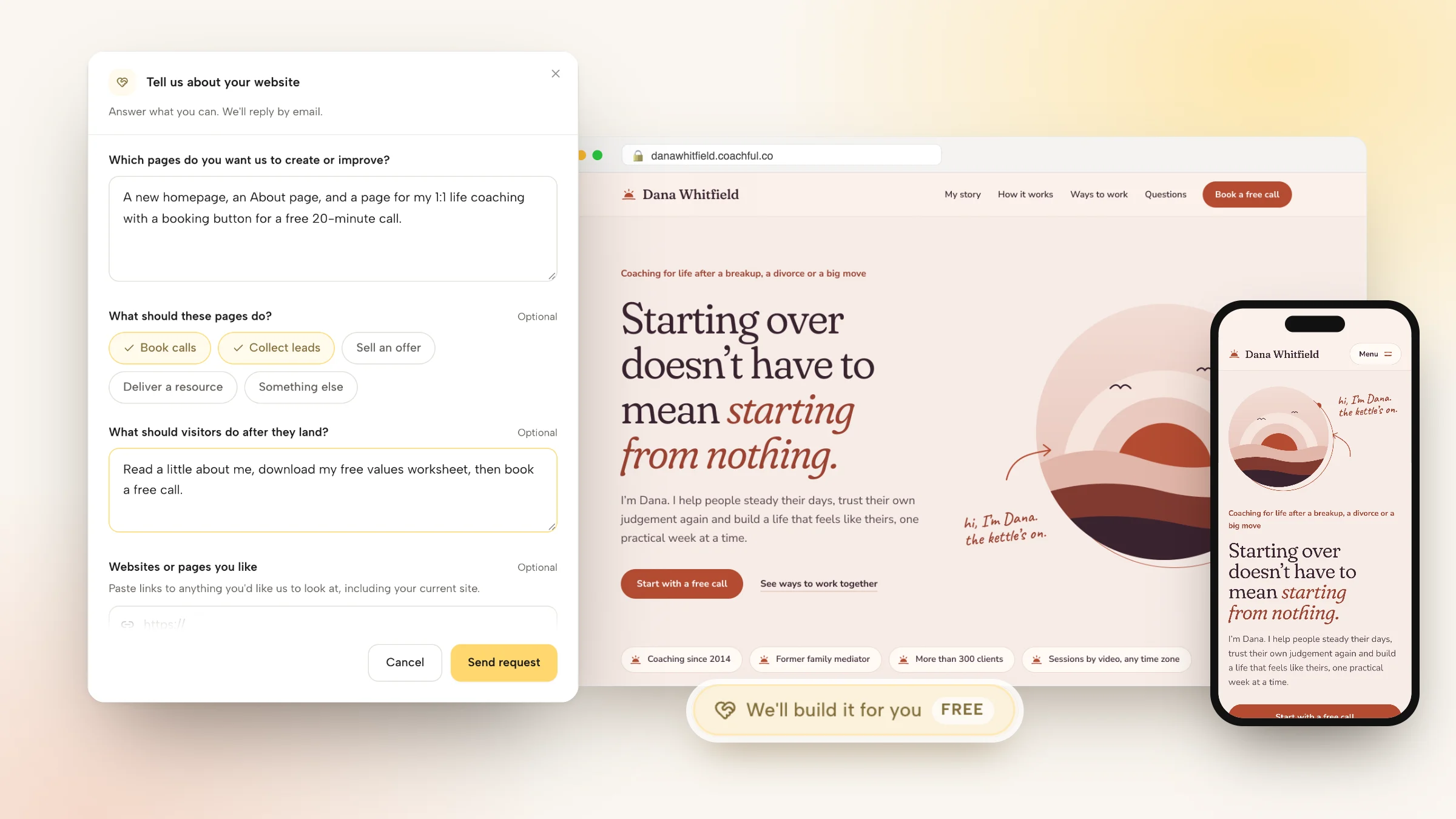
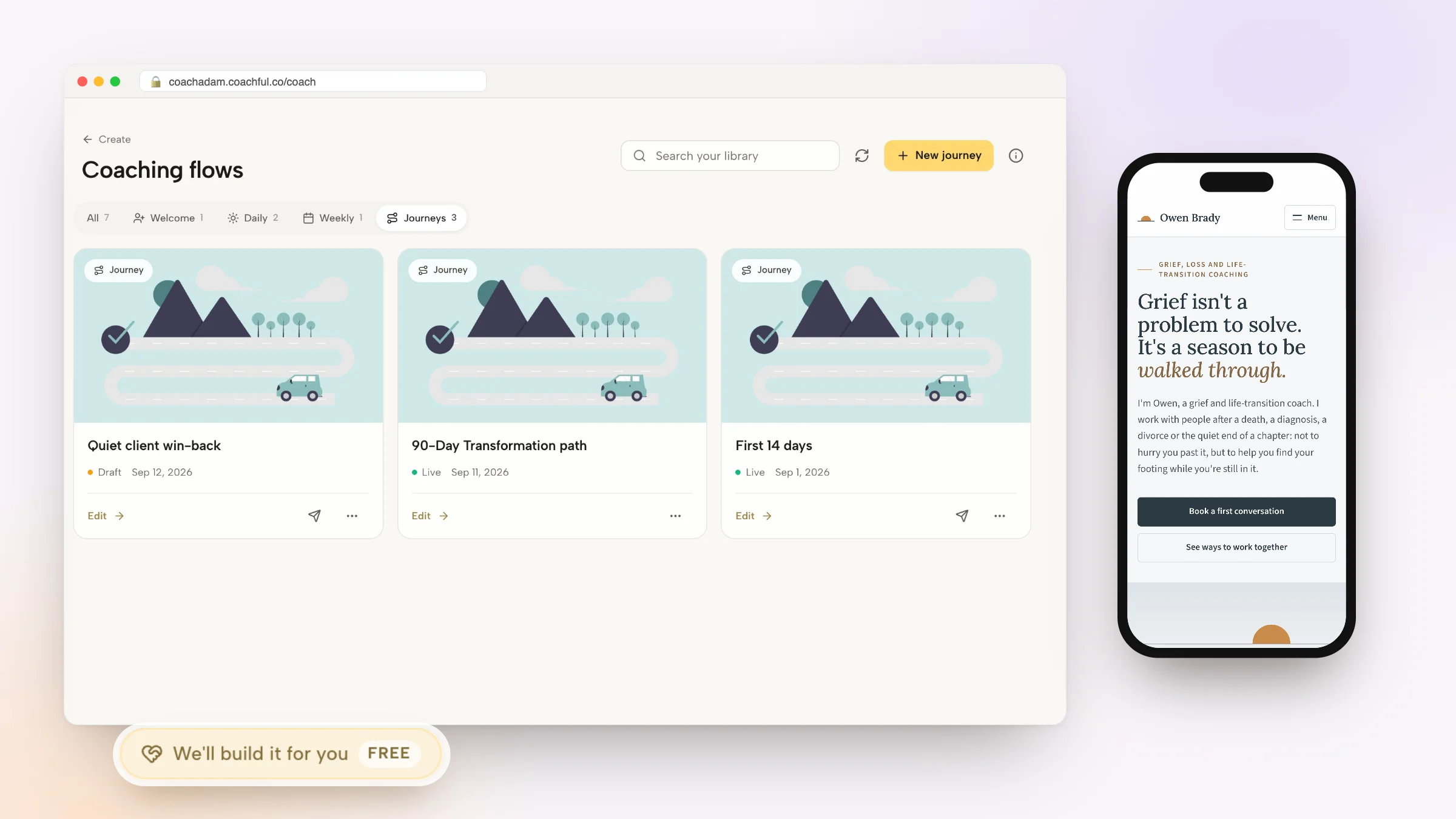
Coachful’s demo forms, prospects and communication surfaces shown above can help you explore that administrative handoff. They do not decide whether a fee is lawful, create permission to share information or replace review of your business-to-business agreement. Keep the agreement itself in your chosen reviewed contracting process.
If your next problem is making the permission request and prospect record consistent, try the interactive Coachful demo. Examine that narrow handoff before moving real referral information. You do not need to redesign your entire practice to test one introduction properly.
Frequently asked questions
Do coaches need a referral agreement if no money changes hands?
A written understanding can still clarify scope, independence, permission, confidentiality and exit. Whether a particular document or form is legally required depends on the arrangement and applicable rules. No fee does not mean no professional responsibilities.
Can this replace my client coaching agreement?
No. This concerns the relationship between the coach and referrer. The client’s coaching agreement needs its own scope, fees, confidentiality boundaries and other relevant terms. Keep the parties and purposes distinct.
Should the agreement guarantee referrals in both directions?
A quota can pressure people to recommend an unsuitable provider. Prefer independent, appropriate introductions without a promise of equal numbers. If any benefit or reciprocal expectation affects a recommendation, consider the relevant disclosure and conflict obligations.
Can I show a referrer my client pipeline?
Not simply because they introduced someone. Limit access and status disclosure to what is necessary, appropriately supported and agreed. A shared pipeline can expose identities, purchases and other information beyond the original introduction.
Where can I find another coaching-specific agreement example?
Life Coaching Professionally’s referral-partnership guide offers formal and informal sample documents. Compare their structure with your actual arrangement; a downloadable template is a starting point, not confirmation of legal suitability.