10 Social Media Sites Similar to Facebook for 2026

Coachful
You post in your Facebook group, answer thoughtful questions, approve members, and run a live that should have started real conversations. A day later, it is buried under memes, family updates, local debates, and whatever the algorithm decided to reward that week.
That frustrates coaches for a reason. Facebook can still produce reach, but it is a weak place to build a focused client journey when attention keeps getting pulled sideways. Coaching businesses need clearer paths. Lead someone in. Build trust. Deliver support. Then move them into a space you control.
Your audience is rarely paying attention in one place anyway. Prospects might discover you on one platform, read your ideas on another, and join a program somewhere else. That makes the question less about finding a Facebook clone and more about choosing the right platform for the right job.
Some tools are better for lead generation. Some are better for thought leadership. Some are useful for active community and peer support. Some can hold a free audience for a while, but they break down once clients need structure, privacy, or accountability.
This guide treats each option as a business decision.
If you want visibility with professional buyers, one platform will do that better. If you want a tighter member community, another will make more sense. If you are tired of renting your client relationships inside noisy social feeds, the primary goal is to know when to use these networks for discovery and when to move people into a dedicated coaching ecosystem.
Below are 10 platforms coaches use instead of, alongside, or beyond Facebook, with the trade-offs that matter.
1. Coachful
For coaches replacing Facebook because they need more than another social feed, Coachful is the strongest first option. It brings community and the rest of the coaching client journey into one branded place, so conversations do not sit apart from the programs, sessions, resources, and accountability they are meant to support.
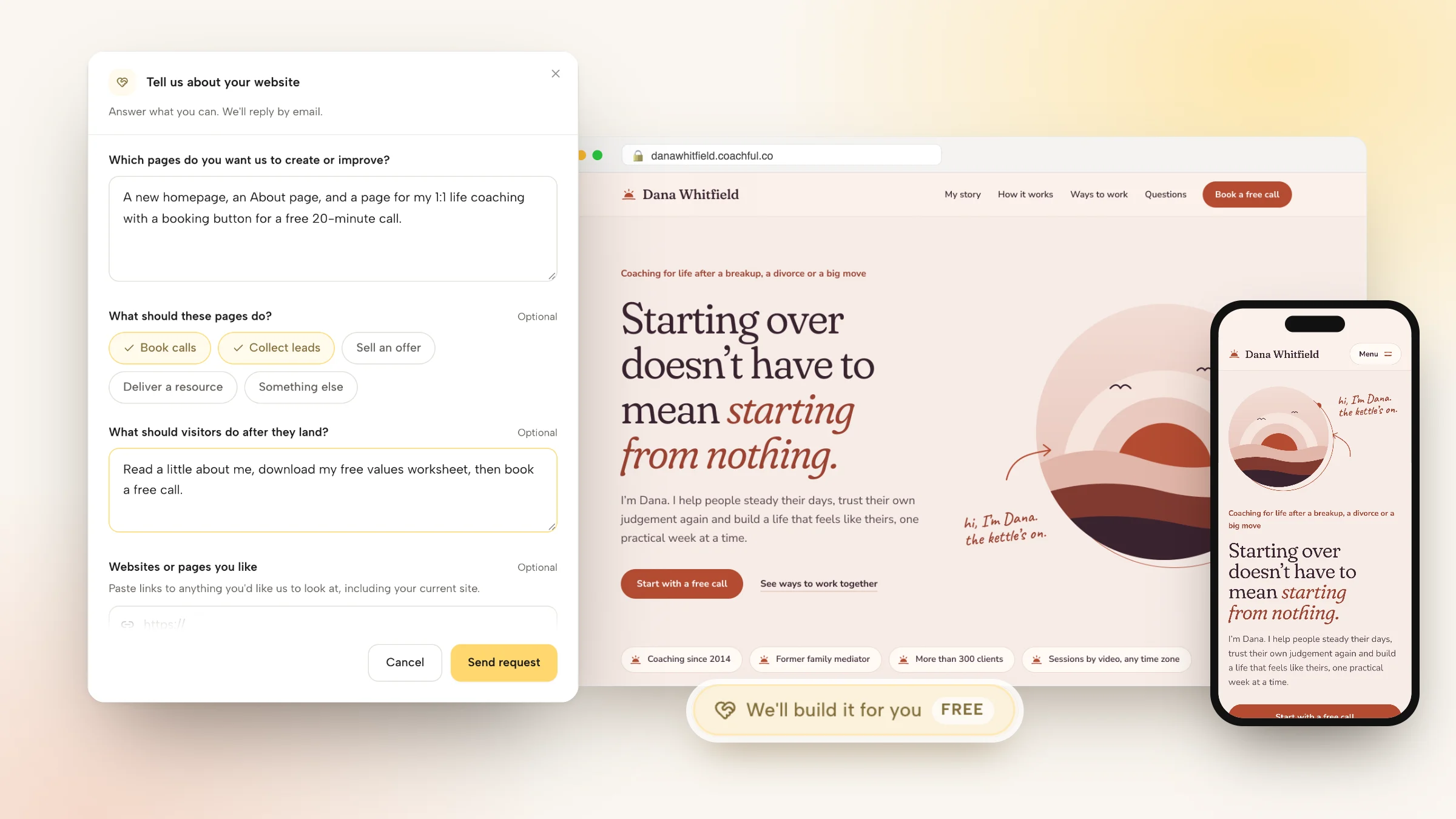
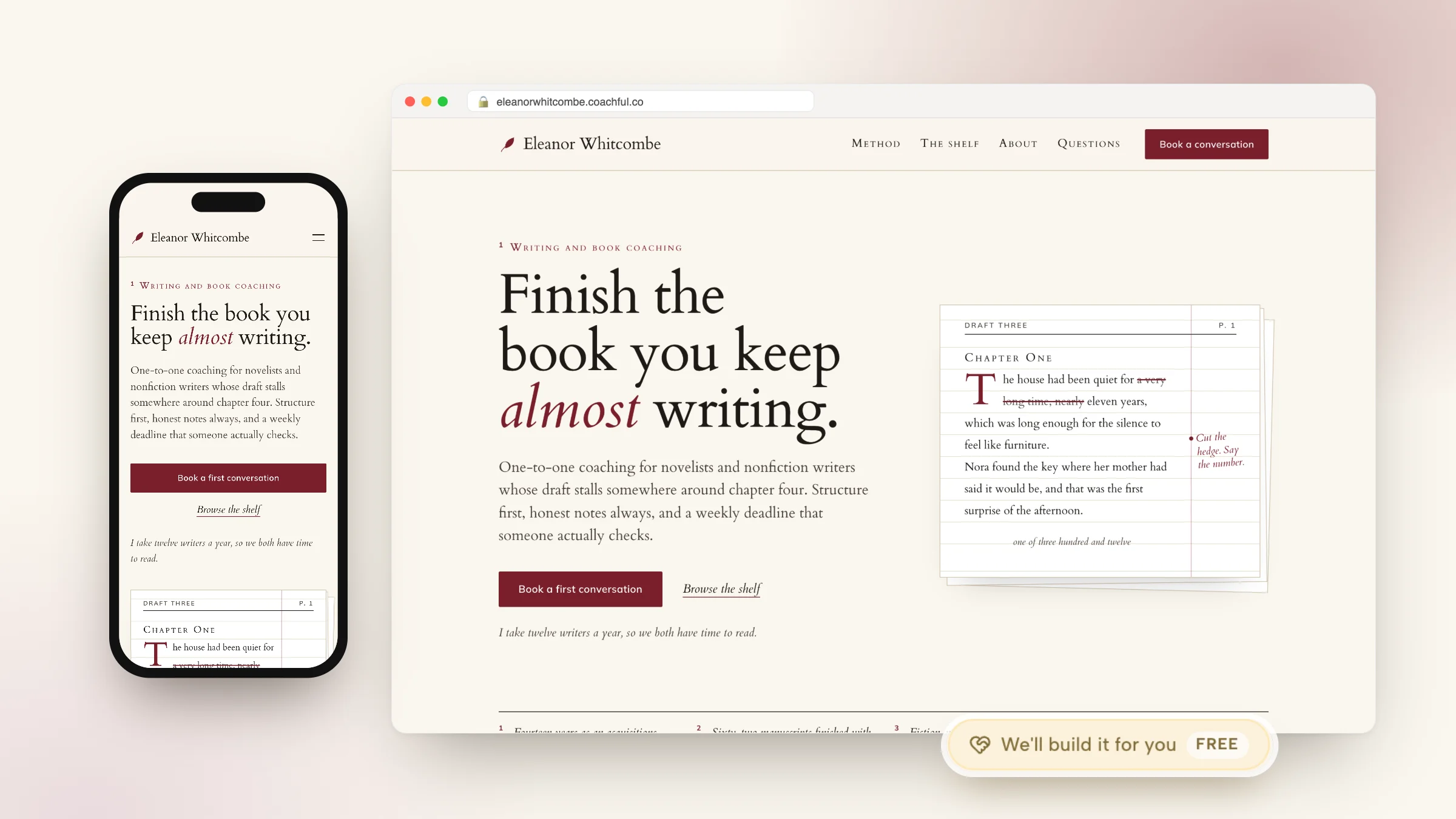
Why Coachful stands out: a free white-glove service. Every plan comes with a team that builds things for you. Send a short request from inside Coachful and they set up your community space and the funnel that fills it in your account, usually within about 24 hours, at no extra cost. It takes the slowest part of starting a coaching business, the setup, off your plate. See what the team will build for you.

Instead of sending clients between a Facebook Group, calendar, course platform, payment tool, forms, and direct messages, you can manage the experience as one connected system. Clients get a focused home without ads or competing algorithmic distractions, while you keep the context needed to coach them well.
Best for coaches who want community and delivery in one place
Coachful fits solo coaches, group programs, cohorts, memberships, and growing coaching teams that want to own the client relationship rather than rent it from a public network.
Use it for:
- Branded community: Give clients and members a focused space for discussions, updates, peer support, and group momentum.
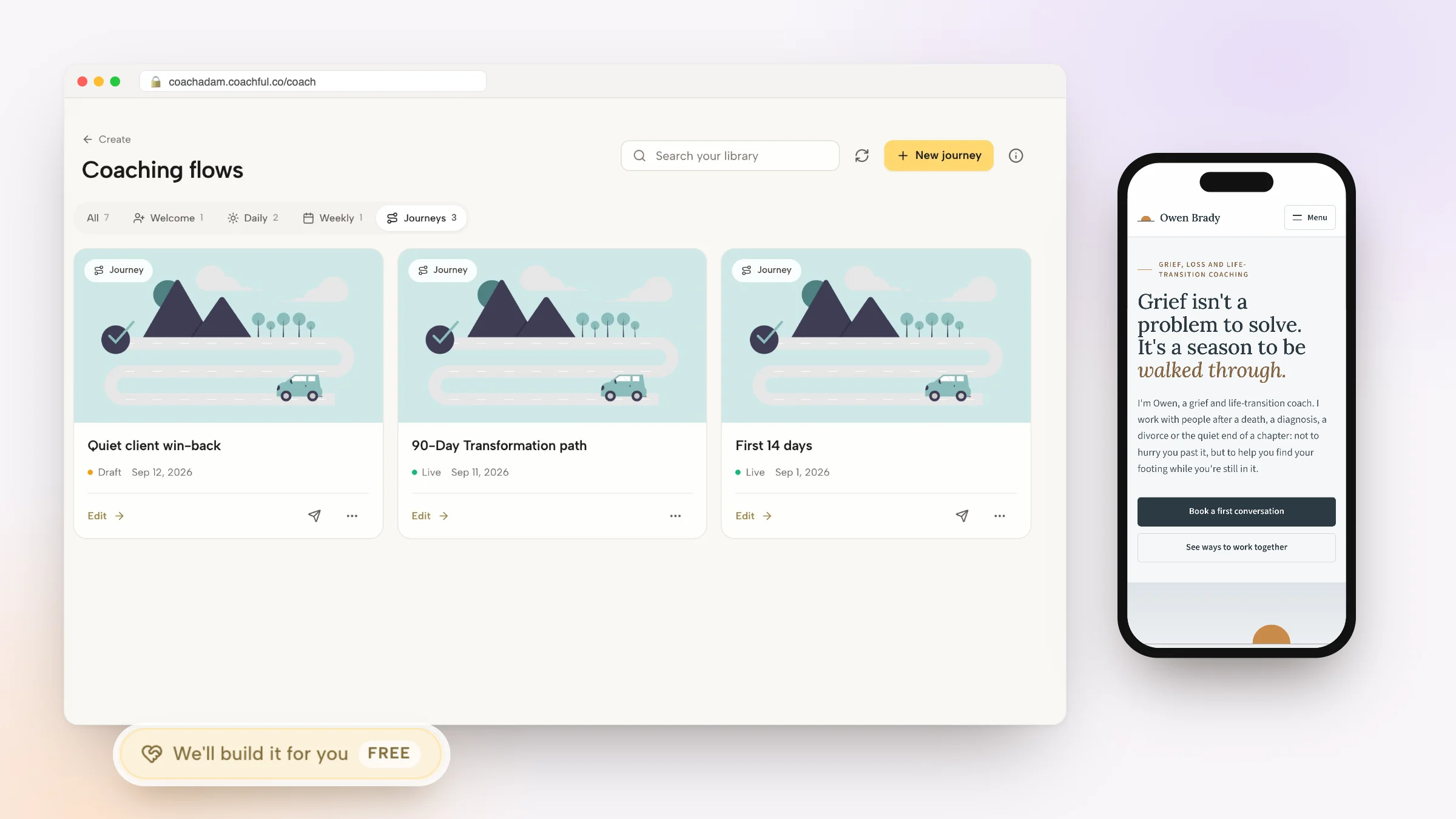
- Programs and accountability: Keep lessons, resources, goals, tasks, forms, and progress connected to the conversations around them.
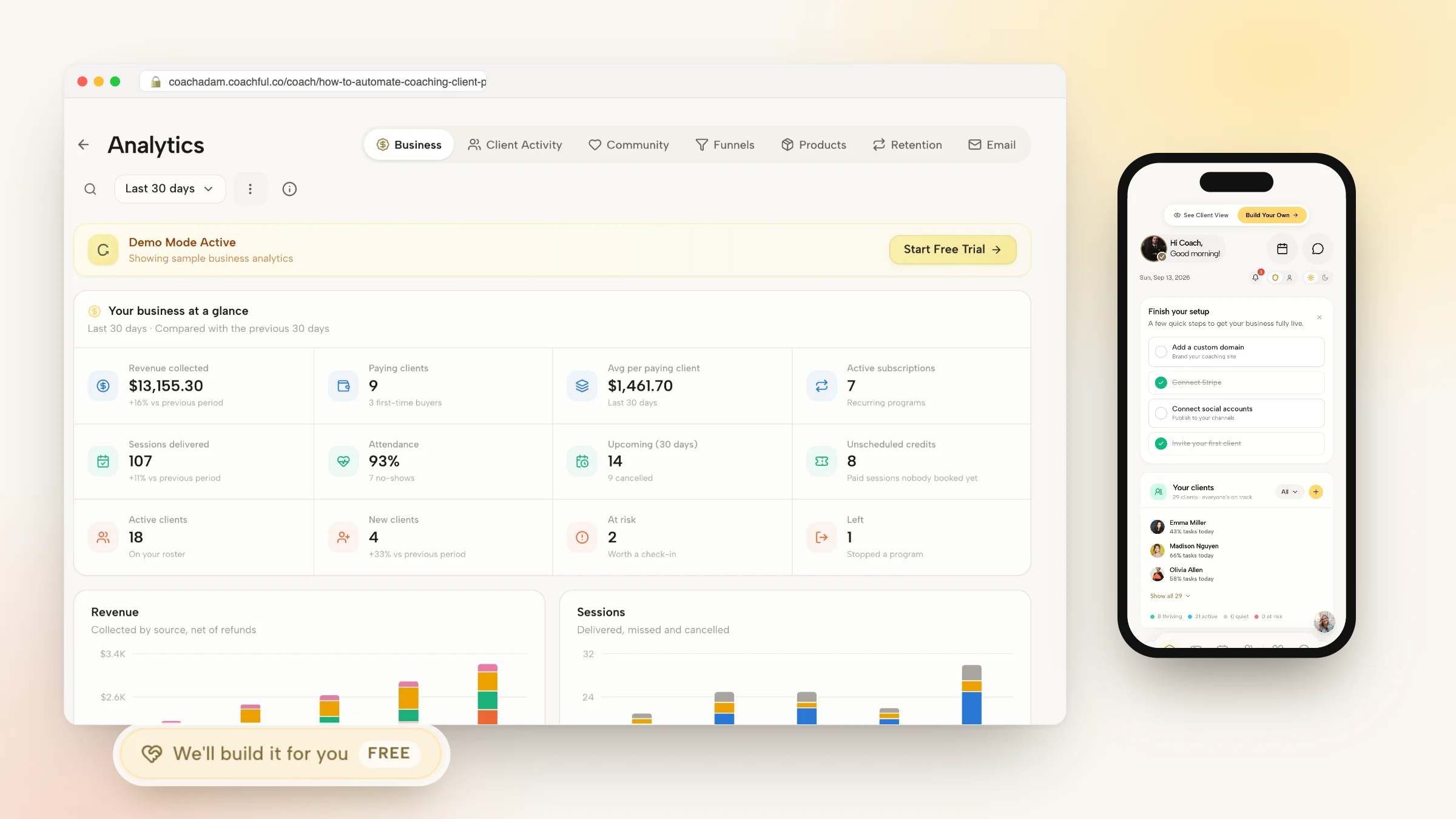
- Coaching operations: Bring scheduling, payments, onboarding, messaging, notes, and client management into the same workflow.
Practical rule: Use public social platforms to get discovered. Use Coachful when someone needs to become a lead, client, or active member of your coaching ecosystem.
The trade-off is that Coachful is not a public discovery network. It will not replace LinkedIn, Instagram, TikTok, or another channel where new people first encounter your ideas. Its job is more valuable after that first touch: turning scattered attention into an organized relationship and giving paying clients a better place to do the work.
You can explore it at Coachful.
2. LinkedIn
If you coach executives, managers, founders, consultants, or career changers, LinkedIn is the cleanest Facebook alternative for business-facing visibility. It doesn't replace a casual social network. It replaces the need to prove you're credible from scratch every time someone lands on your profile.
Your profile, recommendations, work history, newsletter, posts, and events do some of the trust-building before a prospect ever messages you. That matters when you're selling leadership coaching, team coaching, or corporate programs where buyers want to know you can operate in a professional environment.
Where LinkedIn works best
LinkedIn is strong for coaches who need authority before intimacy. That includes executive coaching, leadership development, communication coaching, sales coaching, and career coaching.
Use it like this:
- Thought leadership: Publish long-form posts, articles, and newsletters around client pain points like delegation, burnout, promotion readiness, or conflict at work.
- Warm lead generation: Turn profile views into calls by making your headline and featured section point to one offer, not five.
- Corporate trust signals: Use your experience, recommendations, and event history to make HR or L&D buyers feel safer reaching out.
Practical rule: If your buyer uses words like "team performance," "leadership pipeline," or "stakeholder management," LinkedIn should probably be your public home base.
The trade-off is that LinkedIn groups often need more active facilitation than coaches expect. Posting the group link and hoping members will talk doesn't work. A group only comes alive when members have a reason to return, such as weekly prompts, curated discussions, or event-based interaction.
It's also less natural for many life coaches or wellness coaches unless the angle connects to work, identity, career transitions, or workplace well-being. If your ideal client wants emotional support in a softer environment, LinkedIn can feel formal.
You can test it at LinkedIn.
3. Discord
Discord is what many coaches wanted Facebook Groups to become. Organized. Permission-based. Structured around conversations that don't instantly vanish.
If you run cohort programs, memberships, masterminds, alumni communities, or accountability containers, Discord deserves a serious look. Instead of one giant feed, you create channels by topic, stage, or need. One for wins. One for questions. One for hot seats. One for call replays. One for coworking. That structure reduces noise fast.
Best fit for cohort and accountability coaching
Discord works when your clients need an active room, not a passive audience. A business coach running a 12-week launch program can create channels for mindset, offer feedback, copy reviews, weekly actions, and peer support. A health coach can create check-in channels, recipe threads, habit tracking spaces, and office hour voice rooms.
That structure changes behavior. People know where to post.
A simple setup might include:
- Program channels: Separate modules, resources, and weekly prompts so clients don't ask the same question in ten places.
- Role-based access: Give alumni read-only access to old material while current members keep live discussion privileges.
- Voice and Stage rooms: Host coworking sessions, Q&As, and drop-in office hours without needing another live platform.
Discord's weakness is discoverability. It's not where strangers casually find you. It's where committed people gather after they already know why they're there.
The other friction point is onboarding. Some clients will love it immediately. Others will open it, see channels and sidebars, and think, "This looks technical." You fix that with a welcome video, a short orientation message, and a "start here" channel. Without that, even a well-designed server can feel overwhelming.
You can explore it at Discord.
4. MeWe
Some coaches do not want a new growth engine. They want an environment that feels like old Facebook before everything became crowded, ad-heavy, and algorithmically messy. That's where MeWe is appealing.
MeWe feels familiar. Groups, pages, posting, messaging. The learning curve is low for clients who already understand how Facebook works but don't want the same level of noise or data anxiety.
Why some coaches prefer it
MeWe makes the most sense when privacy and simplicity are part of the sale. Think relationship coaching, recovery support, trauma-informed spaces, or any program where clients care about having a smaller, calmer environment.
It can work well for:
- Private cohorts: Invite-only communities where discussion matters more than public visibility.
- Alumni groups: Ongoing support after a program ends.
- Sensitive topics: Spaces where members may hesitate to engage on a highly commercial mainstream network.
The downside is obvious. MeWe isn't the place most coaches will build top-of-funnel reach. It's better as a hosted community space for people you already brought in elsewhere.
That means it works best paired with a stronger discovery platform. For example, a coach might publish publicly on Instagram or LinkedIn, then move paying clients into a quieter MeWe group where the actual support happens.
If your hidden objection is "I don't want another platform to babysit," that's fair. MeWe only works if you want a simpler social shell for existing relationships. It won't rescue a weak offer or replace a lead generation system.
You can check it out at MeWe.
5. Threads
Threads is useful for coaches who think well in short bursts. Not polished carousel mode. Not heavily produced video mode. More like real-time observations, provocative questions, client-pattern commentary, and sharp reframes.
That makes it valuable for thought leadership and daily visibility. If Instagram feels too visual and LinkedIn feels too formal, Threads can sit in the middle.
A strong add-on for coaches already on Instagram
Threads has one major advantage. It connects easily to your Instagram identity, so you're not building from zero in the same way you would on a brand-new platform.
It's a good fit if you want to post things like:
- Mini coaching prompts: "What are you avoiding because you're calling it planning?"
- Short contrarian takes: Helpful for positioning and differentiation.
- Light engagement posts: Questions that spark replies without requiring a polished asset.
What doesn't work is treating Threads like a private community platform. It isn't one. The feed moves quickly, conversations are public, and the format rewards recency. It's better for attention and personality than for structured transformation.
Most coaches don't need another place to post polished content. They need one place where they can say the thing they'd normally save in drafts.
That's where Threads earns its keep. Use it for public thinking. Then move interested people into a consult, email list, or program space that you control.
You can join at Threads.
6. Reddit
Reddit is often misunderstood by coaches. It's usually not where you build your branded community first. It's where you study communities that already exist and earn trust by being useful.
That distinction matters. If you go in trying to funnel people immediately, Reddit will reject you. Sometimes the moderators will do it first. Sometimes the users will.
Best use for coaches
Reddit is excellent for research, message testing, and authority building inside existing conversations. If you coach ADHD founders, burned-out managers, women in career transition, people navigating divorce, or first-time entrepreneurs, there's a good chance those people are already discussing their problems in subreddits.
The platform matters strategically because not all Facebook alternatives serve the same job. As one useful framing notes, platforms like Reddit and LinkedIn are often used for topic or professional discovery rather than personal-network sharing, which is exactly why treating every Facebook alternative as interchangeable leads coaches into the wrong platform choice (use-case framing for Facebook alternatives).
Here's how a coach can use Reddit without being spammy:
- Client language mining: Read threads and save exact phrases people use to describe frustration, fear, and desired outcomes.
- High-value replies: Answer questions in detail without pitching.
- AMA opportunities: If a relevant community allows it, host a focused Q&A around one narrow expertise area.
The trade-off is emotional. Reddit can be blunt. Anonymous users can be dismissive, skeptical, or combative. If you need warm, affirming engagement to stay motivated, this platform can wear you down.
But if you can separate feedback from ego, Reddit is one of the best places to hear what your market says when no one's trying to impress anyone.
You can browse communities at Reddit.
7. X formerly Twitter
X works for coaches who can think and respond in public. Fast. Often. Without needing every post to become a polished asset.
That's why some coaches thrive there and others burn out. If you like sharp commentary, live reactions, discussion threads, and meeting peers in public conversation, X can build visibility and relationships quickly. If you prefer evergreen content and slower trust-building, it can feel exhausting.
Where X can outperform heavier platforms
X is strong for coaches in business, marketing, media, tech, startup, writing, creator education, and adjacent spaces where public conversation itself is part of credibility. A coach might post a short thread on pricing mistakes, host an audio conversation in Spaces, then turn replies into future content themes.
It's especially useful for:
- Live commentary: Responding to industry developments in real time.
- Peer networking: Meeting collaborators, referral partners, podcast hosts, and event organizers.
- Quick audience testing: Posting strong ideas and seeing what earns response.
If your coaching business grows through conversations, not polished branding, X can still be a sharp tool.
The weakness is obvious as soon as you try to build depth. Posts move fast. Good conversations disappear quickly. Civility can vary a lot by topic and audience.
So use X for momentum, not containment. It's a front-porch platform. Great for being seen. Weak for housing your actual client experience.
You can test it at X.
8. Instagram

A coach posts three times on Facebook, gets a handful of shallow reactions, and still has no real sense of who is paying attention. Instagram usually gives a clearer path. People can see your face, your teaching style, your client point of view, and your offer in a few minutes.
For coaches frustrated by Facebook's algorithm and crowded groups, Instagram works best as an attention and trust platform. It is not where I would try to hold the full client experience. It is where you attract the right people, warm them up, and start conversations that move somewhere more structured.
Instagram fits coaches whose work benefits from demonstration and repetition. A relationship coach can use Reels to break down one communication pattern at a time. A health coach can use Stories for check-ins, polls, and habit prompts. A business coach can turn common client objections into carousels that pre-qualify leads before a DM ever starts.
The strongest use cases are usually clear:
- Reels for discovery: Short, useful videos tied to one specific pain point or belief shift.
- Stories for daily trust: Ongoing visibility, lightweight interaction, and audience research.
- DMs for lead qualification: Better for real sales conversations than long comment threads.
- Broadcast Channels for nurture: A practical option for one-to-many updates without managing a full discussion space.
That last point matters. Some coaches try to force Instagram into a community platform because the audience is already there. The result is scattered conversations, missed messages, and no reliable place for peer support or program delivery. Instagram can start the relationship well. It handles depth poorly.
Use it for top-of-funnel visibility and mid-funnel trust. Move clients off-platform when the relationship needs structure, accountability, searchable conversation, or protected space away from feed noise.
You can use it at Instagram.
9. TikTok
A coach posts three short videos in a week. One gets ignored. One gets a few saves. One suddenly reaches people who have never heard of the business before. That is the appeal of TikTok. It can create discovery fast, even if Facebook has stopped showing your posts to the people who already followed you.
For coaches, TikTok works best as an attention engine. It is a poor place to run an actual coaching relationship. The feed moves too quickly, context disappears fast, and serious client conversations rarely stay organized there. Use it to get noticed, test messaging, and identify which ideas pull people in.
The strongest TikTok content usually does one job at a time:
- Call out a specific problem: "Why high achievers struggle to rest" is stronger than a broad motivation video.
- Offer a sharp reframe: Short clips that challenge a common belief often outperform generic tips.
- Show coaching presence: Tone, clarity, and conviction matter. Prospects are often deciding whether they trust how you think.
- Create a next step: Direct viewers to an email list, application, workshop, or another platform where the conversation can continue.
That last part is where many coaches get stuck. Views feel productive. They are only useful if they lead somewhere you can follow up, qualify interest, and support clients with more structure. If a video performs well but there is no clear handoff, TikTok becomes another noisy channel that eats time and gives weak business return.
There is also a real trade-off in the content style TikTok rewards. Coaches who are strong on camera, comfortable repeating core ideas, and willing to publish often can do well here. Coaches who prefer depth, nuance, and long-form teaching usually get better results by using TikTok as a front door, then moving serious prospects elsewhere quickly.
Use TikTok if your current goal is lead generation and message testing. Do not use it as your main community hub.
You can publish at TikTok.
10. Nextdoor
Most online coaches can skip Nextdoor. Local coaches shouldn't.
If your business depends on geography, trust, referrals, local reputation, workshops, school networks, neighborhood families, or in-person services, Nextdoor can work far better than bigger platforms that attract broad attention but weak local intent.
Strong choice for local-first coaching
Think life coaching tied to local events, wellness coaching with in-person sessions, parenting support, tutoring, college admissions coaching, or accountability groups that meet offline. In those cases, neighborhood visibility matters more than national reach.
What makes Nextdoor useful is context. People are already thinking locally. They ask for recommendations, look for nearby services, and often trust neighbor feedback more than polished branded content.
It's most effective for:
- Local offers: Workshops, intro sessions, group circles, or small classes.
- Recommendation-driven trust: A strong local reputation can travel through neighborhood conversations.
- Community presence: Showing up as a real nearby professional, not just another online brand.
The limitation is also its strength. If your model is national, remote, or global, Nextdoor is too narrow. It won't help much if your ideal client could live anywhere.
The platform also carries some of the messiness of local conversation. Threads can drift into neighborhood complaints and off-topic debates, so your patience matters. But for coaches whose business grows through local reputation, it can be more commercially relevant than larger but less targeted networks.
You can set up a profile at Nextdoor.
Comparison of 10 Facebook-like Social Platforms
| Platform | Best for (👥) | Core strength (✨) | Community & engagement (★) | Value props (🏆) | Pricing / Reach (💰) |
|---|---|---|---|---|---|
| Coachful | 👥 Coaches, cohorts, memberships, clients | ✨ Branded community, programs, scheduling, payments | ★★★★★, focused client engagement | 🏆 Best all-in-one coaching community and delivery platform | 💰 Paid plans; replaces multiple disconnected tools |
| 👥 Executives, HR, B2B clients | ✨ Pages, Groups, Articles, Events | ★★★★, professional credibility | 🏆 Top for corporate coaching & high-ticket leads | 💰 Free + premium/ads; broad professional reach | |
| Discord | 👥 Paid cohorts, accountability groups | ✨ Servers, channels, roles, bots | ★★★★, persistent, real-time interaction | 🏆 Best private community + automation for cohorts | 💰 Free core; optional Nitro; low discoverability |
| MeWe | 👥 Privacy-conscious clients | ✨ Ad-free groups, private messaging | ★★★, simple, chronological feed | 🏆 Privacy-first safe space for sensitive coaching | 💰 Free + premium features; limited audience |
| Threads | 👥 Creators, Instagram followers | ✨ Text-forward + IG integration | ★★★, fast, conversational bursts | 🏆 Quick thought leadership & audience portability | 💰 Free; tied to IG audience; emerging platform |
| 👥 Niche communities & researchers | ✨ Subreddits, AMAs, upvotes | ★★★★, high-intent, topic-focused engagement | 🏆 Excellent for market research & credibility building | 💰 Free; organic with strict promo rules; niche reach | |
| X (Twitter) | 👥 Thought leaders, live commentators | ✨ Microposts, Spaces, Lists | ★★★, real-time trends, high noise | 🏆 Strong real-time visibility & networking | 💰 Free; ads & premium tiers; volatile civility |
| 👥 Visual brand builders & coaches | ✨ Reels, Stories, DMs, Broadcasts | ★★★★, high discovery via visual content | 🏆 Top platform for client acquisition (testimonials) | 💰 Free business tools; paid ads; massive reach | |
| TikTok | 👥 Short-form educators & top-funnel creators | ✨ Viral algorithm + native video tools | ★★★★★, unparalleled organic reach | 🏆 Best for rapid audience growth & awareness | 💰 Free; ads available; trend-driven content needed |
| Nextdoor | 👥 Local coaches, workshop hosts | ✨ Local Pages, neighborhood recommendations | ★★★, high-trust local engagement | 🏆 Strong for in-person referrals & local programs | 💰 Free business pages; hyperlocal reach only |
Beyond the Feed: Owning Your Coaching Ecosystem
A coach posts three times in a week, gets a few likes, answers two DMs, and still has no clear path from attention to paid work. That is the core problem with Facebook for many coaching businesses. The feed creates activity, but it rarely creates a clean client journey.
Coaches looking for social media sites similar to Facebook often hope to find one platform that handles visibility, trust, conversation, delivery, support, and referrals in the same place. In practice, that setup breaks down fast. Every public platform creates trade-offs. Reach usually comes with noise. Community usually comes with moderation work. Discovery usually depends on an algorithm you do not control.
The better approach is to assign each platform a job.
Coachful is the dedicated home for community, coaching delivery, and the client relationship once attention turns into real participation. LinkedIn is useful when your offer depends on professional credibility. Instagram and TikTok are stronger for attention and top-of-funnel education. Threads and X help coaches test ideas in public and stay part of fast conversations. Reddit is useful for research and credibility inside topic-based communities. Discord and MeWe support tighter group interaction. Nextdoor helps local coaches fill workshops or build referral momentum.
The key decision is not which feed to post on. It is when to stop asking a feed to do work it is bad at.
As noted earlier, the biggest social platforms still command huge audiences. That does not solve a coach's operational problems. A large audience pool does not organize onboarding, track client progress, store session notes, or keep program communication clear. It also does not protect paying clients from the distractions and low-signal chatter that make public platforms frustrating in the first place.
Strong coaching businesses separate audience growth from client delivery.
A practical model looks like this:
- Use public platforms for discovery. Show up where your buyers already spend attention.
- Use community platforms for engagement. Move prospects or warm leads into a more focused space when conversation matters.
- Use a dedicated coaching platform for delivery. Once someone becomes a client, give them structure instead of another feed to scroll.
That final move is where many coaches get relief. A dedicated system can hold onboarding, scheduling, payments, messaging, notes, progress tracking, resources, and group interaction in one place. Clients know where to go. Coaches spend less time chasing context across DMs, comments, calendars, and scattered tools. If you are making that shift, a platform like Coachful can support coaching workflows, group programs, messaging, and branded community spaces in a more organized setting.
You do not need to manage ten platforms.
You need one channel that reliably gets attention, one environment that supports real interaction, and one client-owned system where the work happens. That structure reduces your dependence on algorithm swings and gives clients a better experience after they say yes.
If you're ready to stop juggling scattered tools and move clients into a more structured experience, Coachful gives you one place to manage onboarding, scheduling, payments, messaging, progress tracking, group programs, and branded community spaces without relying on a noisy social feed.