How to Find Community: A Coach's Guide to Connection

Coachful
You spend your days helping other people feel less alone.
You hold space on calls. You notice patterns fast. You ask the question that gets a client to tell the truth. You remind people they don't have to build their business, career, or life in isolation. Then the session ends, your calendar clears for an hour, and there's nobody to debrief with who really understands the weight of being the one who's supposed to know.
That gap hits a lot of coaches harder than they admit. It's not just social loneliness. It's professional isolation, identity fatigue, and the pressure to stay composed when you'd love a room where you don't have to be the expert for five minutes.
If you're trying to figure out how to find community as a coach, the answer isn't “join more groups.” Most coaches have already tried that. The essential work is finding or creating a space where you can think out loud, be challenged without being sold to, and build relationships that aren't covertly transactional.
The Connector's Paradox Why Coaches Need Community Most
A coach can be fully booked and still feel cut off.
I've seen this pattern repeatedly. A coach runs strong sessions, gets thoughtful client feedback, maybe even leads a group program that looks lively from the outside. But behind the scenes, they're making every decision alone. They don't have peers to test ideas with. They don't have a place to bring the messy middle, like client boundary questions, self-doubt after a difficult call, or the nagging fear that everyone else seems more certain than they feel.
That's the connector's paradox. The people most skilled at generating connection for others often go without enough of it themselves.

Why generic advice misses coaches
A lot of advice on how to find community assumes you can show up, introduce yourself, and start talking. That leaves out a huge number of people. 36% of adults report serious loneliness, and 70% of community-building guides assume prior social confidence, which leaves out people who need low-friction ways to connect, according to Mental Health America's resource on finding community.
Coaches often fall into that gap in a specific way. They may look socially capable on the surface, but many are carrying invisible friction:
- Role fatigue because they're always reading the room
- Trust issues because too many “peer spaces” turn into prospecting arenas
- Identity pressure because they don't want to look needy in front of colleagues
- Nervous system overload because spontaneous networking can feel performative, not nourishing
A business coach might join a Slack group and mute it in two days because the conversation is all tactics and self-promotion. A life coach might attend a meetup, spend the whole time listening to everyone else's story, and go home with no actual support. An executive coach might sit in a mastermind and realize every vulnerable share gets repackaged into positioning advice.
Coaches don't just need contact. They need context.
What this loneliness actually sounds like
The inner dialogue is usually quiet and harsh:
- “I help people create momentum. Why am I stuck?”
- “I know a lot of people, but who could I actually call?”
- “If I join another ‘community' and get pitched in the DMs, I'm out.”
- “I don't need more noise. I need a few real peers.”
That isn't weakness. It's a signal. If you coach humans for a living, your support system isn't optional. It protects your judgment, your energy, and the quality of your work.
First Redefine What Community Means for You
Most coaches start with the wrong question. They ask, “Where should I join?” when they need to ask, “What kind of support am I missing?”
If you don't define that first, you'll keep joining rooms that look impressive but don't fit your life.
Start with three types of need
I like to separate coaching community into three buckets. Not because life fits neatly into frameworks, but because coaches often blur different needs and then feel disappointed by the wrong group.
| Need | What it gives you | Example of a good fit |
|---|---|---|
| Peers | Professional equals who understand your work | A small circle of coaches who discuss ethics, client dynamics, and business reality |
| Practice | Structured growth around skill or business development | A cohort, lab, mastermind, or supervision-style group |
| Personal | Belonging beyond your role as coach | A local hobby group, faith community, creative class, or volunteer circle |
A coach who says, “I need community,” might define that as, “I need two peers I can talk shop with after a hard week.” Another might mean, “I need friends who don't care what niche I'm in.” Those are different searches.
Build your community blueprint
Take a page and answer these prompts without overthinking:
- When do I feel most alone? After sessions, while marketing, when making business decisions, on weekends, during life transitions?
- What kind of conversation am I craving? Tactical, reflective, emotional, spiritual, playful?
- What do I want to stop pretending about? Revenue pressure, inconsistency, burnout, fear of being seen as less credible?
- What level of structure helps me engage? Open chat, weekly call, asynchronous thread, local meetup, one-to-one voice notes?
- What am I no longer willing to tolerate? Constant pitching, guru posturing, vague positivity, poor boundaries, chaotic moderation?
Then write your answer in one sentence:
My ideal community is a place where I can be a coach, a learner, and a person without having to perform any of those roles.
That sentence becomes your filter.
Define the trade-offs before you join
Every community gives something and costs something. Coaches do better when they name the trade-off upfront.
For example:
- A large Facebook group gives reach and variety. It usually costs intimacy.
- A private Slack or Circle space can support stronger recurring dialogue. It may require more active participation than you have bandwidth for.
- A local meetup gives embodied connection and less screen fatigue. It may also require more social energy than you can manage after client-heavy days.
- A small paid peer group might offer stronger commitment. It can also attract people who expect outcomes rather than relationships.
Useful question: “Do I want access, accountability, or belonging?” Pick the one you need most right now.
That answer changes how to find community. If you need belonging, don't choose a room built for lead generation. If you need accountability, don't expect an informal social space to create momentum for you.
Where to Look for Your People Online and Off
The best communities usually aren't the loudest ones. They're the ones where members already have a reason to return, where conversations have texture, and where nobody seems desperate to extract value from every interaction. For a shortlist, see our comparison of the best coaching communities for new coaches.
Online spaces worth checking first
Start narrow. Search by identity, method, stage, or audience.
Try search strings like:
- “executive coach slack community”
- “ICF chapter [your city]”
- “somatic coach peer supervision group”
- “career coach mastermind women”
- “ADHD coach community subreddit”
- “trauma-informed coaching peer group”
Good online places to explore include:
- Professional associations: Local coaching chapters and membership communities often attract people who care about standards and continuing development. If you coach careers, start with these communities for career coaches.
- Niche Slack or Circle groups: Better than giant catch-all forums when you want recurring dialogue.
- LinkedIn micro-communities: Not broad posting. Targeted comment threads, creator-led groups, and event-based conversations.
- Subreddits and private Discords: Useful when you want candid, low-polish discussion.
- Program alumni groups: Often overlooked. If you've completed training, certification, or mentorship, that alumni room may be your warmest starting point.
A useful cross-industry example comes from Doula marketing strategies. Doulas face a similar challenge to coaches. Relationship-based work, emotional labor, and the need to be visible without becoming performative. Reading adjacent fields can sharpen your eye for where genuine professional support exists versus where people are only polishing a brand.
Offline spaces often create deeper trust
Coaches sometimes default to digital because it feels efficient. But trust often forms faster when people are sharing a physical room and a recurring rhythm.
Look at:
- Local professional meetups: Not just coaching meetups. Leadership circles, facilitators' groups, therapists' consultation communities, and founder networks can all contain your people.
- Workshops and trainings: The side conversations before and after often matter more than the main content.
- Coworking spaces: Especially if they host member breakfasts, salons, or practice-sharing sessions.
- Volunteering and service groups: Strong option if you're craving non-transactional relationships.
- Community education classes: Writing, movement, art, mediation, public speaking. These can restore your personal identity outside your coaching role.
How to make first contact without sounding stiff
Most coaches overcomplicate outreach. You don't need a networking script. You need a human one.
Try this message:
I'm a coach working mostly with [audience]. I'm looking for a thoughtful peer community, not just a promotional space. I noticed the way people interact in this group feels more grounded than most. Is there a good way to get a feel for whether it's an active fit?
Or, for a local event:
I'm coming on my own and mostly looking to meet peers who value honest conversation over heavy pitching. If there's a regular rhythm or a smaller subgroup people tend to connect through, I'd love to know.
Read the room before you speak much
Before introducing yourself, watch what happens.
Ask yourself:
- Who replies when someone shares something difficult?
- Do members ask each other questions, or only talk about themselves?
- Is disagreement handled cleanly?
- Are the same two people carrying the whole room?
- Does the organizer create connection, or just post content?
That last question matters more than coaches think.
How to Evaluate a Community Before You Commit
Joining the wrong community drains energy fast. It can leave you more guarded than before you arrived.
That's especially true for coaches because so many spaces are blurred. They call themselves community, but the actual product is access, upsells, or audience capture.
65% of people join groups for shared interests, yet 58% feel pressured to purchase products within 3 months, according to this discussion of transactional community dynamics. If you've ever joined a “supportive” space and immediately felt the funnel behind it, your instincts were probably right.
Green flags that usually signal a healthy group
Use a short trial period and look for behavior, not promises.
- Clear boundaries: The group has stated norms about conduct, promotion, and respect.
- Member-to-member interaction: People respond to each other without the host being involved in every thread.
- Useful moderation: Someone protects tone and redirects unhelpful behavior.
- Specific reasons to return: There are recurring discussions, check-ins, or gatherings.
- Room for honesty: Members can share uncertainty without getting fixed, pitched, or publicly “coached” without consent.
If you want a sharper evaluation lens, this guide to assessing a community is useful as a checklist for what to observe before you commit time and trust.
Red flags coaches should take seriously
Not every red flag is dramatic. Some show up as subtle misalignment.
| Red flag | What it often means |
|---|---|
| Instant love-bombing | The group may be more focused on conversion than belonging |
| Every conversation bends toward offers | Members are being trained to prospect, not connect |
| No visible disagreement | People may not feel safe enough to be real |
| Founder-centered everything | The room exists to amplify one person, not support the group |
| Vague positivity only | Difficult realities aren't welcome, which limits trust |
If a community makes you more self-conscious than supported, it isn't your room.
Questions to ask before you say yes
A good community can answer basic questions without defensiveness.
Ask things like:
- How do you handle self-promotion?
- What kind of member tends to do well here?
- What happens when conflict shows up?
- Are there member-led conversations, or only host-led ones?
- What's the main purpose of this group?
The final answer matters most. If they can't say the purpose clearly, the culture will probably stay fuzzy. If the purpose is “value” or “visibility,” be careful. Coaches looking for peer support need more than content and exposure. They need a place where relationships aren't monetized through opaque methods.
If You Can't Find It Build It Yourself
Sometimes the cleanest answer to how to find community is this. You stop waiting for the perfect room and create a smaller, more honest one.
That doesn't mean building a giant membership. It means designing a micro-community around a real need you already understand.
Here's what that can look like in practice.

Start with a pilot not a grand launch
A proven starting point is the pilot-to-scale method. Interview five high-value clients about their specific challenges, then use their exact language to shape the community and launch with just those core members as a pilot group, as outlined in Coachvox's approach to coaching client community design.
Even if you're building for peers rather than clients, the principle holds. Don't invent the room from your assumptions. Pull language from real conversations.
Ask questions like:
- What do you wish you had between sessions, trainings, or client weeks?
- What kinds of conversations do you never have space for?
- What would make a peer space feel worth showing up for?
- What would make you leave immediately?
You're listening for three things:
- Trouble someone needs help with
- Traits members share
- Transformation they want from being together
That creates a community with a spine. Not a vague gathering.
Keep the first version small and structured
A lot of coaches overbuild. They create too many channels, too much curriculum, and too many moving parts before there's any proof people want to engage.
A cleaner launch uses a minimum viable structure. This practical guide on forming a community aligns with that mindset: begin with only the spaces and rhythms that help people act, reflect, and return.
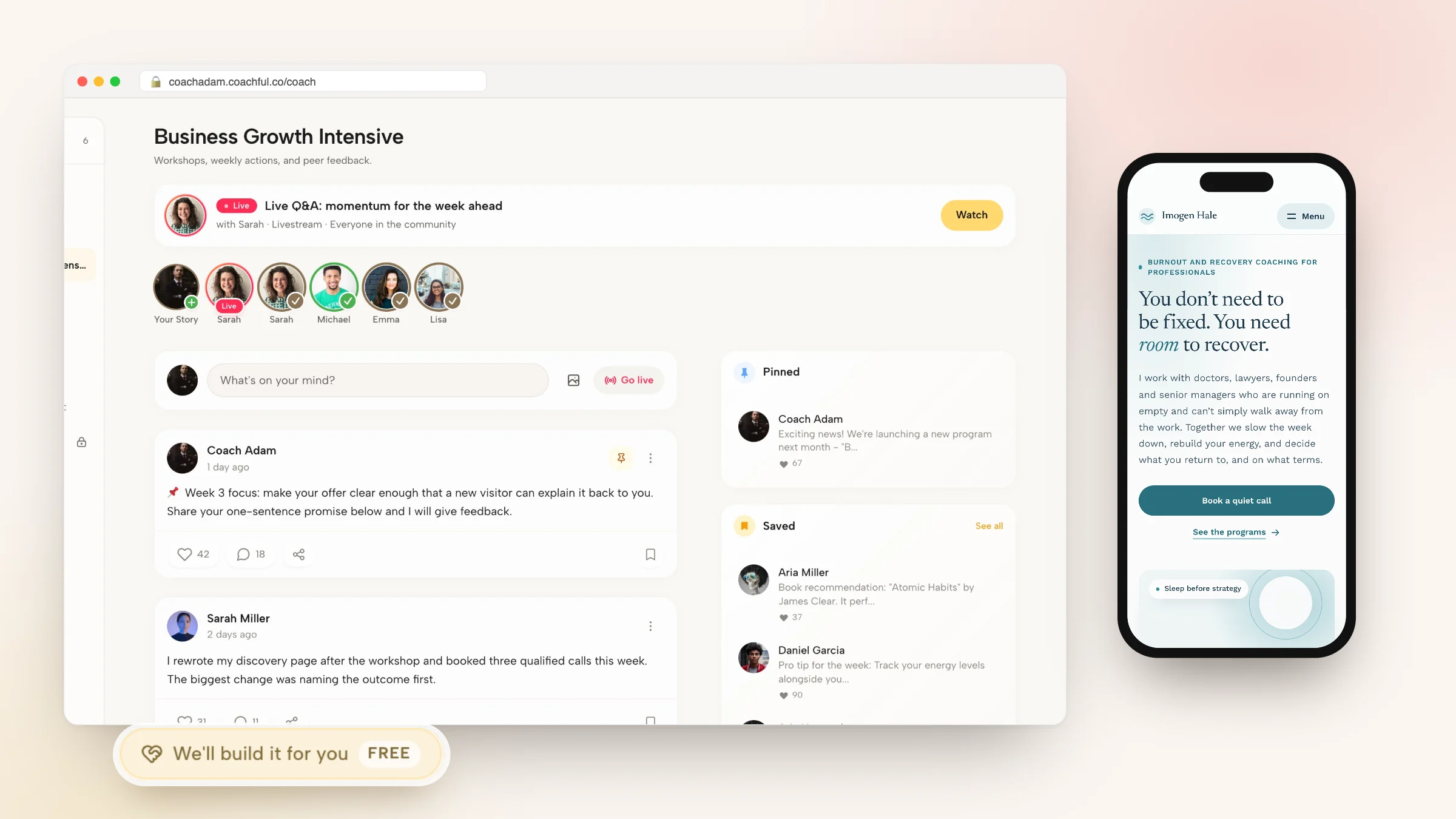
Use only four spaces at first:
- Welcome space with one clear instruction about what to do first
- Weekly action space tied to a shared goal or practice
- Discussion space for reflection and learning
- Consistent event rhythm members can count on
That's enough. More complexity usually becomes avoidance in a prettier outfit.
Practical rule: Don't build shelves for activity you haven't earned yet.
Pre-load the room so nobody walks into silence
Blank communities feel dead on arrival. New members won't know how to enter, so they wait. Then everyone mistakes hesitation for lack of interest.
Pre-load the space with:
- A welcome thread: Tell people where to start
- An introduction prompt: Make it specific, not “say hi”
- A wins thread: Give positive momentum a home
- A questions thread: Normalize asking for help
- A short orientation video: Explain how to use the space and what kind of participation is expected
A better intro prompt sounds like, “What are you committed to completing this month?” It gives members an immediate, focused action.
A useful companion read from another industry is Founder Connects' community insights. Startup communities and coaching communities face a similar design problem. People join for relevance, but they stay because the environment makes participation feel easy and worthwhile.
Prioritize connection over content
Often many good coaches undermine their own communities. They teach too much and connect too little.
If every post comes from you, members become an audience. If you make introductions, create prompts that surface shared experience, and help people recognize each other, members start building relationships that can hold the group up with you, not just around you.
A simple example:
- Don't post a long lesson on client retention.
- Ask, “What client pattern has tested your confidence lately, and what have you tried?”
- Then tag two members who work in adjacent niches and might help each other think.
That shift matters.
A little later, when members know what the room is for, bring in a live element like this:
Give the group a reason to come back
Momentum doesn't come from random posting. It comes from rhythm.
Use one dependable cadence such as:
- A weekly challenge
- A weekly check-in
- A monthly theme
- A recurring reflection call
- A member spotlight or hot seat
And define culture early. Coaches need permission to stop performing. That means naming what this room is and what it isn't. You can say, plainly, that the group exists for honest support, not lead generation. You can also set a norm like, “Disagree with ideas, not people.”
That kind of specificity makes it easier for the right members to relax.
Community Is a Practice Not a Destination
Most coaches approach community like a search problem. Find the right room, join it, and the loneliness should resolve. In real life, community behaves more like a practice.
You define what support you need. You test spaces carefully. You leave rooms that ask you to perform. You build relational habits, not just a contact list. Sometimes you join. Sometimes you create. Often you do both.
The four moves that matter most
If you want a clean way to remember the process, keep it simple:
- Define: Get honest about what kind of support is missing
- Discover: Look in smaller, more aligned places online and offline
- Evaluate: Protect your time, trust, and nervous system
- Build: If the right room doesn't exist, start with a pilot
That sequence works because it respects reality. Coaches don't need more random access. They need steadier connection.
Don't wait for perfect confidence
A lot of the resistance sounds reasonable. “I'm too busy.” “I'll do it when work calms down.” “I don't want to force it.” Sometimes that's true. Sometimes it's self-protection wearing professional language.
The better move is usually smaller. Send one message. Revisit one alumni group. Start one conversation with two peers you already trust. If you need ideas for creating a recurring return point in a group, some of the principles in develop your church's online presence translate well because they focus on consistency, belonging, and shared purpose rather than noise.
And if you do join or build something, don't expect community to form automatically. It needs repetition. It needs contribution. It needs someone to go first. This perspective on community engagement strategy is a useful reminder that spaces stay alive when people have a clear path to participate, not just a place to observe.
Start before you feel fully ready. Belonging usually follows participation, not the other way around.
Pick one small action today. Not five. One.
The coach who supports everyone else still needs somewhere to land.
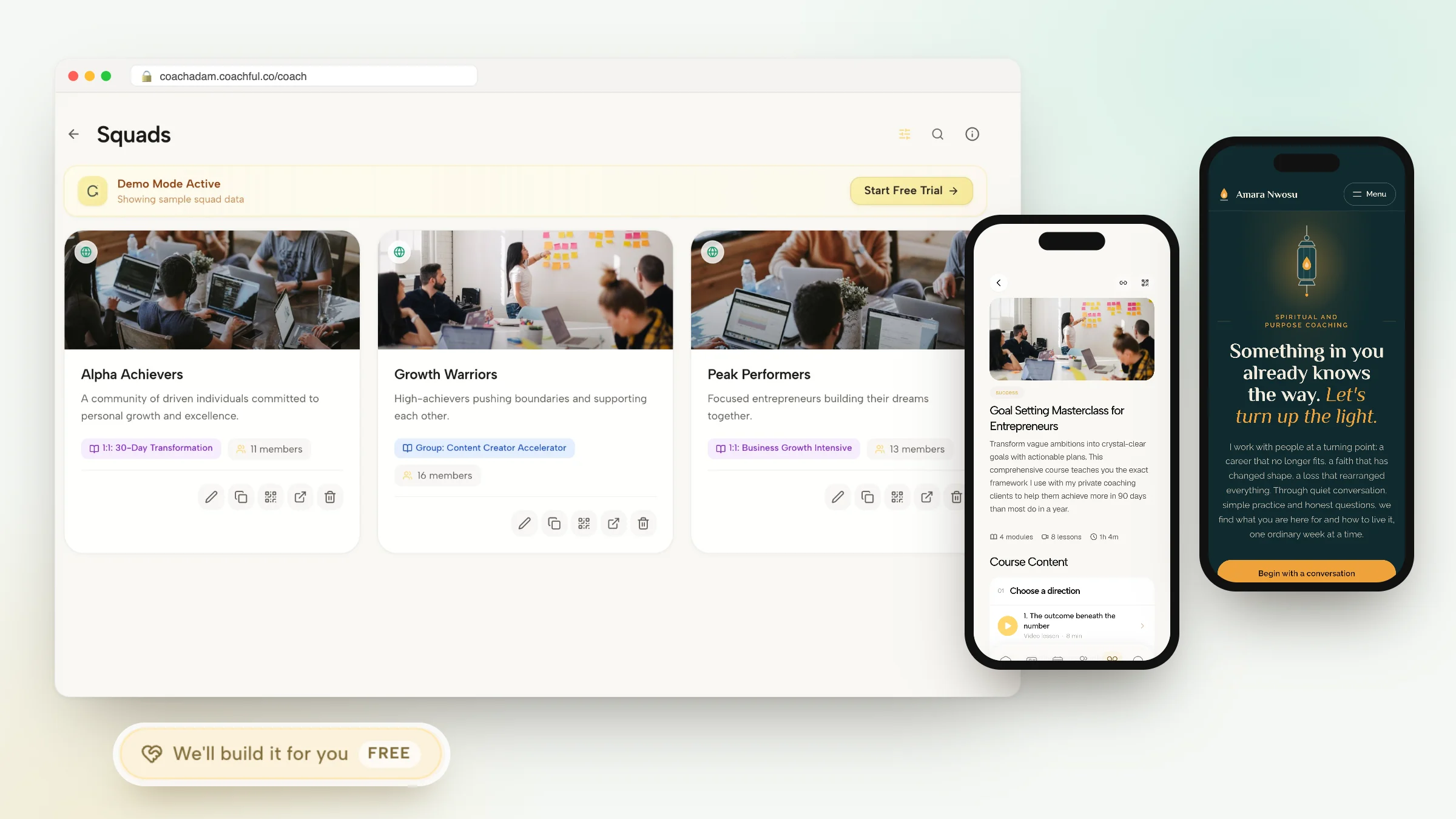
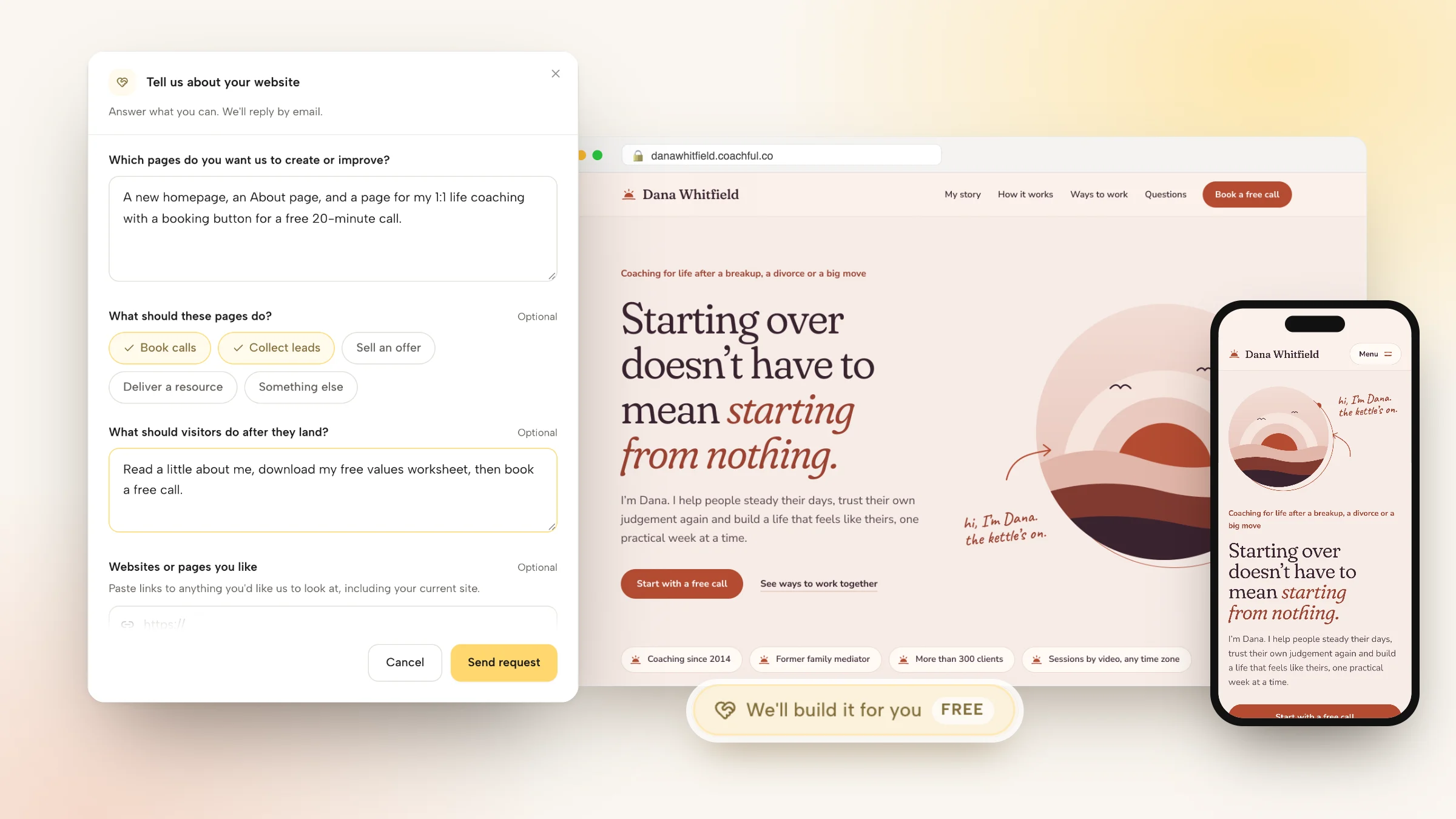
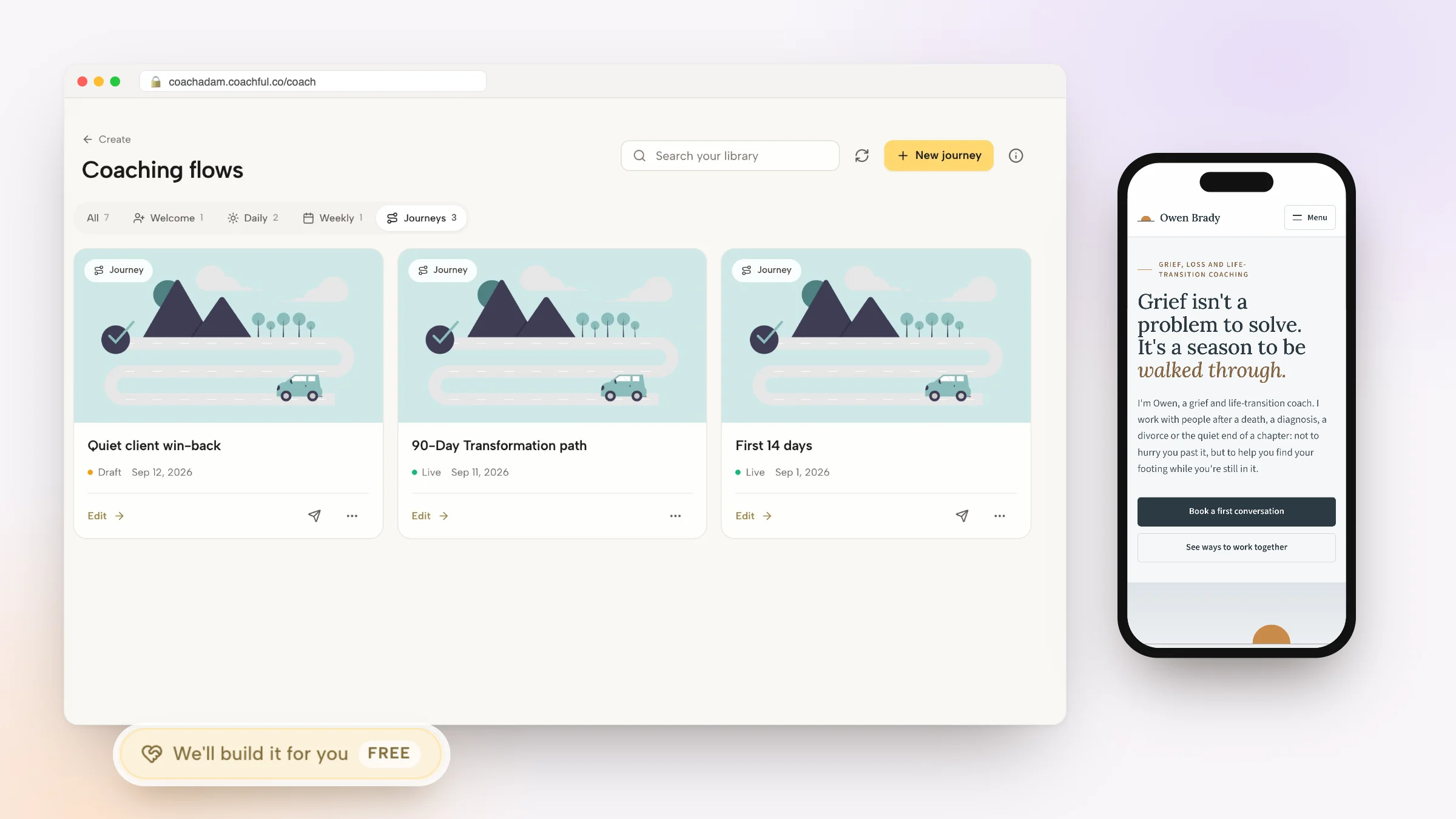
If you're building a coaching practice that includes programs, cohorts, or community touchpoints, Coachful gives you one place to organize the client journey without stitching together separate tools. It helps coaches manage structure, communication, and momentum so the support you offer feels clear on both sides of the relationship.