Testimonial Consent Form for Coaches: Template and 7 Checks

Nour
Founder, Coachful
A client sends a lovely message after coaching. Can you put it on your website? Not just because they sent it. A testimonial consent form should identify the exact words, the attribution, the media and the publication channels the client is agreeing to, then give them a workable way to change that decision.
Approval of a quote is not approval of every possible use. A client can be comfortable with a first-name website quote and uncomfortable with their photograph in a paid advertisement. Your process should preserve that distinction instead of flattening it into one enthusiastic yes.
This guide gives coaches an original permission template, a filled hypothetical example and seven practical checks. It is an operational starting point, not legal advice or a promise that a particular form meets every privacy, advertising, contract or professional requirement. Get qualified advice for your jurisdiction and circumstances, especially for sensitive information, minors or corporate clients.
What belongs in a testimonial consent form?
Include the practice requesting permission; the final quotation or attached version; the client's chosen public attribution; separate choices for photographs, audio and video; named publication channels; the intended duration; editing boundaries; relevant connections or incentives; a withdrawal contact; and a dated record of the client's choices.
Do not collect a birth date, home address or identification document simply to make the form look official. Collect what you need to administer the permission and explain how that information will be handled. Permission to publish a testimonial is separate from permission to send a newsletter.

A testimonial consent form template for coaches
Replace the brackets before sending this. Remove unused choices, show the actual material and do not preselect yes. This version addresses a written quotation; add a properly described, separately reviewed release if you want to capture or distribute audio or video.
Testimonial publication permission
Practice and contact: [legal or trading name, coach name and contact email].
Client and reference: [client name, private contact and permission reference].
Document version: [version and date].The material: I have reviewed this exact proposed quotation: “[insert the final words, or identify an attached version that the client can open].” It describes my own experience accurately. I may decline publication even if I previously provided feedback.
Public attribution: My chosen display is [exact full name / first name / role-only wording / no public attribution]. The wording that will appear is [exact text]. [Explain any remaining risk that the story itself could identify the person.]
Photograph and other identifying details: [Agree / do not agree] to use [identify the particular photograph]. [Agree / do not agree] to display [specific role, employer or other detail]. Remove any option you are not requesting. This form does not authorize new recording or use of my voice.
Where it may appear: I make a separate choice for each proposed use: [named practice website and pages: agree / do not agree]; [named organic social account: agree / do not agree]; [practice marketing emails: agree / do not agree]; [identified paid advertising use: agree / do not agree]; [specified printed material: agree / do not agree]. Uses not described here require another permission request.
Timing and edits: The agreed use runs from [start] to [end or a clearly explained review arrangement]. The practice may [describe permitted formatting or minor correction]. A change to meaning, attribution, image, channel or scope will be returned to me for approval. My statement will not be presented as a guaranteed result for other clients.
Connections and incentives: [Record any free or discounted service connected to the endorsement, payment, employment, family relationship or other relevant connection; or record the client's factual response that none applies.] The practice will assess and include any required disclosure. No reward depends on a positive statement.
Changing my decision: Contact [working email or other accessible route]. The practice will [describe its actual acknowledgment and removal process and timing]. It will explain any limits involving already distributed print, third-party copies, archives or other material outside its control. This does not limit applicable legal rights.
Optional choice and records: Declining this optional marketing permission will not affect [the coaching service or other arrangement, accurately described]. [Link or provide the relevant privacy information, including actual handling and retention of this permission record.]
Confirmation: I have seen the material and information above, had an opportunity to ask questions and made the choices recorded here. [Client confirmation, date and the signature or acknowledgment appropriate to this situation.] [Practice confirmation and date.] A copy of the completed details will be provided to me.
Do not replace your privacy notice with this template. It also does not settle copyright ownership of a photograph, employer approval to use a logo, advertising substantiation or the legal validity of a signature process. Those are separate checks.

1. Approve the exact quote, not a future marketing idea
“You can use my feedback” leaves too much room for interpretation. Send the final quotation with the proposed attribution and enough surrounding context to make the use understandable. Keep the original response as well as the approved edit.
For example, a client writes: “The sessions helped me prepare for a promotion conversation. I haven't heard the decision yet.” Removing the second sentence and adding a promotion headline would change what a prospective buyer understands. A real quote can still become a misleading advertisement through its placement.
The FTC's endorsement guidance says endorsements must be honest and not misleading and cannot make claims the advertiser could not legally make directly. Client permission does not remove that responsibility. Exceptional results also require careful treatment; a casual “results vary” is not a universal solution.
Our testimonial formats guide covers how to structure useful client accounts. This article answers a different question: which particular uses have actually been authorized after the words are ready?
2. Separate identity, media and distribution choices
One checkbox should not silently combine a quotation, headshot, company name, Instagram post and advertising campaign. These choices expose different information to different audiences. Make the distinctions visible without forcing the client through an enormous questionnaire.
A practical starting point is a written quote on a named website with the client's chosen attribution. Ask about another channel when you genuinely plan to use it. You do not need speculative permission for every platform you might open someday.

First-name-only is not automatically anonymous. “A finance director at the only hospital in a small town” may identify someone even without a name. Review the story, role, dates, industry and photograph together. For sensitive coaching work, no public story may be the right decision.
A client also may not have authority to approve their employer's name, logo or confidential business information. Ask what organizational permission is required rather than treating an individual's agreement as corporate authorization. An employer paying for coaching does not own the client's private experience.

3. Keep the request optional, including for happy clients
People can feel obliged to help a coach they like. Avoid making publication permission a condition of finishing a program, receiving their resources or obtaining a useful reference. Say clearly what will remain unchanged if they decline, and only promise what is true.
Try this short request: “Thank you for sharing that feedback. Would you be comfortable reviewing a possible website quote? You can say no, choose a limited attribution or approve the website use without agreeing to social media. It will not affect our coaching.”
Do not turn a feedback questionnaire into a hidden testimonial release. A client should be able to tell you that a worksheet was confusing without authorizing a public quote about the program. Keep service evaluation and marketing permission recognizably separate.
If you offer a benefit, do not condition it on positivity. Evaluate the applicable review-platform rules and disclosure requirements before offering any incentive. A private approved testimonial and a public review request are related activities, not interchangeable permission systems.
4. Show a realistic filled example
The following is hypothetical, not a real Coachful client story or a legally approved release. It demonstrates a limited permission you could actually administer.
- Material: “The sessions helped me prepare an agenda and ask for clearer priorities in our weekly meeting.” Version Q2, reviewed by the client.
- Attribution: “Career coaching client.” No name, employer, headshot or job title.
- Approved placement: the practice's career-coaching services page and homepage.
- Not approved: social accounts, email campaigns, proposals, printed brochures or paid advertising.
- Review: the practice will revisit use after twelve months, under the arrangement explained to the client.
- Changes: formatting is allowed; a different quotation or broader distribution requires renewed approval.
- Contact: the practice's monitored contact address, with its actual removal procedure.
- Connection: document the factual answer about relevant relationships or incentives and assess the disclosure needed.
Notice the missing revenue figure, promotion claim and employer logo. None is necessary to explain the client's experience. If the coach later wants to put this on a conference slide, the existing website permission does not answer that new request.

5. Keep a permission register that answers real questions
A folder called “nice things clients said” is not a publication record. You need to know what can be used today, where it already appears and which version the client saw. A small controlled spreadsheet or record system can be enough if access, retention and security suit the information.
Use fields for the permission reference, private client identifier, approved quote version, exact attribution, permitted media, permitted channels, response date, expiry or review date, original evidence location, relevant disclosure, live placements and withdrawal status. Record a refusal or a narrowed choice clearly rather than leaving a blank cell that someone might interpret as approval.

For each live placement, save its URL or document reference. “Website” is less useful than “homepage quote block, services page quote two.” Include scheduled creative or draft campaign files in your internal removal search, even if they have not been published yet.
Protect the original record. Do not give every contractor access to private coaching notes just because they need an approved quotation for a landing page. Share the approved marketing asset and the relevant use limits, not the entire client history.

6. Treat withdrawal as an operating task, not an awkward email
A client may change roles, become more private or simply stop wanting a public association. Make it easy to contact you. The handling and legal consequences depend on the applicable rules, but an inaccessible inbox and an unsearchable asset library help nobody.
When a request arrives, identify the quote and placements; pause new uses within your control; acknowledge the request; remove or amend controlled placements according to the actual requirements; and record what you did. Ask relevant contractors or partners to act on copies they manage. Tell the client honestly about limits rather than promising to erase the internet.
For UK GDPR consent, the ICO's guidance on obtaining, recording and managing consent explains granular choices, evidence and withdrawal. Do not assume a broad contractual release overrides data-protection rights. Have your actual process reviewed where necessary.
Your permission evidence may need a different retention decision from the public marketing asset. Do not keep everything indefinitely “just in case,” and do not delete the evidence without considering legitimate recordkeeping requirements. Document an appropriate policy with professional advice.

7. Recheck permission when the use changes
A website redesign may preserve the original use, or it may materially change the story. A quote moved from a general biography to a page promising a particular income outcome needs a new accuracy review, not merely a designer's approval.
Recheck when you change the meaning, add a photograph, identify an employer, launch paid distribution, substantially change the offer or encounter a client concern. Include the quotation in your routine content review so an old endorsement does not imply an experience with a service the client never received.
Do not use a session recording as a shortcut to a video testimonial. Permission to record private coaching and permission to distribute an identifiable promotional clip are different decisions. Ask separately before creating the public asset and describe the intended extract and audience.
Test the permission path before asking a client
Run one dummy response through your actual process. Can the person decline a photograph, approve website use only and keep their name private? Can you retrieve the exact version they saw? Can you find every place the resulting quote was used?
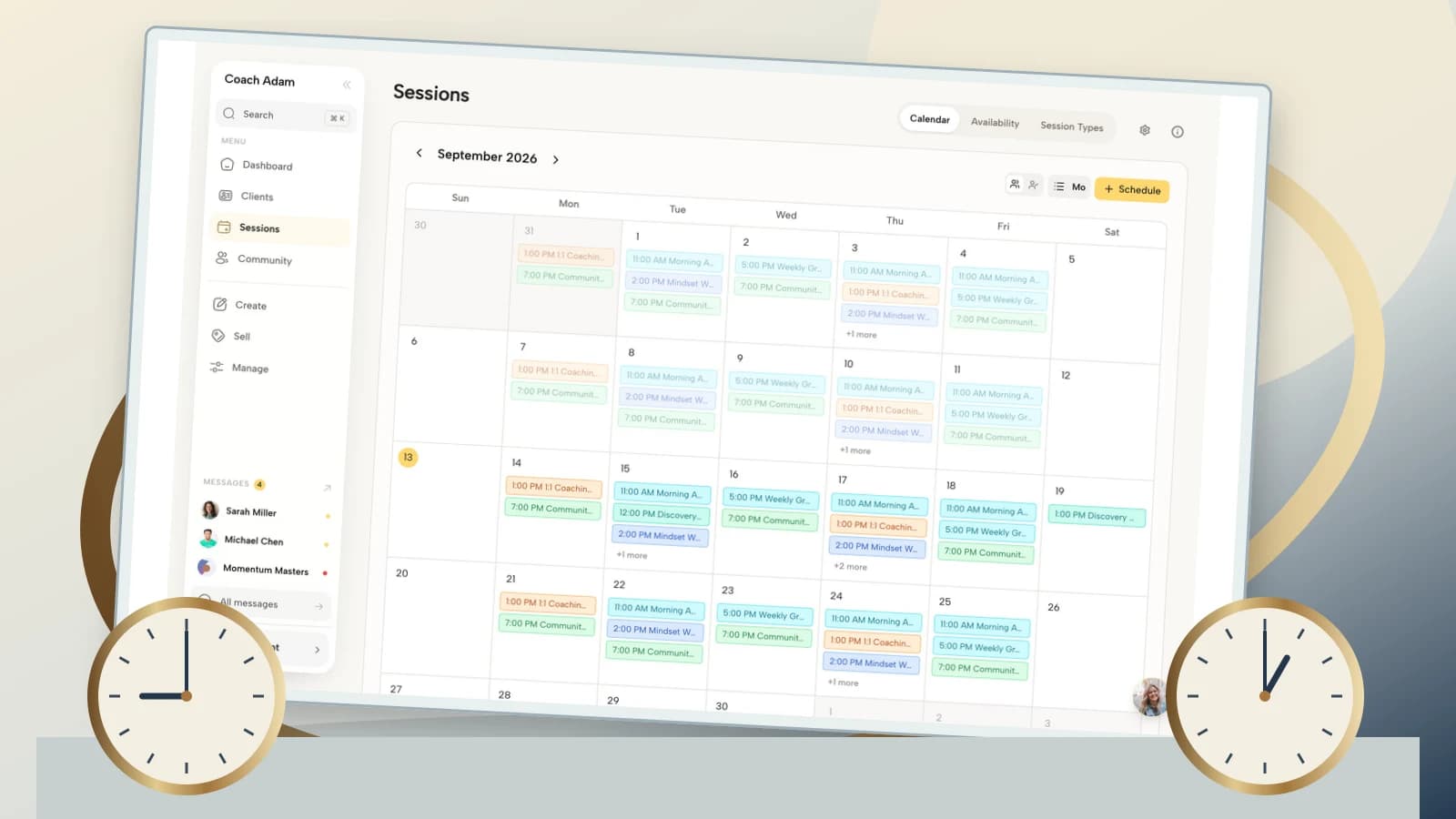
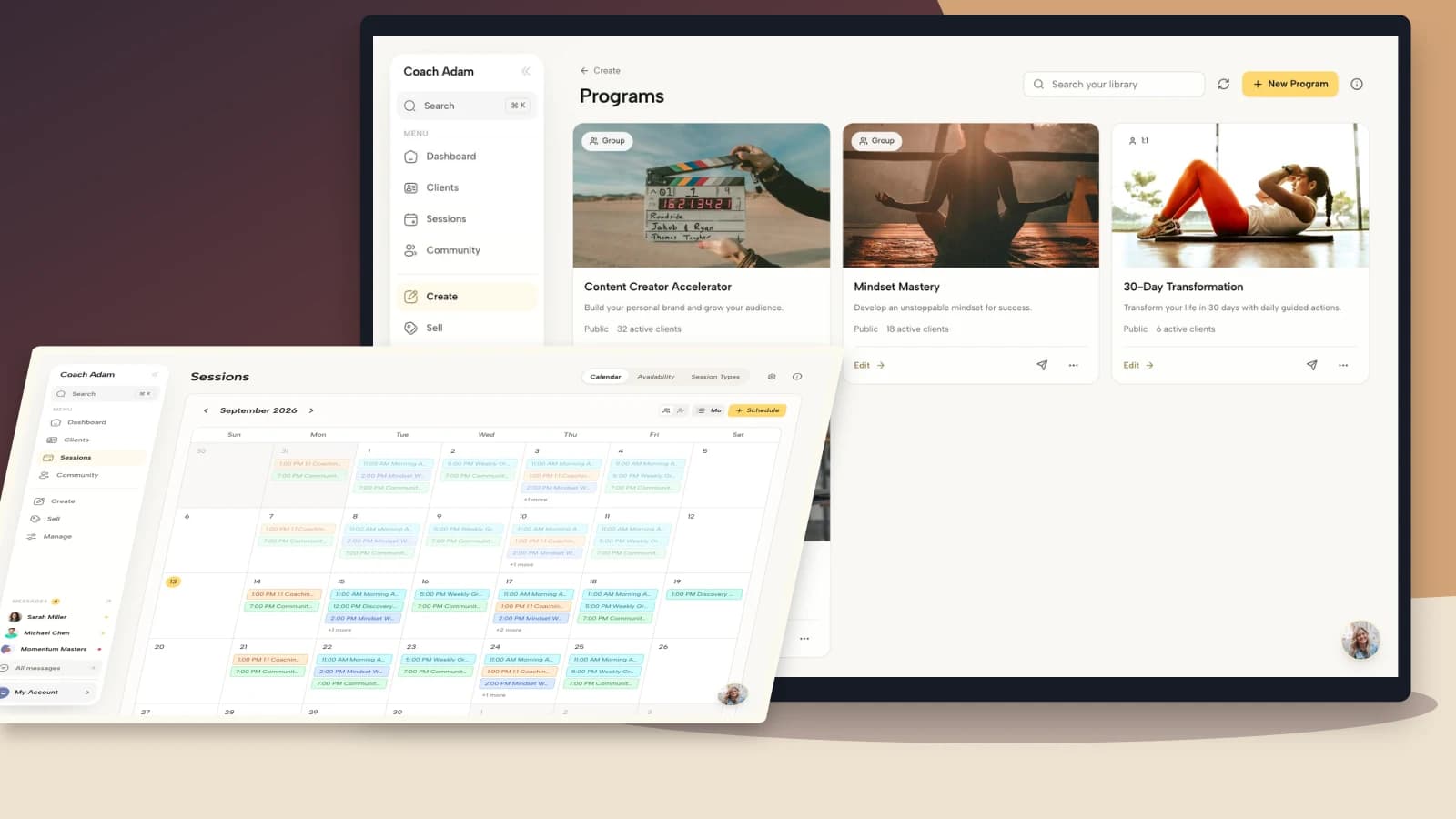
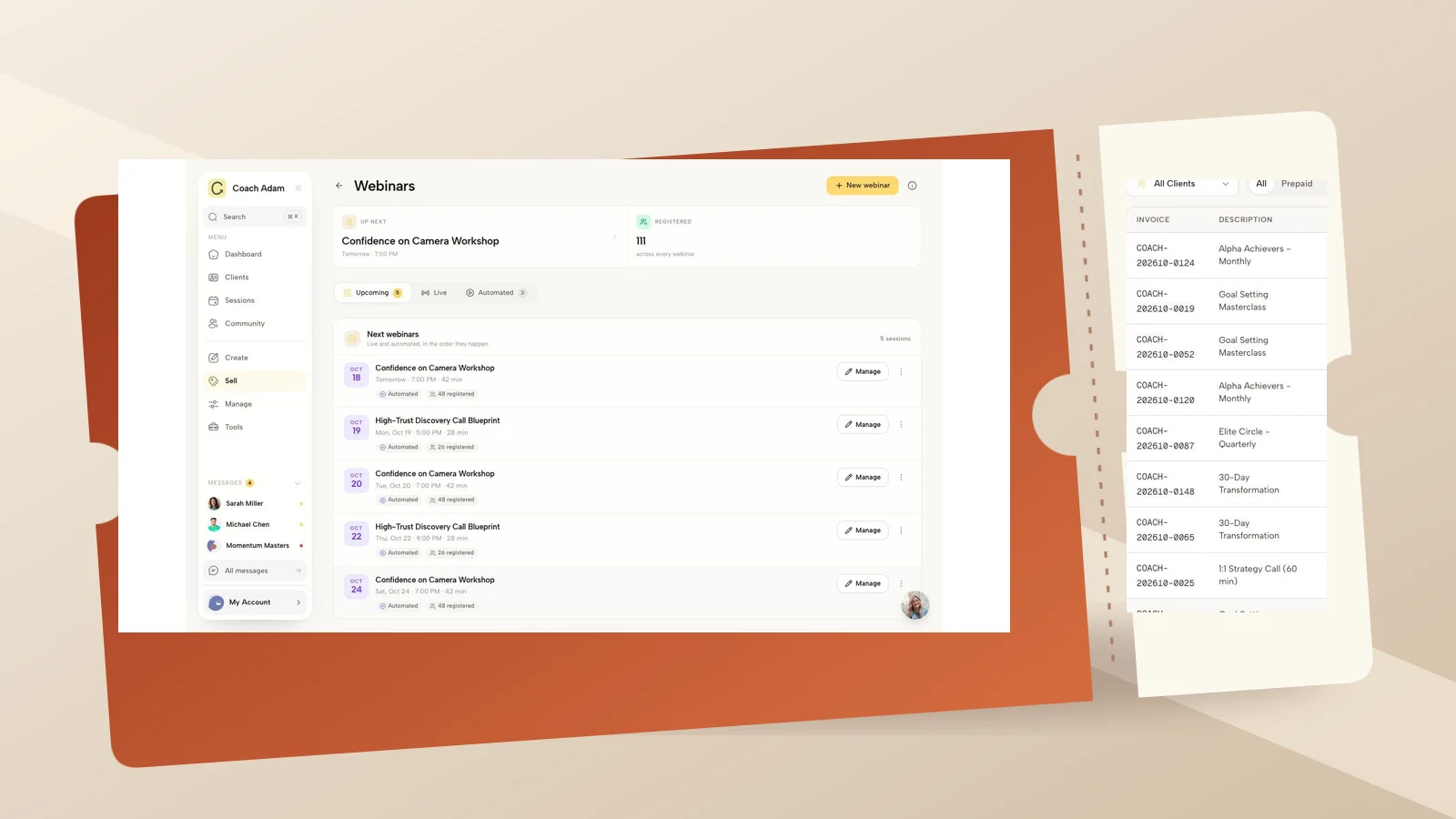
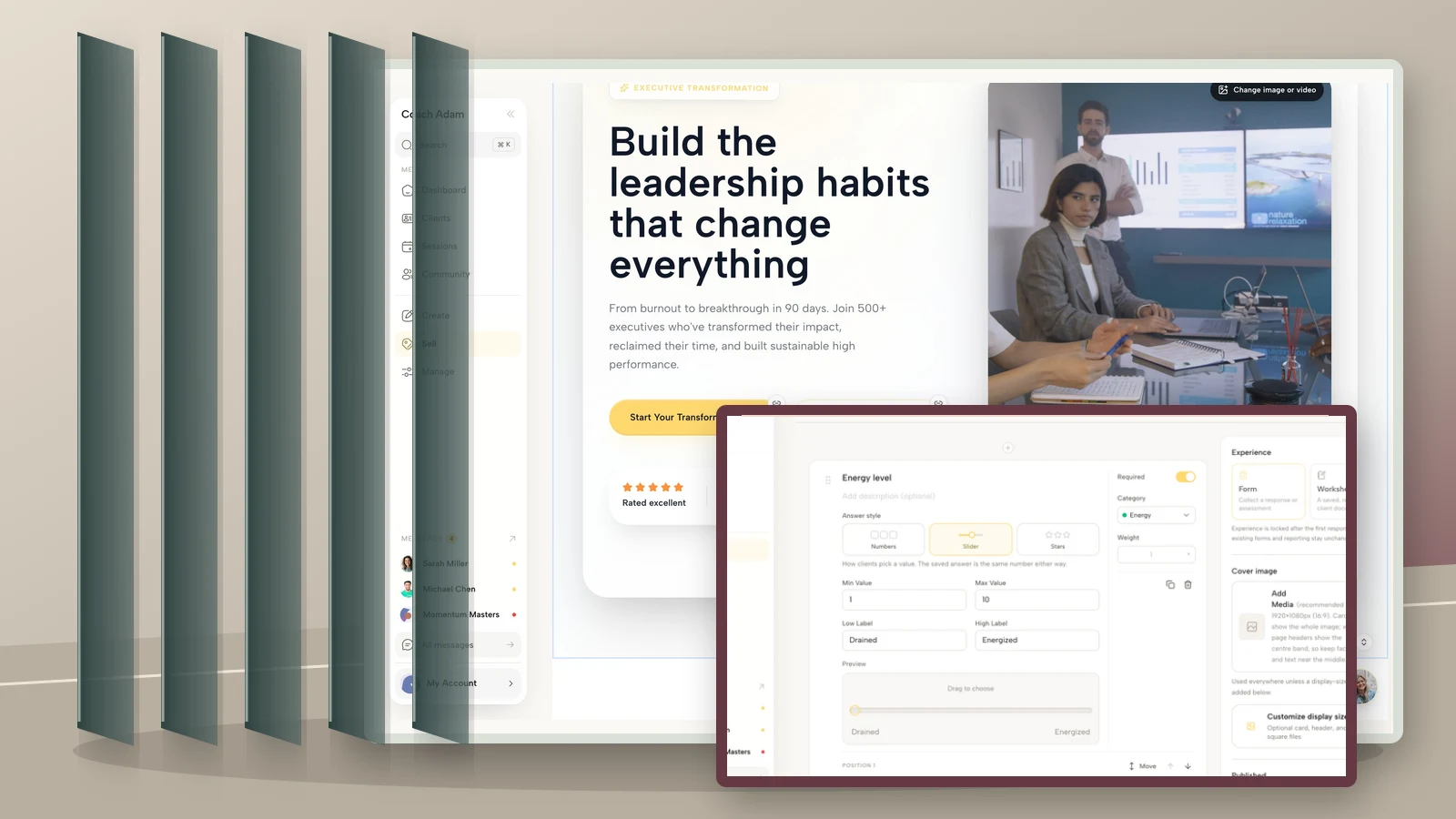
Coachful's demo shows form building, client communication, client management and website editing. The screenshots here show those real surfaces, not a built-in legal release, verified signature system or demonstrated automated consent register. Your legal wording, permission evidence and publication controls still need deliberate setup.
If those are the next pieces you need to test, try the interactive Coachful demo. Walk through collecting a choice, communicating its limits and placing an approved quote. Keep publication out of the test until the full path makes sense.
Common questions about testimonial permission
Can I use a client's private message as a testimonial?
Ask before turning it into marketing. Show the precise quotation, attribution and proposed placements. A friendly message to their coach is not automatically a decision to address prospective clients publicly.
Is an email reply enough, or do I need a signature?
There is no universal answer for every location or situation. What matters operationally is preserving the information presented, the person's identity and actual choices, and the time and version involved. Confirm the acknowledgment or signature requirements that apply to your use.
Can I publish an anonymous testimonial without asking?
Do not treat removing a name as blanket permission. The content may remain identifiable, confidential or sensitive. Seek specific agreement to the intended public version and review the remaining identification risk.
Does consent let me publish any result the client claims?
No. Permission and advertising accuracy are separate checks. Investigate the claim, preserve context, assess relevant disclosures and do not present an unusual experience as a guaranteed or generally expected coaching outcome.
The useful rule is deliberately modest: publish the version the person reviewed, only in the ways they chose, and keep enough evidence to honor that choice later.