Template of a Testimonial: 6 Formats Coaches Can Copy

Coachful
You're staring at a blank message to a client who had a good experience. You want to ask for a testimonial, but you don't know how to make the request specific without making it feel pushy. What if they say something vague? Will this feel like bragging? And even if they send something positive, will a prospect believe it?
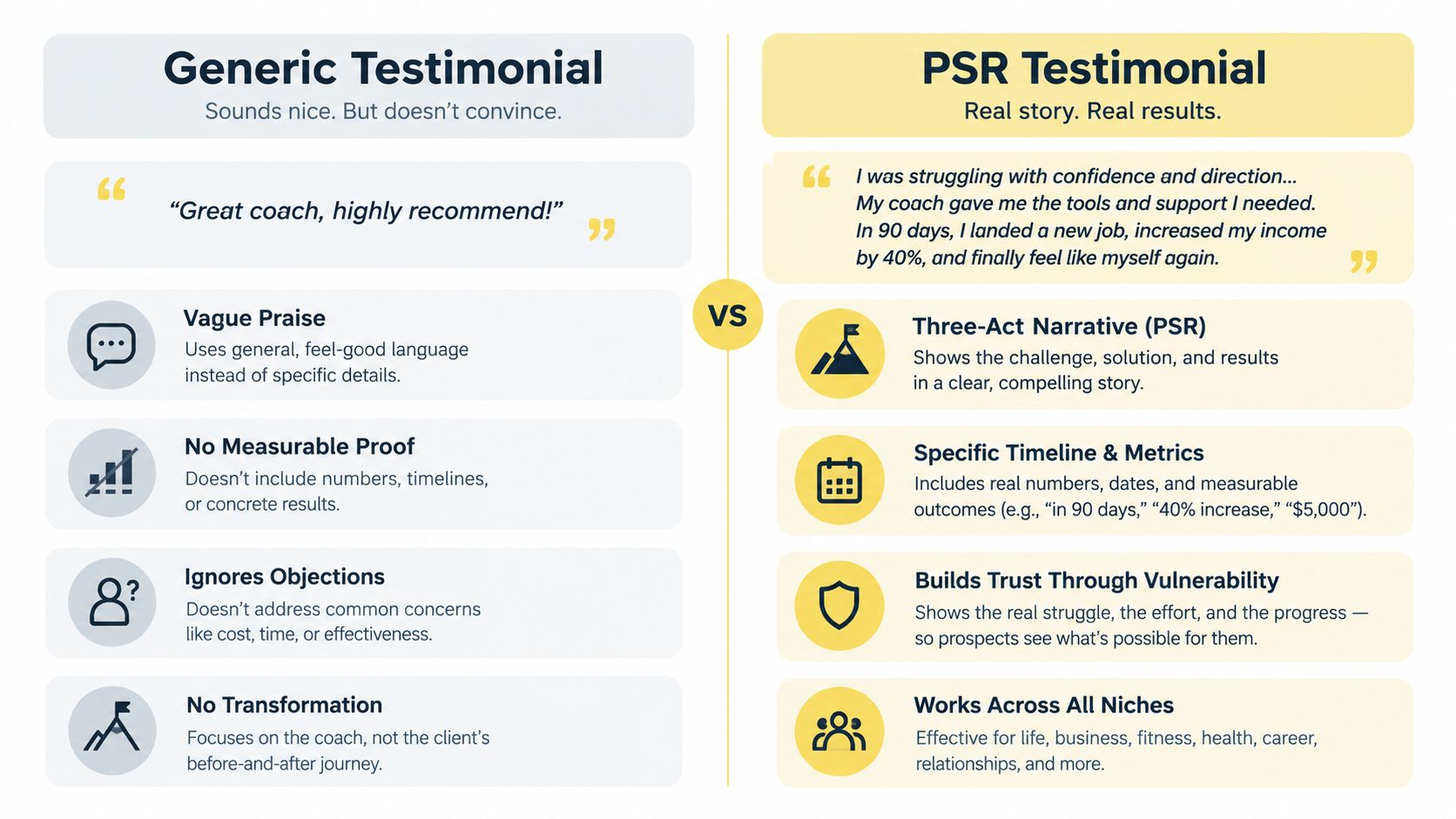
A blank prompt usually produces a blank-sounding testimonial. “Great coach, highly recommend” may be sincere, but it doesn't show a reader what changed, how the coaching worked, or whether the experience relates to their situation. A strong customer testimonial format gives the client a useful path to follow.
The six formats below answer different prospect doubts. Each includes a copyable script, the inner objection it addresses, client questions that uncover useful details, and a Coachful workflow step that makes collection and reuse easier.
1. The Problem-Solution-Results Testimonial
A prospect usually wants three answers before trusting a coaching testimonial: Did this client have a problem like mine? What did the coach do? What changed afterward? The problem-solution-results format answers all three without asking the client to write a polished case study from scratch.
Practical rule: Ask for the client's experience in sequence, not for praise. Sequence creates evidence.
Copyable script
“Before coaching, I was dealing with [specific problem or baseline]. I chose [Coach Name] because [reason for choosing the coach]. Together, we [specific process, tool, or action]. Over [time period], I [measurable or observable result]. The biggest change was [practical or personal impact]. I'd recommend this coaching to someone who [relevant situation].”
A business coach might receive: “Before coaching, I was losing track of client follow-ups and spending too much time on administration. I chose my coach because she helped me turn a vague growth goal into a weekly operating system. Together, we created a structured accountability process and tracked the work in Coachful. Over the first quarter, I had a clearer workflow and more consistent follow-through. I'd recommend this coaching to a business owner who feels busy but isn't making reliable progress.”
The wording stays specific without promising that every client will get the same outcome. That matters because the FTC's endorsement guidance says an endorsement must reflect the client's honest experience and can't make a claim the coach couldn't legally make directly.
Questions that produce a usable story
Ask:
- Starting point: “What was happening before we began?”
- Choice: “Why did you decide to work with me?”
- Process: “What specific tool, framework, or action helped?”
- Timeline: “When did you first notice a change?”
- Evidence: “What changed in your behavior, workflow, confidence, or results?”
- Relevance: “What would you tell someone who feels too far behind to change?”
Keep session notes and progress records beside the testimonial request. Coachful's website testimonial and case study tools can help you organize approved statements for future reuse. Don't turn private notes into marketing copy without permission. Ask the client to confirm any dates, figures, and wording before publishing.
The structure is also useful in a short video. Give the client the same three prompts, then let them answer naturally rather than reading a sales script.
2. The Specific Outcome Testimonial
Some prospects don't need a full journey first. They need proof that coaching helped produce a concrete outcome relevant to their decision. This format isolates one meaningful result, then adds enough context to keep the number or achievement from sounding inflated.
Copyable script
“I worked with [Coach Name] to [goal]. Before coaching, [baseline or situation]. After [time period], I [specific result]. The coaching helped because [specific action or process]. This mattered because [broader effect].”
An executive client might write: “I worked with my coach to prepare for a larger leadership role. Before coaching, I struggled to communicate my priorities clearly in senior meetings. After six sessions, I clarified my target role, rewrote my leadership résumé, and applied for three director-level positions. The coaching helped because each session ended with a practical decision and next step.”
That example is stronger than “My career was transformed.” It gives the reader a timeframe, actions, and observable progress without implying that one client's experience is guaranteed for everyone.
A financial or health-related outcome needs extra care. Don't pressure a client to disclose revenue, weight, medical details, or employment information just because a large number looks persuasive. Use a role-only attribution or anonymize the statement when that better protects privacy.
The questions to ask before publishing
- “What was the single biggest outcome from our work?”
- “What was the baseline before we started?”
- “What changed, and how do you know?”
- “What timeframe should we state?”
- “May we publish this metric?”
- “What other factors contributed during the same period?”
The last question protects against overstating causation. If a client changed their offer, hired staff, or began another program at the same time, the testimonial should not imply coaching alone created every result.
For collection, use Coachful's guidance on getting coaching client testimonials to prompt the client for their biggest win and who would benefit. Store the original response and the approved edit separately. The FOMOchat case-study advice also supports treating the outcome as part of a broader evidence-based story, rather than displaying a number without context.

3. The Niche-Specific Objection-Buster Testimonial
“I don't have time.” “I've tried coaching before.” “The investment feels too high.” “I'm too far along to change.” These objections aren't writing prompts, but they're excellent filters for choosing the right client to interview.
The objection-buster format works when the client names the hesitation plainly, then explains what happened after trying the coaching. Don't make the client sound foolish for having the concern. A skeptical prospect needs recognition before reassurance.
Copyable script
“Before working with [Coach Name], I was hesitant because [specific objection]. That concern was real because [context]. During coaching, we [specific process]. I discovered [relevant change or result]. If you're worried that [objection], I'd say [client's honest advice].”
A business coach could use: “Before working with my coach, I was hesitant because I thought I was too busy to add coaching. That concern was real because I was already handling clients, sales, and administration. During coaching, we identified low-value activities and built a clearer weekly process. I recovered time and became more deliberate about what I accepted. If you're worried that coaching will add another obligation, ask how the process fits into your actual workload.”
That feels credible because it doesn't dismiss the concern. It shows how the client evaluated it.
Match the prompt to the doubt
Start by listing the objections you hear during consultation calls. Then find clients who expressed those concerns before enrolling. Ask:
- Hesitation: “What were you unsure about before we started?”
- Experience: “What made that concern real in your situation?”
- Change: “What happened that altered your view?”
- Advice: “What would you tell someone with the same concern?”
- Boundary: “Who might not be a good fit for this coaching?”
That final question adds credibility. A testimonial doesn't need to claim that your offer suits everyone. In fact, a clear limitation can help the right prospect recognize themselves.
The FTC's Consumer Reviews and Testimonials Rule guidance says businesses should act on red flags suggesting that a testimonial may be fake or false. Keep the client's original response, disclose incentives or material connections clearly, and don't edit away the uncertainty that made the story believable.
4. The Peer-to-Peer Recommendation Testimonial
A prospect says, “You seem good, but would someone like me recommend you to a colleague?” That is the job of this testimonial. It is less about broad praise and more about professional trust. I use it when the buyer wants a signal from a peer who knows the pressure of the role and can judge whether the coaching process would hold up in real work.
Here is the version clients can fill in:
“I would recommend [Coach Name] to [type of professional] who need [specific kind of help]. What stood out to me was [specific differentiator in the process]. Our work helped me [practical result or change], and I'd feel comfortable referring someone who is [clear fit] and wants [clear outcome].”
The line that matters most is the fit. A recommendation with no boundary sounds polite. A recommendation with a clear referral profile sounds real.
For example: “I would recommend [Coach Name] to independent consultants who are doing good work but losing clarity once projects stack up. What stood out to me was the mix of direct questions and practical accountability. Our work helped me make decisions faster and leave sessions with one next move. I'd feel comfortable referring someone capable, experienced, and overloaded, who wants a steadier operating rhythm.”
This format also answers a quiet objection many coaches have: “I do not want to pressure clients into endorsing me like an industry authority.” Good. Do not ask for that. Ask for a grounded referral statement based on lived experience. A client does not need to present themselves as an expert on coaching. They only need to say why they would, or would not, put your name in front of someone they know.
The prompts can sound more like a conversation than a questionnaire:
“Who in your network would this coaching suit?” “What would you say if a colleague asked whether I was worth talking to?” “What part of the process would you mention first?” “Who would you hesitate to refer, and why?” “Would you be comfortable using the words ‘I recommend'?”
That last question matters because some clients are happy to describe results but not ready to make a direct recommendation. Respect that difference.
Coachful can help at the collection stage because you can save the original wording, then pull out short referral lines later for a website, proposal, or sales page. If you want to see how recommendation language works in practice, this social proof example from Coachful shows the difference between vague praise and a firsthand endorsement.
Use titles, company names, photos, and full names only with permission. In some professional situations, a lighter attribution is the safer choice.
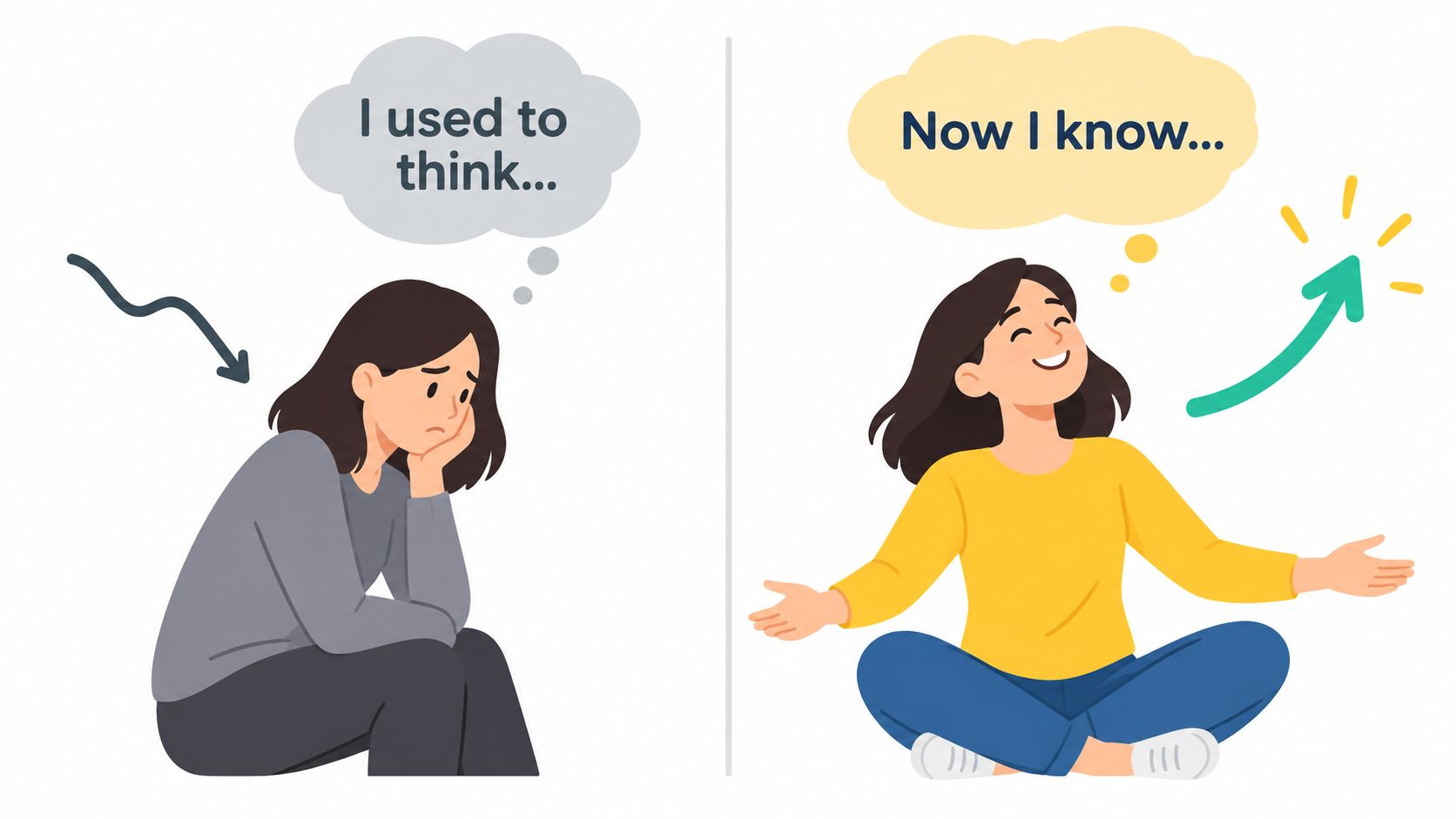
5. The Before-and-After Mindset Shift Testimonial
A client can leave coaching without a dramatic promotion story or a neat business metric, yet still describe a change that matters more. They think differently, and because they think differently, they act differently. That is what this testimonial should capture.
Copyable script
“I used to think [limiting belief]. Through [specific coaching work], I began to see [new perspective]. That shift helped me [specific action or behavior]. I'm now [observable change], although I'm still working on [honest limitation].”
Used well, this format answers a quiet coach objection: “If the result is internal, will it sound vague?” It will, unless the statement links belief to action. The shift is not “I feel better.” The shift is “I stopped waiting for permission and started doing something I had delayed.”
A life coaching version might sound like this: “I used to think I wasn't good enough for the opportunities I wanted. Through values work and structured decision-making, I began to see that I could create opportunities instead of waiting for permission. That shift helped me apply for roles I would previously have dismissed. I'm more willing to act on clear priorities, although confidence is still something I practice.”
That last line matters. A testimonial becomes more believable when the client names progress and the part that is still in motion.
Instead of dropping straight into a standard questionnaire, use a short progression in conversation. Start with identity, then belief, then behavior.
Ask:
- “How were you interpreting your situation before coaching?”
- “What story were you telling yourself at the time?”
- “What changed in how you saw yourself or your options?”
- “Which conversation, exercise, or moment contributed to that change?”
- “What did you do differently because of it?”
- “What still takes effort?”
These questions surface the mindset shift without turning it into therapy language or inflated transformation copy. If a client says, “I feel more confident,” keep going. Ask what that confidence changed in practice. Maybe they led a difficult meeting, set a boundary, made a decision faster, or put themselves forward for an opportunity they had been avoiding.
Coachful is useful here at the collection stage because it lets you keep the client's original wording, then reuse the clearest line later in a website testimonial, proposal, or sales page. If you publish the testimonial publicly, get permission before quoting or paraphrasing private material. If you share it as video, include captions and a readable text version. The testimonial design guidance from Testimonial.to covers practical presentation details such as accessible text, contrast, keyboard navigation, and screen-reader-friendly layout.
6. The Unexpected Bonus Benefit Testimonial
A client hires you for one problem. Then the line they end up writing is about something they did not come to fix.
That can be one of the most persuasive testimonials you collect, because it answers a quiet objection many prospects have but rarely say out loud. Will this work only in the narrow area we discuss, or will it change how I operate more broadly? The key is restraint. The bonus benefit has to be a believable consequence of the work, explained in the client's own terms.
Use a script like this:
“I started coaching with [Coach Name] because I wanted to [primary goal]. I expected [initial expectation]. What surprised me was [secondary benefit]. As I worked on [specific area], I noticed [observable change elsewhere]. I think that happened because [client's explanation].”
For example: “I started coaching because I wanted a more reliable business development process. I expected better planning. What surprised me was how much more present I became with my family. As I clarified priorities and stopped carrying every task in my head, I had more attention for conversations at home.”
The strength of this format is the connection. If the client cannot explain why one change affected another, the testimonial starts to sound broad and vague. Prospects notice that.
I usually hear one hesitation behind this format from coaches: “I do not want to make claims that sound inflated.” Good. That instinct helps. Keep the focus on what the client personally noticed, not on sweeping transformation language, and ask for concrete links between the original goal and the side benefit.
Instead of a standard question list, use a short sequence in conversation: “What did you come in wanting?” “What did you expect the work to help with?” “What changed that you did not expect?” “Where did that show up in daily life or work?” “Why do you think that happened?” “What is still hard?”
That sequence produces better material because it moves from the stated goal to the surprise, then tests whether the client can make the story credible.
Be careful with sensitive categories such as family, health, or relationships. Let clients choose what feels safe to share. Offer role-only attribution, a pseudonym, or an anonymous version if a real name would expose more than they want.
Coachful helps at the workflow stage. Store the raw quote, the cleaned edit, the approval status, and the channels you have permission to use. The FTC's endorsement and testimonial guidance is a useful reference on honest experiences, atypical results, and material connections. A polished testimonial should still sound like the client.
7. The Long-Term Sustainability Testimonial
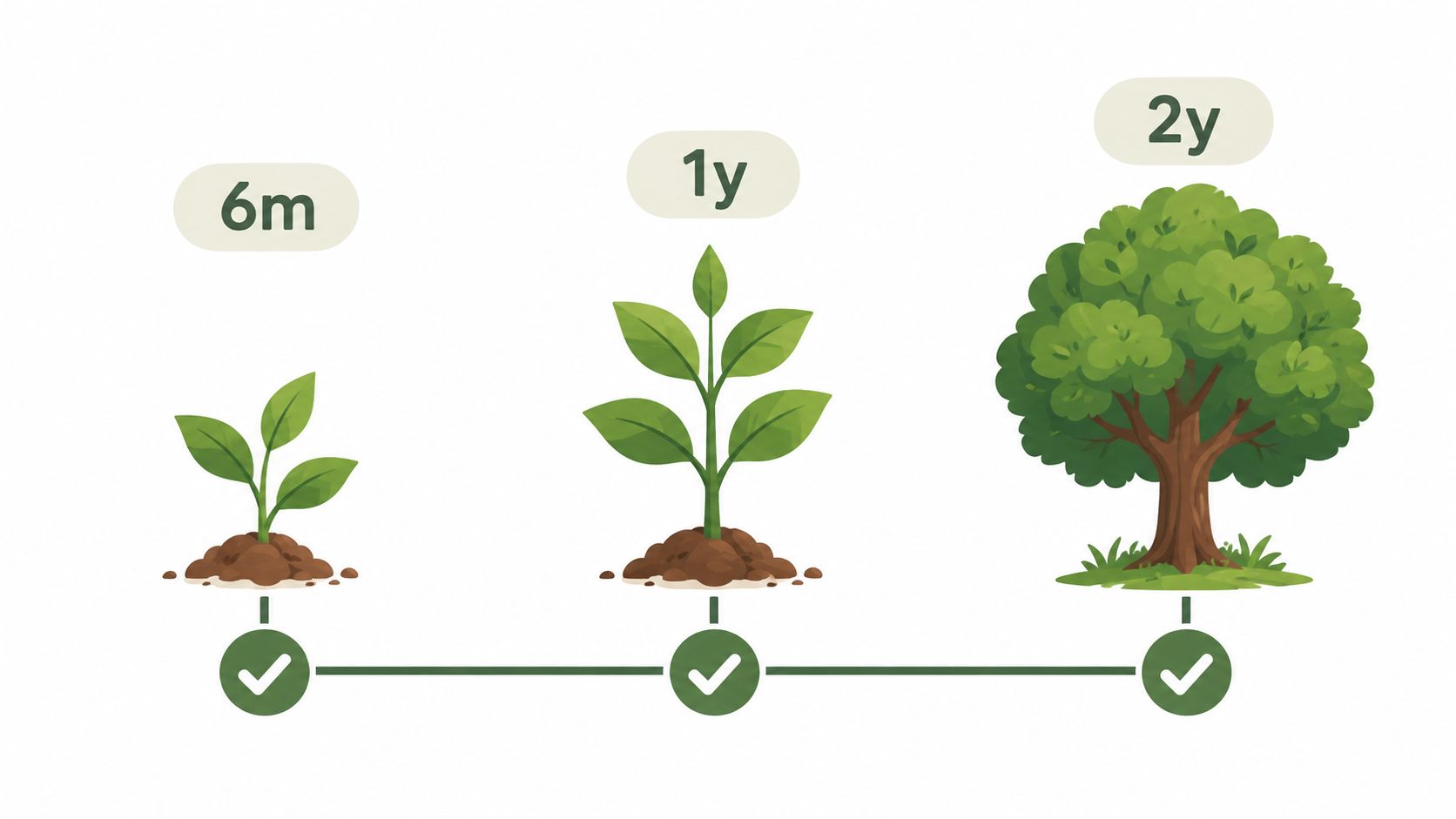
A prospect reads your testimonials, likes the outcomes, then hesitates at the quiet question that often decides the sale: Will this still help after I stop paying for coaching? That is what this format answers. It works best when the client can describe what remained in place after the sessions ended, not just how they felt during the work.
Use a script that makes the staying power concrete:
“I worked with [Coach Name] to [original goal]. Since finishing coaching, I've continued to [specific behavior, system, or result]. I still use [framework or tool] when [situation]. The change has lasted because [reason]. I'm still working on [remaining challenge], but [specific progress] has held.”
A former executive client might say: “I worked with my coach to improve how I handled competing priorities. Since finishing coaching, I still use the decision framework we built when new requests arrive. The change has lasted because the process is simple enough to use during a busy week. I'm still working on delegating earlier, but I no longer treat every request as equally urgent.”
The inner objection this script answers is usually simple: “I do not want people to think the result disappears once coaching ends.” A durable testimonial handles that by naming a repeated behavior, a real situation, and one unfinished edge. That last part matters. It keeps the quote believable.
I would not collect this one the same way I collect a fresh win. Build a follow-up cadence for it. A practical version is a 90-day check-in, then a 6-month check-in inside Coachful or whatever system you use to manage client follow-up.
Use wording like this at 90 days: “Since we finished, what are you still doing differently?” “Which tool, question, or habit from our work are you still using?” Then at 6 months: “What has held up over time?” “What got harder to maintain?” “What still feels natural now that coaching is over?”
Those two checkpoints produce better material than a vague request for an update because they separate early adoption from actual durability.
Some clients will give you a modest answer. Keep it. “I still plan my week differently” is often more persuasive than a polished claim about lasting transformation. The point is continued use.
If you include measurable results, keep the method, timeframe, and supporting context tied to the approved quote. Story22 testimonial structure explains why that record matters when you want a testimonial to stay credible and defensible over time.
Comparison of 7 Testimonial Templates
| Template | Implementation 🔄 | Resources & Time ⚡ | Expected Outcomes 📊⭐ | Ideal Use Cases 💡 | Key Advantages ⭐ |
|---|---|---|---|---|---|
| Problem–Solution–Results (PSR) Testimonial | Medium, structured three-act narrative, needs editing 🔄 | Moderate, session notes + progress metrics; more client input ⚡ | High credibility for process + outcome; relatable transformations 📊 ⭐⭐⭐⭐ | Website case studies, long-form social posts, sales pages 💡 | Shows clear journey and builds trust by detailing process ⭐ |
| Specific Outcome Testimonial | Low, single-focus statement, easy to collect 🔄 | Low, one metric or result; requires permission to publish ⚡ | Very high credibility for data-driven prospects; memorable impact 📊 ⭐⭐⭐⭐⭐ | Ads, social snippets, landing pages, A/B testing campaigns 💡 | Extremely credible due to specific, verifiable results ⭐ |
| Niche‑Specific Objection‑Buster Testimonial | Medium, must identify top objections and find matching clients 🔄 | Moderate, needs clients willing to admit doubts; may use message history ⚡ | Effective at removing enrollment barriers; targeted resonance 📊 ⭐⭐⭐⭐ | Sales pages, email sequences, consult call scripts where objections arise 💡 | Directly neutralizes the #1 reason prospects don't buy ⭐ |
| Peer‑to‑Peer Recommendation Testimonial | Low, short formal endorsement from a peer; simple to request 🔄 | Low, requires established, reputable clients; minimal time ⚡ | Strong authority signal for professional audiences; builds credibility 📊 ⭐⭐⭐⭐ | B2B pages, corporate proposals, LinkedIn posts targeting professionals 💡 | Leverages peer authority to attract high-caliber clients ⭐ |
| Before‑and‑After Mindset Shift Testimonial | Medium, needs introspective client language and coaching context 🔄 | Moderate, session notes useful; clients must articulate belief change ⚡ | Deep emotional resonance; persuasive for identity-focused prospects 📊 ⭐⭐⭐⭐ | Transformation/coaching pages, long-form stories, referral emails 💡 | Communicates profound internal change that motivates sign-ups ⭐ |
| Unexpected Bonus Benefit Testimonial | Low, ask “what surprised you most?”; quick follow-up 🔄 | Low, short interviews or check-ins; minimal tooling ⚡ | Increases perceived value and cross-sells coaching scope; often delightful 📊 ⭐⭐⭐ | Broad marketing, referral materials, cross-category positioning 💡 | Highlights holistic ripple effects beyond the primary promise ⭐ |
| Long‑Term Sustainability Testimonial | High, requires follow‑up system and longitudinal outreach 🔄 | High, outreach at 6m/1y+, CRM reminders, time investment ⚡ | Very persuasive on durability and ROI; reduces fear of temporary gains 📊 ⭐⭐⭐⭐⭐ | High‑ticket offers, trust-building pages, objection handling for longevity 💡 | Demonstrates lasting change and independence from ongoing coaching ⭐ |
Turn Six Formats Into a Steady Testimonial Routine
You don't need every client to write the same kind of testimonial. Match the format to the offer and the doubt you hear most often. A business systems program may benefit from a problem-solution-results account. An executive package may need a peer recommendation or a specific outcome. A mindset-focused offer may be better represented by a before-and-after belief shift.
Send the questions soon after a meaningful milestone, while the details are still easy for the client to recall. That might be after a completed program, a clear breakthrough, a measurable change, or a follow-up conversation that confirms the client is still using the work. Ask one focused set of questions rather than sending a long form that feels like homework.
Your collection process should protect both usefulness and trust. Request permission for the client's name, role, photograph, quotation, results, and publication channels. Ask whether they received free or discounted coaching, whether they're connected to the business, and whether they want to be identified by full name, role only, or a pseudonym. The FTC says material connections should be disclosed clearly and conspicuously, and people presented as consumers should be consumers or be identified otherwise. FTC guidance on endorsements explains why that transparency matters.
Keep three versions of each testimonial:
- Original response: Preserve the client's submitted wording.
- Approved edit: Correct grammar or shorten the statement without changing meaning.
- Reuse record: Note the approved channels, attribution, date, evidence, and any disclosure.
Save approved quotes where you can find them when updating a sales page, writing an email sequence, preparing a consultation call, or developing content pillars. A content pillars guide from iHatePosting can help you connect recurring client themes to broader content planning, but the testimonial itself should remain grounded in the client's firsthand experience.
Coachful can support this routine by keeping client communication, session notes, goals, milestones, and progress information in one workspace. Its website tools also provide places to present approved testimonials, so you can collect a useful statement and reuse it without rebuilding the process each time.
Choose one format this week. Draft the matching questions, review them for privacy and disclosure, and ask one current client for a response. One specific testimonial is enough to start a repeatable system.
Coachful brings client onboarding, scheduling, payments, messaging, progress tracking, notes, and program workflows into one coaching workspace. Use it to organize testimonial prompts, connect feedback to client milestones, and present approved testimonials through your coaching website. Visit Coachful to see how it can support a more consistent testimonial routine.