Virtual Assistant Cost for Coaches: 5 Budget Checks

Coachful
Editorial Team
“Can I afford a virtual assistant, or will I just buy another person to manage?” Budget for a defined amount of administrative work, the fees and tools around it, and your own supervision time. The hourly rate is only one input. The useful number is the cash cost of getting worthwhile time back without weakening client care.
For a coaching practice, start with a small recurring scope you can describe and review: calendar coordination, enquiry administration or maintaining an existing onboarding process. Do not price “help with everything.” That phrase is how a modest retainer becomes an expensive collection of unfinished handoffs.
This guide gives you five budget checks, a worked monthly and first-month example, and a quote brief you can adapt. It concerns the purchase decision, not a general recruitment process. All worked amounts below are hypothetical US dollars, not Coachful prices, supplier quotations or promised savings.
How much does a virtual assistant cost?
There is no single reliable rate for a “coaching VA.” Routine administrative support, specialist course production and managing an entire operation are different services. Location, experience, availability, engagement model and the actual responsibility affect the quote.
As one reference point, Upwork’s virtual assistant cost page displays a broad marketplace median hourly range of $10 to $20. Its more detailed examples distinguish administrative work from marketing support and advanced assistance. Those figures describe a marketplace, not a coach-specific global average or a guaranteed rate you can hire at.
The same page uses different populations and descriptions in different sections. Do not pull its lowest headline number into your budget while expecting specialist skills, immediate responses and independent project management. Obtain current quotes against the same brief, in the same currency, with the same exclusions.
Your working budget should be: agreed labour cost + applicable fees and taxes + incremental tools + setup costs. Track coach supervision separately. A retainer can be affordable in cash and still return very little usable time.
1. Price a task bundle, not an impressive job title
Before requesting a quote, list recurring tasks and the volume that creates them. “Calendar support” is a category. “Check booking requests on agreed working days, prepare rescheduling options within existing availability, and escalate policy exceptions” is something a supplier can assess.

Use your own records to estimate the workload. Count the requests, the normal handling steps and the exceptions. An assistant cannot know whether “a few messages” means five straightforward appointment questions or a stream of sensitive conversations requiring your judgment.
A practical first bundle might include these boundaries:
- Scheduling: coordinate within approved availability; do not open new hours or waive cancellation terms.
- Enquiries: record an inbound request and draft an approved factual reply; do not decide whether coaching is clinically appropriate.
- Onboarding: check whether required administrative steps are complete; do not interpret a client’s private history.
- Content administration: format approved material; do not invent advice, credentials, testimonials or claims.

Specify what counts as complete. A prospect entry might require the correct contact route, service interest and an escalation note. It should not require copying a personal disclosure into several systems merely to make the record look thorough.
Separate maintenance from design. Following an existing onboarding checklist is not the same assignment as designing your client journey. Updating an approved course lesson is not the same assignment as planning its learning objectives. Those distinctions change the skill, preparation and review required.

When a supplier asks clarifying questions, treat that as information about the brief. If several candidates cannot estimate the task, your scope may still be too vague. Buying fewer clearly defined responsibilities is usually a more testable starting point than buying a broad title.
2. Compare the payment model and its limits
The cheapest-looking quote may buy the least usable capacity. Compare what you receive, what happens when demand changes, and which costs remain yours. Avoid comparing an independent freelancer’s hourly fee with an agency package as if the only difference were the number.
Hourly support
You pay for agreed time worked, subject to the contract. This can suit a workload you are still measuring. Set an approval cap and define whether meetings, training, revisions and waiting time are billable. Ask for a short activity record that connects time to the agreed tasks.
An hourly cap is not permission to leave urgent work silently unfinished. Agree what happens as the cap approaches: notify you, prioritize the agreed queue, or wait for authorization. The assistant should not need to guess whether to exceed your budget.
A monthly retainer or hours package
You commit to a recurring amount for defined capacity or services. Ask whether unused hours expire, roll over or are refundable. Check whether the assistant is reserving availability or promising particular deliverables. Those are not interchangeable obligations.
A hypothetical $600 package containing 20 hours has a nominal rate of $30 per hour. If you only use 12 hours and the rest expire, the cash cost per hour used is $50. That does not automatically make it a poor choice: reserved availability may have value. It does mean you should not call it a $30 effective rate for that month.
A fixed project or specialist service
A one-time course upload, template cleanup or documented migration can be easier to quote by deliverable. Define the inputs, acceptance criteria, review rounds and what happens when you change the brief. A fixed fee without a revision boundary is not necessarily a fixed total cost.

Agency support may include recruitment, management or replacement arrangements, but do not assume it does. Ask what is contractual, whether a substitute gets client access, and who trains them. An independent supplier may offer strong continuity too. Assess the actual service rather than the category label.
3. Calculate recurring cost and first-month cost separately
Monthly support is not simply a weekly quote multiplied by four. For an annualized planning average, multiply weekly hours by 52 and divide by 12. Actual invoices depend on the agreement, calendar and billed hours. Use the supplier’s billing method for cash forecasting.
Here is a hypothetical budget for six hours of support each week at $30 per hour. The 5% fee is an invented planning assumption, not the published fee of Upwork, Coachful or any other provider. Replace it with the actual applicable fees and taxes before deciding.
- Average monthly hours: 6 × 52 ÷ 12 = 26 hours.
- Monthly labour: 26 × $30 = $780.
- Illustrative fee on labour: $780 × 5% = $39.
- Incremental tools: $30 per month.
- Recurring cash budget: $780 + $39 + $30 = $849 per month.

Now add the setup period. Suppose the agreement includes four additional paid setup hours and a separate two-hour paid assessment. At the same hypothetical rate, setup costs $120 and the assessment costs $60. Applying the same illustrative fee adds $9. The first-month cash total becomes $1,038.
This example treats setup and the assessment as additional to the recurring hours. Some agreements include them within a package. Check that you are neither omitting them nor counting them twice. Record when each invoice falls due, especially if a deposit or prepaid block is required.
Other quote questions include currency conversion, payment processing, applicable tax, minimum commitments, cancellation notice, overtime and replacement arrangements. A price quoted before tax or platform charges is not your final cash requirement.
Include only genuinely incremental tools. If an existing subscription already covers the required access, do not invent another software cost. If the engagement needs an additional seat or security service, confirm its actual price and permissions. Do not assume any Coachful plan includes a particular team entitlement from the screenshots in this article.
Worker classification and employment obligations also depend on the real arrangement and applicable law. Calling someone a contractor in a document does not settle the question. If the relationship may be employment, get appropriate advice and budget for the associated obligations rather than comparing wages directly with a freelance invoice.
4. Measure the coach time returned after supervision
Six hours on an assistant’s timesheet does not prove you recovered six hours. They may take longer or less time than you did. You may also spend time briefing, answering questions, checking drafts and correcting mistakes. Measure the work removed from your week, not merely the work added to theirs.
Continue the hypothetical example. Suppose the delegated bundle previously took you six hours each week. Once it is running, your briefing and review take 1.5 hours. You receive 4.5 net hours back each week, or 19.5 hours in an average planning month.
At the $849 recurring cash budget, that is approximately $43.54 per net coach hour returned. The calculation is $849 divided by 19.5. It excludes the monetary value of your supervision time; adding that as a separate economic cost would answer a different question. Keep the method consistent when comparing options.

Do not multiply every recovered hour by your advertised session fee and announce a return on investment. That assumes the time becomes a sale, that a suitable client is available, and that the extra delivery fits your capacity. Often the point is finishing work during working hours, not adding appointments.
Decide what you want the returned time to do. It could create a protected business-development block, prevent routine messages from interrupting sessions, or allow you to finish on time. A non-revenue goal can justify the expense, but it still needs a cash budget you can sustain.
Review actual evidence after the agreed initial period: tasks completed correctly, work left for you, avoidable rework, exceptions escalated and your review time. Compare similar weeks. A launch week and a quiet week do not establish whether the arrangement has become more efficient.
5. Budget for boundaries, not just speed
A low hourly fee is not a bargain if the work requires unrestricted access to client information or constant repair. Before delegating, identify the minimum information needed for each task, the actions requiring approval and the situations that come back to you.

For example, arranging an appointment may require a name, contact route, time zone and available slots. It usually does not require the client’s session notes. A screenshot of a broad client overview illustrates why “they can see the dashboard” is not a sufficient access decision.
Check the actual access controls of every tool in the workflow. Use individual authorized accounts where available, avoid shared owner credentials and confirm how access will be removed. If a tool cannot provide a suitable boundary, redesign the task or keep it with you. A confidentiality clause does not create a permission control that the software lacks.

Specify communication authority. An assistant might acknowledge an administrative request using agreed wording while escalating distress, complaints, scope questions or a request for coaching advice. Do not save money by making a less qualified person quietly carry responsibility you should retain.
Budget for the review this requires. Early draft-only work can take more coach attention than a mature handoff. That is a reason to account for the learning period, not to abandon review immediately. A cheaper quote requiring much more supervision may be less suitable for your practice.
A copyable VA quote brief
Use the same brief for comparable suppliers. Replace the brackets with observed information. Leave out private client details; suppliers need enough context to price the work, not unrestricted access to your practice.
- Purpose: I need support with [specific recurring administrative outcome].
- Volume: approximately [requests, records or approved assets] per [period], based on [observation period].
- Included tasks: [bounded actions], with completion defined as [reviewable result].
- Excluded tasks: coaching, sensitive judgment, policy exceptions and [other limits].
- Availability: [working days, time zone and response window]; explain any coverage requirement.
- Process and tools: [existing instructions and systems]; identify training or paid setup needed.
- Authority: draft or act within [specific approval rules], with escalation to [role].
- Quote: currency, fee structure, estimated hours, taxes, charges, minimum term and cancellation terms.
- Capacity rules: unused hours, overages, absences and replacement arrangements.
- Review: [date or period] to compare accuracy, coach oversight and net time returned.
For candidate assessment, use our separate paid virtual assistant work-sample examples. For sourcing and the broader hiring process, see the first assistant hiring guide. The budget decision here comes before committing to an ongoing scope.
Common questions about a coaching VA budget
Should I hire the lowest hourly rate?
Compare a common scope, total charges and supervision needs first. A higher rate can be sensible for specialist work, but an expensive title does not prove competence. Use a proportionate paid assessment and check relevant experience before granting real access.
Is a full-time assistant necessary?
No. The right commitment follows the recurring workload and availability requirement. A narrow project or a small part-time scope may answer your current need. Do not buy a full schedule because a supplier’s package makes it look like better value per hour.
Can automation replace the assistant?
Sometimes a repeated task can be simplified or removed before you hire. Other tasks need human checks or exception handling. Map the actual steps first, then compare the ongoing cost and review requirements of each route. Avoid paying someone indefinitely to repair a process you could make less complicated.
When should I increase the budget?
Increase it when the current work is reliable, additional demand is real and the next task has a clear boundary. Do not expand because all purchased hours were used. More activity is not proof that the arrangement is returning the time or quality you wanted.
Buy a smaller, testable promise
Before accepting a quote, know what it buys, what the first month costs and how you will recognize useful time returned. If those answers are unclear, reduce the scope rather than hoping the assistant will discover your operating model for you.
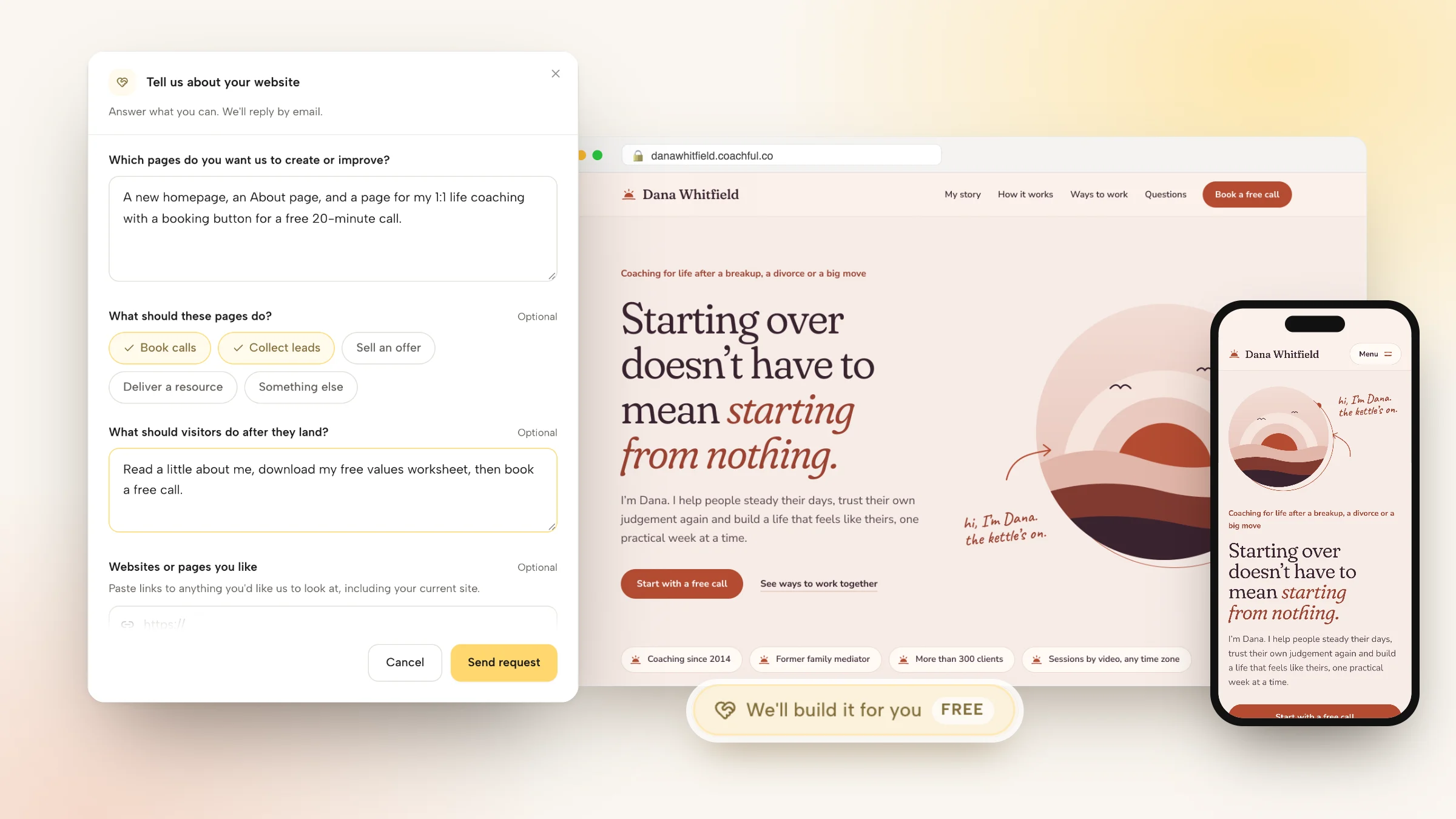
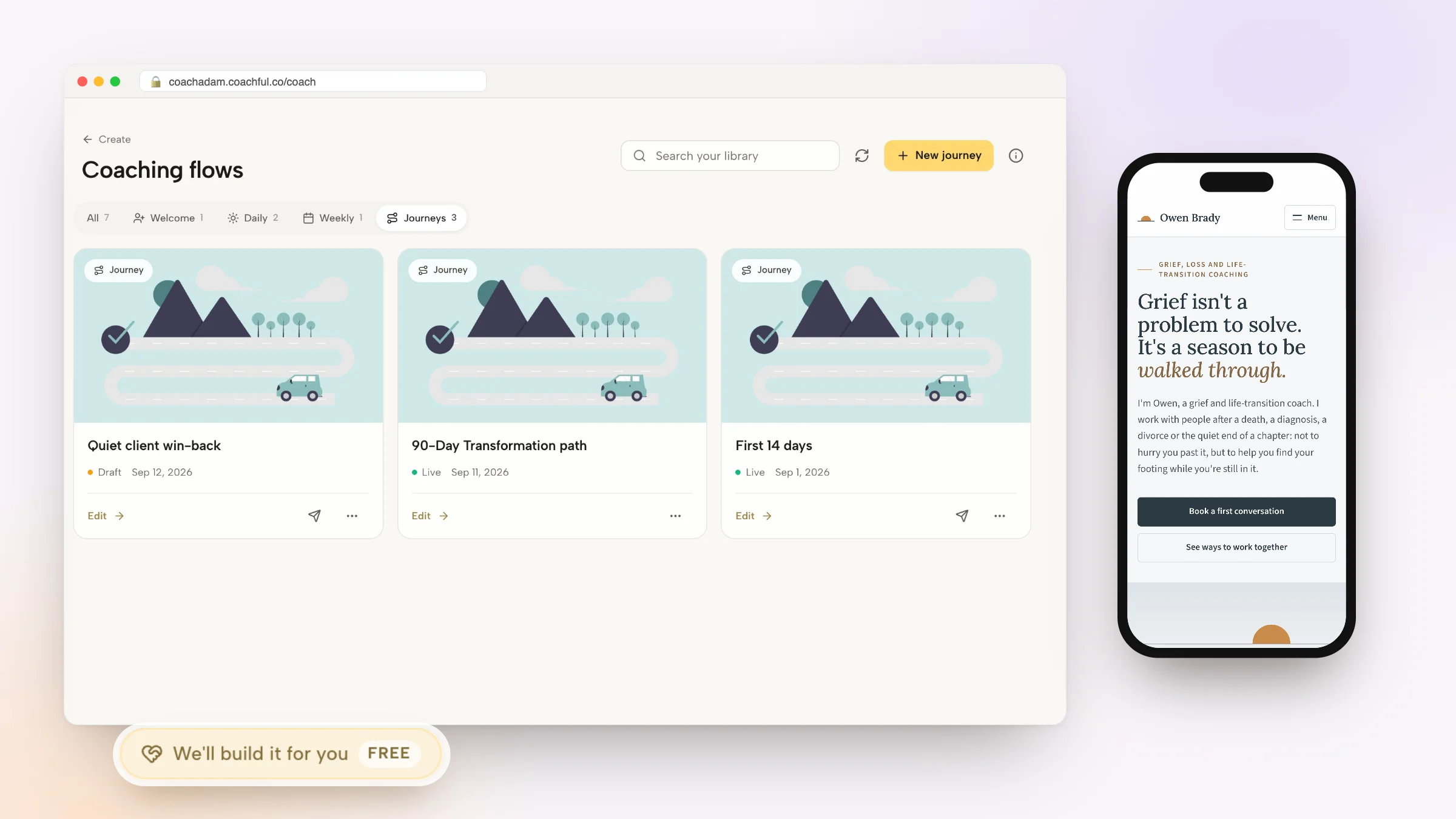
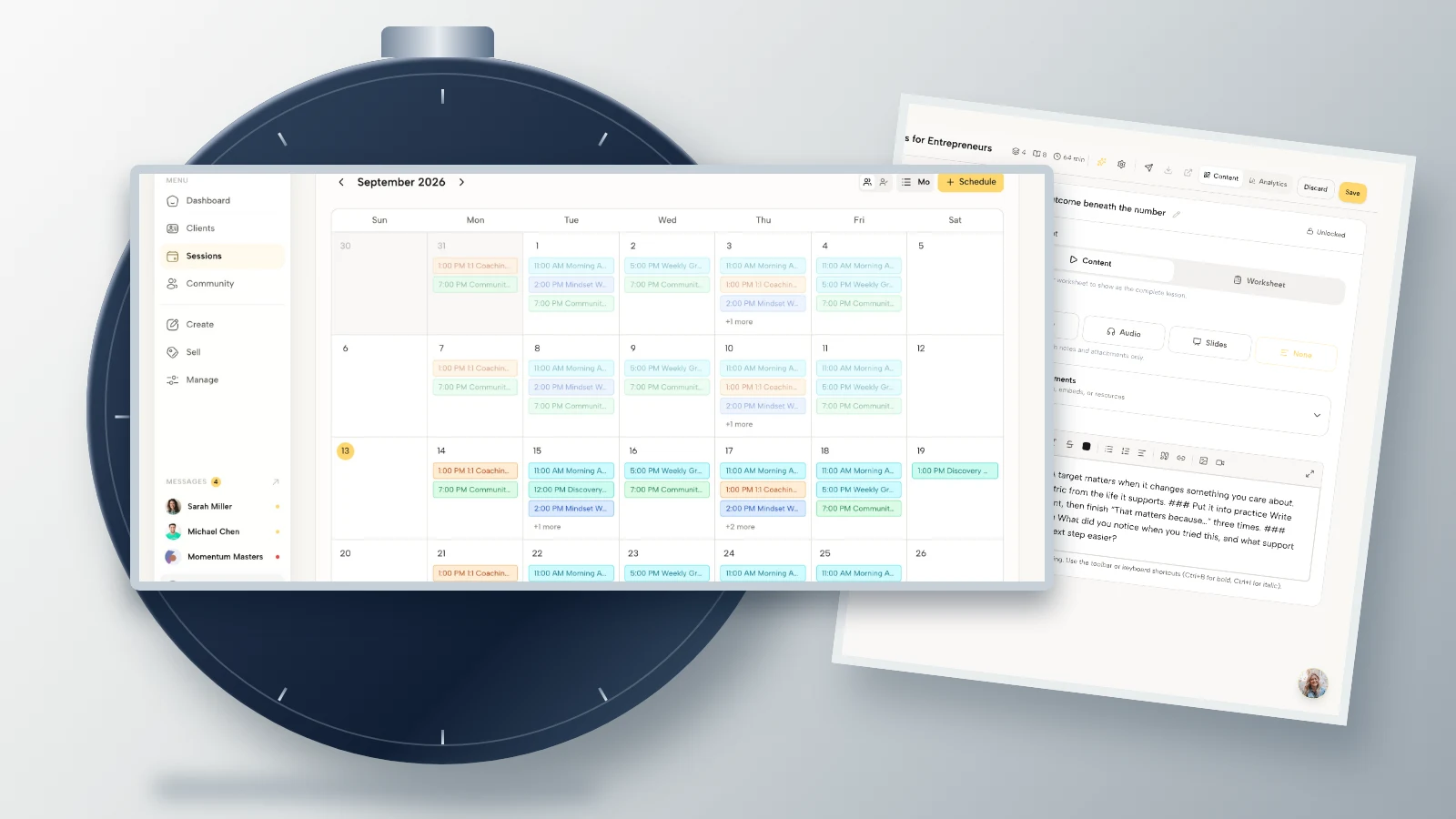
To make that brief concrete, try the Coachful interactive demo and inspect the scheduling, prospect, course and communication surfaces shown here. List the exact administrative actions you would need help with, then check the appropriate access and review arrangements before using real client data. A specific workflow is easier to price than “please take the admin off my hands.”
Visual note: product images show Coachful demo data, not client records or proof of assistant permissions. The original cover composition and two teaching graphics illustrate scope and hypothetical budget calculations. No customer savings or hiring outcomes are claimed.