7 Best Websites for Life Coaches in 2026

Coachful

You're trying to sound calm and credible online, but the minute you start comparing website platforms, the whole thing turns into tabs, trials, plugins, templates, and second-guessing. That's normal. For websites for life coaches, the key question isn't “What's the fanciest platform?” It's “What will help me look trustworthy, make booking easy, and not drain my energy every week?”
The market around coaching is big enough now that your website can't afford to look improvised. The latest ICF Global Coaching Study estimated 122,974 coach practitioners worldwide in 2025, up 15% since 2023 and 54% since 2019, with $5.34 billion in global coaching revenue, and in the U.S. there are an estimated 28,305 registered life coaching businesses in 2025/2026, which makes your site part of a crowded professional category, not a hobby project. That's why the platforms below matter. They shape whether a visitor sees a polished practitioner or a coach who's still piecing everything together. bespoke website development for startups
1. Coachful
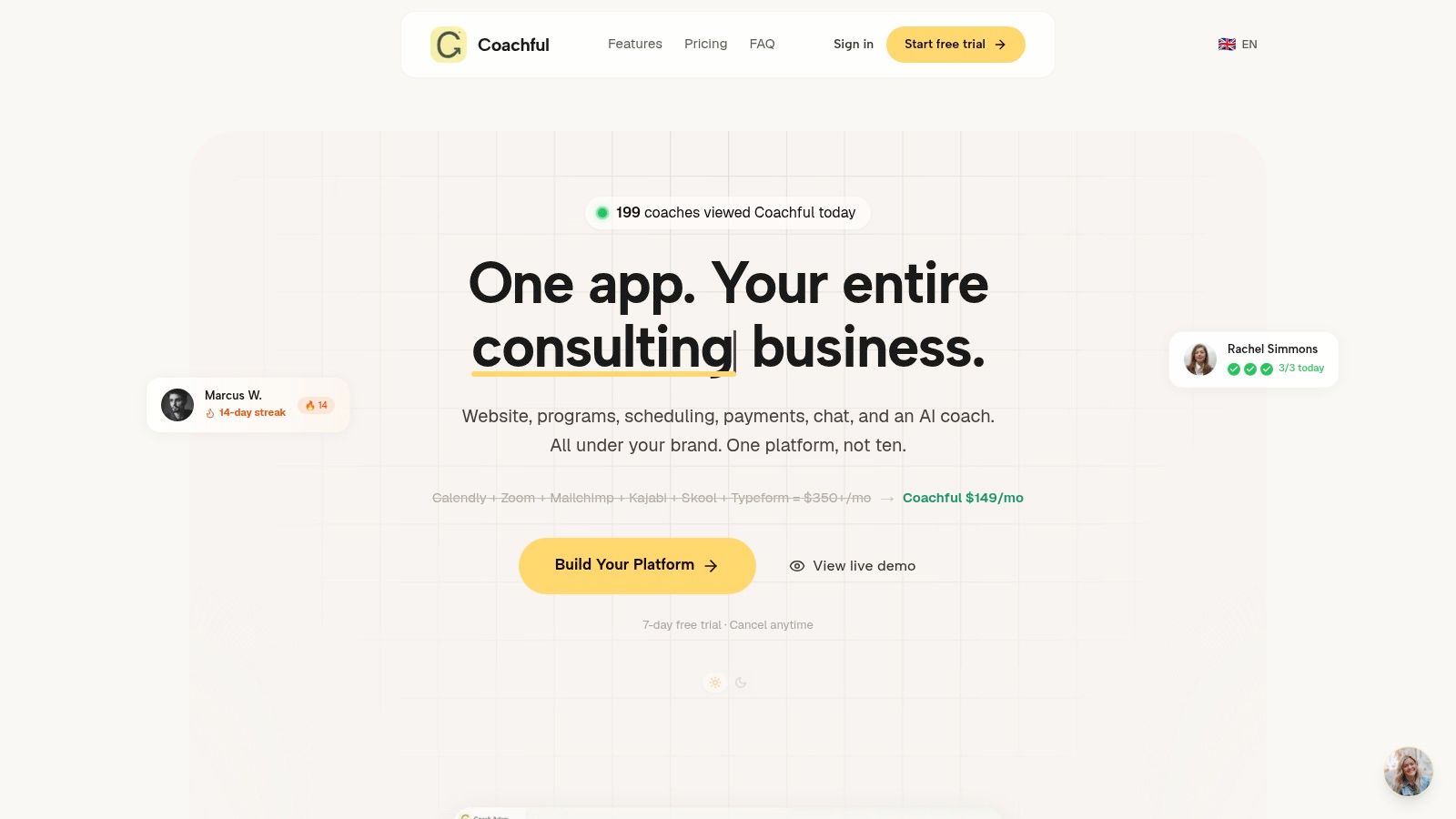
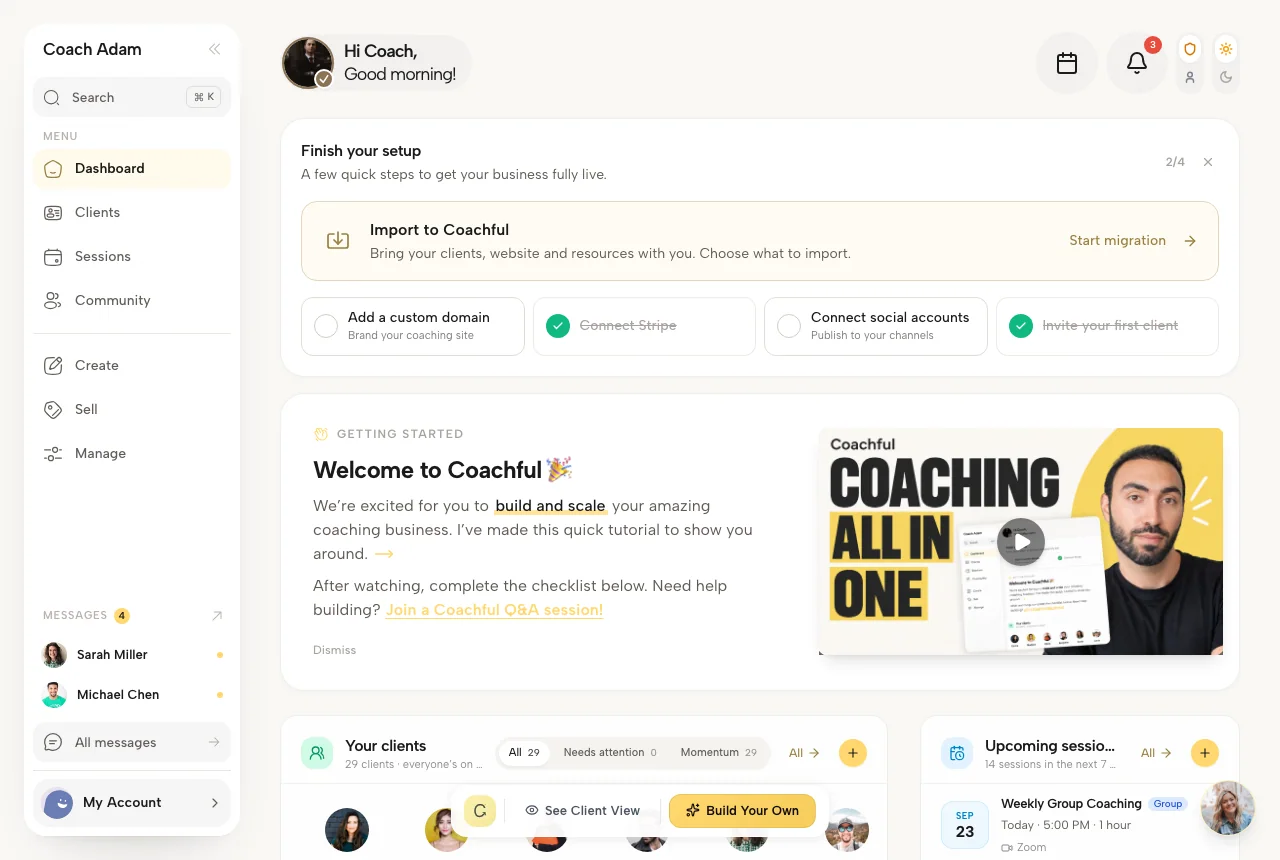
If your inner monologue sounds like, “I need a website, but I also need scheduling, payments, onboarding, reminders, and a way to keep clients engaged,” Coachful is the most complete answer on this list. It is built for the coach who wants one branded place instead of a patchwork of tools, and that matters because 56% of global coaching revenue comes from virtual delivery according to ICF-based industry summaries, which means the website is often the front door and the operating system at the same time. Coachful's coach website builder fits that reality with a drag-and-drop site, custom domain support, and real SEO.
Why it feels different in practice
Coachful replaces the classic stack of Calendly, Zoom, Mailchimp, Kajabi, Skool, and Typeform with one environment. That's not just cleaner, it reduces the “where did that lead go?” problem that costs coaches time and momentum. The platform also handles client-facing work, like websites, funnels, scheduling, chat, video, and payments, alongside delivery tools such as programs, modules, assignments, habit tracking, community spaces, CRM, session notes, templates, invoices, and analytics.
The strongest fit here is a coach who wants to grow beyond a simple brochure site. You can run a solo practice, a cohort, or a team-based program without forcing clients to bounce between disconnected tools. That gives the buyer a smoother experience, which matters because trust is built through continuity, not just a nice homepage.
Practical rule: if your biggest headache is admin, retention, or client follow-through, an all-in-one system usually beats a prettier site with five separate logins.
Coachful also stands out because of two AI tools. Michelle summarizes calls, drafts follow-ups, and can send nudges, while the trainable AI coach can be taught your framework and voice for 24/7 check-ins and voice or text coaching. For a coach who worries about missing details after a call, that kind of support can change the whole rhythm of delivery.
Plans are listed on Coachful's pricing page, with a 7-day free trial and access on Web, iOS, and Android. For a lot of coaches, that feels easier to justify than paying for several separate subscriptions and then trying to make them behave like a single business system.
2. Squarespace
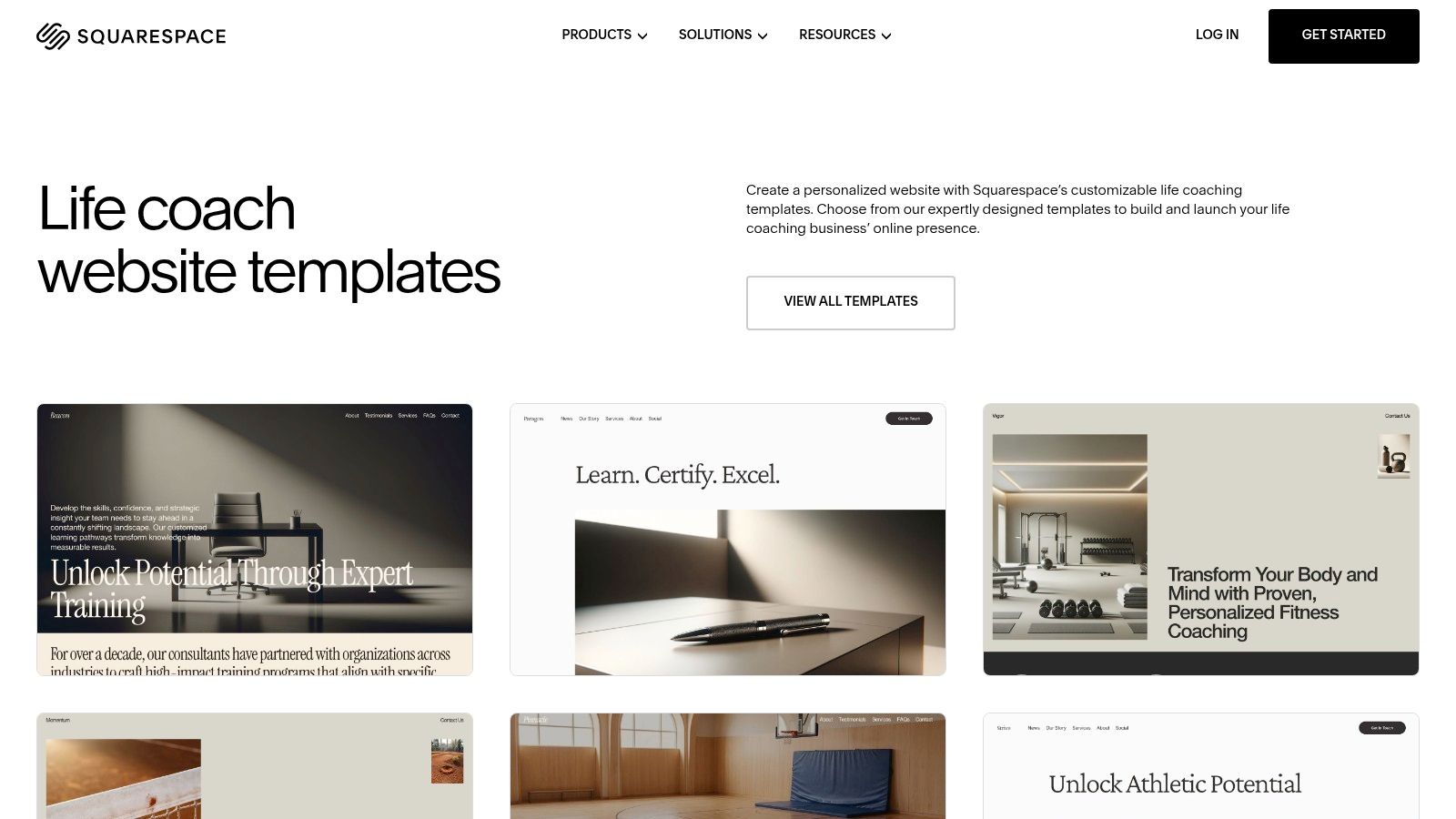
Squarespace is the platform for the coach who thinks, “I don't want to become a tech person. I want my site to look polished fast.” That instinct is valid. For a service business, especially one built on trust and personal presence, design quality does a lot of heavy lifting before a prospect ever reads your offer.
The dedicated Life Coach template gallery makes the starting point easier because you're not staring at a blank canvas. You get a visual editor, global styles, built-in blogging, email campaigns, basic SEO tools, and native scheduling through Acuity or Squarespace Scheduling. That combination is useful if you want your website, appointment flow, and basic marketing under one roof without needing to assemble a stack.
Where it shines, and where it doesn't
Squarespace works best when your business model is straightforward, for example a one-to-one coaching practice with a lead magnet, a services page, a blog, and a booking flow. It's also a strong fit if you care a lot about visual consistency. Your site can feel calm, premium, and intentional without a designer rebuilding every page from scratch.
The trade-off is control. If you're the kind of coach who already knows you'll want highly custom layouts, experimental interactions, or unusual funnel logic later, Squarespace can start to feel more boxed in. It's also not the deepest ecosystem for highly specialized workflows, so you'll want to know what you need before you commit.
What it does very well is lower the anxiety of launch. A lot of coaches get stuck because they imagine they need a perfect website before they can be visible. Squarespace is often enough to break that loop. You can publish a site that feels credible, then refine it as your practice clarifies.
If your main question is, “Can I get something professional live without hiring a developer?”, the answer is usually yes.
3. Wix + Wix Bookings
Wix is the platform for the coach who wants freedom without learning code. The drag-and-drop editor is flexible, and the app market means you can extend the site as your business gets more complex. When you pair it with Wix Bookings, the platform becomes much more than a brochure. It can handle scheduling, payments, reminders, and client management in one place.
That matters if you run a mix of 1:1 sessions, classes, group programs, or memberships. A coach often starts with one offer and then adds a second one once the first starts working. Wix gives you room to grow without immediately forcing a platform switch.
The real advantage is operational flexibility
The best part of Wix is that it lets a coach experiment. You can add funnels, email marketing, communities, analytics, and different booking types as needed. That can be a relief if your offer structure isn't fixed yet, because you don't have to design your business around a rigid template.
The downside is that choice can get messy. More flexibility means more decisions, and more decisions can slow down a coach who already feels overloaded. Some advanced features are tied to specific premium plans, so the “cheap to start” story can shift once you need business-grade capabilities. Community complaints about fees and plan changes also show up often enough that you should read the small print before you build a long-term business around it.
Wix is strongest for coaches who are comfortable tweaking things themselves. If you like the idea of a site that can evolve into a fuller client system, it's a solid fit. If you know you'll freeze every time an app prompt appears, the flexibility may feel like clutter rather than freedom.
4. WordPress.com
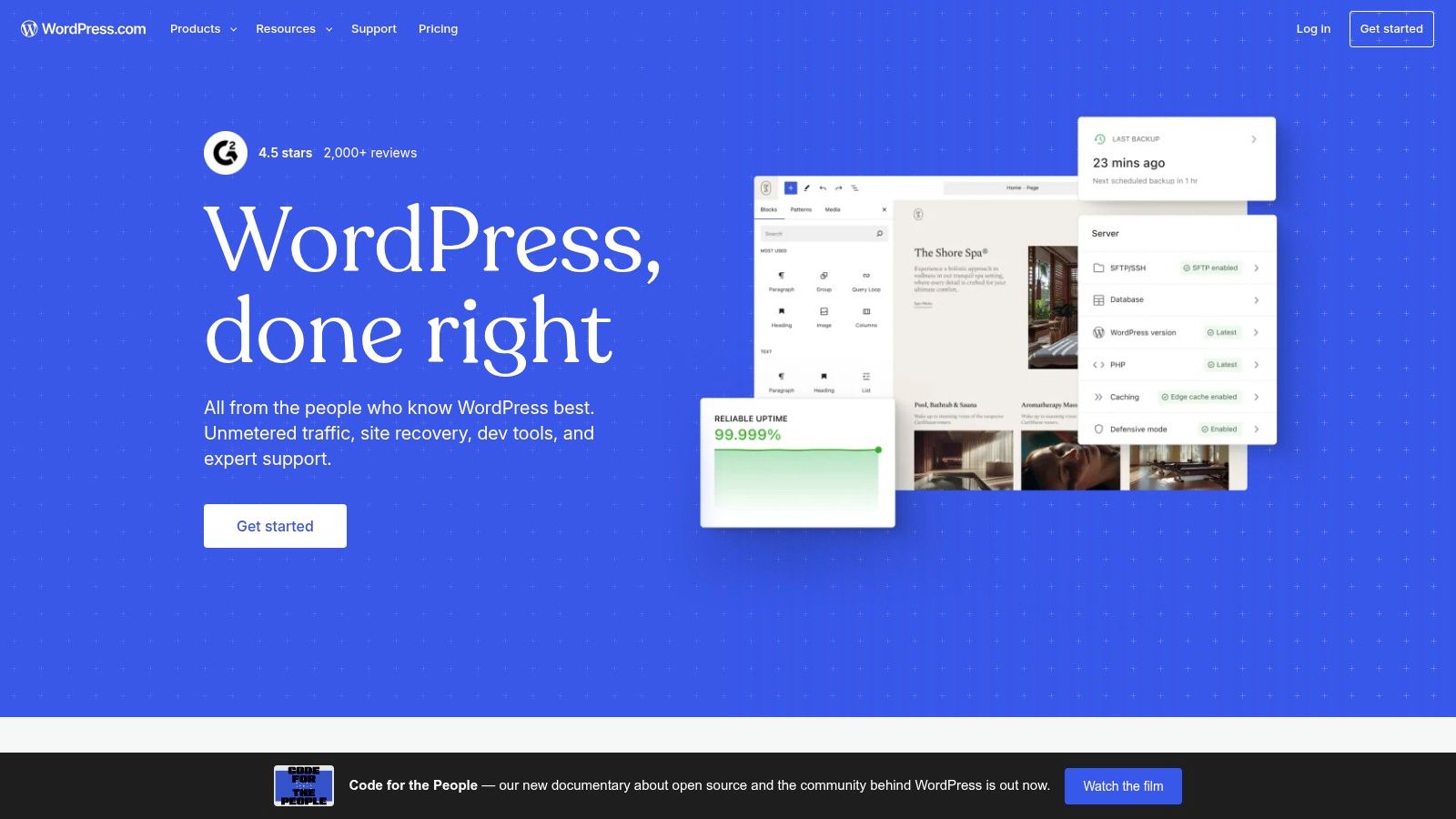
WordPress.com is for the coach who says, “I want room to grow, but I don't want to babysit servers.” That's the core appeal. You get a hosted WordPress setup with guided building, premium themes, managed updates, backups, and security, so you're not dealing with the technical burden that comes with self-hosting.
For content-heavy coaches, that matters. If your marketing plan includes articles, long-form education, and search visibility, WordPress has a natural advantage because blogging is part of its DNA. It also gives you a large theme marketplace and, on higher-tier plans, access to plugins and more advanced functionality.
Best for the coach who expects the business to expand
This platform makes sense if your practice may later include courses, memberships, or a more involved content strategy. You can start with a simple coaching site and add more structure as your offers evolve. That's useful for coaches who know they'll outgrow a basic brochure site but aren't ready for a full-blown course platform yet.
The trade-off is that you trade speed for flexibility. Even with the hosted version, you'll usually spend more time configuring the site than you would on Squarespace or a similarly simplified builder. To add advanced plugins, you'll need Business or Commerce plans, which means the decision isn't just about design, it's about how much extensibility you need.
WordPress.com works best when you're serious about owning your content and building a durable online home. It's a smarter move than people think, especially if your website is going to carry the weight of discovery, authority, and lead generation over time. WordPress vs Shopify vs Wix
5. Paperbell
Paperbell is the calm choice for the coach who wants to stop tinkering and start serving clients. It's a lightweight coaching business system with a simple public site, scheduling, payments, contracts, client portal, and package management. If your inner question is, “Can I just get something that works without a giant setup project?”, Paperbell is built for that feeling.
The platform is especially appealing for solo coaches and small practices. You can sell 1:1 or group packages, send clients into an organized portal, and keep delivery straightforward. That simplicity is often underrated because many coaches don't need a massive platform. They need less friction.
A good fit for a lean practice
Paperbell's biggest strength is speed. The templated site and landing pages make launch easier, and the built-in admin features remove a lot of back-and-forth with clients. You're not stitching together scheduling, contracts, and checkout from separate services.
The trade-off is that it feels more templated than full website builders like Squarespace or Showit. If you care about custom design or advanced marketing funnels, you may hit the ceiling faster. It's also less appropriate if you need a heavier CMS or a more elaborate content strategy.
Still, for the coach whose priority is credibility plus simplicity, Paperbell is a practical answer. It solves the operational basics cleanly, and for many practices that's exactly what's needed. A site that helps a client book, pay, and start the process without confusion is often more valuable than a site full of features nobody uses.
6. Showit
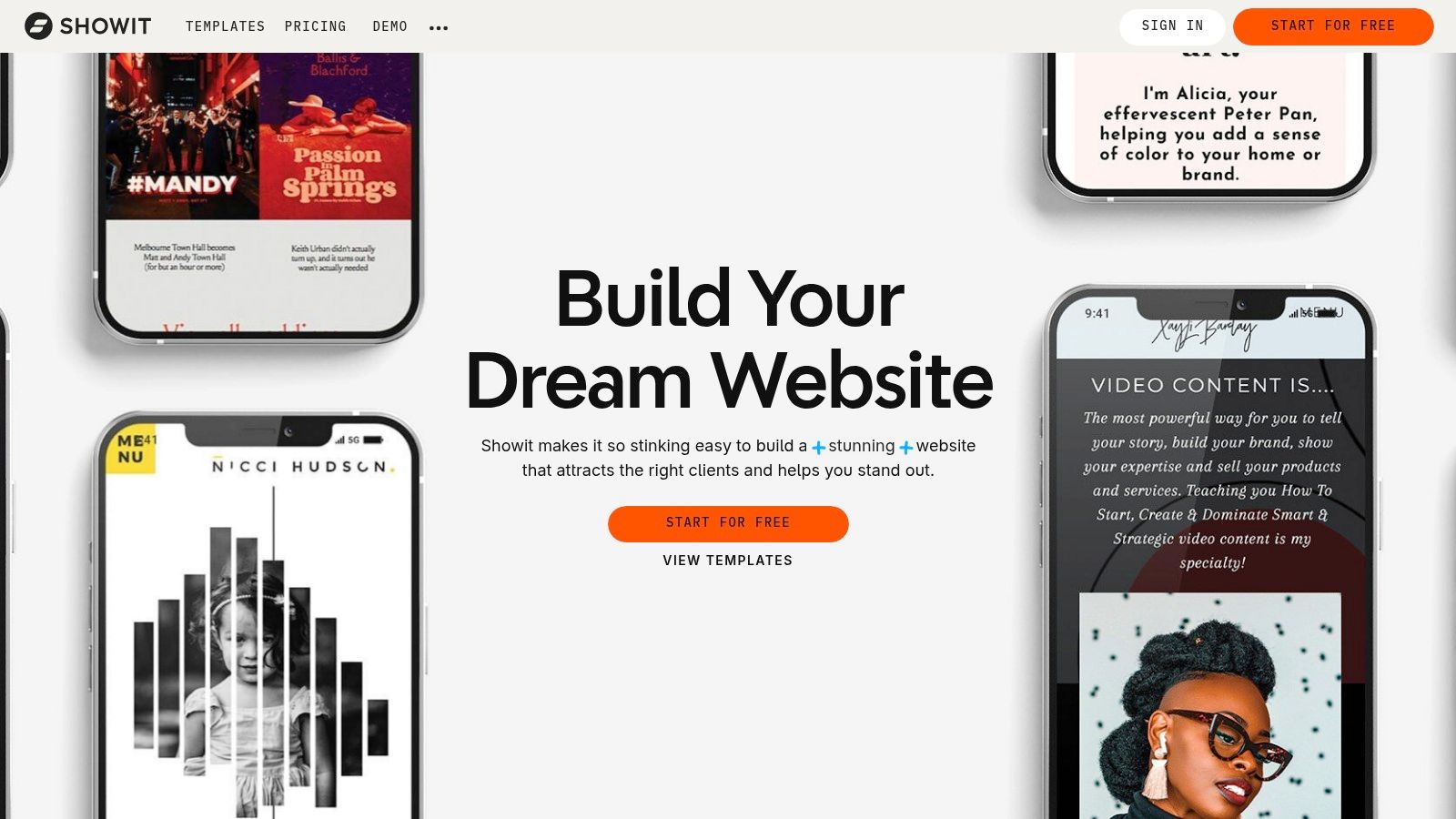
Showit fits the coach who keeps saying, “I want my brand to feel like me, not like a template.” That concern usually points to a real business problem. If your coaching work depends on trust, nuance, and a clear point of view, your website has to support that impression from the first page view.
The main appeal is design freedom. You can place elements wherever you want, create layouts that feel custom, and shape a visual identity that goes further than most drag-and-drop builders allow. For a life coach, that can influence how potential clients read your value before they ever book a discovery call. A site that looks intentional can make your practice feel more distinct, more polished, and easier to remember.
The trade-off is independence
Showit gives you creative control, but it does not include native bookings or payments. You will need to embed tools such as Acuity or Calendly and connect other systems for checkout or lead capture. If you like choosing each part of the stack, that is workable. If setup already feels like a chore, those extra moving pieces can slow you down and make the site feel harder to manage than it should.
The optional WordPress blog integration helps if you plan to use content marketing seriously, and the template marketplace gives you a solid starting point. Still, more freedom usually means more decisions. That can stretch your launch timeline, especially if you keep changing fonts, spacing, or page structure while trying to make the site feel “just right.”
Showit makes sense for a coach whose brand does a lot of the selling. A calm therapeutic aesthetic, a premium consulting look, or a transformation-focused personal brand can all benefit from that visual flexibility. If your top priority is creating something unmistakably yours, Showit delivers that better than a more rigid builder. For a deeper technical comparison of underlying architectures, see this analysis of Squarespace or WordPress for business.
If you are also comparing platforms for content, funnels, or digital products, it helps to separate design freedom from business infrastructure. Showit is strong on presentation, while platforms built around sales systems usually handle the back end with less manual coordination. If your offer suite is still simple, that trade-off may be fine. If your practice is growing toward courses or memberships, you may want to compare that setup with a more systemized option such as Kajabi vs Teachable for coaches.
7. Kajabi
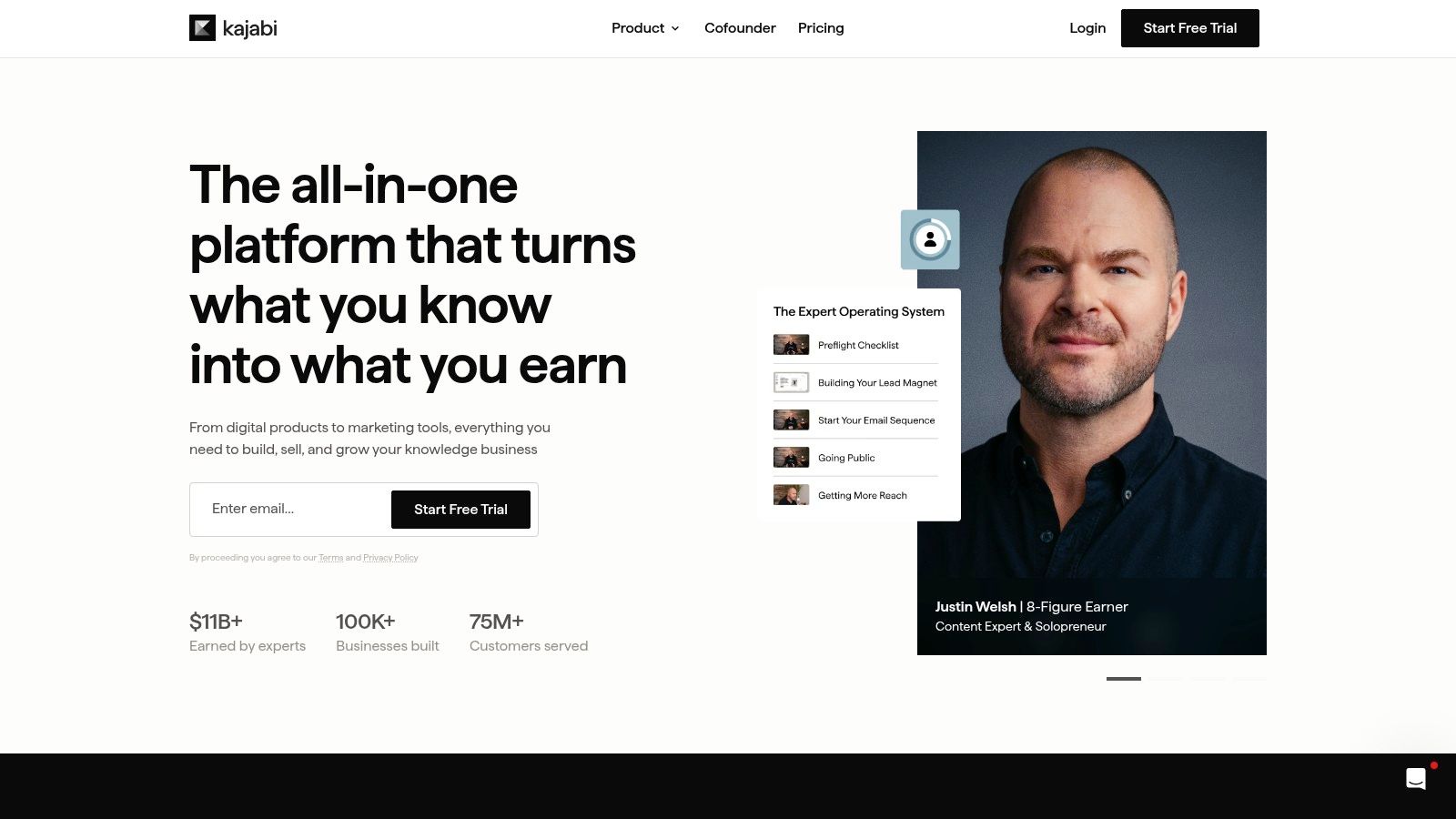
Kajabi is for the coach whose business question is bigger than “How do I get a booking page live?” It's the right fit when you're selling coaching alongside courses, communities, digital products, or group programs and you want the whole commercial engine connected. That means website pages, landing pages, pipelines, email, checkout, analytics, and client portals under one roof.
If you've ever thought, “My offers are too scattered,” Kajabi can bring order to that chaos. The native coaching product type is useful for coaches who want to package their expertise without bolting together six different tools.
Strong on sales architecture, less simple for pure 1:1
Kajabi shines when your practice includes launches, upsells, nurturing sequences, and multiple offer paths. It gives you the structure to move a prospect from curiosity to conversion without leaving the platform. That's especially useful for coaches who also sell self-paced education or cohort programs.
The downside is that it can be more than you need if your business is still simple. Kajabi sits at a higher price point than basic builders, and 1:1 scheduling still often depends on embeds or integrations. If your only offer is private coaching sessions, some of the power here may go unused.
For a coach with a strong digital-product mindset, though, Kajabi can be a smart long-term home. It helps when you want the website to do more than inform. It can actively sell, segment, nurture, and convert. Kajabi vs Teachable
Life Coach Website Platforms, 7-Way Comparison
| Product | Implementation Complexity (🔄) | Resource Requirements (⚡) | Expected Outcomes (⭐ 📊) | Ideal Use Cases (💡) | Key Advantages |
|---|---|---|---|---|---|
| Coachful | 🔄 Moderate–High: initial migration and setup required | ⚡ Medium: one subscription in place of several tools; web + mobile access, training time | ⭐ High • 📊 Consolidates tools → improved retention & less admin | 💡 Solo coaches → growing teams, coaching schools, L&D programs | All‑in‑one platform with AI assistant & trainable coach; analytics |
| Squarespace | 🔄 Low: fast launch with templates | ⚡ Low–Medium: subscription; minimal integrations | ⭐ Medium • 📊 Polished site + native scheduling | 💡 Coaches wanting design‑first site with integrated booking | Professional templates, blogging and built‑in scheduling |
| Wix + Wix Bookings | 🔄 Low–Medium: drag‑and‑drop + app setup | ⚡ Medium: premium plans for advanced features | ⭐ Medium • 📊 Functional booking, packages, mobile management | 💡 Coaches running classes, memberships, recurring sessions | Flexible app market; integrated bookings and reminders |
| WordPress.com (hosted) | 🔄 Medium: guided builder; more config for plugins | ⚡ Medium–High: Business plan for plugins; steeper learning | ⭐ High (with plugins) • 📊 Highly extensible & scalable | 💡 Coaches needing extensibility (courses, CMS, integrations) | Large plugin/theme ecosystem with managed hosting |
| Paperbell | 🔄 Low: purpose‑built for quick launch | ⚡ Low: transparent monthly pricing, minimal setup | ⭐ Medium • 📊 Fast time‑to‑revenue for session sales | 💡 Solo/small practices needing simple booking & delivery | Lightweight coaching OS with contracts, packages and client portal |
| Showit | 🔄 Medium: pixel‑level design control takes time | ⚡ Low–Medium: subscription; relies on embeds for bookings | ⭐ Medium • 📊 Distinctive brand sites; content SEO via WP blog | 💡 Brand‑forward coaches who want custom visual design | Freeform design control; optional WordPress blog integration |
| Kajabi | 🔄 Medium: built‑in funnels but some scheduling embeds | ⚡ High: premium pricing for all‑in‑one stack | ⭐ High • 📊 Strong for launching & scaling paid programs | 💡 Coaches selling multi‑format offers, cohorts and upsells | Cohesive funnels, email, checkout, coaching product type |
Choosing the Right Platform for Your Practice
The best platform is the one that fits the way you coach, not the one with the flashiest homepage. If your first priority is design freedom, Showit gives you the most visual control. If you want a polished site fast, Squarespace makes the launch feel less intimidating. If you're building a bigger offer suite with courses and funnels, Kajabi can support that growth. If you want simplicity and coaching-specific structure, Paperbell is easy to live with.
For many coaches, the biggest decision is whether the website should represent the business or actively run parts of it. That's where an integrated platform like Coachful stands out. It brings the website, scheduling, payments, messaging, progress tracking, and client management into one place, which means less admin, fewer tool handoffs, and a more coherent client experience from the first click onward.
That choice matters because your clients are not evaluating you in isolation. They're comparing your site against the broader market, where buyers increasingly look for specialization, trust signals, and a clear next step, not just a pretty brand page. Independent coaching websites and directory ecosystems show the same pattern, visitors want to know who you help, how you work, and what happens after they contact you.
If you're still early, a simple builder can absolutely work. If your practice is growing and your current stack feels like a pile of tabs, the smarter move is to choose a platform that reduces friction instead of adding it. The right website should help you book better-fit clients, communicate your method clearly, and make your business easier to run.
If you're ready to build a coaching site that does more than sit there looking nice, start by comparing how each platform handles your real workflow, not just your homepage. Then make the platform choice that supports the kind of practice you want six months from now, not just the one you're patching together today.
Coachful gives life coaches one branded place for the website, scheduling, payments, client follow-up, and progress tracking. If you want a platform that helps you look professional and run the business side without juggling extra tools, visit Coachful and see how it fits your practice.