Affiliate Swipe Copy for Coaches: 5 Templates to Adapt

Nour
Founder, Coachful
What do you give an affiliate so they can recommend your coaching offer without inventing a result, sounding like you, or hiding that they get paid? Give them adaptable swipe copy, a verified offer fact sheet, an explicit disclosure and one tested destination. The copy should save them a blank page, not supply a personal experience they never had.
Affiliate swipe copy is suggested promotional wording that a partner can adapt for their own audience. For a coaching practice, the useful pack is small: an introduction email, a newsletter mention, a social caption, a short spoken recommendation and a genuine deadline reminder. Each has a different job. Five copies of the same sales pitch do not make a kit.
This guide is for coaches preparing materials for partners who promote the coach's own service. It is not about joining Coachful's affiliate program, negotiating referral fees or calculating payouts. The templates are original drafting examples, not legal clearance, guaranteed-conversion copy or endorsements from real customers.
Before the templates: prepare an approved offer fact sheet
Do not ask a partner to reconstruct your offer from an old webinar, a checkout link and three voice messages. Write down the audience, scope, format, dates, timezone, total investment, payment terms, access requirements and actual next step. Name the person who approves corrections and the date the facts were checked.
Separate facts a partner may state from opinions they must supply themselves. “Six live group sessions” can be verified against your delivery plan. “This changed my career” belongs only to someone whose genuine experience supports that statement. A sentence does not become safe because you put it in quotation marks.

A useful fact sheet also says who the offer is not for and what it does not promise. If you provide career coaching rather than recruitment, state that. If a workshop is educational rather than clinical treatment, do not let affiliates blur the boundary to make the promotion more persuasive.
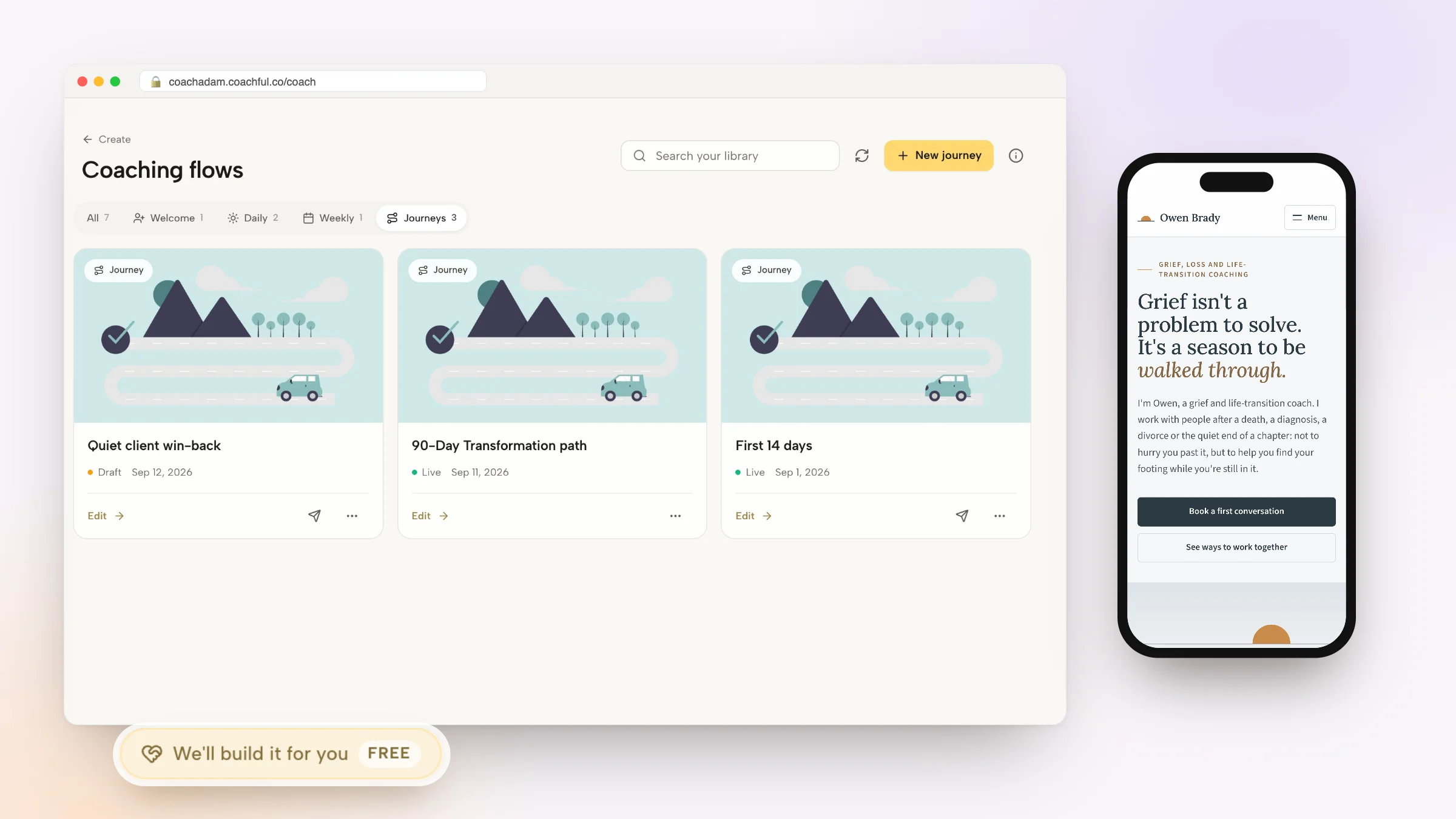
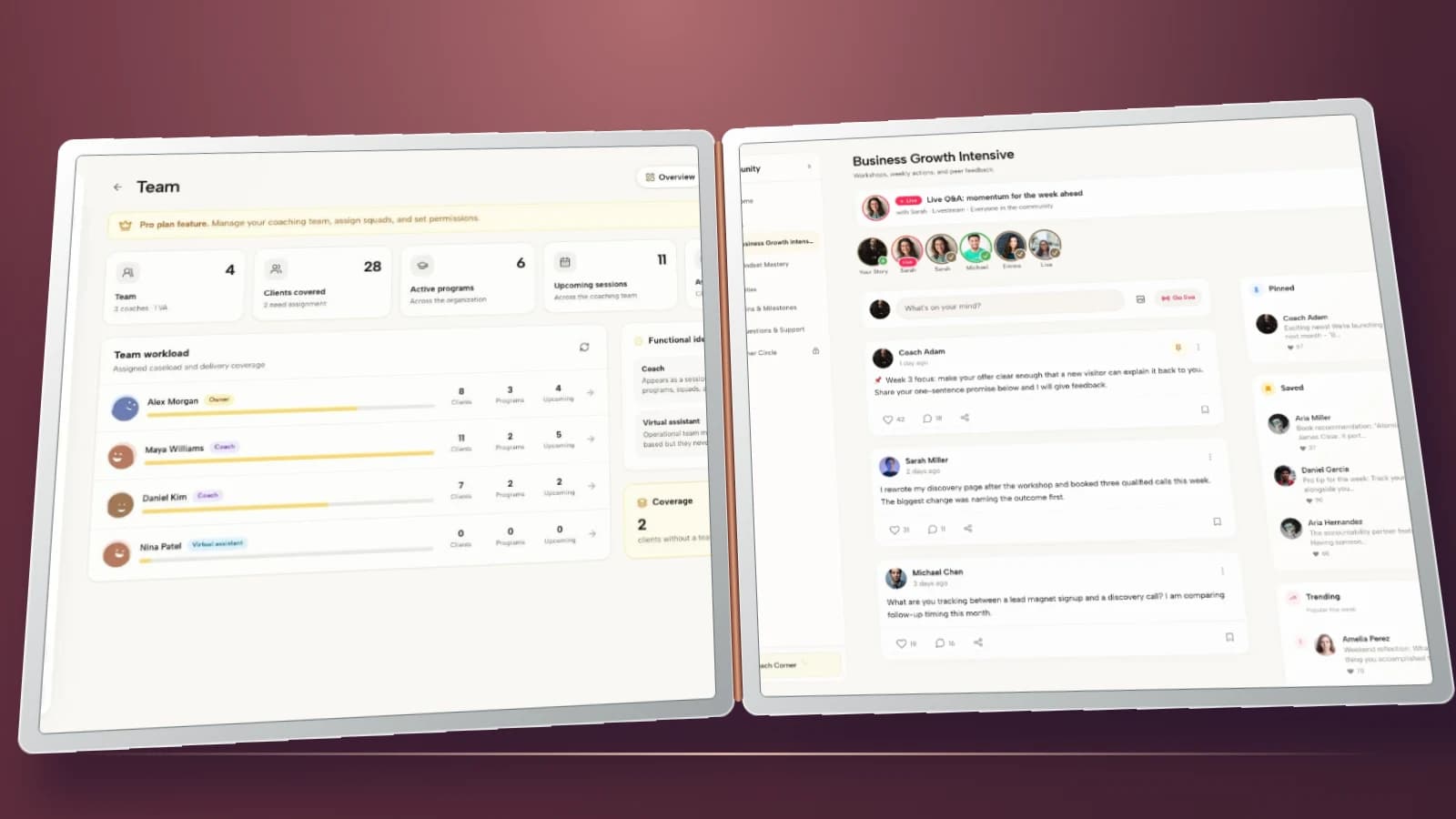
Use your actual offer record as a cross-check, not as the entire affiliate kit. The Coachful demo below shows real offers with different pricing arrangements. It does not prove that an affiliate link tracks a sale, that a discount applies, or that a partner can see private client information.

1. Introduction email: explain who the coaching is for
Use this when: the partner has a permission-based email audience with a relevant problem and wants to introduce your offer. The message should make a useful connection, disclose the relationship and lead to information. It should not pretend the sender has taken your program.
Subject: A coaching option for [specific audience]
Preview: The format, fit and details to review.Hi [first name],
If you are [audience] working through [specific decision], you may want to look at [coach's name]'s [offer name].
I may earn a commission if you enroll through my link.
The offer includes [verified format and scope] over [duration]. It is designed for [fit criteria], rather than [important exclusion].
[Optional: one truthful sentence explaining why this is relevant to your audience. Do not imply personal participation unless you actually participated.]
The full dates, investment, terms and [application or enrollment] process are here: [partner's verified link].
Read those details before deciding. [Coach's name] can answer questions about the service through [approved contact route].
[Partner's name]

The optional sentence is where the partner's voice belongs. A newsletter writer might connect the topic to an issue their readers frequently raise. A former participant may describe a genuine, permitted personal experience. Neither needs to manufacture a dramatic before-and-after story.
Remove “at no extra cost to you” unless you have checked that statement against the actual purchase arrangement. A disclosure should explain the financial connection accurately; it is not a place to add reassuring promises by habit. Likewise, do not call a paid offer free because its first conversation is free.
2. Newsletter mention: make the recommendation fit the issue
Use this when: your partner is including a short recommendation within an existing newsletter, not dedicating an entire email to your offer. Give them a compact block that can sit beside the relevant editorial topic. The disclosure should travel with that block.
Partner recommendation: [offer name]
I may earn a commission if you enroll through this link.
If this week's discussion of [topic] has raised a practical question about [specific decision], [coach's name] offers [accurate coaching format] for [audience]. Participants work on [bounded activity or focus], not a promised [unverifiable outcome].
Check the [dates or availability], total investment and fit criteria here: [verified partner link]. [One genuine limitation or participation requirement, if relevant.]

The opening should connect to something the partner actually wrote. Do not give every partner “After our recent conversation about burnout” when most have never discussed it. Supply optional angles, such as changing roles, managing a first team or rebuilding an exercise routine, only where your coaching genuinely addresses them.
Keep the scope proportional to the space. A short recommendation can send readers to the details; it should not compress important exclusions into illegible footnotes. If a material condition changes the invitation, include it in the recommendation or reconsider whether the format gives you enough room.
3. Social caption: disclose before the link disappears
Use this when: a partner shares your offer in a feed post or caption. Treat the placement as part of the copy task. A disclosure hidden after a long story, behind a “more” expansion or among hashtags may be easy to miss.
Ad. I may earn a commission if you enroll through my link.
Considering [specific decision]? [Coach's name]'s [offer name] is a [verified format] for [defined audience].
You will work on [actual coaching focus or activity]. It is not [important limit], and [honest participation requirement] matters.
Review the format, investment, dates and terms through [the actual link location]. The next step is [application, fit conversation or enrollment], not a guaranteed place.

Use a disclosure that is clear in the language of the promotion and appropriate to the relevant jurisdiction and platform. The example above is a starting point, not a universal wording rule. Do not use an ambiguous label as a substitute for explaining the connection.
For Instagram Stories or other image-led formats, the disclosure needs to be readable in the content people actually see. For video, do not assume a caption alone handles the spoken endorsement. The US Federal Trade Commission's Disclosures 101 guidance explains placement across social formats, including video and live streams. Other jurisdictions can impose additional requirements.
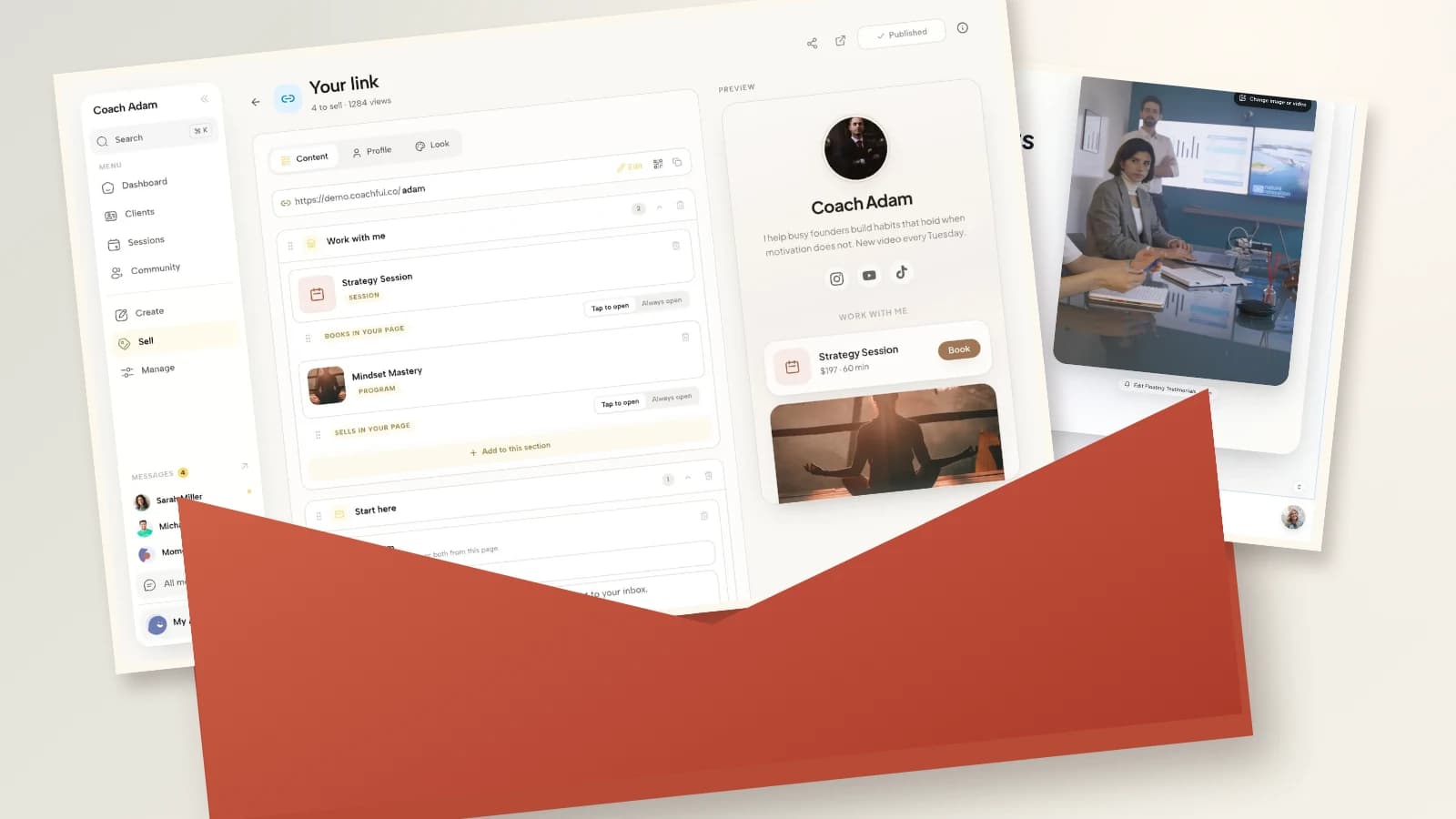
Check the link location as carefully as the words. “Link in bio” is unhelpful if the bio still points at last month's event. Coachful's real links workspace below illustrates the destination-management side of the handoff. It is not evidence that this fictional partner's tracking or social account is configured.

4. Spoken recommendation: write for a human voice
Use this when: a partner mentions the offer on a podcast, webinar or recorded video. Give them a short script with a disclosure they can say aloud, a factual description and an intelligible next step. They should read it aloud before recording and replace words they would never use.
“A quick disclosure: I may earn a commission if you enroll through the link I share.
[Coach's name] offers [offer name], a [format] for [audience] working on [specific focus]. The program includes [one or two verified delivery facts]. It does not promise [important excluded outcome].
If that sounds relevant, the link in [the real episode notes or description] has the full dates, investment, terms and next step. Read those details and decide whether it fits your situation.”
This is not a testimonial script. If the partner has never used the service, do not slip in “I know how powerful this is” or “I wish I had found this sooner” as if those were factual experiences. An honest introduction can stand on relevance rather than borrowed enthusiasm.
For live delivery, plan how the disclosure remains clear when people join partway through. For edited video, check the final cut rather than approving only the script. A visible disclosure removed during editing cannot help the viewer. The coach and partner should understand their own advertising responsibilities rather than assuming the other person handles everything.
5. Deadline reminder: report a real operational fact
Use this when: enrollment genuinely closes, a live event has a confirmed registration cutoff, or the published application window ends. Do not use a deadline template for an evergreen offer with no relevant deadline. A countdown borrowed from somebody else's launch is not your capacity plan.
Subject: [Offer name]: [actual next step] closes [date]
Hi [first name],
I may earn a commission if you enroll through my link.
A factual reminder: [applications or enrollment] for [coach's name]'s [offer name] close on [date, time and timezone] because [real operational reason].
The offer is for [audience], includes [brief verified format] and starts [confirmed date]. Review the total investment, participation requirements and terms here: [verified partner link].
If the timing or scope does not fit, do not rush the decision. [Accurate alternative, if one genuinely exists.]
[Partner's name]
Say “applications close” when acceptance requires review. Say “enrollment closes” when that is the actual event. Do not imply a reader has a reserved place merely because they opened an affiliate email. Avoid invented seat counts, unverified price rises and repeated “last chance” messages after the stated closing time.
When the deadline passes, tell partners to stop using the reminder and update the destination. A correct sentence on Monday becomes misleading if it remains in a scheduled post after the offer changes. Give the kit an expiry or review date that reflects the campaign.
Keep the promotional promise and landing page consistent
Every template needs a destination that confirms the same audience, scope, format, price and next step. A partner should not promise a short workshop and send readers to a long private-coaching package. Nor should the email imply instant enrollment when the page asks for an application.

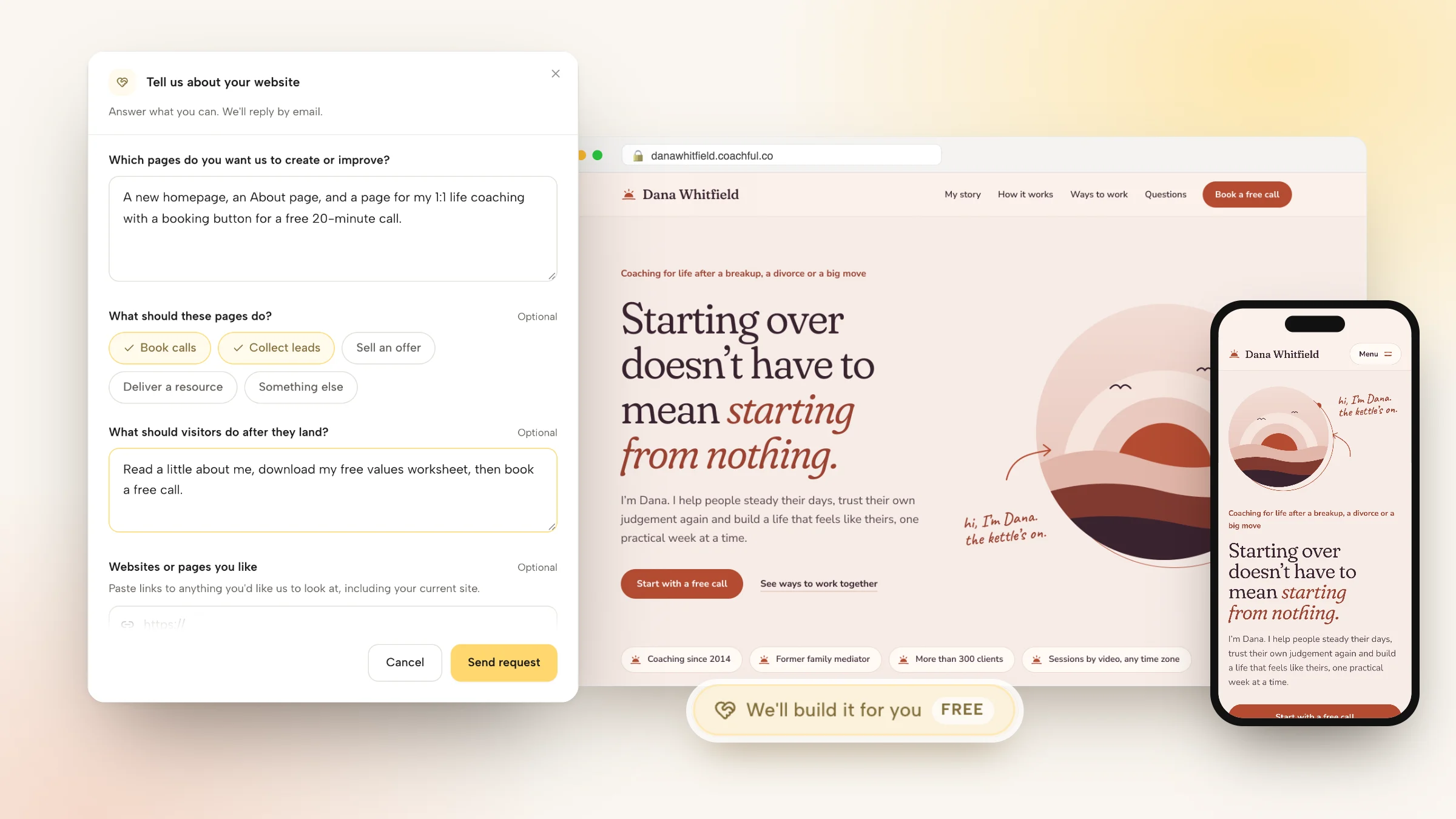
The real Coachful website editor above is useful product proof for checking a public destination. The demo page is not an affiliate landing page for these templates. Use your actual published page for the test, and check its phone view, terms and working links without a staff login.
Open the partner link in a fresh browser, follow the intended route and check the destination after any redirect. Use an appropriate test environment for purchase and attribution checks. Never create a live charge just to prove the copy works. Record what you tested rather than treating a click as proof of an attributed purchase.

A disclosure, an attribution link and marketing permission solve different problems. The disclosure explains the incentive. Tracking supplies evidence under the agreed arrangement. Permission determines whether that person may receive that communication. None automatically supplies the other two.
What to include in the affiliate swipe-copy pack
Keep a single approved version in a place both sides can access without exposing client records. Label the offer, version date, owner, valid promotion period and contact for corrections. Include the five formats above only when the partner actually uses those channels.
- Approved facts: the offer description, audience, limits, delivery details, investment and current destination.
- Adaptation notes: which facts must stay accurate and which openings or examples the partner can rewrite.
- Disclosure instructions: the relationship to explain and the placement needed for each intended format.
- Approved assets: images, logos and quotations with the necessary rights, permissions and accurate captions.
- Stop and correction process: who to contact, what changes require a pause and how outdated materials are withdrawn.
Do not require an affiliate to sound like a cloned version of the coach. Protect the facts, not every adjective. A good approval process removes an invented guarantee and catches a broken link without turning an independent recommendation into a fake first-person brand script.
If a partner wants to use client quotations, supply only wording you have permission to share in that promotional context. Do not hand over session notes, private progress reports or a list of paying clients as “proof.” Even identifying someone as a coaching client can disclose information they did not agree to make public.
A quick approval check before a partner publishes
- Truth: Can you substantiate every service fact, experience claim, result and named relationship?
- Connection: Is the incentive explained clearly where the recommendation appears?
- Fit: Can the intended reader tell who the offer serves and what it does not do?
- Destination: Does the exact partner link lead to the current matching page?
- Permission: Are the channel, audience contact and supplied assets appropriate for the intended use?
- Timing: Are dates, availability and urgency statements still true at publication time?
- Ownership: Does someone know how to correct or stop the promotion promptly?
Keep commercial terms separate from this creative approval. For the agreement itself, see the coaching referral agreement guide. For commission calculations, use the agreed cash and attribution rules rather than a percentage suggested by a copywriter. Swipe copy does not decide whether a paid arrangement is professionally or legally appropriate.
If the handoff is currently messy, first compare the promotional wording with your offer and public page. Try the interactive Coachful demo to inspect those surfaces together before moving real partner materials. The useful test is whether the promised next step and the page a reader reaches agree, not whether you can produce more promotional copy.
Frequently asked questions
Should affiliates copy my wording exactly?
Usually not. Let them adapt the opening, voice and relevant audience connection while keeping verified offer facts and adequate disclosures accurate. Do not let them invent personal use, qualifications or results. Explain which changes need approval instead of calling every paragraph mandatory.
Can I write a testimonial for an affiliate to post?
Do not supply invented first-person experience. You can help edit a genuine account for clarity with the person's approval, while preserving its truth and relevant context. An introduction from someone who has not used the service should remain an introduction.
Does every affiliate promotion need a discount?
No. Compensation to the partner and a discount to the buyer are separate commercial choices. A relevant recommendation can lead to the ordinary offer. Do not promise a saving, special access or extra benefit unless the actual purchase arrangement provides it.
How many templates should I give a partner?
Enough for the channels they will actually use. An email-focused partner may need two formats, not a folder of twenty captions. Start with accurate facts and a tested destination, then supply useful variations when the audience or placement changes.
Sources and limits: FTC disclosure guidance and current affiliate-resource search results informed the format and risk checks. The templates and approval process are original editorial guidance for coaches. No search volume, conversion rate, standard commission or automatic Coachful affiliate publishing or payout capability is asserted.