AI Intake Triage for Coaches That Keeps Follow-Up Human

Monday morning, fourteen new inquiries. One is a perfect-fit client ready to start this month. Several are curious but months away. One is from someone in real distress who needs a referral, not a sales call. You answer them in the order they arrived, so the perfect-fit client waits until Wednesday and books with someone who replied first. Or you switch on an automated responder to keep up, and the people you most want to work with get a reply that reads like a machine.
Both mistakes cost the same thing: the clients who were ready, and the trust of the ones who were not yet. The International Coaching Federation describes the opportunity in a piece on AI in coaching sales: "AI-driven CRMs or automated outreach software can help identify and nurture leads." It adds that AI "can process intake data" such as contact forms or client applications "and gauge where someone fits into your business funnel." The same article is blunt about the risk: "AI can frustrate people when used too aggressively," and "Too many businesses embrace AI as if it will replace the entire client journey. But that's too much, too quickly."
The short answer: let AI read and sort; keep replying and deciding human. Write your own criteria for fit, readiness and urgency, have AI summarise each intake against them and order your follow-up queue, and then write every first reply yourself. AI can draft; you edit and send. Anything sensitive, such as someone in crisis, goes straight to you, never through an automated path. Tell people a person reads their application, and make that true.
Coachful details were checked on 3 October 2026.
What AI should and should not do in coaching intake
Good jobs for AI:
- Summarising a long application into a few lines in the person's own words.
- Checking answers against criteria you wrote and suggesting a bucket.
- Ordering your follow-up list so the most urgent and best-fit inquiries come first.
- Drafting a first reply for you to rewrite, and preparing questions for the discovery call.
Jobs that stay with you:
- Sending any message to a prospect. Drafts are fine; auto-sent replies are where people start to feel processed.
- Deciding someone is not a fit, and how to tell them.
- Anything involving distress, safety or a possible need for therapy or medical help.
- The discovery call itself. As the ICF piece puts it, "AI can't 'be present' with you."
Write your triage criteria before AI touches the data

AI can only sort well against rules you have made explicit. Write them down in plain language:
- Fit: the people and problems you coach, and the ones you do not.
- Readiness: signs someone wants to start soon, such as a clear goal, a timeframe or a question about how to begin.
- Practical match: availability, format and, if you ask, budget range.
- Red flags for personal review: mentions of crisis, self-harm, a current mental health emergency or anything that suggests coaching is the wrong service right now.
Then define four buckets: book a call, nurture, not a fit, refer kindly and review personally today. Every inquiry lands in one, and every bucket ends with a reply from you. For people who are interested but not ready, a thoughtful nurture path works better than pressure; see turning a lead magnet into discovery calls and segmenting a newsletter by client stage.
Matt Paiva explains his approach to using AI for lead qualification. The principle carries over to coaching: clear criteria first, AI sorting second, people in the loop. Source: YouTube.
Design intake questions that both you and AI can read
- A few structured questions (timeframe, format preference, how they heard about you) that sort cleanly.
- Two or three open questions ("What would be different if this went well?") that carry the person's voice into the summary.
- One safety-aware question or note pointing anyone in crisis to appropriate support, so those answers are flagged for you.
- A short notice telling people who reads their answers and whether you use software to organise them. If AI is involved, say so plainly and avoid pasting sensitive details into tools you have not vetted. See AI and client consent.
Keep the form short enough that ready clients finish it. For how intake fits with booking, see keeping discovery call bookings safe.

Prioritise human follow-up without sounding automated
- Set reply targets by bucket: same day for "book a call" and "review personally today," within a few days for nurture.
- Open with their words, not your template. "You said Sunday nights feel like dread. That's exactly where we'd start." No AI summary sounds like that unless you rewrite it.
- Never send an AI draft unedited. Read it aloud; if it does not sound like you, rewrite it.
- Make the next step one click: a booking link for ready people, a useful resource for nurture, and a warm referral for those who are not a fit.
- Review the sorting weekly. Look at what AI put in each bucket and correct your criteria where it got people wrong.


Use AI to prepare for the discovery call, not to run it
Before the call, an AI brief can pull together what the person wrote, what they seem to want and two or three questions worth asking. Then close the brief and listen. The call is where they decide whether they trust you, and a summary cannot do that part. For what happens after the call, see following up after a discovery call, and for whether to charge for that first conversation, discovery session vs paid first session.

Mistakes that make AI intake feel cold
- A chatbot that pretends to be you.
- Automatic rejections with no human reply.
- Sorting mainly by budget, so good-fit people with modest means never hear back.
- Letting AI handle messages that mention distress.
- Never checking how AI sorted people, so mistakes repeat for months.
- Pasting private intake answers into tools without telling applicants.
For limits on client-facing AI more broadly, see setting up an AI coaching assistant that stays in its lane.
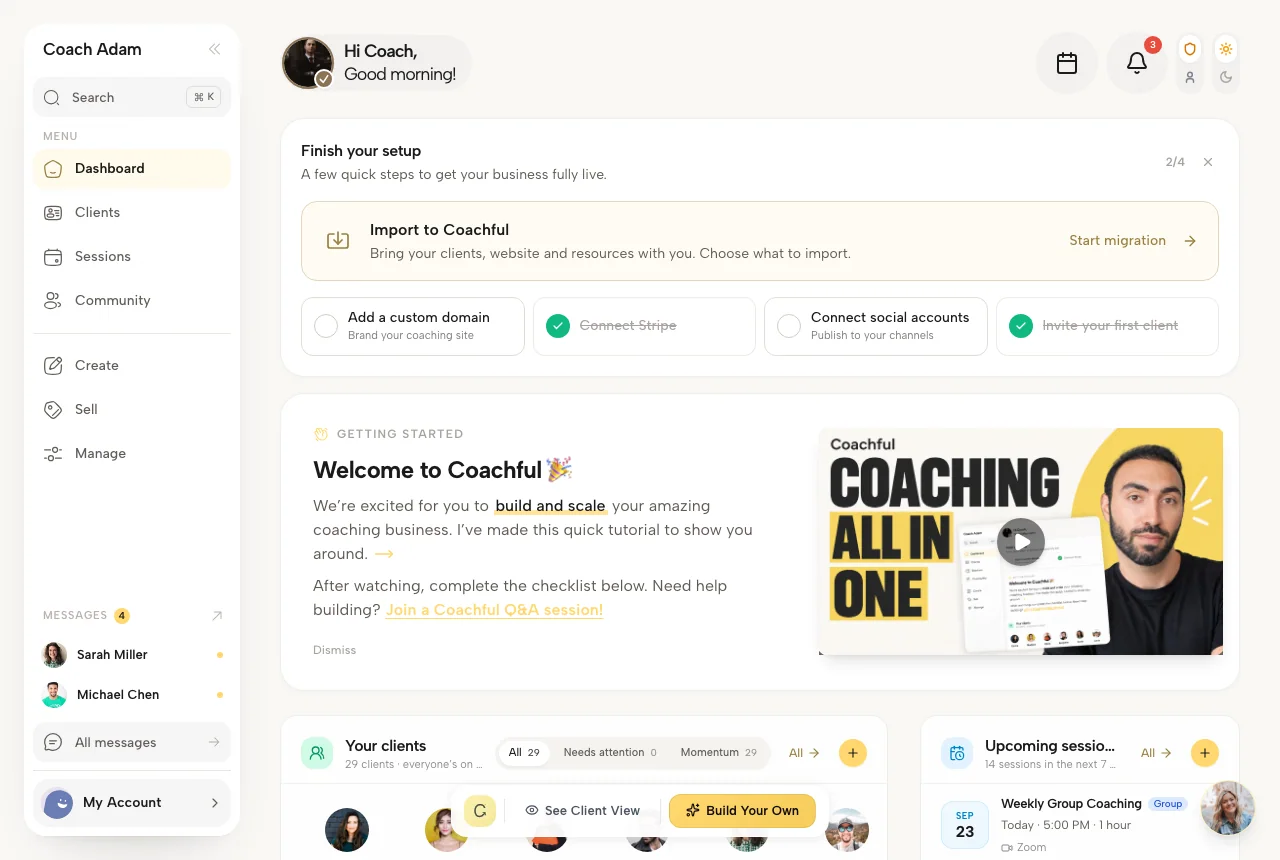
Running intake triage in Coachful
Coachful does not decide who is a fit; your criteria and your judgment do. What it gives you:
- Intake built into booking: questionnaires and intake fields on booking pages, attached to the client record, and application funnels when you want to screen before a call.
- Rule-based scoring you control: form questions can carry categories and weights, and a scored result can drive routing and automations, so the logic is yours and visible.
- A follow-up queue: a leads view with sources, stages and dated follow-ups.
- An AI assistant that prepares you: Michelle works from your live practice context, briefs you before sessions and asks for confirmation before taking actions.
- Nurture without pressure: email sequences for people who are not ready yet, with your personal first reply still coming from you.
- Discovery calls on built-in video, included in the subscription, so there is no separate video tool.
For a wider look at AI tools, see the best AI tools for coaches. Coachful has a 7-day free trial, card required, no charge during the trial, cancel in one click.
Frequently asked questions
Can AI qualify coaching leads?
AI can summarise intake answers and suggest where someone fits against criteria you write. The decision about fit, and the message that tells the person, should stay with you, especially for anyone who is not a fit or who mentions distress.
Will prospects feel automated if I use AI for intake?
Not if AI works behind the scenes and every reply comes from you. People feel processed when they receive auto-sent replies, generic templates or chatbots posing as the coach. A personal first reply that uses their own words makes the difference.
What should a coaching intake form ask?
A few structured questions that sort cleanly, such as timeframe, format and how they found you, plus two or three open questions in their own words. Add a note pointing anyone in crisis to appropriate support, and tell applicants who reads their answers.
How quickly should I reply to a new coaching inquiry?
Set targets by priority: the same day for ready, best-fit inquiries and anything flagged for personal review, and within a few days for people who are exploring. Triage exists so the most important replies are not stuck behind the rest.
Should I tell applicants I use AI?
Yes. A short note saying what you use, what it does and that you personally read every application builds trust, and it lets people decide what to share.
What should never be automated in coaching sales?
The first personal reply, any "not a fit" message, anything involving distress or safety, and the discovery call itself. Automate sorting, reminders and preparation; keep the relationship human.