Coaching Contract Amendment Template: A Paid Extension Example

Nour
Founder, Coachful
A client wants two more sessions and a longer delivery window. Can you just change the package and send another invoice? Not safely as an operating habit. First document exactly what both parties are changing, obtain the acceptance your existing agreement and applicable law require, then bring billing and delivery into line with that accepted version.
A coaching contract amendment can record a narrow change without making everyone reconstruct the original engagement. The useful document says which agreement it changes, what is different, when the change takes effect, what it costs and what stays the same. It should not quietly turn an extension into a new set of restrictions.
This guide provides an educational amendment scaffold and a worked paid-extension example for coaches. It is not legal advice, a jurisdiction-specific contract or a promise that a particular signature method will be sufficient. Have a suitably qualified lawyer review the wording and execution requirements for your practice before using it with paying clients.
When should a coach use an amendment?
Consider an amendment when the same parties want to continue substantially the same engagement with a limited, identifiable change: adding sessions, extending a completion date, changing a payment schedule or revising a clearly defined deliverable. Begin by reading the existing agreement's variation clause. It may specify who must approve changes and how.
A new engagement, a replacement agreement or a separate statement of work may be clearer when the service changes substantially. Moving from individual coaching to a company-wide leadership programme is not merely a date extension. Nor should adding a paying employer silently give that employer access to existing private session content.
Do not use an amendment to disguise a dispute settlement, release of claims or retroactive acceptance of unexpected charges. Those situations can require different advice and documents. A client saying “could we do a bit more?” is the beginning of a proposal, not consent to whatever fee you later enter.

Start with a change schedule, not legal-sounding prose
Write the commercial facts in ordinary language before drafting clauses. This makes contradictions easier to spot. Separate the service originally purchased, what has already been delivered, what remains due and the additional work being proposed.
Here is a fictional example. A coach and client originally agreed six 50-minute sessions for $1,200 USD, with a completion deadline of 30 November. Four sessions have been delivered and the original fee has been paid in full. The client asks for two additional sessions and more time to use the remaining work.
- Original obligation remaining: two 50-minute sessions, already paid for.
- Additional work proposed: two further 50-minute sessions for an additional $400 USD.
- New remaining total: four sessions, not eight and not a fresh six-session package.
- Revised completion date: 31 January of the following year, written with the year in the actual document.
- Unchanged boundaries: the existing coaching scope, confidentiality arrangements and between-session support remain unchanged.
These are invented teaching figures, not suggested coaching rates. The $400 is an additional fee, not the revised total price. The combined service fee is $1,600 before any separately applicable tax treatment. Decide and state that treatment accurately rather than copying “tax included” or “plus VAT” from someone else's business.

Coaching contract amendment template
Use the following as a drafting scaffold to discuss with your legal adviser. Replace every bracketed field and delete inapplicable alternatives. References such as “clause 2” must match the actual signed document, not a generic template you found later.
Amendment [number] to [agreement title]
Parties and original agreement. This amendment concerns the agreement dated [full date], version [identifier if applicable], between [correct legal name of coaching business] and [correct legal name of client], together with [other contracting party, only if applicable].
Purpose. The parties propose to [brief factual description of the change].
Changes to services. With effect from [agreed effective date, subject to the acceptance arrangements below], [identify clause or schedule] is [replaced or supplemented] as follows: [complete revised wording, including sessions, duration, delivery format, what remains from the original purchase and any new work].
Changes to dates. [Identify the specific original deadline.] The revised deadline is [full date including year]. [State whether any other dates or existing bookings change.]
Additional fee and payment. The additional fee for the additional services described above is [amount and currency]. [State the applicable tax treatment.] Payment is due [specific date or precise agreed event]. [State what happens to any existing unpaid balance; do not leave this implicit.]
Unchanged terms and consistency. Except for the changes expressly identified in this amendment, the original agreement remains unchanged. [Have your adviser specify how any conflict between this amendment and the original agreement is resolved.]
Acceptance and effective date. [Identify the required parties, their authority, the accepted execution method and when the amendment becomes effective.]
Execution record. [Provide the appropriate signature or other approved acceptance fields, names, capacities and dates for each required party.]
The purpose sentence explains the change; it does not replace the operative wording. “We are extending the coaching” still leaves session count, price and end date unanswered. Likewise, an “unchanged terms” sentence cannot rescue a document that accidentally contradicts the original payment or termination clauses.

Fill the scaffold for the paid-extension example
For the fictional engagement above, the revised service wording could identify “the two undelivered sessions under the original agreement plus two additional 50-minute individual coaching sessions”. The completion-date provision would identify the original 30 November deadline and replace it with 31 January, using complete dates and years.
The additional-fee provision would identify $400 USD for the two additional sessions. It would also state that the original $1,200 fee has been paid and that no new fee is being charged for the two undelivered original sessions. Add the agreed payment date and accurate tax treatment after checking the relevant records.
Before choosing the new deadline, check that you can genuinely deliver four sessions within it. A generous-looking extension is unhelpful if your available calendar offers only one suitable appointment. Account for your own planned absence and the client's realistic availability without promising a fixed recurring slot you have not reserved.
Keep the example narrow. If you also change session length, support access, cancellation terms and reporting obligations, list those changes explicitly or reconsider whether a clean replacement agreement would be easier to understand. Do not let a “simple extension” become a surprise renegotiation.
Get acceptance before treating the change as agreed
Send the proposal privately to the correct person and explain what decision you need. A useful covering message is short enough that the client can find the actual change, rather than guessing which attachment supersedes which.
Subject: Proposed extension to our coaching agreement
Hi [name],
Following our conversation, attached is the proposed amendment to our agreement dated [date]. It keeps your two remaining original sessions and adds two 50-minute sessions for an additional $400 USD, with the stated tax treatment and payment date.
The proposed completion date is [full date]. The other terms remain unchanged except where the amendment expressly says otherwise.
Please review it and use [the required acceptance method] if you agree. This is a proposal until the required acceptance is complete. If anything differs from your understanding, let me know before accepting.
[Coach name]
This is original sample copy, not legal acceptance language. Use your adviser's process and your original agreement. Depending on the jurisdiction and circumstances, amendment formalities can involve signatures, authority, consideration or other requirements. Do not assume that a friendly email reply is always enough, or that electronic signature automatically solves every legal question.

For corporate coaching, identify the contracting parties separately from the person receiving coaching. The coachee may be able to discuss delivery preferences but not authorize extra company spending. A purchase-order change may be required as well as contractual approval. Obtain the approvals actually needed without forwarding private coaching material to procurement.
Reconcile the money without charging twice
Once acceptance is complete, check billing against the accepted document. Distinguish an additional service fee from money already owed under the original agreement. An extension does not automatically cancel an unpaid balance or authorize you to charge a saved payment method.
In the worked example, the original fee is fully paid and the new additional fee is $400 USD. The related invoice description should make clear that it covers two additional sessions under amendment [number], rather than four remaining sessions or a replacement six-session package. Include the correct legal billing details and tax information for your business.
If the original agreement has an unpaid instalment, show that separately in your reconciliation. For example, “existing balance [amount], additional fee [amount]” is clearer than sending an unexplained combined demand. Whether those sums should appear on one invoice or separate documents depends on your accounting setup and applicable requirements.

If money has already been collected incorrectly, do not overwrite the historical invoice to make the paperwork appear consistent. Work with your accountant or payment provider on the appropriate correction. An amendment should create a traceable change, not erase what happened.
Update delivery without changing someone else's engagement
Bring the client-specific service record into line with the accepted amendment. Confirm the remaining session count, delivery window and any agreed access extension. Preserve completed-session history. You are adding two sessions and retaining two, not resetting progress to the beginning.
Be especially careful with shared programmes and public packages. Editing a general offer may affect future buyers while doing nothing to an existing enrolment. Editing a shared programme may affect more people than this client. Inspect the actual scope of the control before saving changes.

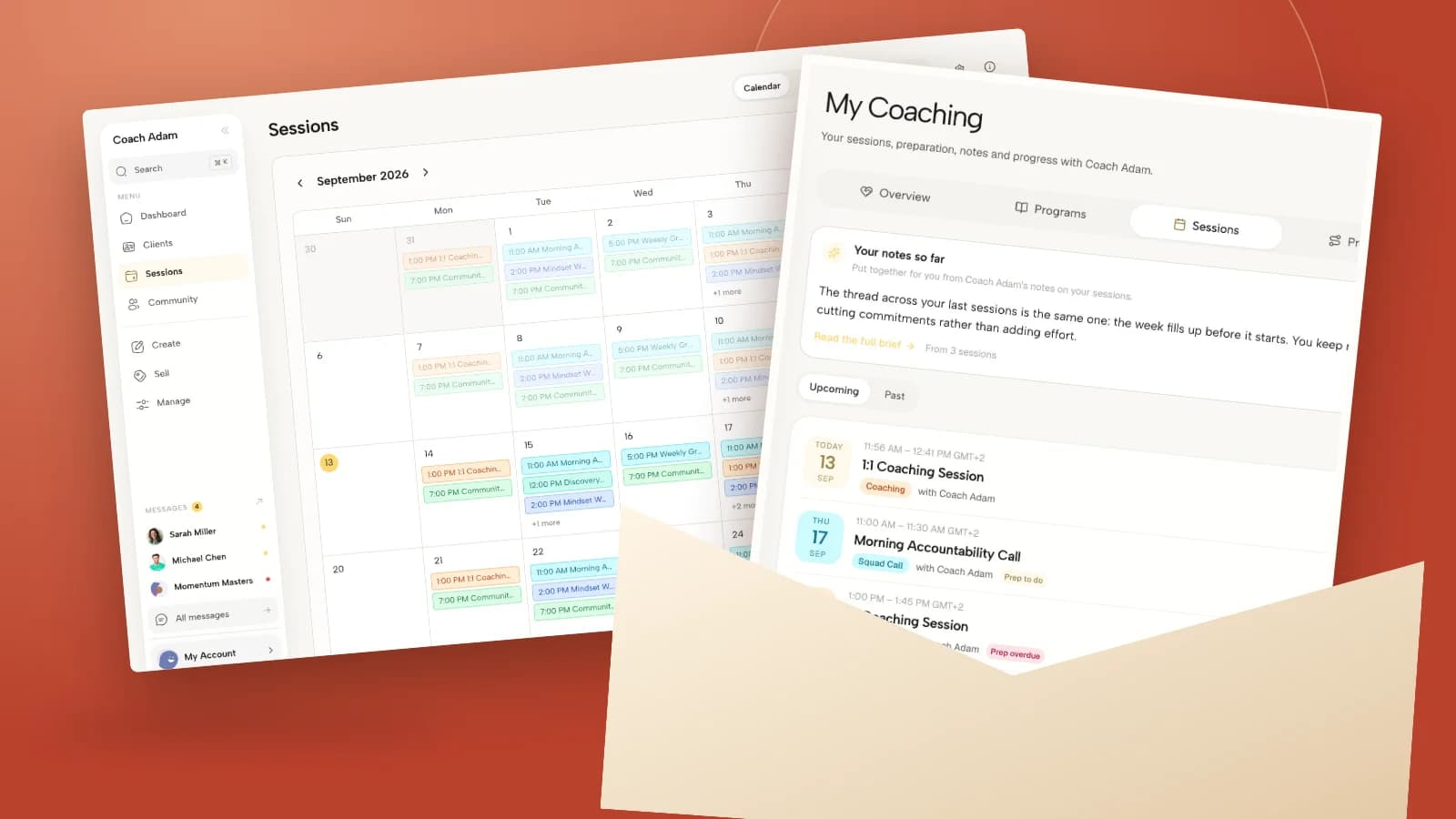
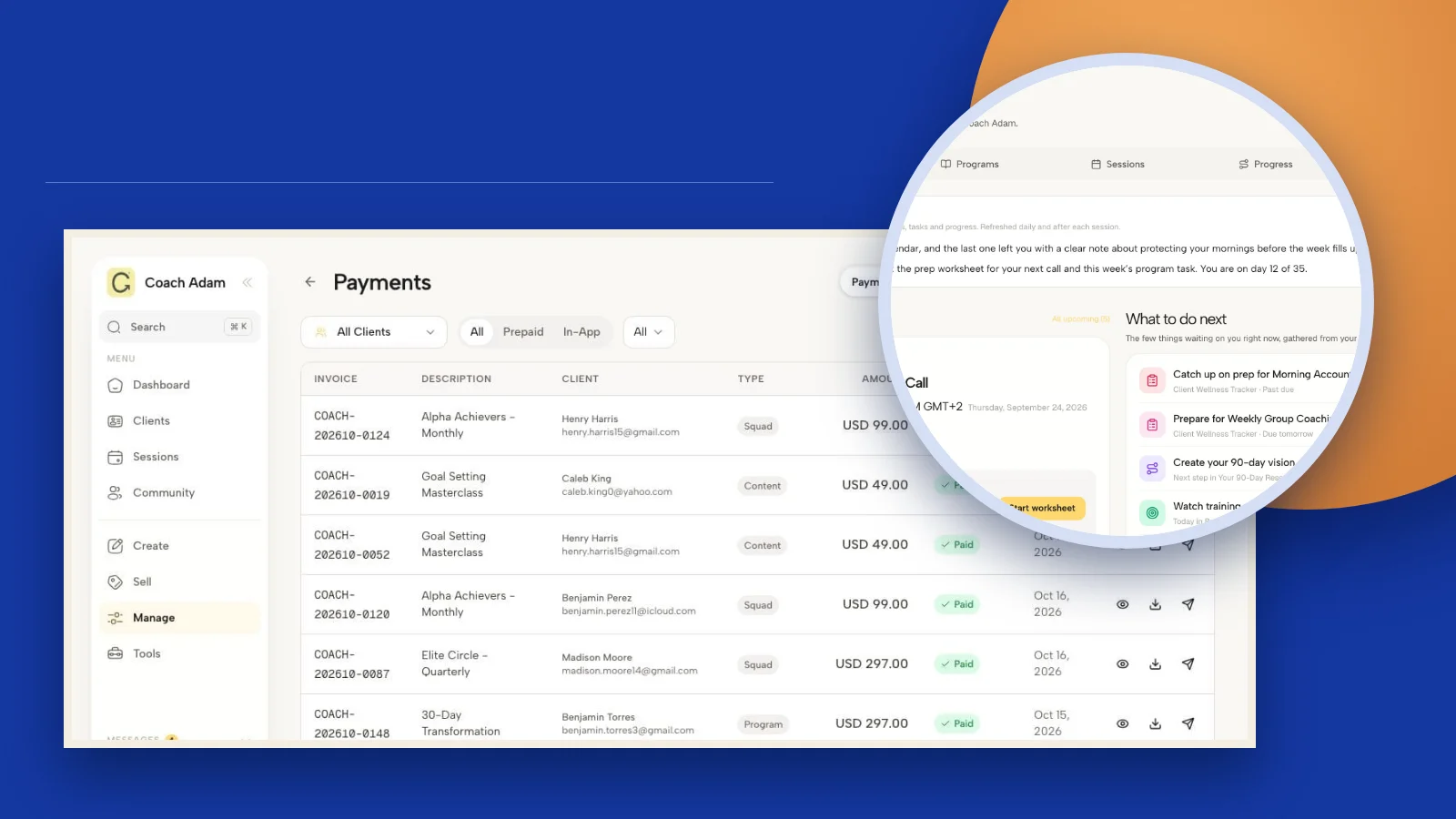
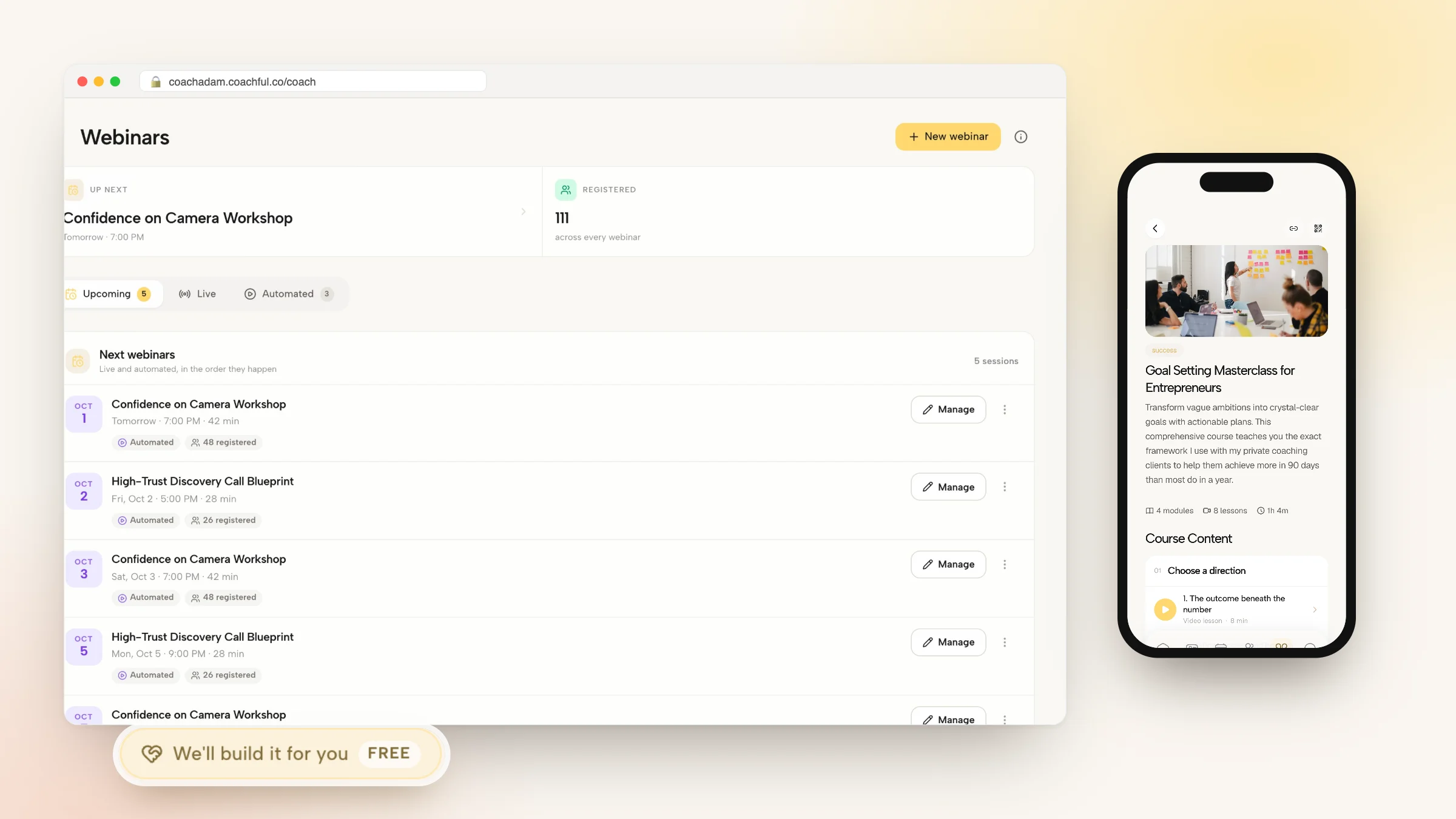
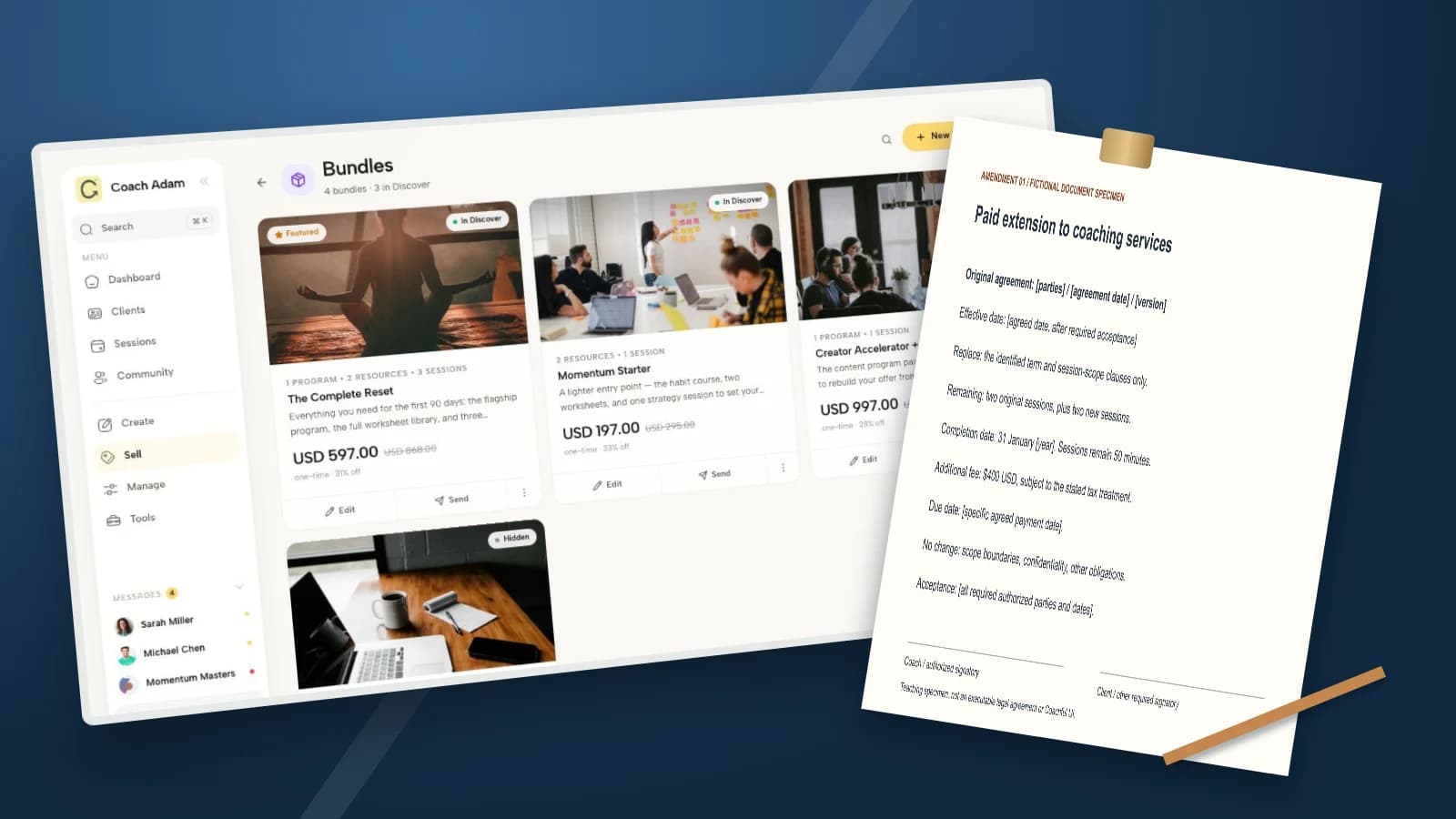
The Coachful demo surfaces in this article show packages, programmes, invoices, individual email and the mobile client experience. They demonstrate places a coach may need to compare, not a native amendment generator or an automatic contract-to-billing workflow. The screenshots are illustrative demo states; no real client engagement was changed to create this guide.
After implementation, view the arrangement from the client's side. Can they see the relevant programme and book the intended remaining work? Is access consistent with the agreed end date? Does any existing message still tell them their work ends earlier? Do not claim a configuration is complete because the coach-facing record looks right.

Keep an amendment record you can reconstruct later
Retain the original agreement and the accepted amendment as separate, identifiable records according to your appropriate retention and security arrangements. Record the version, acceptance date, effective date and the operational changes made. Keep access limited to people with a legitimate need.
A compact internal change log could contain: “Amendment 01; two additional sessions; revised completion date [date]; additional fee [amount]; accepted by [authorized parties] on [dates]; implemented by [person] on [date]; billing and client access checked on [date].” Keep sensitive coaching content out of this administrative log.
If the proposal changes during review, give the new version a clear identity and withdraw the obsolete proposal through your actual process. You do not want the client accepting version one while you implement version two. Avoid filenames such as “final-final-new” that hide the sequence.

Five checks before using the amendment
- Identity: the correct parties, original agreement and authorized signatories are named.
- Scope: existing remaining work and genuinely additional work are separated, with specific clause references.
- Money: the additional fee, currency, tax treatment, payment timing and any existing balance are explicit.
- Timing: the effective date, delivery deadline and any changed bookings are consistent and achievable.
- Proof: the required acceptance is recorded and billing, delivery and client access match the accepted version.
If one of these is unresolved, keep the document marked proposed rather than rushing an invoice to make the arrangement feel settled. Where a client declines the amendment, the original arrangement does not simply disappear. Review your existing obligations and obtain advice if the relationship cannot continue as contracted.
Frequently asked questions
Is an addendum different from an amendment?
People often use the labels differently. An amendment commonly changes existing terms; an addendum commonly adds material. Do not rely on the label to do the legal work. Describe exactly how the document interacts with the original agreement and have that structure reviewed.
Can I extend the deadline without adding a fee?
You can propose a no-additional-fee extension, subject to your agreement and applicable requirements. Say that the fee is unchanged, identify the remaining service and give the revised deadline. “Free extension” should not imply unlimited additional coaching or erase an existing balance.
Do I need a new contract for two extra sessions?
Not necessarily. A narrow amendment may be suitable when the parties and service remain substantially the same. A new package or agreement may be clearer when the original engagement is finished or the new work is materially different. Your existing terms and local legal advice should guide the choice.
Does changing my online package amend a signed agreement?
Do not assume so. A public package describes an offer; an existing client's contract and acceptance history are separate. Changing a sales page or product price is not a reliable substitute for agreeing a change with that client.
Can I backdate the document?
Do not fabricate signature or acceptance dates. If work began before the paperwork was completed, record what actually happened and ask your adviser how to document the intended effect accurately. Distinguish the true signing date from any legitimately agreed effective date.
Make the agreement and the actual service match
The practical job is not producing a more impressive PDF. It is ensuring that the client, the accepted document and your service records describe the same remaining work. Start with the change schedule, settle acceptance, then reconcile money and delivery.
If you want to inspect the operational surfaces before deciding how to manage that handoff, try the interactive Coachful demo. Compare packages, programme delivery, invoicing and the client experience. Use qualified legal advice for the amendment itself; software is not a substitute for it.
Related guidance: start with the coaching agreement template for the original engagement, or the guide to resetting coaching boundaries when the problem is relationship drift rather than buying additional work.
Source boundary: this is original operational guidance, not a validated legal instrument. The professional market includes separate modification documents, such as the Coaches & Company modification addendum. Its existence supports the distinction between an original client contract and a later modification; it does not validate this scaffold or establish the law in your jurisdiction.