Failed Payment Email Templates for Coaches: 5 Examples

Nour
Founder, Coachful
A failed payment email should name the attempted charge, explain the next verified action and say what happens to coaching delivery. Do not assume the client has cancelled, diagnose an expired card without evidence or ask them to buy the package again. Start from the existing billing record, not your irritation at another admin task.
The awkward moment is familiar: a payment alert arrives just before a session, and you are suddenly deciding whether to coach, chase or cancel. Separate those decisions. The payment processor tells you what happened to the charge; your agreement and applicable rules determine what you can change about delivery.
These five original templates cover different payment states, not five messages to send to every client. Use them for a verified failed installment or recurring charge. For an invoice that simply passed its due date without a collection attempt, use the separate payment reminder email templates.
Before writing: failed, pending and unpaid are different
A failed attempt means the attempted collection did not succeed. An unpaid invoice may have had no attempt at all. A pending payment may still be processing. Treating all three as “your card was declined” creates unnecessary work and can lead a client to make a duplicate payment.
Open the relevant invoice or subscription and check the current status, amount, currency, installment reference and payer. Look for a newer successful attempt, a pending transfer, a credit or a reply that changes the next action. A dashboard alert is a reason to investigate, not a permanent statement of what the client owes.

Keep billing information separate from session content. “Career coaching installment, invoice [reference]” normally identifies the transaction without describing redundancy fears, a health condition or a relationship problem. Send to the authorised payer, which may be a sponsor rather than the participant. Never copy a manager or group channel to apply pressure.
Choose the template by the current payment state
- First unresolved failure: template 1 gives a factual notice and a secure route to review payment.
- Client authentication required: template 2 points to the existing payment's verification step.
- A real retry is scheduled: template 3 explains the confirmed attempt without adding another charge.
- A delivery decision is approaching: template 4 gives accurate notice of a permitted, specific change.
- The payment succeeded: template 5 closes the loop and stops the failed-payment conversation.

A client who disputes the amount, reports an unfamiliar charge or requests a cancellation should leave the routine reminder process while you investigate. These are not objections to overcome with more persuasive copy. They are new facts requiring a different administrative decision.
1. First failed payment email: factual and easy to act on
Use when: you have verified that an attempted payment failed and remains unresolved. Check whether your processor already sent an equivalent notice before adding another email.
Subject: Please review your [offer name] payment
Hi [first name],
The [currency and amount] payment attempted on [date] for [offer name / installment reference] did not complete.
Please review the existing payment using this secure link: [verified payment-management link]. The page will show the available next step.
[Accurate sentence about the next booked session or current access, if relevant.]
If the amount looks wrong or you have already paid another way, reply to [monitored billing address] so I can check before taking further action.
Thanks,
[your name]
[practice name]
The deliberately neutral phrase is “did not complete.” Do not replace it with “your card expired” unless the payment record confirms that fact and the instruction is appropriate. A generic decline is not a diagnosis of the client's finances.
Replace every bracketed field. These are writing placeholders, not Coachful merge fields or a ready-to-run automation. If you cannot verify the next session's status, leave that sentence out and check it separately. “Everything is fine” is not useful reassurance when you have not looked.

2. Authentication email: ask for approval, not another purchase
Use when: the existing payment specifically requires customer authentication or confirmation. This is different from a confirmed expired card. Stripe's decline-code documentation distinguishes authentication requirements from other failures; follow the actual payment result.
Subject: A confirmation step for your [offer name] payment
Hi [first name],
Your [currency and amount] payment for [offer name / reference] needs a confirmation step before it can complete.
Please open the secure payment link and follow the confirmation instructions: [verified link for the existing payment]. Your bank or payment provider may ask you to approve the transaction.
You do not need to purchase the coaching package again. Please do not email card details, passwords or verification codes.
If the confirmation page does not work, contact me at [monitored billing address] and I will check the existing payment record.
Thanks,
[your name]
Do not ask the client to send a screenshot of a banking screen that exposes balances or account information. Ask for the non-sensitive error wording if needed. Never offer to receive a one-time bank code and complete the approval for them.
The link must belong to the existing transaction and lead to an appropriate secure provider page. Your public coaching offer, homepage or generic booking page is not a substitute. A second checkout can create a second purchase while the original collection remains unresolved.

3. Retry email: describe the actual next attempt
Use when: another attempt is genuinely scheduled and the notice is useful. Confirm the current attempt date immediately before sending. Do not copy a day-three, day-five or day-seven timetable from someone else's billing setup.
Subject: Payment retry planned for [date]
Hi [first name],
The [currency and amount] payment for [offer name / installment reference] remains unresolved. Our billing record currently shows another attempt planned for [confirmed date and time zone, if a time is stated].
If your payment details need attention, review them here before that attempt: [verified payment-management link]. Please do not make a separate purchase to cover this installment.
If you have arranged another payment method with me, reply before the retry so I can check the collection plan.
Thanks,
[your name]
Use “planned,” rather than an exact promise, when the provider can revise the attempt. If you cannot see a reliable next-attempt date, do not send this version. Use the first notice with an accurate action instead.
Stripe's retry documentation explains that retry behaviour depends on configuration and payment conditions, and some failures cannot be retried without a new payment method. A timed marketing sequence is not evidence that a charge is eligible for another attempt.

4. Notice before a permitted session or access change
Use when: you have checked the unresolved payment, the agreement, applicable rules and the real delivery schedule. Give any required notice. This email does not create a right to pause coaching or impose a fee.
Subject: Please contact me about [reference] before [date]
Hi [first name],
The [currency and amount] installment for [offer name / reference] remains unresolved following the attempted payment on [date].
Please review the existing payment here: [verified link], or contact [billing address] by [reasonable response date] if there is an error or you need to discuss an arrangement.
[Include only when verified and permitted: Under [agreed term], [specific future session or service] will be paused from [date and time zone] if the payment remains unresolved.]
[Accurate explanation of any access or support that remains available, if relevant.]
I will confirm any revised payment or delivery arrangement in writing.
[your name]
[practice name]
Specificity matters more than severity. “The session booked for [date] will not go ahead” and “new bookings will be paused” have different practical effects. Neither automatically means previously purchased resources disappear or a client's records should be deleted.

Do not turn payment administration into a coaching intervention. “Your commitment is being tested” is manipulative, not a billing explanation. If the client describes hardship, discuss only the options you can actually offer, document any agreement and update the collection plan before another automated attempt occurs.
For disputed charges, sponsor arrangements, significant balances or uncertainty about suspension rights, get suitable local professional advice. Keep a human available to review exceptions rather than letting a timer make contractual decisions.
5. Payment recovered email: confirm only what has happened
Use when: the relevant payment has actually succeeded and you have checked the delivery status. A newly added card, an email click or a promise to pay does not prove recovery. Avoid duplicating a receipt that already communicates everything the client needs.
Subject: Payment received for [offer name / reference]
Hi [first name],
The [currency and amount] payment for [offer name / reference] completed on [date]. Thank you.
No further action is needed for this payment. [Verified receipt or invoice link, if useful.]
[Accurate delivery update: our next session is [date], or the agreed service has resumed.]
If anything still looks incorrect, contact [monitored billing address].
Thanks,
[your name]
Stop or cancel outstanding failed-payment messages for that billing cycle. Then check any operational change: a cancelled calendar booking may need to be rebooked, while a paused resource may need a separate access check. Do not promise “everything is restored” just because the charge succeeded.

A hypothetical example: one installment, three different facts
Imagine a career coach with a monthly installment of USD 240. The attempt fails on Monday. The processor does not provide a client-actionable reason, so the coach uses template 1 without guessing why. The next session remains booked under the existing agreement, and the email says so only after checking.
On Tuesday the client updates the card. That is an action completed, not money received. The coach checks whether a retry is scheduled before sending anything else. They do not send the recovery email or ask the client to purchase the package again.
On Wednesday the payment succeeds. The coach reconciles that installment, stops its remaining reminders and confirms the unchanged session booking. If the payment had still been pending, the correct record would have said pending. These dates and amounts are illustrative, not a recommended retry policy.

The small discipline is to track payment state, client action and delivery state separately. A card update changes the second. A successful collection changes the first. A verified booking or access decision changes the third. Combining them into one vague “sorted” status is how the wrong email reaches a client who already did what you asked.
Set up the process without creating duplicate notices
Choose an owner for billing communication. Check which notices your payment provider already sends, who monitors replies and who can approve exceptions. Do not add a second automatic email just because a template is available. A personal follow-up should add a missing fact or resolve a practical problem.
Check before every send. Verify the exact invoice or installment, current status, payer and last contact. Suppress or change routine messages when payment succeeds, a dispute needs review, a cancellation affects collection, an alternative arrangement is agreed or the requested action is no longer relevant.
Test with non-client data. Exercise the secure link on mobile, a payment update without success, a successful recovery and a reply requiring human review. Confirm that no message goes to a marketing audience or unrelated sponsor. Do not send real clients test failures or expose payment-management links in public previews.
Keep a minimal audit trail. Record the billing reference, verified state, message date, next action and owner. Store only what you need, with appropriate access controls. A colleague reconciling payments does not need private session notes.
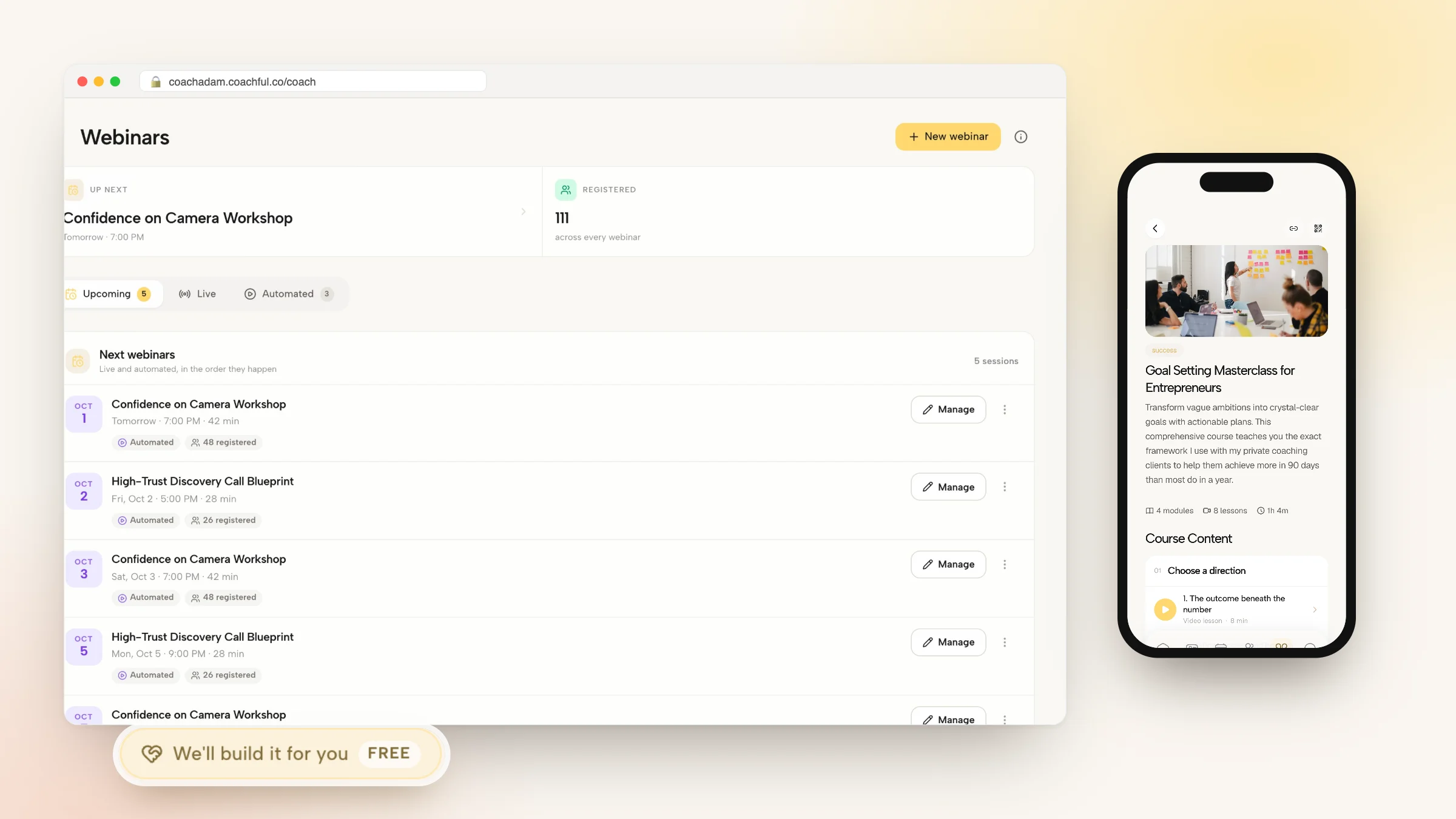
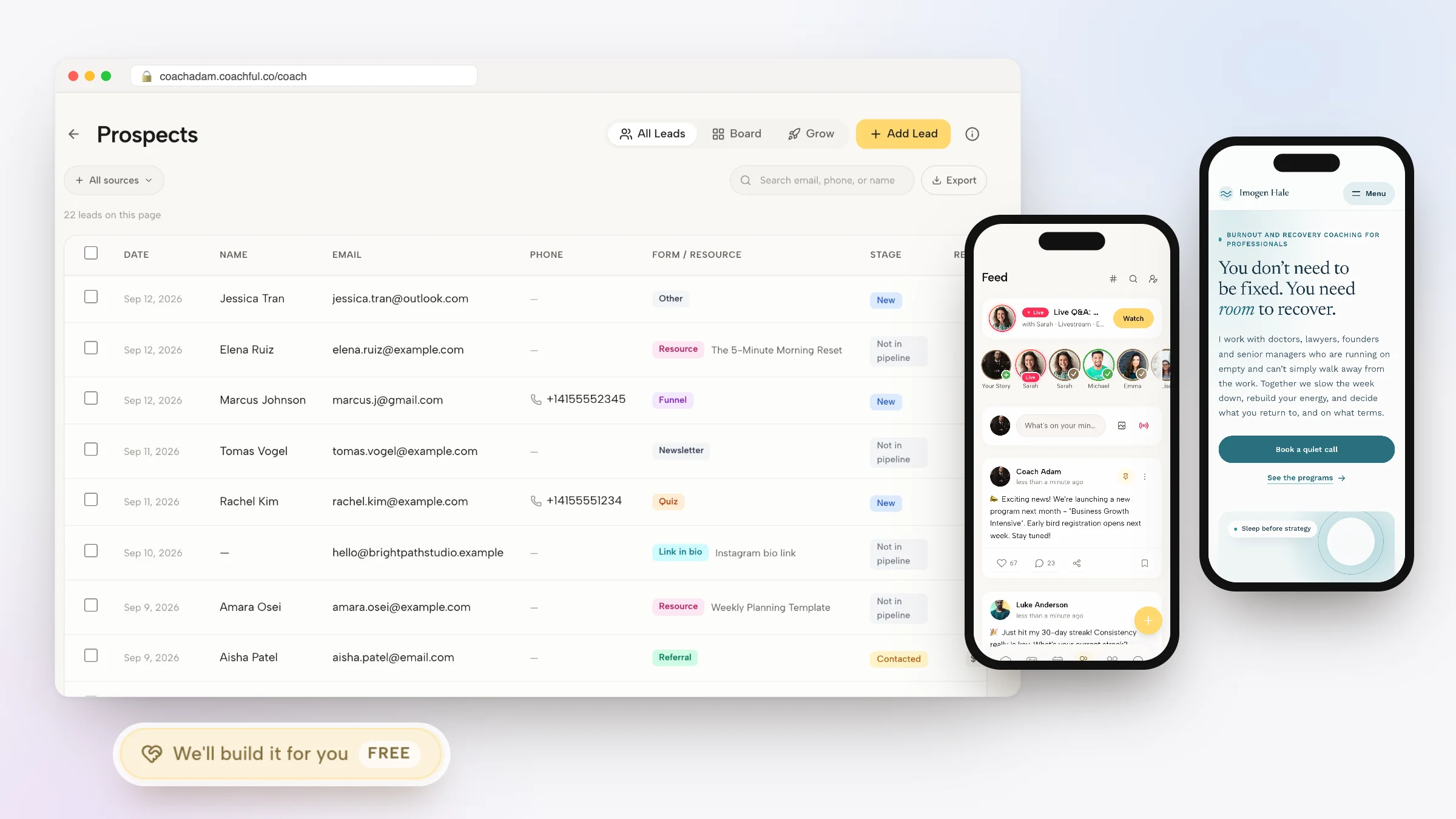
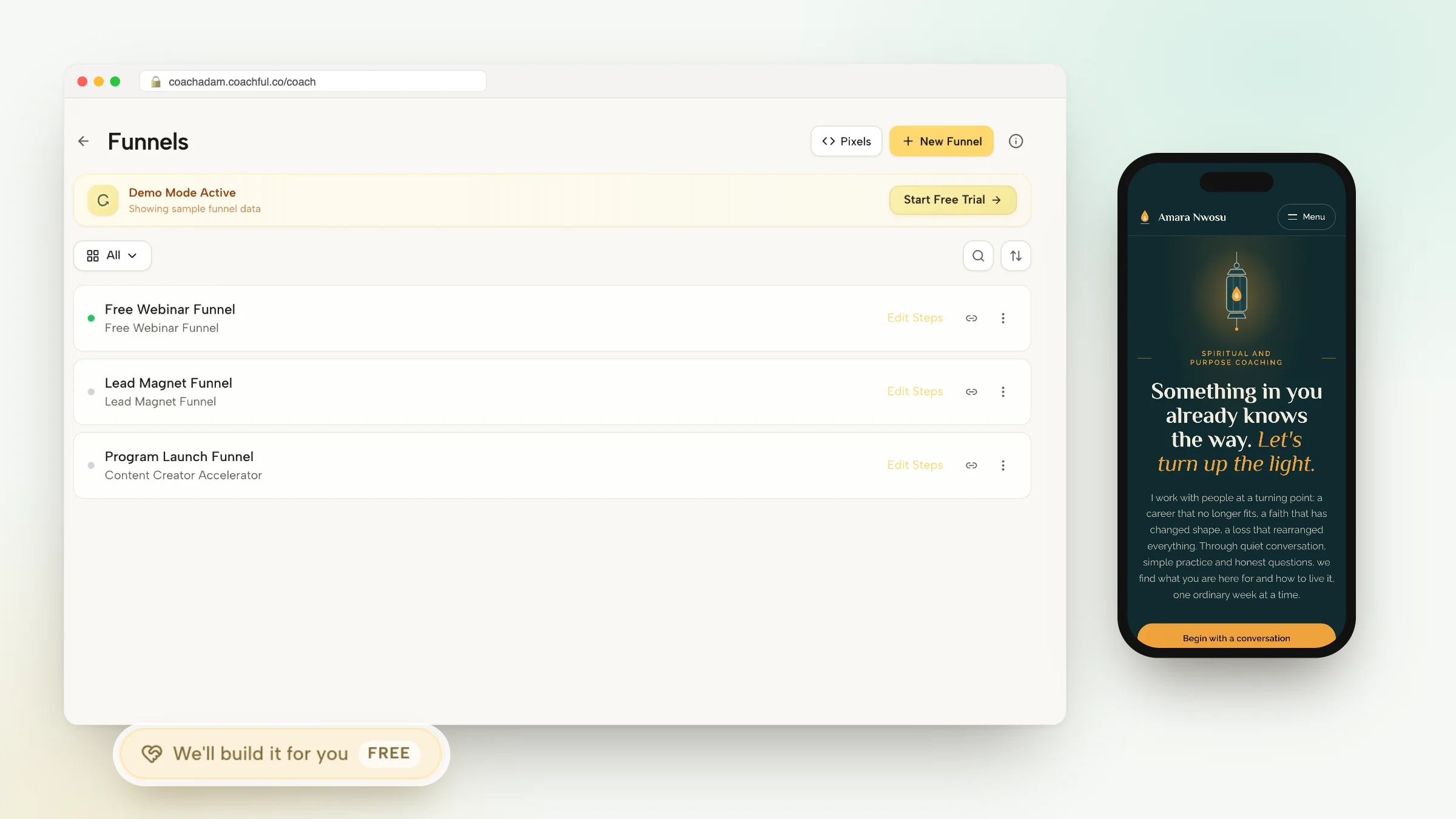
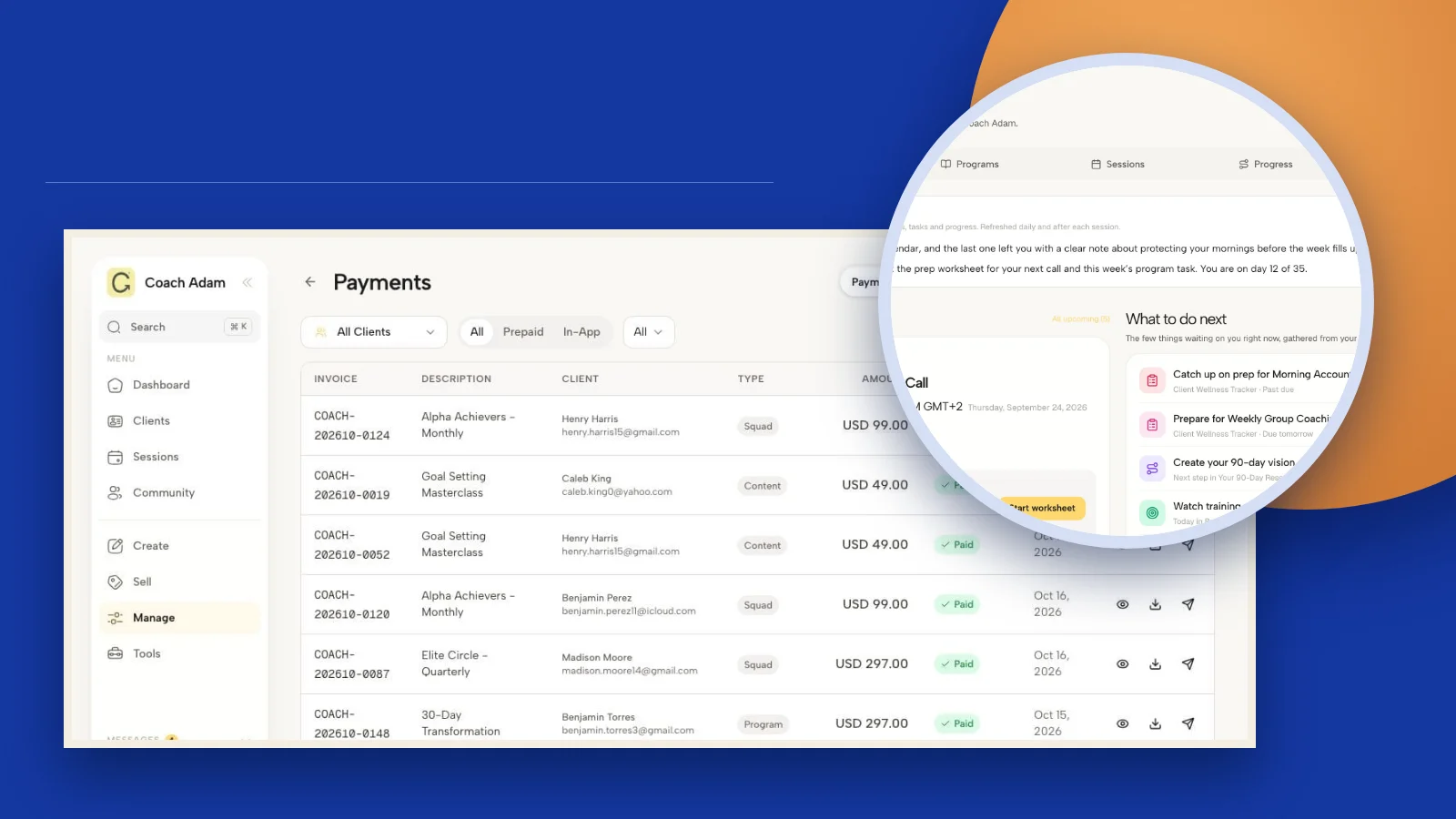
Coachful's failed-payments help guide describes its Stripe-connected billing process. Confirm the actual notices, retry settings and access behaviour in your account rather than treating these editorial templates as configurable built-in messages. The screenshots here show real demo surfaces, not a live client's failure.
If you are evaluating how billing checks connect with your coaching delivery, try the interactive Coachful demo. Inspect the invoice, client and scheduling views with one question in mind: can you verify the payment and the next session separately before contacting the client? That is a more useful test than whether you can send another email.
Frequently asked questions
What should a failed payment email subject line say?
Name the administrative task plainly, such as “Please review your [offer name] payment.” Use “payment retry” only for a real scheduled retry, and “payment received” only after success. Avoid a subject line that reveals private coaching details or claims a cancellation that has not occurred.
Should I say the client's card was declined?
Only when that accurately describes the recorded result. If you do not know the cause, say the payment did not complete and provide the correct secure next step. A pending bank payment, authentication request and expired card require different responses.
How many failed payment emails should a coach send?
There is no universal five-email sequence. These are five alternatives for different states. Match communication to your processor's existing notices, actual attempts, agreement and client replies. Do not send all five or keep sending reminders after recovery.
Can I use a newsletter sequence for failed payments?
Do not assume a timed newsletter sequence knows whether an invoice is paid or who is authorised to receive its details. Use an appropriate private billing channel with verified state checks and recipient controls. Keep promotional content out of administrative notices and obtain advice on applicable communication requirements when needed.
What if the client wants to cancel instead?
Review the cancellation request against the agreement and applicable rules. Confirm what happens to future collection, any existing balance and delivery. Do not treat a failed charge as an automatic cancellation, or treat a clear cancellation request as permission to continue an unchanged reminder sequence.
Sources and scope
The templates and hypothetical example are original Coachful editorial material. Stripe's linked retry and decline-code documentation supports the distinction between payment conditions and possible next steps. Coachful's help guide provides product context, not a guarantee of a particular account configuration. This article offers practice-administration guidance, not legal advice, recovery-rate claims or a promise that any email will collect a balance.