Coaching Room Rental: 5 Checks Before You Commit

Coachful
Editorial Team
Should I rent a coaching room by the hour, take a regular weekly slot, or commit to my own office? Start with the least commitment that gives your clients genuine privacy, reliable access and a workable arrival experience. Move to a larger commitment only when confirmed demand and the full cost justify it.
A beautiful room can still be a bad business decision. If voices carry into reception, your preferred slot disappears every fortnight, or a cancelled session leaves you paying for an empty afternoon, the furniture is not the important part.
Use these five checks before paying a deposit or advertising an in-person slot. They are written for coaches hiring a private room for one-to-one work, not for clinicians choosing a treatment facility or organisers planning a group workshop.
First, choose the rental model you are actually comparing
Hourly hire suits occasional or uncertain demand, provided you can reserve suitable times and the booking minimum is sensible. The trade-off is that a room available today may not remain available next month.
A fixed weekly block buys a recurring place in the venue's timetable. It can help clients keep a routine, but you may pay for the block when you are away or a client cancels. Confirm exactly what “regular” means in writing.
A dedicated room gives you more control over access, furniture and continuity, subject to the agreement. It also converts a variable delivery cost into fixed overhead. A lower advertised hourly equivalent is not a saving if most of the month is empty.

Before comparing quotes, write your minimum specification: the kind of work you do, actual client-facing hours, privacy needs, arrival requirements and the maximum commitment you can carry during a quiet month. Do not make an optimistic pipeline responsible for paying a lease.
1. Test speech privacy, not just whether the door closes
Ask to visit when the building is operating normally. An empty venue on a quiet morning tells you little about the yoga class next door or the receptionist's conversations during your evening sessions.
With the venue's permission, have someone speak at a normal conversational level inside while you listen from the corridor and adjoining space. Swap positions. Use invented, ordinary sentences, never a real client's material, and do not test by listening to another practitioner's session.

Can you distinguish words, not just detect a voice? What happens when someone laughs or raises their voice slightly? Does sound travel through a shared ventilation opening, a door gap or a lightweight partition?
This is an initial suitability check, not an acoustic certification. If confidentiality depends on an uncertain sound claim, ask the provider for appropriate evidence or specialist advice. A fan or background music is not proof of sound insulation.
- Visual privacy: can people in reception or outside see the person attending?
- Interruptions: can staff enter, and is there a clear procedure for cleaning or maintenance?
- Devices: are there cameras, microphones, smart speakers or other recording-capable equipment in or near the room?
- Waiting: will clients be asked to announce their coaching appointment publicly?
A room does not need to hide that a professional practice exists. It does need to support the confidentiality you actually promise. If the venue cannot explain who may hear, enter or record, do not solve that uncertainty by making a stronger promise to your client.
2. Walk the arrival route and check the room with a real session in mind
Start at the entrance a first-time client will use, not at the attractive chair in the listing. Check how someone gets in, where they wait, how they find you, and what happens if reception is closed.
Confirm access information rather than assuming that “accessible” means the same thing to everyone. Look at thresholds, doors, lifts, circulation space and usable toilet access. Ask clients privately about practical participation needs without requesting a diagnosis.

Inside, sit in both chairs. Are they comparably comfortable, and can the distance or angle be changed? Is there somewhere to put a bag, a drink or an assistive device? Can someone take notes comfortably if the work calls for it?
Check heating, ventilation, lighting and noise at the hours you intend to use. A sunny room may become unpleasant later in the day. A ticking clock, bright overhead light or persistent smell can become more noticeable during a quiet conversation.
If you use video for an occasional hybrid appointment, test connectivity and the camera position separately. A room suitable for an in-person conversation does not automatically support confidential online work, and public Wi-Fi deserves its own security assessment.
Ask the venue about permitted use, relevant occupancy and emergency procedures. Coaching, clinical treatment and other services are not interchangeable categories. Obtain location-specific advice where needed; a pleasant visit is not a compliance review.
3. Calculate the cost per usable visit, including empty time
Request an itemised written quote. Ask about booking minimums, taxes, deposits, cleaning, reception, evening access, parking, storage and charges for overrunning. Separate refundable deposits from ongoing costs and from money you could lose.
Then compare the same unit. If an hourly venue requires two booked hours for a visit after setup and its billing increment, the advertised one-hour rate is not your cost per client appointment.
A hypothetical hourly-versus-monthly comparison
Suppose hourly hire costs 20 currency units per hour and each visit requires a two-hour reservation. The venue cost is 40 per visit. Suppose an equivalent fixed arrangement costs 600 per month, including the venue costs you are comparing.
The equal-cost point is 600 ÷ 40 = 15 visits per month. At ten visits, hourly hire costs 400 and the fixed arrangement costs 600. At twenty visits, hourly hire costs 800 and the fixed arrangement costs 600, assuming both options can actually accommodate those appointments.

These are invented planning figures, not rental-rate benchmarks. Replace them with local quotes, include any different extras, and use realistic reservations rather than hoped-for sales. If the monthly option also charges per visit, subtract that variable cost from the hourly alternative before calculating the crossover.
For example, a fixed cost plus a per-visit fee is not directly comparable with an all-inclusive monthly figure. Where the fixed option's per-visit cost equals or exceeds hourly hire, there may be no financial crossover at all.
Also separate cash cost from time cost. An extra journey, an awkward key pickup or a reset requirement may make the apparently cheaper room harder to run. Value that time consistently for planning, without pretending your internal time allowance is an invoice from the venue.
The practical rule: make the commitment affordable at conservative attendance, then check whether the additional control is worth paying for. A room can be a justified quality choice without being the cheapest option.
4. Match room availability to the slots you sell
Ask whether the exact room and recurring times are guaranteed, how far ahead bookings open, and whether the venue can move you to another room. “Usually available on Tuesdays” is not the same as a confirmed Tuesday reservation.
Keep three things distinct: your availability, the client's appointment and the venue reservation. A booking in one calendar does not prove the other two are secured. If you cannot connect them reliably, use a manual confirmation step before promising the location.

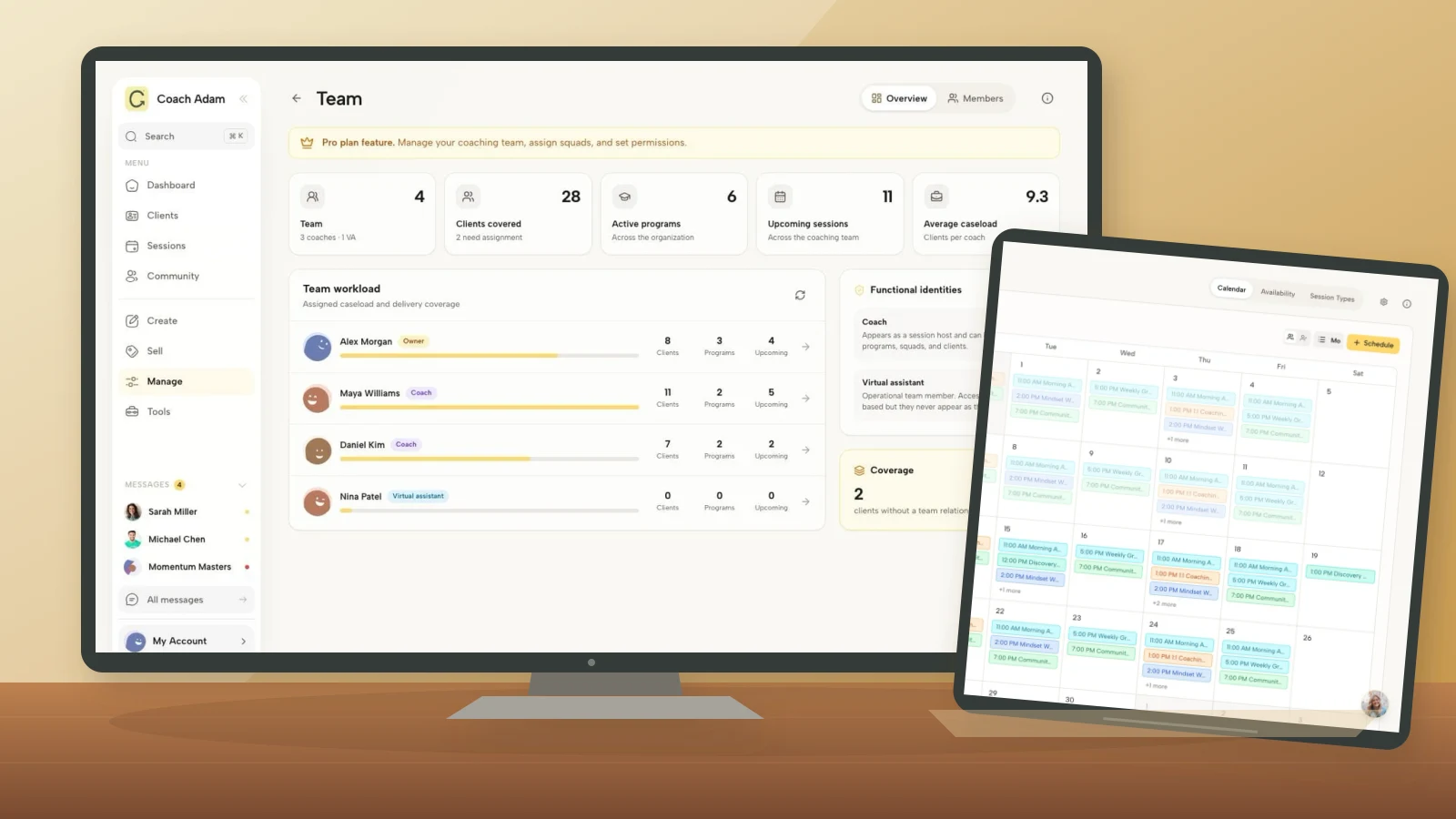
The Coachful demo Sessions calendar illustrates the client-appointment side of this process. It is not evidence of a venue-booking integration. Do not publish in-person availability on the assumption that a third-party room will still be free when someone books.
A workable low-volume process is to reserve a bounded room block first, then offer client times only inside that confirmed block. Another is to agree a provisional appointment with the client and explicitly confirm it after checking the room. Explain which process applies.

Protect arrival and reset time as part of the reservation. A hypothetical 60-minute session with 15 minutes before and after occupies a 90-minute window, but a venue billing in whole hours might charge for two hours. Ask what happens when the previous practitioner leaves late.
If you use calendar connections, test the actual behaviour with a harmless test event before relying on it. Check your own availability and the public booking experience. The integration should support a process you understand, not conceal an unconfirmed room booking.

For a practical walkthrough, try the interactive Coachful demo and inspect Sessions and calendar connections with sample data. Use it to evaluate your client-booking process after deciding how room reservations will be confirmed. Coachful is not being presented here as a venue marketplace or room-reservation system.
5. Read the cancellation, liability and exit terms before paying
Ask for the agreement before transferring a deposit. Confirm the named provider, exact room or substitution rights, permitted services, price, term, notice period and the procedure for access problems. Keep the agreed version, not only a screenshot of a listing.
Pay particular attention to the mismatch between your client policy and the venue policy. Your client may be allowed to reschedule, while the room charge remains due. That is a business cost to plan for, not a reason to invent a new client charge after the cancellation.

- If you cancel: what notice is required, what remains payable, and can you move the reservation?
- If the venue cancels: is there a refund, suitable replacement, or another clearly stated remedy?
- If you cannot enter: who responds at your appointment time, including evenings?
- If property is damaged: which obligations and insurance conditions apply to you?
- If you leave: how do you end the arrangement, recover any refundable deposit and return keys?
Check your own cover with an appropriate insurer or adviser and confirm the venue's requirements. Do not assume the building owner's policy covers your professional work or every incident involving a client. The answer depends on the policy, activity and jurisdiction.
A licence, room-hire agreement and lease may create different obligations. For a substantial commitment, personal guarantee, unclear indemnity or disputed term, get qualified local advice before signing. This article is an operational checklist, not legal, insurance or accessibility advice.
Copy this enquiry before arranging a viewing
The following is an illustrative message. Replace every bracketed field and ask only about services you genuinely intend to deliver.
Hello [name], I am a [type of coach] looking for a private room for one-to-one coaching on [days and times]. My initial need is [realistic number and length of visits], with time for setup and reset.
Could you confirm the total charges and booking increments, recurring availability, privacy arrangements, entry and waiting process, practical access information, cancellation terms and any requirements for insurance or permitted use?
I would like to view the room during normal operating hours and check speech privacy with your permission. Please send the room-hire agreement and explain what happens if the reserved room is unavailable.
A specific enquiry is useful because it exposes gaps before you travel. If the reply only repeats “beautiful room, flexible terms,” follow up on the missing facts rather than treating flexibility as a contractual promise.
Run a short trial before increasing the commitment
Where the venue offers an appropriate short arrangement, start with a limited set of confirmed appointments. Decide the review date and the maximum spend in advance. Do not describe it to clients as a permanent location if that has not been established.
Review practical evidence: visits delivered, room costs paid, access problems, preparation time and whether the setting supported the agreed work. Invite optional feedback about finding and using the space, not private details from the coaching conversation.
Then choose deliberately: keep hourly hire, negotiate a recurring block, seek another room, or remain online. A trial is successful if it prevents a poor commitment as well as when it confirms a good one.
Frequently asked questions
Can a coach rent a therapy room?
Potentially, if the provider permits your actual service and the space meets your needs. A room's label does not make a coach a therapist or authorise clinical work. Describe your service accurately and check relevant insurance, building and local requirements.
Is a coworking meeting room private enough for coaching?
Sometimes, but a closed door and a room-booking label are not enough. Check speech transmission, sightlines, interruptions, equipment and the waiting process. Reject a setting that cannot support the confidentiality you agree with clients.
Should a new coach take a permanent office?
Not simply to look established. Compare the fixed cost with confirmed demand, your cash position and the benefit of guaranteed access. Hourly hire or a recurring block may be a better initial fit, but neither is automatically suitable if privacy or availability fails.
What should I tell a client if the room becomes unavailable?
Contact them promptly, explain the practical change without exposing another practitioner's information, and offer options consistent with your agreement. Do not assume they consent to online coaching or a different venue. Decide any refund or rescheduling obligation from the actual terms and applicable law.
Sources and scope
The Offices.top room-selection guide provides context on private-room formats, booking reliability and suitability. Kent Wellbeing Hub's room-hire guide provides a provider-side example of bundled costs and rental arrangements. Neither is used here as a universal rate dataset or as authority for coaching regulation.
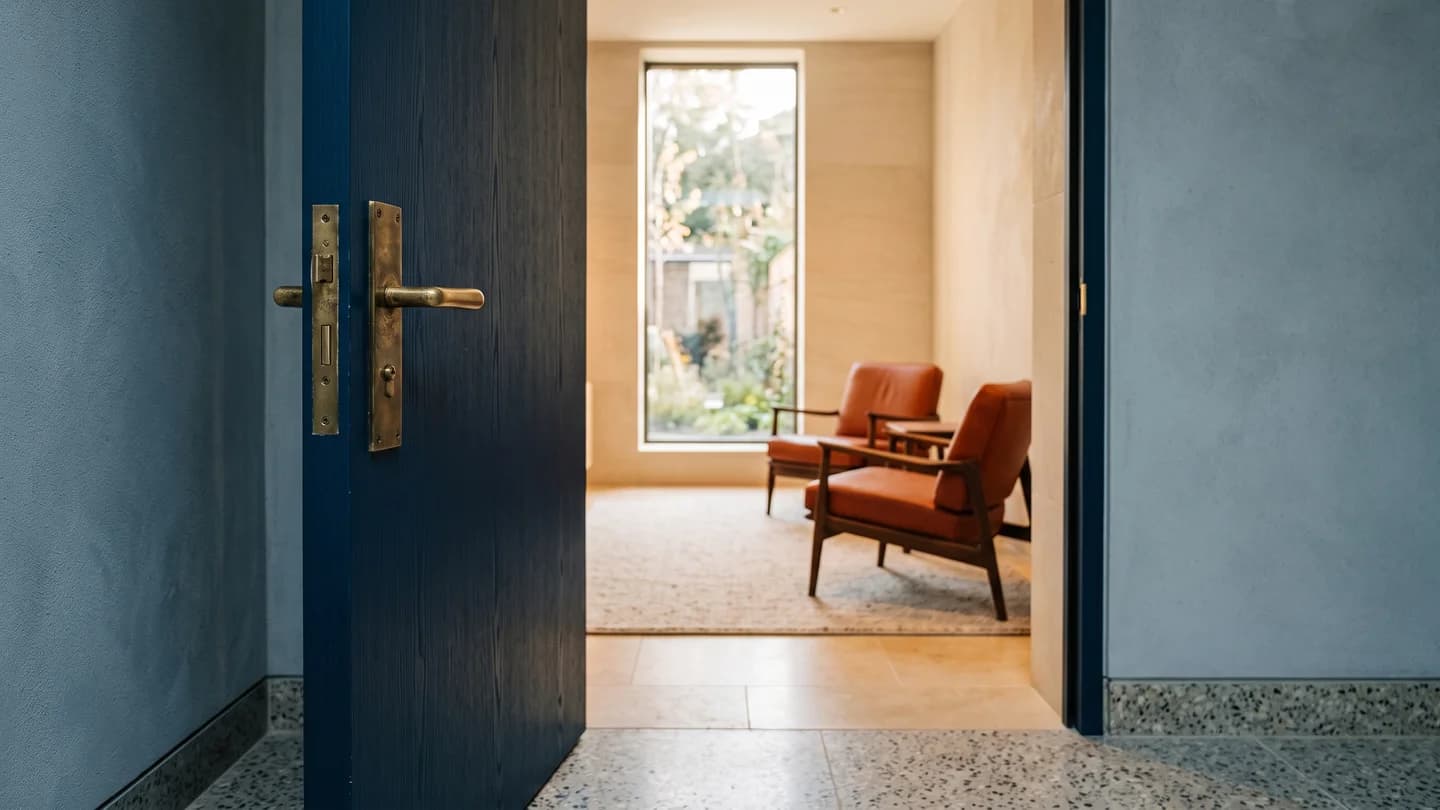
The calculations, enquiry, comparison aids and operating process are original editorial examples. All photographs are AI-generated scenarios, not pictures of a recommended venue. Product screenshots show Coachful demo data and do not establish room availability, acoustic performance or legal compliance.