Corporate Coaching Proposal Follow-Up Emails: 5 Templates

Nour
Founder, Coachful
You sent a corporate coaching proposal, the HR lead sounded interested, and now the thread is quiet. Should you chase the decision, send more information, or leave it alone?
Send a coaching proposal follow-up email that asks for the next decision, not reassurance that the buyer still likes your offer. Reference the exact proposal, name the unresolved step, and make one small response possible. If procurement owns the delay, another paragraph about the benefits of coaching will not fix it.
Below are five original templates for coaches selling employer-funded engagements, leadership cohorts and executive coaching. They cover different buying situations, not a five-email sequence to send to everyone. All names, scenarios and document details are illustrative. Replace bracketed fields before sending; the wording is not legal advice or a promise of sales results.
Choose the follow-up by what is actually waiting
A quiet corporate proposal can mean several things. Your contact may be collecting approval, waiting for a budget discussion, comparing scopes, or simply unable to prioritise the project. You do not know which until you ask. Treat silence as missing information, not a hidden yes and not an invitation to invent urgency.
- The agreed review date has passed: ask whether the decision is ready or the date needs to move. Use template one.
- Your contact needs an internal sponsor: offer a forwardable decision summary. Use template two.
- Finance, legal or procurement is reviewing: ask for the outstanding requirement and its owner. Use template three.
- The buyer wants a smaller or different engagement: clarify the trade-off before changing the document. Use template four.
- There is no agreed next step and previous messages went unanswered: close the active follow-up respectfully. Use template five.
Before sending anything, check the thread for a reply, a stated absence, a procurement instruction or a request not to contact them. Reply in the existing thread where practical, and refer to a recognisable document title and version. “The leadership coaching proposal, version two” is easier to locate than “that thing we discussed.”

1. The agreed proposal review date has passed
Use this when: you and the buyer agreed when they would review the proposal. You are following an existing commitment, not deciding that three days of silence must mean something.
Subject: [Programme name] proposal: next step after [review date]
Hi [Name],
We planned to reconnect after your review of [proposal title and version] on [date]. Is the proposal ready for a decision, or would a later review date work better?
The current scope is [brief description], with [one material inclusion or boundary]. The proposal is here: [secure proposal link].
If there is one point holding up the decision, please tell me which one. I can address that directly rather than sending another overview.
Best,
[Your name]
Why this works as a decision aid: it asks the buyer to choose between a decision and a new date. It does not demand a yes, assume approval, or ask a busy contact to reconstruct the entire sales conversation.
Keep the scope line factual. “Six individual sessions per participant, plus an opening sponsor meeting” is useful. “A transformational leadership journey your managers will love” is not a scope reminder. If the buyer raises a genuine objection, answer it in the next reply rather than running the rest of a prewritten sequence.
If you never agreed a review date: change the opening to “What would be a realistic date to review [proposal title]?” Do not pretend a deadline existed. For future proposals, agree a review conversation before sending the document, while the buyer can still explain how their decision will happen.

2. Your HR contact needs to secure internal approval
Use this when: the contact has explicitly said they need approval from a manager, budget holder or programme sponsor. Your job is to help them present a clear decision, not bypass them by emailing their boss.
Subject: A short approval summary for [programme name]
Hi [Name],
You mentioned that [role or team] needs to review the coaching proposal. Would this short summary help with that discussion?
Decision requested: approval for [engagement and intended participants].
Purpose: [specific development need agreed with the buyer].
Delivery: [sessions, duration and delivery period].
Total proposed fee: [amount and currency], with [tax and payment assumptions as stated in the proposal].
Not included: [important exclusion].The full scope remains in [proposal title and version]: [secure proposal link]. Is there a particular question the approver needs answered before you can move this forward?
Best,
[Your name]
Why this works as a decision aid: a forwardable summary reduces the amount of rewriting your contact has to do. It preserves the difference between a development objective and a guaranteed commercial outcome.
Use an agreed business need without sharing confidential material from a chemistry call. “Support newly appointed managers with delegation and feedback” can describe a programme. A named participant's private concerns, health information or candid comments about their manager do not belong in a procurement thread.
If the sponsor wants evidence, offer information you actually have: relevant credentials, an agreed measurement approach, or a genuinely permitted reference. Do not invent a return-on-investment percentage to make a forwarding email look more convincing. If you include case material, check that your permission covers this specific use.

3. Procurement or legal is reviewing the engagement
Use this when: the buyer has confirmed an operational review is in progress. This is not the moment to send “Are you excited to get started?” while the organisation is waiting for a supplier form.
Subject: [Programme name]: outstanding supplier-review items
Hi [Name],
You mentioned that [procurement/legal/finance] is reviewing [proposal title and version]. What is the next outstanding requirement, and who should coordinate it?
I can provide the documents relevant to the agreed scope through your approved supplier process. Please send the required list or portal instructions rather than forwarding any sensitive information by ordinary email.
If the review changes the likely start date, let me know and I will check delivery availability before confirming a revised schedule.
Best,
[Your name]
Why this works as a decision aid: it separates willingness to buy from readiness to contract. The useful reply might be “complete this vendor questionnaire,” not “yes, we still want coaching.”
Prepare what applies to your practice, such as your business details, insurance evidence, data-handling information and an engagement agreement. Requirements vary by organisation and jurisdiction. Never claim a certification, insurance limit or security standard you cannot substantiate, and do not agree to unfamiliar contractual terms casually in a follow-up.
There is also a clean stopping point here. If an RFP or procurement policy says all questions must go through a named channel, use that channel. Do not contact evaluation-panel members privately or interpret a silent inbox as permission to circumvent the rules.

4. The buyer wants to reduce the scope or change the price
Use this when: the buyer has named a budget or delivery constraint. Do not automatically send a discount. First identify what changes in the work, then make the revised document internally consistent.
Subject: [Programme name]: confirming the revised scope
Hi [Name],
Thank you for clarifying [budget or scheduling constraint]. Before I revise the proposal, can you confirm which option you want me to cost?
Option A: [smaller scope], retaining [essential element] and removing [specific element].
Option B: [original scope], with [a different delivery period or other genuine alternative].The coaching confidentiality arrangements would remain as agreed. Any change to sponsor reporting would need a separate discussion with the relevant parties.
Once you choose the direction, I will send one dated revision showing the scope, fee and schedule together. Which option should I prepare?
Best,
[Your name]
Why this works as a decision aid: the buyer chooses a meaningful trade-off instead of receiving a cheaper document that quietly promises the same work. It also prevents two different versions of the offer circulating as though both remain current.
For example, a hypothetical leadership cohort might keep its live group sessions while removing optional individual sessions. That is a scope change, not a promise that less support produces the same result. Recheck whether the reduced format can still responsibly serve the stated purpose before quoting it.
Change all affected fields together: participant count, sessions, preparation, between-session support, sponsor meetings, delivery dates, total fee and payment terms. Send a short change summary and identify the replacement version. If the revision affects a signed agreement, use the proper amendment process rather than treating an email exchange as sufficient by default.


5. You need to close the active follow-up
Use this when: there is no agreed decision date, earlier reasonable follow-ups have gone unanswered, and you have no current evidence of an active review. This message is an administrative close, not a guilt-inducing “breakup email.”
Subject: Closing the loop on [programme name]
Hi [Name],
I have not heard back about [proposal title and version], so I will close my active follow-up on this proposal for now.
If the project becomes a priority again, you are welcome to contact me. I will confirm current scope, pricing and availability at that point rather than assume the earlier proposal still applies.
No reply is needed if the timing is not right. Thank you for considering the engagement.
Best,
[Your name]
Why this works as a decision aid: it gives the coach a real operational endpoint without accusing the buyer of wasting time. It does not manufacture a scarcity deadline or require the prospect to explain a decision they may not have made.
After sending it, actually stop the active follow-ups. If you have held time and the hold genuinely expires, state the real expiry date plainly. Do not say you are releasing a reserved slot when you never reserved one, or threaten a price increase that is not part of your actual policy.
A previous business conversation is not blanket permission to add the buyer to a marketing newsletter. Handle any future marketing separately, using an appropriate permission or other lawful basis for the location and circumstances. Stop contact when requested.

When should a coach follow up on a corporate proposal?
The buyer's agreed next step is more useful than a universal number of days. If their budget meeting is next Tuesday, a Monday email asking for the result is premature. If they promised a response yesterday, a concise message today can be reasonable. These are practical judgments, not evidence of an optimal conversion schedule.
If you have no timing information, send a brief message asking when review is realistic rather than starting a daily chase. Account for working days, public holidays, absences and the organisation's stated buying process. A large engagement can involve several reviewers; that does not make indefinite pursuit sensible.
Set your own review limit before anxiety sets the cadence. For example, you might choose one request for timing, one relevant follow-up if no answer arrives, and then a close-the-loop note. That is an illustrative operating rule, not a proven formula. When the buyer responds with a real process, replace your default with that process.

Track the next action, not just the last email
A record saying “proposal sent” is not enough. Keep the proposal title and version, buyer contact, decision owner if known, next decision, agreed review date, current blocker and your next action. Keep only business-relevant information and follow your data-retention policy.
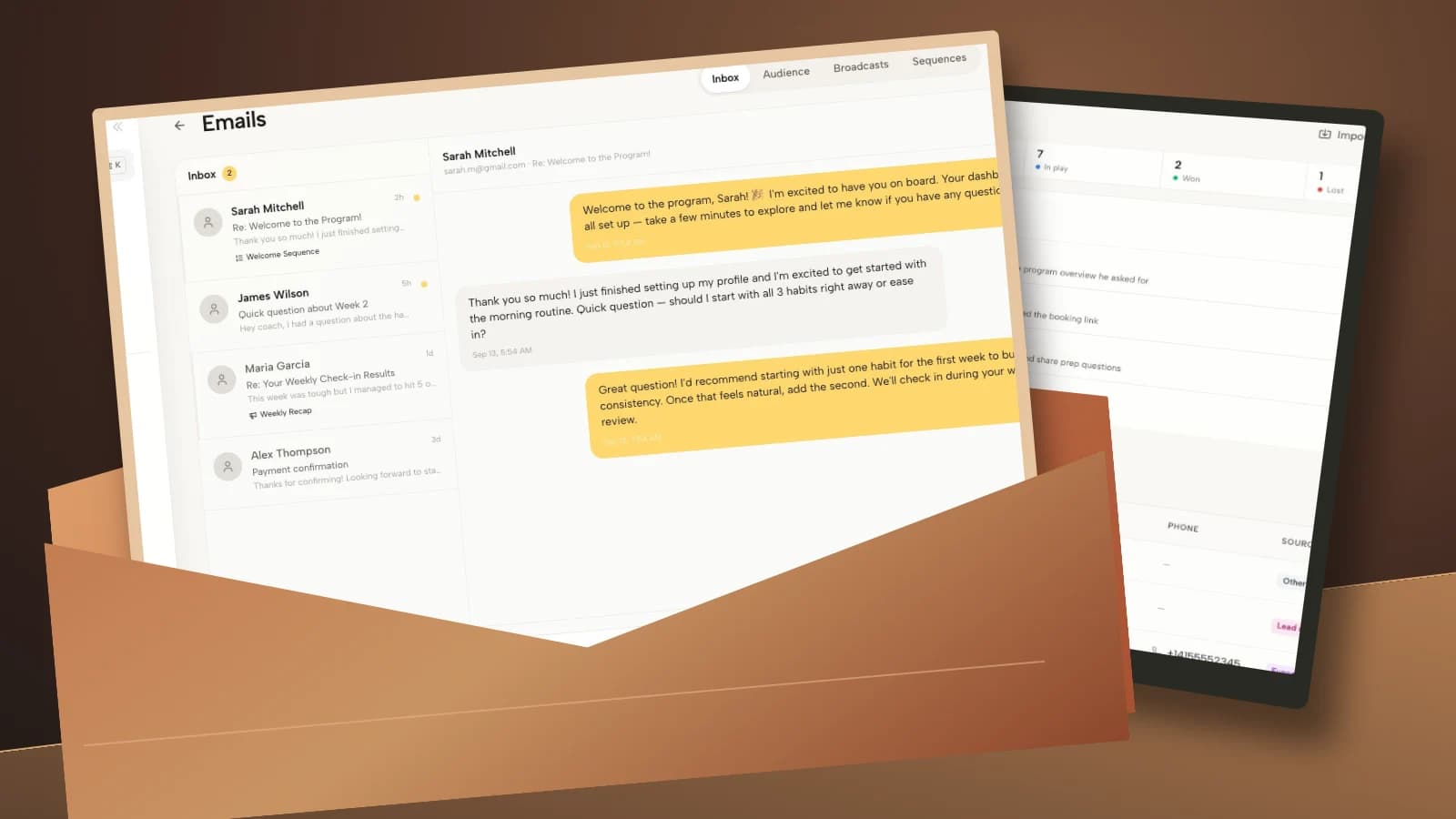
Do not confuse a proposal with an agreement, a payment request or an email newsletter. In Coachful, the real demo Leads workspace shows prospect follow-ups, while the Emails workspace shows correspondence. Those surfaces illustrate keeping follow-up visible; they do not prove a corporate buyer has approved a proposal, opened a document or completed procurement.
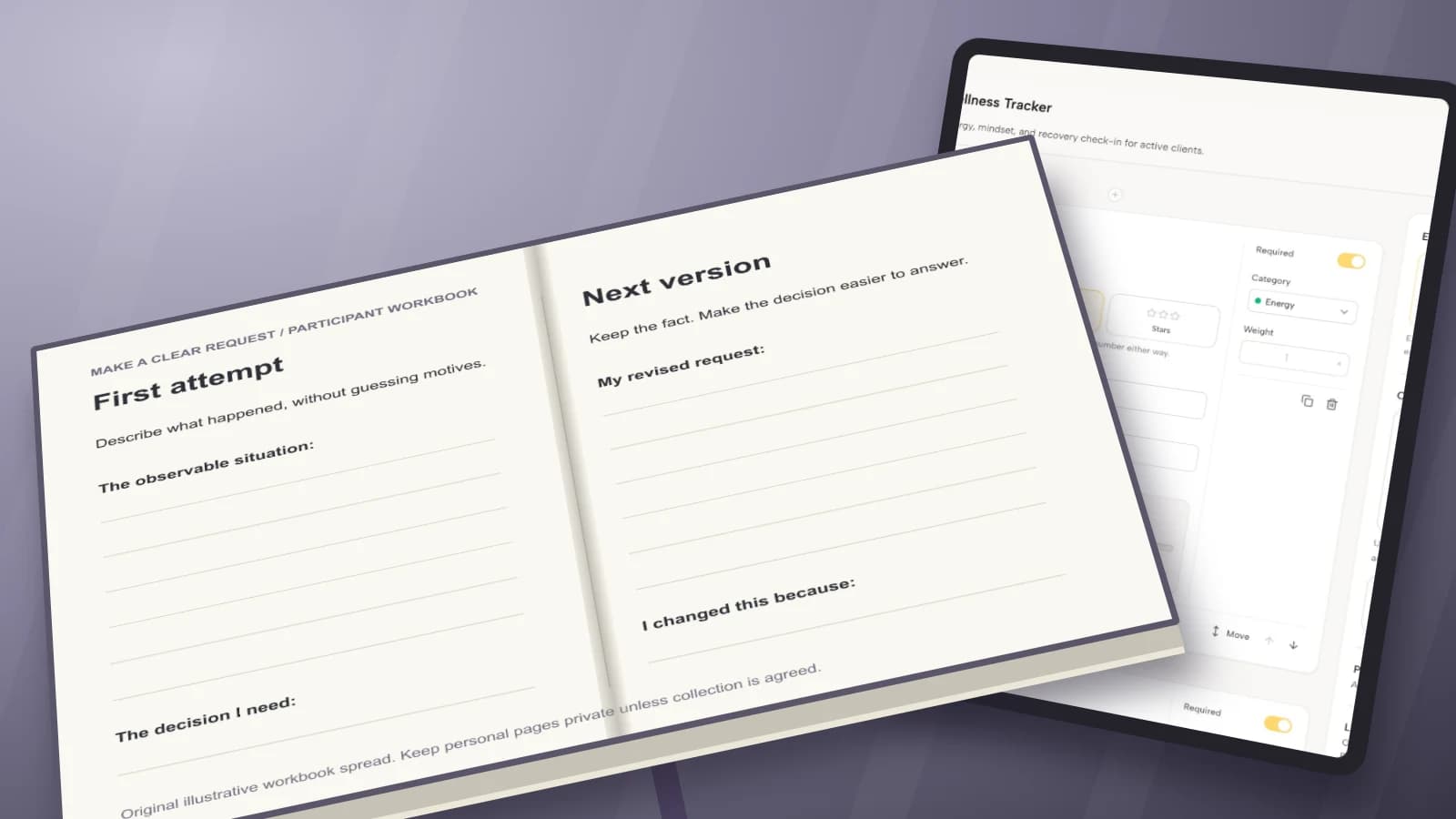
The screenshots in this article contain demo records and example figures, not customer results. The team, scheduling and bundle views illustrate the delivery capacity and offer details a coach should check before promising revised work. They are not a dedicated corporate-proposal or procurement system.
If the practical problem is remembering which buyer needs which action, try the interactive Coachful demo and inspect Leads and Emails with one real proposal workflow in mind. Check whether you can make the next action visible without putting sensitive coaching information into a sales record. That is a more useful test than collecting another email template you never send.
Common questions about coaching proposal follow-up emails
Should I attach the proposal again?
Make the current version easy to find. A secure link can avoid multiple attachments circulating, but use the buyer's accepted process. If they require a file, label its date and version clearly. Do not rely on an old attachment when the fee or scope has changed.
Should I mention that I can see they opened it?
Do not treat an email-open signal as evidence of a buying decision. Technical systems and privacy features can make those signals ambiguous. Ask about the agreed review step instead of making the buyer feel watched.
Should I offer a discount to get a reply?
Not as a default response to silence. You have not established that price is the blocker. Ask what is outstanding; if budget is a genuine constraint, review an appropriate scope change and issue a consistent revision.
What if the buyer says the project is delayed?
Ask whether they want a specific future check-in and record the date they choose. Confirm that you will recheck scope, pricing and availability then. Do not keep sending the original sales sequence after receiving a clear delay.
Related guidance and source boundaries
These five templates are original editorial examples, not tested conversion claims. Current search results include Boldhaus's proposal follow-up discussion, which helps establish the practical question, not a universal sending cadence.
For the document itself, see our coaching proposal examples. For an individual prospect immediately after an exploratory conversation, use the separate discovery-call follow-up guide. This article addresses the later, employer-funded proposal decision with internal approval, procurement and scope-review steps.
The final check before pressing send is simple: can the buyer tell what decision you need, find the right document, and answer without another meeting? If yes, send the short email. If not, fix the decision request before polishing the sign-off.