Group Coaching Attendance Policy: 5 Rules for Missed Sessions

Nour
Founder, Coachful

A member misses Tuesday’s group call and asks, “Can we do my session privately instead?” You want to be helpful, but eight possible make-up appointments were not part of the offer you sold.
A good group coaching attendance policy separates three things: the commitment to attend, the resources available after an absence, and any entitlement to additional coaching. Publish those distinctions before enrollment. A missed group session should not silently become a private-session credit, and a recording should not be promised when you cannot safely provide one.
This guide gives coaches five decisions to make, a copyable policy and practical messages for helping someone return. It is for fixed-cohort coaching programs, not an accredited training provider’s attendance rules. The examples are hypothetical operational choices, not legal terms guaranteed to work in every jurisdiction.
The short answer: separate attendance from entitlement
For a typical fixed cohort, a sensible starting point is: publish the dates, ask members to attend live, provide a defined catch-up route for occasional absences, and explain that the group continues when one member is away. State separately whether private make-ups, transfers or refunds are available. Do not invent a penalty after the absence.
That is different from treating a privately booked appointment as a used session credit. In a cohort, the coach may still deliver the scheduled session to the other members. Your policy needs to explain what the absent member bought and what remains available, rather than borrowing a one-to-one cancellation clause without checking whether it fits.
The aim is a predictable promise, not perfect attendance. Parents, shift workers, carers and people with fluctuating health may want the program while knowing they cannot attend every call. Let them judge the fit honestly before paying.
1. Name the live commitment before accepting payment
“Six weekly calls” leaves several questions unanswered. Which six dates? In which time zone? Does the program include a practice session that cannot be replicated alone? Is a member expected to participate, or can they listen quietly?
Write down the delivery commitments in ordinary language:
- Schedule: the exact dates, start time, time zone and duration, including any planned breaks.
- Participation: what members will actually do, such as paired practice, reflection or a voluntary coaching conversation.
- Attendance expectation: whether live participation is recommended or required for a specific purpose.
- Late arrival: how someone can join without interrupting, and when an exercise is no longer practical to enter.
- Known conflicts: who to contact before enrollment if the dates will not work.
For example: “This cohort meets on the six dates listed below. Live participation is recommended because the sessions include peer practice. If you already know you will miss several meetings, contact me before enrolling so we can discuss whether this cohort fits.”

Do not impose an arbitrary attendance percentage to make an ordinary coaching program look official. If you issue a completion document, explain exactly what it represents. If your program genuinely satisfies an external training requirement, verify that provider’s current rules instead of creating your own equivalent.
The distinction matters. The IFS Foundations for Coaches attendance guidance distinguishes live attendance requirements from recordings for review. That is an example of a provider-specific training arrangement, not a universal rule for coaching cohorts.
Put the short version on the offer page, the full version in the agreement and the practical instructions in onboarding. These should describe the same offer, not three gradually stricter versions of it.
2. Define the catch-up promise, not just “replays included”
A replay can help someone review teaching. It may be a poor substitute for participating in a practice exercise, and it can expose personal material when a session contains individual coaching. Decide what the absent member needs to do next, then choose the resource.
Use the activity to make the decision:
- Teaching segment: a separate lesson, written explanation or appropriately consented teaching-only recording may work.
- Personal coaching: share the general exercise or prompt without distributing someone else’s private disclosure.
- Peer practice: offer an individual reflection or a future opportunity to practise, while being honest that it is not the same experience.
- Group decisions: share agreed actions and the next meeting details without circulating unnecessary personal comments.

Specify where the resource will appear, when you can reasonably provide it and how long access lasts. “Catch-up materials will be posted in the program area within two working days” is an example promise, not a recommended deadline for every coach. Use a timeframe your delivery process can actually meet.
Build a backup for a recording failure. If your offer depends entirely on a successful recording, a technical problem becomes a broken promise. A short teaching summary and the exercise may provide a useful fallback, but do not call them an identical replacement for a live experience.

A provider does not have to record everything to create a catch-up route. Re-origin’s missed-group-session guidance describes submitting questions in advance and reviewing session notes. That illustrates a possible design choice; it does not establish that notes and attendance produce the same results.
When recording is appropriate, agree who can access it, what is captured and when access ends. A person’s absence is not a reason to loosen the privacy promise made to everyone else. For the separate recording decision, use our guide to group coaching confidentiality expectations.

3. State whether private make-ups are included
This is the expensive ambiguity. “I will help you catch up” can mean a resource link to the coach and a fresh hour of private coaching to the member. Neither interpretation should depend on who writes the more persuasive email.
Choose a clear model:
- No private make-ups: the member receives the published catch-up resources and returns to the next group meeting.
- A defined allowance: the offer includes a specific amount of additional support, with its booking window and scope stated.
- Optional paid support: a separate private appointment may be purchased if available. It is not an automatic credit from the missed group call.
These are alternatives, not a ladder in which the most generous one is always best. A coach running a small number of cohorts might deliberately include a catch-up check-in. A coach delivering many groups may need a resource-based approach. Price and describe the support you can sustain.
Keep absence, withdrawal, transfer and refund decisions separate. Missing one meeting is not necessarily withdrawing from the program. A transfer to a later cohort is not the same as an unlimited pause. Your agreement should address those choices consistently with the offer and applicable law.
Useful wording is: “An individual absence does not reschedule the cohort or create an additional private appointment. Your included catch-up support is [specific support]. Any additional coaching is a separate arrangement, subject to availability.” Have the full agreement reviewed for your market before relying on it.

When someone asks for an exception, acknowledge the problem before repeating the rule: “I’m sorry you had to miss it. Your package includes the catch-up exercise rather than a private replacement. I can point you to that now, and we can discuss a separate appointment if you want one.”
That response is specific without making the client argue that their circumstances are serious enough to deserve help. You can still make a considered exception. Record what you agreed and whether it is a one-off; do not accidentally rewrite the offer for the rest of the cohort.
4. Use a private check-in for repeated absences
Repeated absence may mean the schedule no longer works, the format is inaccessible, the member is disengaged, or something unrelated to coaching has happened. An attendance mark cannot tell you which explanation is true.
Choose a practical check-in trigger. For example, a coach might contact someone privately after two consecutive absences in a six-session program. That is an illustrative review point, not an evidence-based threshold or a universal best practice.
The check-in has three jobs: confirm whether the member wants to continue, identify a practical barrier they choose to share, and explain the options already available. Do not require a medical explanation or a public apology. Gather no more personal detail than you need to resolve the operational question.

Try: “I noticed you haven’t been able to join the last two meetings. Is the current format still workable for you? You do not need to explain anything personal. We can review the catch-up route and any options in your agreement.”
If they return, make the route back small and concrete: one resource, one exercise and the next appointment. Avoid sending a pile of overdue homework that makes attending again feel like a test they have already failed.

For an employer-sponsored cohort, decide in advance what attendance information is reported, to whom and for what purpose. Do not silently turn a coaching check-in into a performance report. Keep the sponsorship agreement and the participant’s understanding aligned.
5. Explain what happens when you cancel
A policy that protects only the coach is incomplete. If you cancel, change the agreed time or cannot deliver the promised format, the member has a different problem from choosing not to attend a session that took place.
Set an advance process for notifying members, offering a replacement and handling people who cannot attend the replacement time. Consider what you can fairly offer before selling the cohort, not while recovering from an emergency.
Your policy might say you will propose a replacement date and explain the available options if it does not work. Do not promise an automatic bonus session or universal refund unless that is genuinely your agreement. Applicable consumer rights may require more than your template says.
Operationally, update the same places members use to find the program: the calendar, member session information and relevant announcements. Send a direct notice as well. A quiet edit to a timetable is not a reliable way to communicate a cancellation.

Copyable group attendance policy
The following is a hypothetical starting point for an ordinary fixed-cohort coaching offer. Replace every bracket, remove any option you do not provide and obtain appropriate legal review. It does not replace statutory rights, an accredited provider’s rules or your recording/privacy agreement.
Live meetings. [Program name] includes [number] group meetings on [dates], from [time] to [time] in [time zone]. The group will proceed when an individual member is absent. Please check the dates before enrolling and contact [private contact route] about known conflicts.
Participation. Live participation is [recommended / required for the stated purpose] because [specific activity]. If you arrive late, [joining instruction]. Sessions end at their scheduled time. You do not need to disclose personal circumstances to the group.
Occasional absences. If you know you cannot attend, please notify [contact route] when practical. Your catch-up support is [specific resources or support], available at [location] by [realistic timeframe]. Resource access ends on [date or clearly defined term].
Recordings. [State whether any segments are recorded and direct members to the separate recording/access agreement.] A session listing does not guarantee that a recording will exist. If a promised recording is unavailable, [state the actual fallback and how you will address the missing delivery].
Additional coaching. Missing a group meeting does not automatically create a private coaching credit or move the group’s schedule. [State any included allowance, or explain that extra support is a separate arrangement subject to availability.]
Repeated absences. After [chosen check-in point], I will contact you privately to review whether the format is still workable. Any transfer, withdrawal or refund options follow [the relevant agreement section], subject to applicable rights. There is no requirement to explain an absence publicly.
Coach cancellation. If I cannot deliver a scheduled meeting, I will notify you through [channels] and explain [replacement process]. If you cannot attend the replacement, contact [route] to discuss [the actual options]. This policy does not limit rights that cannot lawfully be excluded.
Test the policy against three awkward situations
A member knows they will miss several dates before buying. Point them to the actual catch-up provision, explain which activities cannot be recreated and let them choose. If live practice is central, suggest a later cohort rather than selling a fit you already doubt.
A member wants a full recording of a sensitive coaching conversation. The catch-up request does not override the group’s privacy agreement. Provide the agreed safe alternative, or explain honestly that the experience cannot be reproduced. Do not invite another member to retell someone else’s disclosure.
A member has missed several meetings and asks to start over. Review the transfer and withdrawal terms privately. Consider a defined exception if appropriate, but confirm it in writing. Neither “no exceptions ever” nor “you can restart whenever” should appear by accident.
Then check the member journey yourself. Can someone find the policy before payment, locate the catch-up resource, see the next meeting and contact you privately? A beautifully written clause is not useful if its promised resource cannot be found.
Frequently asked questions
Should missed group coaching sessions be refundable?
There is no universal coaching rule. The answer depends on the offer, agreement, reason for non-delivery and applicable law. Distinguish a member missing a meeting that was delivered from the coach cancelling or materially changing the service. Get advice on the terms for your jurisdiction.
Should I require cameras to be on?
Describe the activity’s actual participation needs rather than using camera status as a proxy for commitment. Consider privacy, bandwidth and access needs, and discuss workable alternatives. If visual participation is essential to a particular exercise, say so before enrollment.
Can a replay count as attendance?
Only if that is appropriate to the purpose and any relevant rules allow it. Watching teaching is different from completing live peer practice. For certificates, continuing education or external requirements, verify the applicable standard instead of treating a completed video as proof.
Where should the attendance policy appear?
Put a concise summary beside the program’s dates and purchase decision, include the full terms in the agreement, and repeat the practical instructions during onboarding. Keep those versions consistent. Do not introduce a new financial consequence in the absence email.
Build the return route before the first absence
Choose the five decisions first: live commitment, catch-up support, make-ups, repeated absences and coach cancellations. Then prepare the resource and message you will actually use. This makes a missed meeting an operational event you can handle, not a new negotiation over the whole offer.
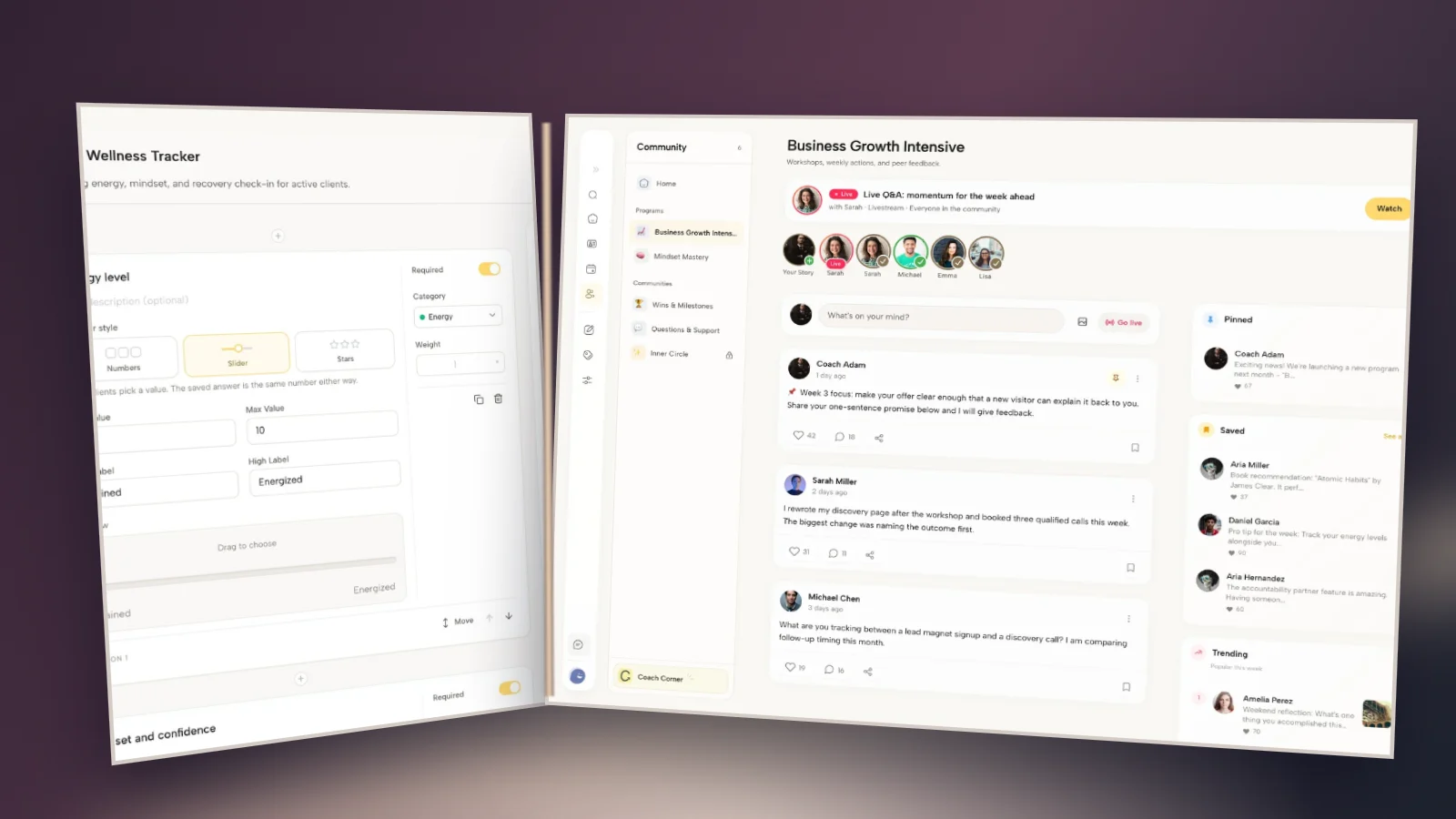
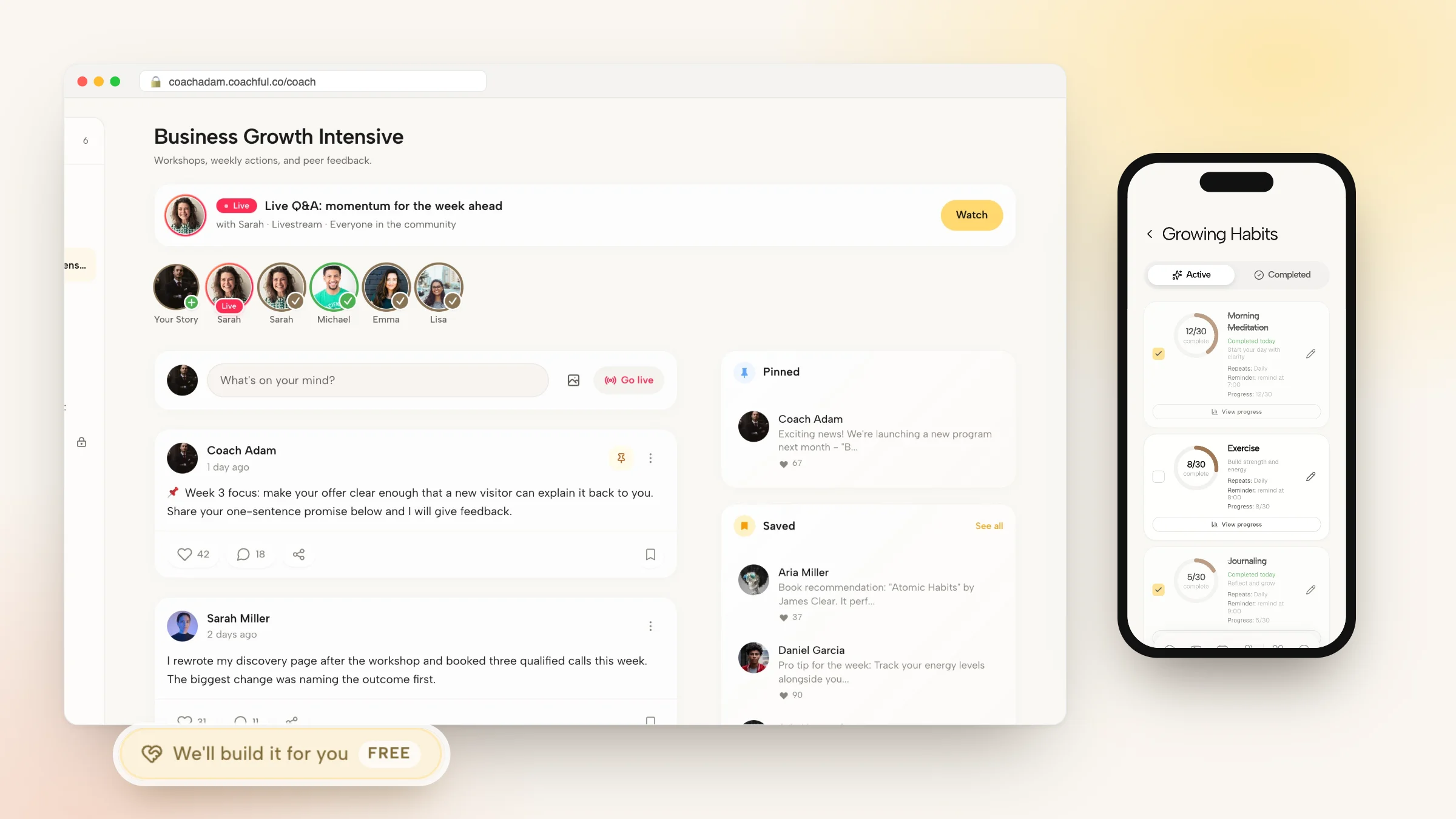
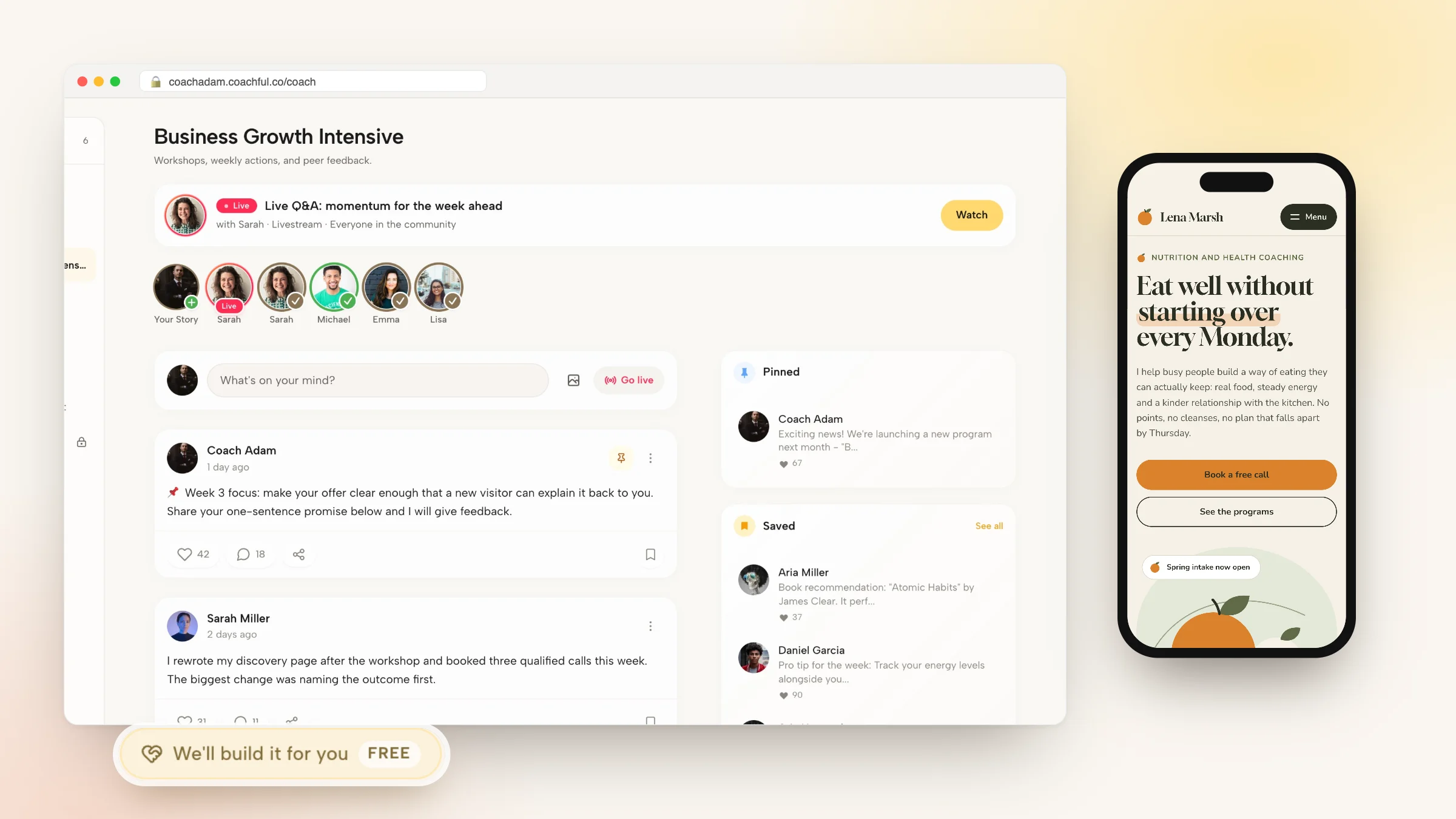
If you are choosing how to deliver that route, try the interactive Coachful demo and inspect the member program, course, session and communication views. Test whether a member could find the next useful step after missing a call. The screenshots above show those real surfaces; they do not claim that Coachful writes your attendance agreement, enforces your exceptions or makes a replay equivalent to attending.