Instagram Live Ideas for Coaches: 5 Formats and a Run Sheet

Nour
Founder, Coachful
“What can I actually do on Instagram Live that helps potential clients, without turning it into a free coaching session?”
Choose one public teaching task, use a format that can handle interruptions, and prepare one relevant next step. The five strongest starting points are a bounded question clinic, a mini-workshop, a complementary expert interview, an offer open house and a fictional scenario demonstration. You do not need to improvise around whatever appears in the comments.
These Instagram Live ideas for coaches are original planning examples, not reports of campaigns or promises of enquiries. Each explains what to prepare, how to handle participation and when a different format would be safer. Start with the simplest one you can deliver well.
Check whether Live is available before promoting it
Instagram’s current Live Help Center says that starting a Live requires a public account with at least 1,000 followers. Check your own account’s eligibility and current creation controls before announcing a broadcast. Other account restrictions or safeguards may also affect access.
If you cannot initiate a Live, do not build a promotion around an unavailable button. Record a short teaching video, run an appropriately configured workshop elsewhere, or wait until you have confirmed an eligible hosting arrangement. Do not buy followers to unlock a format. The business task is useful teaching, not collecting a particular feature.
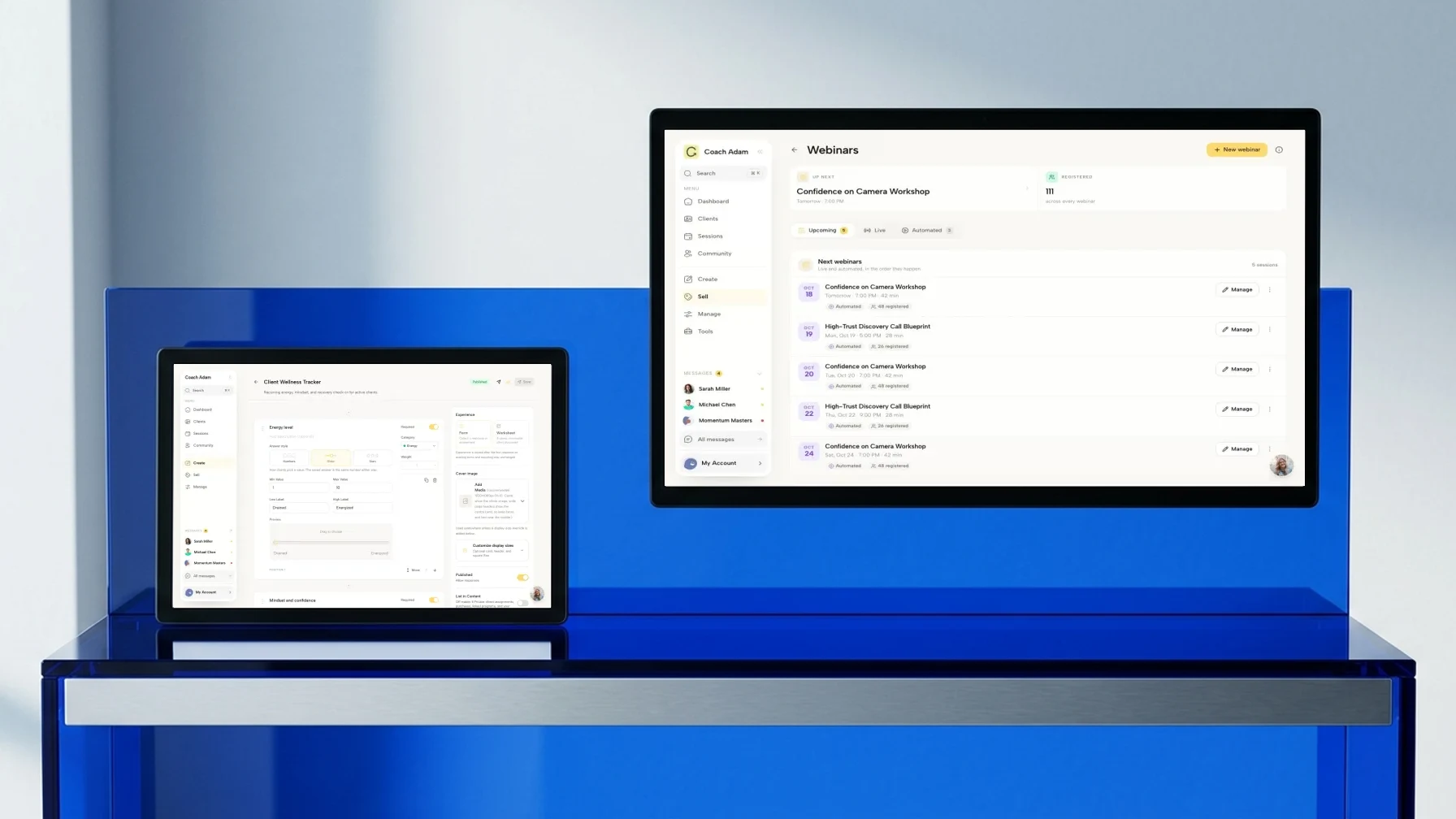
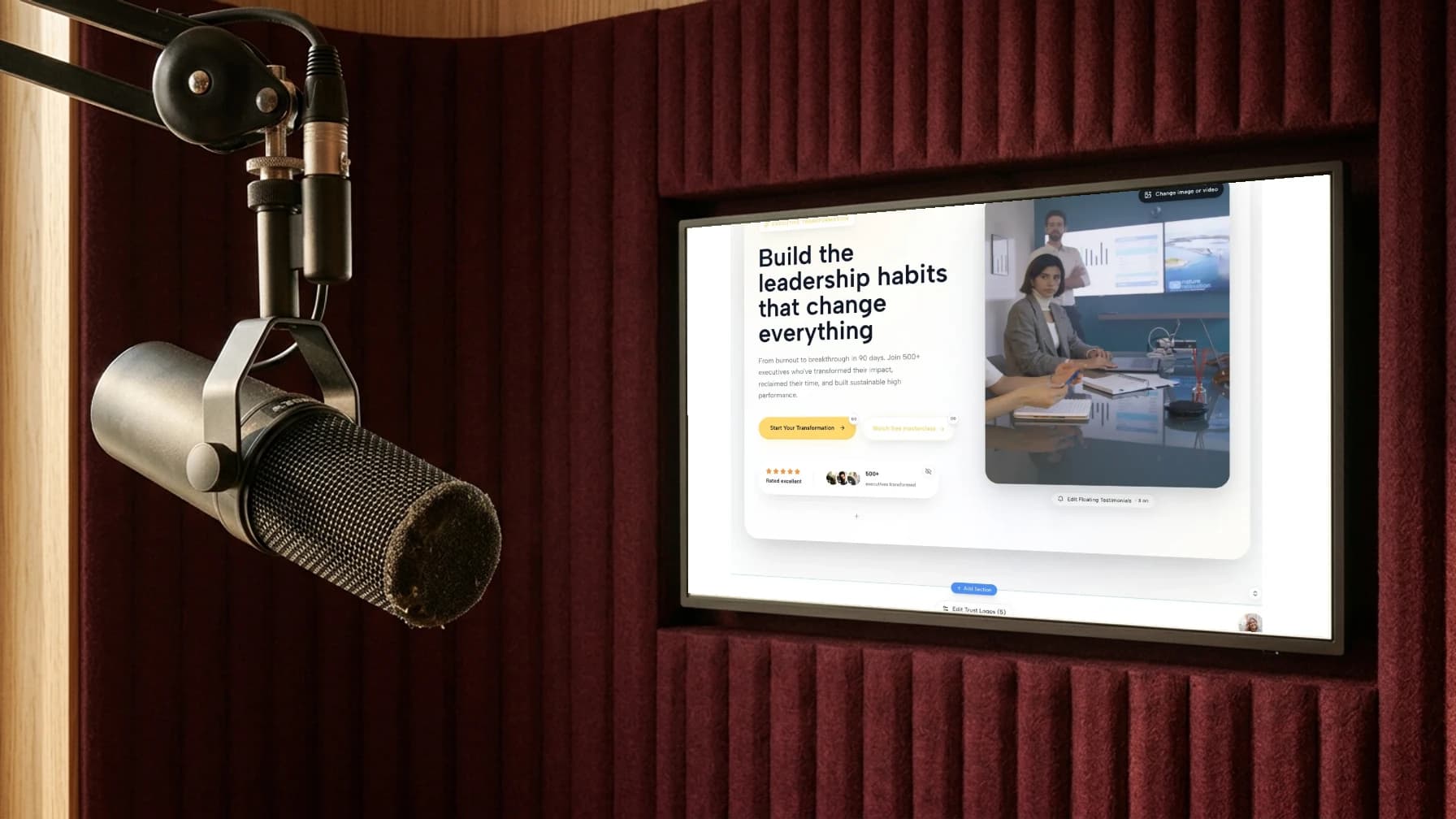
This guide is about editorial planning and the business-side handoff. It is not a promise that Coachful broadcasts to Instagram or manages its comments. The real Coachful screens below show supporting destinations and preparation, not an Instagram integration.
Choose the format by the viewer’s question
- “Can you clarify this common problem?” Choose a question clinic.
- “Can you show me one small method?” Choose a mini-workshop.
- “Where does your expertise stop and another specialist’s begin?” Choose a complementary expert interview.
- “What would working with you actually involve?” Choose an offer open house.
- “How does that idea work in a believable situation?” Choose a fictional scenario demonstration.
The selection rule is deliberately practical: pick the uncertainty the broadcast will resolve, not the format that looks most impressive. A guest adds coordination. A workshop needs readable materials. A question clinic requires moderation. None is automatically better for sales.
1. Run a bounded question clinic
Best for: recurring, general questions that you can answer without learning somebody’s private history. A career coach could host “Preparing for an internal career conversation.” That is tighter and more manageable than “Ask me anything about your career.”
Collect a few questions in advance so the session works even if the first viewers remain silent. Ask for the question, not a detailed account of the person’s workplace, health or relationships. Tell submitters whether you might discuss it publicly, what you will remove, and whether you need separate permission to quote their words.

Open with a boundary you can actually enforce:
“Today I am answering general questions about preparing a career conversation. Please do not post names, employer details or confidential situations. I will discuss patterns and preparation, not decide what an individual should do.”
Prepare three answers, each with a question, a useful distinction and a small action. For example: distinguish asking for information from asking for a commitment, then demonstrate how to write an information-seeking question. That supplies substance without needing a volunteer’s personal problem.
The trade-off: open comments can pull you away from the agreed topic. Have a moderation plan and use the controls currently available to your account. If you cannot safely monitor participation while teaching, enlist a suitable moderator or choose a prerecorded answer instead.
Natural next step: a relevant preparation worksheet or service overview. Do not promise personalised follow-up to every commenter unless you can deliver it and the person has actually requested contact.
2. Teach one mini-workshop with a visible output
Best for: a method viewers can begin privately while you explain. A leadership coach might teach “Turn a vague delegation request into a usable brief.” The output is a draft brief, not a transformed team.
Use an invented example and three headings: the task, the decision authority and the first review point. Fill in one example slowly. Then give viewers a quiet moment to draft their own version off-screen. They should not need to type workplace details into public comments to participate.
A useful opening is: “By the end, you will have three headings for a delegation brief and an example of each. This will not solve every workload or authority problem, but it can help you identify what needs discussing.”
Keep the working material readable on a phone. Test your actual preview, reflections, lighting and sound. Read important words aloud and make the essential explanation available in text afterward. A beautiful sheet held too far from the camera is not a demonstration.

The trade-off: a live mini-workshop is harder to follow when viewers arrive midway. Briefly restate the task at natural transitions without restarting the entire lesson. Do not make early viewers sit through repeated introductions while you wait for a larger audience.
Natural next step: a longer workshop that genuinely develops the same skill. Explain the difference: more practice, a different scope or structured feedback. The webinar screen above illustrates a possible separate workshop destination, not registration for an Instagram broadcast.
3. Interview a complementary expert around one decision
Best for: helping the audience understand a boundary or compare kinds of support. A career coach could speak with a recruitment specialist about preparing questions for a recruiter. A health coach could discuss how to prepare for a conversation with an appropriately qualified clinician, without turning the broadcast into individual medical advice.
Choose a guest for relevant competence, not follower count alone. Verify their role and credentials, agree the topic, and ask which questions they will not answer publicly. Discuss recording, replay, clips, promotional use and any commercial relationship before going live.
Build the interview around three questions:
- What does the audience commonly misunderstand about this decision?
- What can someone prepare before seeking the relevant help?
- When is this outside the service we are discussing?
Ask for an example that does not expose a real client or imply a guaranteed result. Avoid inviting the guest to diagnose a commenter, assess a named employee or provide individual legal or financial recommendations in public.
The trade-off: two knowledgeable people can still produce a vague conversation. Share a short outline, agree who will interrupt a tangent, and prepare a closing summary in case the connection drops. Confirm the current guest-joining workflow in advance rather than learning it in front of the audience.
Natural next step: one resource with a clear owner. If both businesses have something to offer, explain both honestly without creating an obstacle course of competing links or implying endorsement beyond what was agreed.
4. Hold an offer open house
Best for: people who already understand the problem but cannot tell whether your service fits. This is an explicitly commercial session, not an educational event with an undisclosed sales turn.
A useful title is “Inside the six-session career decision package: format, preparation and fit.” Only use that wording if you really sell that package. Cover who it is for, what happens between sessions, the client’s responsibilities, what is excluded and how someone can enquire.

Explain the offer using a fictional schedule rather than a private client’s account. For example, describe how an initial goals conversation differs from a later review, while making clear that the exact agenda is agreed with the client. If you also provide consulting or assessment services, identify the role changes.
Answer buying questions directly. State the actual price or where the current price can be checked. Explain relevant payment and cancellation terms accurately. Do not invent a deadline because silence feels uncomfortable. If availability is limited, describe only the real limitation.
The trade-off: the audience may be smaller than for broad advice. That is acceptable when the purpose is helping interested people decide. Measure the quality of the questions and appropriate enquiries, not whether the session looked busy.
Natural next step: the exact offer page or application you have just explained. Test it while signed out, on a phone, before the session. A spoken invitation that leads to an expired page is avoidable friction.

5. Demonstrate a fictional scenario and invite private reflection
Best for: making an abstract coaching idea concrete without bringing a client on camera. The distinction from a mini-workshop is that viewers observe your reasoning through a scenario rather than build a complete working output alongside you.
A business coach might discuss a fictional solo consultant who has three possible workshop audiences but no evidence of which problem matters most. Show how to separate known facts, assumptions and questions to investigate. Do not use the scenario to pretend that you can predict sales.
Introduce the example explicitly: “This is invented for teaching. It is not a disguised client story.” Then demonstrate one decision point. Present two plausible options and explain what additional information would change your recommendation.
Invite viewers to reflect privately: “Which assumption would you investigate first in your own situation?” You can welcome general questions without requesting revenue, relationship history or other sensitive details in the comments.
The trade-off: a tidy fictional story can make change look easier than it is. Keep one uncertainty unresolved. Explain a limitation of the method and a circumstance in which you would use another approach.
Natural next step: a page explaining the relevant coaching process. If a viewer wants individual work, move toward an agreed private service with suitable boundaries, not an improvised assessment in the public thread.
A 20-minute Instagram Live run sheet you can adapt
The following is an illustrative production plan, not an Instagram limit, an algorithm recommendation or a promise of attention. Extend or shorten it to fit the actual teaching task.
- Minutes 0–2: introduce yourself, name the specific task, explain public-participation boundaries and state any recording or replay plan.
- Minutes 2–10: teach one method using an invented example. Begin even if the viewer count is small.
- Minutes 10–16: answer suitable general questions. Use prepared questions when comments are quiet.
- Minutes 16–18: recap the useful point and explain one relevant next step.
- Minutes 18–20: close on time and clarify where any promised resource will be available.

Write the opening and closing in full, but keep the middle as speaking notes. A complete script can become difficult to recover when a guest drops out or somebody asks a useful question. Your notes should tell you where to resume, not trap you into reading every sentence.
Prepare for the comment you should not answer
Public teaching is not a confidential coaching engagement. Participation does not waive professional obligations, and removing a person’s name does not necessarily remove identifying context. Do not repeat sensitive details simply to explain why you will not discuss them.

Keep a sentence ready: “I cannot responsibly work through that individual situation here. Please avoid sharing further identifying details. I can explain the general preparation principle, or you can seek appropriate private support.” Adapt the signposting to your competence and the situation.
If someone appears to be in immediate danger, do not attempt crisis work through a marketing broadcast. Use appropriate local emergency or crisis signposting and the platform’s relevant reporting options. A general disclaimer does not turn an unsafe exchange into suitable content.
Decide beforehand how you will handle harassment, unsolicited promotions, identifying disclosures and off-topic questions. Check the actual controls available to you. If moderation becomes unmanageable, ending the session is a legitimate decision.
Make the next step work without turning viewers into a mailing list
A viewer should be able to understand your invitation without copying a complicated address from memory. Name the resource and where to find it. Before going live, open your profile route on a phone and check that the promised page is visible, readable and current.

Use an invitation that follows from the lesson: “If you want to practise the three headings, the delegation worksheet is the first resource linked from my profile.” A discovery-call invitation is better suited to an offer open house than to every general question answered.
Do not treat viewing, commenting or following as permission for a sales DM or newsletter subscription. If people request a resource, deliver what was promised. Explain any optional ongoing email separately, use the appropriate permission process and provide the relevant privacy information.

Coachful’s real form, link, website, offer and email surfaces can support that separate business-side preparation. They do not show automatic collection of Instagram viewers, automatic comment replies or verified Live conversion tracking. If you are comparing how to organise the promised destination and follow-up, try the interactive Coachful demo before committing to a setup.
Decide whether to repeat the format
After the broadcast, record the topic, preparation effort, questions you could answer usefully, any moderation issues and the next step you actually offered. Keep personal information out of a casual marketing review.
Review available platform insights without treating a peak viewer count as a business outcome. Where you have reliable enquiry or registration data, distinguish it from guesses about where someone first discovered you. Ask an optional source question if useful; do not pretend attribution is complete.
Repeat a format when it helps the right people understand something important and is sustainable to deliver. Change it when the task was too broad, the materials were unreadable or the boundary became difficult to hold. A quieter session with a useful answer can be worth more than an hour of frantic improvisation.
Frequently asked questions
What should a coach talk about on Instagram Live?
Start with a recognisable decision: preparing a career conversation, writing a delegation brief, understanding an offer or choosing the right kind of support. Teach a bounded task rather than trying to cover an entire coaching niche.
How long should an Instagram Live be?
Long enough to deliver the promised task clearly, with time for suitable questions and a clean close. The 20-minute example above is a rehearsal constraint, not a recommended platform threshold. Check current platform limits separately.
Can I coach a volunteer live?
Do not assume a volunteer’s willingness resolves confidentiality, consent, suitability, replay rights or professional scope. A clearly fictional demonstration is usually simpler for a marketing session. If you plan real public coaching, obtain appropriate professional guidance and a genuinely suitable agreement first.
What if nobody asks a question?
Teach the prepared material and answer your preselected general questions. Do not invent live audience submissions. Say, “One question I prepared for today is…” and keep going.
Should I publish the replay?
Only after considering the permissions, sensitive comments, guest agreement and accuracy of what was said. Review the actual recording and current platform options. Do not promise that deleting a replay removes copies others may already have made.
Your first Live does not need more spontaneity. It needs a smaller promise, a useful example and a next step that works. Pick one of the five formats, rehearse the opening, test the destination and make the session worth attending even for the first person who joins.