LinkedIn Polls for Coaches: 5 Examples and Follow-Up Templates

Nour
Founder, Coachful
Can a LinkedIn poll bring you coaching clients, or does it just attract people who enjoy pressing buttons? Use polls to choose a useful next conversation, not to label every voter a lead. A vote can tell you which answer someone selected. It cannot establish that they want coaching, have a budget or consent to a sales message.
The best LinkedIn polls for coaches ask about a specific, non-sensitive professional situation and lead to something genuinely useful: a worked example, a practical resource or an optional workshop. Below are five original poll examples, with answer options, interpretation rules and follow-up copy. These are templates to adapt, not reported client campaigns or conversion benchmarks.
Before choosing a poll: decide what the answer will change
Write one sentence before opening LinkedIn: “I will use this answer to choose the next [article, exercise, workshop example or explanation].” If you cannot finish that sentence, you may be asking for engagement rather than information.
A leadership coach could choose between teaching delegation briefs and feedback preparation. A career coach could choose between an example about comparing offers and one about preparing questions for an interview. Neither needs to ask people to announce that they are struggling at work.
Choose a question that your intended audience can answer from experience. Avoid questions that mainly attract other coaches, such as which coaching framework is best. Peer discussion is valuable, but it serves a different purpose from learning what prospective clients need explained.
Content research can help identify a topic worth investigating. Coachful’s Growth Lab Market Pulse is one such context source; it does not tell you how your LinkedIn audience voted or prove that a coaching offer will sell. Keep that distinction visible in your planning.

LinkedIn poll settings and privacy: what coaches should know
LinkedIn’s poll FAQ describes a 140-character question limit and 30-character answer limit. It also distinguishes option availability by device. The examples here use four options so they fit the desktop format; check the composer you are using before posting.
LinkedIn’s poll guidance says the author can see who voted and how they voted. Do not call a poll anonymous. For a Page poll, relevant Page administrators can also see responses. A person who feels comfortable clicking may not have considered who can inspect that choice.
LinkedIn prohibits poll questions asking for sensitive data or intended to infer it. For coaches, that rules out using polls to identify mental-health conditions, health status, political opinions or similarly sensitive information. Changing “Do you have anxiety?” to “Which anxiety symptom affects your meetings?” does not solve the problem.
Use professional tasks and teaching preferences instead. Do not publish an identifiable client situation as a question without appropriate permission, even if you remove the name. A distinctive combination of role, organization and event may still identify someone.
1. The teaching-priority poll
Best for: a leadership coach deciding which practical example to publish next. This is useful when the alternatives are things you can genuinely teach, rather than four vague problems you hope to sell against.
New managers: which example would be most useful in a short practical guide?
- A clearer delegation brief
- A first feedback conversation
- A useful weekly one-to-one
- Something else
Post introduction: “I’m choosing the next management example to write. Please vote for the one you would actually use. This asks about the guide, not your performance as a manager.”
What you can infer: which offered example appealed to participating voters in your network. You cannot infer the most common management problem across an industry, or that the people selecting feedback need paid coaching.
Follow-up post: “The delegation example received the most votes in this poll. Here is a fictional brief before and after revision, plus the three questions behind the changes.” Include the useful material in the post instead of making everyone complete a sales form to receive the promised answer.
If the poll uncovers a question that needs more explanation, offer an optional place to elaborate. Coachful’s form builder can support a separate questionnaire, but the demo screen below is a wellness form, not a LinkedIn research form. Write new, purpose-specific questions and explain how responses will be used.

2. The decision-stage poll
Best for: a career coach deciding where to start an educational series. Ask about the decision people want explained, not whether they are secretly planning to resign. On a professional network, that difference matters.
Which career decision would you most like to see worked through with a fictional example?
- Compare two job offers
- Choose interview questions
- Assess an internal move
- None of these
Post introduction: “I’m planning a short series using invented scenarios. No need to share your employer or personal plans. Which decision would make the most useful example?”
What you can infer: a preference among the examples offered. Someone may choose interview questions because they hire people, support colleagues or enjoy the topic. Their vote does not establish a career transition or a coaching need.
Next action: publish the selected worked example with its assumptions. For comparing offers, distinguish criteria the fictional person controls from uncertainties they need to investigate. Do not promise the method will identify a universally correct job.
Optional invitation: “If you want to practice the comparison with a fictional case, the workshop details are here. It covers the exercise, not recruitment advice or a guaranteed career result.” Only include that invitation when you have a real workshop with accurate timing, price and scope.
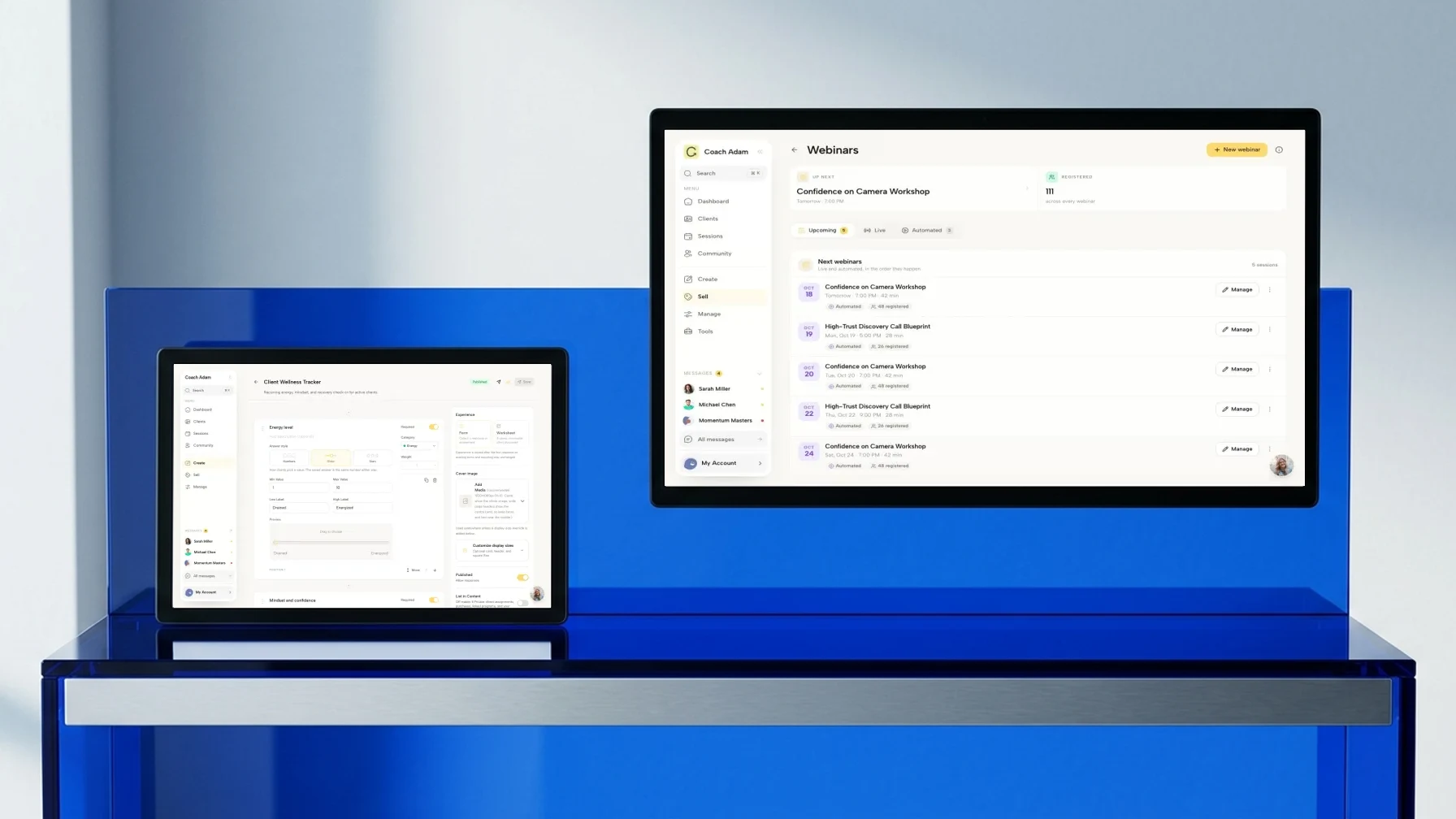
A webinar destination can support this next step without turning the poll into a booking trap. Coachful’s webinar area shows a real place to manage workshop offerings. It does not create a LinkedIn poll or demonstrate that voters will attend.

3. The practical-format poll
Best for: a business coach deciding how to explain one bounded task. Keep the learning goal constant so you are investigating presentation preference rather than mixing topic, price and delivery in the same question.
For learning to write a clearer project brief, which format would you be most likely to try?
- A filled-in example
- A five-minute walkthrough
- A blank template
- No preference
Post introduction: “Same task, different explanations. I’m choosing the first version to make, not asking you to join anything.” This gives respondents an accurate account of what their vote affects.
What you can infer: stated preference under the conditions described. Preference is not completion. Someone who selects a video may never watch it, while someone who chooses a template may need an example before using it.
Next action: build the smallest useful version and observe voluntary use. If you share a template, include instructions and an accessible text explanation. If you share a video, provide captions or a transcript. Do not interpret a format preference as permission to add someone to an email sequence.
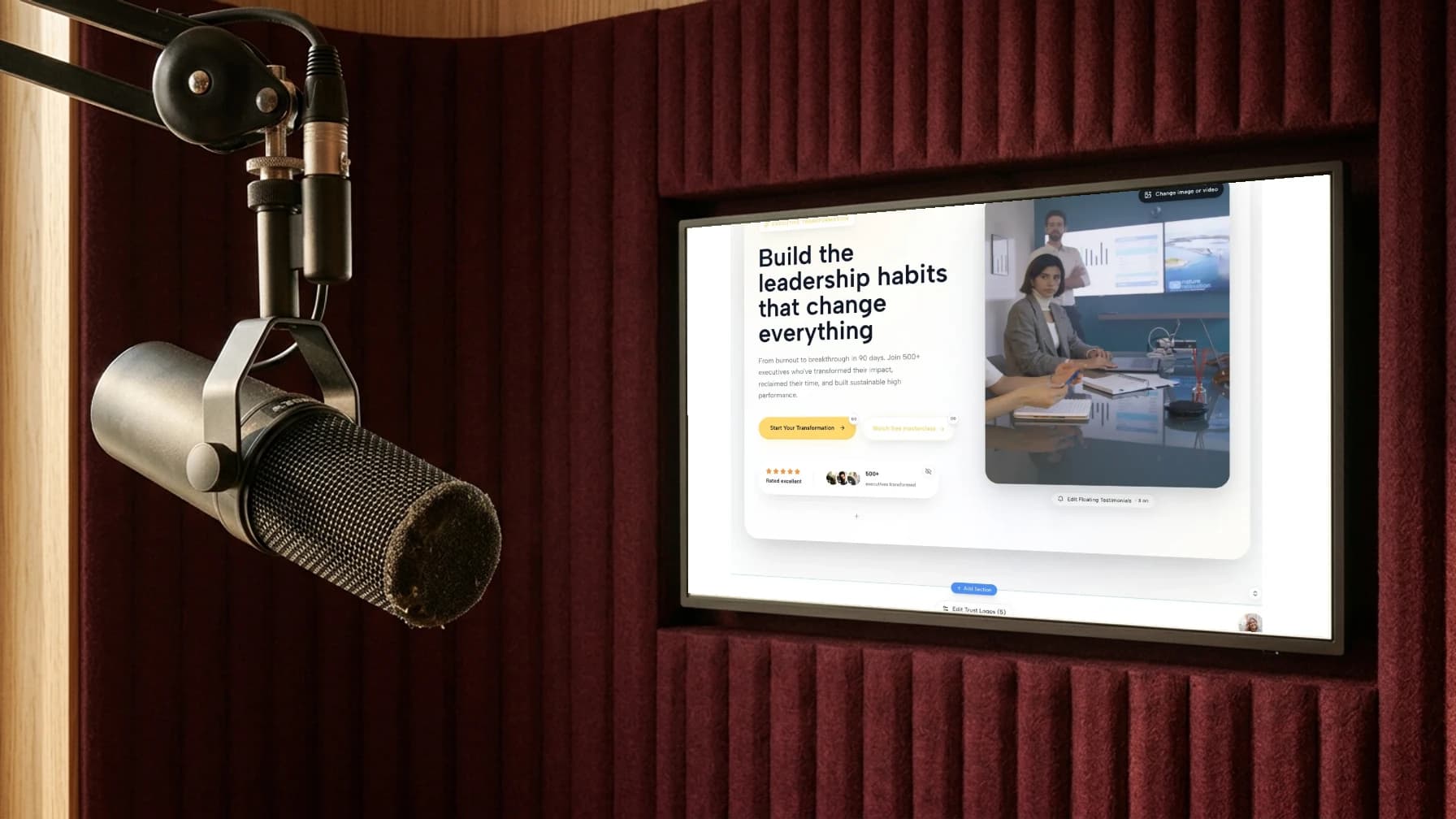
Keep delivery and ongoing marketing separate. “Send me this template” and “Subscribe me to future emails” are different requests. Coachful’s sequence editor illustrates a later communication workflow for appropriately subscribed contacts, not an automatic handoff from LinkedIn voters.

4. The professional-scenario poll
Best for: a coach selecting a fictional case for a discussion or workshop. Ask what participants want to examine, not which undesirable behavior they personally commit. That makes the question more useful and less intrusive.
Which fictional team scenario would make the most useful discussion exercise?
- A deadline changes twice
- Two priorities conflict
- A handover lacks detail
- Another scenario
Post introduction: “I’m writing a fictional exercise about agreeing work clearly. Please choose a scenario, not a colleague. Avoid naming employers or sharing private incidents in the comments.”
What you can infer: which proposed case interests respondents. You cannot infer that their team has that problem. A well-designed fictional case lets people explore a decision without making an involuntary public disclosure.
Next action: publish a short case and ask readers which clarifying question they would ask first. Offer a reasoned explanation afterward, including circumstances in which another choice would make sense. Avoid presenting one answer as a diagnostic test of leadership competence.
If someone posts confidential workplace detail, do not amplify it for reach. Respond without repeating the detail, discourage further identifying information and consider the appropriate moderation options. Public comments are not a safe substitute for a contracted coaching conversation.
5. The misconception poll
Best for: a coach choosing what to clarify about an unfamiliar service. Rather than testing whether people “understand coaching,” ask which explanation would make a practical decision easier. That avoids making the audience perform for the expert.
Which part of employer-funded coaching would be most useful to explain?
- Who agrees the goals
- What sponsors receive
- How sessions are arranged
- Who the service fits
Post introduction: “I’m preparing a plain-language explanation for people exploring coaching at work. Which section would you read first? This is about the explanation, not your employer’s current arrangements.”
What you can infer: an information priority among respondents. You cannot infer their organization has budget, that they are authorized to commission coaching or that they want a proposal.
Next action: publish a direct answer based on your actual practice. If you explain sponsor reporting, distinguish what is agreed in your contracts from a universal industry rule. Never imply that employers automatically receive session notes.
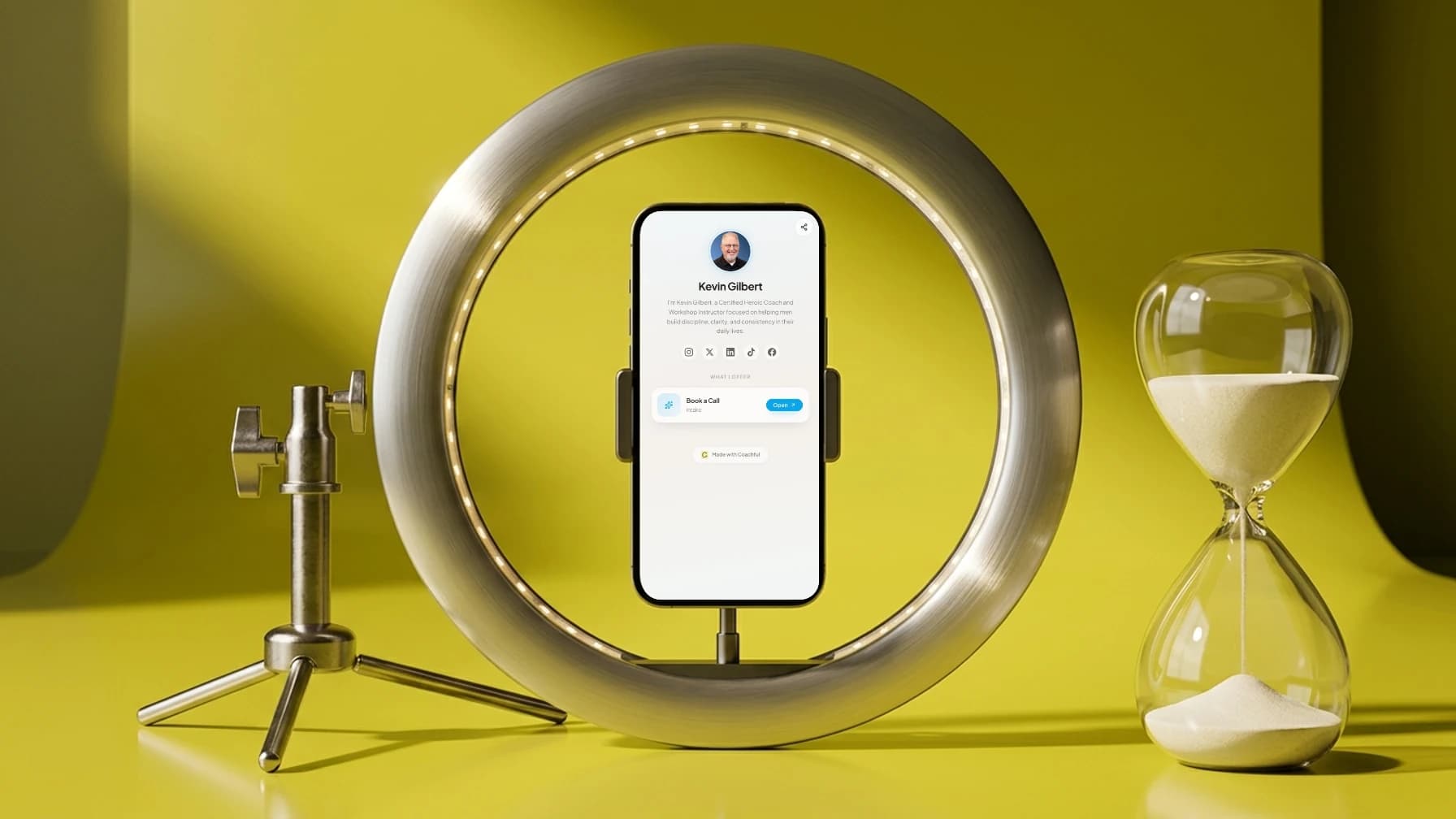
Link to an accurate service explanation only after giving a useful answer. Check the destination on a phone, including whether someone can understand the next action without hunting through unrelated links. The mobile Coachful example below illustrates that handoff, not a promise of LinkedIn lead attribution.

How to interpret results without inventing market demand
Record the question, options, visibility, open and close dates, total votes and the decision you intended to make. Keep the actual denominator beside any percentage. A result from a self-selected network is not a representative market survey.
Here is a fictional result, included only to show interpretation: 40 people vote; 18 select a delegation brief, 12 select feedback, six select one-to-ones and four select something else. The supported statement is “18 of the 40 votes in this poll selected the delegation example.” It is not “45% of managers need delegation coaching.”
Those numbers have different meanings because the poll asks about a guide, not need, purchasing intent or prevalence. The people who saw it and chose to respond may differ from your intended buyers. Your answer choices also constrain what they can tell you.

If “something else” attracts meaningful responses, read the public comments without treating them as permission to reuse quotations in marketing. If the options overlap, the question is ambiguous or the wrong audience responds, write down that limitation. More votes will not repair a poorly defined question.
For a higher-stakes offer decision, use a separate method. Our market research interview questions investigate real experiences and buying decisions. Polls are a lighter way to select a public explanation, not a replacement for that work.
Follow up without turning a vote into a sales ambush
Close the loop publicly first: thank participants, state the result with context and deliver the promised explanation. You do not need to message every voter. A person can contribute to your post without agreeing to become part of your pipeline.
Public follow-up template: “Thanks for helping choose this example. Among the people who voted here, [option] received the most votes. I’ve published [specific useful resource]. These results describe this poll, not the wider market. You can use the resource without booking a call.”
When someone explicitly requests a resource: “Here is the [resource] you asked for: [actual link]. The worked example is in [accurate location]. No need to book anything to use it.” Fulfill the request without adding a surprise qualification step.
When someone asks about coaching: “I work with [actual audience] on [accurate scope]. Are you looking for the public resource, or would you like information about the coaching?” Let their answer determine the next step. Do not send a calendar link merely because you can see their vote.

A simple review sheet for one poll experiment
Judge the experiment against the decision you wrote down, not an arbitrary engagement target. A quiet poll can still expose confusing language. A popular poll can still be irrelevant to your practice.
- Learning: What did the responses help you choose, and what remains uncertain?
- Delivery: Did you publish the explanation or resource you promised?
- Voluntary action: Did anyone request more information, register or ask a relevant question?
- Business relevance: Were those requests within your scope, and how much time did the experiment require?
- Next decision: Repeat, revise the audience or question, use another research method, or stop.
Keep poll engagement separate from enquiries and sales. Coachful’s diagnostics surface illustrates thinking about a business bottleneck rather than celebrating a single visible number. It does not prove that a LinkedIn poll caused a booking. Ask genuine enquirers what prompted them to act and retain uncertainty when several sources contributed.

Frequently asked questions
Are LinkedIn polls anonymous?
No. LinkedIn says the author can see who voted and their selections. Do not ask questions whose usefulness depends on respondents mistakenly believing their answer is anonymous. Check the official guidance for visibility details before publishing.
How long should a coaching poll run?
LinkedIn offers set duration choices. Pick one that fits when you will review the result and deliver the promised follow-up. There is no universal duration that guarantees reach or clients. Check the wording before publishing because LinkedIn says a published poll cannot be edited.
Can I use a poll to validate my coaching price?
A price preference vote does not establish willingness to purchase your actual offer. Respondents may not be buyers and may lack the scope, terms and context needed to decide. Investigate real buying decisions and test an honest, deliverable offer rather than treating a popular price as validated demand.
What if only other coaches vote?
Treat the result as feedback from those participants. It may be useful for professional content, but it does not describe your intended buyers. Change the topic, audience context or research method instead of relabeling peers as prospects.
Prepare the next step before asking the question
Choose one poll above, decide what its answer can actually change and prepare to deliver the useful follow-up. Do not build an elaborate funnel around a question that cannot support the decision you want to make.
If your next step needs a voluntary response form, workshop destination or appropriately subscribed email follow-up, Try the interactive demo to inspect the real Coachful surfaces shown here. Evaluate that handoff before inviting people through it. The software supports the next step; it does not make a vote a buying signal.
Source and example note: Platform constraints and visibility guidance come from the linked LinkedIn Help pages. Polls, copy and the numerical example are original editorial specimens, not observed campaign results. Product images show real Coachful demo states, not a LinkedIn integration.