15 Market Research Questions for Coaches (With Interview Script)

Nour
Founder, Coachful

Are people genuinely interested in your coaching offer, or being kind because you asked them? The most useful market research questions for coaches ask about a real buying situation: what happened, what someone tried, how they chose support, who paid, and what made the decision difficult. Ask about that before describing your program.
“I would definitely join something like that” is encouraging. It is not a purchase order. A conversation becomes useful when you can distinguish a remembered action from a polite prediction, then connect the evidence to one decision about your offer.
Below are 15 original interview prompts, organized into five research jobs, plus an invitation, opening script, note template and worked interpretation. This is a guide to conducting better buyer interviews, not a substitute for testing paid demand. For that separate decision, see our guide to validating a coaching niche with a paid pilot.
Before the questions: choose the decision you need to make
Do not begin with “I want to understand my ideal client.” That can produce an interesting conversation and no usable change. Choose a decision narrow enough to investigate: whether to offer evening sessions, which problem to foreground on a package page, or what an employer needs before approving coaching.
For example, a career coach might ask: “Do people returning from parental leave look for help before their first week back, or after a difficult experience at work?” The answer could change recruitment timing, preparation materials and the language of an offer. It does not require inventing a new niche.
Write down three things before recruiting: the decision, the people whose experience can inform it, and the evidence that would make you change your mind. Keep one main audience and buying situation in the first round. Mixing self-funded graduates with employer-funded directors makes the notes harder to interpret.
Public research can help you identify language and alternatives before speaking to anyone. Coachful’s Growth Lab Market Pulse provides content context to investigate, not proof that a particular coaching offer sells. Treat a visible topic as a question to explore with buyers, not a demand forecast.

Recruit people with relevant experience, not just enthusiasm
Ask people who recently faced the situation, including some who bought support, some who chose another option, and some who decided not to act. Your happiest clients can explain what worked for them, but they cannot represent everyone who did not buy.
Use a small, manageable first batch and review what you are learning before recruiting more. Five conversations can be a planning choice for a solo practice, not a scientifically sufficient sample or proof that the market agrees. Recruit beyond close friends where possible, and note how each participant reached you.
Adaptable invitation: “I’m researching how people returning to work after parental leave decide what support they need. Have you been through that in the past year? I’d value a 25-minute conversation about your experience. This is research, not a coaching session or sales call. No purchase is expected, and you can skip any question. Would you be open to receiving the details?”
State any incentive in advance and provide it regardless of whether the participant likes your idea. Do not recruit current clients in a way that makes access to coaching seem conditional on participation. Offer an accessible format, including written answers when a call would exclude someone.
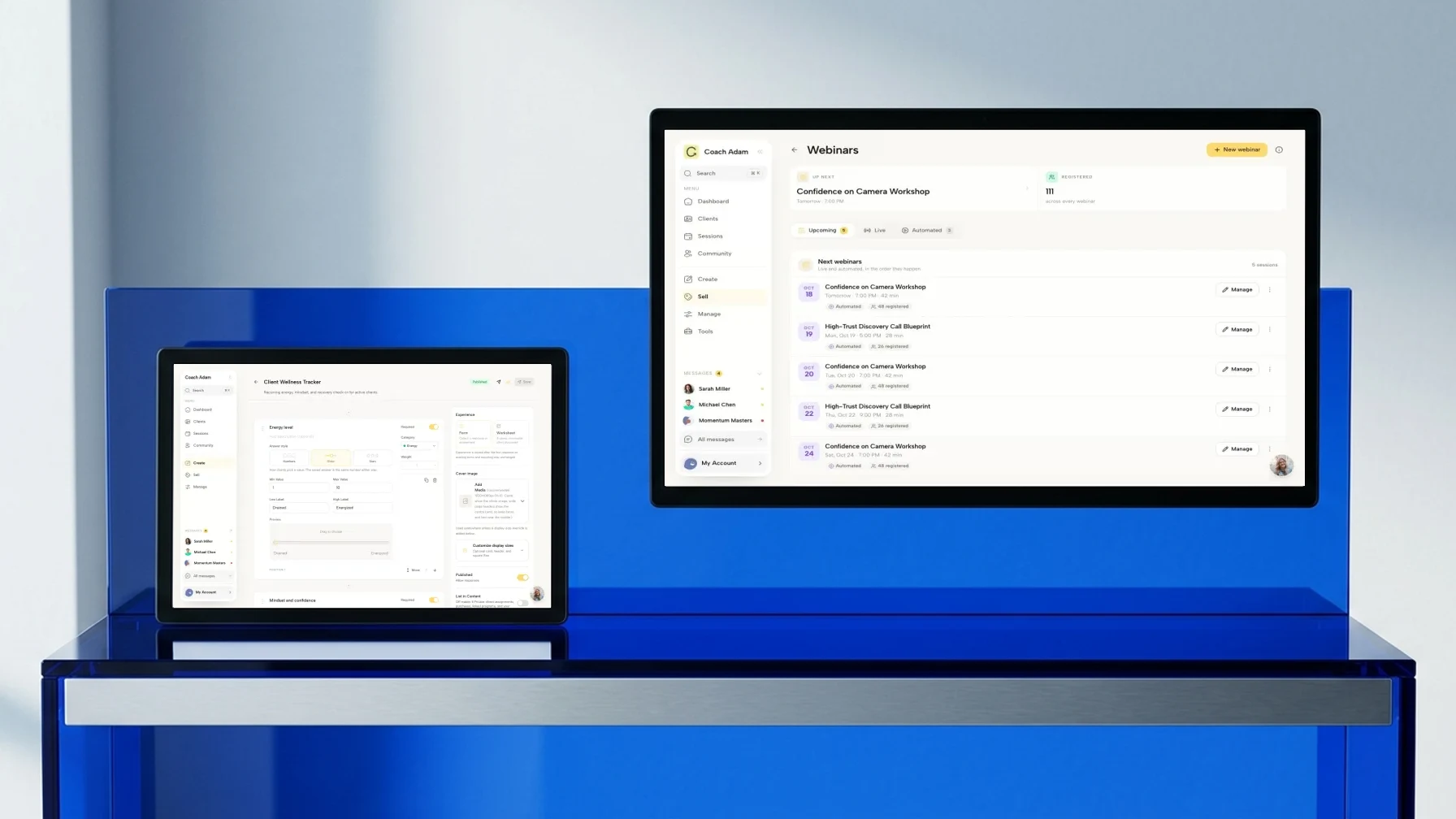
A recruitment form only needs enough information to assess relevance and arrange contact. Avoid collecting detailed health, employment or relationship histories. If you use Coachful’s form tools, write questions for this purpose; the demo wellness questionnaire below is a real editor example, not a ready-made market-research instrument.

A short interview opening that prevents a hidden sales call
Begin by restating the purpose and limits. The participant should know whether you are taking notes, whether anyone else will see them, and whether you want to record. Agree to any recording before starting it. Participation in research is not permission to publish a quotation or subscribe someone to marketing.
Opening script: “Thanks for helping. I’m trying to understand how you approached returning to work and choosing support. I’m interested in what actually happened, including things that did not work. There are no right answers. You can skip a question or stop. I’ll take private research notes and won’t identify you in marketing. Is that okay?”
If you want to record, add a separate, specific request covering the recording tool, intended use, access and retention. If the answer is no, use agreed notes instead. Do not quietly enable an automated note-taker after someone declines a recording.
The GOV.UK guide to in-depth interviews recommends planning around research questions, creating a discussion guide, and testing the flow before using it. For a coach, that means rehearsing with a colleague and removing questions that sound like a pitch.
Give the appointment its own label and realistic time boundary. Coachful’s scheduling surface illustrates managing appointments; it does not conduct the interview or obtain research consent for you. Keep your research slots distinct from paid sessions and discovery calls.

1. Understand the trigger: why did the problem become important?
Question 1: “Take me back to the most recent time you faced [specific situation]. What was happening?” Start with an episode, not a broad identity. Let the participant set the scene. Ask “What happened next?” rather than offering your interpretation of their feelings.
Question 2: “At what point did you decide you needed to do something differently?” This investigates a trigger. A new role, an upcoming conversation or a repeated practical difficulty may matter more than a demographic label. “I wasn’t looking for help” is also a useful answer.
Question 3: “What became harder if you left it as it was?” Listen for consequences in the participant’s words, without escalating distress to make the problem sound commercially attractive. Do not translate ordinary uncertainty into a diagnosis or imply that coaching was necessary.
What this can change: the opening of an offer page, when you invite someone to a relevant resource, or the situation your examples address. It cannot establish how common the problem is across the whole market.
2. Explore alternatives: what did they actually do?
Question 4: “What did you try first?” Leave room for doing nothing, asking a colleague, reading, using an employer benefit, taking a course or hiring someone. Other coaches are only part of the comparison set.
Question 5: “How did you find that option, and what made you consider it?” Ask for the actual route: a named type of community, a referral, a search or an internal recommendation. “I’d probably look on Instagram” is a prediction, not a channel they have used.
Question 6: “What was useful about it, and what remained unresolved?” Ask both halves. A competitor or free resource may have served the participant well. Your research should be capable of concluding that your paid offer is unnecessary for some people.
What this can change: the alternative you explain on a sales page, your referral relationships or the practical gap your service addresses. Do not copy another provider’s materials or infer their effectiveness from a single account.

3. Investigate the purchase: how was support chosen and funded?
Question 7: “Walk me through how you decided whether that support was worth the time or money.” Learn the criteria before asking about your price. Someone may have compared trust, scheduling, privacy, relevance and access before considering fees.
Question 8: “Who else was involved in approving or paying for it?” Separate the participant, recommender and payer. An employee wanting coaching does not establish an employer budget. A partner discussing household spending is not equivalent to a formal procurement team.
Question 9: “Was there a point when you nearly decided against it? What happened?” This is more informative than asking for an objection to a program the person has never seen. Allow them to decline financial details. You usually need the decision process more than their exact income.
What this can change: information shown before a call, payment explanations, proposal detail or the evidence a sponsor needs. Historical spending provides context, not a guaranteed price for your different offer.
4. Learn the delivery constraints: what could they realistically use?
Question 10: “When you used that support, what did participation look like in an ordinary week?” Ask about attended sessions, completed exercises and actual time available. This is different from asking how much time they hope to have in a better future.
Question 11: “What made it easy or difficult to keep using?” Practical barriers might involve time zones, caring responsibilities, technology, access needs or privacy. Ask what happened rather than assuming the barrier means low motivation.
Question 12: “How did you judge whether it was helping?” Seek observable changes and the participant’s own criteria. “I prepared the conversation and used my notes” is different from “I was promoted,” which depends on decisions outside a coach’s control.
What this can change: session timing, resource format, support boundaries and the progress measures you discuss with clients. Do not turn every preference into a new service commitment. Check that a proposed change fits your competence and capacity.
5. Test the explanation: what does your offer communicate?
Only now show a short, accurate description of the offer, if message comprehension is part of the research. Say that this is a separate task. Keep the description consistent between interviews so you can tell which version someone saw.
Question 13: “In your own words, who do you think this is for, and what would happen?” Let them interpret it before correcting anything. If your explanation requires a five-minute rescue speech, the page may not yet be doing its job.
Question 14: “What information would you need before deciding whether to take the next step?” This can expose missing scope, qualifications, price, confidentiality or practical details. Do not treat a request for information as agreement to buy.
Question 15: “Which part, if any, does not fit the experience you described?” Invite disagreement explicitly. A “none of this is for me” answer can reveal that the participant belongs outside the offer rather than that the copy needs more persuasion.
What this can change: the clarity of a specific offer explanation. This task tests interpretation, not willingness to pay, effectiveness or conversion. Keep any later sales invitation separate and ask permission before following up commercially.

Keep a research note, not a collection of flattering quotes
Use one entry per conversation with an anonymous participant code. Record the research question, recruitment source, relevant experience, recent trigger, alternatives used, decision criteria, payer, practical constraints and unresolved questions. Store contact details separately when practical and limit access.
Give each useful note three fields: what was said or done, your interpretation, and the next question. This prevents a vivid phrase from turning into a claim the participant never made. Preserve disagreement instead of averaging everyone into an imaginary ideal client.

Here is a fictional example. Participant R03 says: “I bought a course, but stopped after two lessons because I could only watch after bedtime.” The supported observation is that this person stopped using that course under those circumstances. Your hypothesis might be that a shorter format is worth exploring. “Returning parents hate courses” is not supported.
Another participant might say a self-paced course was the only format they could use. That is not bad data. Ask whether the two people have different constraints or are solving different problems. The appropriate decision could be a clearer eligibility statement, not offering every format.
Keep direct quotation private unless there is a separate, informed permission for the proposed public use. Removing a name does not necessarily remove identifying details. Do not convert sensitive coaching disclosures into research material simply because you already have access to them.
Turn the interviews into one bounded offer decision
After each small batch, group notes by research question rather than by how much you liked the participant. Look for repeated experiences, meaningful exceptions and unanswered questions. Keep raw counts with context: “three of the five people recruited through this parent network mentioned evening access,” not “60% of the market prefers evenings.”
For the fictional career-coaching example, several participants might understand the problem but misread “return-to-work support” as CV editing. A sensible next move is to clarify the offer’s scope and ask another relevant reader to explain the revised version. Building a larger curriculum would not fix that misunderstanding.
Write a short decision record: “We heard this from these participants; we think it may mean this; we will change this one element; this is what remains unproven.” Then choose the next appropriate test. A message-comprehension check, a usability check and an honest purchase offer answer different questions.

Keep the follow-up straightforward. Thank participants, honor any incentive and confirm only the follow-up they agreed to. Coachful’s email workspace can support individual correspondence. The demo thread below is not a research campaign, an automated consent process or permission to email everyone you interviewed.

Five questions to stop asking in their current form
- “Would you buy my program?” Replace it with questions about the last real decision. If you want purchase evidence, make an honest, deliverable offer later.
- “Don’t you find accountability difficult?” Replace the built-in conclusion with “What happened when you tried to follow through?”
- “How much would you pay?” First investigate what they have chosen, compared and funded. A hypothetical number is not an accepted price.
- “Would weekly coaching solve this?” Ask about constraints and previous support before naming your preferred format.
- “Can I use that as a testimonial?” Finish the research without making praise the price of participation. Any later request needs its own context and permission.
Frequently asked questions
How many market research questions should a coach ask?
Choose the prompts that answer your specific decision rather than rushing through all 15. A shorter conversation with useful follow-up is better than a completed questionnaire with vague answers. Agree the duration in advance and stop or arrange a further conversation rather than assuming extra time.
Can I send these questions as a survey?
Yes, but adapt the format. A written survey cannot ask a spontaneous follow-up when an answer is unclear. Keep questions concise, allow “not applicable,” avoid unnecessary sensitive information and consider offering a separate interview to explore an important answer. Do not promise anonymity if your form collects identifying data.
Can I do research with existing coaching clients?
Yes, with clear boundaries and voluntary participation. Explain that their answers will not affect the service they receive. Separate the research purpose from coaching, avoid reusing confidential session material without an appropriate basis, and include other perspectives if your decision concerns people who have not bought.
Do these interviews prove that my offer will sell?
No. They can improve your understanding of experiences, language, constraints and decision processes. They do not establish market size or future purchases. Use a legitimate purchase test for demand and appropriate client measures for delivery usefulness. Keep those forms of evidence separate.
Make the next step small enough to finish
Choose one offer decision, recruit a relevant first batch and use the questions to investigate real experiences. Revise the decision when the evidence disagrees with your assumption. The point is not to make people approve your idea; it is to stop building around an answer you supplied yourself.
Once you know what to ask, you can evaluate the practical setup for recruiting participants, arranging conversations and improving the page they eventually see. Try the interactive Coachful demo to inspect the form, scheduling, email and website surfaces shown here. The software can support the administration; the research judgment remains yours.