Out-of-Office Messages for Coaches: 5 Templates

Coachful
Editorial Team
“Can I take a week off without clients feeling abandoned or my inbox becoming a second holiday itinerary?” Yes, but your out-of-office message must describe the service clients will actually receive, not the service you feel guilty about withholding.
For a coaching practice, a useful absence message names when you are unavailable, when replies resume, what happens to sessions and agreed support, and who can handle any genuinely covered administrative work. Tell active clients before you leave. An auto-reply is the safety net, not the announcement.
Below are five original out-of-office templates for coaches, from a solo practice taking a short break to a group programme pausing for a holiday. They are adaptable wording, not legal terms or a substitute for your coaching agreement. Replace every bracketed field and delete anything that is not true.
Cover: AI-generated editorial photograph illustrating a coach closing her practice before planned leave.
Which out-of-office message should a coach use?
- Active clients need advance notice: use template 1 before the absence begins.
- You are a solo coach with no cover: use template 2 as your mailbox auto-reply.
- A colleague handles administration: use template 3, with a tightly defined scope.
- A group programme has a planned break: use template 4 in the agreed group communication channel.
- You are taking extended leave: use template 5 after agreeing individual delivery arrangements.
These are not five messages to send to everyone. A solo coach might need only the advance notice and the auto-reply. A group facilitator needs a group-specific explanation because a member may otherwise assume the curriculum, live calls and moderation all continue unchanged.
The distinction from ordinary between-session support boundaries is the finite exception: your usual response window will not apply during stated dates. Explain that exception without quietly rewriting what the client bought.
Decide the absence plan before writing the message
Start with three different dates: your last available working day, your return-to-work date, and the date or window by which you can realistically reply. “Back on Monday” does not tell someone whether their message will be answered on Monday or later that week.

Then check each promise in the current engagement. Will a session move? Will a weekly review wait until you return? Is a programme break already included in the published schedule? Does a recurring payment cover a calendar period, a stated number of sessions, or ongoing access and support?
There is no universal answer that a clever email can supply. If your absence changes contracted delivery, agree the adjustment with the client, including any relevant timing, credit or payment arrangement. Do not assume an email saying “I am away” automatically changes billing or removes an obligation.
Finally, choose a sustainable reply commitment. “I will reply by [date]” is useful if you can honour it. “I will review messages on [date] and confirm next steps by [date]” can be more honest after extended leave. Avoid “limited access” if what you mean is “I will not read this inbox.”
1. Advance vacation notice for active coaching clients
Use when: planned leave affects a current client's usual session or between-session support. Send it early enough to resolve practical changes before your last working day. The appropriate notice depends on the agreement and the length of the break, not a universal number of days.
Subject: Coaching arrangements while I am away, [dates]
Hi [Name],
I will be away from [start date] through [end date], returning to work on [return date]. I will not be reading coaching messages during that time.
For our work, [state the agreed session and support arrangements]. Our next session is [date, time and time zone].
Before I leave, please send any scheduling questions by [cutoff]. I will respond to messages received during the break by [realistic date or window after return].
[If applicable: For scheduling or access questions while I am away, contact [approved administrative contact]. They do not provide coaching support.]
Please let me know before [date] if these arrangements do not match what we agreed.
Warmly,
[Your name]
The most important sentence is the one about the agreed arrangements. “Our next session remains on 18 June” is useful. “Keep doing the work” is not a plan. If you have agreed a reflection exercise, identify where the client can find it and when you will review it, without implying you will monitor submissions while away.
Keep this notice about service, not your holiday. Clients do not need an itinerary, a location or an explanation of why you deserve a break. Nor do you need to apologize for leave that has been planned within your agreement. If a change genuinely inconveniences someone, acknowledge that specific change and resolve it.

In Coachful, the email workspace shown above illustrates individual correspondence. Check that each affected client has received the relevant arrangements through your agreed channel. The screenshot does not establish that a vacation responder is available there; mailbox auto-replies need their own configuration and test.
2. A solo coach's out-of-office auto-reply, without cover
Use when: you will not monitor the inbox and nobody is providing cover. Saying so is better than inventing an “urgent” route that also ends with you checking your phone.
Subject: Away until [return date]
Hello,
Thank you for your message. I am away through [end date] and return to work on [return date]. This inbox is not monitored while I am away.
I will respond by [realistic date or window]. If you are a current coaching client, the arrangements we agreed before the break remain in place.
There is no administrative or coaching cover during this period. This inbox is not an emergency service. For an immediate safety emergency, contact local emergency services or appropriate local urgent support.
Best wishes,
[Your name]
Use a plain subject because the reply may reach people who are not clients. Avoid putting a sensitive specialty, a client's goal or any reference to their coaching history in an automated subject line. An auto-reply can be forwarded just as easily as an ordinary email.
The safety sentence is a boundary, not a complete safety plan. If a client's needs require continuity beyond what you can provide, discuss appropriate support within your competence before the absence. A generic auto-reply cannot make an unsuitable engagement safe or replace locally relevant emergency information.
You can omit the sentence referring to current clients if you want a fully general public reply. Do not fill the space with an application pitch. Someone trying to clarify an existing session should not have to read a sales funnel to discover whether you are available.
3. Out-of-office reply with administrative coverage
Use when: a real colleague has agreed to handle a defined set of practical questions. Confirm their dates, contact route and authority before naming them.

Subject: Away until [return date]; scheduling help available
Hello,
I am away through [end date] and return on [return date]. I will not read or answer this inbox during the break, and will respond by [date or window].
For [specific administrative matters], [name] can help at [approved contact route] during [coverage days and hours, with time zone].
Their cover is administrative only. Please do not send coaching notes or sensitive personal information to that address.
Coaching messages will wait until my return under the arrangements already agreed with current clients. This mailbox and the administrative contact are not emergency services.
Best,
[Your name]
“Contact my assistant for anything urgent” looks efficient but creates an undefined responsibility. Is a failed login urgent? A cancellation? A distressed message? Name the tasks the person can handle and what they should do when a request falls outside that list.
Do not forward the entire coaching inbox by default. Give a covering colleague only the authorized access necessary for their task, following your confidentiality, privacy and security arrangements. A list of appointments may be relevant to scheduling; private session notes usually are not.
If another coach will actually deliver sessions, treat that as a separate professional arrangement. Discuss the client's choice, suitability, confidentiality, fees, records access and responsibilities before the handover. Calling someone “backup” in an auto-reply does not establish the client's agreement to work with them.
4. Holiday-break message for a group coaching programme
Use when: a cohort or ongoing group has a shared break. Be precise about the difference between access to materials and access to a facilitator.
Subject: Our programme break, [dates]
Hi everyone,
Our planned programme break runs from [start date] through [end date]. The next live session is [date, time and time zone].
During the break, [state what remains available]. There will be no [live calls, facilitator replies or other support that pauses].
[State the agreed task and check-in arrangements, including when submissions will next be reviewed.] [State any agreed effect on the programme end date or payments, if applicable.]
For [covered administrative question], use [approved route]. The group is not monitored for urgent support; use appropriate local services if you need immediate help.
I will post our restart update on [date].
Warmly,
[Your name]
Delete unsupported promises such as “the community will support you while I am away.” Members did not necessarily agree to provide cover, and peers are not substitutes for an available professional. If moderation stops, tell members what that means and decide whether keeping posting open is appropriate.
Check existing sessions rather than relying on the announcement. A calendar invitation can remain live after you have told everyone there is a break. Similarly, a scheduled prompt can ask for a reflection on a day when nobody will review it. Inspect those client-facing details before leaving.

The Coachful client sessions view illustrates the appointment information a client may still see. Review the actual bookings in your practice and confirm any changes through the normal process. Do not assume the message changes appointments, programme access, payment collection or refund arrangements.
If members have different contractual arrangements, handle their payment or delivery questions privately. Do not publish individual circumstances in the group or expose recipients through an improvised group email. Use a suitable channel that respects the group's existing confidentiality arrangements.
5. Extended-leave message when the return needs more planning
Use when: a longer absence needs individual decisions about pausing, continuing elsewhere or ending an engagement. Tell active clients personally before relying on this general message wherever possible.
Subject: Practice availability during extended leave
Hello,
I am on extended leave from [start date]. I am not accepting new coaching bookings or monitoring this inbox during the leave.
[Choose one true statement: I expect to return on [date], with replies by [date]. / My return date is not confirmed; I will provide an availability update at [public, non-sensitive page or approved channel] by [date].]
Current clients have received individual information about [the agreed pause, delivery or transition arrangements]. For [specific covered administrative matter], contact [approved route and coverage window].
This inbox is not an emergency service. Please use appropriate local urgent support if you need immediate help.
Best wishes,
[Your name]
You do not owe general enquirers a medical explanation or family detail. “Extended leave” can be sufficient. Current clients do need practical clarity about their engagement, including any unresolved commitments, access, records and financial arrangements. Privacy about your reason is compatible with accountability for your work.
If the return date is uncertain, promise an update you can genuinely arrange, not a definite return you cannot know. For unplanned leave, have an authorized person help communicate necessary information if appropriate. Do not make an unattended mailbox responsible for a commitment nobody can fulfill.
Set up and test the reply where messages actually arrive
An email auto-reply only answers email handled by that mailbox. It does not necessarily cover portal chat, Instagram messages, contact forms or a separate business number. List the channels clients are entitled to use and put an appropriate availability notice in each relevant place.
For Gmail, use Google's current vacation responder instructions. Google notes that replies generally go to someone the first time they message, with exceptions including another message after four days or an edited response. Do not expect every follow-up email to trigger another notice.
Test from an outside address, including any restriction that limits replies to contacts. Check the dates in the mailbox's settings, the displayed subject, the contact details and the links. If an administrative colleague is named, ask them to confirm they can receive and handle a test request without seeing private coaching material.
Keep a small live-text checklist with the absence dates, affected clients, agreed session changes, support exceptions, administrative coverage, billing decisions and return tasks. You do not need to copy confidential coaching narratives into that checklist. It is an operations record, not a second client file.
What to do when you return

Remove stale notices from every channel you changed. Check that the auto-reply has ended, your booking availability reflects the dates you actually work, and any programme notices show the next real session. Read the messages before sending a breezy “back now” update that overlooks an unresolved practical problem.
Then honour the response window you promised. If something unexpected prevents that, communicate the revised timing rather than leaving the original promise unanswered. Review any covered administrative requests with the colleague, using only the information needed to resolve them.
For your next break, note the questions clients asked. If several people asked whether check-ins would be reviewed, the plan was missing that fact. Improve the service explanation, not merely the warmth of the opening sentence.
Frequently asked questions
Should I say I will check email occasionally?
Only if that is a real, sustainable arrangement with a clear response expectation. “Occasionally” makes people guess. If you will not read messages, say so; if you offer a defined window, state it without implying continuous monitoring.
Can I use an out-of-office reply to pause a client's package?
No. The message communicates arrangements; it does not by itself change your agreement, invoices or session entitlements. Resolve any change in delivery and payment separately, and give the client written confirmation of what was agreed.
Do I need to give clients an emergency number?
Do not invent one or imply you provide emergency support. Clarify that unattended coaching channels are not emergency services. Discuss any appropriate continuity or safety arrangements separately, within your competence and with locally relevant support where needed.
Should I announce my holiday publicly?
You can state business availability without sharing travel dates, location or private circumstances. A public notice should contain only what an enquirer needs. Current clients should receive their own service arrangements through an appropriate channel.
Before your next break, rehearse the client experience
Pick the two templates your practice actually needs. Resolve the delivery details first, replace the placeholders, then send a test message and check the appointment information a client will see. A warm paragraph cannot rescue a live booking you forgot to move.
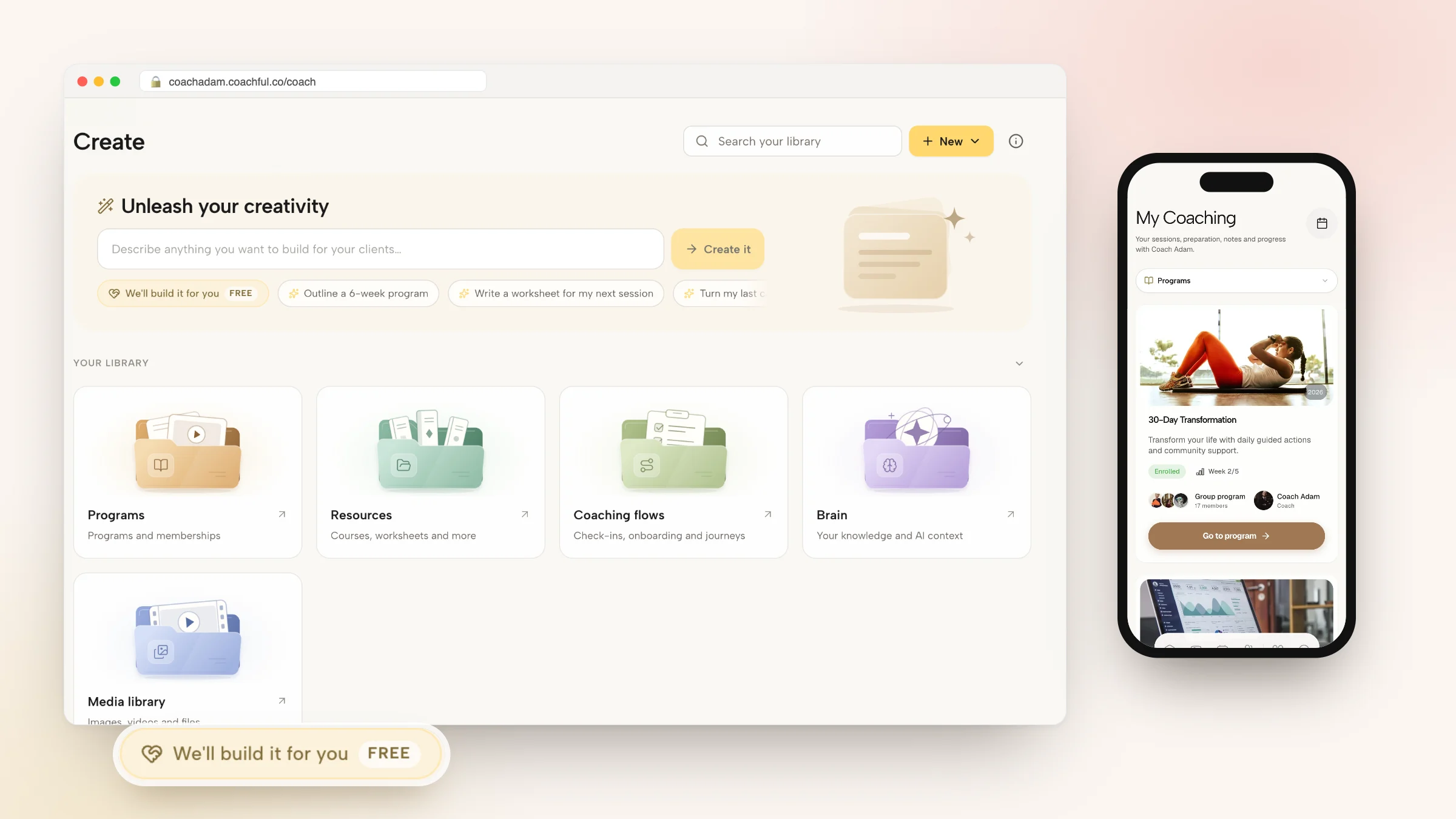
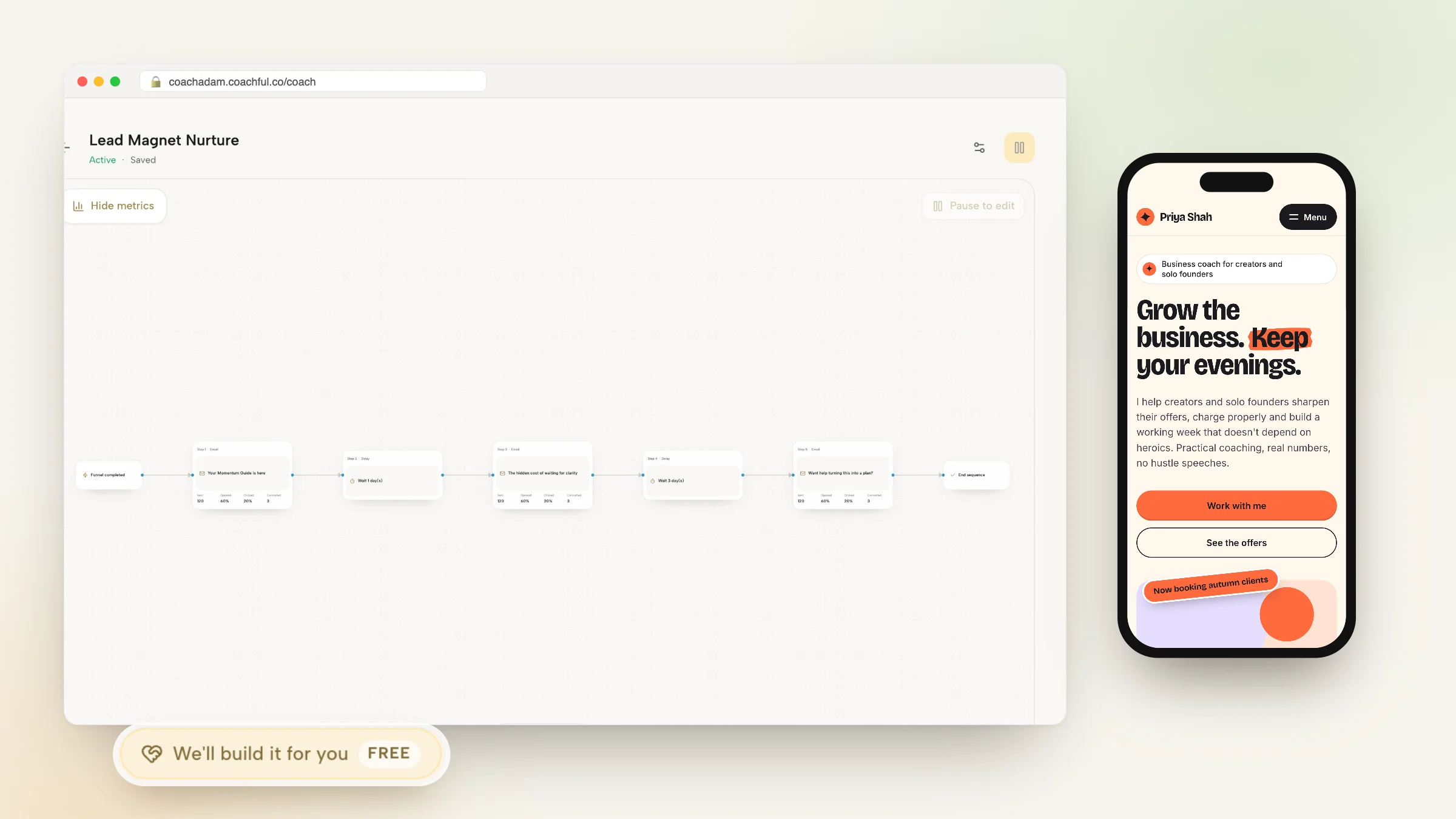
If you are evaluating how to organize those client communications and sessions, explore the workspaces illustrated above before moving your practice. Try the interactive demo to inspect Coachful's correspondence and client session views. Configure mailbox autoresponders separately and test your own absence workflow before relying on it.
The useful standard is simple: clients should not have to infer your availability from silence. State the dates, make the service arrangements real, and give yourself permission to follow the plan you have communicated.