Reddit for Coaches: 5 Ways to Build Trust Before Selling

Coachful
Editorial Team

Can you get coaching clients on Reddit without becoming the person everyone reports for spam? Potentially, yes, but treat client inquiries as a possible result of useful participation, not the price people must pay to receive your answer. Choose communities where your expertise belongs, follow their rules, answer the question in public, and discuss paid coaching only when the context and the person’s permission support it.
That is a slower proposition than searching for someone who sounds stuck and sending a pitch. It also avoids building your practice on an unpleasant assumption: that a stranger describing a difficult week has volunteered to become your lead.
This guide covers five practices for independent coaches considering organic Reddit participation. They are selected for relevance, permission and a manageable workload, not maximum reach. This is not a paid advertising guide, a promise of clients or a list of communities you can sell into.
Start with permission, not a prospect list
Reddit can help a coach understand problems, contribute informed perspectives and become discoverable. Those are three different jobs. Research does not require an invitation to contact someone. Participation does not entitle you to a sales conversation. A genuine inquiry still needs a fit assessment.
Reddit’s official rules explain that communities have their own rules enforced by moderators, alongside platform-wide rules. They also emphasize privacy and safety. Read the current rules of each community before contributing; a tactic permitted in one place may be unwelcome elsewhere.
Do not rely on a supposed universal number of helpful comments that earns you the right to advertise. Community rules, relevance and moderator decisions matter more than a marketing ratio. Nor should you hide that you are a coach while pretending to be an unrelated satisfied customer.
The useful test: would this contribution still help the reader if they never visited your profile? If not, rewrite it before worrying about conversion.
1. Choose communities by the problem you can help with
The most obvious coaching community is not necessarily where your prospective clients gather. A forum for coaches may be excellent for professional learning and poor for reaching first-time managers. Start with the situation your offer addresses, not the job title on your business card.
For example, a career coach helping experienced professionals change industries could investigate discussions about career transitions and interviewing. An executive coach might investigate first-time management questions. These are research directions, not endorsements of particular communities or claims that promotion is allowed there.
Shortlist no more than three communities initially. For each, read the rules, pinned guidance and several recent discussions. Record four things in a simple working note:
- Audience: are these people experiencing the problem your paid offer addresses?
- Conversation: are members asking for practical perspectives you can responsibly provide?
- Permission: what do the rules say about professional participation, links, services and direct messages?
- Culture: what kind of answer receives a constructive response rather than being treated as an intrusion?
A large audience is not compensation for a poor fit. A community devoted to venting may not want solutions. A peer support space may explicitly exclude professional solicitation. A thread about acute distress is not a clever place to introduce your package.
Trade-off: narrower communities may offer fewer opportunities, but make it easier to judge whether your contribution belongs. If you cannot participate without continually testing the rules, choose a different community or channel.
2. Research recurring questions without collecting people
Before drafting a post, identify a handful of recurring decisions. Look for the point at which people become stuck: deciding whether to negotiate, preparing a first difficult conversation, choosing a manageable habit or comparing career directions.
Write down the pattern in your own words. Do not copy usernames, contact details, sensitive histories or entire posts into a prospect spreadsheet. Avoid copying identifiable disclosures into external analysis tools. The useful research output is a question your market needs answered, not a dossier on the person who asked it.

For a hypothetical career-coaching practice, your notes might look like this:
- Repeated question: “How can I explain an industry change without sounding inexperienced?”
- Decision underneath: which experience should the candidate emphasize?
- Useful public contribution: a way to map past evidence to the requirements of the new role.
- Offer connection: individual coaching could help someone make and test their own transition plan, if they later want that support.
Notice what is missing: “Find everyone who mentioned being laid off and contact them.” A painful situation is a reason to use more care, not a reason to accelerate the pitch.
Use this research to improve your website wording, educational content and discovery questions. Do not claim that a few discussions establish market size or willingness to pay. They can reveal language and uncertainty; they cannot validate your entire offer.

Trade-off: public discussions are useful but selective. People who post may not resemble those who hire you, and popular opinions are not evidence that coaching is the appropriate intervention. Compare what you read with real, consent-based conversations with suitable prospects.
3. Write answers that stand on their own
A helpful comment answers the actual request before it introduces your professional identity. You do not need to deliver a full session. Give one useful distinction, a small method and an appropriate limit.
A workable structure is: acknowledge the specific decision, explain one way to approach it, and identify what information would change the advice. If your professional interest is relevant, disclose it plainly without turning the disclosure into an advertisement.
Here is an original hypothetical response to someone asking how to prepare for a career-change interview:
“It sounds like the hard part is showing relevant experience, rather than explaining why you want to leave. Pick two requirements from the job description and write down one concrete example from your current work for each. Then practice explaining the connection without assuming the interviewer knows your industry. I work as a career coach, so this is the kind of preparation I help people think through; the right examples will depend on the role.”
That answer leaves something usable in the thread. It does not withhold the method behind a download, diagnose the poster or end with an unsolicited invitation to message you. If professional disclosures are restricted in that community, respect the restriction rather than finding a coded workaround.
Compare it with: “You need to work on your limiting beliefs. DM me and I’ll explain.” The second version tells a stranger what is wrong with them, provides no useful answer and moves the value behind a private interaction. Changing the last line to “happy to help” does not fix the underlying pitch.
Before submitting, check whether the poster actually wants suggestions. Ask permission before offering a perspective when the request is unclear, and accept “no.” Do not pursue someone across threads after they stop responding.
Trade-off: a complete public answer may never produce an inquiry. That is not a defect. If contributing without a sale feels unacceptable, organic community participation is probably the wrong acquisition method for your practice.
4. Share an educational post only where it is welcome
A useful original post can demonstrate your thinking more clearly than a stream of short replies. But it needs both a community reason to exist and permission to be there. Read the rules on educational posts, promotional threads and external links. If the distinction is unclear, ask moderators before posting.
A concise moderator question could be: “I’m a career coach and have drafted a text-only exercise for translating experience between industries. It contains no booking link. Would that be appropriate here, or should I keep it to an existing thread?” Describe the real commercial relationship and proposed content honestly.
Choose a topic that emerged repeatedly and teach the useful part directly in the post. A career coach could explain a three-column exercise: target requirement, existing evidence and a gap to investigate. A leadership coach could offer a preparation framework for a first delegation conversation.
Do not recycle a client’s private situation into an entertaining case study. Use a clearly fictional example or obtain appropriate permission for any real story, considering whether the person could still be recognized. Never invent client wins to make an educational post feel authoritative.
If the rules permit a relevant link, the destination should continue the same promise. A post about preparing a role transition should not send someone to a generic page promising to transform every part of their life.

Prepare the destination before sharing it. State who you help, the kind of work you do, relevant limits and the next available action. A reader should be able to decide whether an inquiry makes sense without surrendering sensitive details first. Keep optional newsletter enrollment separate from a request for information about coaching.
A profile can provide professional context too, but it is not a loophole for breaking community rules. Repeatedly steering every answer toward “check my bio” is still a promotional pattern. Do not pretend a profile visit turns unsolicited outreach into permission.
Trade-off: posts require more preparation and may be removed even when you believe they are useful. Accept moderation decisions, seek clarification respectfully if appropriate and do not repost through another account to evade them.
5. Turn a voluntary inquiry into a clear next step
Someone asking a follow-up question is not necessarily asking to buy. Clarify what they want before introducing a consultation, a form or a package. Keep the first exchange proportionate.
An original response to a genuine inquiry might be: “Thanks for asking. I work with professionals planning a change of industry. Are you looking for general resources, or information about individual coaching? If it is coaching, I can share how the process works and the current fee before you decide whether to book a fit conversation.”
This gives the person a choice and makes the commercial nature explicit. It does not manufacture urgency or imply that accepting more information creates an obligation. If they ask for resources, provide what you reasonably can or explain your limits without turning the answer into pressure.
Public does not mean confidential. Do not ask someone to describe their employer, medical history, relationship conflict or financial situation in a public thread to prove that they qualify. Coaching scope, confidentiality expectations and any relevant agreement belong in an appropriate private process, not improvised in comments.

A private message is not automatically a secure intake process either. Collect only the information needed for the next decision, explain what will happen to it and use an appropriate channel. Do not add someone to marketing emails because they asked about one service. Follow the consent and privacy requirements that apply to your practice.
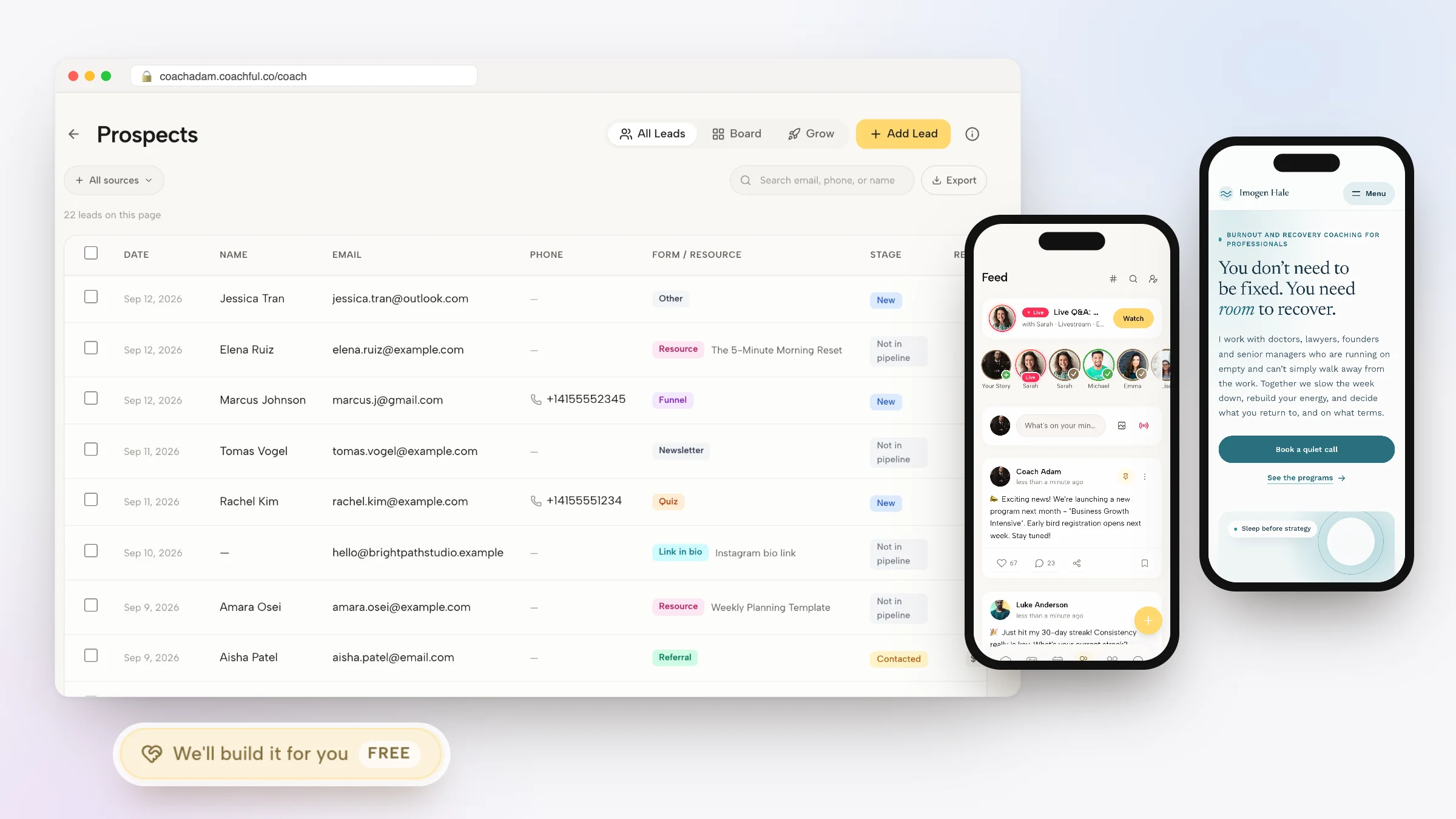
Once a person deliberately inquires, a minimal prospect record could include their chosen contact details, the broad service requested, their preferred next step and the agreed follow-up date. There is no need to retain their entire posting history.

If the request falls outside your competence, say so. Clinical, legal, financial or urgent safety needs should not be reframed as objections your sales process must overcome. You can decline a coaching inquiry without diagnosing the person or promising that another service will fix their situation.
Trade-off: a permission-led handoff may reduce the number of people entering your pipeline. It makes the remaining conversations clearer: both sides know why they are talking and what decision comes next.
Run a small test before making Reddit a marketing commitment
Set a modest time budget that fits around paid delivery. For example, you might choose two short research-and-participation blocks each week for four weeks. That is a planning suggestion, not an algorithmic posting requirement or a deadline by which Reddit should produce clients.
Keep your review simple: time spent, useful contributions, voluntary inquiries, suitable consultations and paid engagements. Record what people tell you about how they found you rather than assuming the last visible interaction caused the sale. Do not confuse upvotes with purchasing intent.

In the hypothetical example above, ten useful contributions lead to three voluntary inquiries, two suitable calls and one paid engagement. These are invented numbers to show what to record, not a forecast. The same contributions might produce no inquiries while still teaching you which questions your website fails to answer.
At review time, distinguish three outcomes. If conversations are relevant but nobody inquires, improve your positioning or destination without pressuring community members. If inquiries repeatedly fall outside your scope, reconsider the community or the way you describe your work. If the activity consumes delivery time without useful learning or suitable inquiries, reduce it or stop.

For the wider review, see how to track which visibility activities bring coaching clients. Reddit should compete for your time alongside referrals, partnerships and other channels; it does not deserve a permanent place simply because participation is free.
Frequently asked questions
Can life coaches get clients from Reddit?
It is possible for relevant participation to lead to an inquiry, but there is no dependable client count or timeline to promise. Your scope, community fit, communication and offer all matter. Choose a community because you can contribute appropriately, not because its members seem vulnerable enough to need your service.
Should I send direct messages to people asking for advice?
Do not treat a public request for advice as an invitation to receive a private sales pitch. Answer appropriately in the thread, follow the rules and let the person explicitly choose any further contact. An invitation to explain a point is not blanket consent for repeated marketing.
Which subreddit is best for coaches?
There is no universal best community. A coach-to-coach forum serves a different purpose from a forum where your intended clients discuss a relevant decision. Investigate current rules and conversation quality yourself; no list can grant permission to promote a service.
Do I need a lead magnet or paid ads first?
No. Start by establishing whether you can contribute usefully and whether people voluntarily seek more information. A resource is helpful only when it genuinely continues the answer. Paid Reddit advertising is a separate decision with its own budget, targeting, policies and measurement needs.
Make the handoff easier, not the pitch louder
The practical opportunity is not extracting leads from every discussion. It is becoming useful in the right context, then being clear and organized when someone independently wants to explore coaching.
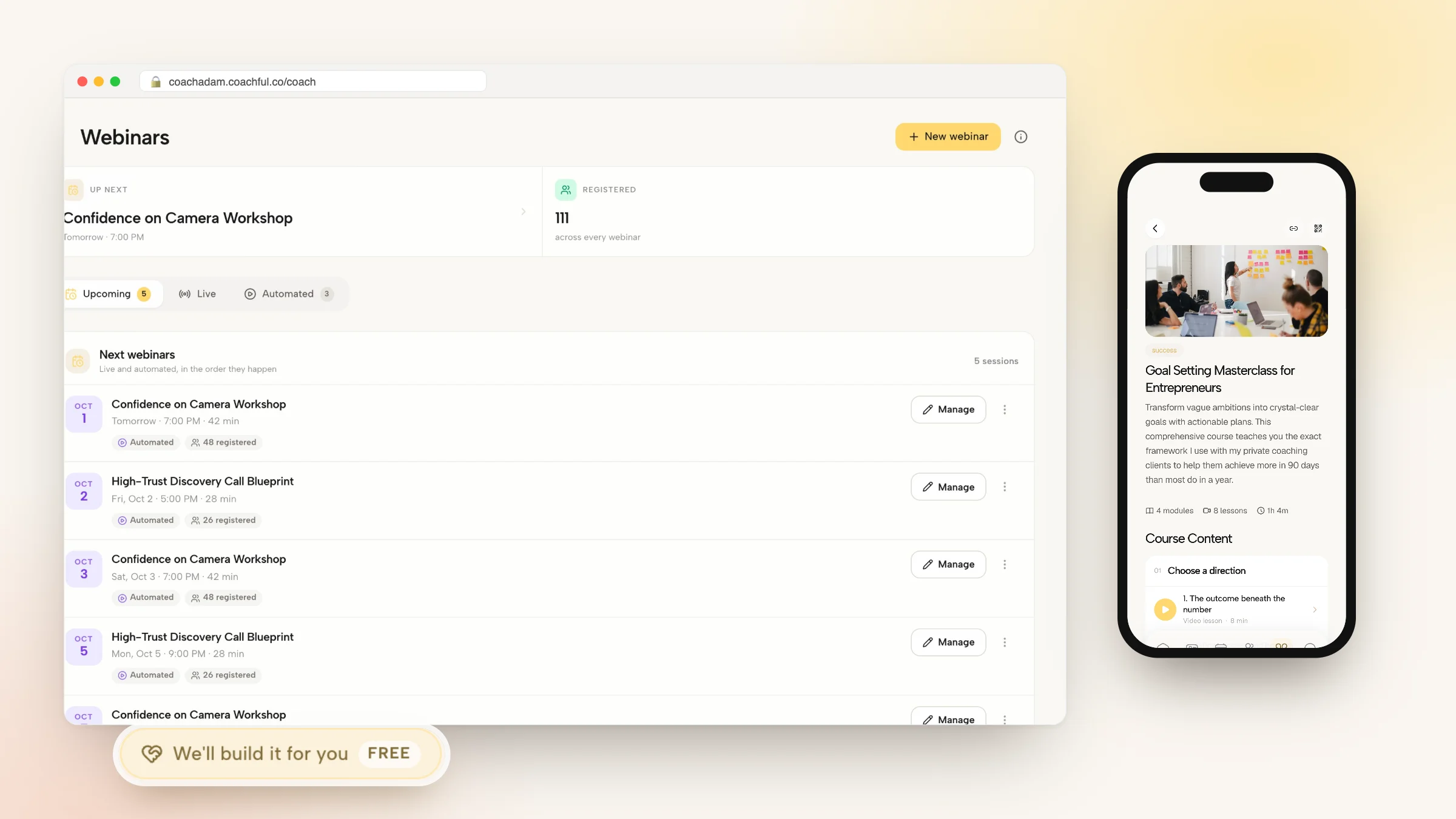
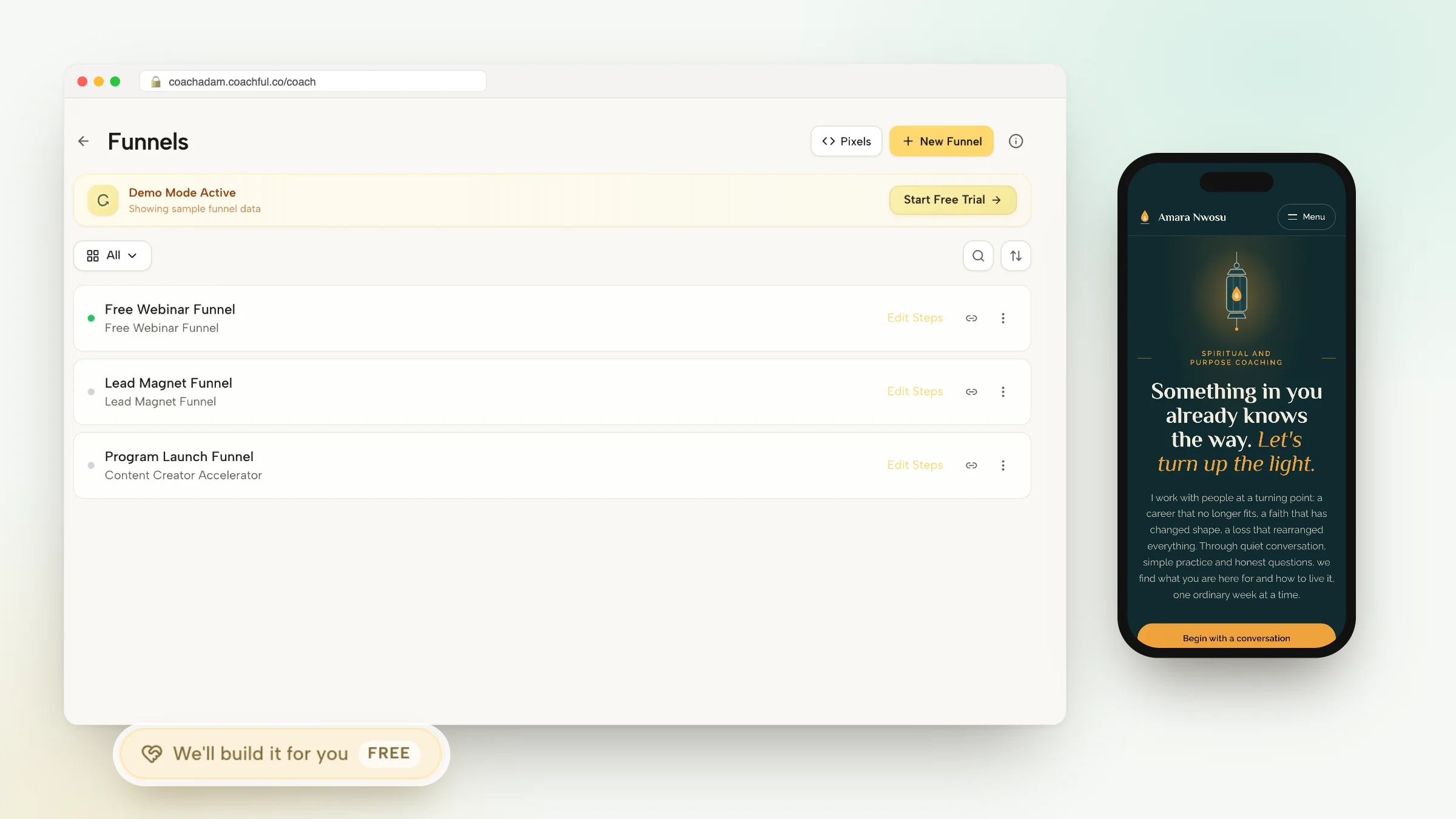
Before investing more hours, test the route a willing prospect would take: relevant page, understandable scope, voluntary inquiry and an agreed follow-up. If that is the part you need to organize, try the interactive Coachful demo and examine the website and prospect workspaces shown here. Coachful can support that practice-management handoff; the screenshots do not demonstrate Reddit monitoring or automated social outreach.
Start this week: investigate one suitable community, record its rules and one recurring question, and decide whether you can offer a useful answer without asking for anything back.