Welcome Back Email to Coaching Clients: 5 Restart Templates

Nour
Founder, Coachful
What do you email a coaching client who has already decided to return after a break? Confirm the restart, explain what has changed and give them one practical next step. Do not send a sales pitch to someone who has just said yes, or make them repeat an intake that no longer fits.
A welcome-back email should make the next coaching session easier to attend, not pretend the previous engagement never ended. The client may remember your conversations perfectly and still have no idea whether their old booking link, session credits or account access still work.
These five original templates cover different restart situations. They are fictional editorial examples to adapt, not messages sent to real clients or tested retention claims. Choose one by the agreement you have actually reached, rather than sending all five as a sequence.
Welcome back, reactivation or renewal: which email do you need?
A welcome-back email follows an affirmative decision to resume. A reactivation email invites a former client to consider returning. A renewal conversation concerns whether an existing engagement should continue. Those are different jobs, even when you use the same contact record.
If someone has only said “I might be interested,” do not write “Your coaching restarts next week.” Send the relevant information or arrange the fit conversation they requested. For outreach before a person has decided, see the separate past-client reactivation guide. For an engagement that has not ended, use the package renewal guide.
A client returning after a planned pause may still have an existing agreement. An alumnus buying a different program may need new terms. Someone returning after a poor experience needs the unresolved concern addressed before a cheerful confirmation. “We know each other” does not settle any of those questions.

Check six facts before you write
Open the current record rather than relying on your memory of the last session. The useful check is small: what is agreed, what remains to be decided and what can the client actually do now?
- Decision: has the client confirmed a return, or only requested information?
- Service: is this the same engagement, a new package or a different delivery format?
- Timing: is an appointment booked, or does the client still need to choose one?
- Money: what payment or credit arrangement has been verified, and what remains pending?
- Access: can this client reach the correct materials and joining instructions?
- Changes: which goals, contact details, boundaries or accommodations need updating?
You do not need to expose the whole checklist in the email. Include the facts that affect the next action. If a condition is pending, name it rather than disguising it as a completed step. “Once we have agreed the new package” is different from “Your package is active.”
Do not include the reason for a sensitive absence in the subject line. A shared inbox, lock-screen preview or forwarded calendar message is a poor place to mention illness, relationship difficulties or a previous workplace problem. You can acknowledge a return warmly without reciting the client's private history.

1. Returning after an agreed short pause
Use this when: the client has confirmed the restart and the existing engagement still applies. It works for an agreed scheduling pause, not an assumption that every absent client should resume automatically.
Subject: Your coaching restart: the next step
Hi [First name],
It will be good to work with you again. As agreed, we are resuming [service] under [the existing agreement or confirmed update].
[Your next session is booked for date, time and time zone / Please choose your next session using the booking link below].
Before we meet, let me know whether your availability or the focus you want to bring has changed. You do not need to explain the break again.
[View your confirmed session / Choose your next session: insert the correct link]
If the link does not work, contact me at [monitored address].
[Coach name]
Choose one timing sentence and one matching action. Do not leave both options in the finished email. If the client still has unused sessions, confirm the verified position separately or include a short factual line. Do not promise that old credits remain valid without checking the applicable agreement.

2. An alumnus starting a new coaching package
Use this when: the previous engagement ended and a new package has been agreed. Familiarity can shorten orientation, but it should not hide a changed price, session allowance or support boundary.
Subject: Welcome back: your new [package name]
Hi [First name],
I am glad we are working together again. This is a new engagement for [brief agreed focus], rather than an extension of your previous package.
We have agreed [session count, session length and delivery format], with [brief between-session support boundary]. The confirmed terms are here: [agreement link].
[Accurate payment or credit status, without financial account details].
Your next step is to [specific outstanding action]: [relevant link].
Before our first session, I will ask what has changed since we last worked together so we can begin from where you are now.
[Coach name]
State only the next outstanding action. If the agreement is unsigned, that action might be reviewing and signing it. If terms and payment are complete, it might be booking. A friendly confirmation should not imply that an unsigned proposal, pending payment or unreserved appointment is complete.
Where your terms changed, draw attention to the meaningful differences in plain language. Linking a long document is not a good substitute for saying that messaging support is now limited to specified working days. Keep the binding terms consistent with the summary, and obtain appropriate professional advice for your agreements.

3. Returning with a different goal or changed circumstances
Use this when: a client wants to work with you again, but the previous focus is no longer a reliable starting point. The next appointment may be a clearly described reassessment conversation rather than the first session of an already agreed program.
Subject: Starting again with your current priorities
Hi [First name],
Thank you for getting back in touch. We have agreed to meet for [accurate description of the next conversation] on [date, time and time zone].
We will start by understanding what matters now, rather than assuming you want to continue the previous goals.
If useful, send a brief answer to these questions: What has changed? What would make our next conversation useful? Is there anything about the format that needs adjusting?
You can leave personal details for the session. [View the appointment and joining instructions: link].
We will decide together whether my current coaching offer fits before committing to further work.
[Coach name]
Explain whether this conversation is paid, included or free before it is booked. The template does not establish those terms. If new circumstances suggest needs beyond your competence, do not treat the client's previous satisfaction as proof that coaching remains suitable. Discuss scope and appropriate referral options.
Ask only for information you will use. A returning client should not have to complete an extensive personal-history form because your original onboarding automation has one. Equally, skipping every update can leave you working from outdated assumptions. A short change-focused check is often the practical middle ground.

4. Returning in a different format
Use this when: the client is moving between delivery formats, such as private sessions and a group program. They know you, but they do not yet know how this version of the service works.
Subject: Welcome back: how [program name] works
Hi [First name],
Welcome back. Your place in [program name] is confirmed under [agreed terms].
This program works differently from our previous private sessions: [specific distinction, such as shared live calls rather than individual appointments].
Your first activity is [accurate activity and date or access instruction]. The current schedule and participation guidance are here: [program link].
Please review [relevant confidentiality, recording or participation expectations] before joining. If this format creates an access or participation difficulty, contact me at [address] so we can discuss it.
[Open your program: link]
[Coach name]
Do not carry private-session expectations into a group offer by accident. Say whether individual coaching time is included, how questions are selected and which channels are available. For a recorded group, explain the actual arrangements before participation. A returning relationship is not blanket permission to share previous session material.

5. A confirmed return after a long gap, before the session
Use this when: the return and next appointment are already agreed, and you need a concise practical orientation. This is not a “we miss you” campaign or an invitation to reopen an inactive account without consent.
Subject: Before our next coaching session
Hi [First name],
I am looking forward to seeing you on [date] at [time and time zone]. Our session is [length] and takes place [online with joining instructions / at confirmed location].
Since we last worked together, [relevant operational change, or omit this sentence].
You can find the current details here: [session link]. If you cannot access them, use [recovery contact or verified account-recovery route].
There is no need to catch up on old exercises before we meet unless we have specifically agreed otherwise. We will review your current priorities first.
If the time no longer works, [accurate rescheduling instruction and applicable terms].
[Coach name]
Avoid promising to resume “exactly where we left off.” The earlier notes may be useful background, but the client has lived through the gap. A reset conversation is not evidence that their previous work was wasted. It is a way to stop an old plan from becoming an unexamined obligation.

Make the email and the actual restart agree
The most polished wording still fails if the client clicks into an expired appointment or the wrong program. Test the action using the appropriate client perspective and access permissions. A staff dashboard displaying the correct record does not prove the client can open it.
- Appointment: confirm the date, time zone, duration and joining route against the actual booking.
- Agreement: distinguish existing terms, proposed changes and changes the client has accepted.
- Billing: verify the current arrangement independently of account access. Do not create a second charge to solve a login problem.
- Content: check the correct program and access period, without promising that all old materials remain available.
- Recovery: provide a monitored route if access fails, without asking for passwords or card details by email.
Coachful's pause and resume help covers the account-management task. The communication task is separate: tell the client what has actually been restored, what remains pending and what happens next. Do not infer a billing change from an access change.

Keep a service confirmation separate from a marketing campaign
Send the restart confirmation to the person whose service arrangement you are confirming. Do not automatically add former clients to a promotional sequence because they replied to a scheduling email. Past purchase, present service messages and marketing permissions are different questions.
The US Federal Trade Commission explains that an email's primary purpose matters when distinguishing commercial messages from transactional or relationship messages. A promotional offer does not become a service notice merely because the subject says “Your account.” Other jurisdictions can require consent or impose additional conditions.
If you add a new offer to a restart confirmation, review the message's purpose and applicable marketing rules. Use the FTC CAN-SPAM guide and your local regulator's guidance as starting points, not a universal legal clearance. This article is operational guidance, not legal advice.
Frequently asked questions
Should I make a returning client complete onboarding again?
Update the parts that affect the new work. Confirm current goals, scope, contact details, terms and relevant participation needs. Repeating an entire original intake may be unnecessary; assuming nothing changed is also risky. Explain why each requested update is needed.
Can I send a welcome-back email before the client pays?
Yes, if the message accurately describes a pending step rather than a completed purchase. For example, confirm a discussion and link to agreed next actions. Do not say a package is active, paid or booked unless those facts are verified.
Should I mention why they stopped coaching?
Only when it is relevant and appropriate. You usually do not need to repeat a sensitive reason. If there is an unresolved service concern, address it directly in an appropriate private conversation rather than burying it beneath a cheerful template.
What if the client does not respond?
Check whether the email required a response. A confirmed appointment notice may need none. If an action remains outstanding, follow up factually under the agreed process. Silence does not authorize a new purchase, renewed billing or a commitment to attend.
Prepare one accurate restart, then send the welcome
Choose the template that matches the actual arrangement. Verify the appointment, service terms and access, remove unused alternatives and make the next action unmistakable. You are helping a familiar client find their footing again, not sending them through a new-client sales funnel.
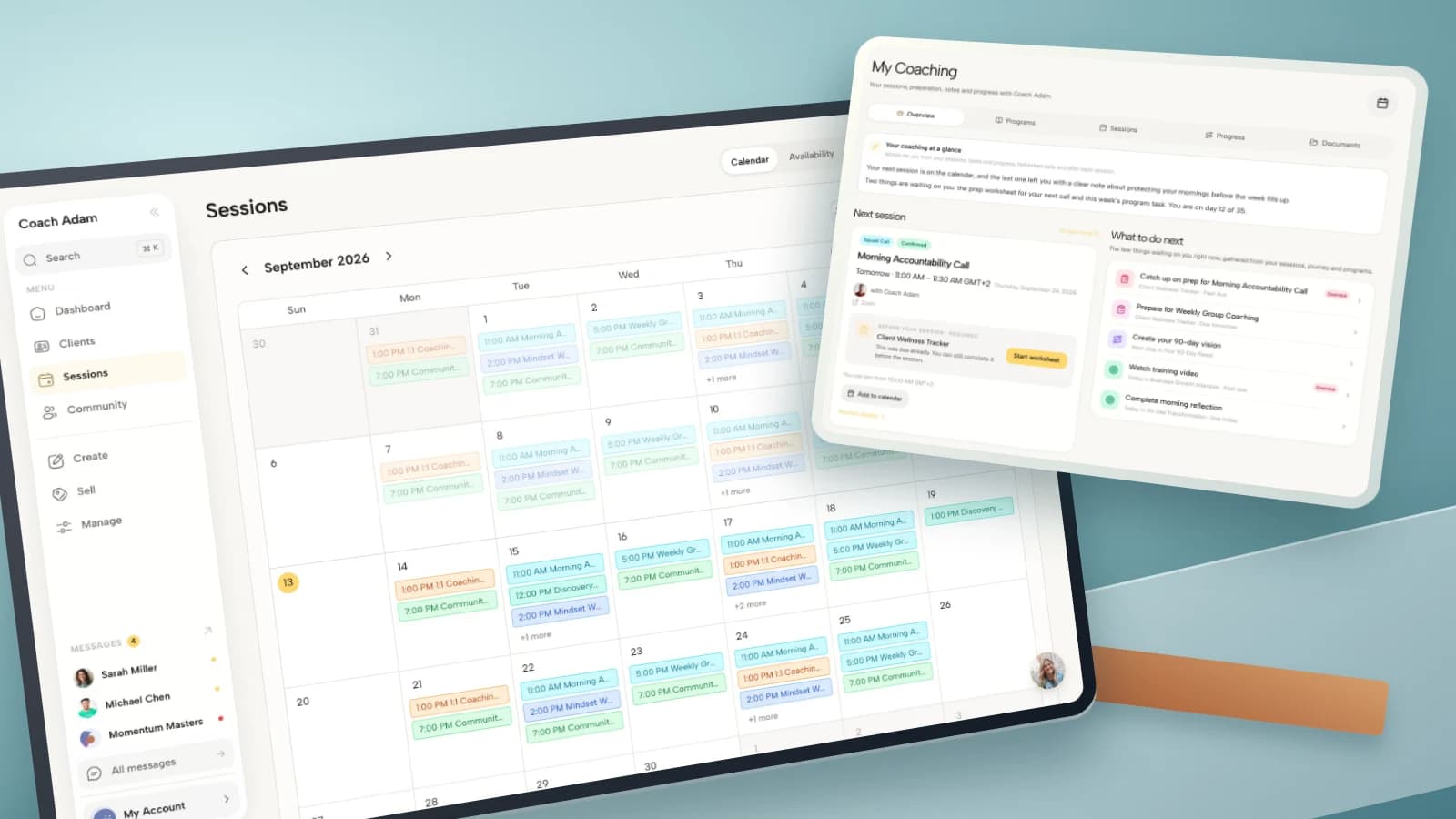
If your next task is connecting the client record, communication and session details, Try the interactive demo to explore Coachful's real client and scheduling surfaces. Use that walkthrough to assess the workflow you need; it does not replace checking an individual client's agreement, payment or access.