10 Wellness Coaching Strategies That Create Real Change

Coachful
Your client knows they should sleep more, move more, and stress less, so why do your sessions keep ending with another plan they won't follow? You may be thinking that they need more motivation. But before you reach for another educational resource, check whether you've agreed on a concrete action, a realistic way to measure it, and what happens when life interrupts.
Conventional wellness coaching advice often stops at listening, personalizing, and holding clients accountable. Those principles matter, but they don't tell you what to say when a client avoids tracking, rejects your suggestion, or disappears after a difficult week. The missing ingredient is an operating structure, not a more persuasive explanation of healthy living.
A systematic review of coaching for people with chronic illnesses reported improvements in patient-centered outcomes, including quality of life and self-efficacy, while rating certainty as low or very low for most outcomes. That's a useful stance for practice: offer structured support, measure what changes, and don't promise outcomes you can't establish.
Practical rule: Leave the session with a client-owned action, observable evidence, and a recovery plan, not just an encouraging conversation.
The following wellness coaching strategies translate that stance into session-ready decisions. Each includes a rationale, implementation steps, a client prompt, and a metric, so you can use it in your next conversation without rebuilding your entire program.
1. Set a SMART Goal and Define the First Two Actions
This feels slow. Shouldn't we get straight to the plan? Only if you and the client mean the same thing by success. Improving energy could mean recovering from afternoon fatigue, enjoying family time, or feeling less depleted after work.
Make the goal specific, measurable, achievable, relevant, and time-bound. Then identify the first two actions that make starting easier, rather than adding more goals.
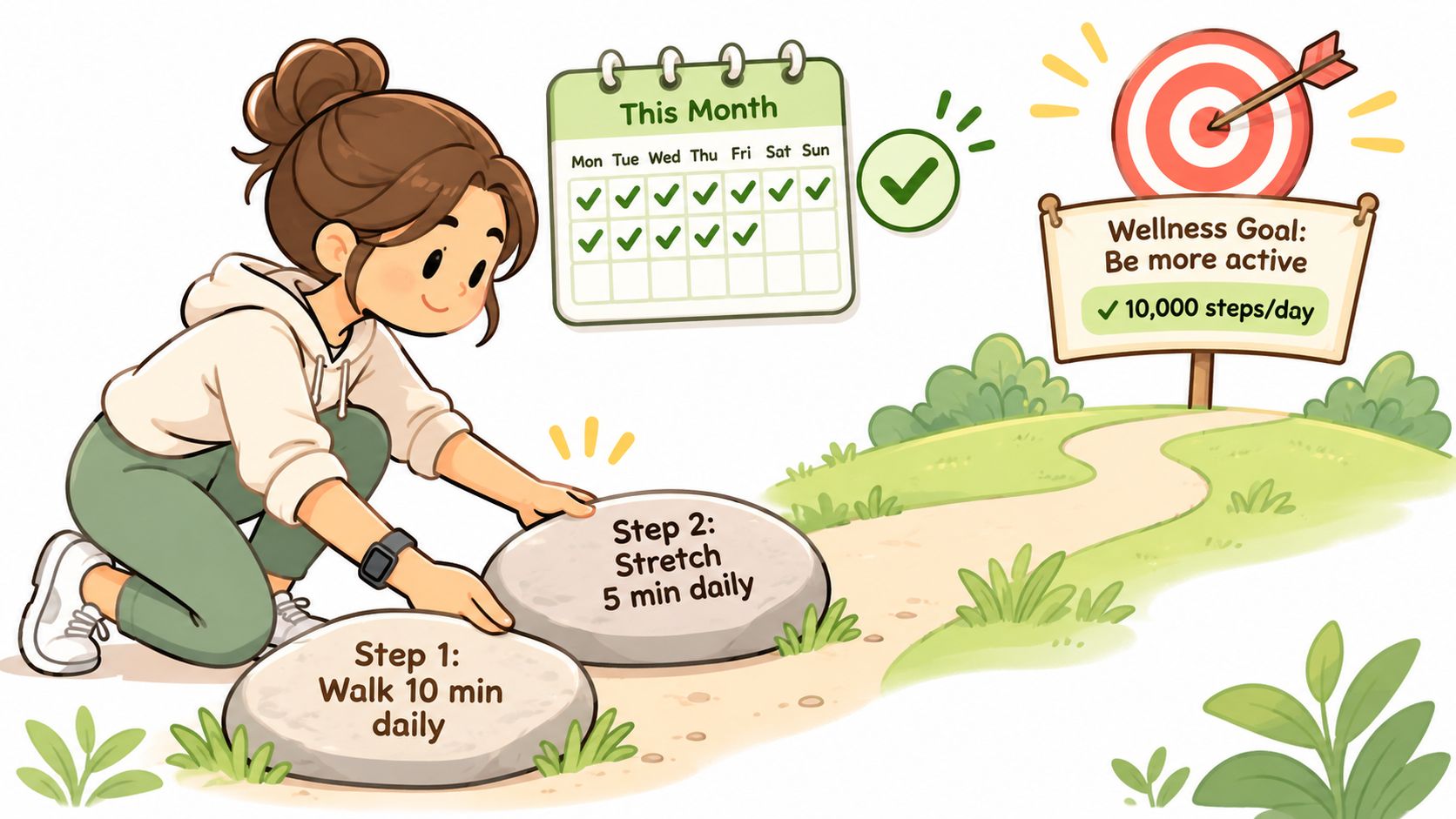
A shared record makes the agreement visible.
Make the next action smaller than the ambition
Say a client chooses a lunchtime walking goal. Their starting actions might be placing trainers beside the door and reserving the lunch break in their calendar.
- Clarify relevance. Ask: What would this change make possible that matters to you?
- Test feasibility. Ask: What could make this unrealistic during a difficult week?
- Define evidence. Agree on a completed-walk record and a brief energy reflection.
Use a goal-setting template to capture the outcome, supporting behavior, review date, and evidence of completion.
Measure completed actions against planned opportunities, alongside the client's chosen outcome. If the client repeatedly misses the target, revisit the timing, resources, or scope before questioning commitment. A smaller goal the client owns gives you something useful to review; an impressive goal they've accepted to please you doesn't.
2. Use Motivational Interviewing to Move From Advice to Autonomy
A client agrees with everything you suggest, then does none of it. Your instinct may be to explain more clearly, but agreement isn't necessarily ownership.
Motivational interviewing uses open questions, reflections, and summaries to explore ambivalence. A systematic review of health and wellness coaching identified patient-centered work, client-selected goals, self-discovery, and accountability as recurring features of coaching.
Start with the tension rather than the solution. A client might want better recovery while fearing that stepping away from work will make them unreliable.
Reflect before recommending
Try: You want more energy, and you're worried that protecting recovery time could disappoint people. Have I understood that correctly? Then ask what the client values about the current routine and what they'd like to change.
- Explore motivation. Ask: What are your strongest reasons for doing this?
- Offer choice. Ask whether they want to explore options, receive information, or stay with the uncertainty.
- Confirm ownership. Ask: Which next step feels like your decision?
When a client explores specialist options, such as holistic hormone support for Houston women, help them articulate their questions without interpreting symptoms or endorsing treatment.
Measure whether the client can state their reason and chosen action in their own words. If they remain ambivalent, agree on an exploration task instead of extracting a promise. Moving slowly is preferable to manufacturing consent.
3. Build a Small, Repeatable Wellness Routine Using Habit Formation
A client doesn't need a more elaborate morning routine if they can barely get out of the house. They need a behavior that fits an existing moment.
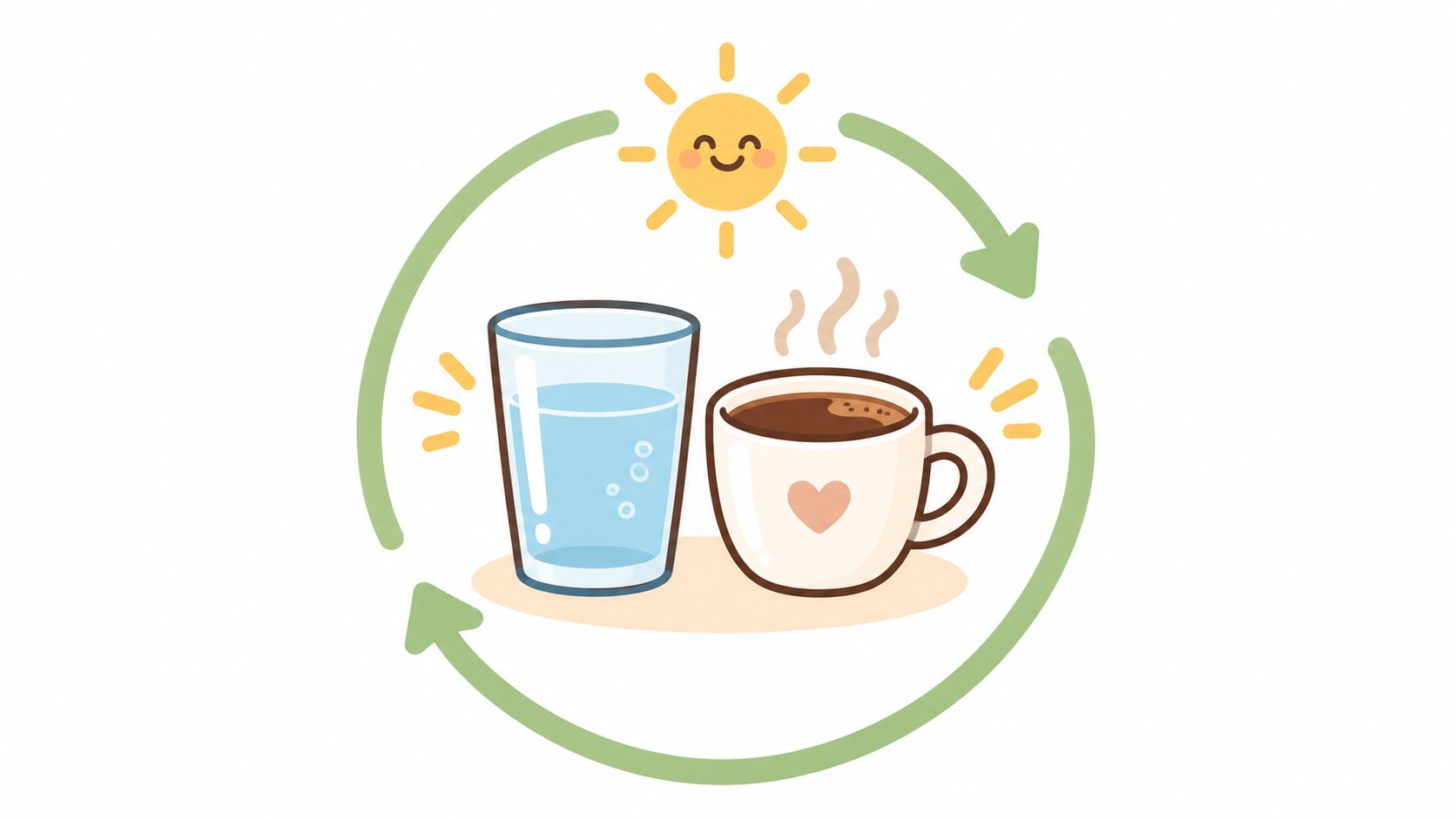
Choose a cue, reduce friction, and define a fallback. For example, a client who wants to remember hydration could fill a glass while preparing coffee, placing the glass beside the mug beforehand.
This illustration captures the cue-and-action connection.
Design the difficult-day version
Isn't that too small to matter? A minimum version isn't a substitute for every desired outcome. It's a way to preserve participation when the full routine isn't practical.
Ask the client to finish this sentence: After I finish an existing activity, I'll do my chosen action. Then identify what needs preparing and what would count on an overloaded day.
For movement, the standard version might be a walk outside; the fallback might be a brief stretch after closing the laptop. Keep those versions distinct in the record so you don't confuse continuity with equivalent activity.
Make the behavior easy to start, but stay honest about what the smaller version accomplishes.
A resource on breaking the Monday motivation cycle can support discussion about repeatable behavior rather than repeated restarts.
Measure completion when the cue occurs, noting full and fallback versions separately. If the cue keeps disappearing, change the cue before adding reminders.
4. Use Self-Monitoring to Turn Experience Into Useful Coaching Data
Before asking a client to track anything, ask yourself: What decision will this record help us make? Without that question, tracking becomes homework you may never use.
A client concerned about afternoon fatigue could record sleep duration, caffeine timing, and perceived energy. Review the pattern together without claiming that a diary establishes the cause of a symptom.
Keep the record simple enough to use during an ordinary day.

Collect evidence you'll actually review
In a randomized behavioral weight-loss trial, intervention mechanics included personalized goals, repeated self-monitoring, and individualized coach feedback. That's a useful workflow, not proof that any particular tracking tool will work.
- Choose the question. Ask: What are we trying to understand?
- Select the format. Offer a diary, wearable, checkbox, or brief platform check-in.
- Review collaboratively. Ask: What do you notice? before giving your interpretation.
Use progress-tracking software when it reduces effort or makes review clearer, not because it collects more fields.
Measure both record completion and usefulness for decisions. If logging creates shame, obsessive checking, or excessive burden, simplify or stop it and consider appropriate support. Missing entries are information about the method's fit, not evidence that the client doesn't care.
5. Run a Weekly Wellness Review to Create Accountability and Momentum
My client missed everything. Won't reviewing it make them quit? It might if the review becomes a performance appraisal. Instead, make it a shared investigation.
Begin with what happened, including partial completion and unexpected successes. Then identify the actual obstacle: time, energy, skill, environment, competing priorities, or a plan the client never wanted.
A technology-assisted telephone coaching pilot found stronger satisfaction during its intensive phase, but technology didn't reduce coaches' time use. Automating contact isn't the same as automating good coaching.
Use a repeatable review sequence
- Recognize effort. Ask: What deserves credit, even though the result wasn't what you intended?
- Find the obstacle. Ask: At what moment did the plan become difficult?
- Adjust the commitment. Agree on the next action, when it will happen, and what counts as complete.
For an executive who repeatedly skips lunch, review the calendar rather than repeating nutrition advice. The next experiment might involve blocking a break and arranging meeting cover.
Offer an asynchronous review when live attendance is the barrier. A workplace-wellness report identified lack of time and inconvenient scheduling among participation barriers.
Measure completed reviews and follow-through separately. If the client stops responding, ask whether the format, timing, privacy, or commitment needs changing. Don't respond to silence by automatically sending more reminders.
6. Use the Wheel of Life to Locate the Highest-Leverage Coaching Conversation
When a client says everything needs fixing, don't build a plan for everything. Use the Wheel of Life to help them choose where to begin.
The visual map makes competing priorities easier to discuss.
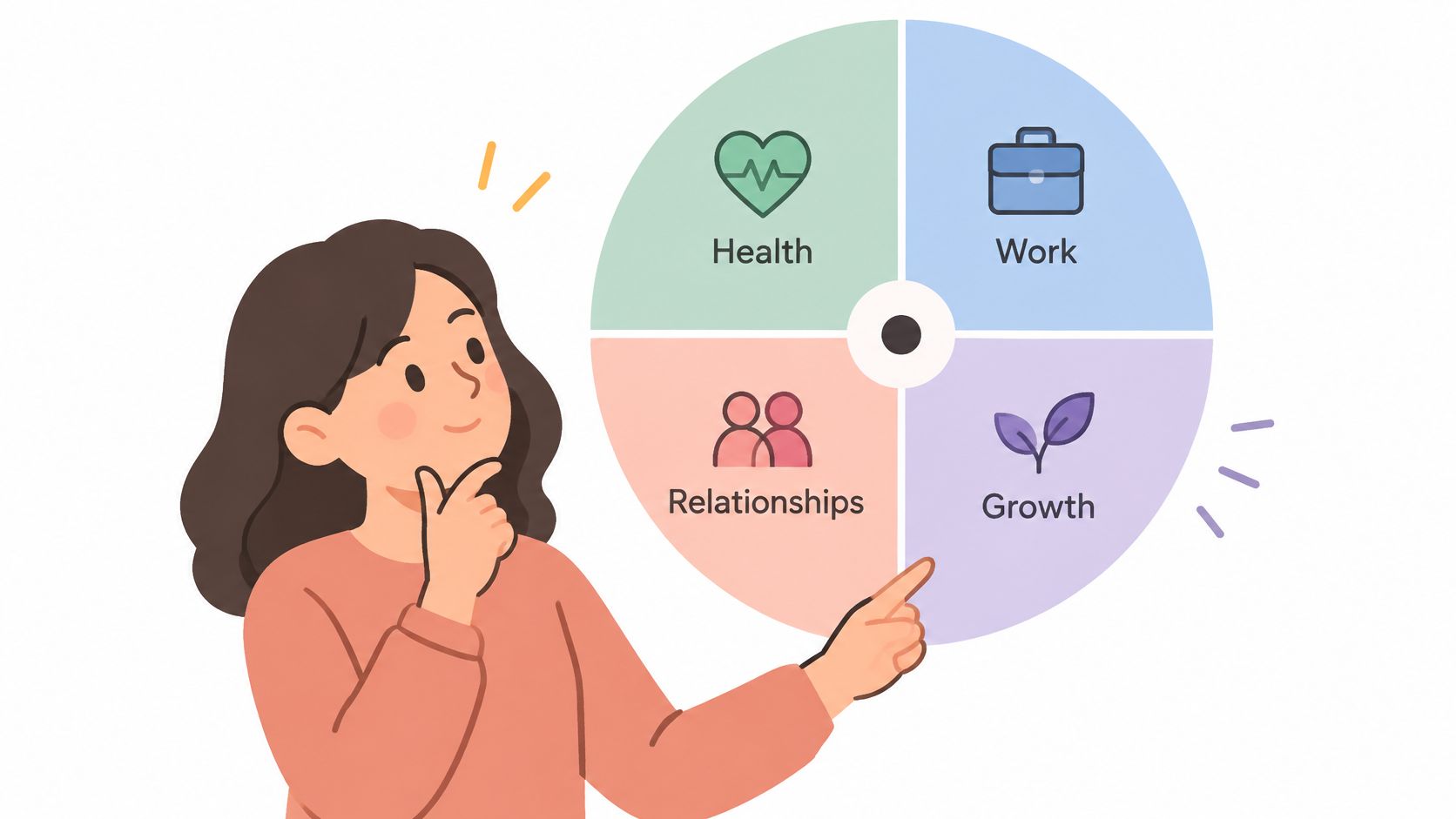
Invite the client to rate satisfaction across relevant domains, such as health, work, relationships, recreation, and recovery. Use a Wheel of Life tool as a conversation prompt, not a clinical assessment or objective verdict on balance.
An executive may initially want productivity tactics but notice that recovery feels neglected. Ask: What would improving recovery make possible elsewhere? Let them choose whether that's the priority rather than directing them toward the lowest rating.
Turn reflection into a testable action
Ask what a meaningful improvement would look like in daily life. A client might choose a protected wind-down routine rather than an abstract commitment to better balance.
This demonstration offers a visual introduction to the exercise.
Measure the selected behavior and revisit the client's satisfaction rating. Ask what changed in their circumstances before crediting coaching for a different score.
If the wheel overwhelms the client, narrow the discussion to the domains they consider relevant. The exercise underperforms when completing the diagram replaces making a decision.
7. Conduct a Values Clarification Exercise to Align Wellness Actions With Identity
They say health matters, but work always wins. Are they being inconsistent? Perhaps. Or perhaps their proposed health routine conflicts with another value, such as reliability, contribution, or family connection.
Values clarification helps you understand that conflict without turning it into a character judgment. Ask the client to describe a time when they felt engaged and well, then explore what they were expressing through their actions.
A client may discover that connection matters more than solitary achievement. Their preferred wellness action could become cooking with family or walking with a friend rather than following an isolated fitness target.
Translate meaning into behavior
- Find the value. Ask: What mattered about that experience?
- Explore the conflict. Ask: What would you worry about losing if you made this change?
- Choose an expression. Ask: What small action would honor this value during the coming week?
For an executive who values stewardship, recovery might mean protecting their capacity to make thoughtful decisions. But don't make rest acceptable only because it improves work; ask what they believe they're entitled to outside performance.
Measure completion and perceived alignment. Did the action happen, and did it express what mattered to the client?
When the behavior feels wrong despite completion, change its form. Don't insist that the client repeat a values statement until they comply. A meaningful explanation still needs a feasible action.
8. Create a Relapse-Recovery Plan Instead of Treating Missed Actions as Failure
A missed week shouldn't require a fresh burst of courage before the client can contact you. Agree on the return route while things are going well.
Ask what has interrupted previous attempts: travel, illness, caregiving, deadlines, low mood, or an overloaded schedule. Then write a recovery plan that identifies the warning sign, fallback behavior, support contact, and restart action.
For a traveling client, that might mean packing comfortable shoes, choosing an accessible walking route, and sending a brief check-in when the original routine becomes impossible.
Recovery principle: Make returning easier than explaining the lapse.
Separate disruption from a need for clinical care
A restart prompt could be: The original plan didn't fit this situation. What's the next safe action I can take? During your review, examine the plan without asking the client to defend their worth.
Technology-enabled coaching findings discussed in a mental-health services study make scope boundaries important when supporting clients with meaningful symptoms. Coaching shouldn't become a substitute for indicated assessment or treatment.
Discuss referral when symptoms impair functioning or raise safety concerns. With consent, coordinate appropriate information sharing; for immediate danger, direct the client toward local emergency or crisis support.
Measure how readily the client resumes an appropriate action, not an unbroken streak. If the same disruption recurs, redesign the plan. If health concerns drive the disruption, prioritize qualified care rather than greater discipline.
9. Use Strength-Based Coaching to Build Confidence and Sustainable Action
Start with a question the discouraged client may not expect: What are you already doing that protects your wellbeing? Be specific enough that the answer can guide action.
A client who describes themselves as hopeless at routines may reliably organize family logistics. Explore how they remember commitments, prepare materials, and handle changes, then adapt those skills to a wellness behavior.
Strength-based coaching isn't praise instead of problem-solving. It's identifying an existing capability and deciding where it can help.
Pair every strength with an application
- Prioritization. An executive uses an existing planning ritual to protect recovery time.
- Cooking. A confident home cook prepares adaptable meal components rather than following an unfamiliar rigid menu.
- Connection. A socially motivated client invites a friend into their movement routine.
For family food challenges, kitchen-tested tips for fussy family eaters can provide discussion material. Help the client choose an approach that fits the household instead of treating preferences as disobedience.
Am I avoiding the difficult conversation? You are if you praise resourcefulness while ignoring an unrealistic commitment. Ask permission to examine the mismatch: Would it be useful to look at where this strength helps and where you need a different approach?
Measure whether the chosen strength supports the agreed action. If it doesn't, try another resource or skill. Don't turn a strength into another expectation the client must live up to.
10. Run a Wellness Experiment Instead of Promising a Perfect Program
A client doesn't have to commit forever to learn whether a routine fits. Frame the change as a time-limited experiment with a prediction, measurement method, and review date.
Say the client wonders whether a lunch walk helps afternoon focus. Agree on when they'll try it, how they'll record focus, and what practical costs they'll note, such as rushed meals or scheduling pressure.
Keep the change narrow enough to interpret. If they simultaneously change movement, caffeine, bedtime, and workload, you'll have difficulty deciding what to retain.
Decide what the result will mean beforehand
Ask: What do you predict will happen? What would make this worth keeping? What would tell us to modify or stop it?
A randomized smartphone physical-activity trial found that adding coaching calls and automated messages didn't improve activity compared with the app alone. Don't assume that more contact guarantees a better outcome.
- Keep it. The client finds the behavior useful and feasible.
- Modify it. The benefit is promising, but timing or effort creates problems.
- Stop it. The burden outweighs its value or a safety concern emerges.
Measure the behavior, the chosen outcome, and feasibility separately. Completion without benefit is different from a potentially useful routine the client couldn't implement.
If an experiment produces unclear results, say so. Review measurement quality and circumstances rather than describing every outcome as proof that the program works.
10 Wellness Coaching Strategies at a Glance
| Strategy | Best Used When | Core Client Question | How Progress Is Measured |
|---|---|---|---|
| Set a SMART Goal and Define the First Two Actions | A broad wellness ambition needs a clear target and practical starting steps | What specific outcome do you want, and what are your first two actions? | Track the measurable outcome, milestones, deadline, and completion evidence |
| Use Motivational Interviewing to Move From Advice to Autonomy | A client feels ambivalent, discouraged, or overwhelmed by change | What are your own reasons for making this change? | Review the client's stated motivation, barriers, and chosen next steps |
| Build a Small, Repeatable Wellness Routine Using Habit Formation | A client needs help making a desired behavior easier to repeat | What cue can help you do this, and what is the smallest version that counts? | Review consistency and identify what made the routine easier or harder |
| Use Self-Monitoring to Turn Experience Into Useful Coaching Data | A client wants to understand patterns in wellbeing or behavior | What question should tracking help us answer? | Review brief records for patterns and changes in selected measures |
| Run a Weekly Wellness Review to Create Accountability and Momentum | A client needs regular reflection and follow-through between sessions | What happened, what got in the way, and what will you do next? | Review completed actions, lessons, obstacles, and next-week priorities |
| Use the Wheel of Life to Locate the Highest-Leverage Coaching Conversation | A client needs help choosing a focus across several life or wellbeing areas | Which area has the biggest gap between how things are and how you want them to be? | Compare client ratings across domains over time |
| Conduct a Values Clarification Exercise to Align Wellness Actions With Identity | A client needs meaningful motivation or faces competing priorities | What values matter most, and what small action would express one this week? | Review whether chosen actions reflect the client's values |
| Create a Relapse-Recovery Plan Instead of Treating Missed Actions as Failure | A client faces predictable disruptions or tends to give up after a lapse | What has derailed you before, and how will you restart? | Review recovery time, restart actions, and updates after setbacks |
| Use Strength-Based Coaching to Build Confidence and Sustainable Action | A client feels criticized, skeptical, or unsure of their ability to change | What strengths or past successes could help with this challenge? | Review use of strengths, confidence, and follow-through on co-designed actions |
| Run a Wellness Experiment Instead of Promising a Perfect Program | A client wants to test a change without committing to a permanent routine | What do you predict will happen, and what would you learn? | Compare results with the hypothesis and success criteria at the review date |
From Strategies to a Coaching Practice That Runs Itself
How do I run all of this without drowning in admin? Don't introduce every strategy at once. Build a repeatable workflow around the decisions you already need to make: what the client wants, what they'll do, how you'll review it, and what happens when the plan stops fitting.
Choose two strategies to pilot this week, such as SMART goal-setting and a weekly review. For the goal, track completed actions against planned opportunities; for the review, track whether the client completes it and leaves with a clear next commitment. Review the pilot after two weeks and decide what to keep, simplify, or remove.
Build a minimum useful client record
Keep the client's primary outcome, current action, evidence, barriers, and recovery plan together. Write notes that help you make the next coaching decision rather than documenting every sentence.
- Before the session. Review the current commitment, recent check-ins, and unresolved concerns.
- During the session. Explore what happened, agree on an adjustment, and confirm ownership.
- After the session. Record the decision and arrange the next relevant prompt or review.
For example, a client working on recovery doesn't need a dashboard filled with unrelated habits. They need a visible agreement about their wind-down routine, a manageable check-in, and a clear way to tell you when the plan needs adjusting.
Coachful is an all-in-one platform for delivering this kind of structured support. Our Coaching CRM connects intake, goals, habits, check-ins, sessions, private notes, tasks, and messages around the client; our AI assistant provides a briefing before the next conversation, and our behavior-change and accountability tools fit non-clinical health coaching.
Automate the coordination, not the judgment
Use reminders for agreed commitments, but retain a human decision point when someone disengages. A missed check-in could mean poor timing, technical difficulty, overwhelm, or a client who no longer wants the goal. Those situations shouldn't receive an identical response.
The practice won't run itself. You still need to interpret context, protect boundaries, and recognize when coaching isn't the appropriate support. What you can remove is avoidable searching, repeated setup, and uncertainty about the next step.
Start with a workflow you can sustain, then expand only when the additional information helps you coach better. Setting up a workspace takes about 15 minutes, so you can begin running structured, measurable wellness coaching this week without waiting for a perfect program.
Coachful brings client goals, check-ins, session notes, scheduling, and progress tracking into a shared coaching workflow. Visit Coachful to set up your workspace, choose the strategies you'll pilot, and give your next client a clear action, review metric, and recovery plan.