Unlock Client Potential: Use 7 Learning Styles in Coaching (2026)

Coachful
Imagine a coaching session where every insight lands perfectly, every activity sparks immediate understanding, and every client feels seen, heard, and motivated. It sounds like the ideal, right? But as coaches, we've all been there: you share a brilliant concept, but it doesn't quite connect. You assign a powerful exercise, but the client stalls.
The coach's inner dialogue starts: 'Am I explaining this wrong? Is this the right approach for them? Why aren't they getting it?' The answer often lies not in what you're teaching, but how you're teaching it.
This is where understanding the 7 learning styles becomes a coaching superpower. It isn't about boxing clients into rigid categories, but about expanding your toolkit to meet them where they are. This approach moves beyond the theoretical and provides practical, actionable strategies to identify and cater to each of the 7 learning styles. To truly speak your client's language and understand their communication preferences, tools like a social style assessment can also provide invaluable insights into their behavioral patterns.
In this guide, we'll give you specific examples, scripts, and even show you how to implement these techniques within a coaching platform like Coachful. Get ready to turn personalized coaching from a lofty goal into a daily reality, transforming your client interactions and unlocking deeper, more sustainable results. We'll cover everything from spotting the signs of a specific style to crafting session assignments that stick, ensuring your coaching is as effective as possible.
1. The Visual Learner: Seeing is Believing
Visual learners, also known as 'Spatial' learners, absorb and recall information most effectively when it is presented in a graphic format. This is a foundational concept within the 7 learning styles, and understanding it can radically alter your coaching effectiveness. These clients think in pictures, building an internal world of images, charts, and mental movies to make sense of new ideas.
For a coach, this tendency is a goldmine. When you ask a client to 'visualize their goals,' this learner is already halfway there, naturally creating vivid mental images of their desired future. However, a session heavy on abstract talk or dense text can leave them feeling lost and disengaged. Their inner dialogue might be screaming, “I can’t picture what you're saying! Can you draw it out for me?” They need to see progress, map out strategy, and organize their thoughts in a tangible, visual way. Your job is to provide the canvas.
Signs of a Visual Learner
You might be coaching a visual learner if they frequently:
- Use phrases like "I see what you mean," or "Let me get a picture of this."
- Are drawn to doodles, diagrams, and notes during sessions.
- Get more from watching a video tutorial than reading a manual.
- Are skilled at reading body language and nonverbal cues.
- Prefer information presented in charts, graphs, and mind maps.
Coaching Strategies for Visual Learners
To connect with these clients, shift your approach from telling to showing. Instead of just discussing a client’s journey, map it out. A visual roadmap of a six-month coaching program, complete with color-coded milestones, gives them a clear picture of where they are and where they're going.
Key Insight: For a visual learner, abstract goals feel unattainable. Concrete, visual representations of progress make success feel real and within reach. They need to see the path forward.
A business coach, for instance, could use a flowchart to map a client’s new sales funnel. A life coach might work with a client to create a digital vision board, pulling images and quotes that represent their ideal life. These aren't just feel-good activities; they are essential cognitive tools that help the visual learner process, organize, and commit to the coaching plan.
Implementation Inside Your Coaching Platform
Your coaching platform should be your visual command center. Here are specific ways to apply these strategies:
- Visual Progress Reports: Use your platform’s dashboard features to create visual progress reports. A client seeing a "goals completed" metric jump from 25% to 50% provides a powerful and immediate feedback loop.
- Resource Library: Fill your client’s resource portal with infographics, video summaries of core concepts, and presentation slides. Instead of a long document on overcoming limiting beliefs, share a short video or a one-page infographic.
- Session Templates: Design session templates that include sections for mind mapping or sketching. Encourage clients to use a digital whiteboard tool during your calls and save the image to their session notes.
- Actionable Worksheets: Create visual goal-setting worksheets. Instead of a simple to-do list, design a "Goal Ladder" or a "Vision Tree" where they can visually plot the steps needed to reach their objective.
2. The Auditory Learner: Let's Talk It Through
Auditory learners, sometimes called 'Verbal' learners, process new information most effectively through sound and speech. This style is a key pillar within the 7 learning styles, and mastering it allows you to connect with clients who find clarity through conversation. These individuals think in sounds and words; they learn by listening, speaking, and talking concepts through to a logical conclusion.
For a coach, this is a direct invitation to engage in powerful dialogue. When you ask an auditory client to "talk about what's on their mind," you are tapping directly into their primary method of processing. They are not just venting; they are actively organizing their thoughts out loud. Conversely, a session that relies too heavily on visual aids without discussion, or one that demands silent, written reflection, can feel unproductive and disconnected. Their internal monologue is likely, "This makes sense, but I need to talk it out to be sure. Can we just discuss this for a minute?" Your job is to create a space for that essential dialogue to unfold.
Signs of an Auditory Learner
You might be coaching an auditory learner if they frequently:
- Use phrases like "I hear you," "That sounds right to me," or "Let me talk this through."
- Prefer to explain their ideas verbally rather than writing them down.
- Get immense value from session recordings, podcasts, and audiobooks.
- Are skilled at noticing changes in tone of voice and vocal inflection.
- Enjoy group discussions, debates, and brainstorming sessions.
Coaching Strategies for Auditory Learners
To engage these clients, make conversation the core of your methodology. Instead of just presenting a framework, invite them to discuss it, challenge it, and rephrase it in their own words. The act of verbalizing solidifies their understanding and commitment.
Key Insight: For an auditory learner, internal thoughts are like rough drafts. Speaking them aloud is the editing process that clarifies goals and makes them real. They need to hear themselves commit to the plan.
A business coach working with an auditory client could role-play a difficult conversation with an employee, allowing the client to practice their script out loud. A life coach might encourage a client to create a personal audio mantra to repeat daily, using the power of their own voice to reinforce new beliefs. These are not just conversations; they are specific cognitive tools that help the auditory learner process, internalize, and act.
Implementation Inside Your Coaching Platform
Your platform should serve as a hub for a rich auditory experience. Here are direct ways to apply these strategies:
- Session Recordings: Always record your live sessions (with permission) and make them immediately available in the client portal. An auditory learner will often replay key moments to absorb the advice more deeply.
- Voice Note Messaging: Use your platform’s voice note feature for check-ins and feedback. A two-minute audio message can be far more impactful for them than a lengthy email, as it captures tone and nuance.
- Audio Resources: Build a resource library filled with podcast-style audio lessons, guided audio meditations, or audio summaries of core coaching models. Instead of a worksheet on values, provide a 10-minute audio guide walking them through a values-clarification exercise.
- Group Discussion Prompts: For group programs, use announcements or discussion forums to post audio or video prompts that spark conversation. Encourage cohort members to respond with voice notes to create a dynamic, dialogue-driven community.
3. The Reading/Writing Learner: The Power of the Written Word
Reading/Writing learners find clarity and meaning through the written word. For these clients, information truly sinks in when they can read it, write it down, and articulate their thoughts in text. This style, a key component of the 7 learning styles popularized by the VARK model, thrives on well-structured documents, detailed notes, and thoughtful written reflection.
As a coach, understanding this preference is crucial. A client who says, "Can you send me a summary of that?" isn't being difficult; they are asking for the cognitive tool they need to process the session. While other learners might want a diagram or a conversation, the Reading/Writing learner needs text. A coaching session that is purely verbal, with no written follow-up or resources, can leave them feeling anxious and uncertain. Their inner dialogue might be, "I need to write this down to make sense of it. I'm going to forget everything we just discussed if I don't see it in print." Your role is to provide the structure and text they need to build their understanding.
Signs of a Reading/Writing Learner
You may be coaching a Reading/Writing learner if they frequently:
- Use phrases like "Let me write that down," or "Could you put that in an email for me?"
- Take meticulous notes during sessions, often creating organized lists.
- Enjoy journaling and written reflection exercises.
- Prefer to read a detailed article or book over watching a summary video.
- Communicate best through well-thought-out emails or messages.
Coaching Strategies for Reading/Writing Learners
To effectively coach this type, lean into text-based communication. Your words, when written, become powerful tools for motivation and accountability. Instead of just talking about a five-step process, present it as a clear, numbered list in a follow-up document.
Key Insight: For a Reading/Writing learner, undocumented ideas are fleeting. A written plan, detailed session notes, and structured resources transform abstract conversation into a concrete, actionable roadmap.
For example, a business coach could provide a client with a comprehensive workbook on developing a marketing plan, complete with prompts for written responses. A life coach might assign a "letter to your future self" exercise, allowing the client to articulate their goals and aspirations in a deeply personal written format. These written tasks are not just homework; they are the primary method by which these clients internalize and commit to their own growth.
Implementation Inside Your Coaching Platform
Your coaching platform should serve as a digital library and workspace for your Reading/Writing clients. Here are specific ways to apply these strategies:
- Detailed Session Summaries: Use your platform’s session notes feature to create detailed, structured summaries after each call. Send these to the client with clear headings, bulleted action items, and key takeaways.
- Robust Resource Library: Build a library filled with in-depth articles, downloadable eBooks, and comprehensive guides. Curate reading lists and share links to relevant blog posts or studies that support your coaching topics.
- Writing-Based Assignments: Create assignments that prompt written reflection. Use templates for journaling, goal-setting worksheets that require written descriptions, or prompts that ask clients to write out their limiting beliefs and reframe them.
- Actionable Worksheets: Design text-heavy worksheets and workbooks. Instead of a simple checklist, create a "Strategic Plan" document where clients must write out their mission, vision, values, and quarterly objectives in full sentences.
4. The Kinesthetic Learner: Learning by Doing
Kinesthetic learners, often called 'Tactile' learners, internalize information through physical experience. For them, understanding is not a passive activity but an active, hands-on process. This is a crucial concept within the 7 learning styles, as these individuals connect knowledge with muscle memory, movement, and direct application. They don't just want to hear about a theory; they need to build it, touch it, or live it.

For a coach, this is a call to action-literally. A session filled with abstract concepts and theoretical frameworks can make a kinesthetic learner antsy and disengaged. Their inner voice is likely thinking, “This all sounds good, but what do I do? How can I try this out?” They need to move, experiment, and engage with the world to make sense of your guidance. Your role is to build a bridge from discussion to real-world practice.
Signs of a Kinesthetic Learner
You might be coaching a kinesthetic learner if they:
- Use phrases like "How does this feel?" or "Let me try it out."
- Seem restless during long periods of sitting and talking.
- Learn best by doing, often through trial and error.
- Are expressive with hand gestures and body language while speaking.
- Prefer to jump straight into an activity rather than read instructions first.
Coaching Strategies for Kinesthetic Learners
To engage these clients, your coaching must be grounded in action and experience. Instead of just talking about building confidence for a presentation, you should role-play the scenario with them. Let them feel the act of standing, speaking, and gesturing.
Key Insight: For a kinesthetic learner, insight without action is incomplete. The "aha" moment happens not during the conversation, but during the implementation of the ideas discussed.
A business coach might assign a client the task of making five cold calls using a new script before the next session. A life coach could challenge a client to practice a new boundary-setting phrase with a family member. These real-world assignments are not just homework; they are the primary learning environment where your coaching concepts become real and lasting.
Implementation Inside Your Coaching Platform
Your platform should serve as a launchpad for real-world action. Here are specific ways to apply these strategies:
- Action-Oriented Assignments: Use your platform’s assignment feature to create tasks that demand physical doing. Frame them as "missions" or "challenges," such as "Conduct one difficult conversation this week" or "Prototype your product idea."
- Role-Playing Scenarios: Include worksheets in your resource library that outline a role-playing exercise. The client can practice with a friend or family member and then use a reflection prompt in their session notes to document how it felt.
- Trackable Action Steps: Break down large goals into small, physical action items. Use the platform’s progress tracking to let clients check off each completed task, providing a satisfying sense of accomplishment and forward movement.
- Real-World Checklists: Create a "Fieldwork Checklist" for clients to take into their daily lives. For a wellness client, this could include items like "Walk for 15 minutes without your phone" or "Prepare one healthy meal from scratch," which they check off directly in their client portal.
5. The Logical/Analytical Learner: Understanding the "Why"
Logical learners, sometimes called ‘Analytical’ learners, thrive on structure, patterns, and reason. They need to understand the underlying logic behind any concept to truly absorb it. This learning style, a key component of the 7 learning styles framework, is especially prevalent in fields that demand data-driven decisions, making it critical for business and executive coaches to master. These clients think in systems and need to see how the puzzle pieces fit together before they commit to action.
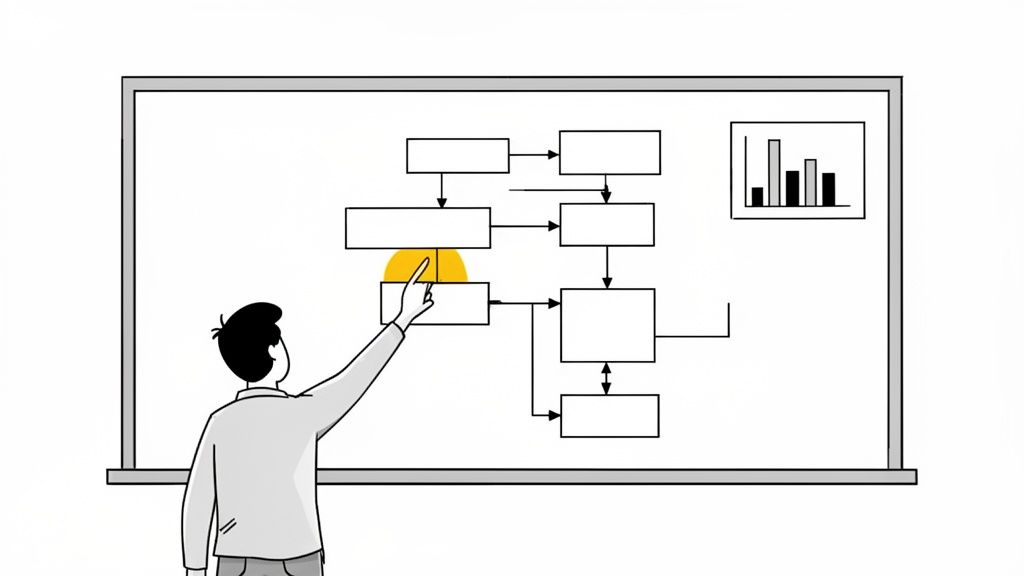
For a coach, this is a call for clarity and evidence. When you ask a logical learner to 'trust the process,' their internal voice is likely questioning, "What process? Is it based on research? What are the expected outcomes, and how will we measure them?" They aren't being difficult; they are trying to build the mental model needed to engage fully. A session filled with vague affirmations or unproven strategies will create resistance. Your job is to present a clear, evidence-backed case for your coaching methodology.
Signs of a Logical Learner
You may be working with a logical learner if they frequently:
- Ask "Why?" to understand the reasoning behind your suggestions.
- Are interested in data, statistics, and case studies.
- Prefer structured goals with clear metrics and KPIs.
- Use phrases like, "That makes sense," or "Let's break this down."
- Excel at creating orderly lists, agendas, and step-by-step plans.
Coaching Strategies for Logical Learners
To connect with these clients, your approach must be methodical and transparent. Instead of just setting a goal, build a logical framework around it, showing the cause-and-effect relationship between their actions and their desired results. Presenting a plan using a technique like backwards planning can be highly effective, as it starts with the end goal and logically works backward to define the necessary steps.
Key Insight: For a logical learner, inspiration follows information. They are motivated by well-reasoned plans and measurable progress, not by emotional appeals alone. They need to believe in the strategy to believe in the outcome.
A business coach working with an executive could use a strategic framework like OKRs (Objectives and Key Results) to structure their coaching engagement. A life coach might help a client analyze their time-tracking data to identify patterns and create a more efficient daily schedule. These activities aren't just analytical exercises; they are the language that builds trust and buy-in with a logical mind.
Implementation Inside Your Coaching Platform
Your coaching platform should serve as your data and systems hub. Here are specific ways to apply these strategies:
- Data-Driven Reporting: Use your platform’s analytics to create reports that track specific metrics. Show an executive client how coaching sessions correlate with a 15% improvement in their team's project completion rate.
- Resource Library: Stock your resources with research papers, case studies, and articles that support your methods. Instead of just a worksheet on "goal setting," provide a summary of the research behind SMART goals.
- Structured Session Templates: Design session templates that follow a logical flow: 1. Review Metrics, 2. Identify Problem/Objective, 3. Brainstorm Solutions (based on models), 4. Define Action Steps with KPIs.
- Actionable Frameworks: Create assignments that require clients to build a system. For instance, have them develop a personal financial model in a spreadsheet or map out a new business process using a flowchart tool, then upload it for review.
6. The Social Learner: Stronger Together
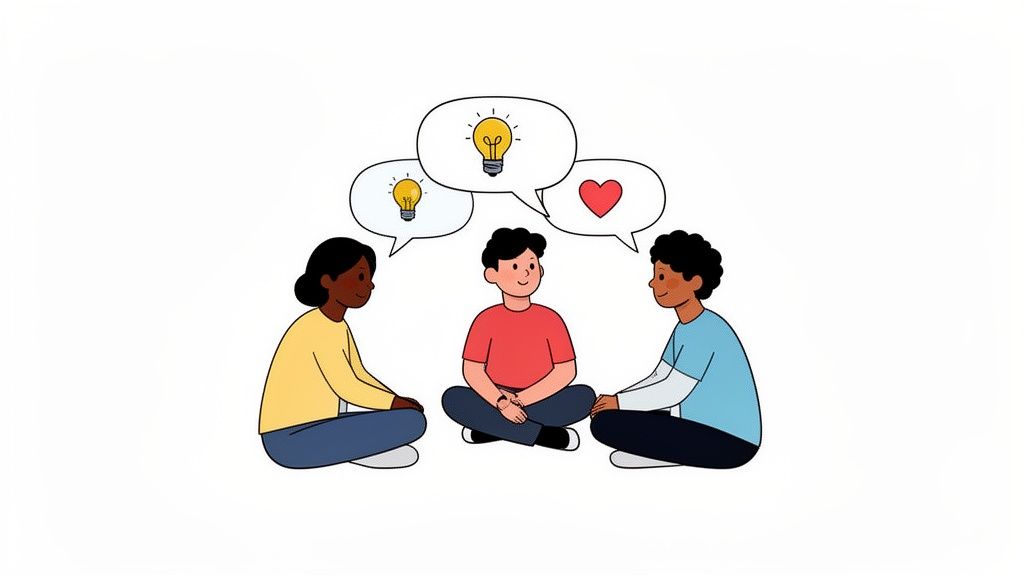
Social learners, also known as 'Interpersonal' learners, find their greatest understanding and motivation through interaction with others. This learning style, a key component of the 7 learning styles framework, is built on collaboration, discussion, and shared experience. These clients don’t just learn from others; they learn with others, processing information by talking it out, hearing diverse perspectives, and engaging in group dynamics.
For a coach, identifying a social learner opens up powerful community-based strategies. A one-on-one session can feel isolating and less dynamic for them. They thrive on the energy of a group and gain clarity by articulating their thoughts to peers. Their inner dialogue might sound like, "This is a great idea, but I wonder what others think," or "I'd love to bounce this off someone who's going through the same thing." Your role is to create the space for these vital connections to happen.
Signs of a Social Learner
You might be coaching a social learner if they frequently:
- Use phrases like "Let's talk this through," or "What do you think about...?"
- Seem most energized and engaged during group discussions or Q&A sessions.
- Ask about others' experiences or case studies.
- Are natural networkers and enjoy building relationships.
- Value feedback and accountability from peers.
Coaching Strategies for Social Learners
To best serve these clients, you must shift your focus from individual instruction to facilitated group connection. The very act of sharing their goals and struggles with a cohort provides a powerful form of processing and commitment.
Key Insight: For a social learner, progress feels more real and achievable when it's shared. Witnessing peers overcome similar obstacles and celebrating group wins provides motivation that solo work cannot replicate.
A career coach, for example, could run a cohort-based program for professionals in transition. The weekly group calls, where members share job search wins and workshop interview strategies, become the program's core value. A wellness coach could create a group challenge, where clients share healthy recipes and workout progress in a dedicated community space, fostering mutual encouragement. For a deeper dive, consider these strategies for building an online community around your coaching.
Implementation Inside Your Coaching Platform
Your platform should function as a central hub for community and collaboration. Here are specific ways to apply these strategies:
- Group Programs: Structure your offerings as cohort-based programs. Use your platform to manage group enrollment, schedule group calls, and provide a shared resource library for all members.
- Community Forums: Create a dedicated community space or forum within your platform. Pose weekly discussion questions, encourage members to ask for feedback, and facilitate peer-to-peer support.
- Peer Accountability: Use your platform to assign 'accountability partners' within a group program. Create a shared task list or a small group chat where partners can check in on each other’s progress between sessions.
- Shared Milestones: Design group challenges or shared milestones that the entire cohort works toward. Use your platform’s tracking features to display group-wide progress, creating a sense of collective achievement.
7. The Solitary Learner: The Power of Introspection
Solitary learners, often described as having strong 'Intrapersonal' intelligence, find their greatest insights through self-reflection and independent work. As the final of the 7 learning styles we'll explore, this type thrives on internal processing. These clients are often self-motivated, introspective, and prefer the deep focus of one-on-one interaction over the noise of a group setting. They build understanding by connecting new information to their personal values, experiences, and goals.
For a coach, this presents a unique opportunity for profound, lasting change. A solitary learner is not looking for a cheerleader; they are seeking a guide who can provide the right questions and frameworks for them to explore their inner world. A coaching session filled with group activities or surface-level social interaction will feel distracting. Their inner voice might be thinking, "This is interesting, but I need time to process this on my own. How does this apply specifically to my life and my goals?" Your role is to provide the structure and space for that deep, personal work to happen.
Signs of a Solitary Learner
You might be coaching a solitary learner if they frequently:
- Show a strong preference for one-on-one sessions over group workshops.
- Are highly self-aware and can clearly articulate their feelings and thoughts.
- Use journaling or other self-reflection tools without being prompted.
- Are goal-oriented and motivated by personal achievement.
- Tend to be quiet in group settings but offer deep insights in private conversations.
Coaching Strategies for Solitary Learners
To empower these clients, your coaching must honor their need for autonomy and reflection. Instead of driving the conversation, create a container for their self-discovery. A one-on-one executive coaching engagement focused on personal development is a perfect example of this style in action.
Key Insight: For a solitary learner, true commitment comes from personal conviction, not external pressure. They need to integrate coaching concepts into their own belief system before they can act.
A life coach might provide a client with a set of journaling prompts based on the Wheel of Life exercise to complete between sessions, allowing them to explore life balance on their own terms. A business coach could assign a self-paced module on leadership, trusting the client to work through the material and come to the next session with specific, self-generated questions. These methods respect their process and lead to deeper, more sustainable growth.
Implementation Inside Your Coaching Platform
Your platform should serve as a private sanctuary for your client's individual journey. Here’s how to set it up:
- Personalized Coaching Plans: Use your platform to create highly individualized action plans. Instead of a generic program, build a plan that reflects the client’s unique goals, complete with personal milestones they can track themselves.
- Journaling Templates: Create and share journaling templates or reflection frameworks directly within the client portal. Prompts like "What was my biggest win this week, and why?" or "Where did I feel resistance, and what does it tell me?" guide their independent work.
- Self-Guided Resources: Your resource library should be rich with self-paced materials. This includes in-depth articles, workbooks, and pre-recorded videos that clients can consume at their own pace, whenever they feel the need to dive deeper.
- Optional Group Activities: If you run group programs, make the community aspect optional. Frame group calls or forums as an available resource for connection, not a mandatory requirement, allowing solitary learners to engage if and when they choose.
7 Learning Styles Comparison
| Learning Style | 🔄 Implementation complexity | ⚡ Resource requirements | 📊 Expected outcomes | 💡 Ideal use cases | ⭐ Key advantages |
|---|---|---|---|---|---|
| Visual Learning | Medium — needs designed visuals and dashboards | Medium-high — images, design tools, time to create | High — clear plans, improved pattern retention | Goal visualization, progress dashboards, strategic planning | Strong planning, visual retention, independent use |
| Auditory Learning | Low — relies on spoken sessions and recordings | Low — audio tools, quiet space, scheduled sessions | Medium-high — better recall from dialogue and discussion | One-on-one calls, group discussions, podcast-style content | Excellent verbal engagement, live clarification |
| Reading/Writing Learning | Low — produces written guides and notes | Low — documents, workbooks, time for writing | High — deep understanding and referenceable records | Email follow-ups, resource libraries, course guides | Strong documentation, independent study, research depth |
| Kinesthetic Learning | Medium-high — requires hands-on setups and practice | Medium-high — space, real tasks, role-play resources | High — strong implementation, behavioral change | Action assignments, role-playing, real-world projects | Practical problem-solving, high motivation via doing |
| Logical/Analytical Learning | Medium — build frameworks, metrics, and models | Medium — data tools, analytics, structured templates | High — measurable progress and strategic insight | Executive coaching, data-driven programs, KPI tracking | Pattern recognition, data-driven decisions, clarity |
| Social/Interpersonal Learning | Medium — needs facilitation and group management | Medium — platforms, scheduling, facilitator time | High — peer learning, accountability, diverse perspectives | Cohorts, mastermind groups, team coaching | Collaboration, networking, motivation through peers |
| Solitary / Intrapersonal Learning | Low — focuses on individualized materials and reflection | Low — journaling prompts, self-paced resources | High — deep self-insight and sustained personal progress | One-on-one coaching, self-paced programs, reflective work | Self-motivation, tailored growth, strong self-awareness |
From Theory to Transformation: Your Multimodal Coaching Blueprint
You've just navigated the rich terrain of the 7 learning styles, from the Visual learner who needs to see the path forward to the Solitary learner who must first walk it alone internally. The map is now in your hands. But a common thought might be bubbling up for a busy coach: “This is interesting, but it sounds complicated. Do I really need to create seven different versions of my coaching program? I just don't have the time for that.”
Let’s be clear: the answer is a resounding no. The goal isn't to become a rigid diagnostician, forcing every client into a neat little box. The true power of understanding these styles is in becoming a multimodal coach. It’s about building a more flexible, adaptable, and ultimately more effective practice.
Moving Beyond a One-Size-Fits-All Approach
Great coaching isn't about pulling a client into your preferred way of working; it's about meeting them where they are. It’s about having a diverse enough toolkit to build a bridge to their world. This shift doesn't require a complete overhaul of your business. It starts with small, intentional adjustments.
Think about your next client interaction. How can you inject a little more variety?
- In your session summaries: Don't just send written notes (perfect for Reading/Writing learners). Could you also record a two-minute Loom video summarizing the key takeaways and next steps? This immediately engages your Visual and Auditory clients.
- When assigning a task: Instead of giving one rigid assignment, offer a choice. Propose a reflective journal prompt for the Solitary learner or suggest they discuss the concept with a trusted colleague for the Social learner. Give the Kinesthetic learner a small, physical action to take.
- During a session: If you sense a Logical learner is getting stuck on the "why," pause and sketch out a simple flowchart on a virtual whiteboard. If an Auditory client seems disengaged while reading a document, ask them to read a key paragraph aloud and share their vocal reaction.
The objective is not to create more work for yourself, but to create more entry points for your client. By layering these approaches, you ensure that no matter how someone is wired to learn, they have a way to connect with the material and make it their own.
Building Flexibility into Your Coaching Systems
This is where your operational setup becomes your greatest ally. Instead of retrofitting these ideas into a rigid system, you can build this flexibility in from the ground up. This is where a dedicated coaching platform can make a significant difference.
Imagine building a program template that intrinsically blends these styles. You can structure a module that includes:
- A live group call to kick things off (Social, Auditory).
- A downloadable PDF worksheet with structured questions (Reading/Writing, Logical).
- A pre-recorded video lesson with strong visuals (Visual, Auditory).
- An action-based assignment to implement a new habit (Kinesthetic).
- A private journaling space for reflection (Solitary).
By building your resource library and program structures this way, you’re not just accommodating the 7 learning styles; you're creating a richer, more dynamic experience for everyone. This proactive approach leads to deeper client engagement, stronger accountability, and the powerful results that define exceptional coaching. You stop being just a source of information and become a facilitator of true, lasting change.
Ready to build a truly adaptable coaching practice? Coachful is designed to help you integrate these multimodal strategies effortlessly. Create rich resource libraries, build flexible program templates, and track client progress all in one place, making it simple to cater to all of the 7 learning styles without adding complexity to your workflow. See how it works at Coachful.