Selling With Confidence: A Coach's Practical Guide

Coachful
You know the feeling. A discovery call starts well, the prospect seems engaged, then the moment arrives to talk about the offer and your chest tightens. Your voice changes. You either overexplain, underquote, or start sounding like someone you'd never trust yourself.
Most coaches don't struggle with selling because they're bad at helping people. They struggle because the sales moment feels like a personality test. If the prospect says no, it can feel like they've rejected your expertise, your pricing, your credibility, and sometimes your identity in one go.
That's why generic advice like “just be confident” lands badly. It asks you to manufacture certainty on command. Real confidence doesn't work that way. In practice, selling with confidence is what happens when you know what to ask, how to listen, what to recommend, and how to follow up without spiraling.
If you've been telling yourself, “I'm just not a natural salesperson,” that's usually not the truth. More often, you're trying to improvise your way through a high-stakes conversation without a reliable process. Anyone feels shaky in that position.
The Real Reason Selling Feels So Hard for Coaches
A lot of coaches think the hard part is confidence. It's not. The hard part is ambiguity.
You get on a call not knowing where it's going, what objections will show up, whether the person is qualified, or how to talk about your work without sounding forceful. That uncertainty creates the exact internal noise that ruins good conversations.
The inner dialogue is familiar:
- “I don't want to sound pushy.”
- “What if they ask something I can't answer well?”
- “What if they think my price is ridiculous?”
- “What if they can tell I'm nervous?”
None of that means you're unfit for sales. It means you care, and you don't yet have enough structure to carry that care cleanly through a buying conversation.
Why old sales advice makes coaches worse
A coach selling leadership coaching, health coaching, or consulting support isn't selling a phone plan. The offer is often intangible. The prospect can't hold it, test it fully in advance, or compare it neatly against a shelf of alternatives.
That challenge has become sharper because prospects now show up better informed. Many have already read reviews, looked at competitors, and even consumed AI-generated summaries before the first conversation. Guidance referenced in this 2026 sales discussion suggests confidence depends less on charisma and more on helping the buyer feel informed and safe.
So if you've been trying to “sound more persuasive,” you may have been solving the wrong problem.
Coaches often think they need a stronger pitch. What they usually need is a better decision process.
What confidence actually looks like
Confident coaches don't always sound louder. They sound clearer.
They ask better questions. They don't rush to fill silence. They don't attach their self-worth to a yes. They can say, “I'm not sure this is the right fit,” without panic. That kind of steadiness doesn't come from a trait. It comes from a framework.
And that's good news, because frameworks can be learned.
Master Your Mindset Before The Call
The fastest way to calm sales anxiety is to stop treating the call like a performance. It's not an audition for your worth. It's a decision conversation.

Most coaches who hate selling are reacting to a stale mental model. They picture a manipulative salesperson cornering someone into a yes. That image poisons the conversation before it starts. You tighten up because you're trying not to become someone you dislike.
Modern sales guidance offers a cleaner frame. Consultative selling guidance on buyer safety argues that confidence should be understood as a buyer safety skill. The emphasis shifts from persuasion to active listening, trust-building, reducing perceived risk, and maintaining ethical boundaries. For coaches, that matters because trust is often the offer before the program even begins.
Replace pressure with diagnosis
Your job on a call isn't to convince everyone. Your job is to diagnose, qualify, and recommend only when there's a match.
That single shift removes a lot of emotional static.
Use this mental replacement:
| Old mindset | Better mindset |
|---|---|
| “I need to close this.” | “I need to understand this.” |
| “I hope they like me.” | “I need to assess fit.” |
| “I have to justify my price.” | “I need to connect value to their situation.” |
| “A no means I failed.” | “A no gives clarity.” |
When you think like a diagnostician, you stop lunging. You ask cleaner questions. You become more credible because you're no longer pushing for agreement before you understand the problem.
The pre-call reset that actually helps
Coaches often ask for a mindset trick. The useful ones are simple and repeatable.
Try this before every call:
Read your notes, not your fears
Review the lead source, application answers, LinkedIn profile, or intake form. Facts regulate the mind better than vague worry.Write one sentence about the problem you help solve
Example: “I help founders stop operating in reactive mode and build a leadership rhythm their team can trust.”Decide your standard for success before the call starts
A successful call is not “they say yes.”
A successful call is “we reached the truth about fit.”Choose one grounding question
Ask yourself, “What would it sound like to be calm, honest, and useful right now?”
Practical rule: If you need the sale to feel okay, you'll leak pressure into the conversation.
Useful mantras when imposter syndrome kicks in
Not all self-talk is helpful. Some of it is just spiritualized avoidance. You need language that keeps you honest and steady.
Try these:
- “I'm not here to impress. I'm here to understand.”
- “Clarity serves both of us.”
- “If this isn't a fit, saying so is part of my professionalism.”
- “I don't need to be perfect to be credible.”
A coach who's grounded in service is much harder to rattle. You stop trying to win the room and start helping the buyer make a good decision.
Define Your Value and Price With Conviction
A shaky price usually starts with a shaky value story.
If your offer lives in your mind as “four sessions, Voxer support, and some worksheets,” your price will always feel vulnerable. You'll quote it like you're apologizing for it. The fix isn't hype. The fix is learning how to translate what you do into what it changes.
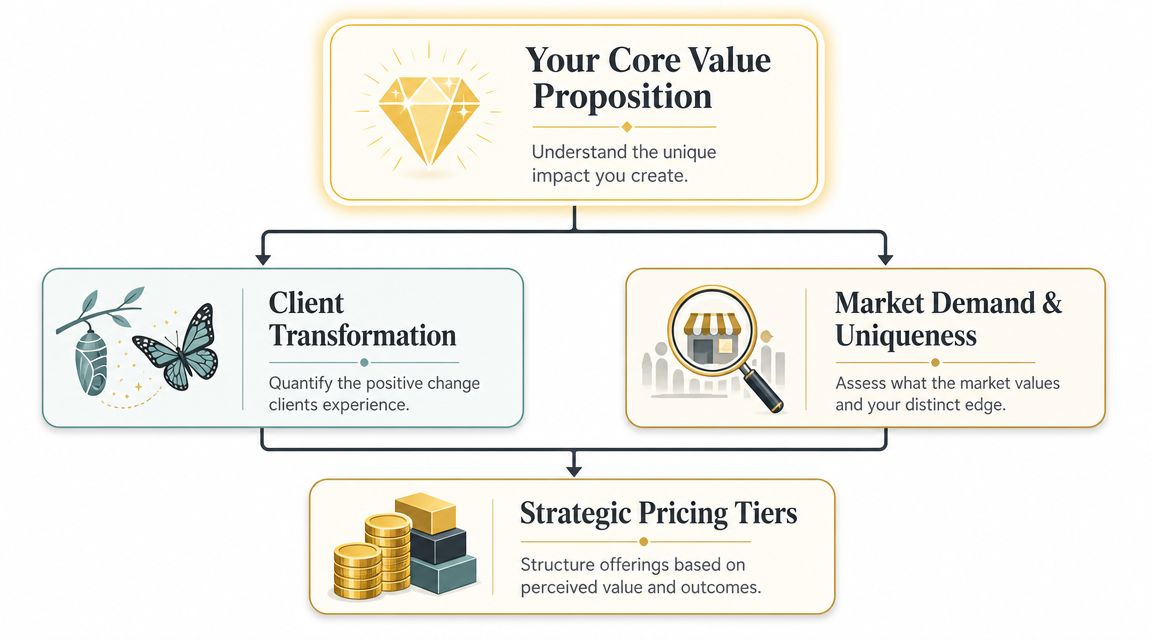
Tony Robbins' sales guidance notes that buyers judge you within seconds, and that confidence is sustained by connecting your offer to business value through body language, mirrored communication, and deep listening, as described in this sales confidence resource. That last part matters most when you talk about price. Buyers don't gain confidence because you sound intense. They gain confidence because you can explain the value in terms that matter to them.
Stop selling sessions
Clients don't buy calendar appointments. They buy movement.
Here's the difference.
| Weak framing | Strong framing |
|---|---|
| “You get weekly calls.” | “You get consistent decision support during a leadership transition.” |
| “There's email support between sessions.” | “You won't sit alone with implementation friction between sessions.” |
| “We'll do mindset work.” | “We'll identify the patterns that keep you hesitating and replace them with clear action loops.” |
That's the start of a value stack. Not fake bonuses. Not inflated claims. Just a structured explanation of what your offer does in the client's world.
Build your value stack in plain language
Write out these four layers for your offer:
What happens
Example: biweekly coaching calls, voice note support, review of team communication drafts.What that helps the client do
Example: make decisions faster, lead difficult conversations with less avoidance, stop second-guessing every move.What that changes over time
Example: better team trust, cleaner delegation, more consistent execution.Why your approach is different
Example: you combine accountability, strategic reflection, and direct feedback rather than only insight work.
If you want more examples of how positioning shapes perceived value before the sales call even starts, it also helps to build your LinkedIn brand so prospects arrive with clearer context about your expertise.
A simple way to say your price without wobbling
Try this script:
“Based on what you've shared, I'd recommend my three-month coaching package. The reason is that your issue isn't just one decision. It's a pattern in how you're leading under pressure. That package gives us enough time to diagnose it, change it, and support implementation. The investment is [your price].”
Notice what's missing. No rambling. No defensive discounting. No five-minute speech before the number.
Then stop talking.
Silence is part of selling with confidence. Coaches often ruin a solid price by trying to cushion it with nervous overexplanation.
If pricing still feels emotionally charged, review your offer design and package structure until the number feels aligned with the change you create. If you need a practical pricing walkthrough, this guide can help you boost your consulting income.
The No-Sweat Discovery Call Framework
Most bad sales calls aren't bad because the coach lacked heart. They go bad because the coach had no map.
A useful call doesn't require a manipulative script. It needs a sequence that keeps you oriented when the conversation starts wandering. One proven approach is a four-step conversation: diagnose the buyer's situation, map the desired outcome, quantify the gap or cost of inaction, then present a specific recommendation, as outlined in this framework for skeptical buyers.
Start with the visual flow below, then make it your own.
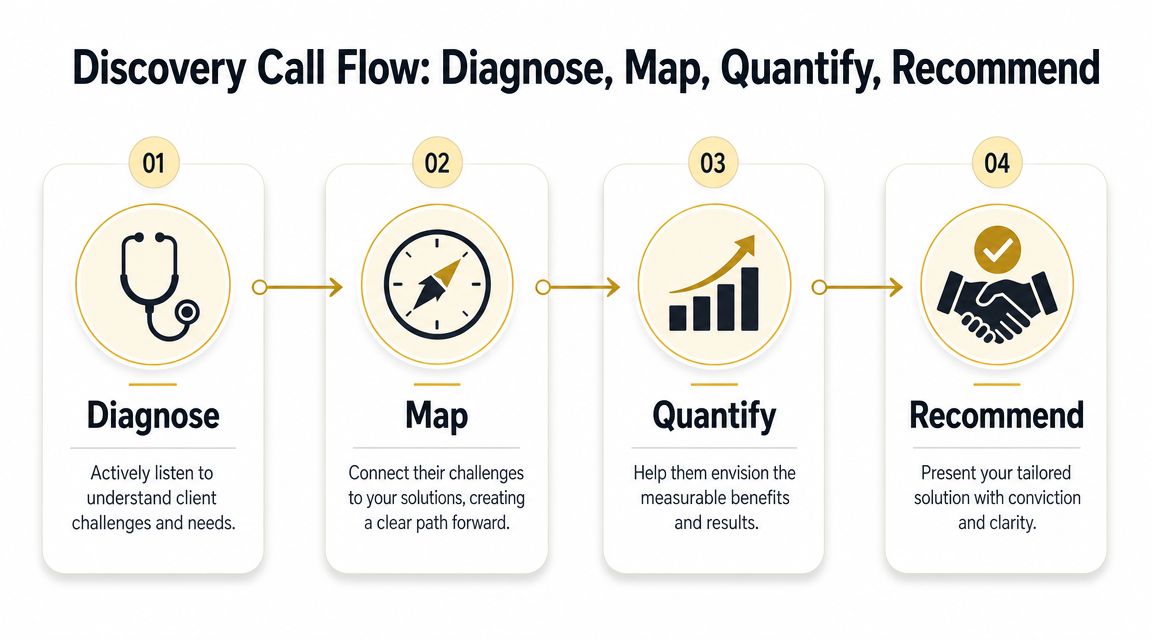
Diagnose the current situation
Anxious coaches often rush. They want to prove they can help, so they pitch before they understand. Don't.
Stay here longer than feels natural.
Ask questions like:
- “What's happening right now that made you book this call?”
- “What have you already tried?”
- “Where does this show up most often?”
- “What's the part that's hardest to solve on your own?”
If a business coach hears, “I'm overwhelmed,” that's not enough. Overwhelmed by what. Team problems. Lead flow inconsistency. Delivery chaos. Weak boundaries. Money stress. Decision fatigue.
Diagnosis creates precision. Precision creates trust.
Map the desired outcome
Once the current pain is clear, move to the future state.
You're helping the buyer define what better looks like. Not in abstract terms. In lived terms.
Ask:
- “What would need to change for this to feel like a real win?”
- “Six months from now, what do you want to be doing differently?”
- “What would become easier if this problem was solved?”
A leadership coach might hear, “I want to stop carrying my whole team.” Good. Keep going. What would that look like in practice. Better delegation. Clearer expectations. Fewer Slack interruptions. Less emotional reactivity in hard conversations.
The more specific the future becomes, the easier it is to recommend the right path.
Here's a short training resource to reinforce the flow in action:
Quantify the gap
This part scares coaches because they think “quantify” means inventing numbers or forcing ROI math. It doesn't.
It means helping the client describe the cost of staying stuck. Sometimes that cost is financial. Sometimes it's operational, emotional, relational, or reputational. For coaches, it's often a mix.
Ask:
- “What's this problem costing you right now?”
- “What happens if nothing changes over the next few months?”
- “Where is this creating drag in your work or life?”
Examples:
| Coaching niche | Cost of inaction question |
|---|---|
| Executive coaching | “What does this pattern cost you as a leader when your team needs clarity?” |
| Health coaching | “What happens if this cycle keeps repeating for another season?” |
| Business coaching | “How much energy are you losing to problems your current systems should already be handling?” |
You're not manufacturing pain. You're helping them see the full shape of the problem.
When buyers already know the options, your value is often your ability to frame the decision clearly.
Recommend the right next step
Now the offer becomes the logical bridge. Not a leap.
Use a structure like this:
Name the fit
“Based on what you've shared, I do think I can help.”Tie the offer to the diagnosed problem
“The main issue isn't effort. It's that you're trying to fix a leadership pattern with ad hoc tactics.”Explain why this package fits
“That's why I'd recommend the six-session engagement rather than a single intensive.”State the trade-offs
“If you want quick insight, a one-off session could help. If you want behavior change and implementation support, the longer package is the better fit.”
Trade-offs make you more credible. They show you're not trying to force every prospect into the highest-ticket option.
If you want a starting structure you can adapt to your niche, you can access Coachful's call script.
Handle Objections Without Getting Defensive
An objection feels like danger when you hear it as rejection. It becomes workable when you hear it as incomplete certainty.
Most coaches don't get tripped up by the objection itself. They get tripped up by what happens internally. The body tightens, the brain speeds up, and suddenly they're either arguing, discounting, or retreating.
When they say they need to think about it
A common mistake sounds like this:
Prospect: “I need to think about it.”
Coach: “Okay, no problem, let me know.”
That sounds polite. It also ends the conversation before you've learned anything useful.
A better response:
“Of course. When someone says they need to think about it, that can mean a few different things. It might be timing, money, trust, or just needing space. Which part feels unresolved for you?”
That response works because it's calm and specific. You're not cornering them. You're helping name the core issue.
When they say they can't afford it
The wrong move is instantly defending your price or offering a discount.
A stronger move is to slow down.
Try this:
Acknowledge the concern
“I understand.”Clarify what they mean
“When you say affordability, is the issue cash flow, overall priority, or uncertainty about the value?”Respond to the actual obstacle
If it's cash flow, discuss structure if you offer one.
If it's priority, return to the cost of inaction.
If it's value uncertainty, revisit the recommendation and expected outcomes.
There's a big difference between “I can't” and “I'm not convinced enough yet.” Don't treat those as the same.
When they ask if it's guaranteed to work
Insecure coaches often overpromise. That always backfires later.
Say something grounded instead:
“I can't guarantee an outcome because your results depend on your context, decisions, and follow-through. What I can tell you is how I work, what I'll help you focus on, and the kind of support you'll have inside the process.”
That answer protects trust. It also signals maturity.
If you want more examples of calm responses in tense moments, this guide on mastering sales objections is a useful supplement.
A simple objection framework that keeps you steady
Use this sequence:
| Step | What to do |
|---|---|
| Listen | Don't interrupt or counter too quickly. |
| Label | Name the category of concern if appropriate. |
| Locate | Find the real issue beneath the first statement. |
| Lead | Respond to that issue with honesty and clarity. |
A short example:
Prospect: “I'm interested, but I'm not sure now is the right time.” Coach: “I hear you. Is the hesitation more about capacity, budget, or whether this solves the right problem?” Prospect: “Frankly, capacity.” Coach: “That makes sense. If we worked together, the process would need to reduce load, not add to it. Let's look at whether that's realistic.”
That's selling with confidence. Not sharper pressure. Better composure.
Rehearse and Role-Play For Real-World Poise
If you freeze on calls, practice is not optional. It's the bridge between knowing and doing.
A lot of coaches avoid rehearsal because it feels artificial. Then they end up performing live with real prospects while their nervous system is doing the learning in public. That's a much more painful way to train.
Practice until your brain stops treating sales as danger
You don't need a full sales bootcamp. Start with low-friction reps.
Record your offer explanation
Listen for vagueness, rambling, and apology in your tone.Practice the price line out loud
Say the number, then stay silent for a few seconds. Most coaches discover that the silence is what scares them, not the price.Role-play objections with a peer
Ask them to be skeptical, distracted, or unclear. You want some friction.Review outreach language
If you also do prospecting, studying examples of optimizing B2B sales outreach can help you tighten the front end of your conversations.
Keep the role-play realistic
Don't script a perfect buyer. Practice with the buyer you meet.
Use scenarios like:
- A prospect who loves your content but doesn't see why they need support now.
- A buyer who wants guarantees you can't ethically give.
- Someone interested in results but vague about commitment.
Awkwardness in practice is cheap. Awkwardness with a real prospect is expensive.
One honest review session with a peer can reveal more than ten silent assumptions in your head. That's how poise gets built. Not from positive thinking alone, but from repeated contact with the moment that used to throw you.
Build Systems to Make Confidence Repeatable
The most overlooked part of selling with confidence happens after the call.
A coach can have a strong conversation and still lose business through scattered follow-up, forgotten notes, delayed proposals, or awkward scheduling. At this point, confidence stops being mindset and becomes operations.
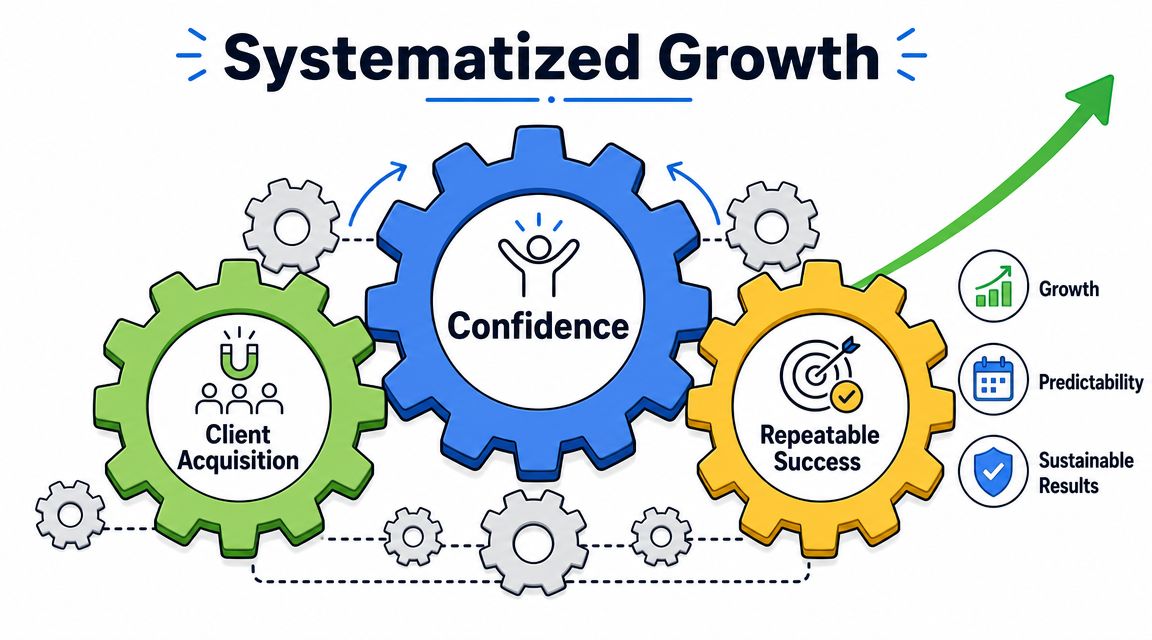
According to Zendesk's 2026 sales statistics, 80% of sales require five follow-up calls, yet 48% of salespeople never make a single follow-up attempt. For coaches, that's a strong reminder that persistence isn't a personality issue. It's a system issue.
What to systematize first
You do not need enterprise software. You need consistency.
Start with these components:
Lead tracking
Use a CRM like HubSpot, a Notion board, Airtable, or a simple spreadsheet. Track contact date, call date, fit level, next step, and follow-up date.Follow-up templates
Write clean emails for post-call recap, proposal follow-up, and gentle check-in. Templates reduce emotional friction.Scheduling and payment flow
Remove back-and-forth wherever possible. One practical option is using coaching software that combines onboarding, scheduling, payments, messaging, and client progress workflows in one place.
A simple follow-up rhythm
The point of follow-up is not to chase. It's to maintain a professional decision process.
Try this structure:
| Moment | What to send |
|---|---|
| Same day | Short recap of the call, problem discussed, recommended next step |
| A few days later | Brief check-in with one clarifying point or answered question |
| Later follow-up | Polite close-the-loop message asking whether they want to move forward, revisit later, or pass |
That rhythm helps you stay present without sounding needy.
The real benefit of systems
When your notes are organized, your next step is visible, your emails are templated, and your scheduling is clean, you stop carrying every lead in your head.
That matters more than most coaches realize.
The opposite of sales anxiety is not bravado. It's having a process that catches you when memory, mood, or momentum drops. Confidence becomes repeatable because your business no longer depends on adrenaline.
And once that happens, your calls sound different. You're less attached. More attentive. Easier to trust.
If you want a cleaner way to move prospects into paying clients without juggling forms, scheduling links, payment tools, and client notes across five platforms, Coachful gives coaches one place to manage onboarding, sessions, payments, messaging, and ongoing client progress. That kind of operational clarity makes selling feel lighter because the handoff from yes to delivery is already built.