10 Client Contract Templates for Coaches in 2026

Coachful

It's 11 p.m. The discovery call went well, the prospect said yes, and now the uncomfortable thought lands all at once, there isn't a signed agreement yet. The inner dialogue shows up fast, I'm not a lawyer, a template will feel cold, I'll sort the paperwork after the first payment. Then the practical worry follows, what happens if the client cancels tomorrow and there's no clear clause for notice, rescheduling, or no-shows?
That's why client contract templates matter before the first session starts. The right one doesn't just look polished, it fits the engagement you're selling, one-off session, retainer, group program, or corporate deal, and it leaves room for the coaching-specific clauses you need to control, like cancellation, confidentiality, payment timing, privacy, and scope. The options below differ mostly in fit, customization effort, and legal depth, so the question is not which tool has the most templates, but which one matches the way you work. see LinkShip's recommendations
1. PandaDoc template library
PandaDoc works best when you want the contract, the quote, and the payment step to live in the same flow. Its template library is broad, the editor is polished, and the product feels built for a coach who sends a proposal, then a contract, then a payment request without bouncing between tools. The platform also leans into variables, content blocks, and pricing tables, which helps when you repeat the same coaching offer with small changes for each client. PandaDoc templates
For coaching, that structure is useful if you sell a defined package and want the agreement to mirror the offer page closely. A simple example is a business coach who sells a 12-week package with a fixed fee, a set number of sessions, and a payment schedule that needs to appear in the same document the client signs. The downside is that this kind of depth can be more than a solo practice needs, especially if you only want a clean agreement and aren't using the broader quote-to-cash workflow. The right fit is usually a coach who wants repeatability without rebuilding the contract every month. Coachful's coaching contract templates are a good internal reference point if you're comparing how much coaching-specific wording you need to preserve.
Practical rule: Use PandaDoc when your contract has to look like part of a sales process, not a separate legal attachment.
2. Rocket Lawyer
Rocket Lawyer feels like the middle ground between DIY forms and a full legal department. You get guided interviews, a wide spread of business templates, and the option to ask legal questions when a clause starts to feel too generic. That matters if you're staring at a consulting-style agreement and wondering how much of it can safely pass as a coaching contract without more thought. Rocket Lawyer
The trade-off is that the language is still broad by design. A life coach, for example, might get a usable service agreement, but still need to add the details that matter in coaching, session cadence, rescheduling limits, no-show handling, privacy rules for notes, and whether recordings are allowed. For solo coaches who hesitate to involve an attorney until the agreement is almost finished, the appeal is obvious, because you can get legal Q&A without hiring a lawyer for every draft. The risk is over-relying on a form that sounds professional but doesn't fully reflect the way you deliver the program.
Where it fits
- One-off use cases: Good for a single contract you need to clean up quickly.
- Membership value: Better if you expect to reuse the platform and ask legal questions more than once.
- Coach-specific edits: Still needed, because the baseline language is generalized.
3. LegalZoom Forms + eSignature
LegalZoom's forms and e-signature setup is a familiar option for coaches who want a recognizable brand and a structured template library. The useful part is the combination of business forms with an integrated signing step, which means you can move from draft to execution without stitching together multiple services. The library also maps to consulting and service-style arrangements, so the language often feels closer to what a coach needs than a random generic form. LegalZoom Forms and eSignature
That said, the platform can feel heavier than a solo coach's workflow needs. If all you want is a clean client agreement for a retainer or a cohort program, the broader ecosystem may add more surface area than value. A coach who runs executive intensives might appreciate the brand familiarity when dealing with corporate clients, while a newer solo coach may find the plan structure and feature gating more annoying than helpful. The sweet spot is a practice that wants a known name, a decent template base, and signing in the same environment.
The strongest use of a brand like this is confidence, not complexity. Clients rarely care how many adjacent legal products exist, they care that the agreement is clear and the signing step works.
4. LawDepot
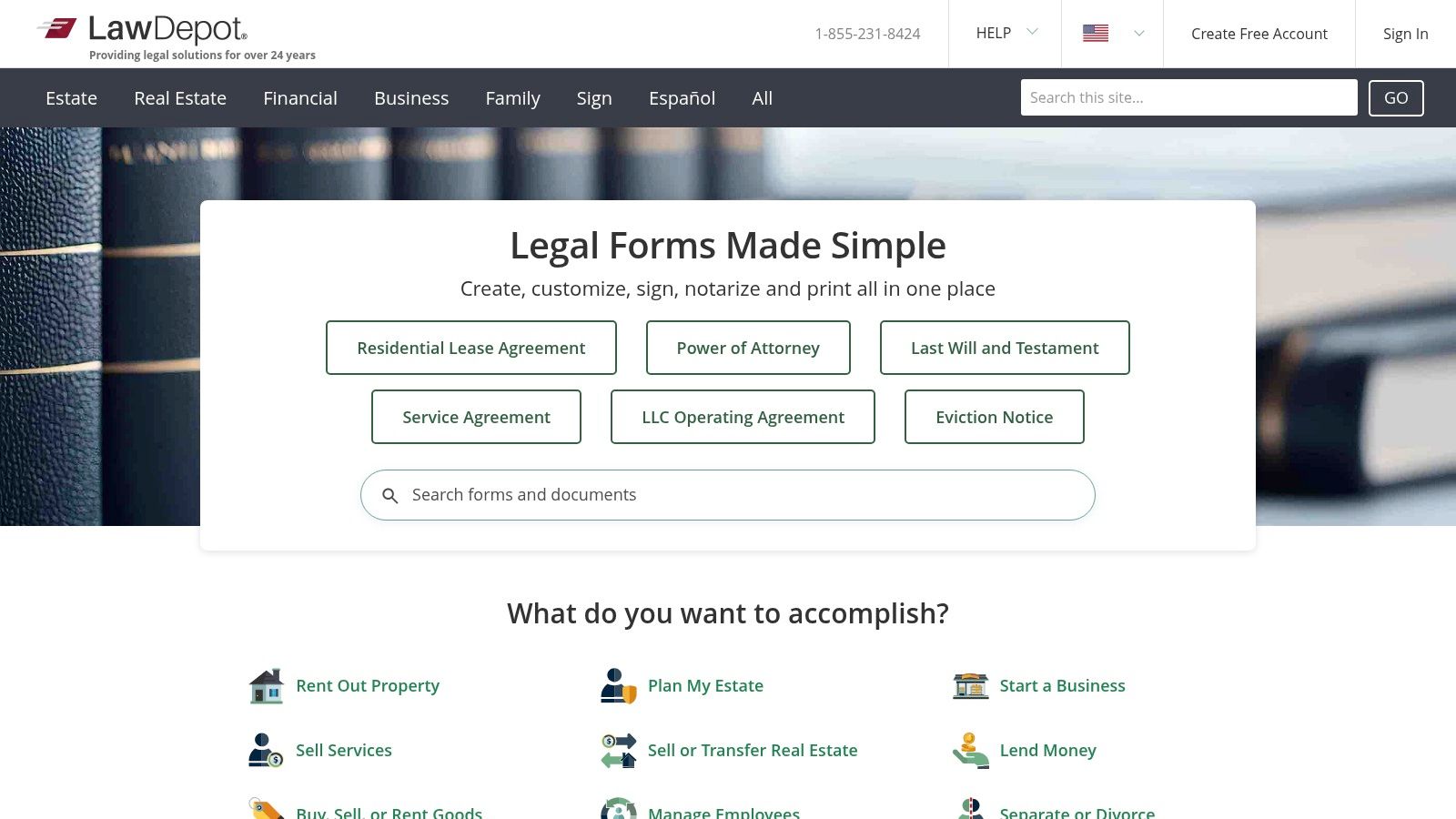
LawDepot is the practical choice when you want to generate a contract quickly, download it, and make your own coaching edits afterward. The guided questionnaire approach is straightforward, so you can produce a service agreement or consulting-style contract without learning a new system. That's useful when the goal is not to admire the software, but to get a workable baseline into Word or PDF fast. LawDepot
For coaches, that often means less friction at the exact point where hesitation usually appears. If you're nervous about asking a new client to sign, a simple form builder lowers the emotional barrier because you're not drafting from a blank page. The compromise is that there's no built-in lawyer Q&A, so if your business model involves health-related disclaimers, AI-assisted notes, group-program rules, or cross-border privacy language, you need to know what to add yourself. This is still a strong option when you want a low-cost starting point and don't need the system to manage the full client lifecycle.
Best fit
A coach who wants a download, a few edits, and a signed agreement in the client folder will usually get what they need here. A coach who wants built-in legal guidance will probably outgrow it.
5. eForms
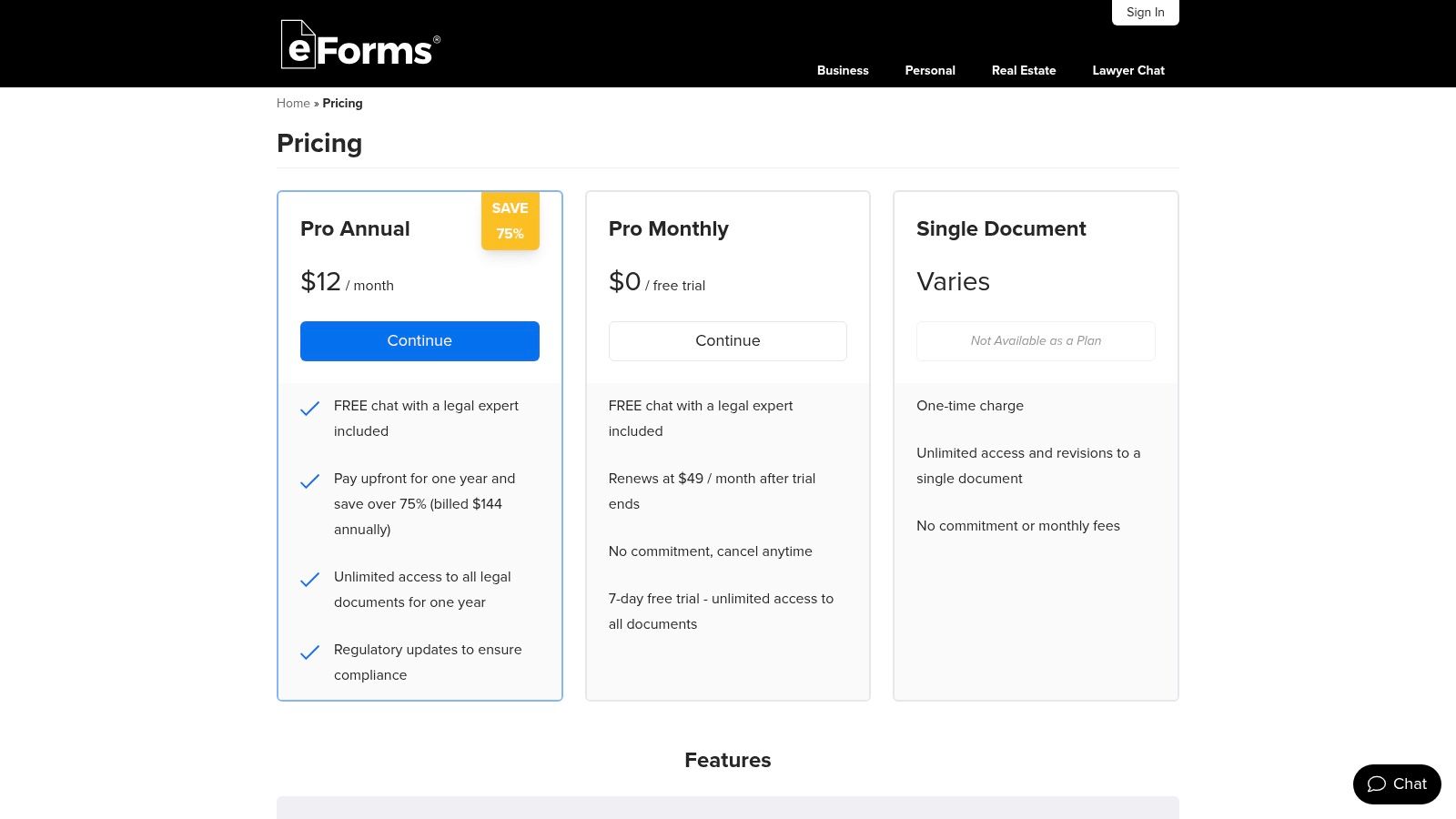
eForms sits in the category of fast, usable, and not overbuilt. It gives you a large catalog of legal forms, a guided fill-in experience, and export paths that make it easy to turn the result into a document you can send. If you've ever wanted a baseline service agreement without signing up for a heavier suite, this kind of tool makes that first draft much less painful. eForms pricing
The appeal for coaches is speed. A consultant who is signing a one-time project agreement can use the form as a starting point, then adjust the wording around session frequency, project milestones, or deliverables. The limitation is workflow depth. You don't get the same proposal, payment, and signature orchestration you'd see in a full sales stack, so you may still need a separate e-signature tool or a document system to keep signed copies organized. That makes eForms a good drafting utility, not a full contract operations layer.
A useful way to think about it is this, if the contract is the only thing you need, eForms is efficient. If the contract has to trigger onboarding, payments, and storage, it becomes only one piece of the puzzle.
6. Dropbox Sign templates
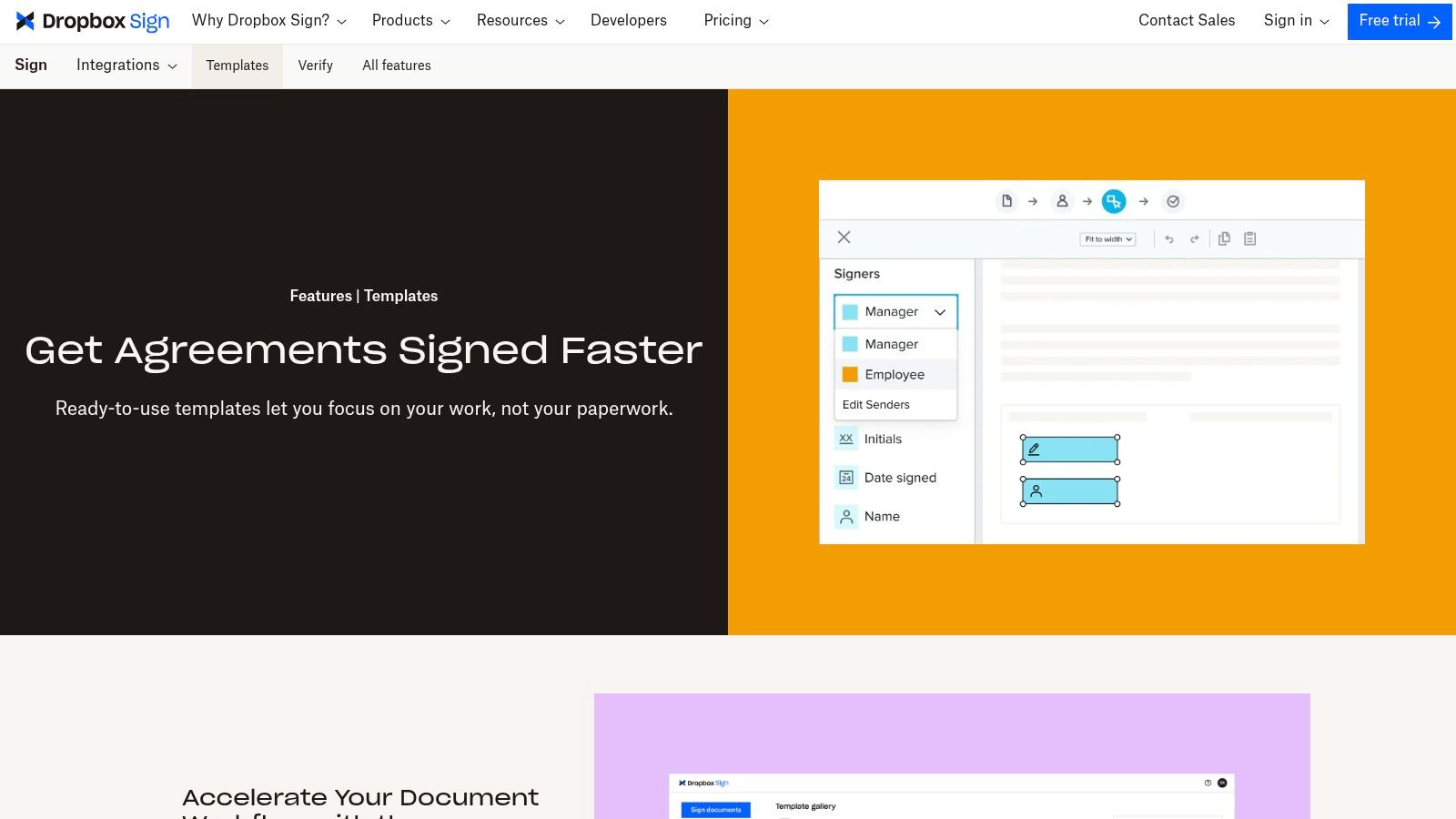
Dropbox Sign is strongest when you already know what your agreement should say and you mainly want a simple, repeatable signing workflow. The template library and reusable template links help if you send the same coaching agreement again and again, especially when you want to keep the signed file close to Dropbox storage. The drag-and-drop field setup is easy to learn, which matters when you're trying to get a client from yes to signature without making the process feel complicated. Dropbox Sign templates
For coaching, this is a good fit for standardized offers. A career coach who uses one retainer format, or a trainer who runs the same cohort each month, can reuse a template instead of rebuilding the document each time. What it doesn't do especially well is replace a richer contract-authoring system. If you want pricing tables, detailed proposal pages, or a more elaborate document experience, this tool stays focused on signing. That focus is a strength when you need reliability and a weakness when you want your contract to do more of the selling.
7. DocuSign
DocuSign is the platform most enterprise clients already recognize, which can matter more than coaches expect. When a corporate buyer sees a DocuSign envelope, the objection usually shifts away from the tool and back to the terms, which is exactly where it should be. The reusable templates, signer workflows, and audit trail support make it a solid option for agreements that need clean execution and a traceable record. DocuSign
Coachful's guide to the best electronic signature software for coaches becomes helpful, because the core question isn't whether the signing tool works. It's whether your contract process stays connected to onboarding, payment, and client records after the signature lands. DocuSign is strong on the signing side, especially in multi-stakeholder or higher-volume environments. It's less about authoring rich coaching content and more about dependable execution, which is exactly what some corporate deals need.
If a corporate client already uses DocuSign internally, using the same system removes one more excuse to delay signature.
8. SignWell
SignWell is a good answer when you want a clean, lightweight signing tool with reusable templates and less clutter. The interface is simple, the pricing is transparent, and the product is built for repeat sending rather than document drama. That makes it a practical choice for solo coaches who need a reliable path from agreement to signature without adopting a larger system than they'll use. SignWell
The trade-off is authoring depth. If you're trying to build a contract that includes coaching-specific details like package expiry, emergency rescheduling, or data-processing language, you'll still need to prepare the content elsewhere or accept a simpler draft. For low-to-moderate volume sending, though, that simplicity is exactly why it works. A coach who closes a few clients a month doesn't always need a platform that acts like a legal operations suite.
What works here
- Repeatable sending: Good for the same agreement over and over.
- Basic bulk workflows: Helpful if you run cohorts or group enrollment cycles.
- Simple management: Easier to keep consistent than a patched-together email plus PDF process.
9. Jotform Sign templates
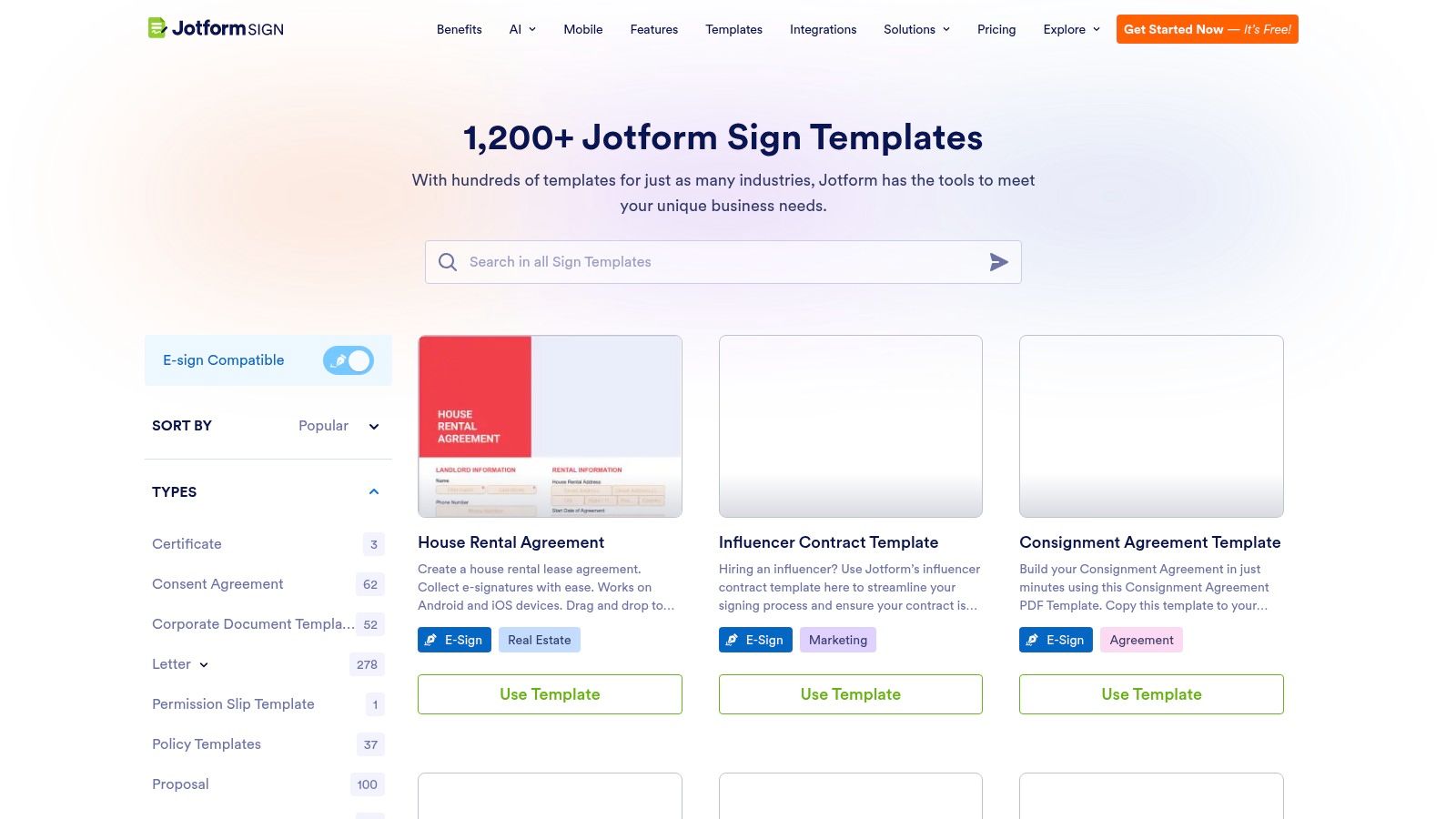
Jotform Sign is different because it blends intake, forms, and signing into one environment. That matters for coaches who don't just want a contract, they also want onboarding data, assessments, or pre-call information tied to the signed document. The large template gallery gives you a quick starting point, and the automation side helps if you like the idea of signed agreements triggering the next step in your workflow. Jotform Sign templates
The upside is obvious when a client's path includes more than one form. A coaching school, for example, can collect intake details, issue a signable agreement, and route the signed PDF into storage without jumping between systems. The downside is that the editor feels form-centric, so heavily customized contract formatting can take more patience than in a document-first tool. That makes Jotform Sign especially useful when the contract is part of a bigger process, not a standalone legal artifact.
10. Bonsai
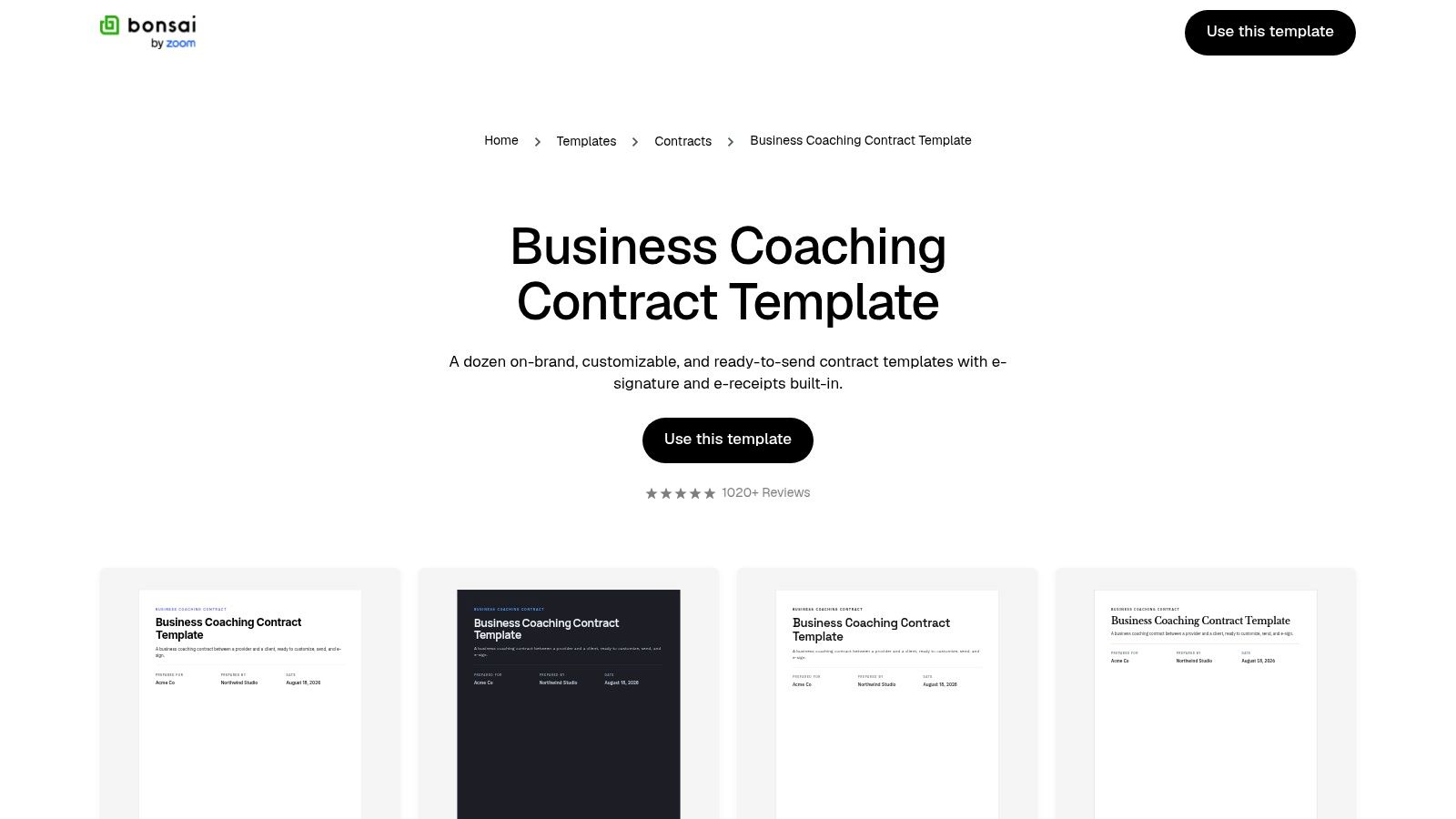
Bonsai is built for freelancers and service providers, and its coaching-focused contracts make it especially easy to imagine in a real coaching workflow. The templates are already framed around consulting and coaching, which lowers the mental load when you're drafting a new agreement after a discovery call. The fact that proposals, invoices, scheduling, and contracts can sit in the same environment is the main reason many solo coaches look at it first. Bonsai business coaching contract
The practical value is in the handoff. A coach can move from a proposal to a signed agreement to an invoice without reinventing each step, which helps when you're trying to protect momentum after a client says yes. Coachful's coaching contracts sit in a similar conversation, especially if you care about reusable terms and keeping client records close to the rest of the workflow. The trade-off is that the legal depth is not the same as a dedicated legal library, so if your model includes unusual privacy, liability, or cross-border issues, you still need to review the wording carefully.
Top 10 Client Contract Template Platforms, Comparison
| Product | Core features ✨ | Quality ★ | Price 💰 | Best for 👥 | Standout 🏆 |
|---|---|---|---|---|---|
| PandaDoc template library | 1,000+ editable templates, variables, pricing tables, e-sign & payments | ★★★★☆ | 💰 Mid–High (scales with seats) | 👥 Coaches needing proposals → contracts → payments in one place | 🏆 Quote→contract→payment workflow |
| Rocket Lawyer | 250+ guided templates, e-sign, storage, ask-a-lawyer access | ★★★★☆ | 💰 Affordable membership + pay-per-use | 👥 Coaches wanting attorney Q&A & discounted consults | 🏆 Attorney-drafted forms + legal Q&A |
| LegalZoom (Forms + eSignature) | 150+ attorney-drafted templates, eSign, add-on legal plans | ★★★★☆ | 💰 Mid (add-ons may increase cost) | 👥 Coaches who prefer a recognized legal brand | 🏆 Broad template coverage & brand trust |
| LawDepot | Guided questionnaires → downloadable Word/PDF contracts | ★★★☆ | 💰 Low (one-time or subscription) | 👥 DIY coaches who will edit contracts themselves | 🏆 Fast, state-aware downloadable docs |
| eForms | Large fill-in form catalog, guided export to Word/PDF | ★★★☆ | 💰 Low–Mid (flexible purchase options) | 👥 Coaches needing quick baseline contracts | 🏆 Flexible subscribe or one-off buys |
| Dropbox Sign (HelloSign) | Template gallery, reusable links, drag-drop fields, storage integrations | ★★★★☆ | 💰 Mid (plan-dependent) | 👥 Coaches standardizing a few agreements (Dropbox users) | 🏆 Simple reusable templates + Dropbox sync |
| DocuSign | Reusable templates, audit trails, advanced signer workflows | ★★★★★ | 💰 High (enterprise pricing tiers) | 👥 Coaches needing enterprise-grade compliance & multi-stakeholder workflows | 🏆 Market leader for reliability & compliance |
| SignWell | Template gallery, reusable templates, bulk send, API | ★★★★☆ | 💰 Low–Mid (transparent pricing) | 👥 Solo coaches needing simple repeatable e-sign workflows | 🏆 Lightweight UI and straightforward pricing |
| Jotform Sign templates | 1,000+ sign templates, drag-drop builder, automations & storage | ★★★★☆ | 💰 Mid (limits vary by plan) | 👥 Coaches combining intake/forms with contracts | 🏆 Unified intake → sign → automation flow |
| Bonsai (freelancer/coach) | Coaching contract templates, proposals, invoices, scheduling & e-sign | ★★★★☆ | 💰 Mid (all-in-one subscription) | 👥 Solo/small-team coaches wanting integrated business stack | 🏆 Coach-focused templates + end-to-end workflow |
Build One Master Agreement Before Your Next Yes
Choose the template that matches your most common engagement, then adapt the scope, fees, cancellation terms, confidentiality, and data handling to your coaching model. The hard part isn't finding a document that looks legal, it's building one master agreement you can trust and reuse without rewriting it every time a client says yes.
The coaches who stay organized usually do one thing well, they keep a single approved version in their workspace and resist the urge to improvise from old emails. That matters because the contract should reflect how you deliver, whether that's a one-off session, a retainer, a group program, or a corporate deal. If your template sits beside onboarding and payment, the agreement goes out at the same moment as the invoice, which feels far more professional than chasing signatures later. For a different legal workflow reference point, see Matil's mercantile contract.
If you're running your practice on Coachful, its configurable templates can hold that master version beside onboarding and payments, so the contract, signature, and client setup move together instead of becoming three separate chores. That keeps the yes from turning into admin friction.
Coachful gives you a place to store a master agreement, send it with onboarding, and keep the signed version next to the rest of the client record. If you want client contract templates that stay connected to scheduling, payments, and program delivery, visit Coachful and see how the workflow fits your practice.