Coaching Client Handover Template: 7 Things to Include

Coachful
Editorial Team
How do you move a coaching client to another coach without making them repeat their history, sharing too much, or leaving both coaches assuming the other person is following up?
Use a short, client-reviewed handover brief that names the change, the permitted information, the current coaching goal, the work already tried, practical preferences, open commitments and the next responsible person. Confirm the client's choice and the receiving coach's acceptance before treating the handover as complete. Sending a folder is not the same as transferring responsibility.
This coaching client handover template is for a coach arranging temporary cover, an agreed internal change or a move to a separate practice. It is not a clinical referral form, a substitute for a new coaching agreement or permission to circulate session notes. All names, dates and documents below are fictional examples.
First, decide what kind of handover you are arranging
The same document cannot settle every type of transition. A client meeting a colleague for three sessions needs different arrangements from someone ending your service and contracting with an independent coach. Name the situation before writing the brief.
- Temporary cover: another coach works with the client for an agreed period. Specify who handles coaching messages during that period and how the return decision happens.
- Permanent internal change: the client remains with your practice but works with a different coach. Reconfirm the service, commercial terms, access and relationship boundaries.
- Move to another practice: the receiving coach operates separately. Check the new engagement and data-sharing arrangements rather than assuming your existing terms travel with the client.
- Referral outside coaching: a different professional service may be more appropriate. Use the relevant referral process and your scope-of-practice guidance, not this coaching continuity template.
If the client is simply leaving and wants their records, use the separate guide to what to give a departing coaching client. This article addresses the narrower question of what another coach needs to accept a live piece of work, and what the client must understand about that change.

1. Record the change and the client's actual choice
Put the reason, type of change, dates and named coaches at the top. Use plain language: “Priya will be away; Sam is available for three sessions” is clearer than “We are optimising your delivery experience.” Do not describe the change as an upgrade unless you can substantiate that claim and it reflects the client's priorities.
Explain the options available under the agreement. That may mean meeting the proposed coach, discussing a pause or choosing an appropriate ending. Do not promise a refund, a replacement appointment or unchanged terms before checking the relevant arrangement. A client should not discover a different coach through an unexpected calendar invitation.
Field wording: “Proposed change: [temporary cover / permanent change / separate practice]. Outgoing coach: [name]. Receiving coach: [name]. Proposed dates: [dates]. Options discussed: [options]. Client decision and date: [record].”
For employer-funded coaching, clarify the sponsor's operational role without treating payment as unrestricted permission to share the conversation. The client, sponsor and coaches may have different agreements. A sponsor can need attendance information without needing personal reflections or detailed coaching notes.
2. Define what can be shared, with whom and how
Do not start with “Which files can I export?” Start with “What does this coach need for the agreed next step, and what information-sharing arrangement applies?” A tightly scoped summary may be sufficient. Raw notes, recordings, third-party details and old intake answers are not automatically necessary.
The ICF Code of Ethics requires clear agreements about exchanged information and its method of exchange, and addresses confidentiality and secure record handling. Its standards 1.1 and 2.1–2.5 are particularly relevant. The Code is an ethical framework, not a complete answer to the data-protection law or contract requirements in your jurisdiction.
Field wording: “Information covered: [specific summary and attachments]. Intended recipient: [named coach]. Purpose: [agreed continuity task]. Sharing method: [approved secure route]. Client review or authorisation: [what was agreed, when and where recorded]. Exclusions: [items not included].”
Client agreement to a coach change and the lawful handling of personal data are related but separate questions. Establish the appropriate legal basis, required notices and security arrangements for your practice. A casual “sure” does not answer every compliance question, particularly where sensitive information or separate organisations are involved.

3. State the current goal in the client's language
A handover should tell the receiving coach what the client wants now, not freeze them inside the goal from their first intake. Ask the client to review one or two sentences. Include the question they want to work on next and any current boundary around that work.
Useful: “Alex wants to make a clear request when a project priority changes. At the next session, Alex wants to review the opening they drafted.” Less useful: “Alex has confidence issues and needs stronger boundaries.” The second version is broad, interpretive and likely to bias the incoming conversation.
Separate the coaching goal from an employer's business objective and from your hypothesis. If a sponsor wants improved team communication while the client wants to prepare one specific conversation, label both rather than presenting them as identical. If they conflict, resolve the contracting question before the new coach starts.
Field wording: “Client's current goal, reviewed on [date]: [their words]. Proposed first-session focus: [question]. Outside the present coaching scope: [boundary].”

4. Summarise what has been tried, without writing a verdict
Give enough history to prevent pointless repetition. Record the exercise, decision or action, its date or stage, and what is known about the result. Distinguish a client's report from your observation. “Alex reports using the opening once” is different from “Alex now communicates assertively.”
Unfinished work deserves an explicit label. A worksheet being uploaded does not prove it has been discussed; a session being attended does not prove the goal has been reached. The incoming coach needs to know what to ask about, not inherit a confident conclusion unsupported by the record.
Field wording: “Work tried: [activity]. Evidence available: [client report / reviewed example / agreed record]. What remains untested or unknown: [gap]. Relevant client-approved attachment: [item, if needed].”
Leave out personality labels, speculative diagnoses and comments about being a “difficult” client. If a specific interaction matters, describe it factually and connect it to an agreed practical adjustment. A handover brief is a working document, not a private performance review of the person receiving coaching.
5. Include practical preferences and access needs
Useful continuity is often mundane. The client may prefer a written prompt before an exercise, need captions, require a different appointment time or want permission requested before role-play. Ask what they want the receiving coach to know rather than copying a whole wellbeing history.
Describe the adjustment, not unnecessary medical detail. “Send the exercise instructions in writing before the session” may be enough. Do not make the client repeatedly explain sensitive circumstances to justify a practical preference that you can simply honour.
Field wording: “Client-approved working preferences: [specific adjustments]. Scheduling constraints: [constraints]. Communication arrangements: [channel and agreed response expectations]. Topics the client prefers to introduce themselves: [record only what is necessary].”
Preferences are a starting point, not a script the new coach must follow forever. The receiving coach should reconfirm them with the client. They may discover that a different approach is useful, but that should happen through a new agreement rather than an unexplained change.

6. List every open promise, with an owner
The most irritating handover failure is not a missing life story. It is a coach saying “I'll send that on Friday,” disappearing from delivery, and assuming someone else knew. List promised resources, feedback, reviews and administrative actions separately from general background.
For each item, write the action, owner, deadline and status. If nobody has accepted an action, mark it unassigned and resolve it before the handover. Do not make the incoming coach responsible for commitments they have never seen or cannot reasonably fulfil.
- Coaching action: Sam reviews Alex's draft at the first session.
- Outgoing promise: Priya sends the already-promised worksheet before cover begins.
- Practice administration: the practice owner confirms remaining sessions and any billing implications.
- Unknown: whether an employer update is due. Resolve the reporting agreement before sending one.
These are illustrative assignments, not a recommended service package. Where financial or contractual details matter, check the authoritative record rather than deriving a session balance from memory. A professional handover should not accidentally sell more support than the client purchased.
7. Confirm the next appointment and responsibility boundary
Finish with the next event, not “Sam will be in touch.” Record the date, time zone, coach, joining route and who confirms it. Name who handles coaching messages, administrative questions and fit concerns after the change. If the appointment is not booked, state who must arrange it and by when.
Field wording: “Receiving coach accepts the handover on [date]. Responsibility begins [date and time]. First appointment: [date, time zone, route]. Coaching contact: [person/channel]. Administrative contact: [person/channel]. Fit concern route: [route]. Review or return decision: [date and owner].”
A temporary handover also needs an ending. Do not assume the client returns automatically or that both coaches keep replying throughout. Agree what happens to new notes, whether a brief return summary is needed and when access will be reviewed.

Copyable coaching client handover template
Use this as a working document, then remove fields that are not necessary. Keep the client-reviewed summary separate from private administrative checks where that makes responsibilities clearer. Do not label the document approved until the review has actually happened.
Coaching handover brief
Client reference: [minimum identifier needed]
Version and review date: [version/date]1. Change and choice
[Type, named coaches, dates, options discussed, client decision.]2. Sharing boundary
[Information included, recipient, purpose, method, review/authorisation record and exclusions.]3. Current goal
[Client's wording, first-session question and scope boundary.]4. Work already tried
[Actions, evidence, relevant attachments and unknowns.]5. Practical preferences
[Agreed adjustments, scheduling and communication arrangements.]6. Open commitments
[Action / owner / due date / status.]7. Ownership and next appointment
[Acceptance, responsibility start, appointment, coaching contact, administrative contact, fit concerns and review date.]
For the fictional example shown above: Alex agrees to three cover sessions with Sam from 4–25 November. Alex approves a brief for Sam only, without recordings or raw notes. The goal is to make a clear request when project priorities change; an opening has been drafted but workplace application is unreviewed. Alex prefers written prompts and being asked before role-play. Sam reviews the draft at the first session on 4 November at 14:00 UTC. The practice owner handles billing, and the return arrangements are reviewed on 24 November.
Run the handover in three passes
Before sharing: confirm choice, fit and minimum information
Check that the proposed coach has capacity, relevant competence and no unresolved conflict of interest. Give the client enough information to make a real choice. Ask them to correct the brief, remove unnecessary detail and identify anything they prefer to explain themselves.
If the outgoing coach is unexpectedly unavailable, follow the practice's continuity arrangements and applicable confidentiality obligations. Do not use urgency as permission for unrestricted access. Where the situation involves immediate safety concerns, use the appropriate safeguarding or emergency process rather than waiting for an ordinary handover meeting.
Before the session: test the practical route
Verify that the receiving coach can access only what they need through the approved route, without borrowing the outgoing coach's login. Confirm the calendar entry, meeting link and client-facing instructions. Check the actual system behavior instead of assuming that adding a team member transfers every record or conversation.

A short introduction can be enough: “With your agreement, Sam will provide the three cover sessions we discussed. Sam has the summary you reviewed, not a copy of every session note. Your first appointment is [verified details]. Please contact [person] about the coaching arrangements and [person] about administration.” Adapt this only after each statement is true.
After the session: check the fit and close the overlap
The receiving coach should invite the client to update the goal and correct the summary. Ask a concrete question: “Did anything important feel missing or different from what you expected?” Make the route for raising a concern clear, particularly if the client feels awkward criticising a colleague to the outgoing coach.
Then close duplicate ownership. Decide who responds to new coaching messages and whether the outgoing coach remains involved at all. Review access according to the agreement and retention requirements; do not delete records indiscriminately just because a staffing arrangement changed.


Using Coachful to check the client-facing experience
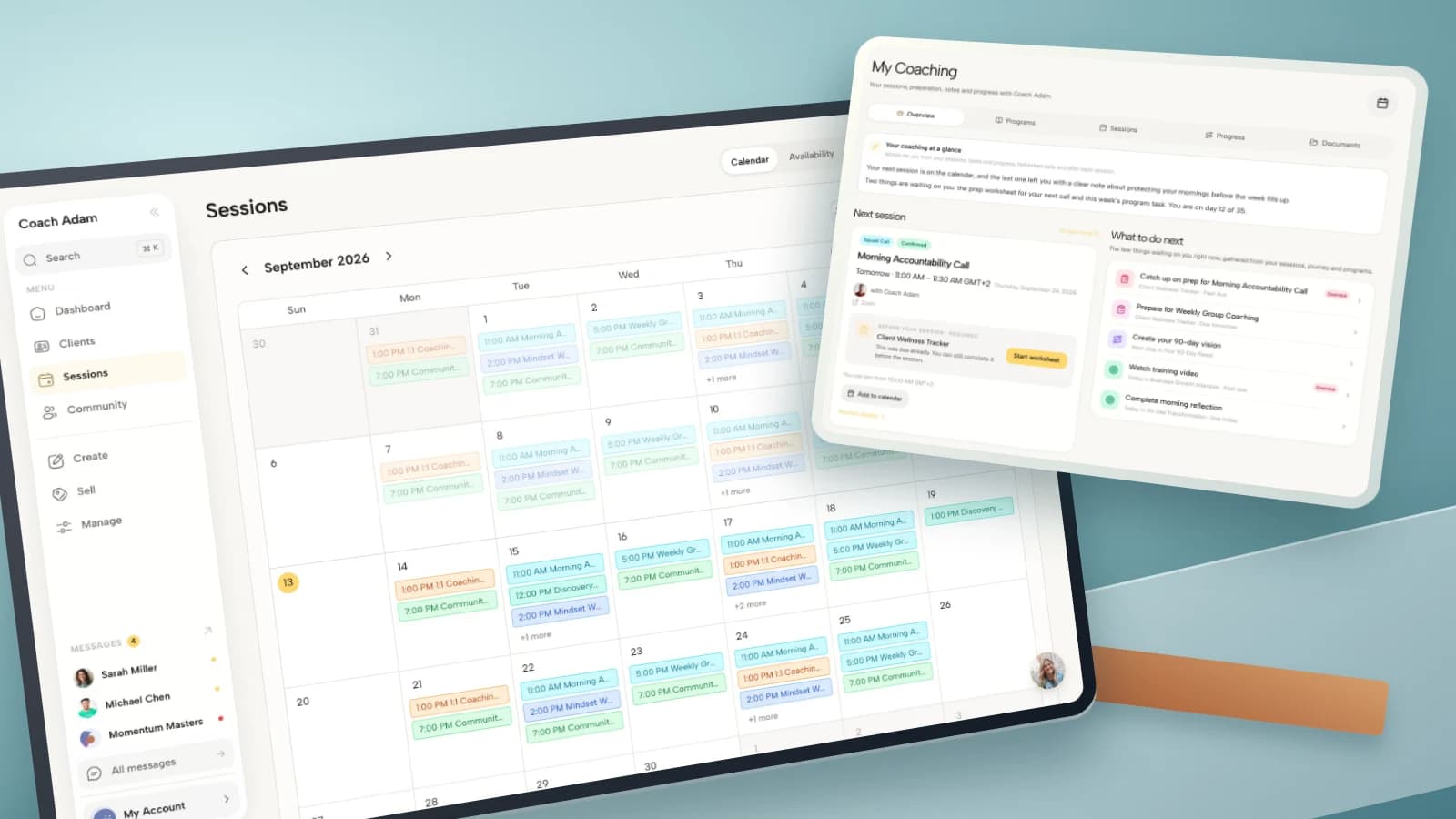
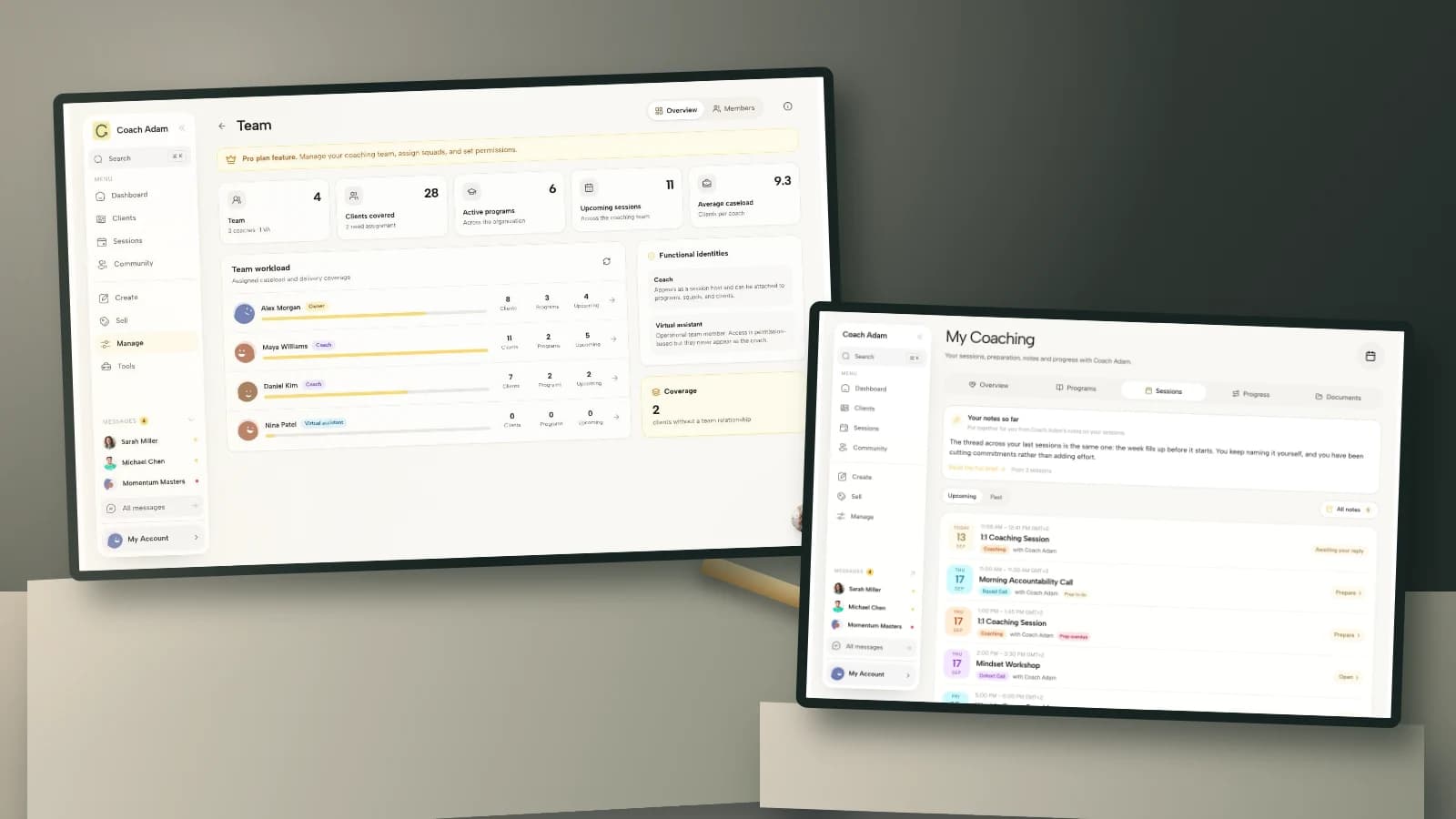
The demo surfaces shown here include Team, client records, Sessions, Chat Channels and the client's coaching portal. They illustrate the operational places a coach should inspect: who is delivering, what appointment the client sees, what progress is visible and where communication happens.
They do not prove that reassignment, consent, record transfer or permission changes happen automatically. Verify those details in your actual account and process before promising continuity. Keep the approved handover brief and acceptance record through your practice's appropriate secure route.
Once you have drafted the seven fields, try the interactive Coachful demo and follow the journey from the team view to the client's session and progress surfaces. That is a useful next step because a sound handover document can still fail if the client cannot find their next appointment. The software should support the agreement, not stand in for it.
Frequently asked questions
How long should a coaching handover be?
Short enough for the client and receiving coach to review properly. Start with one concise working brief and add only necessary, authorised attachments. There is no universal page count that makes a handover complete; the test is whether the next coach can accept the work without guessing or receiving irrelevant confidential information.
Should I send all my coaching session notes?
Not by default. Decide what is necessary, what the information-sharing agreement permits and what applicable law requires. A client-reviewed summary is often a more useful starting point than a full archive. A formal request for personal data is a separate process and should not be answered solely by this template.
What if the client does not want the proposed coach?
Discuss the available options under the agreement without pressuring them to accept. Their concern may be fit, timing, privacy or the difference between the service purchased and the proposed replacement. Do not silently reassign the engagement or describe reluctance as a coaching problem to overcome.
Is a warm introduction enough?
No. It can help the relationship, but it does not confirm access, resolve open promises, change the contract or establish who owns the next message. A useful handover combines an agreed introduction, a minimal working brief, receiving-coach acceptance and a verified next appointment.