Mastering Cohort Based Learning for Your Coaching Business in 2026

Coachful
Picture this: you're leading a group on a mountain expedition. Instead of just handing everyone a map and wishing them well, you all start together. You climb together, tackle tricky parts as a team, and plant your flag at the summit as one unit. That shared journey, in a nutshell, is the heart of cohort-based learning.
A Better Way to Guide Client Transformation

If you're a coach, you might be wondering, "Is this just another buzzword? How is this any different from the group coaching I'm already doing?" It's a fair question, and one every smart coach should ask. While it does share some DNA with group coaching, cohort-based learning is a specific, time-bound experience where a dedicated group of learners progresses through a set curriculum together.
It’s a deliberate move away from the isolated, often lonely experience of self-paced online courses. You're shifting the focus from simply consuming content to participating in a shared, momentum-driven experience. You aren't just selling information; you're cultivating a community with a clear beginning and end. This means you can finally stop chasing disengaged clients and start leading an energized team.
The Power of Shared Momentum
Think about all the well-intentioned clients who sign up for your self-paced program. Their initial excitement is palpable, but then life happens. The kids get sick, work gets busy, and without anyone to keep them accountable, they trail off. It’s frustrating for you and a failed promise for them. Cohort learning directly solves that by baking a powerful support system right into the program's design.
At its core, this approach turns learning from a lonely sprint into a team relay. The energy of the group helps carry everyone across the finish line, building a culture where progress feels collective and support is always there.
This community dynamic is also fantastic for accommodating the diverse ways people learn. You know you have clients who need to talk things out and others who prefer to watch and learn. In fact, there are 7 distinct learning styles to consider. A cohort naturally brings together people who learn by debating ideas with those who learn by watching their peers succeed, creating a richer, more effective environment for everyone.
This structure is what builds such strong connections and accountability. It all comes down to a few key ingredients:
- A fixed schedule: Everyone is on the same page, following the same timeline for lessons, live calls, and assignments. This creates a powerful shared rhythm.
- Community interaction: Learners don't just learn from you; they learn from each other in forums, group projects, and peer-to-peer feedback sessions.
- Live components: Your real-time sessions provide that essential personal touch, offering direct guidance and a chance for genuine Q&A.
The result? An experience that’s not only more engaging but also dramatically more effective. The numbers speak for themselves. While traditional self-paced courses often struggle with dismal completion rates as low as 3-4%, it's not uncommon for cohort programs to see completion rates north of 90%. That massive difference shows just how much the built-in accountability and community can keep people invested in seeing things through. You can dig into the data behind these metrics to understand more about cohort completion rates.
Why Cohorts Create Unstoppable Client Momentum
We've all been there. A new client signs up for your self-paced course, full of energy and ready to go. But a few weeks in, their engagement drops off a cliff. You're left wondering how to keep them on track without having to personally chase them down every single day. The inner dialogue starts: "Did I fail them? Was the content not good enough? Should I be sending more emails?"
The secret isn't more check-ins; it's tapping into the psychology of momentum. A cohort-based program isn't just a series of group calls. It’s a community engineered to create its own forward motion. Think of it like an elite sports team—the shared goal, the locker-room encouragement, and the structured practice schedule all push everyone to bring their A-game.
For you, this means you can finally stop playing cat-and-mouse with disengaged clients. Instead, you get to step into your role as a true facilitator, guiding a vibrant community as they support each other toward real transformation.
The Power of Peer Accountability
When someone learns alone, their biggest hurdle isn't usually the material itself. It's the silence. There’s no one to ask when they get stuck, no one to celebrate a small win with, and frankly, no one to notice if they quietly fade away. This is the Achilles' heel of most solitary learning formats.
A cohort flips that dynamic on its head. Suddenly, your clients aren't just students; they're part of a team.
- Positive Peer Pressure: Seeing others complete assignments and share their breakthroughs is a powerful motivator. No one wants to be the only one falling behind. A client sees Maria post her completed worksheet and thinks, "Okay, I need to get mine done too."
- Shared Problem-Solving: A client wrestling with a tricky concept can get help not only from you but from a peer who just had their own "aha!" moment. This creates a web of support where everyone learns and teaches.
- Visible Progress: The group's journey is out in the open. This shared experience fosters a powerful social contract that makes people want to show up, participate, and see it through to the end.
This environment of mutual support and gentle accountability is the secret ingredient. It shifts learning from a passive act of consuming content to an active, collaborative journey.
From Passive Knowledge to Active Application
One of the greatest challenges for any coach is making sure your lessons actually stick. It’s one thing for a client to watch a video, but it’s something else entirely for them to absorb and apply that knowledge in their own life. You've seen it happen—they nod along in your sessions, but nothing changes. This is where cohort-based learning truly makes its mark, turning passive viewing into active doing.
The core benefit here is the shift from "just-in-case" learning (hoarding information for a future problem) to "just-in-time" learning (applying concepts to solve immediate, real-world challenges alongside peers).
This hands-on, collaborative model has a massive effect on results. One of the most compelling reasons to choose cohorts is their dramatic impact on knowledge retention. Research shows that of the tiny 3-4% of people who actually finish self-paced courses, only about 72% remember what they learned. In contrast, cohort programs can boost retention by as much as 69%, leading to a much more meaningful outcome. You can explore the research behind cohort learning's effectiveness to see just how significant this difference is.
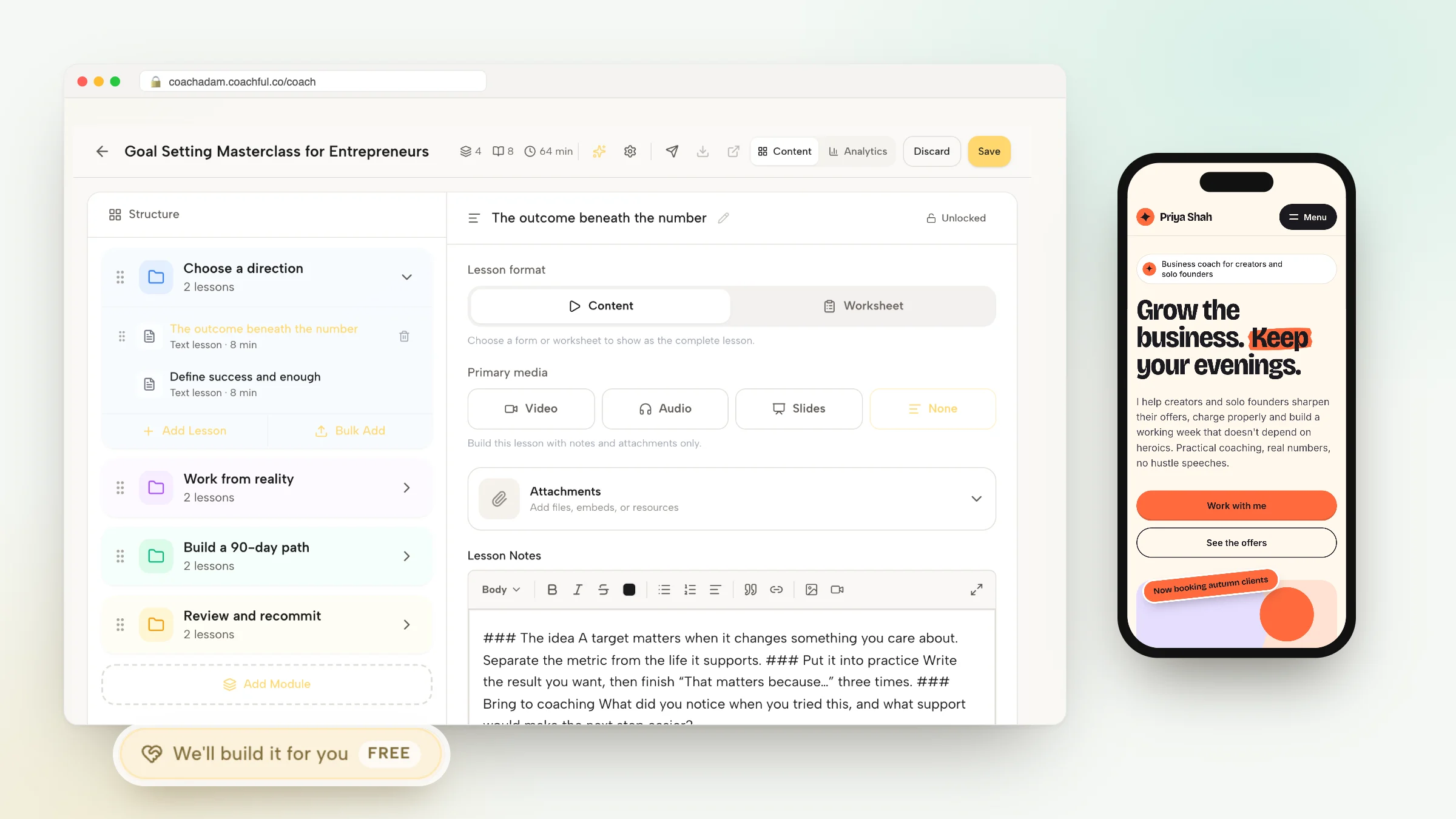
When you design your program around a cohort, you’re building a framework that naturally encourages immediate application. Group projects, peer feedback sessions, and live workshops push clients to move from theory to practice—and that’s where the real growth happens. This dynamic creates an unstoppable momentum, not just for one person, but for the entire group, carrying everyone toward the finish line together.
Designing Your First High-Impact Cohort Program
Staring at a blank slate and thinking about building an entire program from scratch can feel daunting. The questions start swirling immediately: "Where do I even begin? How do I structure the lessons? What’s the right mix of live calls versus solo work? Am I even qualified to build a whole curriculum?" Take a breath. This is completely normal.
Let's reframe this. You're not trying to engineer a massive, complex machine. You're simply drawing a map for a journey you'll guide your clients on—one clear step at a time. The goal is to create a rich, supportive experience that weaves together live teaching, independent activities, and peer-to-peer connection.
Think about the typical client journey. They sign up, full of excitement, but without structure and community, that initial fire can quickly burn out. This is where a well-designed cohort program changes the game.

As you can see, a cohort model intercepts that common "fizzle" point and turns it into a source of collective momentum. The program's structure itself becomes the engine that keeps everyone moving forward together.
Outlining Your Curriculum and Modules
You live and breathe your expertise, but your clients are just starting out. Your first job is to break down what you know into a logical, easy-to-follow sequence. The best way to do this? Start with the end in mind. What is the one major transformation you promise your clients?
Once you have that destination, work backward. What are the key milestones they must hit to achieve that big win? Those milestones are your modules.
- Module 1: The Foundation. What's the core concept or mindset shift they need to grasp before anything else? For a leadership coach, this might be "Defining Your Authentic Leadership Style."
- Module 2: The First Action. What's the very first tangible step they need to take? Example: "Running Your First Effective Team Meeting."
- Module 3: Overcoming the First Hurdle. What's the most common roadblock they'll face early on, and how will you guide them through it? Example: "Managing Difficult Conversations with Direct Reports."
- Subsequent Modules: From there, keep building one skill on top of the next, always tying it back to the ultimate transformation.
Remember, you don't need to teach them everything you know. You just need to get them from Point A to Point B. If you want a more detailed framework, our guide on how to write a curriculum breaks down this entire process.
Blending Live and Asynchronous Learning
The real power of a cohort-based learning program comes from its rhythm—a smart blend of live interaction and independent work. This model positions you as a guide, not just a lecturer. But it often raises a key question: "How much is too much? I don't want to overwhelm everyone, or myself!"
A great rule of thumb I’ve seen work time and again is the 1:3 ratio. For every one hour of live, instructor-led time (like a webinar or Q&A), plan for about three hours of asynchronous work. This includes watching pre-recorded videos, completing assignments, or participating in peer discussions.
This structure respects your clients' busy schedules while making sure they stay connected and engaged between your live calls. It gives them the breathing room to process information, put it into practice, and learn from their peers.
Here’s what a typical week might look like for a business coach's cohort:
- Monday: The week's core content is released—a 20-minute video on "Crafting a Compelling Offer" and a worksheet to draft their own.
- Wednesday: You host a 60-minute live workshop where members present their draft offers in breakout rooms and get real-time feedback.
- Friday: The final version of their offer statement is due for peer review in the community forum.
This cadence creates a predictable and effective learning loop.
Setting Milestones and Engaging Assignments
Your assignments are where theory turns into practice. This is where your clients move from simply knowing something to actually doing it. Steer clear of generic "read and repeat" tasks and instead, design assignments that demand real-world application.
I hear a common objection from coaches: "But grading projects for 20 people sounds like a logistical nightmare!" The good news is, you don't have to grade everything like a high school teacher. The goal is progress, not perfection.
- Focus on Application: Instead of a quiz on marketing theory, have them create a real social media post for their business and share the link.
- Incorporate Peer Feedback: This is a game-changer. Have members review each other's work using a simple rubric you provide (e.g., "Is the call to action clear? Does the headline grab you?"). It builds community and trains their critical eye.
- Use Reflective Prompts: Ask powerful questions that encourage them to reflect on their progress, their challenges, and their "aha" moments. A great prompt could be: "What was the hardest part about this week's task, and what did it teach you?"
By the end of this design phase, you won't have a fuzzy concept; you'll have a concrete blueprint for a high-impact program. This roadmap will leave you feeling confident and prepared, not overwhelmed by the possibilities.
Keeping Your Group Engaged and On Track

Let's talk about one of the biggest fears coaches have when moving from one-on-one to a group program: "How can I possibly give everyone my attention? How will I know if people are actually getting results or just falling behind?"
It’s a totally reasonable question. The secret isn't to try and replicate one-on-one coaching for twenty people at once—that’s a recipe for burnout. Instead, you need to shift your mindset. In a cohort-based learning model, you’re less of a direct problem-solver and more of an architect, designing a system where progress and engagement are baked right in.
Build Engagement into the Program's DNA
Real engagement isn't just you lecturing on a weekly call. It comes from creating intentional moments for your clients to engage with the material, with you, and—most importantly—with each other. A simple Q&A session won’t cut it. You have to design experiences that get people talking and working together.
Here are a few ideas I’ve seen work wonders:
- Interactive Workshops: Ditch the one-way lecture. Turn your live calls into hands-on sessions. For example, a career coach could use breakout rooms to have clients practice their "elevator pitch" on each other. This forges connections and helps them apply what they're learning on the spot.
- Peer Feedback Loops: Make peer reviews a standard part of the assignments. Give your clients a simple framework for providing constructive feedback. This not only reinforces their own learning but also builds a supportive community.
- A Touch of Gamification: Introducing points, badges, or a leaderboard for things like participation or completing modules can work magic. A little friendly competition is a fantastic motivator that keeps everyone in the game.
When you implement these, the community starts to power itself. It becomes its own engine for engagement, which takes a ton of pressure off you.
How to Measure Real Progress (It's Not About Tests)
When you think "assessment," your mind probably goes straight to quizzes and grades. But in coaching, progress isn’t about memorizing information. It’s about seeing real-world changes and taking action. To measure that, you have to get a little more creative.
Your goal isn’t to grade people. It’s to get a clear view of their journey so you can step in with the right support at the right time. Your methods should measure action, not just knowledge.
Here are some better ways to see what’s really happening:
- Project-Based Check-ins: Have clients work on a single, meaningful project throughout the program that’s tied directly to their goals. For a new business coach, this could be their business plan. How that project evolves is a crystal-clear indicator of their progress.
- Group Challenges: Throw a challenge at the entire cohort and have them solve it together. A marketing coach could challenge the group to collectively generate 100 new leads in one week. This is a great way to gauge their collective grasp of the material while also building their teamwork skills.
- Quick-Hit Reflections: Ask clients to submit short, regular journal entries about their wins, roadblocks, and "aha" moments. This gives you an unfiltered look into their personal experience and mindset shifts.
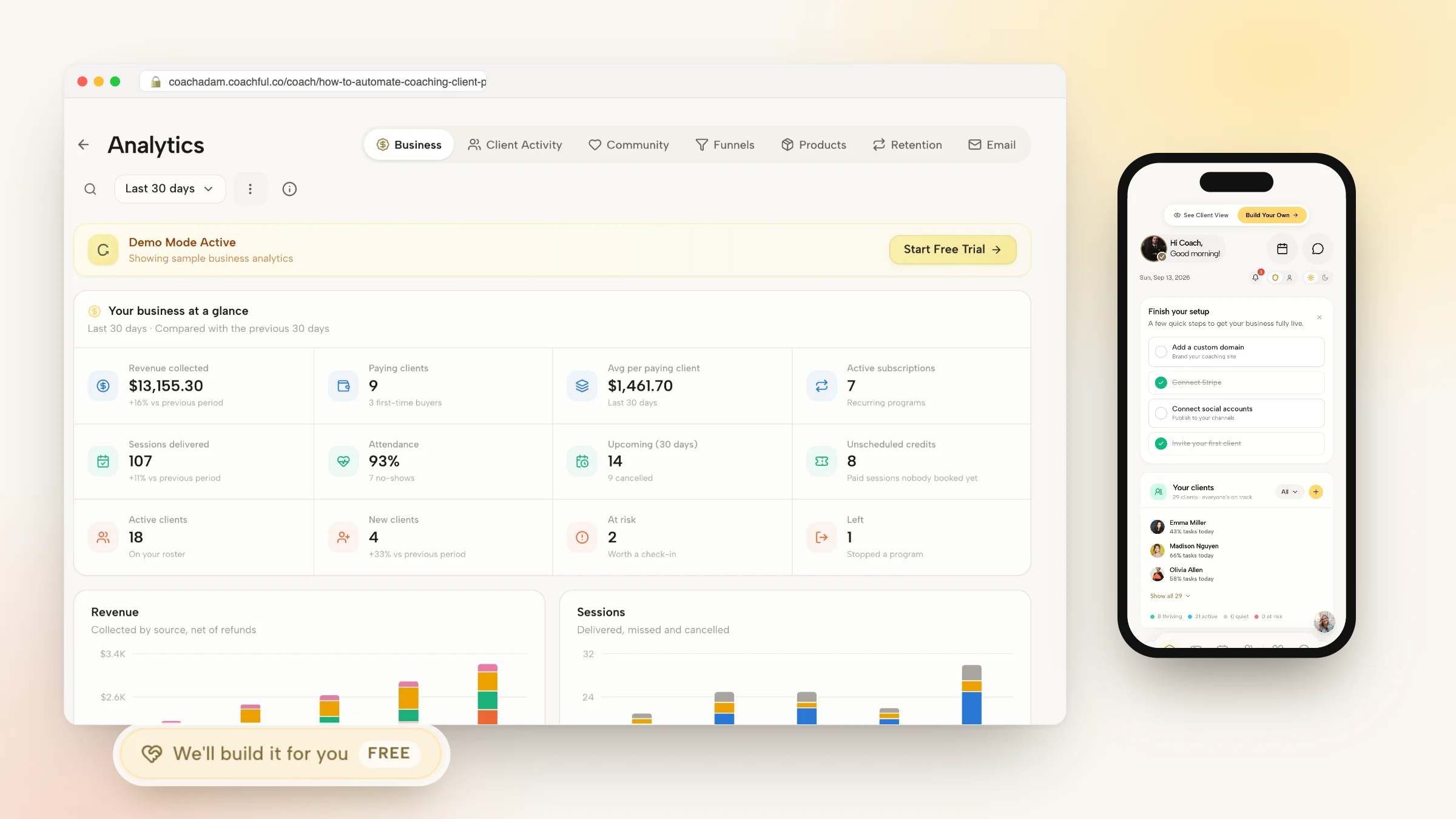
To juggle all these relationships and keep an eye on everyone’s progress, a good system is your best friend. Something like a lightweight CRM can be a lifesaver, helping you keep track of notes, submissions, and conversations in one place. You’ll be able to spot who’s flying high and who might need a little extra encouragement.
Modern platforms are built to be your co-pilot here. With tools for tracking assignments, hosting discussions, and monitoring activity, you get a dashboard view of every single person. We actually have a student progress tracking template that can give you some great structural ideas. This kind of visibility is what ensures that even in a group, no one gets lost in the shuffle.
Your Launch Checklist for a Successful First Cohort
You’ve poured your expertise into designing the program and mapping out the curriculum. Now for the part that gets every coach’s heart racing: the launch. That nagging voice creeps in, doesn't it? "What if I miss something? What if nobody signs up? What if the tech breaks?"
Let’s treat this as our pre-flight checklist. It’s here to quiet that voice and guide you toward a smooth, professional launch that builds both your confidence and your reputation.
Remember, launching a cohort-based learning program isn't like selling a pre-recorded course. You're not just offering content; you're selling a time-sensitive experience, a budding community, and a shared transformation. That calls for a carefully orchestrated plan, covering everything from attracting the perfect clients to giving them a frictionless start.
Phase 1: The Pre-Launch Runway
This is all about building buzz and filling your cohort with the right people. This groundwork starts weeks before you even think about opening your cart. You can't just drop an announcement and expect a flood of sign-ups—you need to warm up your audience.
A huge part of this is generating qualified leads. Your mission is to find and connect with potential clients who are an ideal match for the journey you're offering. For many of us, this means tapping into our professional networks. There are some incredibly effective lead generation strategies on LinkedIn that can help you build that crucial initial waitlist.
Your pre-launch marketing should zero in on a few key things:
- Problem-Awareness Content: Create posts, videos, or short articles that speak directly to the pain point your cohort solves. You want your audience to read it and think, "Wow, that's me." For instance, a post titled "3 Signs Your Side Hustle is Ready to Become Your Full-Time Gig."
- The Transformation Promise: Get crystal clear about the "after" state. What specific, tangible outcome can they expect when they finish the program? E.g., "In 8 weeks, you will have a signed, paying client for your new consulting business."
- Building a Waitlist: Offer a compelling reason to sign up early, like a special discount or an exclusive bonus. This gives you a direct line to your most eager and qualified leads.
Phase 2: The Launch and Onboarding Sequence
It’s go-time. This is when the doors officially open. Your launch window, which is usually around 5-7 days, will be an intense burst of communication. You’ll be answering questions, handling objections, and gently reminding people of the deadline. The fear of missing out (FOMO) is a real and powerful motivator here, since a cohort has a hard close date.
But the work isn't over once someone clicks "buy." A clunky, confusing onboarding process can instantly kill a new client's excitement and create buyer's remorse.
Think of your onboarding as the welcome lobby of a five-star hotel. It should be clean, clear, and make your new guest feel instantly confident they made the right choice. It’s your first chance to deliver on your promise of a premium experience.
Your onboarding process absolutely must include:
- Welcome Email: An immediate, warm welcome email that confirms their spot and clearly lays out the next steps.
- Tech Setup: Simple, foolproof instructions for accessing the community platform (like Coachful), a calendar invite for the first call, and a link to any pre-program materials.
- Pre-Program Task: A small, engaging "quick win" assignment. This gets them interacting with the material and, more importantly, with each other before the first official session even begins. Example: "Post a 2-minute video in the community introducing yourself and your #1 goal for this program."
Phase 3: Post-Launch and Program Kickoff
The cart is closed, and your cohort is full. Now the real fun begins. A strong start is everything—it sets the tone for the entire program. That first live session is your golden opportunity to build rapport and establish the culture of your new community. Use that time to set clear expectations, let everyone introduce themselves, and create a powerful, shared sense of purpose.
This model is gaining serious momentum, and it's not just for solo coaches. Cohort-based learning is taking off in corporate and professional development. Research from the Brandon Hall Group underscores this trend, revealing that 69% of organizations now view this collaborative model as highly or moderately effective. That's a massive leap from just 27% in 2020. What’s more, 89% of them plan to either increase or maintain their use of cohorts, showing a deep organizational belief in its power.
As your program gets underway, keep checking in. Ask for feedback after the first week to smooth out any wrinkles. A successful launch isn't just about filling seats; it's about delivering an exceptional experience from the very first click.
Common Questions About Cohort-Based Learning
If you’re a coach, the thought of switching to a new model probably has your head spinning. The "what ifs" start piling up almost immediately. You're thinking about the practical details, the potential roadblocks, and whether this is really the right move for you and your clients.
It's completely normal. So let's cut through the noise and tackle those nagging questions head-on. My goal here is to give you the clear, practical answers you need to decide if this is the right path for you.
How Do I Price My Cohort Program?
This is usually the first and biggest mental hurdle. You're probably thinking, "If it's not one-on-one, I can't charge my premium rate. But it’s more involved than a self-paced course, so what's the right number?"
Pricing a cohort feels tricky because you aren't just selling content. You're selling an entire experience—the community, the accountability, and the shared momentum. The secret is to anchor your price in the incredible value of that experience, not just the hours you put in.
Here’s a simple way to think about it:
- Establish Your Baseline: Start by calculating the value of your direct time. This includes live sessions, the effort to create content, and any time you'll spend giving feedback.
- Add the Community Premium: This is the intangible magic. What's the value of the network, the peer support, and the collective energy a cohort builds? This is a huge part of the transformation, so don't undervalue it.
- Position It Correctly: A good rule of thumb is to price your cohort program higher than a self-paced course but lower than the equivalent hours of your one-on-one coaching.
For example, if ten hours of your private coaching costs $2,500 and your self-paced video course is $500, a high-touch, eight-week cohort could easily land in the $1,200 to $1,800 range per person. Do some research in your niche, but ultimately, have the confidence to price based on the powerful outcomes you deliver, not just the clock.
What Is the Ideal Size for a Coaching Cohort?
Right after you think about money, you start thinking about people. "How many clients can I realistically handle? If it's too big, I'll lose the personal touch. If it's too small, it won't be profitable."
There's no single magic number. The right size is a strategic choice that depends entirely on the kind of experience you want to create. Are you building an intimate mastermind or a bustling online campus?
The intimacy of your program should dictate its size. For deep, transformational work with lots of personal feedback, smaller is better. For skill-based programs focused on content and peer learning, you can scale up.
Especially for your first run, starting small is the smartest play. It lets you nail the experience before you try to scale it.
- For Deep Transformation (8-15 people): If you're a life coach or executive coach guiding people through major breakthroughs, keeping the group small is essential. This allows you to build real relationships and provide meaningful, individual feedback.
- For Skill-Based Learning (20-50+ people): If your program is focused on teaching a specific skill—like marketing, a software tool, or a new methodology—you can absolutely manage a larger group. You can use tools like breakout rooms, peer reviews, and even assistant coaches or community managers to keep everyone engaged as you grow.
What if Some Participants Fall Behind?
The fear of someone getting "lost in the crowd" is a real one, especially for dedicated coaches. You’re worried about how to support the person who's struggling without slowing down the rest of the group. This isn't a failure of the model; it’s a natural part of group dynamics and a fantastic opportunity to show your value as a facilitator.
The solution isn't to force everyone into lockstep. It's to build a system of support that helps the whole group cross the finish line, even if they take slightly different paths to get there.
First, build safety nets directly into your program. Always record live sessions so people can catch up or re-watch them. Schedule optional "office hours" where anyone needing a little extra help can drop in.
Second, empower the community to help itself. Create a culture where asking for help is a sign of strength, not weakness. You can even assign smaller "accountability pods" of 3-4 people within the larger cohort. A good platform will also make it easy to spot who's falling behind on coursework, so you can reach out with a quick, personal message to offer support.
How Much Time Does It Take to Run a Cohort?
And finally, the big one—the question about your most valuable resource: time. "Is this going to be more work than it's worth? How can I be sure this is a smart move for my business?"
Let’s be honest: running a cohort is more front-loaded than creating a passive online course. But it is infinitely more scalable than one-on-one coaching. Your biggest time investment is on the front end in curriculum design and marketing—it’s not uncommon for this to take 40-80 hours for the very first launch.
Once the cohort is live, however, your weekly time commitment might only be 5-10 hours. That time covers your live sessions, popping into the community forum, and providing feedback. The real magic is that this same time commitment serves 15, 30, or even 50 clients at once. After your first successful run, future cohorts become incredibly efficient. You reuse and refine your core content, which dramatically slashes your prep time and boosts your profitability with each new launch.
Ready to stop trading time for money and build a scalable coaching business? Coachiul provides all the tools you need to launch, manage, and grow your own cohort-based programs. From curriculum building and community forums to automated reminders and progress tracking, our platform is designed to help you deliver an exceptional client experience without the technical headache. Learn more and start your journey at https://coachful.co.