
Top Community Manager Software: Pick Yours for 2026

Coachful
Your coaching clients are active. Sort of. One person replies in the Facebook group. Three send voice notes in Instagram DMs. A handful miss the Zoom link because it was buried in email. You built a program to create transformation, but the community layer feels like scattered notifications instead of momentum.
That's the moment most coaches start searching for community manager software. Not because they want another platform to learn, but because they're tired of babysitting fragmented conversations and wondering whether clients are experiencing support between sessions. The deeper fear is usually this: if the community feels messy, does the program feel less valuable too?
You're not overthinking it. The software choice shapes the client experience more than most coaches expect. It affects whether members show up, whether peer support happens without you prompting it, whether content stays searchable, and whether the space feels intimate or noisy. It also determines how much admin work lands back on your plate.
The market is getting bigger because more organizations now treat digital communities as operating infrastructure, not just an add-on. One market report values the global online community management software market at USD 5518.6 million in 2024 and ties that growth to the rising strategic importance of customer engagement and unified digital ecosystems (Cognitive Market Research on online community management software).
1. Circle
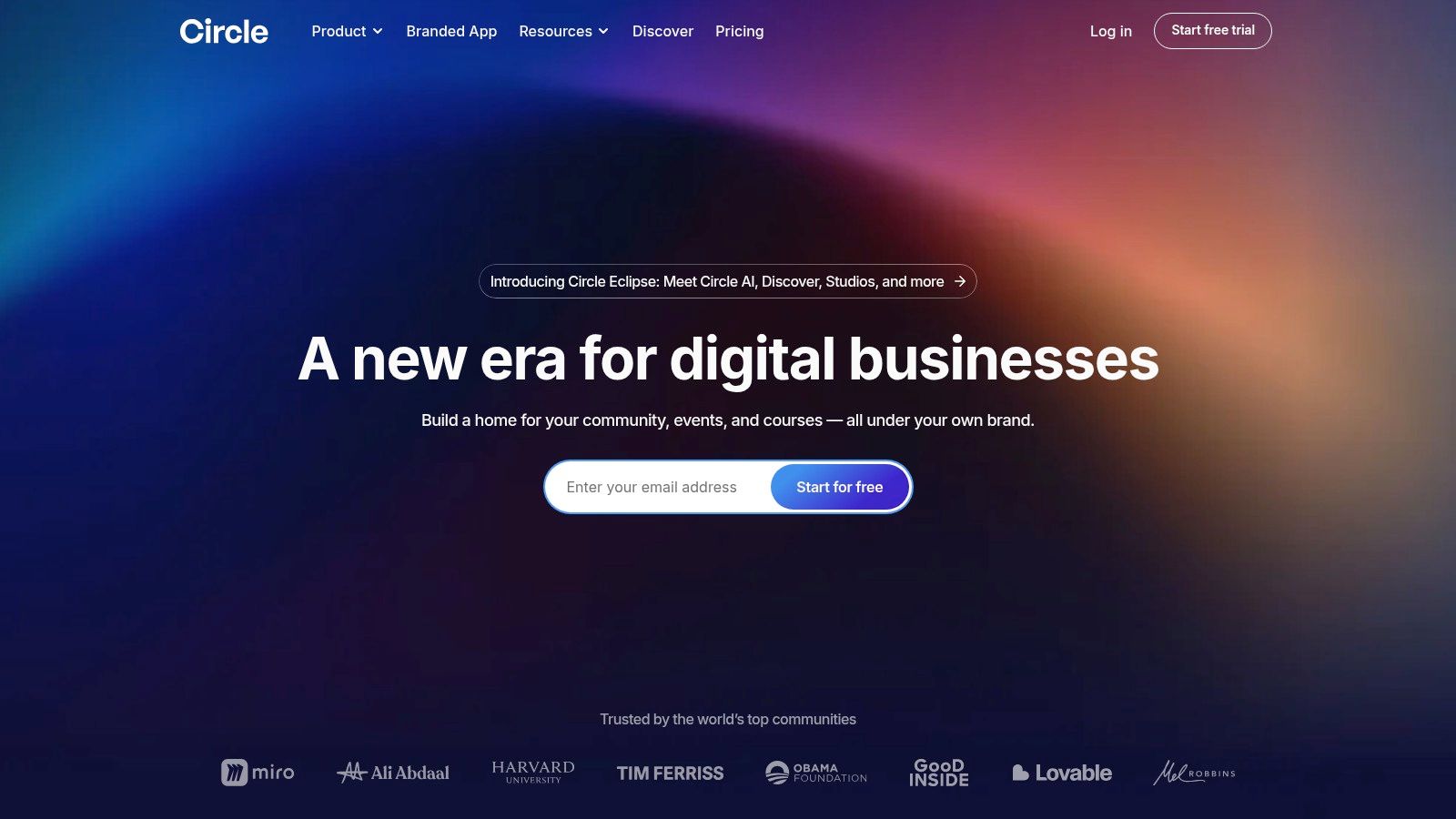
Circle is the tool I'd point most coaches to first when they want one place for discussions, courses, events, livestreams, and paid memberships without drifting into enterprise complexity. It feels like software built by people who understand that coaches need structure, but don't want to build a portal from scratch.
Circle works especially well for cohort programs and private client communities. You can create spaces for weekly wins, lesson discussions, resource libraries, and live session replays, then bundle access by offer. That matters when you're running multiple programs and don't want members wandering into the wrong room.
Where Circle fits best
If your inner dialogue sounds like, “I want this to feel premium, but I also need members to know where to click,” Circle solves that better than many tools. The interface is clean, and clients usually grasp the logic quickly.
A practical setup might look like this:
- For a group coaching cohort: Use one space for announcements, one for lesson discussion, one for peer wins, and one for call replays.
- For a membership: Create topic-based spaces so members can self-select by need, not scroll through a single noisy feed.
- For a mastermind: Keep conversations tighter with smaller access groups and event-driven interaction.
If you want a clearer definition of the role software is supporting, this primer on what a community manager is is a useful reference.
Practical rule: Circle is strongest when you care as much about navigation as engagement.
The trade-off is that some of its more advanced capabilities, like deeper automations and custom email tools, expand through add-ons rather than appearing in the base experience. That's good if you want room to grow. It's less good if you want every advanced feature included from day one.
2. Mighty Networks
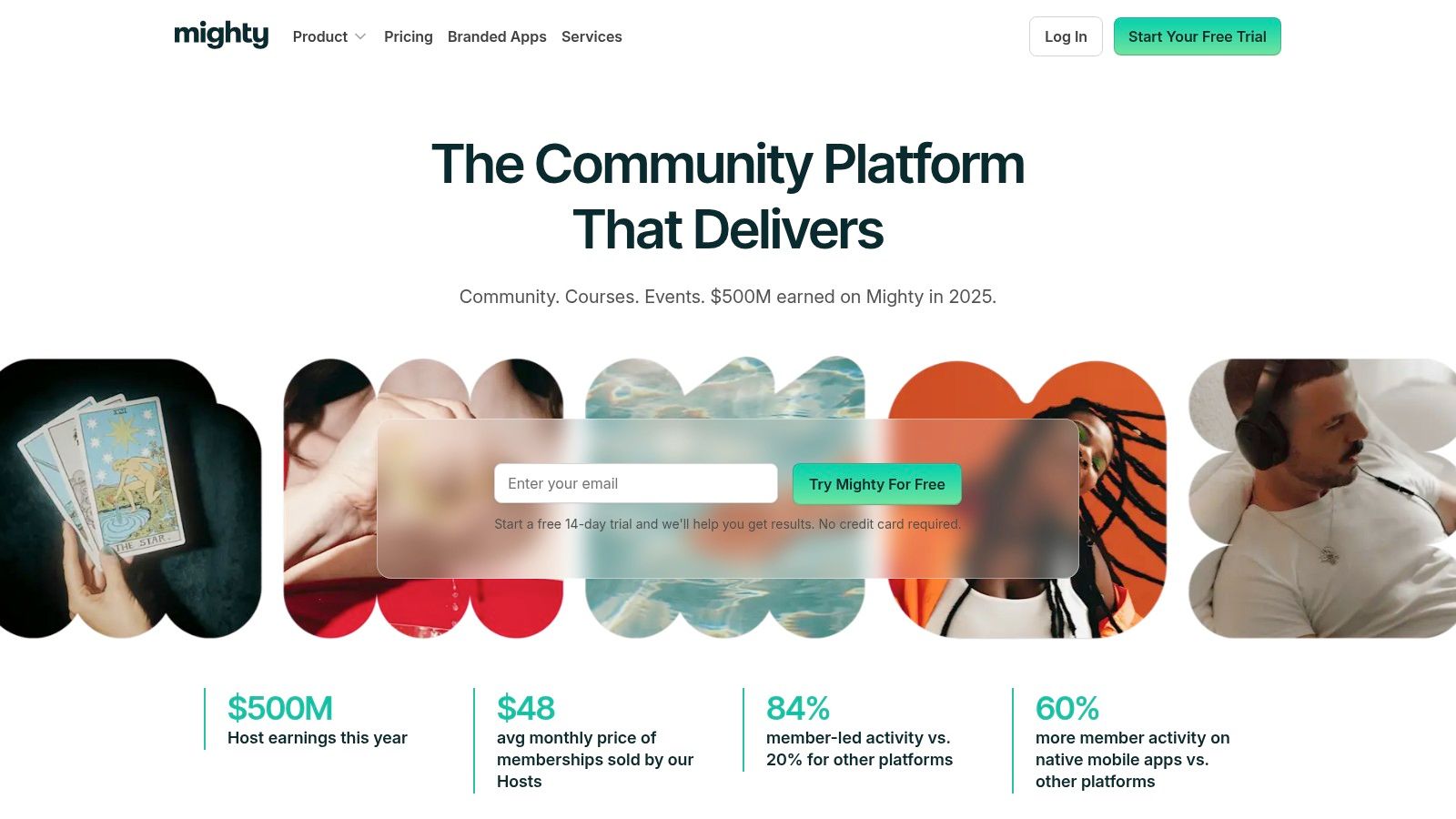
Mighty Networks is the best fit when your coaching business lives on people coming back daily from their phones. If your members are busy professionals, parents, or founders who won't log into a desktop portal often, Mighty's mobile experience is a serious advantage.
This platform leans into engagement loops. Challenges, spaces, livestreaming, courses, and memberships all work together in a way that encourages repeat participation. For coaches running accountability programs, habit communities, or layered memberships with events and coursework, that combination is hard to ignore.
Why coaches choose Mighty
Mighty makes sense when your question is less “Where do I store content?” and more “How do I get clients to return between calls?” Daily interaction is where this platform earns its place.
A few real-world coaching scenarios where it tends to shine:
- Challenge-based programs: Daily prompts, check-ins, and live sessions feel natural.
- Tiered memberships: You can layer offers without making the experience feel stitched together.
- Community-first brands: If the relationship between members is part of the product, Mighty supports that behavior well.
For coaches thinking beyond posting content and into repeat participation, this guide to community engagement strategy pairs well with Mighty's strengths.
The downside is familiar. Some automation and API functionality sit higher up the plan ladder, and branded apps are a different conversation entirely. If your business doesn't need strong mobile habits, Mighty may feel more extensive than necessary.
3. Bettermode
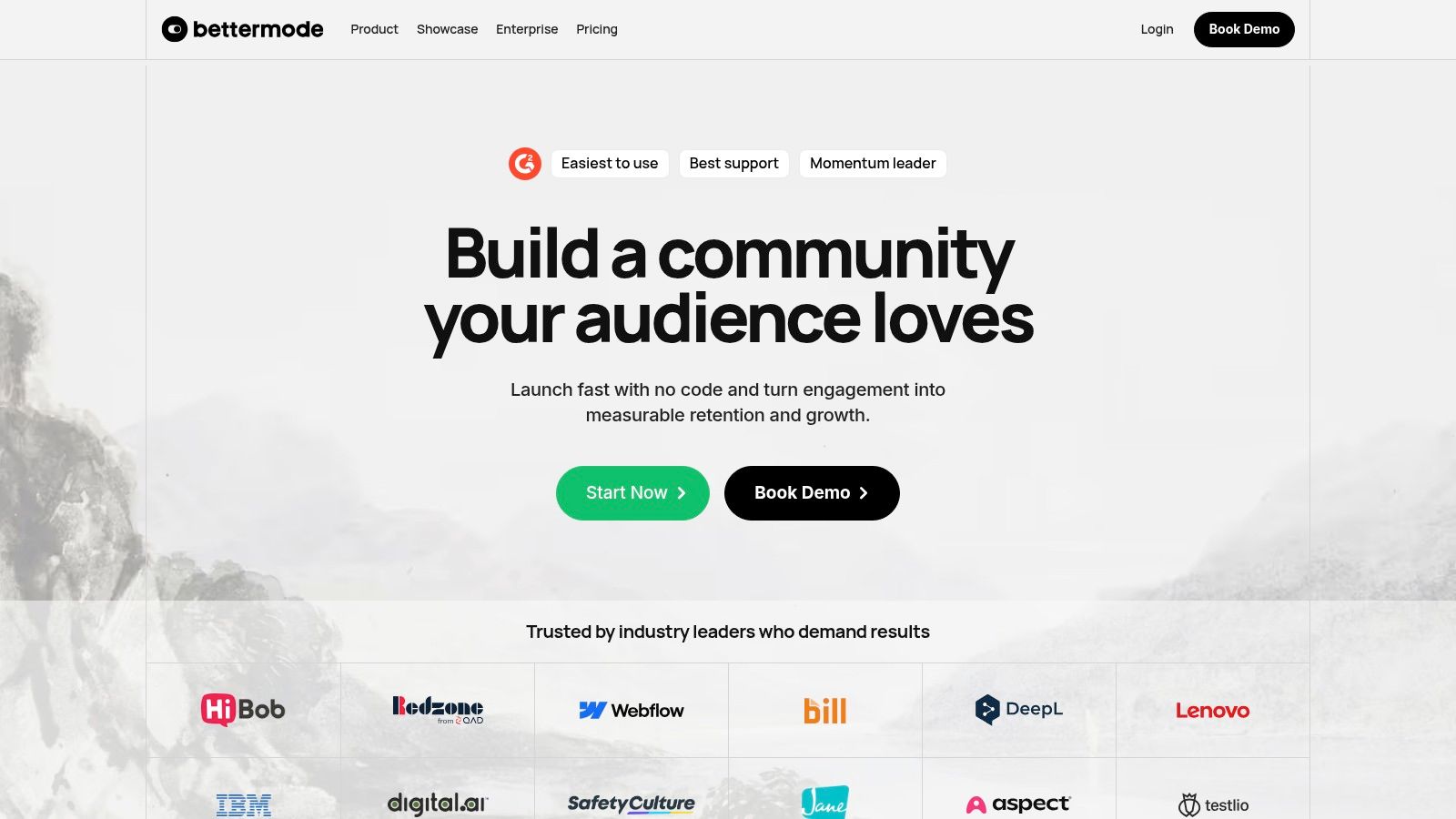
Bettermode is what you pick when “community” is really becoming a branded hub with serious operational requirements. It's far more customizable than creator-first tools, which makes it attractive for larger coaching organizations, education companies, and SaaS-backed learning businesses.
It gives you building blocks instead of a heavily opinionated out-of-the-box experience. That's powerful if you know what experience you want to design. It's a headache if you're hoping the platform will make every strategic decision for you.
Best for teams that need control
Bettermode stands out for SSO, APIs, webhooks, stronger security posture, and the ability to shape the experience around your workflows. If your team is already using tools like HubSpot, Zendesk, or Slack, Bettermode is easier to imagine inside a broader system rather than as a standalone coach portal.
Here's where I'd place it:
- Coaching schools or academies: You need a branded community tied to enrollments, support, and content.
- B2B education programs: You want structure, permissions, and integration depth.
- Enterprise-facing providers: You need white-label polish and technical flexibility.
One reason buyers struggle here is that the category itself is messy. A recent industry guide notes there are “very few platforms dedicated specifically to community management,” and many options are really adjacent tools or association systems rather than dedicated community software (Tradewing's guide to community management software for associations).
Bettermode is a buildable system, not a quick-fix coach portal.
That distinction matters. If you want speed and simplicity, skip it. If you need a branded hub that can grow into a serious business asset, it belongs on the shortlist.
4. Heartbeat
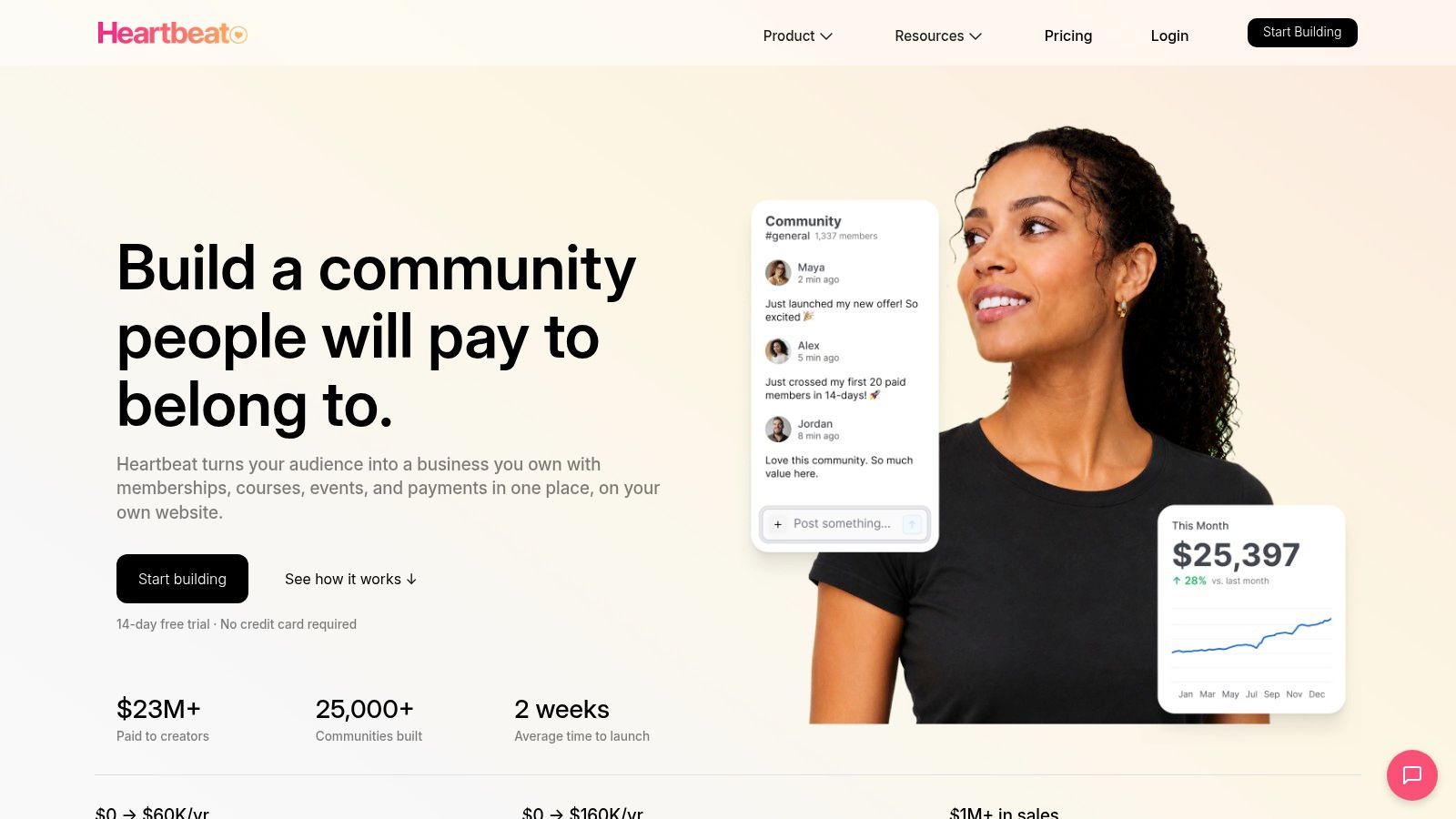
Heartbeat sits in a sweet spot a lot of coaches overlook. It combines chat, posts, courses, events, documents, and memberships without trying to become an everything platform for every use case. That restraint is part of its appeal.
If Slack feels too chaotic and a full-featured community platform feels too heavy, Heartbeat is often the calmer middle option. You can launch quickly, keep the learning curve low, and still give clients a home for conversation and resources.
When Heartbeat feels right
This is the platform for coaches who think, “I want interaction to feel alive, but I don't want clients lost in menus.” It works well for pop-up cohorts, mastermind groups, and ongoing communities where chat matters but structure still needs to exist.
Useful examples include:
- A six-week group program: Channels for check-ins, lesson discussion, and wins.
- A mastermind: Fast conversation with resources and event links in the same place.
- A team coaching program: Zoom and calendar integrations reduce coordination friction.
Heartbeat's main limitation is depth. If you already know you'll want deep reporting, broad integrations, and highly customized workflows, you may outgrow it. But if you've been paralyzed by over-comparing tools, Heartbeat is one of the easiest ways to get a useful community live without drowning in setup.
5. Skool
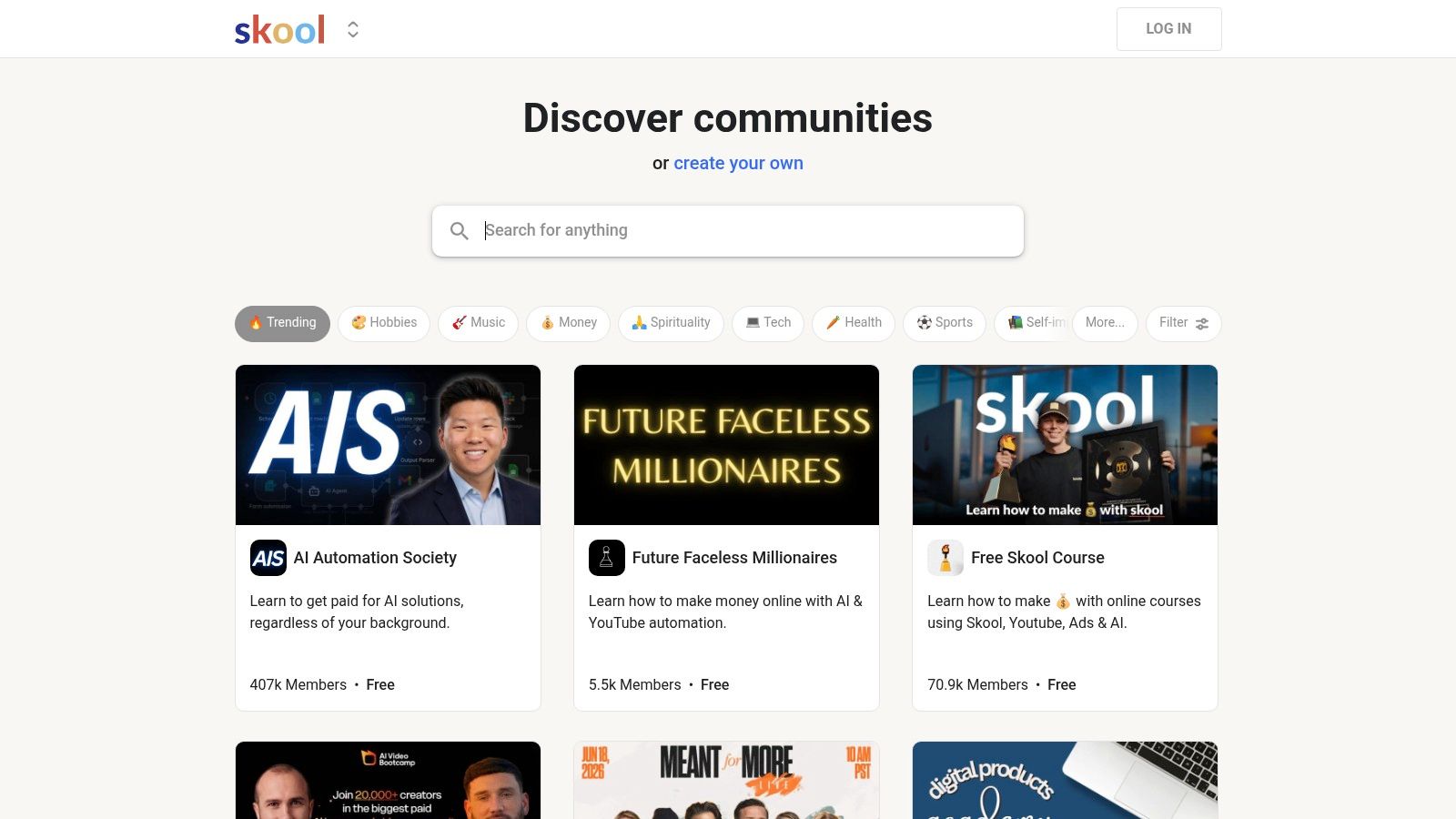
Skool is for the coach who wants to stop researching and start selling. It's simple, creator-centric, and intentionally less customizable than many alternatives. That's not a weakness if your biggest problem is launch friction.
Skool combines community, courses, live calls, monetization, and gamified engagement in a way that's easy to understand. Members don't need a tour. Admins don't need a project plan. For solo creators, that simplicity often beats feature richness.
The no-fuss option
Skool is strongest when your offer is straightforward. Think paid group coaching, low-ticket memberships, accountability communities, and educational programs where you want a clear path from join to participate.
It fits especially well when you want:
- Fast setup: Minimal configuration and fewer decisions.
- Simple member experience: Clear tabs, low confusion, fast adoption.
- Built-in motivation: Leaderboards and activity-driven energy.
For coaches building learning around interaction and peer momentum, community-based learning is the idea Skool supports naturally.
The trade-off is obvious once your brand matures. You won't get deep enterprise controls, broad white-label flexibility, or the same level of integration sophistication you'd find elsewhere. But for many coaches, the enemy isn't lack of advanced functionality. It's spending months comparing software while the offer sits unlaunched.
6. Discourse
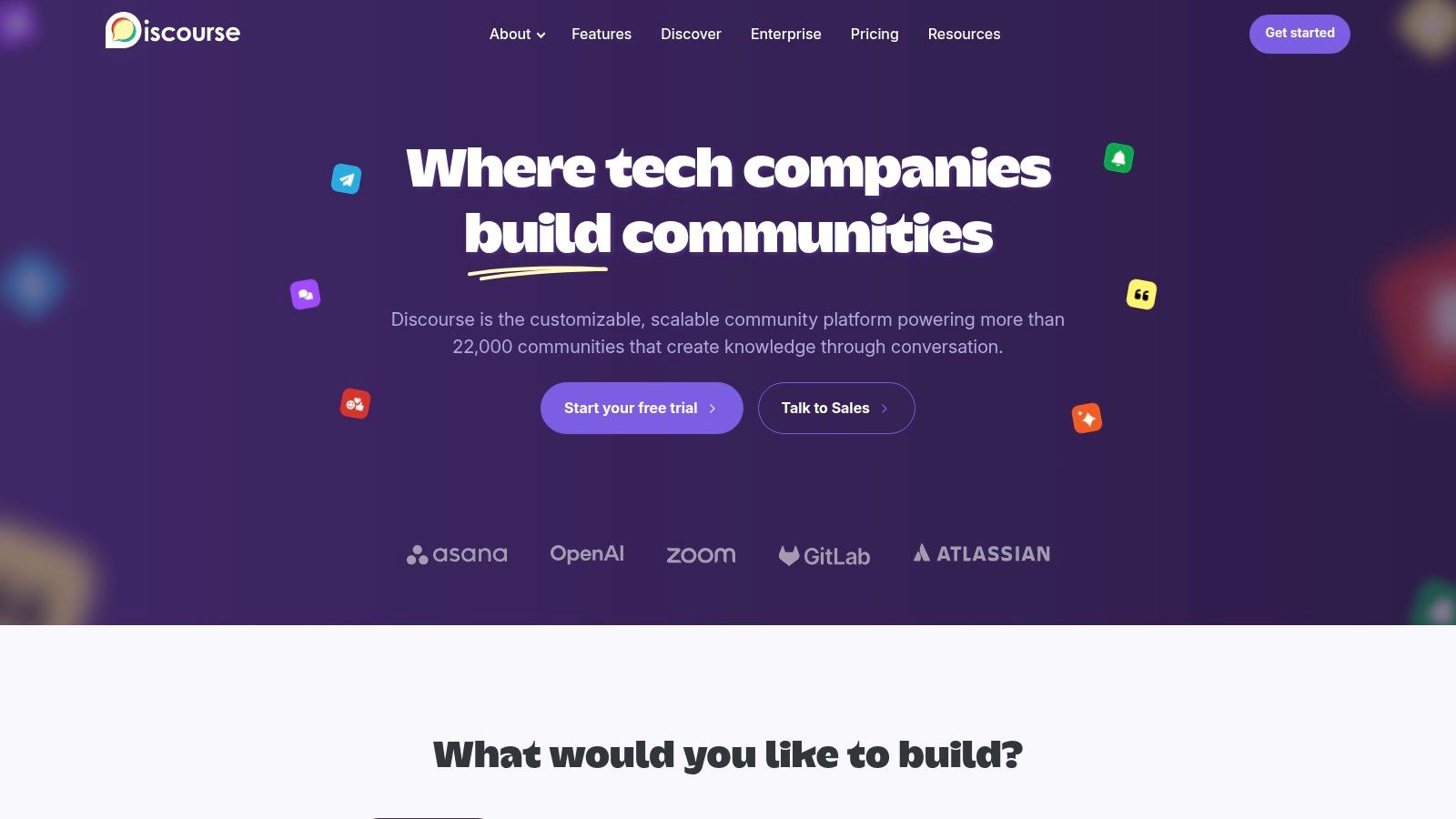
Discourse is a different kind of choice. It isn't trying to mimic a social feed or creator membership app. It's built for durable discussion, searchable knowledge, and community governance that gets stronger over time.
That makes it excellent for communities of practice, alumni networks, peer support forums, and programs where the conversation itself becomes a long-term asset. If your members ask thoughtful questions that deserve to be found again later, Discourse is one of the most practical tools on this list.
Best for knowledge-rich communities
Discourse handles categories, tags, moderation, trust levels, and structured discussion exceptionally well. It also gives you the option to self-host, which matters if ownership, portability, or technical control is a priority.
Here, it earns respect:
- Certification communities: Members search archives and contribute best practices.
- Alumni groups: Discussions stay useful after the cohort ends.
- Support-heavy programs: Answers become reusable resources, not buried chat threads.
A fast chat can build energy. A searchable archive builds institutional memory.
The catch is that Discourse doesn't feel like a modern creator platform out of the box. It's less feed-driven, less course-native, and more operational if you choose self-hosting. If your coaching business needs sleek memberships and built-in course delivery, you'll likely want something else. If you want substance, searchability, and longevity, Discourse is still one of the smartest forms of community manager software available.
7. Hivebrite
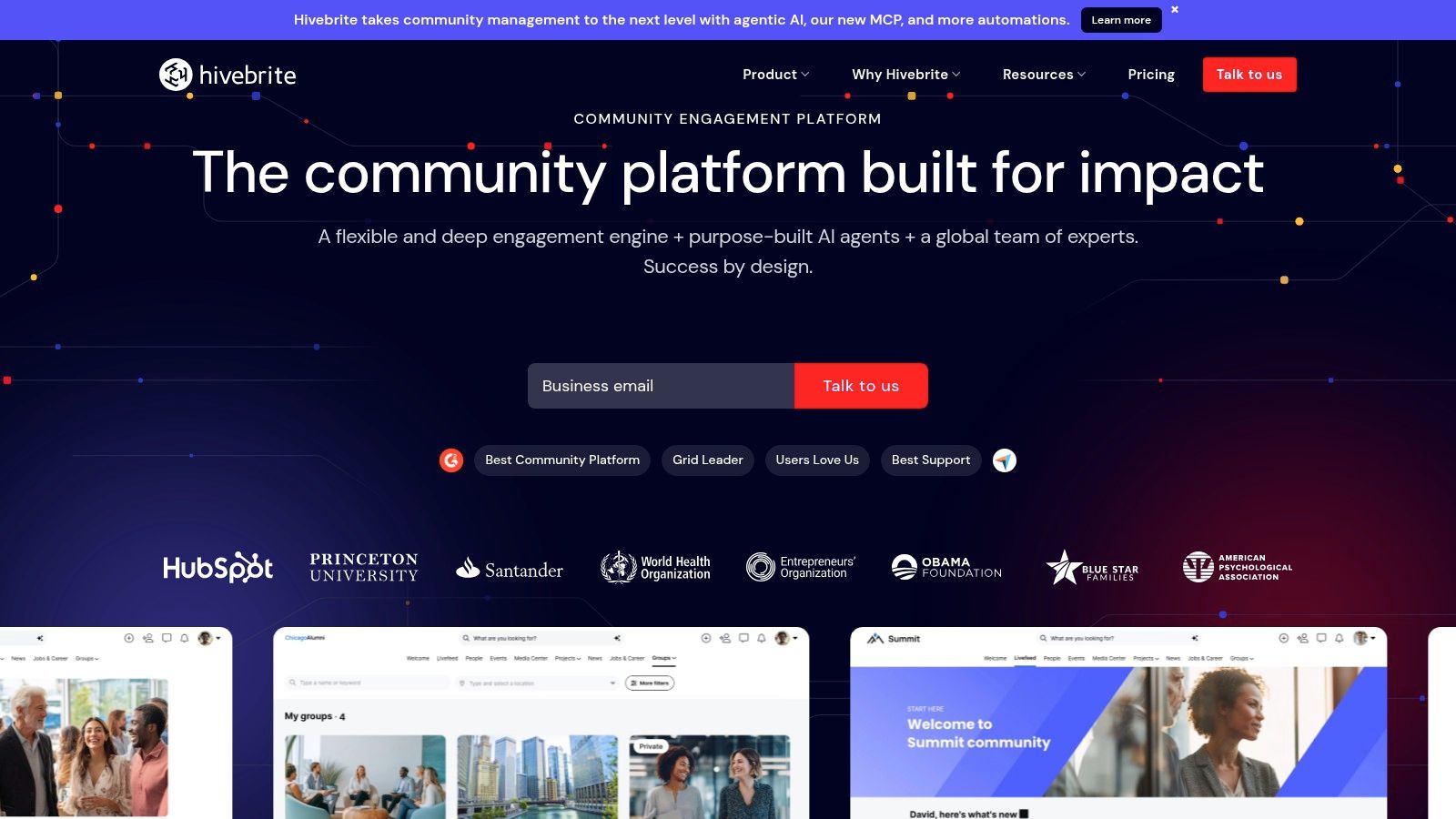
Hivebrite is built for organizations with more layers than a typical coaching brand. If you're running chapters, sub-communities, directories, events, memberships, mentoring, or multilingual experiences, Hivebrite starts to make more sense than creator-led tools.
This is the software I'd look at for coaching associations, large academies, alumni-style networks, and multi-program organizations that need governance as much as engagement. It can support a branded and structured environment without forcing everything into one feed.
For complex organizations, not simple offers
Hivebrite shines when the business model itself is more complicated. You might have paying members, volunteer mentors, regional groups, leadership cohorts, and event programming all operating in one ecosystem.
Scenarios where it fits:
- A coaching school with alumni and mentor directories
- A professional association with subgroups and member programs
- A larger training organization needing onboarding and migration support
One market forecast estimates the global community management software market at USD 2.85 billion in 2024 and projects it could reach USD 8.97 billion by 2033, reflecting demand for more centralized engagement, analytics, and collaboration workflows (Growth Market Reports on community management software).
Hivebrite's weakness isn't quality. It's weight. Small coaching teams can end up paying for organizational complexity they don't need. If your offer is a single membership or mastermind, this is probably too much platform.
8. Higher Logic Vanilla
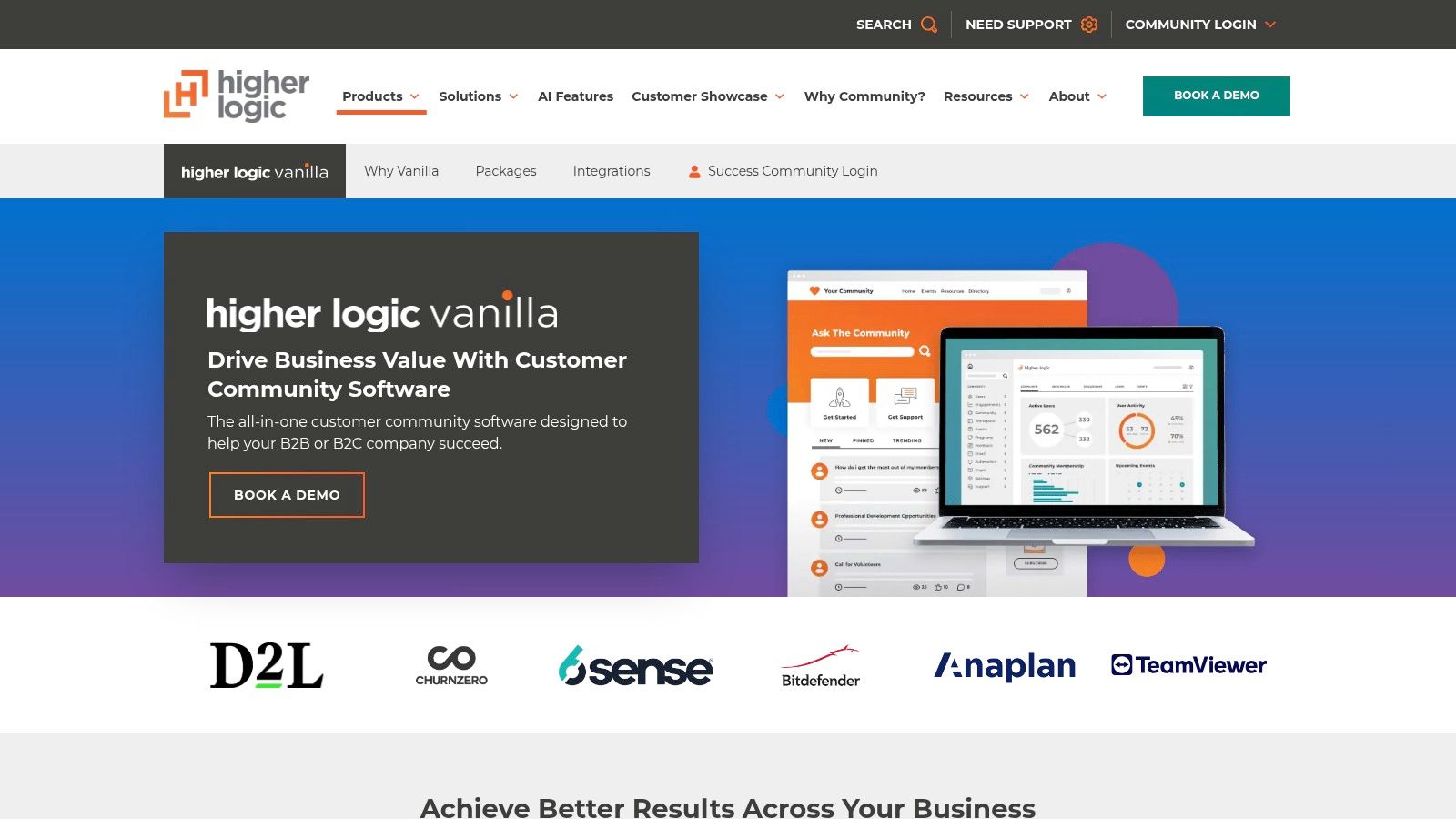
Higher Logic Vanilla is what I'd call a customer-community machine. It's built around forums, knowledge base structure, self-serve support, product feedback, and enterprise integrations. That makes it more relevant to B2B coaching firms, SaaS education teams, and associations than to a solo coach launching a paid group.
The draw here is operational value. This type of platform isn't just for “engagement.” It's for reducing repetitive support, improving discoverability, and making community content usable at scale.
Where Vanilla wins
If your members ask many of the same questions, or your clients need searchable help across programs, Vanilla becomes interesting quickly. Its orientation toward self-service can lighten the load on teams who are tired of answering the same things in email, chat, and calls.
That's not a small issue. G2 reports that organizations adopting online community management software see an average decrease of over 40% in support cases within the first six months, along with a 33% year-over-year decrease in overall support costs and a 41% increase in profit margins (G2's online community management category overview).
A few strong fits:
- B2B coaching and enablement programs
- Software-adjacent education communities
- Associations needing robust forums and knowledge organization
The limitation is obvious for most independent coaches. Vanilla isn't built around course-native coaching delivery. It's built around support, discussion, and scalable customer or member experience. If that's your problem, it's compelling. If not, it's probably the wrong category of tool.
9. Gainsight Digital Hub
Gainsight Digital Hub is not for the average coaching practice, and that's helpful to say plainly. It belongs in conversations where community activity needs to connect to customer success workflows, product adoption, education, and account health across teams.
If your business has a Customer Success function, product stakeholders, education teams, and segmented customer journeys, Gainsight becomes more relevant. If you're a solo executive coach with a paid mastermind, it doesn't.
Built for cross-functional operations
The reason to choose Gainsight is integration with wider customer workflows. Community isn't treated as a separate island. It becomes part of how a company tracks engagement, identifies friction, and coordinates across functions.
It fits best for:
- Enterprise coaching vendors serving corporate accounts
- Education programs embedded in larger customer journeys
- Organizations where multiple teams need shared visibility
Another market forecast projects the broader online community management software market could reach USD 19.79 billion by 2032, with a projected 14.5% CAGR from 2026 to 2032, reflecting demand for platforms that consolidate engagement, messaging, and analytics across different use cases (Verified Market Research on online community management software).
That broader shift explains why software like Gainsight exists. Buyers increasingly want operational consolidation, not just a place for posts. Still, unless your coaching organization has enterprise-scale complexity, this tool will likely feel oversized.
10. Khoros Communities
Khoros Communities sits firmly in enterprise territory. It's designed for large brands that need peer support, ideation, product feedback, moderation, governance, analytics, and broad service support around the platform.
For most coaches, it's overkill. For large organizations managing customer or member communities in regulated or high-volume environments, it's a serious option. Khoros is less about launching a cozy coaching group and more about operating a mature community program with internal stakeholders who care about risk, reporting, and governance.
The AI moderation question matters here
Khoros belongs in the same conversation as enterprise moderation and operational scale. That's also where a more uncomfortable question enters: what happens when automation shapes who gets flagged, heard, or trusted inside a community?
Recent analysis on AI in community management argues that AI moderation can create bias, burnout, and broken trust unless platforms give members transparency, appeals, clear explanations for flags, and regular audits of who gets flagged and why (Glue Up's analysis of AI risks in community management).
Software can speed moderation. It can also make members feel watched, misunderstood, or unfairly handled if the process isn't transparent.
That doesn't rule out AI-assisted moderation. It means coaches and organizations should ask better questions before turning it on. If your community serves diverse voices, cross-cultural discussion, or emotionally nuanced topics, moderation design matters as much as feature count.
Top 10 Community Platform Comparison
| Platform | ✨ Core features | ★ Quality / UX | 👥 Target audience | 💰 Pricing / Value | 🏆 Standout / USP |
|---|---|---|---|---|---|
| Circle | ✨ Spaces for discussions, courses, events, livestreams; memberships; mobile apps | ★★★★☆ Clean, coach‑friendly UX; analytics | 👥 Creators & coaches running cohorts & private communities | 💰 Mid‑tier; add‑ons for email/automation; transaction fees | 🏆 Cohort modeling + flexible add‑ons |
| Mighty Networks | ✨ Unlimited spaces/members, native apps, livestreams, payments, automations | ★★★★☆ Best‑in‑class mobile experience | 👥 Coaches prioritizing mobile engagement & challenges | 💰 Mid; transaction fees; Mighty Pro for branded apps | 🏆 Superior mobile engagement & challenges |
| Bettermode | ✨ White‑label hub, SSO, API/webhooks, enterprise security | ★★★★ Enterprise control; more setup effort | 👥 SaaS, education, enterprises needing SSO & control | 💰 Higher entry; enterprise pricing | 🏆 Enterprise‑grade customization & integrations |
| Heartbeat | ✨ Chat channels, courses, events, Zoom/calendar, Stripe payouts | ★★★★☆ Fast to launch; approachable admin | 👥 Coaches wanting Slack‑style chat + structured courses | 💰 Affordable entry tier; good for short cohorts | 🏆 Chat + courses combo for quick launches |
| Skool | ✨ Courses, live calls, leaderboards, monetization & affiliates | ★★★★ Very simple, minimal config UX | 👥 Individual coaches/creators launching paid groups | 💰 Transparent pricing; transaction fees | 🏆 Speed to market & simplicity for paid groups |
| Discourse | ✨ Threaded forums, categories, search, plugins, SSO, self‑host | ★★★★☆ Durable, searchable archives; forum focus | 👥 Knowledge‑rich communities, alumni, peer support | 💰 Hosted or self‑hosted options, ownership value | 🏆 Portability, longevity & robust moderation |
| Hivebrite | ✨ Groups, directory, memberships, mentoring, SSO, mobile app | ★★★★ Enterprise UX with migration support | 👥 Alumni networks, associations, large coaching orgs | 💰 High price; annual billing emphasis | 🏆 Scales complex org structures & mentoring |
| Higher Logic Vanilla | ✨ Forums + KB, AI search, SSO, integrations, deflection metrics | ★★★★ Enterprise‑scale reliability | 👥 B2B/SaaS/support teams needing self‑serve hubs | 💰 Sales‑assisted pricing; enterprise focus | 🏆 Strong deflection/SEO & support analytics |
| Gainsight Digital Hub | ✨ CS‑linked communities, integrations to Gainsight, CS tooling | ★★★★ CS‑centric UX & metrics alignment | 👥 Enterprise CS/Product/Education teams | 💰 Enterprise pricing via sales | 🏆 Community activity tied to CS/adoption metrics |
| Khoros Communities | ✨ Full community stack: moderation, KB, analytics, compliance | ★★★★★ Proven at large scale; measurable outcomes | 👥 Large brands needing scale, governance & CX | 💰 Enterprise pricing & implementation | 🏆 Outcomes at scale (NPS/CSAT/deflection) |
Your Community Is an Asset, Not an Admin Task
The best community manager software doesn't just collect conversations in one place. It changes the shape of your coaching business. It can turn lonely content consumption into peer momentum, make support more scalable, and create continuity between sessions so clients feel held instead of left to drift.
That's why the right choice depends less on feature envy and more on business model. A solo coach usually needs speed, simplicity, and a member experience that doesn't require training. That points toward tools like Skool, Heartbeat, Circle, or Mighty Networks, depending on whether you value minimal setup, chat-driven interaction, cleaner structure, or stronger mobile habits.
A scaling program business needs something different. Once you're managing cohorts, layered offers, moderators, segmented access, or more formal onboarding, the software has to support systems, not just engagement. Circle can still work well there. Bettermode and Hivebrite become more relevant when branding, permissions, and broader workflows carry more weight.
Enterprise and multi-team organizations sit in another category entirely. Higher Logic Vanilla, Gainsight Digital Hub, and Khoros Communities make sense when community touches support, product, customer success, associations, or compliance. Most independent coaches shouldn't buy like an enterprise. It usually creates more setup, more cost, and more friction than the business can justify.
If you're still stuck, ask three blunt questions.
- What kind of interaction do I want most? Fast chat, thoughtful discussion, searchable knowledge, or mobile check-ins.
- What kind of offer am I really running? A paid group, a cohort course, a membership, an alumni network, or a multi-program ecosystem.
- What do I need the software to reduce? Admin, support repetition, confusion, churn risk, or scattered communication.
Those questions usually narrow the field fast.
There's also a practical point many coaches miss. Community software should support the client journey you already believe in. It shouldn't force you into a style of delivery that looks good in a demo but feels unnatural in real life. If your work is intimate, don't choose a tool that rewards noise. If your program depends on peer accountability, don't choose one that hides members in static content folders.
Some coaches will also want a broader operating system around the community itself. In that case, a platform like Coachful may be relevant because it supports group coaching and community-related workflows alongside core coaching operations. If your focus is specifically on launching a niche fitness offer, this guide on how to launch an online fitness community gives a useful adjacent lens on experience design.
The right tool is the one that helps your clients feel connected, supported, and clear on what to do next. When that happens, your community stops being an unread notification stream and starts becoming part of the transformation people pay for.
If you want your community to live inside a broader coaching system instead of another disconnected app, Coachful is worth a look. It brings coaching workflows like onboarding, scheduling, payments, messaging, progress tracking, group programs, and community touchpoints into one workspace, which can reduce the usual sprawl of tools coaches end up managing.