Conference Speaker Proposal Template for Coaches: 5 Parts

Nour
Founder, Coachful
You have a useful coaching method and a conference application open. How do you turn the work into a speaker proposal without writing a sales pitch in a slightly more serious font?
A strong conference speaker proposal explains who the session serves, the decision it helps them make, what they will actually do, and why you can teach it responsibly. Match those answers to the event’s form and review criteria. Your biography supports the session; it is not the session.
This guide gives coaches a five-part proposal template, a complete fictional abstract and a practical alignment test. It is for responding to a call for presentations, not selling a coaching package or assuming that an accepted conference session will be paid.
Before you write: is this the right call for your session?
Open the actual application, not just the announcement. Record the audience, themes, experience level, session formats, duration, field limits, submission deadline and time zone. Check whether the organizer wants a research contribution, a practical workshop, a case study or a panel.
Read the payment and participation conditions separately. Acceptance may involve a registration fee, travel costs or permission to record. Do not treat a stage slot as a commercial speaking contract. For finding buyers and negotiating the job, see our guide to paid speaking engagements for coaches.
Calls differ in what they ask you to submit. For example, the published IWAC proposal guidance separates the proposal body, session type, descriptive title and short programme abstract. That is one organizer’s structure, not a rule for coaching conferences. Read your own event’s requirements rather than copying another application’s field order.

Use a small requirements note with these headings: required field, exact limit, reviewer question, your evidence and any unresolved condition. A beautiful abstract is wasted effort if you cannot attend the required format or are proposing content outside the event’s scope.
Do not force an existing talk into a fashionable track. If the audience needs evidence-based coaching practice and your idea is mainly a personal business story, choose a different call or substantively change the session. Renaming it does not fix the fit.
1. Name one audience and one useful session promise
Begin with an audience already described in the call. Then narrow the difficulty you can help that audience examine. “Leadership and transformation” is a category. “Helping managers separate their own career criteria from everyone else’s advice” is a teachable problem.
Complete this sentence before polishing a title: “This session helps [specific participants] [observable task] when [recognizable situation].” The task should be possible within the session, not a life outcome you hope will follow months later.
For a conference attended by coaches, write for coaches. A session about career decisions should help the coach facilitate a better conversation. It should not quietly become a career-advice seminar for the coach’s clients. The target audience changes the examples, activities and ethical boundaries.
Three original title directions illustrate the difference:
- Too broad: Unlocking Career Transformation. It does not identify the participant’s work.
- Clearer: When the Client Wants You to Choose Their Next Role. It names a recognizable coaching tension.
- More explicit: Coaching Career Decisions: Practicing Questions That Return the Choice to the Client. It describes the method participants will rehearse.
Choose the version that fits the event’s title limit and audience vocabulary. Avoid presenting a normal coaching practice as a proprietary breakthrough. A useful, accurately described session is more defensible than a grand claim you cannot support.
2. Write the reviewer-facing abstract
An abstract is not your public sales page. The reviewer needs enough detail to judge fit, substance and feasibility. Lead with the participant problem, explain the approach, describe the activity and state the concrete takeaway.
Keep the language plain. “Participants compare two fictional coaching responses and draft three questions” tells a reviewer more than “an immersive journey into empowered transformation.” If a method is yours, label it accurately. If you draw on research or another author’s framework, provide the attribution the call requests.
Follow the actual word or character limit. There is no universal conference-abstract length. A separate public agenda summary may have a different limit and purpose. Write in a document first, then check the text again after pasting into the form.

A complete fictional coaching conference abstract
The example below is original and fictional. It is not an accepted proposal, a tested workshop or a description of a real speaker. Its length and 45-minute format are editorial choices, not a conference requirement.
Title: When the Client Wants You to Choose Their Next Role
Coaches working with managers can be asked to resolve a career decision that belongs to the client: which role to pursue, whether to stay, or whose advice to trust. Responding with a recommendation can bypass the client’s criteria; responding only with “What do you think?” may leave the conversation without a useful structure.
This interactive workshop examines how a coach can support the decision without taking ownership of it. Participants compare two fictional coaching responses, separate a client’s stated criteria from outside advice, and draft three questions that help the client investigate their options.
A short demonstration is followed by private writing and optional paired rehearsal. Participants can use the supplied fictional scenario rather than disclose client material. A private rewrite is available instead of paired practice.
Participants leave with a draft decision-criteria worksheet, a revised conversation opening and a plan for practicing the approach. The session addresses coaching process, not employment advice, clinical assessment or a guarantee that a particular career move will succeed.
Notice the boundaries. The abstract does not promise promotions, client breakthroughs or a new credential. It explains how people will learn and what they can produce. It also gives an alternative to personal disclosure rather than relying on a room full of volunteers sharing sensitive cases.
3. Make the learning objectives observable
Write objectives that can be matched to something participants do. “Understand career coaching” is difficult to evaluate. “Distinguish a client’s stated decision criteria from external recommendations in a fictional scenario” gives the session a specific learning task.
For the sample workshop, use objectives such as:
- Distinguish the client’s stated criteria from other people’s recommendations in a fictional career scenario.
- Draft three coaching questions that invite the client to investigate options without prescribing a choice.
- Practice or privately rewrite a short opening that makes the client’s decision ownership explicit.
These are proposed activities, not claims that everyone will master the skill. If the event requires a particular number of objectives or a specific format, adapt them. Do not add extra objectives just to make a short session sound substantial.

Run an alignment test on every objective: where will it be taught, where will participants try it, and what output could show that they engaged with it? If you cannot point to those moments, narrow the objective or change the agenda.
Keep the intervention within your competence. A coaching session on making decisions is not a license to offer legal advice about employment contracts. A wellbeing session does not become clinical treatment because it appears on a professional conference programme.
4. Show a teaching plan that fits the format
Calling a talk “interactive” is not a plan. Describe whether participants will compare examples, write, discuss, rehearse or observe. Say what they need to bring and how you will include someone who cannot or does not wish to participate in the proposed way.
For the fictional 45-minute session, a workable first draft is:
- Minutes 0 to 5: introduce the decision, scope and participation choices.
- Minutes 5 to 13: compare two fictional coaching responses and identify their differences.
- Minutes 13 to 23: privately draft decision criteria and three coaching questions.
- Minutes 23 to 35: offer paired rehearsal or an individual rewrite using the same scenario.
- Minutes 35 to 42: debrief the method without discussing identifiable clients.
- Minutes 42 to 45: summarize the learning and explain the worksheet.

That is a proposed run sheet, not a guarantee that the timing works. Rehearse the instructions aloud. Time the transition into practice, not just your opening explanation. Leave enough room for people to understand what you are asking them to do.

Check practical conditions before promising them. Fixed theatre seating may not suit a moving-group exercise. A hybrid audience needs a participation plan that includes remote attendees. Microphones, captions, readable handouts and accessible alternatives require discussion with the organizer, not a vague assurance that the session is inclusive.
If the application asks about access requirements, describe what you need and what you can adapt. Do not claim universal accessibility from a single arrangement. Ask how the organizer handles accommodations and agree responsibilities before the event.
5. Supply relevant proof and an accurate bio
Your bio should explain why you can teach this session to this audience. Use accurate qualifications, relevant coaching experience and genuine teaching evidence. Do not fill the field with unrelated awards or imply that a credentialing body endorses your proposed content.
A short fictional bio might read: “Maya Reed is a career coach working with professionals considering role changes. Her proposed session focuses on facilitating decision criteria and client-owned exploration. The linked teaching sample is a rehearsal of this session, not footage from a previous conference.” Replace that identity with your own verified facts.
If you have organizer feedback, use it with permission and correct attribution. A private coaching testimonial is not a review of your conference facilitation. Do not relabel it, invent audience counts or use AI-generated photographs as evidence that you have spoken at an event.
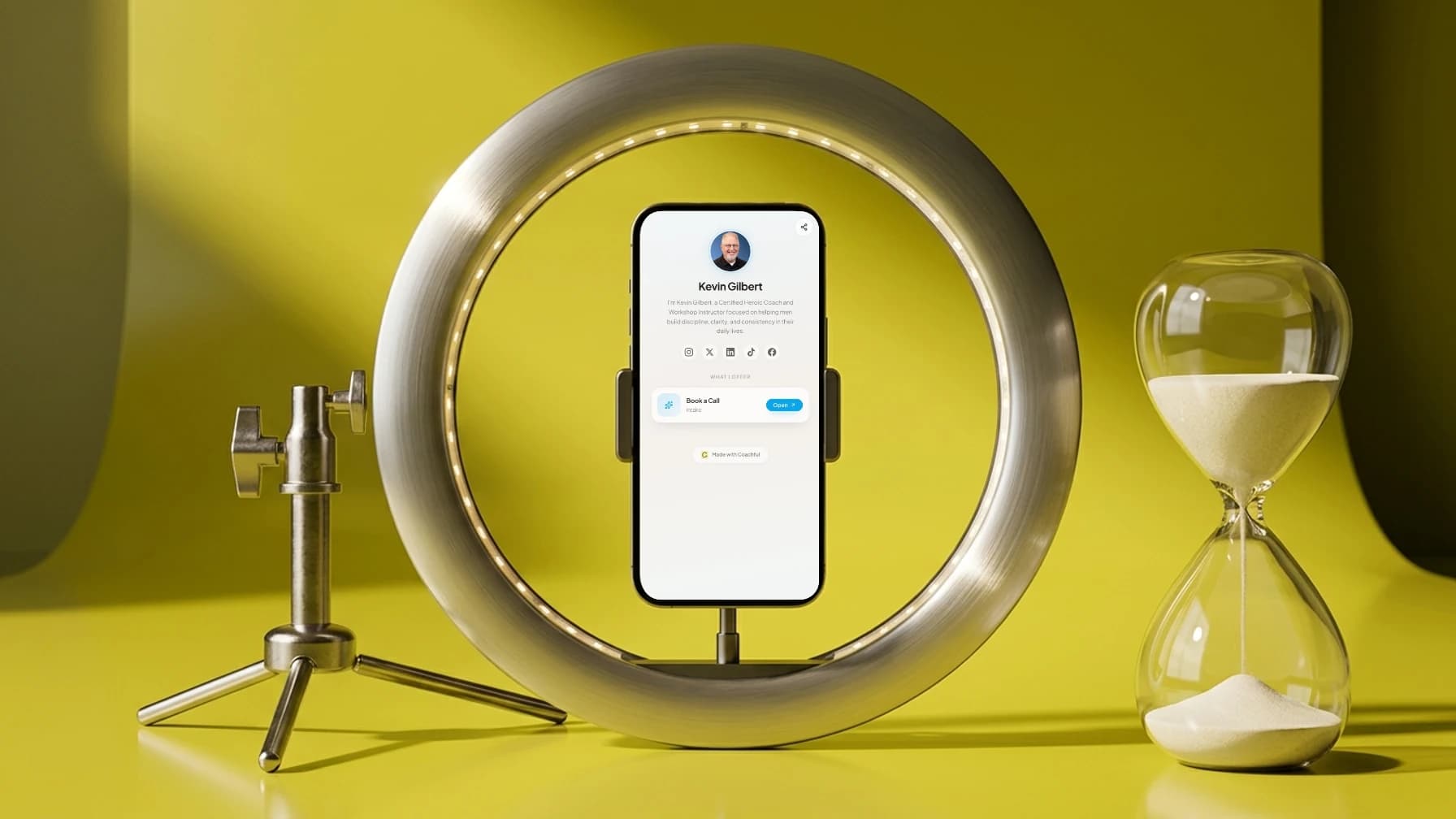
A public speaker page can make permitted supporting material easier to inspect. Include a concise bio, an accurately labeled sample, a current contact route and any documents the organizer allows. A speaker one sheet is useful for that overview, but it does not replace a required abstract or application.

If your website is in Coachful, its website workspace is relevant to that supporting page. It does not submit proposals to external conferences or give reviewers access to private coaching records. Keep sample material public only when you have the rights and permissions to share it.
Copy-and-fill conference speaker proposal template
Use this as a working document, then transfer the answers into the organizer’s actual fields. Delete headings the form does not require and add any it does. Do not attach a general template instead of following instructions.
- Event fit: [Event, track, participant level and the specific published requirement your session addresses.]
- Session title: [Plain description of the audience problem and useful angle, within the stated limit.]
- Format and duration: [The permitted format and length, not your preferred alternative.]
- Audience and prerequisites: [Who will benefit and what prior knowledge or equipment is needed.]
- Abstract: [Problem, approach, participant activity and concrete takeaway. Include scope boundaries where relevant.]
- Learning objectives: [Observable tasks, each matched to a real activity.]
- Engagement plan: [What participants do, approximate timing and an alternative where appropriate.]
- Evidence and references: [Accurate experience, permitted sample and requested sources. Identify hypothetical examples.]
- Bio and disclosures: [Relevant facts, co-presenters, commercial interests and any other required declarations.]
- Practical conditions: [Access arrangements, technology, room needs, recording permissions and availability.]
For a co-presented session, name who teaches which section. Obtain the other presenter’s approval of the submitted wording. One person’s strong bio does not explain how two facilitators will use the time.
Check the submission, then stop editing the wrong version
Before submitting, compare the final fields against the call. Check the title, limits, objective wording, links, permissions, disclosures and deadline time zone. Open supporting links in a signed-out browser. A private design-editor link is not a public teaching sample.
Save a dated copy of the exact submission and any confirmation the organizer provides. Record the expected decision date and the permitted route for questions. Do not repeatedly pitch committee members through other channels because the application has gone quiet.
If accepted, confirm the conditions before announcing the slot. Clarify the final format, participation costs, recording rights, delivery arrangements and any permitted resource invitation. Acceptance is not a promise of coaching clients, compensation or continuing-education recognition.

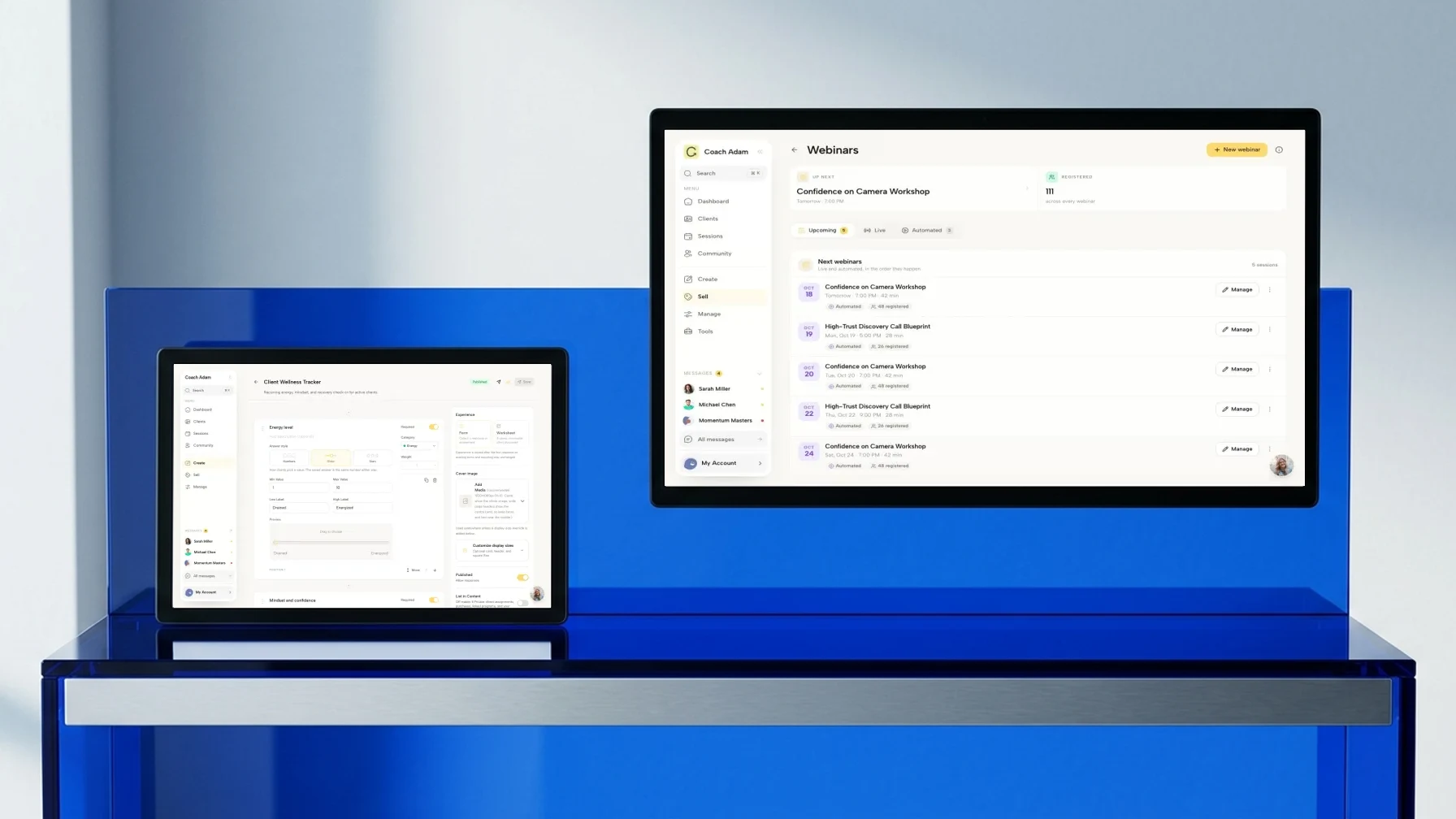
For your own rehearsal or follow-on event, a workspace such as Coachful’s webinar area can be relevant. It is not proof that the conference uses Coachful, and the sample events shown here are not your speaking history. Any invitation to your own event must follow the organizer’s promotional rules.

A separate organizer enquiry form on your own site can collect future speaking briefs. Keep it separate from the external CFP and from individual coaching intake. Ask for the audience, format and learning goal, not confidential attendee stories or unnecessary employee information.
Conference speaker proposal FAQs
Can a new coach submit without previous conference footage?
Check the call’s eligibility rules. Where a sample is permitted, an honestly labeled rehearsal can show how you explain and facilitate. Do not imply previous bookings. The organizer decides whether your experience and evidence meet its criteria.
Should I put my coaching offer in the proposal?
Disclose relevant commercial interests as required, but do not turn the session into a product pitch unless that is explicitly the event’s format. The reviewer is choosing education for an audience, not buying your coaching package.
Can I reuse the same abstract for several conferences?
You can reuse truthful material where the rules permit it. Recheck audience, track, format, limits and any originality or exclusivity requirements. Adjust the actual teaching plan when the audience changes, not just the event name.
Does acceptance mean I can claim continuing-education credits?
No. Follow the relevant event and accrediting body’s actual approval process. Do not advertise a credit allocation, certification or credential recognition that has not been confirmed for the session.
Finish the session promise before decorating the application
Start with one call, one audience problem and a learning task you can teach responsibly. Draft the abstract, map objectives to activities and test the plan. Only then polish the supporting page and speaker materials.
If you need to evaluate a home for those public materials and your own event enquiries, Try the interactive demo. Look specifically at the website, forms and webinar workspaces. Coachful supports those surrounding jobs; it does not find conferences, submit your proposal or guarantee acceptance.
Sources and limits: The published IWAC proposal guidance illustrates how one organizer separates proposal components. It is an example of application structure, not a recommendation that this academic event fits your coaching practice or is currently accepting submissions. The coach-specific template, sample abstract and teaching plan here are original editorial examples. No acceptance rates, speaking fees or client outcomes are claimed.