
Data Protection Compliance for Coaches: Your Practical Guide

Coachful
You finish a coaching session and stare at the notes you've just written. Your client disclosed a painful family situation, a health concern, or a fear they've never shared before. The notes sit in a cloud folder beside invoices, intake forms, and marketing files, and a quiet question appears: Who could see this if something went wrong?
That unease is understandable. Coaches aren't managing abstract records. You're holding pieces of someone's private life, often in moments of unusual vulnerability. Data protection compliance gives that trust a practical structure, so privacy doesn't depend on memory, good intentions, or a laptop that happens to stay safe.
The Hidden Anxiety Behind Every Coaching Relationship
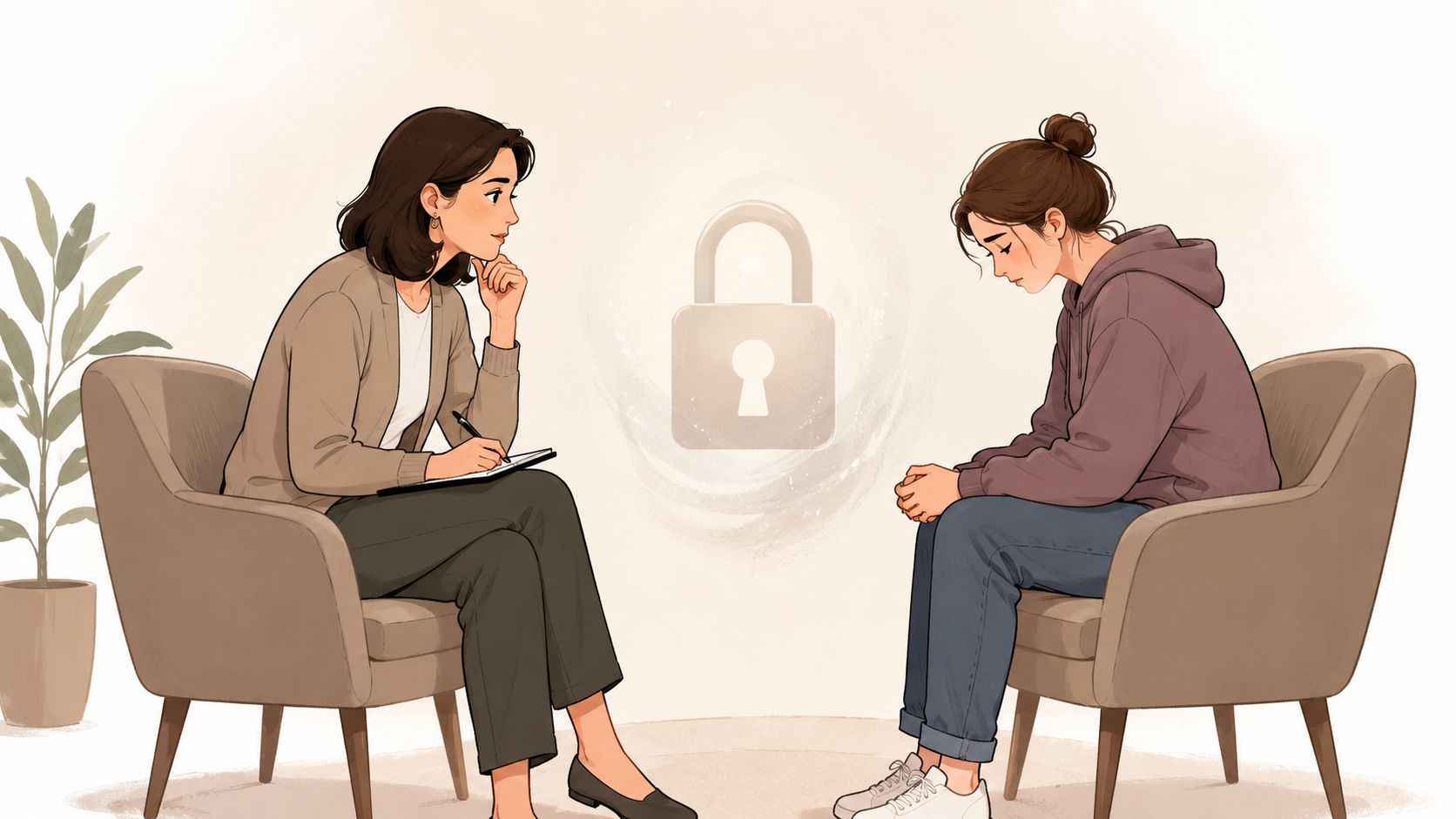
A client pauses halfway through a session, then tells you something they've never said aloud. You listen, make a careful note, and promise yourself you'll handle the information responsibly. Later, you send a follow-up email from your phone, upload an assessment to a shared drive, and leave your laptop open while making coffee.
Nothing feels reckless. That's what makes privacy risk difficult. It usually appears inside ordinary moments, not dramatic scenes involving a masked attacker. A misplaced device, an overly broad folder permission, an old export, or a former contractor's active account can turn a trusted confession into exposed information.
Your worry is a professional signal
You might think, “I'm a solo coach, not a multinational company. Surely compliance is for legal departments.” That reaction is common, but it misses the nature of your work. The smaller your practice, the more personal your relationship with each client may be. You may hold session notes, goals, personal history, performance concerns, payment details, and messages in one compact workflow.
The concern itself is evidence that you understand the relationship. A coach who asks who has access, how long records remain available, and what happens after a client leaves is already thinking like a responsible custodian.
Practical rule: Treat a digital client record like a confidential file cabinet. Lock it, limit the keys, track access, and decide when the file should leave your office.
Replace fear with repeatable habits
Compliance becomes manageable when you stop treating it as a giant legal project and start treating it as a series of small decisions. You need to know what information you collect, why you collect it, where it goes, who can access it, and when you'll delete or review it.
Consider two coaches. One keeps everything in an inbox because “it's convenient.” The other uses a defined intake process, separates sensitive notes from general administration, reviews access regularly, and has a response plan for mistakes. Neither coach is careless by nature. The second coach has converted care into a system.
Your client doesn't need a perfect corporate privacy department. They need you to make thoughtful choices before a crisis forces them on you. That's the work of data protection compliance, and it starts with respecting the secret shared in the room.
Understanding the Legal Requirements Without the Jargon
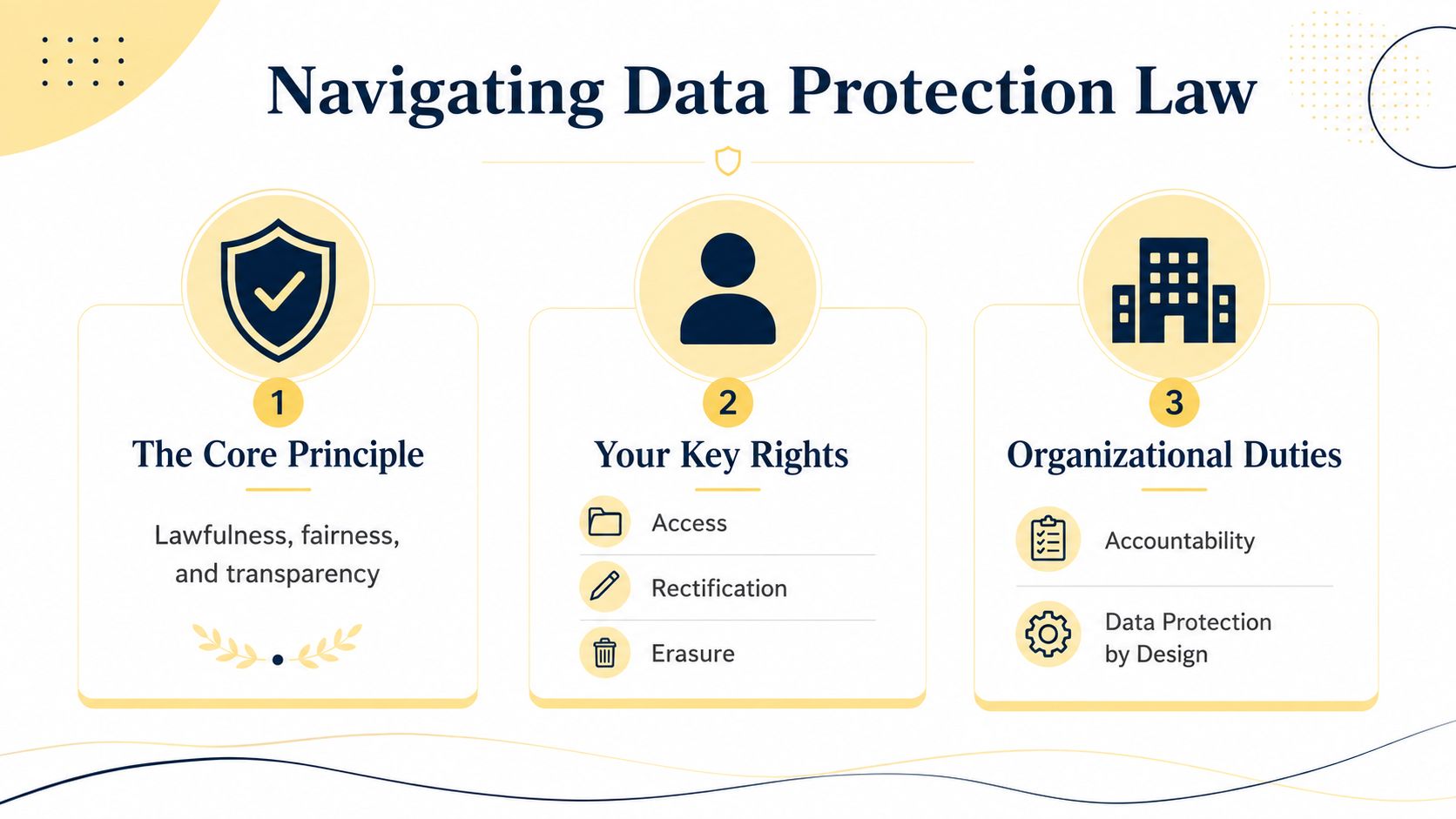
The legal environment looks complicated because different laws use different terminology. For a coach, the working questions are more direct: what personal information do you handle, why do you handle it, and what safeguards protect it?
The European Union's General Data Protection Regulation, or GDPR, took effect on 25 May 2018. Enforcement has since become a durable reference point for privacy governance. The DLA Piper GDPR Fines and Data Breach Survey reported cumulative fines of approximately €7.1 billion by 10 January 2026, including about €1.2 billion issued in 2025. More than 60% of the total fine value was imposed since January 2023, showing that privacy enforcement remains active.
The rules become real in your workflow
The CMS GDPR Enforcement Tracker listed 2,685 fines by March 2026, totaling around €6.11 billion, across 32 countries and nine years of enforcement activity. It recorded 440 additional fines compared with its 2025 report, with an average fine of €2,277,122 across the 2018 to 2026 period.
These figures do not mean every independent coach faces a corporate-scale penalty. They do show that regulators expect privacy duties to appear in daily operations. A published policy cannot compensate for weak consent records, broad access, careless retention, or exposed session notes.
The GDPR may apply if your practice is established in Europe or offers services to people there. California privacy rules can also create operational duties for businesses handling California residents' information. A business generally has 45 calendar days to respond to requests to delete, correct, know, or access automated decision-making data, with one possible extension of 45 calendar days, for a maximum of 90 days. The Sidley summary of the CCPA text explains the relevant framework.
Rights and responsibilities need an owner
A client may ask what you hold, request a correction, or ask you to delete an assessment. Your practice needs a repeatable way to verify identity, find the relevant records, decide what action applies, and document the response.
California's FAQs describe a two-stage process. Businesses must confirm receipt within 10 business days, then provide the substantive response within 45 calendar days, subject to the possible extension. The California privacy FAQ resource can help you design that workflow.
For a practical governance view, the Nutmeg Technologies compliance approach connects legal duties with documentation and everyday information handling. That link matters in coaching because your records may contain fears, health details, relationship difficulties, or other disclosures shared in confidence. Compliance is the operating discipline that protects those disclosures, not paperwork kept apart from your practice.
Mapping Requirements to Your Unique Coaching Practice
A solo life coach, a corporate coaching provider, and a coaching academy don't need identical compliance programs. They need proportionate controls that match the data, people, tools, and decisions in their own workflow.
Start by drawing the client journey from first contact to final deletion. Include discovery calls, booking, intake, payment, session delivery, assessments, progress tracking, referrals, marketing, and offboarding. For each stage, record the information collected, the purpose, the tool used, the people with access, and the point at which you'll review whether it's still needed.
If you work alone
A home-based practice often has fewer users but more informal habits. Begin with the basics:
- Secure the environment: Protect home Wi-Fi, keep devices updated, enable screen locking, and avoid storing client files on a family device.
- Use individual accounts: Choose strong, unique passwords and multi-factor authentication wherever available. Don't share one login with an assistant or household member.
- Separate categories: Keep session notes, invoices, marketing contacts, and raw assessment data in clearly controlled locations.
- Review your intake: Ask only for information that supports the coaching relationship. If a question doesn't serve a defined purpose, remove it.
- Plan your exit: Decide what happens to records when a client finishes, pauses, or asks for deletion.
A retention schedule turns “I'll keep it for now” into a defensible decision. The Coachful guide to data retention policies can help you translate that decision into categories and review points.
If you run a team or program
A team practice adds complexity because access expands. An administrator may need billing information, a coach may need session notes, and a program manager may need attendance or progress data. Those people shouldn't automatically receive the same visibility.
Use role-based access controls, documented permission rules, and an onboarding and offboarding checklist. Review access when someone changes role or leaves. If a corporate HR team sponsors coaching, define whether the employer receives attendance, broad outcomes, or individual notes. Never assume that “the client's company is paying” means every internal detail should be shared.
A coaching school or academy also needs a retention schedule for student portfolios, mentor feedback, recordings, attendance, and certificates. Larger datasets make consistent workflows more valuable than heroic manual effort. The right question isn't “Can we write a longer policy?” It's “Can every person follow the same safe process?”
Concrete Controls for Technical and Organizational Security
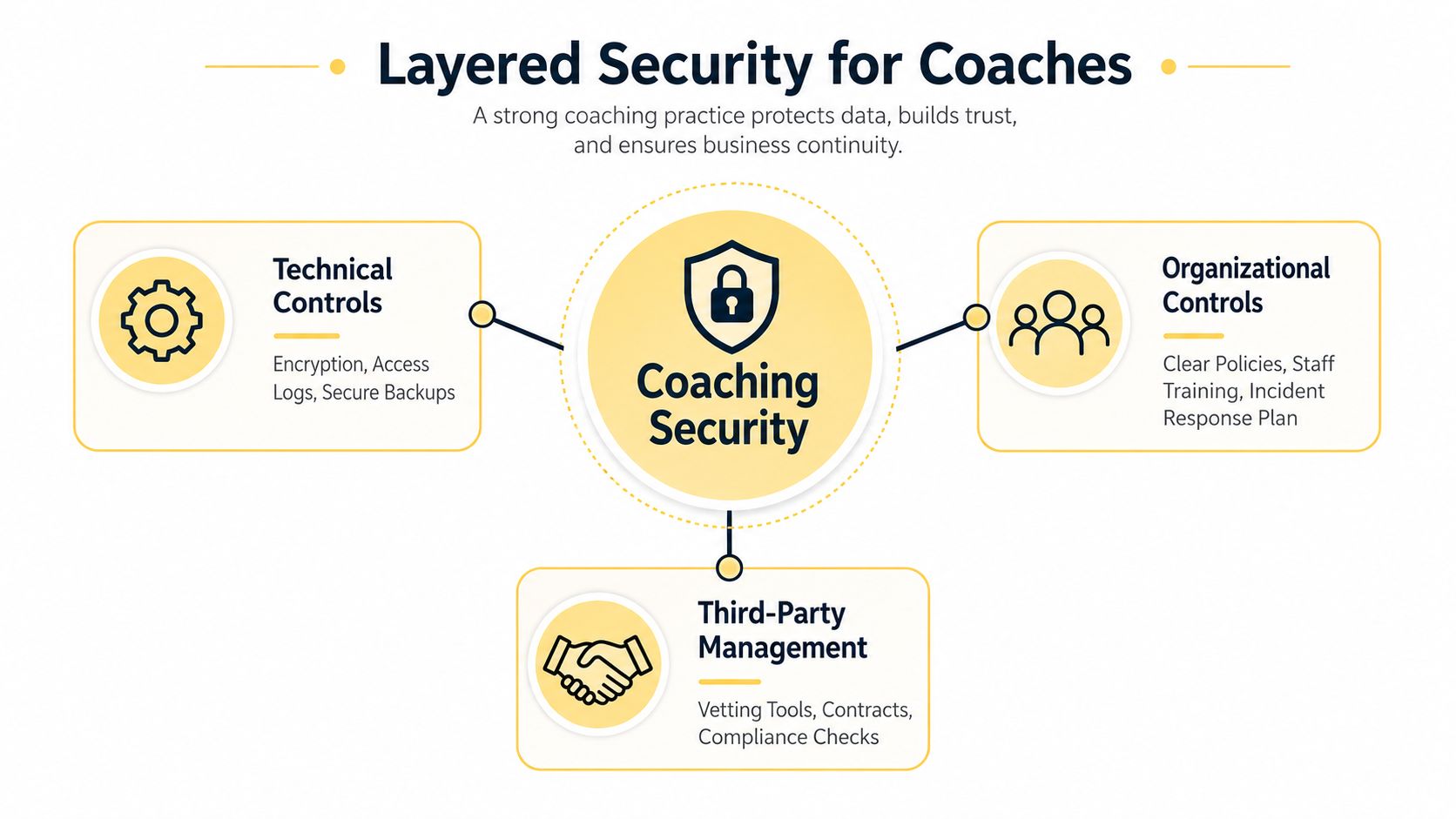
Security works best in layers. A locked front door helps, but it doesn't replace an alarm, a visitor log, or a rule about who can enter the archive. Digital protection follows the same logic.
NIST guidance recommends encrypting data at rest, in transit, and in use, segregating personal data when practicable, and applying role-based access controls. For a coaching platform, that means session notes, goals, and assessments should be protected across storage and transmission, while logical separation by client, cohort, or tenant limits the damage from a single authorization failure. The NIST confidentiality guidance explains this defense-in-depth approach.
Build controls that match real behavior
Encryption acts like a digital lock. It doesn't decide who should enter, so pair it with access controls that give each person only the visibility required for their work. A billing assistant doesn't need full access to vulnerable session reflections. A guest facilitator may need cohort materials without seeing private one-to-one notes.
Segregation reduces the blast radius of mistakes. Keep client groups, programs, or tenants logically separated where your tools allow it, and avoid one shared spreadsheet containing every client's information. Backups should be protected too, because a backup is still personal data.
Audit logs provide the digital equivalent of a sign-in ledger. NIST logging guidance requires organizations to identify loggable event types, create and retain audit logs, allocate sufficient storage, and protect archived logs with strong access controls. The NIST audit logging publication supports recording access to session notes, exports, permission changes, and administrator actions.
If you can't reconstruct who accessed a record, you can't confidently explain what happened to the person whose record it was.
Don't forget people and suppliers
Technology can't compensate for unclear behavior. Write a short policy covering acceptable devices, sharing, exports, messaging, retention, incident reporting, and access reviews. Train contractors and assistants using examples from your practice, such as an email sent to the wrong client or a request to export all session notes.
Third-party tools deserve the same scrutiny. Check where information is stored, what the vendor does with it, how accounts are secured, how deletion works, and whether a suitable data processing agreement is available. For practical context on secure disposal and information handling, review Beyond Surplus ITAD services.
If you use a coaching intake form, keep its questions purposeful and its access limited. This coaching intake forms resource can help you structure that first collection point without turning it into an uncontrolled data grab.
Ready-to-Use Templates for Immediate Compliance
A client asks whether their session notes are private. Your answer should come from a working process, not a policy buried in a folder. Short templates help you respond consistently at the moments privacy is tested.
Start with plain consent and privacy language. Identify what you collect, why you need it, where relevant, who receives it, how long you plan to keep it, and how the client can ask questions or exercise applicable rights. Keep separate purposes separate instead of combining them in one vague sentence.
Example consent wording:
I'll use the information you provide to deliver coaching, manage appointments, communicate with you about your program, and maintain appropriate business records. I won't use your session notes for marketing without a separate, clear choice from you. You can contact me to ask what personal information I hold, request a correction, or ask about deletion where applicable.
Adapt this wording to your jurisdiction, services, lawful basis, and actual tools. Do not promise deletion where another legal or contractual duty requires retention. Do not claim confidentiality beyond what your platform and working process can deliver.
A simple vendor addendum
When a platform or contractor processes information for your practice, document the relationship in a Data Processing Addendum. Include:
- Processing details: The purpose, categories of personal information, types of clients, and duration.
- Security duties: Encryption, access restrictions, authentication, backups, and incident cooperation.
- Instructions: The vendor may process information only for agreed services, not unrelated purposes.
- Sub-processors: Require transparency about additional suppliers and a practical objection or review process.
- Rights support: Require help with access, correction, deletion, and other applicable requests.
- End of service: Specify return or deletion of information, subject to documented legal requirements.
- Evidence: Ask for relevant security and compliance information you will review.
For client-facing agreements, the coaching contract templates resource can help connect privacy language with scope, communication, payment, and termination terms.
A breach workflow you can follow under pressure
Write the first response before an incident occurs. If someone reports unauthorized access to session notes, record the time, preserve evidence, restrict access safely, identify the affected information, and contact the appropriate privacy or legal adviser.
Under the EU GDPR, a controller must notify the competent supervisory authority without undue delay and, where feasible, no later than 72 hours after becoming aware of a personal data breach, unless the breach is unlikely to risk people's rights and freedoms. The GDPR breach notification reference explains the rule.
U.S. obligations vary by jurisdiction. A multi-state practice should maintain a jurisdiction map and identify the applicable consumer-notification deadlines before an incident happens. The Privacy Rights Clearinghouse survey reference can support that review.
How Coachful Supports Your Compliance Journey
Many coaches build their practice from separate tools. Intake happens through one form, scheduling through another calendar, notes in a document app, payments through a third service, and client communication in email. Every connection creates another place to configure access, review retention, and investigate if something goes wrong.
A unified coaching workspace can reduce that sprawl, but it doesn't remove your responsibility. You still need to choose appropriate settings, explain processing clearly, control permissions, review vendors, and maintain a response process. The value comes from making safer behavior easier to repeat.
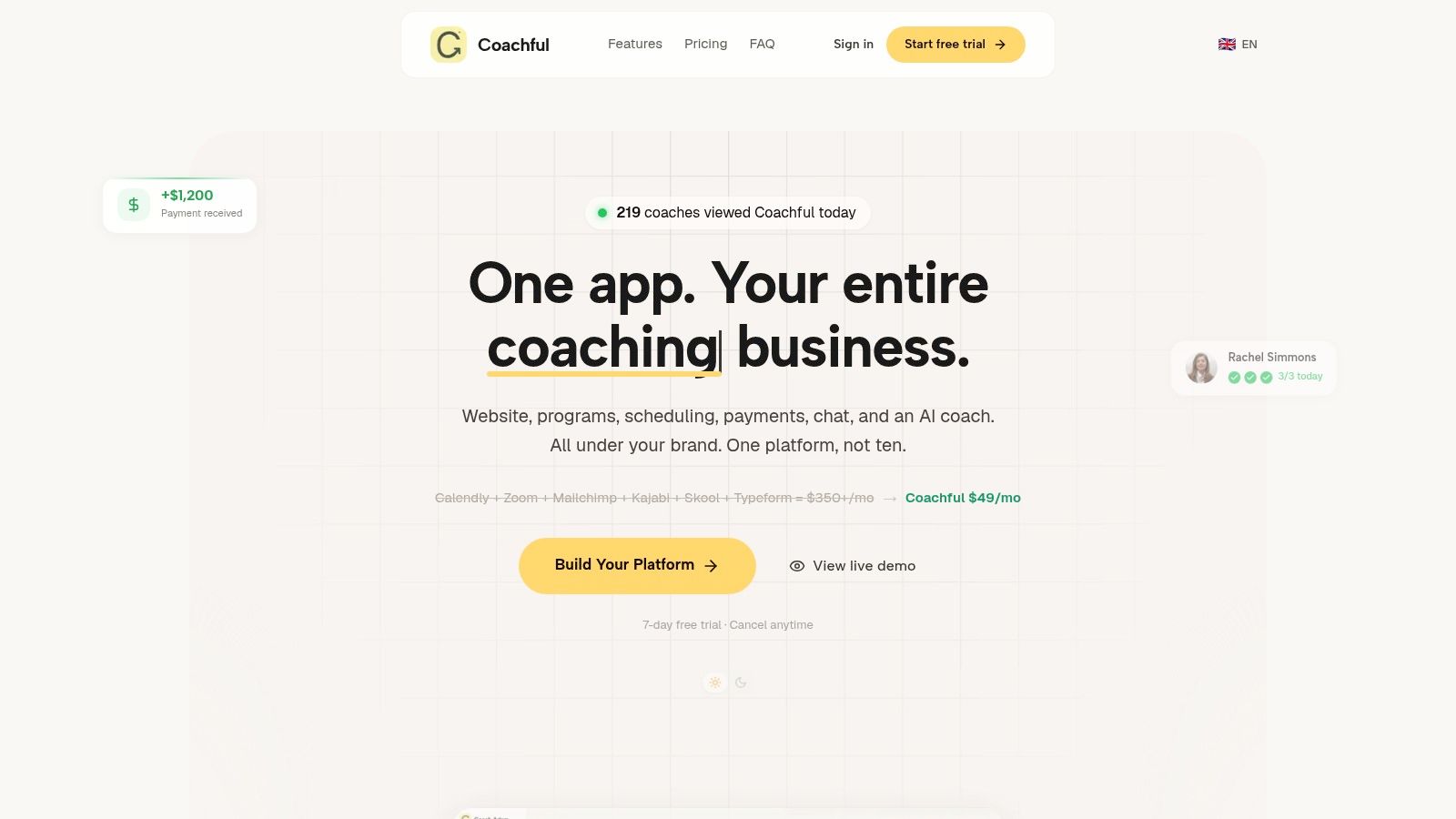
Coachful brings client onboarding, scheduling, payments, messaging, goals, milestones, session notes, resources, and progress tracking into one workspace. Its privacy policy states that it follows GDPR principles and applicable local privacy laws, and describes rights including access, correction, and portability. Its contracts workflow supports US ESIGN, EU eIDAS, and UK Electronic Communications requirements, with metadata captured on signatures.
Use the platform as part of your control system
For a solo coach, centralized records can reduce insecure email chains and scattered downloads. For a team, permissions can help distinguish a coach's private notes from an administrator's operational tasks. For a school or cohort program, structured programs and group workflows can create clearer boundaries around who sees materials, assignments, and participant information.
The platform can support your process, but configuration still matters. Before adopting any tool, ask where data is stored, how it's encrypted, how access is logged, how exports work, how deletion is handled, what subprocessors are involved, and how the vendor responds to incidents.
Software should make your privacy promises easier to keep. It shouldn't become an excuse to stop checking whether those promises match reality.
Turning Compliance Into a Competitive Advantage
A prospective client may not ask about your retention schedule. They may ask a simpler question: “Who can see what I share with you?” A clear answer, supported by sensible controls, can separate a trusted practice from one that relies on reassurance alone.
Compliance protects more than records. It shows clients that their vulnerability has shaped your operations, from the intake form to the final deletion review. That trust can become a genuine competitive advantage because it's demonstrated in your choices, not claimed in a slogan.
Start this week by mapping your client journey, removing unnecessary questions, tightening access, and writing your breach workflow. Then choose tools that help you deliver those commitments consistently.
Coachful gives coaches one workspace for onboarding, scheduling, secure client communication, payments, notes, goals, and progress tracking, with permissions that support controlled access to sensitive information. Visit Coachful to see how a structured coaching platform can help you turn data protection compliance into a daily practice.