
Google Review Request Templates for Coaches: 5 Examples

Coachful
Editorial Team
How do you ask a coaching client for a Google review without making the relationship feel transactional? Send a short, optional invitation with your direct review link, explain that the review is public, and ask for an honest experience rather than a particular rating. Use a consistent completion point, not a satisfaction score, to decide when to invite someone.
The awkward part is rarely finding a polite adjective. It is asking someone who has trusted you with private information to identify themselves publicly for your marketing. A useful review process makes declining as easy as participating. It never turns gratitude, access to support or a refund discussion into leverage.
Below are five original Google review request templates for coaches, followed by a practical sending and response workflow. They are messages from the coach asking for a review, not suggested reviews for clients to copy. Replace every bracketed field with verified information before sending.
Before you ask: is a Google review appropriate for your practice?
Start with your business model and professional obligations. Google's Business Profile eligibility rules generally require in-person customer contact; an online-only coaching practice does not become eligible because it serves people in a particular city. Use our Google Business Profile guide for coaches for the eligibility and setup decision. This article assumes you already have an eligible, appropriately managed profile.
Next, check your agreement, professional code and any rules applying to a second regulated role you hold. A health coach who is also a licensed clinician may have obligations that a general business coach does not. Employer-funded coaching also raises identification and sponsor questions. If you cannot make the request without exposing participation or creating pressure, do not ask.
A Google review is not the same as a privately collected testimonial. With a testimonial, you can agree on attribution and publication channels before using the quote. A Google review is posted by the reviewer through their account. Do not promise anonymity, approval before publication or an attribution format you cannot control.
The useful boundary: make an honest public review possible, never make it feel owed. A client who declines has not failed to support your business. They have made a decision about their own identity and information.

Choose a fair trigger, not your happiest clients
Google's Maps content policy prohibits selectively soliciting positive reviews and discouraging negative reviews. Its review guidance also prohibits incentives, including free or discounted services in exchange for reviews. An incentive does not become acceptable because you say that any star rating qualifies.
For a coaching practice, a sensible operational trigger is an agreed completion point: the end of a package, a scheduled review after enough experience to comment, or the conclusion of a workshop. These are suggested process choices, not Google's mandatory waiting periods. Pick the event in advance and apply it consistently to comparable clients.
Do not make a breakthrough, compliment or high feedback score the eligibility test. The client who had mixed feelings must not lose access to the public review link because their experience is less flattering. Similarly, do not send a satisfaction survey that directs happy respondents to Google and unhappy respondents only to a private form.

Privacy-based exceptions are different from sentiment filtering. An agreed no-marketing-contact preference or an employer confidentiality restriction is a reason to withhold a request. “This person might give me three stars” is not. Document the relevant communication restriction, not an elaborate prediction of their rating.
Keep the request out of a difficult session, sales conversation or negotiation over unused sessions. If an administrative dispute is active, resolve it on its own merits, without asking for a review change as a condition. A uniformly applied pause during unresolved administration should not become permanent exclusion of dissatisfied clients.

5 Google review request templates for coaches
Choose the version that fits the communication context, rather than sending all five. Each gives the client a real choice, uses a direct destination and avoids coaching outcomes you would be uncomfortable seeing on a public page.
1. The end-of-package email
Use it when: the engagement has ended and you have completed the practical close-out. Keep the review request separate from the work needed to deliver what the client paid for.
Subject: Optional feedback about your experience
Hi [first name],
Thank you for working with me. If you would like to share an honest Google review of your experience, you can use this link: [your verified Google review link].
Google reviews are public and may identify you through your account profile. Please do not include anything you prefer to keep private.
This is entirely optional. There is no need to reply or explain if you would rather not.
Thank you,
[your name]
The message does not say the client “achieved an incredible transformation” or ask them to describe a private goal. It also avoids estimating how long posting will take. Someone may need to sign in, check their public profile or decide whether publication is appropriate.

2. The ongoing-client invitation at an agreed review point
Use it when: your practice has a consistent review point during longer engagements and an invitation is appropriate under the coaching agreement. Be especially clear that the coaching relationship is not contingent on public praise.
Hi [first name],
At this point in an engagement, I offer clients an optional way to share their experience publicly. If you would like to leave an honest Google review, here is the link: [your verified Google review link].
Reviews are public and may identify you. There is no need to mention your goals, employer or anything discussed in sessions.
Whether you leave a review, and what you choose to say, will not affect our work together. It is also completely fine not to participate.
[your name]
Only use the opening if that really is your process. Do not invent a standard policy to make an isolated request sound less personal. If asking during an active engagement would create an uncomfortable power dynamic, use the completed-engagement version later or do not request a public review.

3. The workshop follow-up
Use it when: you have delivered a workshop and are contacting participants through an appropriate, agreed follow-up route. An employer's purchase does not automatically authorize you to email every participant for marketing purposes.
Subject: Optional review of [workshop name]
Hi [first name],
Thank you for attending [workshop name]. If you would like to share an honest review of your experience, you can do so here: [your verified Google review link].
The review will be public. Please avoid naming colleagues, sharing other participants' comments or including confidential workplace information.
Participation is optional, and there is no need to respond. Thank you for taking part in the workshop.
[your name]
Send individually or through a properly configured communication method that does not expose the participant list. Do not ask the organizer to identify the enthusiastic attendees so you can invite only them. If the sponsor requests anonymity for the program, a public review campaign may be the wrong next step altogether.
4. The brief private message
Use it when: a private messaging channel is already an appropriate route for this type of contact. This is not permission to move a client from email to a personal phone number because you expect a faster response.
Hi [first name]. If you would like to leave an honest Google review of your experience, here is the link: [your verified Google review link]. Reviews are public and may identify you, so please keep private details out. Completely optional, with no need to reply.
Short should not mean incomplete. Keep the public-identity warning and optional wording even when the message feels less conversational. Avoid a voice note that makes the client hunt for the link or leaves the boundaries unstated.

Never post a request tagging a coaching client in a group or community. That publicly associates them with the work before they have chosen to review it. A private channel is a communication route, not a substitute for considering whether the request itself is appropriate.
5. The one-time reminder
Use it when: you have already made an appropriate invitation, no decline or stop preference is recorded, and a reminder remains reasonable. One reminder is a restrained practice recommendation, not a claim about an optimal conversion cadence.
Subject: One optional reminder
Hi [first name],
One reminder about the optional Google review invitation: [your verified Google review link]. If you have already posted, thank you; there is nothing else to do.
Reviews are public and may identify you. Please leave out anything you want to keep private.
No pressure if you would prefer not to participate. I will not send another reminder about this request.
[your name]
Keep that last promise. Do not add the person to another campaign that restarts the sequence. If someone declined the first invitation, do not send the reminder at all. Silence is not a reason to keep escalating through email, text and a session conversation.

Get the correct review link and test it before sending
Use Google's current instructions to obtain the review link from your managed Business Profile. Interface labels can change; follow the review-request option available in your account rather than constructing a URL from an example on a blog. Google's guidance also describes sharing a QR code where that is appropriate.
- Open the link yourself and confirm it identifies the correct coaching business.
- Check it on a phone as well as a desktop browser.
- Notice what the client is asked to do, including any Google account sign-in.
- Put the verified destination into the message in place of the bracketed placeholder.
- Send yourself a test message and click the link from the delivered version.
A QR code can suit a printed workshop handout, but it should lead to the same verified destination and carry the same optional, public nature. Do not watch a client scan and complete it. Remove friction without turning the request into a supervised task.
Do not tell clients you can post on their behalf. Do not ask for login details, write a review for their account or provide five-star wording for them to approve. The review should remain their independent account of a genuine experience.
Keep a small request log, not a reputation dossier
You need enough information to avoid repeat requests and respect preferences. You do not need to copy session notes into a marketing tracker. A simple, access-controlled log can contain the client reference, the relevant completion event, invitation date, communication route, any decline or stop preference, and whether the single reminder has been used.
If someone volunteers that they posted, you can mark the request complete. Do not demand a screenshot as proof. Google display names may not match your records, so avoid confidently attributing a public review to a particular client based on a guess.
Review the process rather than chasing a star target. Ask whether the link works, comparable clients receive the same opportunity, restrictions are respected and reminders stop. A low number of public reviews is not evidence that clients dislike the coaching; privacy or account friction may be part of the picture.
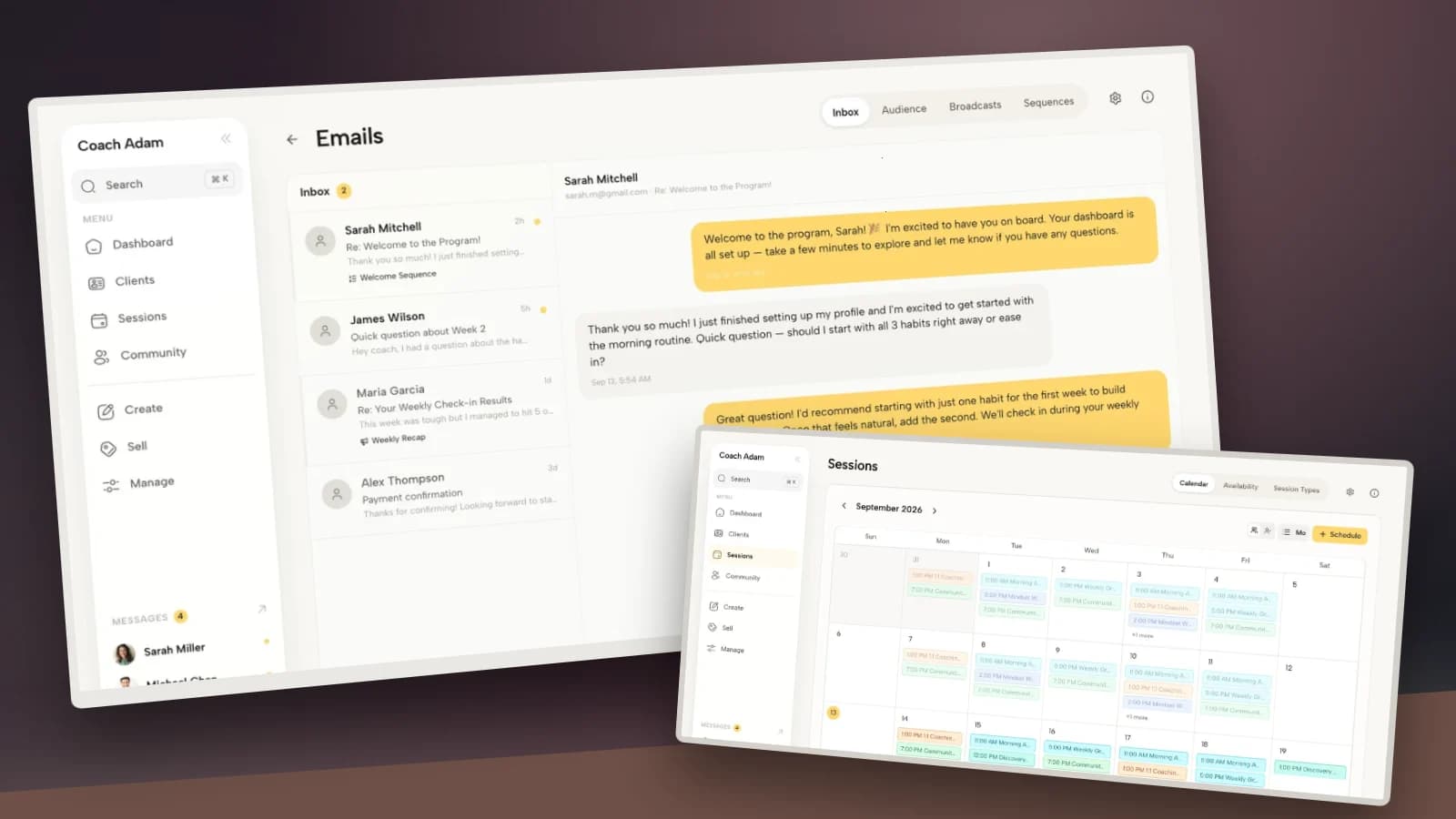
Coachful's client, scheduling, email and journey workspaces can help you inspect the surrounding relationship and follow-up. The demo screenshots illustrate those surfaces, not a native Google review collector, rating monitor or automated review suppression feature. Keep any separate request log in a suitable system with appropriate access controls.
How to respond without revealing private coaching information
A public review does not waive your confidentiality obligations. Even if the reviewer mentions a difficult personal situation, do not add details from sessions, confirm an employer's involvement or explain the history behind a missed appointment. Your reply is another publication, not an extension of a private conversation.
For a straightforward positive review, a restrained response might be: “Thank you for taking the time to share your feedback.” There is no need to tell future readers which exercise helped, how many sessions the person bought or why they initially contacted you.

For a critical review, do not rebut the person using records that only you possess. A possible starting point is: “Thank you for sharing your feedback. I do not discuss individual circumstances publicly. You are welcome to contact me at [business contact] if you would like to raise this privately.” Adapt the wording to your obligations and the circumstances; do not imply that a private resolution requires a changed rating.
If you believe a review violates Google's policy, use its reporting process with the relevant evidence. Disagreement or disappointment is not proof of a policy violation, and reporting does not guarantee removal. Address any underlying service issue separately.
Frequently asked questions
Can I ask for a five-star review if the client says they loved coaching?
Ask for an honest review, not a predetermined rating. A compliment is not permission to steer the public account, and selecting only enthusiastic clients creates a separate review-gating concern.
Can I offer a free session for any review, regardless of the rating?
No. Google's policy prohibits incentives in exchange for posting reviews, not only rewards tied to five stars. Do not offer discounts, gifts or extra support for the act of reviewing.
Can a client leave an anonymous Google review?
Do not promise anonymity. Reviews are public and associated with the reviewer's Google account profile. Explain that exposure before inviting participation and let the client decide whether it is acceptable.
Can I also offer a private feedback route?
Yes, but do not use it to filter dissatisfied clients away from Google. The private route should be available regardless of sentiment, and the public invitation should not depend on a favorable survey answer.
Can I put the Google review on my coaching website?
Treat website reuse as a separate decision. Check permission, attribution, professional obligations and applicable platform requirements before quoting it in your marketing. Public availability is not a reason to disregard the client's preferences. For curated quotations, use our testimonial formats guide rather than rewriting an independent review.
Build the process before sending more requests
Choose one appropriate completion event, adapt one template, verify the destination and decide how you will prevent repeated requests. That is a better starting point than a bulk campaign to everyone who has ever worked with you.
If you want to inspect the client and follow-up side before changing your process, try the interactive Coachful demo with fictional details. Review the client record, calendar and communication workspaces together, then decide where your own permission check and stop rule belong. The goal is a respectful invitation you can reliably stop, not a machine for manufacturing praise.
Sources: Google Business Profile review guidance, Google Maps content policy and Google's business representation guidelines, checked on 17 October 2026. This is practical coaching-business guidance, not legal advice or a guarantee of review publication, profile approval or search rankings.












