Group Coaching Application Form: 12 Questions and Template

Coachful
Editorial Team
What should you ask on a group coaching application form without making people audition for help? Ask only what you need to decide whether your particular group is a suitable place for this person: their goal, their expectations of peer participation, practical availability and any issue that needs a private conversation. Publish the programme details first. An application should check fit with an honest offer, not create an impression of exclusivity.
The most expensive mistake is accepting someone because they can pay, then discovering in week one that they wanted private advice, cannot attend the calls or expected confidentiality you cannot promise between members. A short application can surface those mismatches before either side commits. It cannot predict a person’s results or certify that a group will be safe.
This guide gives coaches a twelve-question template, an example review process and adaptable responses. It is specifically about choosing members for a shared coaching experience, not collecting a new client’s full intake history or filtering prospects into a sales call.
Do you need an application, or just a registration form?
Use an application when the composition of the group changes what members can reasonably receive. A small peer-practice group, a facilitated mastermind with stated prerequisites or a cohort working on a shared professional challenge may need a selection conversation. The coach has a real decision to make before offering a place.
Use straightforward registration when anyone meeting clearly published requirements can join and you do not intend to review people individually. An introductory workshop does not automatically need an application. Asking people to justify their interest when you will accept every payment adds work without protecting the experience.
Keep three stages separate:
- Application: Is this particular offer and group format suitable, subject to clarification?
- Agreement and enrollment: What are both parties committing to, including payment, attendance, boundaries and cancellation?
- Intake: What additional information is necessary to deliver the coaching once the person joins?
A person can be a good prospective client and still be wrong for this cohort. Your decision should be about the offer’s limits, not whether someone appears sufficiently impressive, confident or articulate.

Before writing questions, publish the facts applicants need
Someone cannot give an informed answer about commitment if you have hidden the price and dates until a sales call. State who the group serves, what it covers, what it does not provide, the format, price and payment options, session dates with time zone, between-session work and any genuine prerequisites.
Explain what group participation means in practice. Will people discuss their own examples, practice with a partner, contribute to a community or mostly listen? Can they pass on an exercise? Are recordings made, and what is recorded? Do not advertise unrestricted confidentiality when other members will hear what someone shares.
Then explain the application itself: who reviews it, what the next steps could be, when you expect to respond and where the privacy information lives. Use a response window you can actually meet. If there is a real closing date or seat cap, say so; if not, do not invent one to make the form feel selective.

A group coaching application form template: 12 questions
Treat the following as a menu to adapt, not a requirement to ask twelve mandatory questions. Short text, select options and optional follow-up routes can all be useful. Keep only questions whose answers could change your decision or a necessary clarification. The wording below is original editorial guidance, not a validated assessment.
1. What name would you like us to use?
Ask for the name you need to communicate respectfully. Do not demand a legal name at the application stage unless you have a specific necessary reason. You can collect billing details later through an appropriate process.
2. What email address should we use about this application?
Explain that you will use it for application-related messages. Do not silently treat submitting an application as permission for an ongoing newsletter. If you offer marketing signup, distinguish it clearly from applying and follow applicable consent requirements.
3. Which current situation would you most like to work on?
Invite a brief description linked to the programme. For a new-manager group, this could be preparing for difficult feedback conversations. Ask people not to include colleagues’ names, sensitive employer information or details they would prefer to discuss privately.
4. What would useful progress look like by the end?
You are checking the match between their expectations and your scope. “Prepare and practice a feedback opening” fits a skills-focused group differently from “make my employee change.” Do not require a perfectly measurable goal before someone has had help clarifying it.
5. What appeals to you about working in a group?
Make this concrete: “This programme includes peer discussion and paired practice. Which parts would be useful, and which would you like to ask about?” Discomfort is not an automatic rejection. The answer may identify a reasonable adjustment or a mismatch with what you provide.
6. Have you used a similar group or learning format before?
Make this optional unless previous experience is a genuine prerequisite. Ask what helped or got in the way, not for a rating of their character. A first-time group participant should not be disadvantaged simply for being new to the format.

7. Can you attend the published sessions?
List the actual dates, duration and time zone before the response options. Offer “yes,” “I have a known clash” and “I need to clarify.” A private follow-up is more useful than assuming that a scheduling constraint means someone lacks commitment.
8. Is the stated between-session workload workable?
Describe the work before asking. “One practice conversation and a short reflection between sessions” gives someone more to assess than “Are you ready to invest in yourself?” If you have estimated a time requirement, label it as an estimate and allow questions.
9. What participation or access arrangements would you like to discuss privately?
Keep this optional and functional. Ask about arrangements, not diagnoses or medical histories. Give a direct contact route for anyone who does not want to disclose an access need on the form. Do not promise an adjustment until you have checked what you can actually provide.
10. Is anything you are seeking outside the published programme?
Examples might include individual consultancy, mediation, clinical treatment, crisis response or a formal professional qualification. Asking about the service someone wants is different from asking them to disclose a condition. Clarify scope without implying that therapy and coaching are mutually exclusive.
11. Having seen the price and terms, what needs clarification before you could decide?
You do not need a personal income interrogation. Offer a question about the published payment options, employer approval or another practical decision. Where a scholarship process exists, explain it separately and collect only what that process genuinely needs.
12. What else should we clarify before either side agrees to a place?
Keep the final field optional. Add a reminder not to include confidential third-party or unnecessary sensitive information. Provide a separate link to the privacy information and explain what submitting the form does; a generic “I agree to everything” checkbox is not a substitute for a proper agreement.

Copyable introduction and confirmation text
Use this introduction as a starting point, replacing every bracketed detail with a fact. Do not publish the brackets or promise a process you have not arranged.
Apply for [programme name]. This group is for [audience] working on [specific focus]. It includes [format and participation], meeting on [dates and time zone], at [price and payment options]. Please read [programme details] before applying.
Your answers help us decide whether this group matches what you need. Applying does not reserve a place or commit you to payment. We expect to respond by [realistic date or window]. We may offer a place, ask a brief follow-up question or explain why another option would fit better. Please avoid confidential details about other people. Our privacy information explains how we handle applications: [privacy information].
After submission, confirm receipt rather than implying acceptance:
Thanks, [name]. We have received your application for [programme]. The next step is [actual review process], and we expect to contact you by [window]. No place or payment is confirmed yet. If you need to correct an answer or discuss access privately, contact [address].
If the form cannot send this exact message, show equivalent information on its confirmation page or send a manual acknowledgment. The operational requirement is that people know what happens next, not that you buy a particular automation.
Review applications against published criteria, not personal chemistry
Before reading the first response, write a short review guide. For a hypothetical six-week feedback-practice group, the relevant criteria might be a goal within the advertised scope, willingness to participate under the group agreement, a workable attendance plan and any genuinely necessary prerequisite.
Do not build a personality score or label people “high quality.” Long answers, polished English and confidence on video are not reliable proxies for suitability. Ask whether your process unnecessarily filters for writing ability, available spare time or familiarity with coaching language.
Use three provisional outcomes, with a brief factual reason:
- Offer a place: The available information supports a suitable match, subject to the agreement and enrollment process.
- Clarify: One necessary question remains, such as a date clash or uncertainty about paired exercises.
- Do not offer this cohort: A material mismatch remains that you cannot responsibly accommodate within the published offer.
A waitlist is different. It means a person may be suitable but a place is unavailable, not that their application is indefinitely “under review.” Explain whether the list has an order, how long it stays active and whether joining it creates any obligation.

In the hypothetical group, an applicant who wants to rehearse a feedback conversation but misses one session needs clarification about attendance options. Another applicant seeking a coach to mediate an active workplace dispute may need a different service. Neither decision requires diagnosing the person or guessing their future performance.
Where the answers raise a concern outside your competence, pause and seek appropriate professional guidance. An application is not a clinical assessment or crisis service. Keep any advice about alternatives within your role, and avoid presenting a referral as a diagnosis.

Three response templates: offer, clarify and decline
Offer a place without promising outcomes
Hi [name], your stated goal of [brief appropriate summary] appears to fit [programme focus]. We would like to offer you a place in [cohort], subject to reviewing the agreement and completing enrollment. Here are the dates, participation expectations, price and terms: [details]. Please ask anything you need before deciding. Your place is confirmed when [actual confirmation condition].
Only add a response deadline if you have a real reason and a stated process. Do not confuse an offer with confirmed enrollment, or suggest that acceptance proves someone will achieve the outcome.
Ask one necessary clarification
Hi [name], thanks for applying. Before either of us decides, could we clarify [specific issue]? The programme includes [relevant requirement or limit]. Would [available option] work, or would you prefer to discuss it privately? This is a fit question, not a commitment to join.
Do not use a follow-up conversation to extract unnecessary personal details or turn a stated access need into a sales objection. Resolve the question and record the decision, not a speculative story about the applicant.
Decline this cohort respectfully
Hi [name], thank you for explaining what you are looking for. This cohort focuses on [scope], while the support you described includes [brief non-sensitive mismatch]. I cannot offer that within this group, so I will not offer a place in this round. If useful, [appropriate alternative or general resource]. Thank you for considering the programme.
You do not owe a judgment about someone’s potential, and they do not owe you agreement with your decision. Avoid “you are not ready” language when the accurate statement is that your offer cannot meet their needs. Never add declined applicants to marketing contact automatically.
Protect application information before the group starts
Limit access to the people who genuinely need to review applications. Decide how long unsuccessful applications need to be retained, explain the relevant handling in your privacy information and follow applicable privacy obligations. Do not keep every answer forever because another cohort might happen.
Do not paste someone’s application into a group welcome post. Obtain their agreement on an introduction they are comfortable sharing. Similarly, employer-funded enrollment does not give a sponsor unrestricted access to application answers. Agree any necessary information-sharing boundaries separately.

After enrollment, collect only the additional intake details necessary to deliver the service. Application, agreement and intake may live in related systems, but their purposes are not interchangeable. If you export responses to a spreadsheet, that copy needs appropriate handling too.
Test the member experience, not just the submit button
Complete the form on a phone using dummy details. Check the programme link, date and time-zone wording, required fields, error messages, confirmation, privacy route and the actual review inbox. Ask a colleague to identify any question they cannot answer from the published offer.
Then inspect what an accepted member receives. The application should not promise a small discussion group while the member experience mainly consists of a self-paced content library. Check the joining instructions, community expectations and access to the relevant programme before inviting real applications.

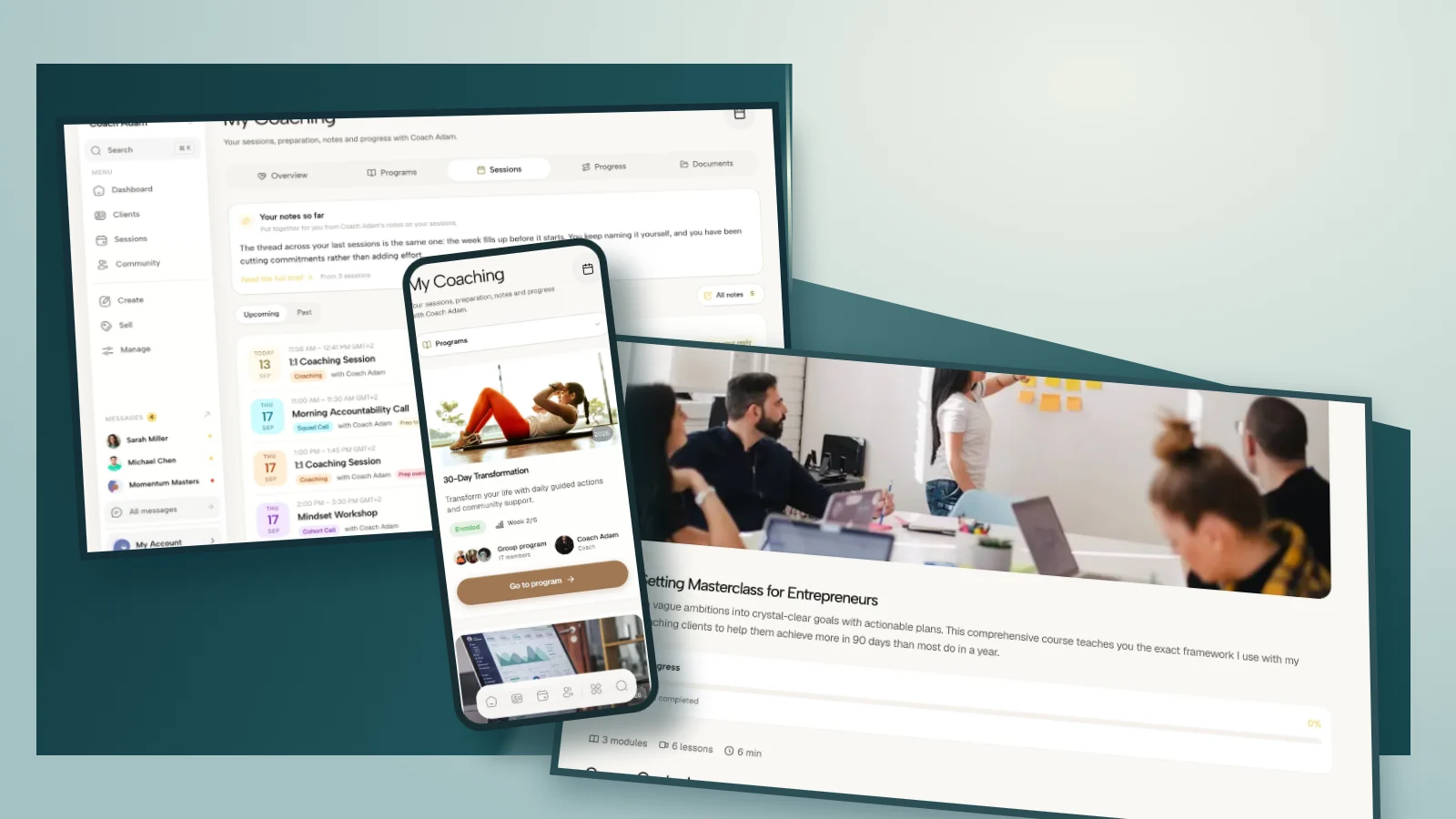
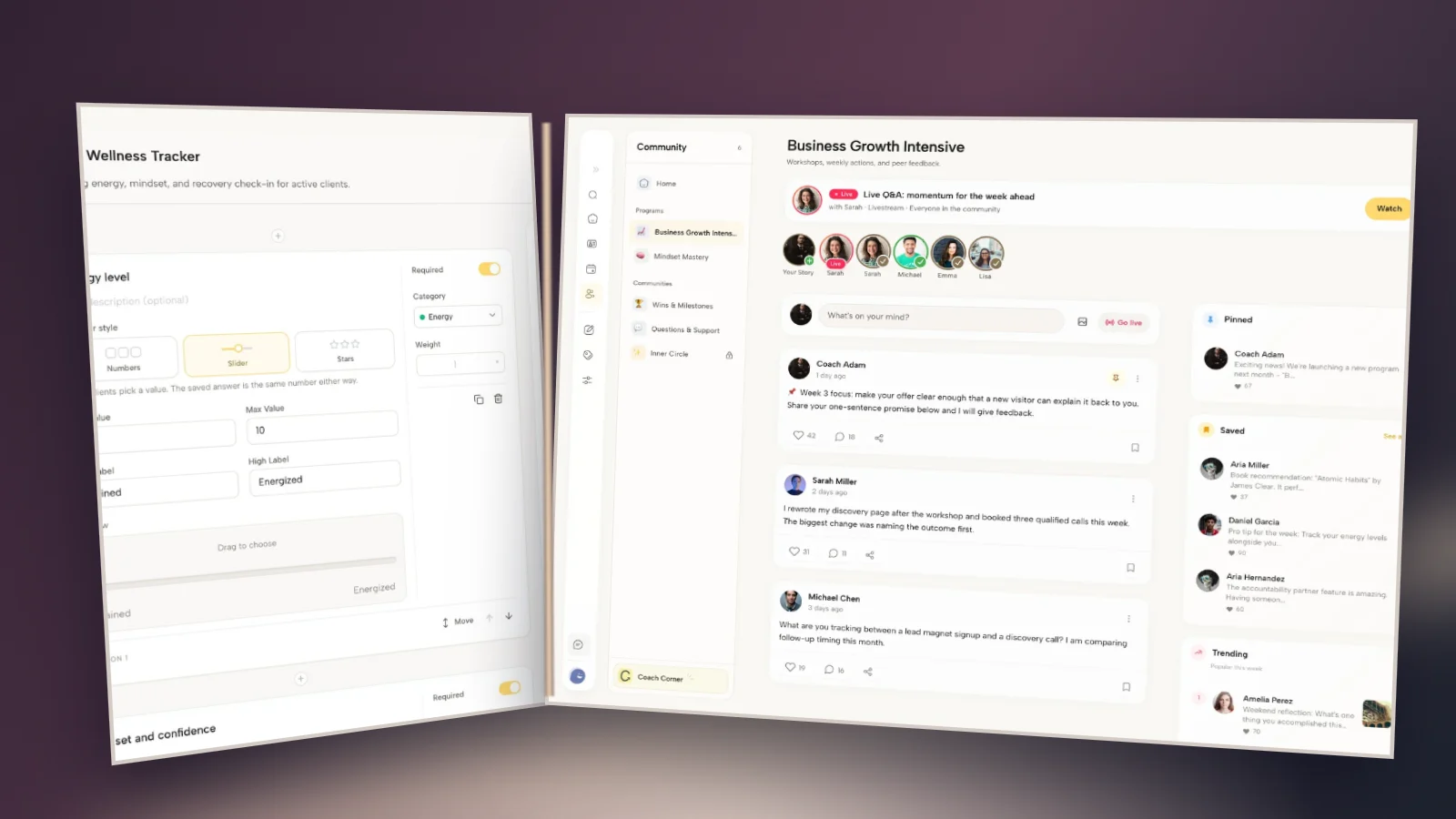
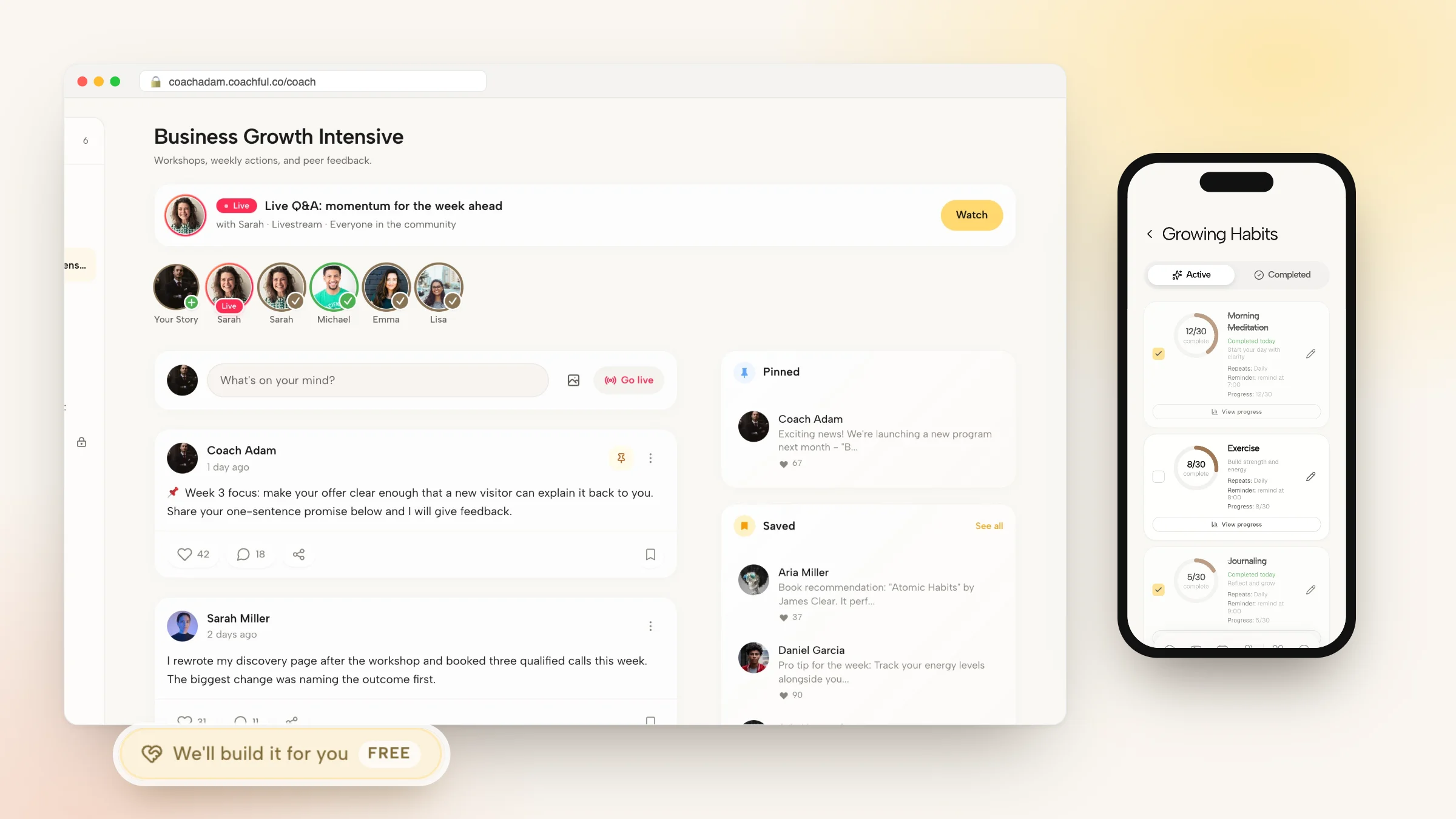
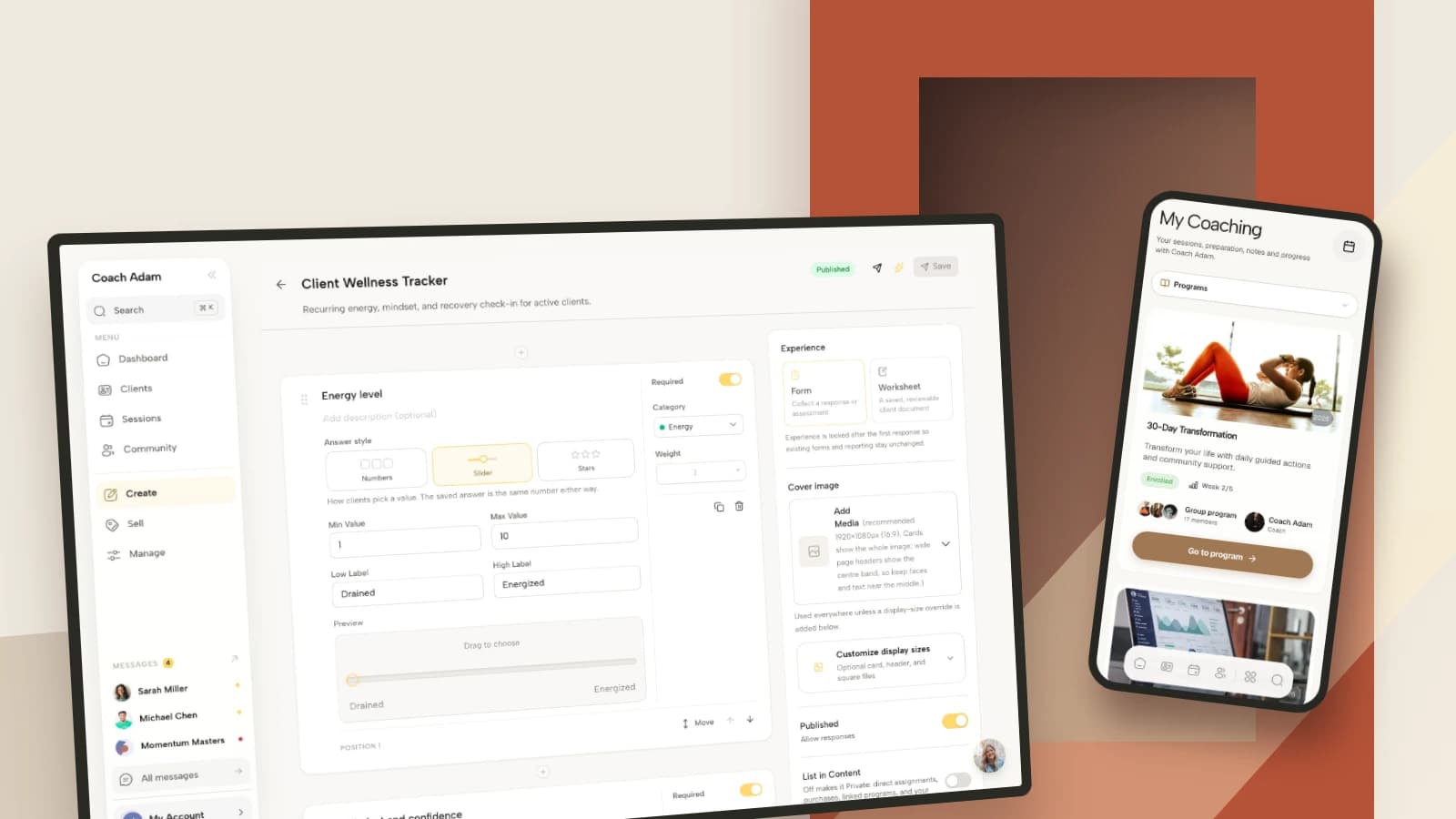
Coachful’s form builder, programmes and member experience can help you organise parts of that path. The screenshots here show real demo surfaces, not an automatic admissions service or a built-in version of this template. If you are considering that setup, try the interactive Coachful demo and follow the path from question builder to programme experience. Use the template above to judge the workflow, rather than letting software decide what you ask.
Frequently asked questions
How many questions should a group coaching application have?
There is no universal optimum. Start with the minimum needed for your actual decision, using the twelve questions above selectively. Remove any question that would not change your review or a necessary follow-up. Test the form with someone outside your practice before estimating completion time.
Should applicants pay before they are accepted?
That depends on your disclosed process, terms and applicable rules. Do not take payment while leaving the acceptance, refund or timing conditions ambiguous. For many small groups, reviewing fit before offering the enrollment step is administratively simpler, but it is not a universal legal rule.
Can I use an application to create exclusivity?
Use it to make a real decision. If everyone can join by paying and there is no suitability review, call the form registration. A genuine seat cap, prerequisite or review process can be explained plainly without making people perform enthusiasm or disclose painful experiences.
Is the application the same as a group confidentiality agreement?
No. The application can explain that group confidentiality expectations exist, but your agreement and facilitation need to address them properly. Do not promise that you can control every member’s behaviour. Explain limits, reporting routes and the expectations everyone accepts before participating.
Editorial context: Group Coaching HQ discusses applications and pre-registration conversations for group composition. This article’s questions, examples and responses are original editorial guidance. Coachful’s forms and questionnaires page documents the product surface shown here. This is general practice guidance, not legal, clinical or data-protection advice.