Group Coaching Taster Session: A 45-Minute Agenda

Coachful
Coachful Editorial
A group coaching taster session should let people experience one bounded piece of your coaching, then decide whether the full program fits. For a 45-minute preview, spend most of the time on reflection, volunteer coaching and application. Reserve the final five minutes for an honest explanation of the paid offer and the next step.
If you are wondering, “How do I show the value without giving away the whole program or turning the room into a sales pitch?”, start by shrinking the promise. You are not trying to produce the program's final outcome in one sitting. You are showing how you facilitate, how participants learn together and what taking part actually asks of them.
This guide gives you an original sample agenda, invitation copy, an exercise and follow-up language. The timing is a practical starting point, not a research-backed optimum. The examples are hypothetical and written for coaches planning a prospective-client group, not for consumers choosing a coach.
What a group coaching taster is, and what it is not
A taster is a standalone preview of the working experience. Participants should leave with something complete enough to use, even if they never buy. For a leadership cohort, that could be a clearer request for one difficult conversation. It should not be a promise to resolve someone's entire leadership challenge.
Keep three formats separate:
- A discovery call explores mutual fit, goals, logistics and the offer. Its main job is a buying decision, not live group coaching.
- A teaching webinar explains a topic to an audience. It can be useful without participants bringing their own situations into the work.
- A group taster gives participants a bounded opportunity to reflect, observe coaching and apply the learning to their own context.
The distinction is not about which format is superior. Choose the one that answers the uncertainty your prospective clients actually have. If people already understand group coaching but need dates and pricing, a taster may create unnecessary work. If they cannot picture learning alongside strangers, an explanation alone may leave the important question unanswered.
Our discovery session versus paid first session guide covers the individual entry-point decision. This article addresses a different job: designing a group preview that demonstrates participation before a prospective member commits to a cohort.

1. Pick one useful result, not a miniature program
Write the result in a sentence: “By the end, participants will have drafted one specific request for a conversation they have been postponing.” That gives you a design constraint. Anything that does not help someone make that draft probably does not belong in this preview.
For a career-coaching cohort, the result might be identifying one question to investigate before changing roles. For a business-coaching group, it might be choosing one customer assumption to test. In each case, the participant does some thinking and leaves with a next move. You are not promising a job offer, a revenue result or a permanent personal change.
Then choose an activity representative of the paid program. If your cohort is built around live coaching and reflection, do not preview it with a highly polished lecture. If participants will mainly work through exercises and discuss experiments, let them try that pattern. A preview that is impressive but unrepresentative can attract the wrong expectations.
Keep the boundaries equally specific. A taster might include one live group session and a short exercise, but not private messaging, ongoing access to your community, individual feedback afterward or a recording. State those exclusions before registration rather than discovering them through an overflowing inbox.
2. Make the invitation clear enough for the right person to decline
Your invitation needs the topic, intended audience, date, start and end time, time zone, cost, participation format and next step. Say whether you will introduce a paid program. Do not advertise “no selling” if the closing section contains an invitation to buy.

Here is an adaptable example:
Try a group coaching session: prepare one difficult conversation
A 45-minute live online taster for new managers who want to make a clearer request without scripting an entire conversation.
On [date], [start time] to [end time], [time zone], we will use private reflection, volunteer coaching and shared learning. You may pass on speaking; you do not need to name your employer or describe confidential situations.
The session costs [price, or explicitly state free]. It is not recorded. In the final five minutes, I will explain my [program name], including its dates, format and price. There is no obligation to apply.
See the session details and register: [your verified registration link].
Replace every bracket before publishing. Do not describe an online room as confidential without explaining the limit: you can agree expectations and manage the session, but you cannot guarantee what another attendee does afterward.
Collect only the information you need to run the event, such as name, email and an optional practical question. A public registration form is not the place to request a detailed personal history. Provide a private route for access requirements, and do not silently treat event registration as consent to an unrelated newsletter.
3. Decide capacity and the free-or-paid question before promoting
Base the headcount on what you are offering, not a round number that looks good on the event page. In this agenda, one volunteer receives focused coaching and everyone gets private application time. It does not provide individual coaching for every attendee. Make that clear.
A smaller room makes a spoken round easier to manage. A larger room may require written reflection, carefully moderated chat or a co-facilitator. Do not add breakouts just to create activity. If you cannot explain the task, support people who need help and bring them back reliably, leave that feature out.

A free taster can be a reasonable choice when the main barrier is understanding the group experience. A paid taster can be reasonable when you are delivering a defined standalone session and want to charge for that work. Neither price proves motivation, readiness or personal commitment. A fee is a commercial choice, not a character test.
If the taster fee will be credited toward the full program, state the amount, eligibility and any genuine deadline in advance. If it will not, say that plainly. Avoid implying that a payment reserves a place in a future cohort unless you have explicitly made and can honor that arrangement.
Budget for setup, delivery and follow-up, not just the live session. Before offering repeated tasters, decide how much time you can spend learning whether this route is useful. A calendar full of free previews is not automatically a healthy sales process.
4. Use this 45-minute group coaching taster agenda
Use the following as a facilitator run sheet. Keep a visible clock and a short version of your closing explanation ready. If one discussion grows, shorten your commentary rather than stealing the participant's reflection time or overrunning the advertised finish.

Minutes 0 to 5: agree how the room will work
Welcome people, name the result and explain the sequence. Ask participants not to repeat identifiable personal details outside the session. State that passing is allowed and describe how to contribute verbally or in writing. Explain your recording decision and any platform notices before coaching starts.
You can say: “We are working on one conversation, not solving the whole situation today. Please leave out names and sensitive business details. You may reflect privately or pass on a question. I will explain the full program at the end, but you can use today's exercise without joining.”
Minutes 5 to 10: let everyone choose a manageable situation
Give people a short private writing task. Ask them to choose something current but not their most distressing or high-risk problem. They should be able to explore it without identifying someone else or needing specialist legal, clinical or employment advice.
Ask: “Which conversation are you postponing? What would you like to ask for more clearly? What part is within your control?” Let participants keep their answers private. You need a workable starting point, not a round of disclosures.
Minutes 10 to 25: coach one willing volunteer
Invite a volunteer and confirm the scope before beginning. Ask what would make the next fifteen minutes useful and whether they are comfortable being coached in front of the group. Do not choose someone because their story would make a stronger sales demonstration.
Coach the decision or action they named. Questions might include: “What are you observing rather than assuming?”, “What response are you trying to control?” and “What request could you make without deciding the other person's answer?” Use your judgment; these are prompts, not a mandatory script.
End the segment by checking what the volunteer is taking away. Thank them without turning the moment into a testimonial request. Avoid diagnosing, performing a breakthrough or presenting the volunteer's experience as evidence that everyone will have the same result.
Minutes 25 to 35: transfer the learning to each participant
Return to private reflection. Ask attendees what they noticed that is relevant to their own situation, without analyzing the volunteer. Then invite brief observations about the process: a question that helped, an assumption they noticed or a choice they can now see.
Protect this distinction: “I noticed I often guess what the other person thinks” is useful shared learning. “I think the volunteer's manager is insecure” is speculation about someone who is not in the room. Redirect the second kind promptly.
Minutes 35 to 40: name one next action
Ask participants to draft one request and choose when they will test it. They can write it privately or share a short version. Make the action modest enough to be appropriate without ongoing support from you.
Close the coaching section cleanly: “What will you try, and what will tell you that you learned something?” If a participant is not ready to act, identifying a question to clarify can be a legitimate next step. Do not force a commitment to make the session feel successful.
Minutes 40 to 45: explain the invitation, then finish
Describe the paid program's audience, working method, dates, price and application or purchase route. Explain what is different from today, such as repeated practice, feedback or scheduled follow-up, but only if those are real parts of your offer.
Try: “Today you tried one reflection-and-coaching cycle. In [program], we repeat that process over [actual duration] with [actual support]. Here are the dates and price. If that fits, the next step is [action]. If it does not, keep the exercise and use it.”
Answer a practical question if time allows and finish on time. Send unresolved individual fit questions to a private conversation rather than asking attendees to discuss personal circumstances in front of prospective peers.
5. Give participants a complete exercise they can keep
The exercise should stand on its own. Avoid a worksheet with the useful final step locked behind enrollment. A small finished result is a more honest demonstration than making people feel unfinished so they will buy.

For the difficult-conversation example, use these five prompts:
- Situation: What conversation am I postponing? Describe it without names or confidential details.
- Observation: What have I actually seen or heard? What am I guessing about the other person's motives?
- Choice: What specific request could I make? What response remains outside my control?
- Experiment: When will I try the request, and what will I notice afterward?
- Boundary: What would make this situation unsuitable for a public group discussion or beyond this session's scope?
For a hypothetical new manager, the draft might be: “In our next planning meeting, I will ask which of two projects takes priority instead of agreeing to both without discussion.” That is an observable experiment. It does not require a dramatic disclosure or promise that the colleague will respond well.
Do not reuse participant answers in promotional material by default. Permission to attend, speak or submit a reflection is not blanket permission to publish someone's story.
Protect the group experience while people are still strangers
A preview room is not yet an established cohort. Participants have not built shared history, and some may only want to observe. Design accordingly. Do not make speaking, camera use or personal disclosure a public test of whether someone is “ready for coaching.” Discuss genuine format requirements privately and in advance.

Be particularly careful when attendees work together or have a reporting relationship. A public invitation does not erase workplace power differences. Consider whether separate sessions, a different example or a more private format would be appropriate.
If a contribution moves beyond your competence or the session's agreed scope, interrupt kindly and name the limit. You might say: “I want to pause because this deserves support we cannot provide in this preview. We do not need more personal detail here.” Follow your professional procedures for a safety concern; a sales event is not a substitute for suitable specialist support.
For a fuller operational treatment, see setting confidentiality expectations in group coaching. The core lesson for a taster is simple: do not use a more exposed format than the work requires.
Show the paid experience without implying free access
Prospective members may want to know what happens between sessions. A brief view of the real program outline or participant experience can answer that more clearly than another slide of benefits. Show only what belongs to the offer, using your own approved demonstration content.

Explain practical expectations: how often the group meets, what preparation is required, whether recordings exist, where questions go and what access ends with the program. Do not show current client records, private discussions or identifiable participant work to persuade a new audience.
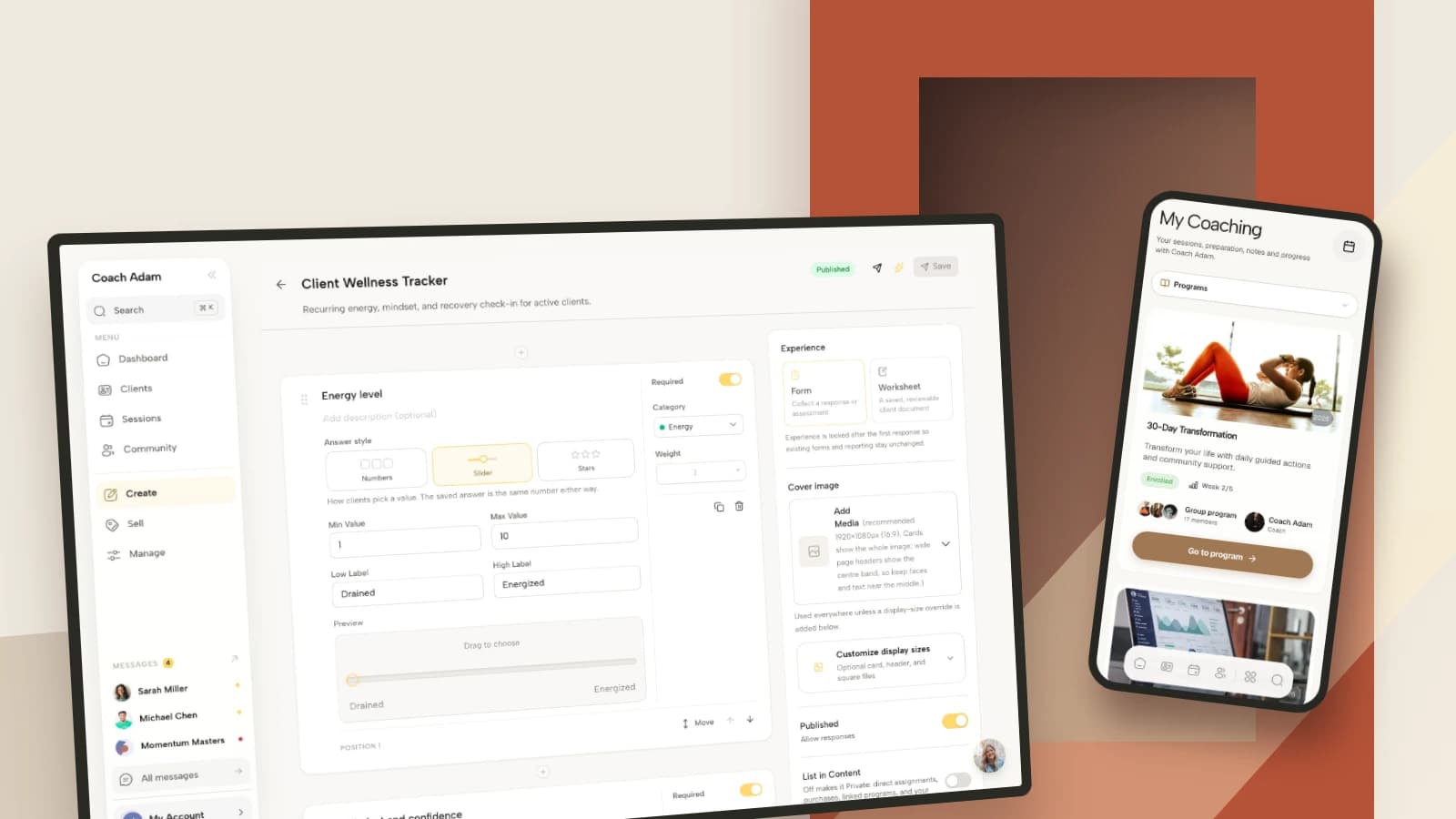
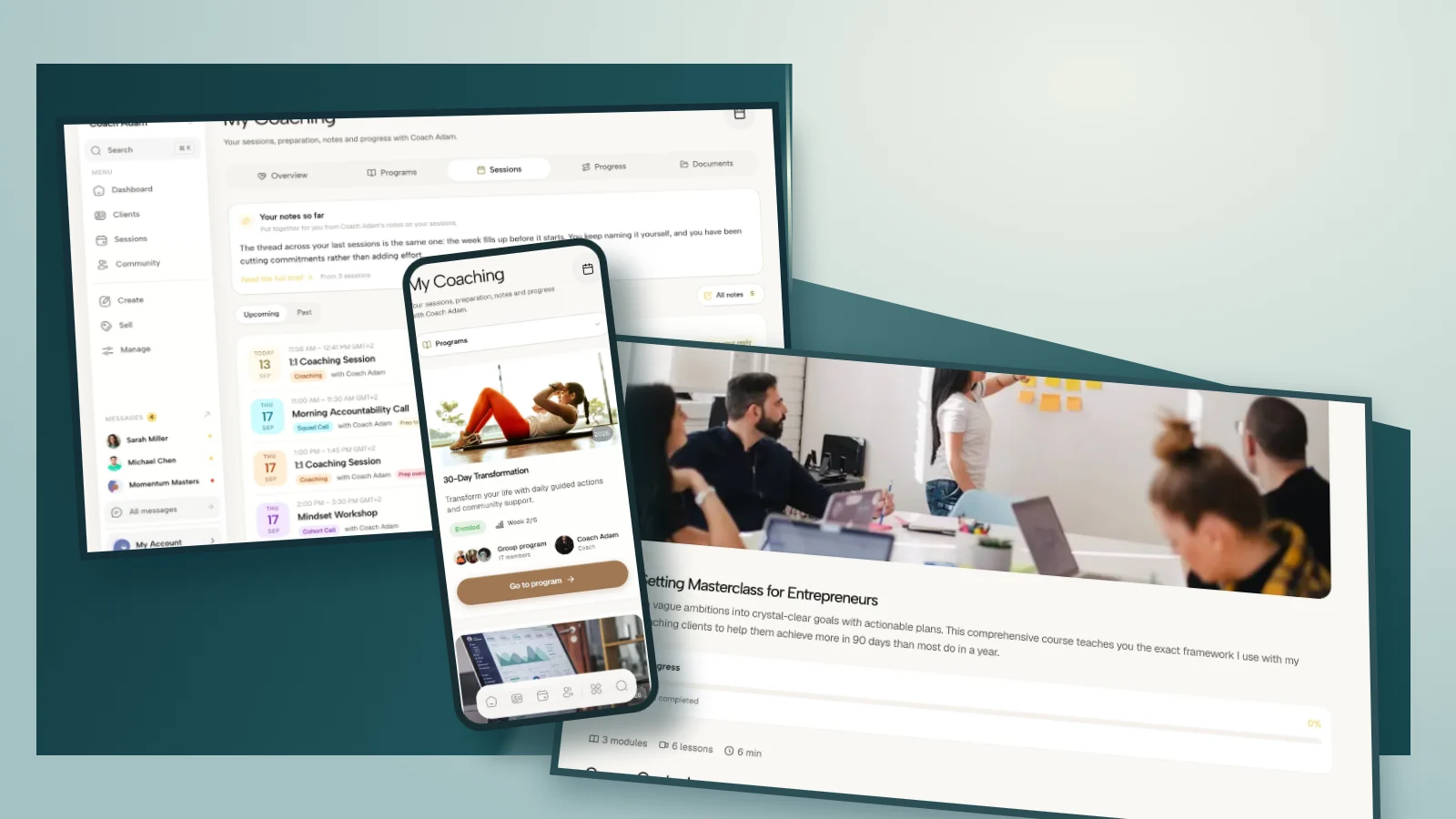
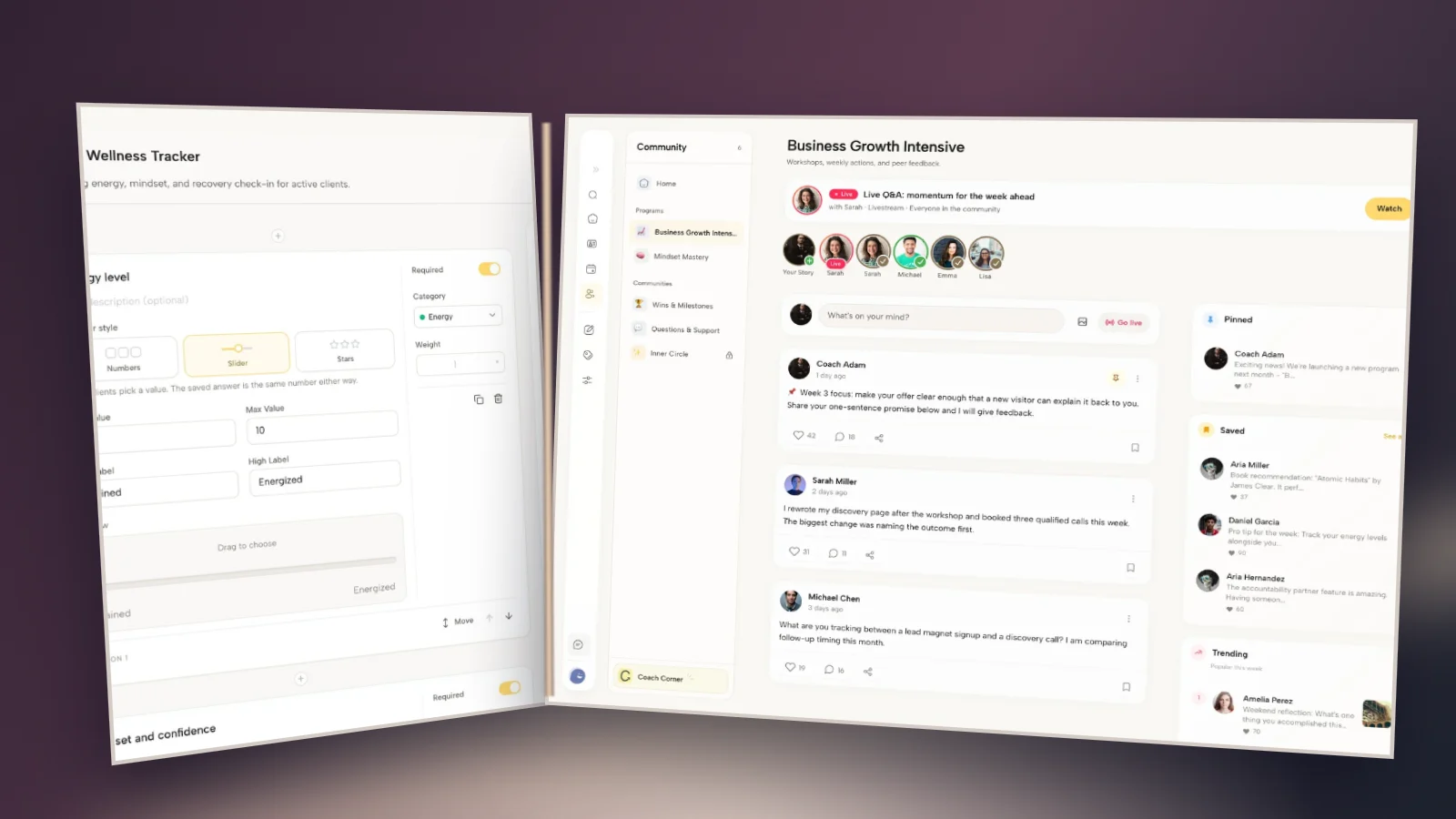
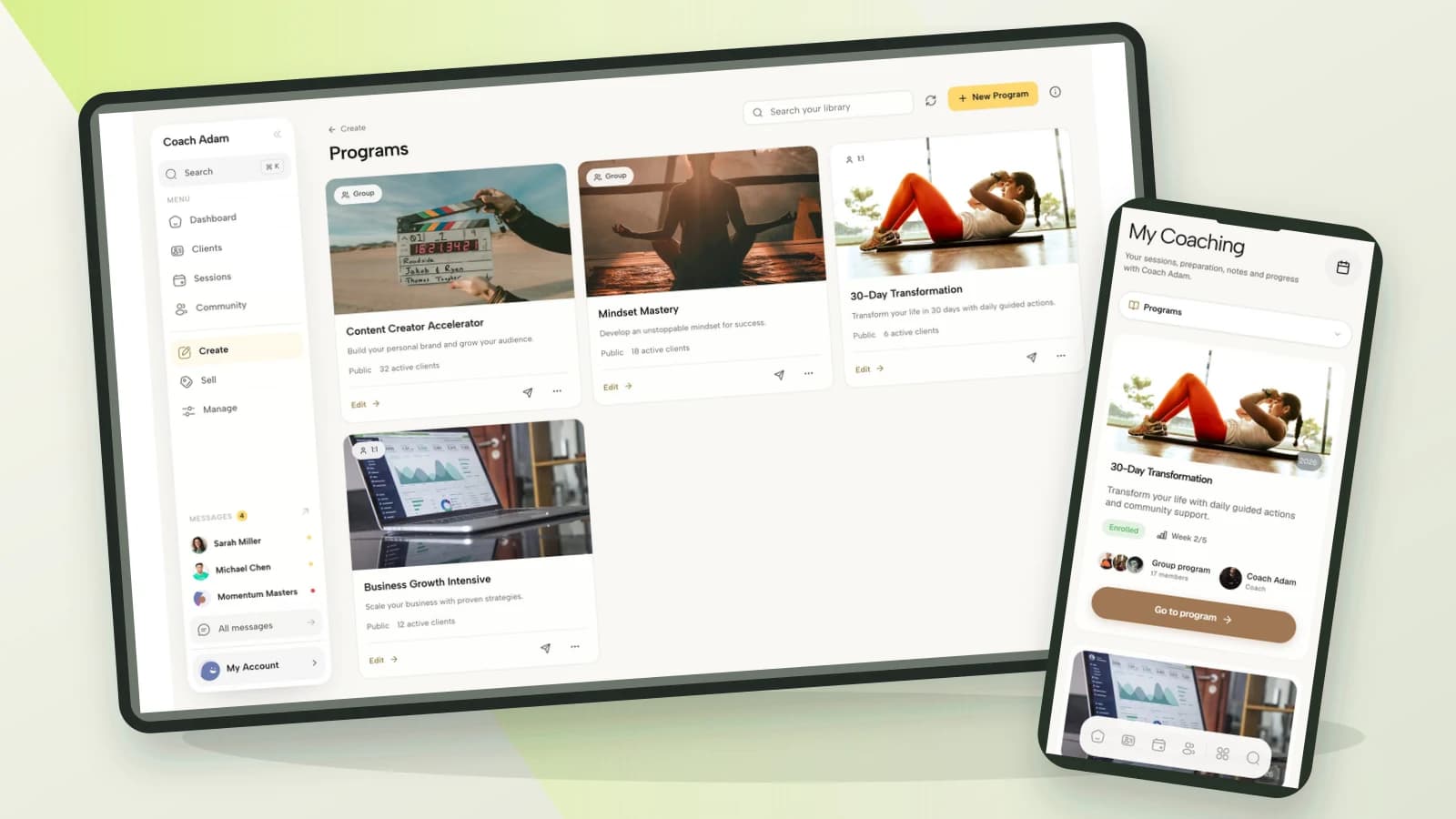
Coachful's real demo program and community screens can help you explore how a group experience might be organized. They do not establish your event's registration rules, paid-program terms or privacy arrangements. Those are decisions you must make and communicate for your practice.
Send a useful follow-up, not a disguised pressure sequence
Send the resource or recap you promised, the practical program details and one next step. Keep the volunteer's private material out of the recap. If someone asks not to receive further invitations, respect that request rather than interpreting it as a sales objection.

Here is an original follow-up template:
Subject: Your taster exercise and the group program details
Hi [first name],
Thank you for joining today's session on [topic]. Here is the exercise we used: [resource link]. You can use it whether or not you continue with me.
If you want repeated practice in a group, [program name] runs [dates and format] and costs [actual price and payment terms]. It includes [actual support] and does not include [important boundary].
You can read the details and [apply or enroll] here: [verified offer link]. If you are unsure about fit or access requirements, contact me privately at [contact].
[If true: Applications close on [real date] because [real delivery reason].] Otherwise, remove this sentence rather than inventing a deadline.
Thanks, [your name]
Write a separate factual message to people who registered but did not attend. Do not tell them they experienced the session or received its benefits. If there is no recording, do not imply otherwise. Offer the next real option, if one exists.
How to decide whether to run another taster
Review the event as a small business experiment. Record registrations, attendance, requests for more information, applications and paid enrollments separately. Someone who attended is not automatically a qualified buyer; someone who declined may have understood your offer perfectly.
Also record your preparation, delivery and follow-up time, cash costs and any practical problems. Ask attendees which part helped them understand the format and what remained unclear. Do not make a public compliment the only acceptable feedback.
Repeat when the session attracts suitable people, demonstrates the real work and is proportionate to the effort. Revise when people enjoy the exercise but misunderstand the paid program. Stop when the main result is more unpaid delivery with no useful learning about demand or fit. There is no universal conversion benchmark that decides this for every coaching practice.
Common questions about group coaching tasters
Should a taster session be free?
Not necessarily. State the fee and what it buys clearly. A free event can introduce the experience; a paid standalone preview can compensate you for a defined session. Do not treat either choice as proof of a participant's seriousness.
Should I record a group coaching taster?
For a participatory preview, not recording is a straightforward way to reduce unnecessary exposure. If you have a genuine reason to record, address permission, access, storage and participation options before the event. Do not assume a platform notification settles every privacy question.
How many participants should I invite?
Invite only the number your promised format can support. A fifteen-minute volunteer segment does not give everyone individual airtime. Increase capacity only when your participation structure and moderation can still deliver the experience you advertised.
How much should I explain about the paid program?
Enough to make the next decision: who it serves, what participants do, dates, price, support, boundaries and how to apply or enroll. Give those facts in writing too. The coaching portion should not be a long pretext for withholding the commercial details until the last moment.
Build the preview around the experience you can honestly deliver
The strongest taster is not a shortened sales presentation or an exhausting attempt to prove your entire worth in one session. It is a useful sample with clear boundaries, followed by a practical invitation. Let the participant understand both the work and the decision.
Before choosing the setup for your own event, explore the program, participant view, scheduling and email surfaces you would actually use. Try the interactive Coachful demo to inspect those workflows before building your preview around them.
Sources and scope
Group Coaching HQ's overview of group coaching describes facilitated shared learning, goals and peer perspectives. It informs the distinction between a participatory group and a teaching-only event, not the exact agenda or a conversion claim. The agenda, invitation, exercise and follow-up in this article are original practical examples, not a validated intervention or professional legal advice.