How to Start an Online Business: Step-by-Step Guide 2026

Coachful
You probably have a Notes app full of ideas, a head full of doubt, and a browser with too many tabs open.
One tab says you need a niche. Another says you need a funnel. Another insists you need branding, a lead magnet, a webinar, a content engine, and a morning routine that starts at 5 a.m. Meanwhile, you're thinking something much simpler and much more honest: What if no one buys? What if I'm not ready? What if I'm good at coaching but terrible at business?
Those fears are normal. They also don't get to run the show.
Learning how to start an online business as a coach isn't mostly about hype or hustle. It's about making a series of clear decisions in the right order. First, define a problem you can solve. Then validate that people want help with it. Build a basic business model that won't starve you. Set up simple systems so admin doesn't swallow your week. Launch softly. Improve as you go.
That's the work. Not glamorous. Very real. And very doable.
Find Your Niche and Unforgettable Offer
Most new coaches get bad advice first. They hear, "Follow your passion," and then they build an offer around what they love talking about instead of what someone urgently wants solved.
That mistake is expensive. The global success rate for launching an online coaching business is approximately 19%, and a major reason for failure is weak market validation and poor differentiation in a crowded space, according to Ippeli's online business success rate breakdown. If your offer sounds like everyone else's, prospects don't know why to choose you. If it solves a vague problem, they don't feel enough urgency to pay.
Passion matters. It just can't be the only filter.
Start with tension, not talent
A niche becomes compelling when it sits at the intersection of three things:
| Element | What to ask | Weak version | Strong version |
|---|---|---|---|
| Skill | What problem do people already trust you with? | "I'm a good listener." | "I help leaders have hard conversations." |
| Interest | What kind of client and topic can you stay engaged with for years? | "I like personal growth." | "I care about career identity and confidence." |
| Need | What pain is active enough that someone will pay to resolve it? | "People want happiness." | "New managers feel out of depth and fear being exposed." |
A life coach who says, "I help people find happiness," sounds kind. A coach who says, "I help first-year tech managers handle imposter syndrome and lead with confidence," sounds useful.
That's the shift you want.
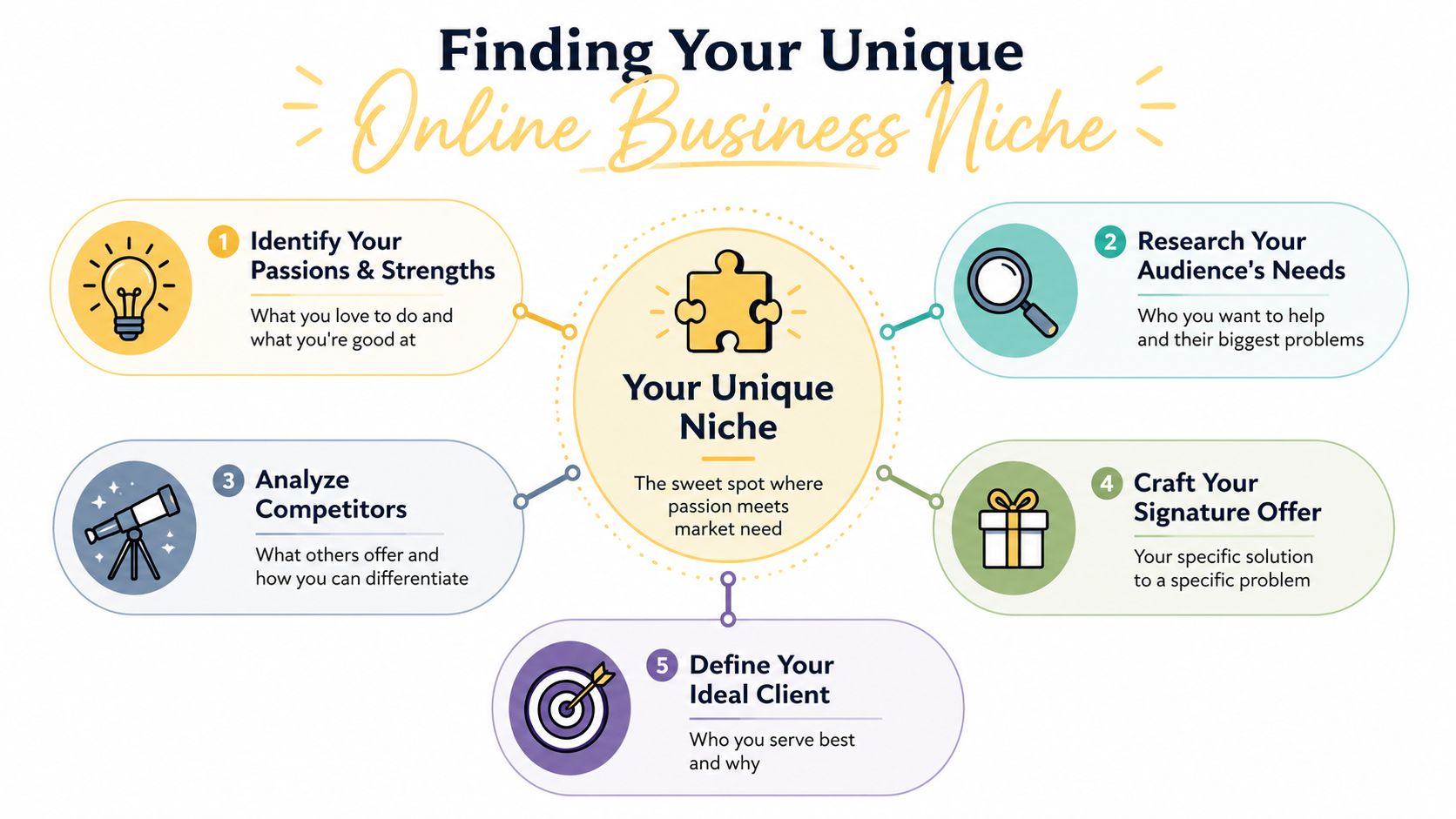
Use this five-part niche filter
If you're stuck between ideas, run each one through these questions:
Who is the client when they're in pain?
Not "women" or "founders." Think "newly promoted team leads," "burned-out therapists," or "divorced dads rebuilding routines."What specific problem keeps showing up?
Good niches form around recurring friction. Decision fatigue. Low confidence. Team conflict. Client retention.Why are you believable here?
Maybe you've lived it. Maybe you've coached through it repeatedly. Maybe your prior career gives you authority.What makes your method different?
Different doesn't have to mean completely new. It can mean faster, more structured, more compassionate, more practical, or more suited to a certain context.Can you explain the result in plain language?
If your ideal client can't repeat your offer back to a friend, it isn't clear enough.
Practical rule: If your offer could fit on ten other coaches' websites unchanged, it isn't positioned yet.
A simple example:
- Too broad: Confidence coaching for women
- Better: Confidence coaching for women returning to work
- Stronger: Confidence coaching for senior women returning after maternity leave who need to re-enter leadership conversations without second-guessing themselves
Specificity doesn't shrink your business. It makes trust easier.
Define the client before you design the program
A lot of coaches secretly hope they can stay broad because narrowing down feels risky. They think, "If I choose one type of client, won't I lose everyone else?" In practice, the opposite happens. Clear positioning makes people feel seen.
If you need help pressure-testing your direction, a tool like this coaching niche quiz can help turn scattered ideas into a sharper client-and-problem match.
Your niche doesn't need to be permanent. It needs to be clear enough for someone to say, "That's me. I need that."
Validate Your Idea Before You Build Anything
The worst sequence is common. A coach spends weeks building a website, outlining modules, choosing colors, writing welcome emails, and polishing a program no one asked for.
Validation comes before infrastructure.
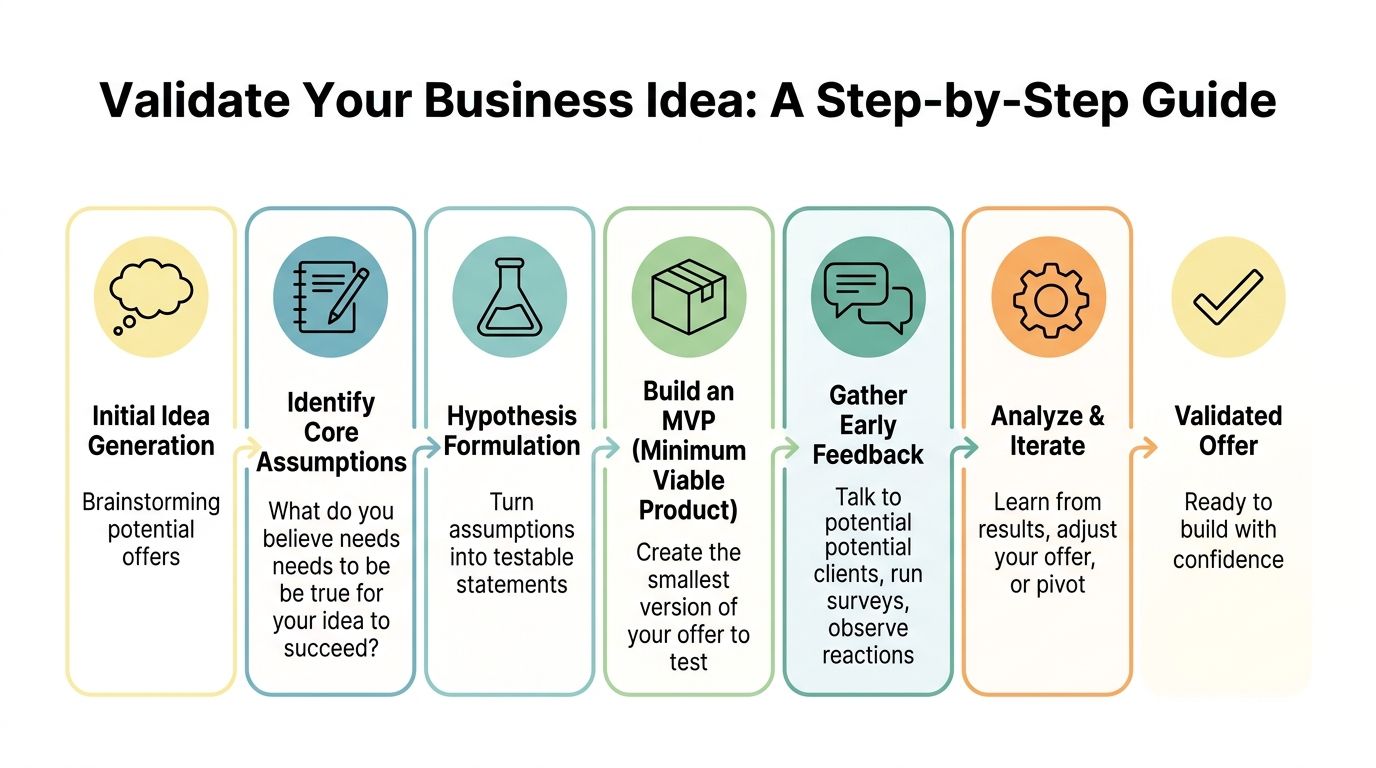
The validation process is about finding problem-solution fit through pre-sales or small tests before you scale. According to this business validation framework, 90% of online businesses fail within the first four months if this step is skipped. That doesn't mean your idea is doomed. It means your confidence should come from evidence, not effort.
Use conversations as your first market test
You don't need a formal research project. You need honest conversations with the kind of people you want to serve.
Try a simple five-chat method:
- Ask people you already know: Former colleagues, past clients, peers, or warm referrals can tell you how they describe the problem in their own words.
- Listen for current pain: Ask, "What's frustrating right now?" not "Would you buy coaching?"
- Notice emotional language: Phrases like "I keep avoiding it," "I feel behind," or "I don't know how to handle this" point to real buying tension.
- Test the promise: Say your offer out loud and watch for energy. If they lean in and ask questions, you're close.
- End with one direct question: "If I offered a small pilot around this, would you want details?"
You're not fishing for compliments. You're looking for friction, urgency, and language.
Build a small pilot, not a giant machine
Your first version should feel almost too simple. Good.
If you're an executive coach, don't build a twelve-week flagship right away. Offer a compact pilot to a small group around one clear result. If you're a wellness coach, test one focused challenge before building a membership. If you're a business coach, run a short beta on a single bottleneck, such as client messaging or sales conversations.
A pilot gives you answers to the questions that matter:
| Question | What a pilot reveals |
|---|---|
| Do people care enough to join? | Whether the problem feels urgent |
| Does your framing make sense? | Whether your offer is clear |
| Can you actually deliver this well? | Whether the format fits your style |
| What objections appear fast? | Whether price, timing, or promise needs work |
If nobody buys a pilot, don't rush to redesign the logo. Revisit the problem, the promise, or the audience.
Run a smoke test before full build-out
A smoke test is simple. Put the offer in front of real people before the full thing exists.
That can look like:
- A short landing page: Describe the problem, who it's for, and what early access includes.
- A direct outreach message: Send a note to people in your network who fit the client profile.
- A community poll: Ask a niche online group which challenge feels most pressing.
- A pre-sale conversation: Invite a few people to apply or book a call before the curriculum is complete.
One coach I mentored wanted to launch "career clarity coaching." Polite interest, weak demand. We narrowed it to "decision support for high-performing professionals who want to leave a role without blowing up their finances or identity." Suddenly the conversations got more honest. People didn't just say it sounded nice. They started asking when it began.
That difference matters.
Design Your Business Model and Financials
This is the part many coaches avoid because it feels like the opposite of coaching. But avoiding money decisions doesn't make you more mission-driven. It makes you fragile.
According to DemandSage startup data, the average cost of starting a business is $40,000 in the first year, and 82% of businesses that fail do so because of poor cash flow management. You don't need to spend that much to begin as a coach, but you do need a real plan for expenses, pricing, and reserves.
Choose a legal structure that's good enough for now
New coaches often freeze because they think one wrong setup decision will ruin everything. It won't. Start with a sound choice for your stage, then update as the business grows.
Here's the practical distinction many solo coaches wrestle with:
| Option | Why coaches choose it | Trade-off |
|---|---|---|
| Sole proprietorship | Fast, simple, low admin | Less separation between you and the business |
| LLC | Clearer separation, often feels more professional | More setup and ongoing admin |
If you want a deeper breakdown of the trade-offs, this guide on sole proprietorship vs S corp vs LLC is a useful next read.
The key is to decide, not drift. Open a separate business bank account. Track every expense. Stop mixing client revenue with groceries and rent in the same account.
Price around delivery and stability
A lot of coaches price by copying what they saw on Instagram. That's not strategy. That's anxiety wearing a business outfit.
Common coaching models include:
- Per-session pricing works when you're testing demand or offering a very specific intervention.
- Packages work when the transformation requires continuity and accountability over time.
- Monthly retainers or memberships work when support is ongoing and the client benefits from regular access.
If you want the business to feel calmer, study understanding recurring revenue. It helps explain why predictable income changes decision-making, cash planning, and retention.
Decision check: Price the format you can deliver consistently without resentment.
A coach who hates being on call all week shouldn't sell high-access voice-note support just because it sounds premium. A coach who thrives in structure may do better with a cohort or package than disconnected one-off sessions.
Build the habit that keeps businesses alive
Financial management isn't one dramatic action. It's a weekly rhythm.
Use a simple operating routine:
- Review incoming cash weekly: Know what's been paid, what's late, and what's expected.
- Set aside money for taxes and overhead: Don't wait until a deadline forces panic.
- Pay yourself intentionally: Even a modest owner draw builds discipline.
- Keep reserves visible: A cash cushion creates better decisions than desperation ever will.
Many coaches don't fail because they're bad at coaching. They fail because they treat cash flow like a side detail.
It isn't.
Build Your Tech Stack to Automate and Impress
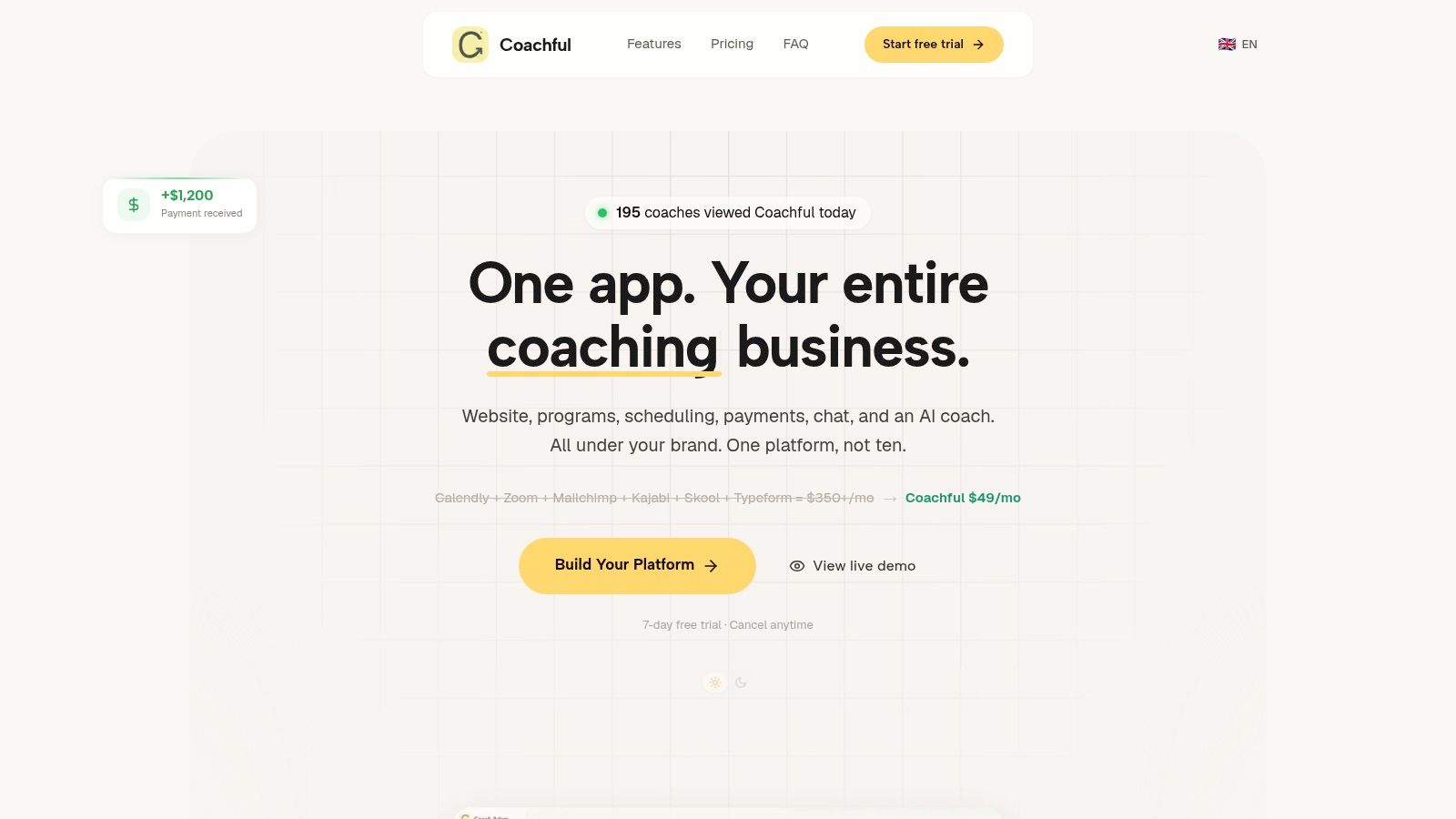
Most coaching businesses don't break because of a lack of care. They break because the backend gets patched together with too many separate tools.
One link for scheduling. Another tool for intake forms. A payment page that feels disconnected. Notes in Google Docs. Progress updates in email. Resources buried in a drive folder. Then a client asks, "Where do I find the worksheet?" and you spend ten minutes hunting for your own system.
That mess is more than annoying. It drains trust.
According to research on underserved practice-operations pain points, 68% of solo practitioners quit within 18 months due to administrative burnout, and manual billing and scheduling errors cost solo coaches an average of 15 hours per month. That's not a motivation problem. That's an operations problem.
Stop cobbling. Start consolidating
A clean coaching business usually needs these functions working together:
| Function | What the client experiences | What the coach needs |
|---|---|---|
| Scheduling | Easy booking and reminders | Fewer back-and-forth emails |
| Onboarding | Clear forms and expectations | Consistent intake data |
| Payments | Secure checkout and renewals | Less chasing invoices |
| Session delivery | Notes, goals, and resources in one place | Better continuity between sessions |
| Progress tracking | Visible milestones and accountability | A clearer view of client momentum |
When those live in separate systems, the coach becomes the integration layer. That's exhausting.
Build a setup you can actually maintain
If you're not technical, keep your foundation boring and reliable. One practical path is to buy a domain through a registrar such as Namecheap or GoDaddy, install WordPress through a host like Bluehost or HostGator, and use a premium theme such as Divi to create a professional site without custom coding. That sequence is clear enough for a solo coach to follow and simple enough to update later.
Then be strict about what your website needs to do. It doesn't need to win awards. It needs to explain your offer, let people inquire or book, and support a smooth client experience.
If you want to get a site live without wrestling code, a website builder made for coaches can shorten the setup path.
Think like a client for five minutes
A client doesn't experience your business as "tools." They experience it as confidence or friction.
If they book easily, get a welcome form immediately, know where to pay, can review notes, and can see goals and resources in one place, you feel professional. If they have to search their inbox for every next step, you feel improvised.
The more energy you spend managing the system, the less energy you bring to the coaching.
A health coach running six clients can survive with patchwork for a while. A business coach running private clients and a group cohort can't do that for long without feeling the drag. The work starts to feel heavier than it should.
That's why your tech stack should act like a quiet operations assistant. It should remove repeat tasks, not create new ones.
Create Your Simple and Effective Launch Plan
Most coaches think launching means making a lot of noise in public. That's why they delay it. They picture posting everywhere, selling hard, and risking silence in front of everyone they know.
A better first move is quieter.
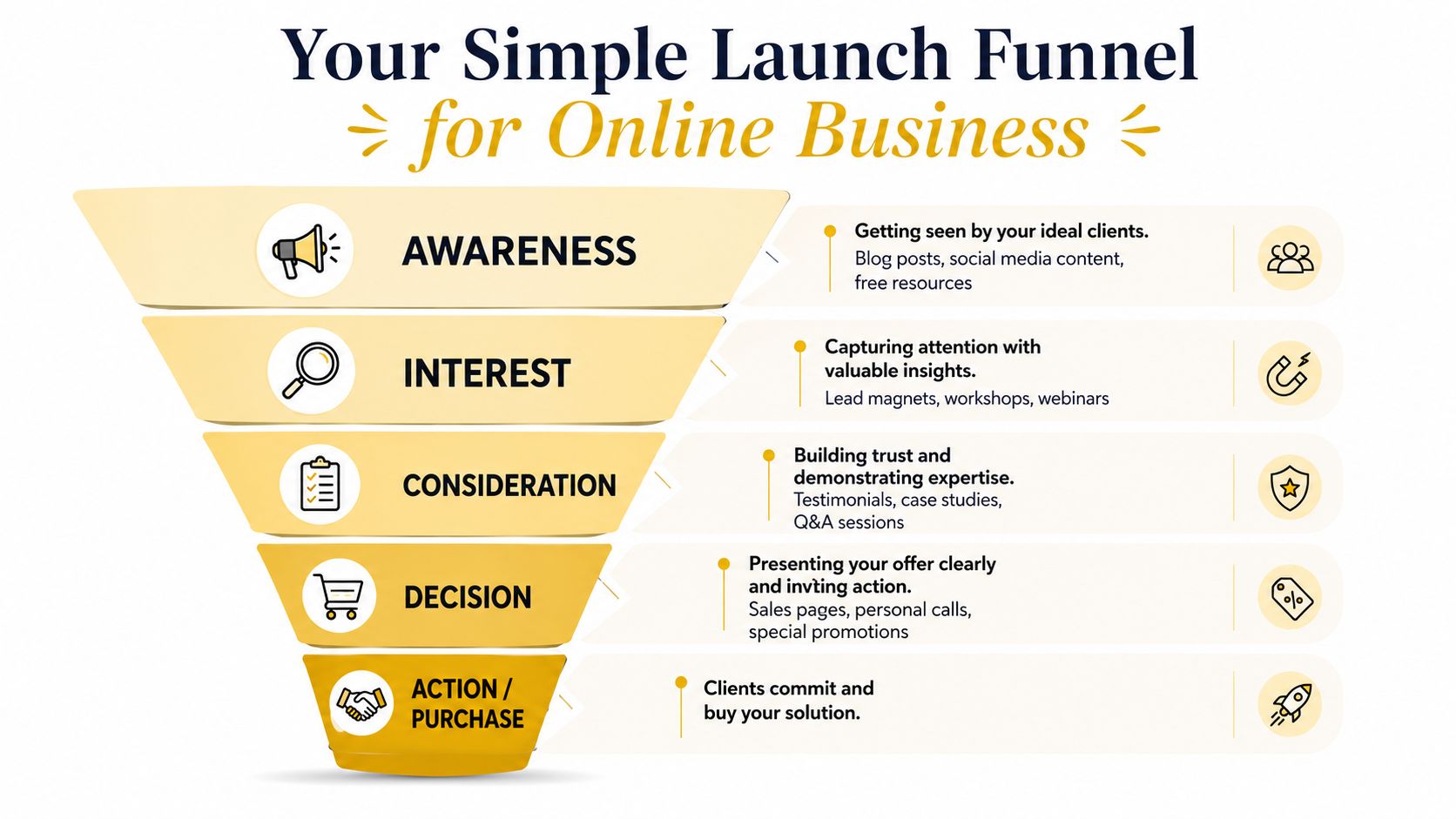
A soft launch lets you test the offer with a limited group, gather feedback, and collect the first testimonials before a broader release. That's the practical reason behind the recommendation in Octolize's launch guidance. It's also the psychological reason many coaches finally move.
What a soft launch looks like in practice
Say you're an executive coach who wants to help new directors lead with more authority. Don't start with a giant public rollout. Invite a small beta group first.
Your beta could be:
- A short pilot cohort for people already in your network or one step removed from it
- A focused program around one urgent result, not your entire philosophy
- A reduced early-access price in exchange for structured feedback and a testimonial if the experience was strong
- A clear start and end date so people know this is a real offer, not an indefinite favor
The inner dialogue shifts. Instead of "What if no one buys?" the question becomes "Can I get a few right-fit people into a small test?" That is much easier to answer with action.
Use a low-pressure invitation sequence
You do not need a complicated launch funnel. You need a clean invitation.
A simple sequence:
Email or message one warm list first
Former colleagues, peers, subscribers, and trusted contacts are enough for an initial pilot.Describe the problem in lived language
"You're leading a bigger team now, but second-guessing every hard conversation."Present the beta clearly
Explain who it's for, what result it aims for, what the format is, and how to reply.Follow up once
People are busy. A second message is normal, not pushy.Talk to interested people directly
Sales gets easier when you treat it as fit, not persuasion.
Here's a useful mindset shift:
You're not convincing someone to want help. You're helping the right person recognize that help is available.
A direct outreach message can be plain. "I'm running a small pilot for newly promoted leaders who want to feel steadier in difficult conversations. If that sounds relevant to you or someone you know, I'm happy to send details."
Later in the section, if you want a quick visual walk-through, this short video can help ground the launch process:
Collect proof, not just revenue
The point of your first launch isn't only to get paid. It's to learn.
Ask beta clients:
- What almost stopped you from joining?
- What part felt most valuable?
- What wording made the offer click for you?
- What would you tell a friend about this program?
Those answers improve your next version faster than guessing ever will.
Operate and Scale Your Practice for the Long Term
Starting is one challenge. Staying in business without resenting it is another.
A lot of coaches reach a fragile middle stage. They have clients, some income, maybe even momentum, but the whole thing depends on them remembering everything, responding to everything, and carrying every detail in their head. That's where the business starts owning the coach.
Long-term practice growth comes from replacing memory with systems.
Move from sessions to systems
You are not just delivering coaching. You're running a service business that needs consistency.
That means creating repeatable ways to handle the work around the work:
- Client feedback loop: Ask for feedback at defined points, not randomly when you're feeling insecure.
- Program review rhythm: Revisit curriculum, session flow, and client drop-off patterns on a schedule.
- Boundaries on delivery: Decide response times, office hours, and communication channels before clients train you otherwise.
- Admin routine: Pick fixed times for invoicing, notes, and planning so the tasks stop leaking everywhere.
One coach can hold a lot together manually for a while. The cost is usually hidden. Reduced attention, late admin, uneven client experience, and chronic low-grade stress.
Raise prices with a reason
Many coaches either raise prices too late or too apologetically. They wait until resentment builds, then feel guilty for changing anything.
A healthier approach is to raise prices when one of three things is true:
| Signal | What it means |
|---|---|
| Your demand is stronger | More of the right people are saying yes |
| Your offer is sharper | The result and process are clearer than before |
| Your delivery is stronger | You have better structure, tools, and outcomes |
Raise prices for new clients first. Keep the message simple. Explain the updated rate, the effective date, and the value of the current offer. No long defense is needed.
Add leverage without losing quality
If your only offer is one-to-one coaching, growth eventually hits a ceiling. You run out of time before you run out of demand.
That's when you consider your advantages:
- Group programs if clients benefit from shared learning and accountability
- A lower-ticket entry offer if people need a first step before private coaching
- Structured renewals if your work naturally extends into ongoing support
- Resource libraries or assignments if clients need between-session reinforcement
The goal isn't to become a content factory. It's to create a business model that supports your energy, your clients, and your life.
The strongest coaching businesses don't just help clients change. They give the coach room to keep doing the work well.
If you're ready to stop juggling forms, scheduling links, payment tools, notes, and client follow-up across too many systems, Coachful gives you one place to run your practice. It brings onboarding, scheduling, secure payments, messaging, progress tracking, and program delivery into a single workspace so you can spend less time on admin and more time coaching.