How to Write Online Course Quiz Questions: 5 Coach Examples

Nour
Founder, Coachful
How do you know whether a client understood your course, rather than simply watched the videos? Write a short learning check that asks them to use the lesson in a realistic situation, then explain the reasoning behind the answer. A completion tick tells you that a step was marked complete. It does not tell you what the person can now do.
For a coach creating an online course, the useful question is not “How many quiz questions should I add?” It is “What decision should a learner be able to make after this lesson, and what response would show me that?” Start there and the writing becomes much less arbitrary.
This guide shows how to write online course quiz questions through five original examples, with answer keys, feedback and a reusable drafting template. These are low-stakes educational checks, not validated assessments, diagnostic questionnaires or professional certification exams. Adapt the subject matter to your competence and what you actually taught.
Start with the learning objective, not the quiz format
Write one observable action: “Choose a verifiable weekly goal,” “Identify the missing part of a delegation brief,” or “Revise an action plan to fit the available time.” Avoid an objective such as “Understand confidence.” You cannot write a defensible answer key until you decide what understanding should look like.
The University of Waterloo's guidance on multiple-choice questions recommends familiar language, a clearly expressed problem, plausible distractors and only one best answer. Those principles matter in coaching courses because everyday decisions often have several reasonable answers. Your question must supply the conditions that make one response better.
Keep three different activities separate:
- Knowledge check: there is a defensible answer based on the lesson.
- Reflection: the learner describes their own priorities or experience. There may be no correct answer.
- Practice task: the learner produces something you review against stated criteria.
Do not label a personal preference wrong because it does not fit your favourite framework. A learner choosing a different career priority is not failing a knowledge test. If you need an individual coaching conversation, use the response to open that conversation rather than manufacture a score.

1. A multiple-choice question that checks application
Use this when: the lesson teaches a clear distinction and the learner needs to recognise it in a new example. Multiple choice is useful when one option is demonstrably best under the stated conditions, not just the one that sounds most positive.
Lesson objective: choose an action whose completion can be verified by a named date. The lesson has already distinguished observable actions from aspirations.
Question: You want a weekly goal you can verify next Friday. Which option meets that criterion?
- A. Become an inspiring manager.
- B. Hold two feedback conversations by Friday.
- C. Care more about team development.
Answer key: B. It names an observable action, a quantity and a deadline. A and C may express worthwhile intentions, but neither specifies what would count as completion by Friday.
Feedback to show: “B can be checked against the stated criterion. It does not guarantee a useful conversation or make this the right goal for every manager. Your next task is to decide what a good feedback conversation would involve in your own setting.”
The caveat is part of the teaching. Without it, you risk implying that measurable activity automatically produces the desired result. Ask only what the item can genuinely establish.

2. A scenario question with plausible distractors
Use this when: the learner must notice a common mistake and choose an appropriate next move. The wrong options, called distractors, should represent realistic misunderstandings rather than absurd behaviour.
Lesson objective: identify a missing decision boundary in a delegation brief. Your lesson has taught that a useful brief names the outcome, deadline and authority the colleague can exercise.
Question: A manager gives a colleague an outcome and a deadline. The colleague asks, “Which decisions can I make without checking with you?” What should the manager clarify first?
- A. Ask the colleague to send a daily progress report.
- B. Agree which decisions the colleague can make and when to consult.
- C. Wait until the final deadline before discussing the work.
Answer key: B. The question identifies missing decision authority. A introduces monitoring without resolving that uncertainty; C leaves the uncertainty in place.
Feedback to show: “Agreeing decision boundaries answers the colleague's actual question. A progress report might be useful later, but it does not tell them what they can decide now.” This explains why an attractive alternative misses the point rather than merely announcing “Incorrect.”
Avoid hiding a second problem in the scenario. If the colleague also lacks training, the deadline is impossible and the manager has no authority, several answers become arguable. Add complexity only when evaluating that complexity is the learning objective.

3. A sequencing question for a taught process
Use this when: the lesson teaches a process whose order matters. Do not turn a flexible conversation into a rigid sequence simply because ordering questions are easy to mark.
Lesson objective: apply a specific weekly planning routine taught in the course. For this example, the routine is to identify fixed commitments, choose one priority, place a realistic action and define a fallback.
Question: Put these steps in the order used in this lesson: A. Choose one priority for the week. B. Define a smaller fallback action. C. Identify fixed commitments. D. Place a realistic action in the remaining time.
Answer key: C, A, D, B. First inspect the commitments you cannot move. Then select a priority, place an action that fits and decide how to adapt if the original slot disappears.
Feedback to show: “This is the sequence taught for this exercise, not a universal law of planning. Choosing an action before inspecting your commitments can create a plan with nowhere to happen. The fallback follows the action because it is a smaller version of that specific commitment.”
If your tool does not offer drag-and-drop ordering, ask the learner to type the letters. The thinking task matters more than the interaction. Keep the instructions explicit and make sure the answer remains usable by keyboard and on a phone.

4. An error-spotting question that leads to a revision
Use this when: the course teaches a quality standard that learners should apply to their own work. Give them a short fictional draft to inspect instead of asking them to judge an actual client's choices.
Lesson objective: recognise a mismatch between an action plan and its stated capacity. Here, the lesson requires the proposed action to fit the available slot.
Question: A fictional learner has a 20-minute window for an exercise. Their draft action is “Spend one uninterrupted hour reviewing my options on Thursday.” What needs to change before this plan is workable under the stated constraint?
Answer key: the planned duration exceeds the available window. The learner should reduce the action to fit that window or identify a genuinely available longer slot. “Try harder” does not resolve the mismatch.
Acceptable revision: “On Thursday, use the available 20 minutes to list three options and write one question about each.” This is one possible answer, not the only acceptable wording. A different action can qualify if it fits the time and preserves a useful purpose.
Feedback to show: “You have repaired the capacity mismatch. Now check whether the smaller action still helps with the decision you are trying to make.” The task tests the plan, not whether the learner is disciplined enough.
Write the acceptance criteria before reading responses. Otherwise a perfectly workable answer can look wrong simply because it differs from the example you had in mind.

5. A short-answer question with a transparent rubric
Use this when: you need evidence of the learner constructing an answer, not recognising one you supplied. This takes more review time, so choose it for an important skill rather than every minor concept.
Lesson objective: draft a realistic action using an observable behaviour, a defined occasion and a capacity check.
Question: Write one action you could take this week. Name what you will do, when or in which situation you will do it, and one constraint or smaller fallback. Use a fictional example if you do not want to disclose personal information.
Review rubric:
- Observable action: the response names something a person can actually do, rather than an identity or feeling.
- Defined occasion: it names a time or a recognisable situation.
- Capacity check: it acknowledges a relevant constraint or supplies a realistic fallback.
Example response: “After Tuesday's team meeting, I will spend ten minutes drafting the opening of a feedback conversation. If the meeting overruns, I will write the first two sentences before lunch.” It provides all three elements without needing an intimate personal disclosure.
Feedback to show: “The action and occasion are specific. Your fallback preserves a useful first step. Before using it, check whether the conversation itself is appropriate and within your role.” If an element is missing, name that element and invite a revision.
You can record the three criteria as met or not yet demonstrated. If you attach points, explain the scoring in advance and do not present the total as a validated measure of confidence, readiness or psychological health.

Turn an answer key into useful feedback
A useful feedback note does three jobs: identifies the relevant principle, explains how it applies to this answer and names the next move. “Correct, well done” is pleasant but tells a guesser very little. “Incorrect, watch the whole lesson again” gives an unnecessarily broad repair.
For the delegation example, point back to the section on decision authority. For the planning example, invite the learner to compare duration with actual availability. Keep the correction close to the misunderstanding rather than sending everyone back to the beginning.
Decide whether learners can retry and whether you want a new example on the second attempt. For low-stakes practice, a revision can be more informative than a first-attempt percentage. For an assessment with professional or contractual consequences, get appropriate assessment expertise rather than improvising a pass mark.

Use this quiz-question drafting template
Copy this brief for each proposed item before building it in software:
- Lesson and objective: After this lesson, the learner can [observable action].
- Evidence needed: I would recognise that ability if they [response or product].
- Question: [Only the context and instructions needed to respond.]
- Answer or criteria: [The defensible key, or the elements that qualify.]
- Likely misunderstanding: [The plausible error this question can reveal.]
- Feedback: [Principle, explanation and next action.]
- Delivery check: [Response type, access, privacy, review owner and retry approach.]
Write a small set for one lesson and pilot it before adding checks throughout the course. Ask a colleague to explain how they interpreted each question. If they cannot answer because the wording is ambiguous, fix the question before deciding the teaching failed.
Test the learning check from the client's side
Open the lesson and question as a learner, not just in the editor. Can you find the relevant context, read the complete options on a phone, answer by keyboard and understand what happens after submission? If the exercise depends on a visual, provide the necessary information in text as well.
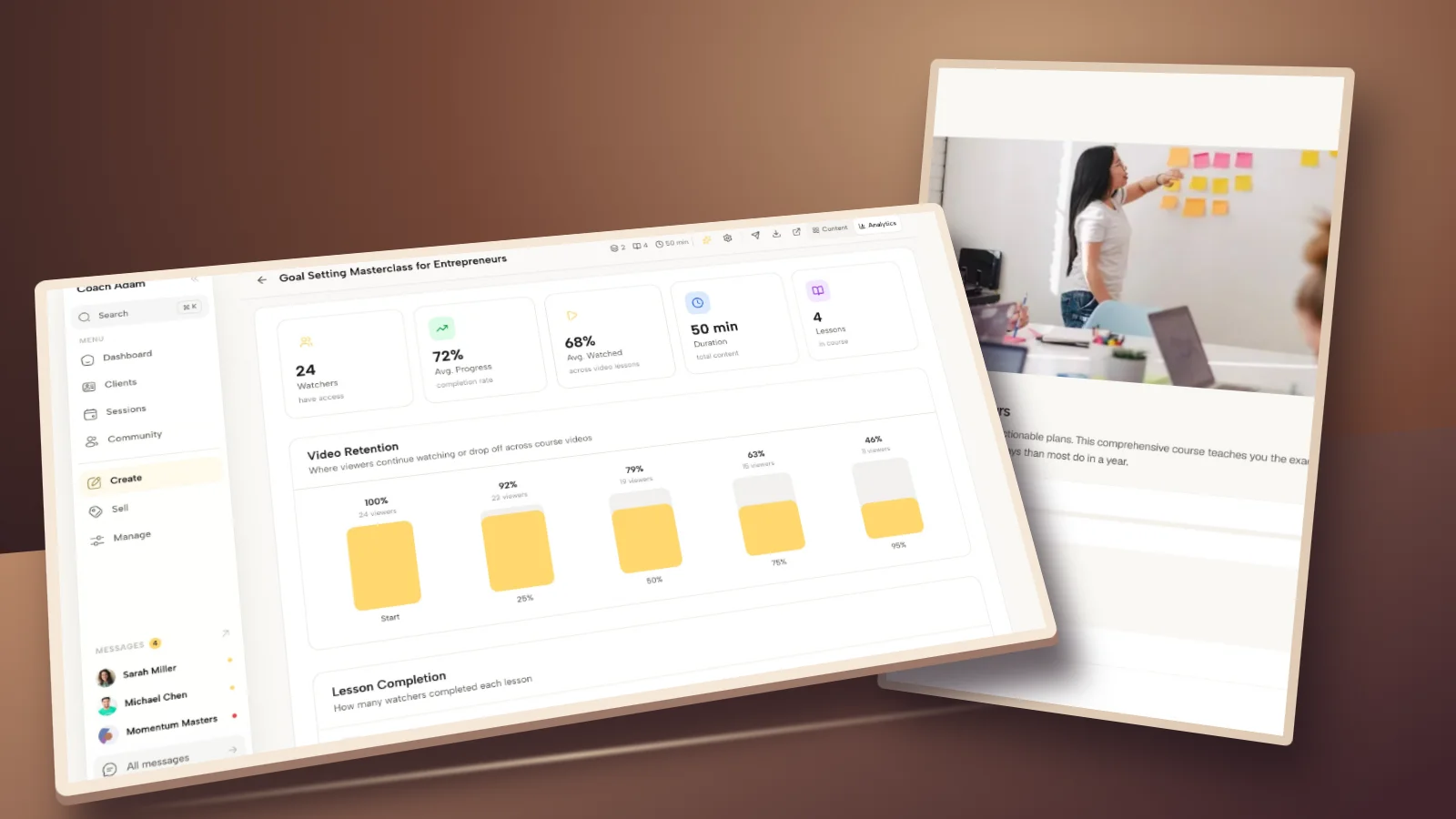
Separate engagement data from learning evidence. A video-retention chart can help you investigate where attention drops. A completion record can tell you which steps were marked done. Neither replaces reviewing an answer or observing a skill. Do not tell a sponsor that a learner has mastered delegation because they reached the final page.

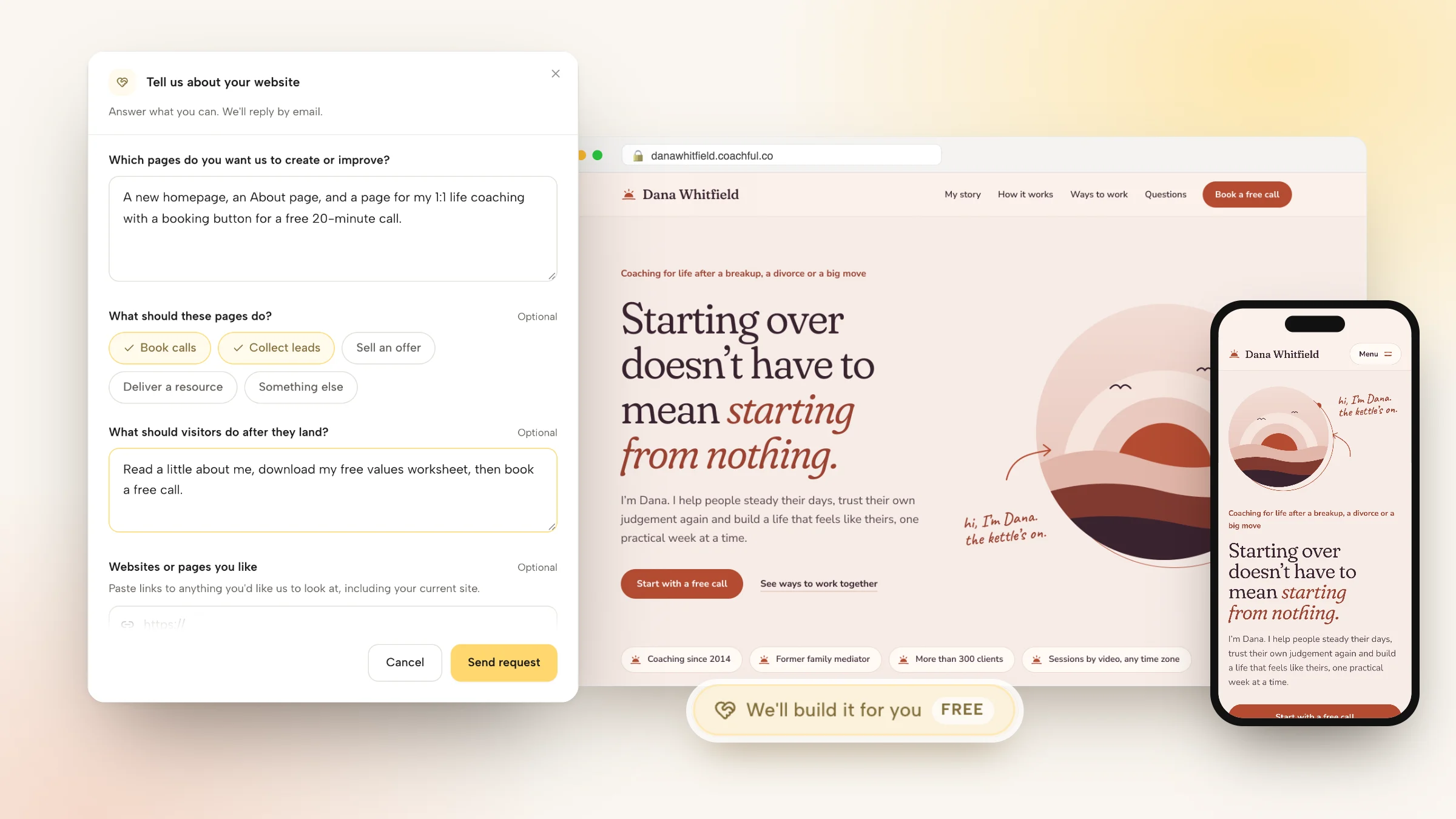
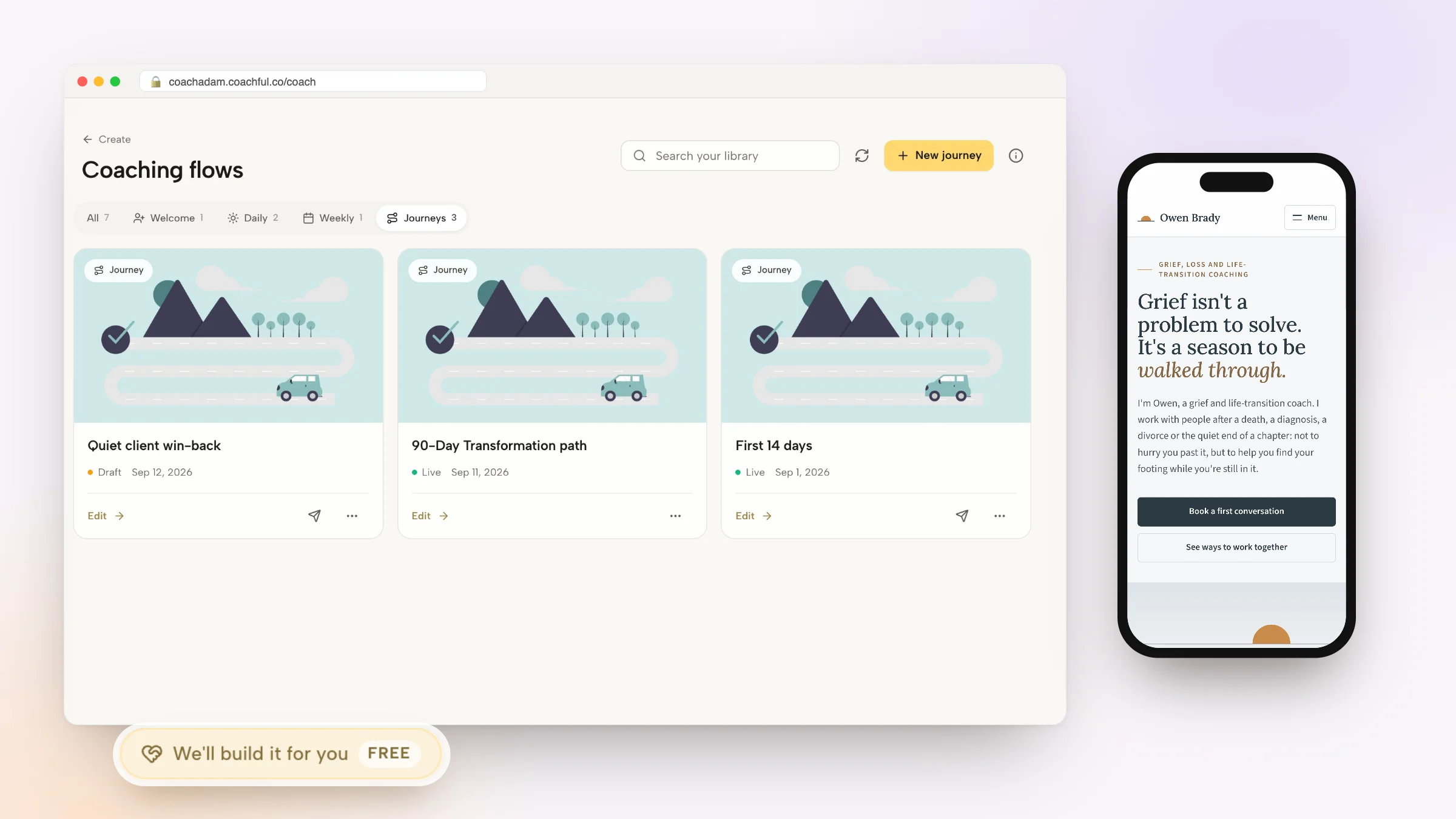
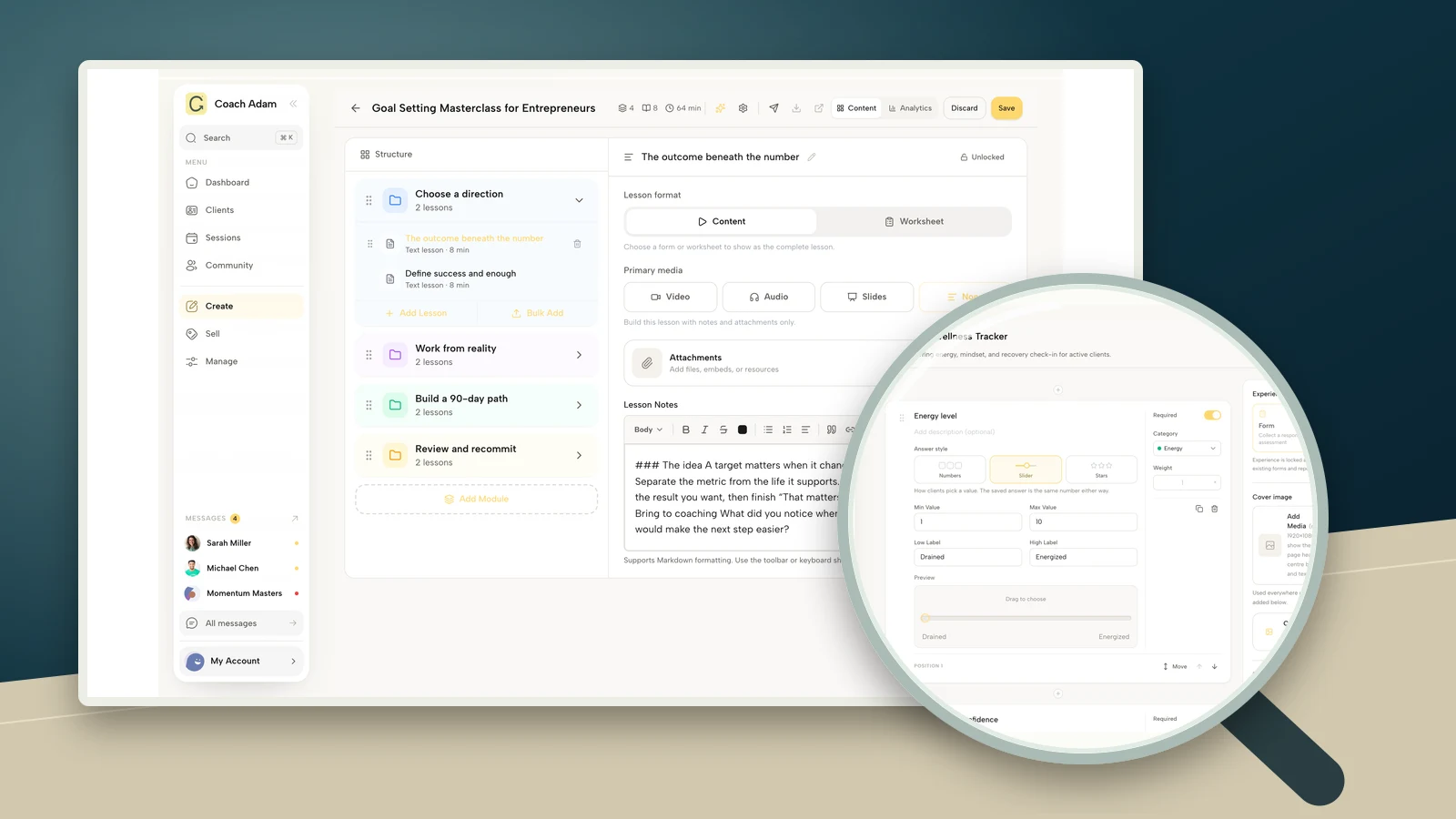
Coachful's demo shows a course editor, a learner course experience, a form builder and course analytics. Those are useful surfaces to inspect when planning where a lesson, response and review belong. The screenshots here do not establish automatic quiz marking, a question bank, pass-based access restrictions or a professional assessment capability.
Before choosing your setup, test the exact question type, feedback method and review process you need. If your next job is connecting the lesson to the client's practical experience, try the interactive Coachful demo and inspect those surfaces with one drafted question beside you. Check the requirements against the real workflow rather than buying from an assumed feature list.
Frequently asked questions
How many questions should a coaching course quiz have?
Use enough to check the lesson's important objectives without repeating the same distinction. A short pilot can start with one or two well-written questions and a practice task where needed. That is a manageable starting point, not a research-backed universal optimum. Add items when they supply different evidence.
Should every question have a right answer?
No. Reflections about values, priorities or lived experience may not. Label them as reflections. Use an answer key for a taught distinction and a transparent rubric for a constructed response; do not grade a person's life preference as incorrect.
Can a quiz prove that a coaching client has changed?
Not by itself. A correct response can show understanding of a particular question under particular conditions. Behaviour outside the course requires different evidence, agreed with the client and handled proportionately. Avoid turning a small learning check into a claim about broad transformation.
Should I randomise the questions?
Only when the questions remain meaningful in a different order and the scoring still works. That is a delivery decision after you have good items. Our guide to randomising multiple-choice questions covers that separate task. A lead-generation quiz has a different purpose again; see the quiz funnel guide for prospect-facing results and follow-up.
The practical standard: each question should tell you something specific enough to guide the next teaching move. If you cannot explain what an answer demonstrates, or what you would do with a misunderstanding, rewrite the question before adding it to the course.