10 Ideas for Short Term Goals to Propel Client Progress

Coachful
How do you translate a client's grand vision into progress they can feel next week?
That's the gap most coaches run into. The long-term dream sounds compelling in a discovery call, but the actual work happens in shorter cycles. Short-term goals are usually framed as objectives completed in under one year, often within a few days to a few months, which is exactly why they work well in coaching. They turn an inspiring direction into something observable, reviewable, and easier to act on. Guidance summarized by the U.S. Chamber notes that setting a goal and deciding to pursue it can raise completion probability by 25%, while assigning a deadline can raise it to 40%, and creating a detailed plan can raise it to 50% (U.S. Chamber goal-setting overview).
If you coach people for a living, that matters. Your client doesn't need another vague aspiration. They need a concrete target, a place to track it, and a cadence that keeps them honest when motivation dips.
These ideas for short term goals are built as a coach's playbook, not a generic self-help list. Each one is something you can implement inside your practice, assign to clients, and manage as a repeatable system. You'll see examples, trade-offs, tracking approaches, and practical ways to reduce drop-off. The point isn't to add more work. It's to replace scattered effort with a structure that supports real follow-through.
1. Complete Client Onboarding Process Setup
A messy start creates avoidable problems later. If clients arrive confused about expectations, communication, goals, or session rhythm, you'll spend the first few weeks fixing preventable friction instead of coaching.

A strong onboarding setup usually includes an intake form, welcome message, program overview, consent or policy acknowledgment, and a baseline reflection. For a life coach, that might mean asking about career, relationships, health, and finances. For an executive coach, it might mean leadership challenges, stakeholder dynamics, and desired outcomes before session one.
What to build first
Keep the intake lean. If you ask too much too early, completion drops and clients rush through answers. I'd rather see a short, thoughtful form than a giant questionnaire nobody wants to finish.
Useful onboarding pieces include:
- Core intake questions: Ask only what you'll use in the first phase of coaching.
- Expectation-setting note: Clarify response times, session cadence, and how accountability works.
- Welcome media: A short video or voice note can make the process feel human, not administrative.
- Profile centralization: Store answers where you can reference them during sessions, not buried in email.
If you need a practical framework, this coaching client onboarding guide is a sensible place to tighten the handoff from prospect to active client.
Practical rule: Don't use onboarding to impress clients with complexity. Use it to reduce uncertainty.
Later, if you want a broader operations stack around client records, a Webtwizz client CRM builder can help map contact and workflow needs outside your coaching flow.
After you've drafted the process, walk through it as if you were a new client. That single test usually reveals where people get stuck.
A visual walkthrough helps when you're setting this up:
2. Implement Session Scheduling and Calendar System
How many sessions have you lost to preventable calendar friction?
If a client has to email you, wait for a reply, then negotiate times back and forth, scheduling is already draining momentum from the coaching relationship. This is one of the fastest operational goals to clean up because the failure points are easy to spot. Missed reminders, double bookings, timezone confusion, and last-minute cancellations usually come from a weak system, not a difficult client.

Set up scheduling as a coach's operating system, not just a booking link. Clients should be able to book from approved availability, get reminders automatically, and reschedule inside clear rules. Coaches running one-to-one work need a clean way to protect focus time. Coaches handling group programs or corporate delivery need stricter controls, recurring events, and fewer exceptions.
A scheduling system worth keeping usually includes:
- Defined session types: Separate discovery calls, paid sessions, group calls, and urgent support so the calendar reflects real capacity.
- Buffer time: Block space before or after sessions for prep, notes, and recovery.
- Reminder sequence: Send confirmations and reminders at fixed intervals so attendance does not depend on memory.
- Self-service rescheduling: Let clients change a booking within your policy without turning every change into an email thread.
- Timezone handling: Show bookings in the client's local time by default. This prevents avoidable no-shows.
I tell coaches to track three things for the first month after setup: no-show rate, reschedule volume, and how often clients ask booking questions anyway. Those numbers show whether the system is clear or whether clients still need hand-holding. If a client repeatedly misses sessions, do not solve it with extra flexibility. Tighten reminders, shorten the booking window, or require the next session to be booked before the current one ends.
If you want scheduling connected to notes, goals, and client records in one place, a coaching platform can reduce tool switching and make follow-up easier to manage.
One warning. Do not let every client book a different way. Once one person schedules by text, another by email, and another through your calendar page, you create admin work that keeps growing. Pick one path, document it, and coach clients to use it. That consistency is what makes the system reliable.
3. Define and Document Coaching Program Structure
Some coaches sell “ongoing support” because it sounds flexible. Clients often hear that as “I'm not sure what happens next.” Structure builds trust.
Documenting your program doesn't mean turning your work into a rigid script. It means making your process visible. Clients should know the rhythm, the milestones, the expected effort on their side, and what progress will look like.
Give the client a map
A business coach might offer a focused program for sales process improvement and a separate longer engagement for leadership development. A life coach might run a weekly transformation program with milestone reviews. A coaching academy might structure an eight-week cohort with weekly calls, assignments, and office hours.
What should be documented:
- Program duration and cadence: How often sessions happen and for how long.
- Expected deliverables: Worksheets, check-ins, voice notes, action plans, or reflections.
- Success markers: What the client should be able to do, decide, or change by key checkpoints.
- Customization boundaries: What can flex and what remains standard.
The strongest short-term goals in operations become specific, measurable, and tied to one area of execution, with regular review on a weekly or monthly cadence rather than waiting for a quarterly reset. Synergita's summary of short-term planning makes this practical point well, especially for goals like booking a set number of discovery calls in a month or improving renewal rate over a defined period (Synergita short-term goals examples).
Clients don't need perfect certainty. They need a clear next step and a believable path.
If your client asks, “What exactly happens if I sign up?” you should be able to answer in under a minute.
4. Establish Progress Tracking and Outcome Measurement System
If progress only lives in your memory, it's not a system. It's a hope.
Many coaches underperform when they create insight in sessions but fail to measure whether anything is changing between sessions. That makes renewals harder, referrals weaker, and client motivation more fragile.

Track fewer things, better
Pick a handful of indicators that reflect movement. An executive coach might track confidence in difficult conversations, completion of stakeholder actions, and follow-through on leadership commitments. A health coach might track sleep consistency, meal prep adherence, and training completion. A business coach might review proposal sent, sales conversations held, or delivery bottlenecks resolved.
Use a mix of quantitative and qualitative tracking:
- Baseline snapshot: Capture where the client is at the start.
- Subjective ratings: Confidence, clarity, energy, and stress are worth tracking if you define them clearly.
- Behavioral evidence: What did the client do, avoid, complete, or repeat this week?
- Monthly review: Step back and review trend, not just isolated wins or misses.
Short-term goals are especially useful in data-driven workflows because they create quick, quantifiable wins. The Sunflower Lab notes that short-run movement can be detected through simple control-style thinking, where several consecutive points moving closer to natural limits can indicate an emerging trend, and a longer run of points may suggest a more durable shift (data strategy and short-term measurement).
That matters in coaching. Don't overreact to one good week or one bad week. Watch for patterns.
For client feedback and experience signals, this guide on feedback management can help you think more clearly about what to capture and how to use it.
5. Create Secure Payment and Billing Infrastructure
Nothing undermines a professional coaching relationship faster than awkward payment handling. If invoices are inconsistent, reminders are manual, or terms are vague, clients start to feel they're dealing with a hobby business.
Billing is operational, but it's also psychological. A clean payment process supports commitment. A sloppy one invites delay, renegotiation, and confusion.
Remove payment friction without becoming loose
A solo coach may use Stripe or PayPal. A group program facilitator may need recurring billing or installment plans. A corporate program may require contracts, invoicing by department, and a different approval flow.
Build around a few clear rules:
- Payment timing: Collect before the program starts or before the next billing period begins.
- Policy clarity: Explain cancellations, missed sessions, and refunds in plain language.
- Automation: Use recurring invoices and reminders instead of manual chasing.
- Record keeping: Make sure payments and client status are easy to reconcile.
The trade-off is simple. More flexibility can increase conversions, but too much flexibility creates admin and weakens accountability. If you offer payment plans, keep them structured and easy to understand.
Security matters here too. If your website handles forms, payment links, or client portal access, review practical guidance on protecting small business websites. Coaches often think about trust emotionally and forget that trust is also technical.
6. Build a Resource Library and Content Hub
If clients leave a session energized but have nothing useful to work with afterward, momentum fades quickly. A resource library fills the gap between live coaching and actual implementation.
The best version isn't a dumping ground of PDFs. It's a curated support system. Clients should be able to find the right worksheet, prompt, recording, or framework when they need it, without asking you to resend it every week.

Start with recurring client problems
Look at your last ten clients. Where did they stall? What did you explain more than once? That's your first batch of resources.
A useful library might include:
- Planning tools: Weekly planners, reflection sheets, decision filters.
- Session follow-up assets: Homework guides, recap templates, action sheets.
- Skill supports: Communication scripts, mindset prompts, leadership frameworks.
- Media resources: Short videos or audio explanations for common sticking points.
For example, an executive coach might upload a difficult-conversation template and meeting-prep sheet. A life coach might share journaling prompts, habit trackers, and guided reflections. A business coach might include proposal templates, offer-positioning prompts, and sales-call debrief forms.
The trap is overbuilding. Don't spend weeks designing a huge library before clients have used a single resource. Start with the few assets that solve frequent problems, then expand based on real use.
7. Establish Clear Communication Channels and Messaging Protocols
Many coaches think accessibility equals value. It often creates resentment instead.
If clients can message you anywhere, anytime, about anything, you won't feel more supportive. You'll feel interrupted. And clients won't necessarily become more accountable. Some become more dependent.
Boundaries make coaching stronger
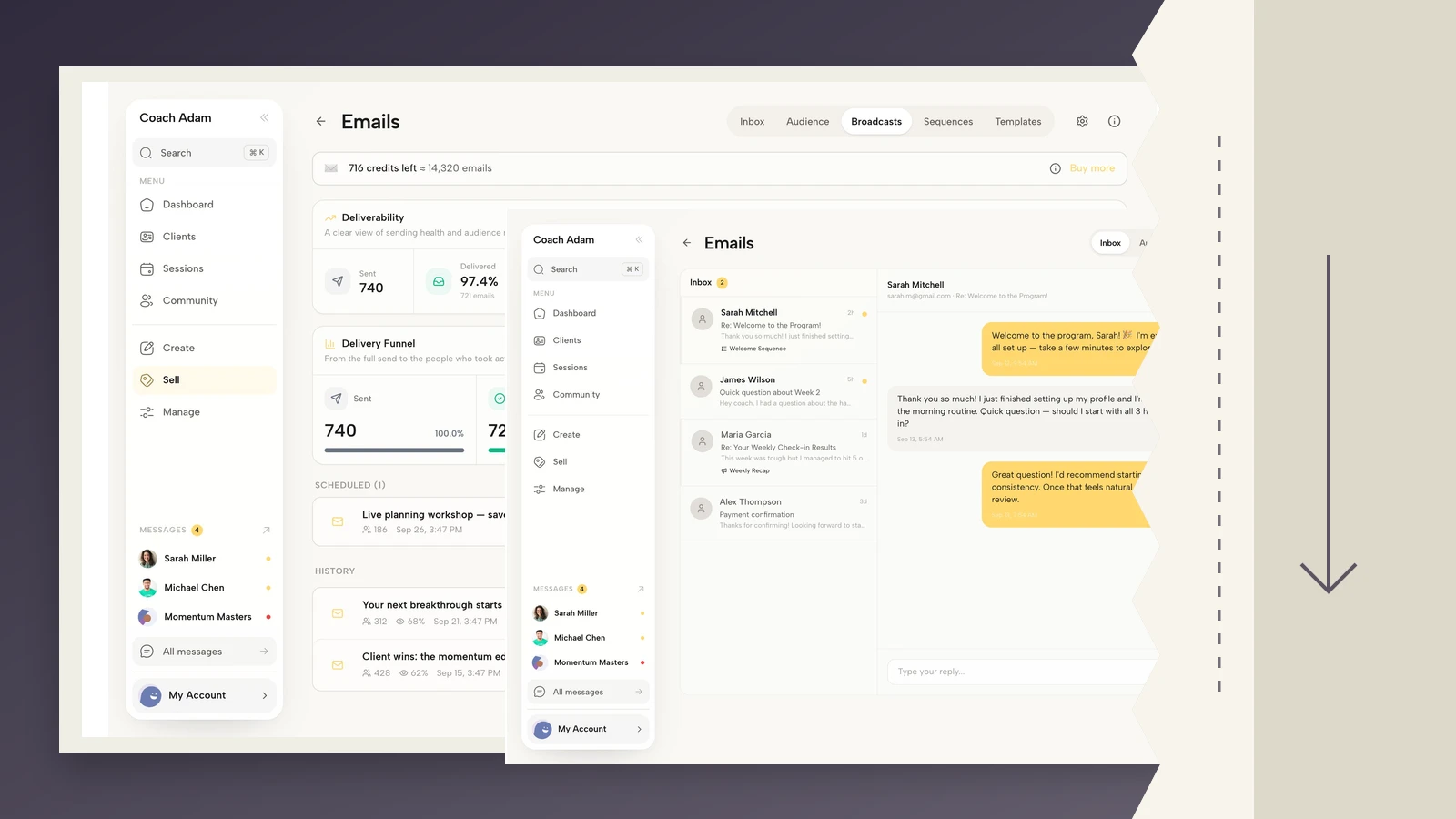
Set one primary communication channel. Reserve others for specific cases. A routine setup might look like in-platform messaging for check-ins, email for formal documents, and calendar booking for live support. In a group program, you might use one channel for announcements and another for peer discussion.
Here's what usually needs to be explicit:
- Where clients should message you: Don't let this drift across text, WhatsApp, DM, and email.
- When you respond: Give a realistic response window and stick to it.
- What counts as urgent: Most things don't.
- What belongs in session: Deeper processing often needs live coaching, not endless back-and-forth messages.
If a client keeps “processing by message,” bring that pattern into the next session. Don't keep coaching reactively in fragments.
This is also where prioritization matters. One of the biggest gaps in short-term goal advice is not idea generation but choosing what to focus on first when time and energy are limited. Asana's summary points to this problem and references Dovetail's advice to choose one goal per category at a time, using tools like the Eisenhower Matrix to reduce goal sprawl rather than adding more targets (Asana short-term goals guide).
That applies to communication too. Give clients fewer channels, fewer options, and clearer rules. They usually do better, not worse.
8. Develop Client Success Criteria and Accountability Framework
A client saying “I want to grow” isn't a goal. It's a theme.
You need success criteria that both you and the client can recognize. Otherwise you'll get halfway through the engagement and hear, “I know I've made progress, but I'm not sure how much.” That uncertainty kills momentum.
Build accountability into the relationship
The SMART framework remains useful because it forces clarity. It asks whether a goal is Specific, Measurable, Achievable, Relevant, and Time-bound. For models to adapt, see 50 SMART goals examples across health, work and money. A research summary cited by Speexx, referencing Locke and Latham's 1981 work, reports that difficult but attainable goals can improve performance by up to 90%. The same summary also notes that purposeful regular accountability check-ins have been associated with a 95% success rate in one widely circulated set of goal-setting statistics (Speexx SMART goal-setting basics).
That doesn't mean your client needs a complicated framework. It means they need a concrete one.
Try this structure:
- Outcome goal: What result are we trying to create?
- Process goal: What repeated action supports that result?
- Proof of follow-through: How will we know the action happened?
- Review cadence: When do we check progress and adjust?
A business coaching client might set an outcome goal around booked sales conversations and a process goal around outreach blocks and follow-up activity. A health coaching client might set an outcome around energy consistency and process goals around sleep, movement, and meal planning. A life coaching client might target better boundaries and track specific conversations completed during the week.
If the client doesn't follow through, don't rush to motivation speeches. Check for overload, confusion, unrealistic pacing, or hidden resistance. Accountability works best when the task is small enough to be done and clear enough to verify.
9. Create a Referral and Client Testimonial System
Most coaches ask for testimonials randomly, usually when they suddenly need marketing assets. That's why they get weak, vague responses.
A better approach is to make social proof part of the client journey. When someone has completed meaningful work with you and can name what changed, capture that moment.
Ask at the right moment
Strong testimonial timing usually comes shortly after a milestone, completion point, or breakthrough the client can describe clearly. Waiting too long weakens detail. Asking too early gives you shallow praise.
Make the request easier by prompting for specifics:
- Before and after: What problem were they facing before coaching?
- Useful part of the process: What helped most?
- Observable change: What did they do differently afterward?
- Best-fit client: Who would they recommend you to?
For example, an executive client may describe handling conflict more directly. A life coaching client may talk about finally making a career decision. A business client may mention improved consistency in follow-through or clearer offer positioning.
Referral systems work the same way. Don't just say, “Let me know if you know anyone.” Give clients a short explanation of who you help, what kind of problems you solve, and how to introduce someone without awkwardness.
What doesn't work is pressure. If the client had a decent experience but not a transformation they can articulate, let it go. Forced testimonials sound forced.
10. Implement Client Brand Experience and Professional Appearance
Brand experience isn't decoration. It shapes how clients interpret your reliability.
If your booking page looks polished but your PDFs are inconsistent, your portal feels generic, and your emails read like they came from three different businesses, clients notice. They may not complain, but they feel the mismatch.
Consistency does more work than flair
An executive coach may want a cleaner, more corporate tone. A life coach may prefer warmth and calm. A business coach may want sharper visuals and more direct language. What matters is coherence across touchpoints.
That usually includes:
- Visual basics: Consistent colors, logo use, and readable fonts.
- Communication templates: Welcome emails, reminders, follow-up notes, and feedback requests that sound like the same brand.
- Document design: Goal sheets, progress summaries, and resources that feel related.
- Portal setup: A client-facing space that looks intentional rather than improvised.
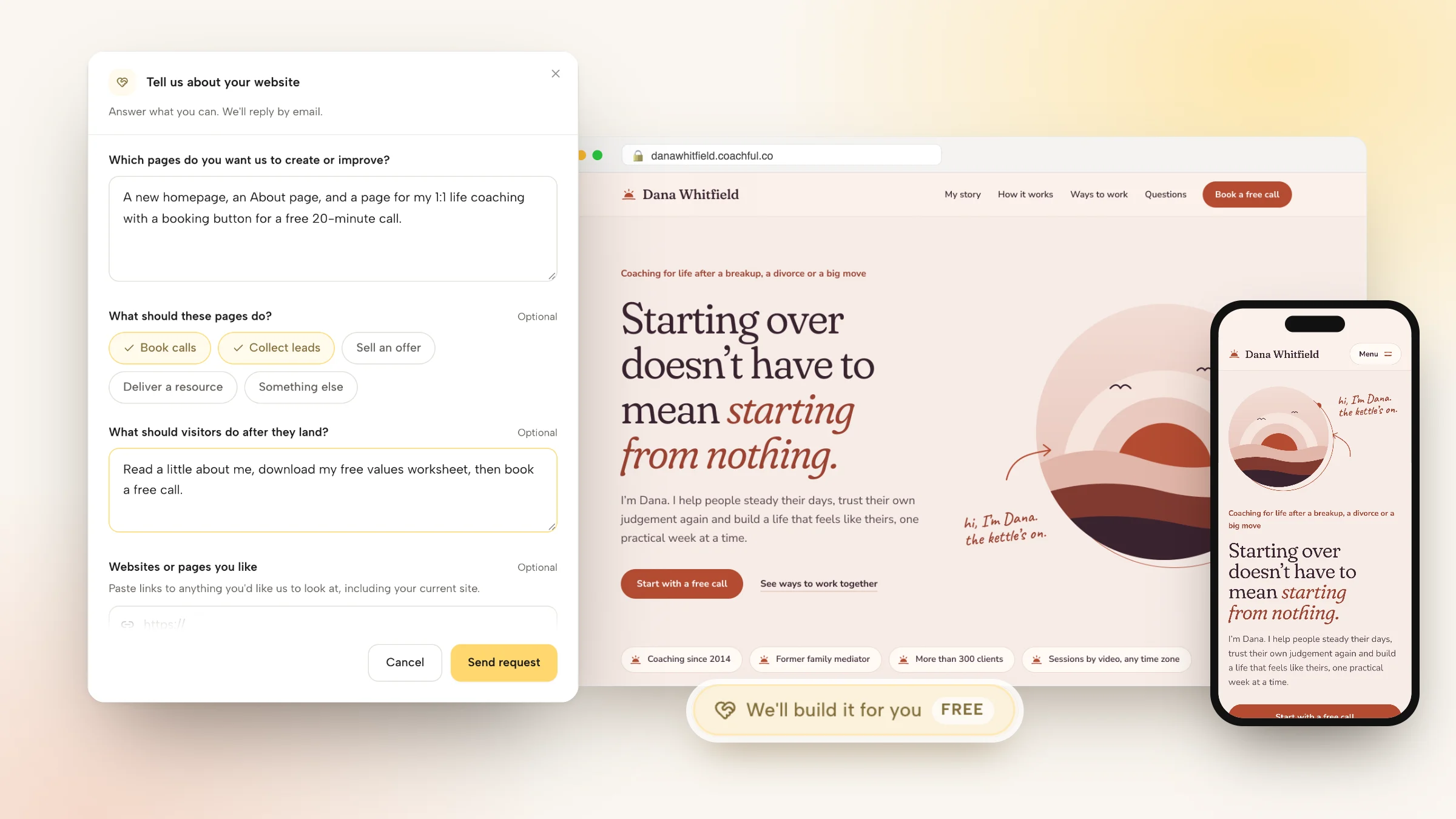
If you want more control over the front-end experience, a coaching website builder can help you align your public presence with the coaching environment clients enter after they sign up.
There's another layer here. Real life is volatile. Short-term goals often break because schedules change, income changes, caregiving pressures rise, or burnout hits. Guidance from WECU highlights the need to break goals into smaller monthly or weekly targets and account for liquidity and everyday expense pressure, which is a useful reminder even outside financial coaching (planning for short-term financial goals).
Your client experience should reflect that reality. Professional doesn't mean rigid. It means clear, adaptive, and trustworthy when life gets messy.
10-Point Short-Term Goals Comparison
| Item | 🔄 Implementation complexity | ⚡ Resource requirements & time | 📊 Expected outcomes | ⭐ Ideal use cases | 💡 Key advantages / tip |
|---|---|---|---|---|---|
| Complete Client Onboarding Process Setup | Medium, design forms, flows, integrations | Low–Medium, templates, platform setup time | High, consistent starts, reduced admin, faster tracking | New coaches, corporate HR, health & executive coaches | Keep intake to 10–15 Q, use conditional logic and integrate data into platform |
| Implement Session Scheduling and Calendar System | Low–Medium, calendar sync, timezone rules | Low, scheduling tool subscription, initial config | High, fewer no‑shows, less coordination time | Solo coaches, executive coaches, cohort programs | Set 48/24h reminders, add buffer time, enable self‑reschedule and payment holds |
| Define and Document Coaching Program Structure | Medium–High, map methodology and deliverables | Medium, time to document, create materials | High, clearer offers, consistent delivery, easier scaling | Programized coaches, academies, corporate programs | Define 3–5 tiers, visual outlines, milestone reviews (30/60/90 days) |
| Establish Progress Tracking and Outcome Measurement System | Medium, choose KPIs, build dashboards | Medium, tracking tools, client input required | High, measurable ROI, data‑driven adjustments | Executive, business, health coaches, L&D teams | Select 3–5 core metrics, capture baseline in session one, use visual dashboards |
| Create Secure Payment and Billing Infrastructure | Medium, integrate processor, set policies | Low–Medium, payment fees, setup time, compliance | High, recurring revenue, fewer overdue invoices | Subscription programs, retainers, group tuition | Offer payment plans, require prepayment/deposits, automate invoices and reminders |
| Build a Resource Library and Content Hub | Medium–High, create & organize content | High, significant upfront content creation | Medium–High, extended client value, less repetition | Coaching academies, asynchronous programs, busy coaches | Start with 5–10 core resources, categorize clearly, add short intro videos |
| Establish Clear Communication Channels and Messaging Protocols | Low, set channels, response windows, templates | Low, platform messaging, auto‑responses | High, reduced burnout, consolidated history, clearer expectations | Solo coaches, group facilitators, corporate programs | Communicate expectations in onboarding, batch responses, use FAQs and templates |
| Develop Client Success Criteria and Accountability Framework | Medium, set SMART goals, check‑ins, trackers | Medium, tracking tools, regular coach/client follow‑up | High, increased commitment, measurable behavior change | Goal‑driven coaching (executive, business, health) | Use SMART + 30/60/90 milestones, one‑page goals, celebrate milestones visually |
| Create a Referral and Client Testimonial System | Low–Medium, processes, requests, tracking | Low, forms, small incentives, admin time | Medium, social proof, organic referrals, marketing content | Coaches with repeatable results, program grads | Request testimonials 1–2 weeks post‑completion, use specific prompts and incentives |
| Implement Client Brand Experience and Professional Appearance | Medium, design assets, apply across touchpoints | Medium, branding/design cost and time | Medium–High, higher perceived value, stronger trust | Premium coaches, corporate‑facing coaches, academies | Keep a simple brand guide (2–3 colors, 1–2 fonts), use branded templates and professional photos |
Turn These Ideas Into Your Client's Next Breakthrough
A well-chosen short-term goal does more than give a client something to do this week. It creates traction. It turns coaching from a series of good conversations into a visible process with movement, evidence, and accountability.
That's the core value in using ideas for short term goals as systems rather than inspiration. A better onboarding process improves readiness before session one. A stronger scheduling setup reduces drift. Program structure lowers confusion. Tracking makes progress visible. Communication boundaries protect both the client experience and your energy. Accountability frameworks make it harder for clients to hide behind good intentions.
Clients rarely fail only from lack of desire. More often, they fail because the goal was too broad, the next action was unclear, the tracking was weak, or the environment changed and nobody adjusted the plan. Good coaching responds to all of that. It doesn't just set goals. It manages conditions around the goals.
If a client doesn't follow through, treat it as data. Was the action too large? Was the goal competing with three others? Did the client agree to something they didn't believe they could do? Did your system rely too much on memory and motivation? Those are coachable problems.
I'd strongly suggest choosing one of these ten areas and implementing it fully before moving to the next. Don't try to overhaul your entire practice in one month. That's the same mistake clients make when they set too many goals at once. Pick the operational bottleneck that causes the most friction, fix it, then build from there.
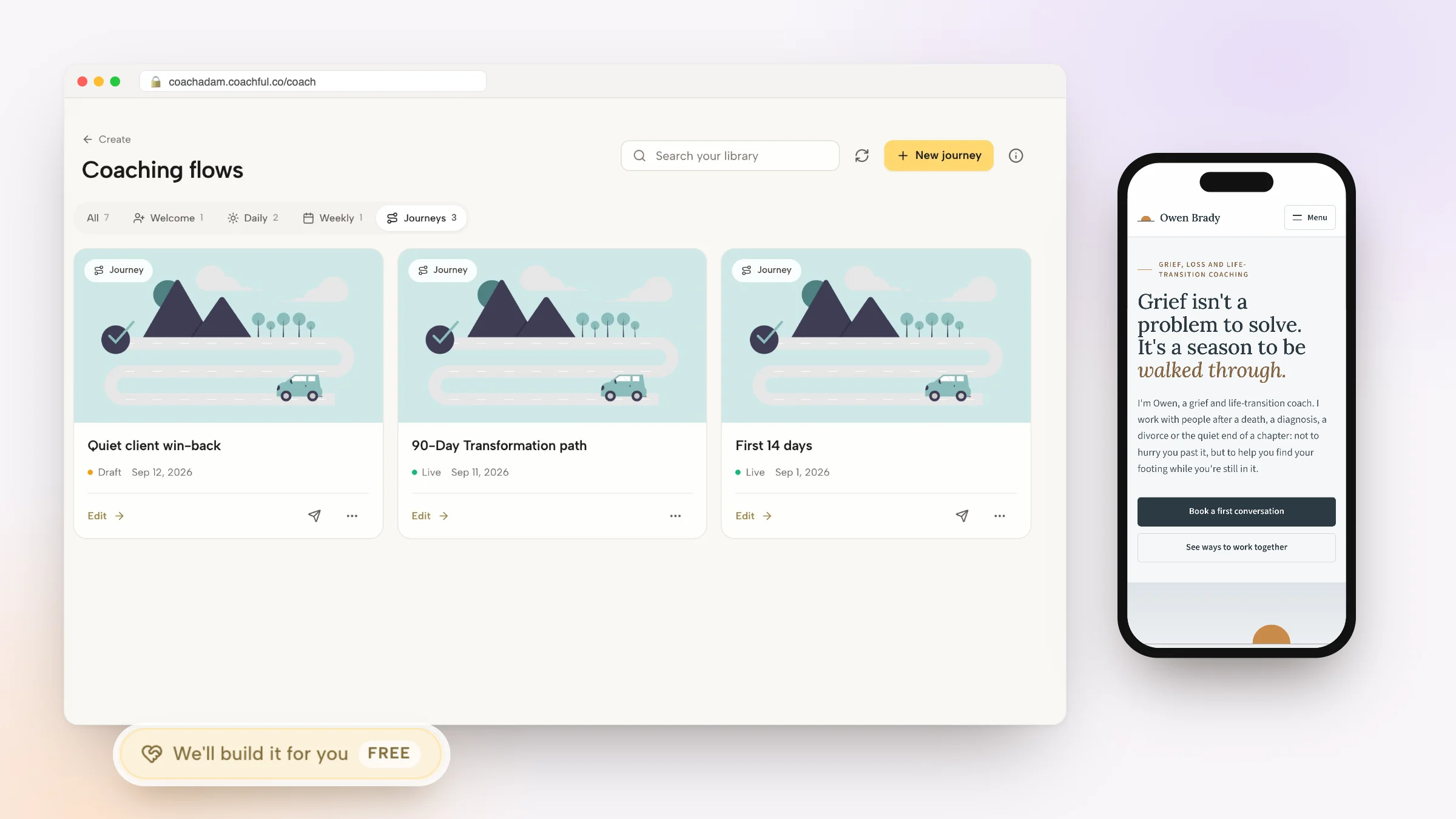
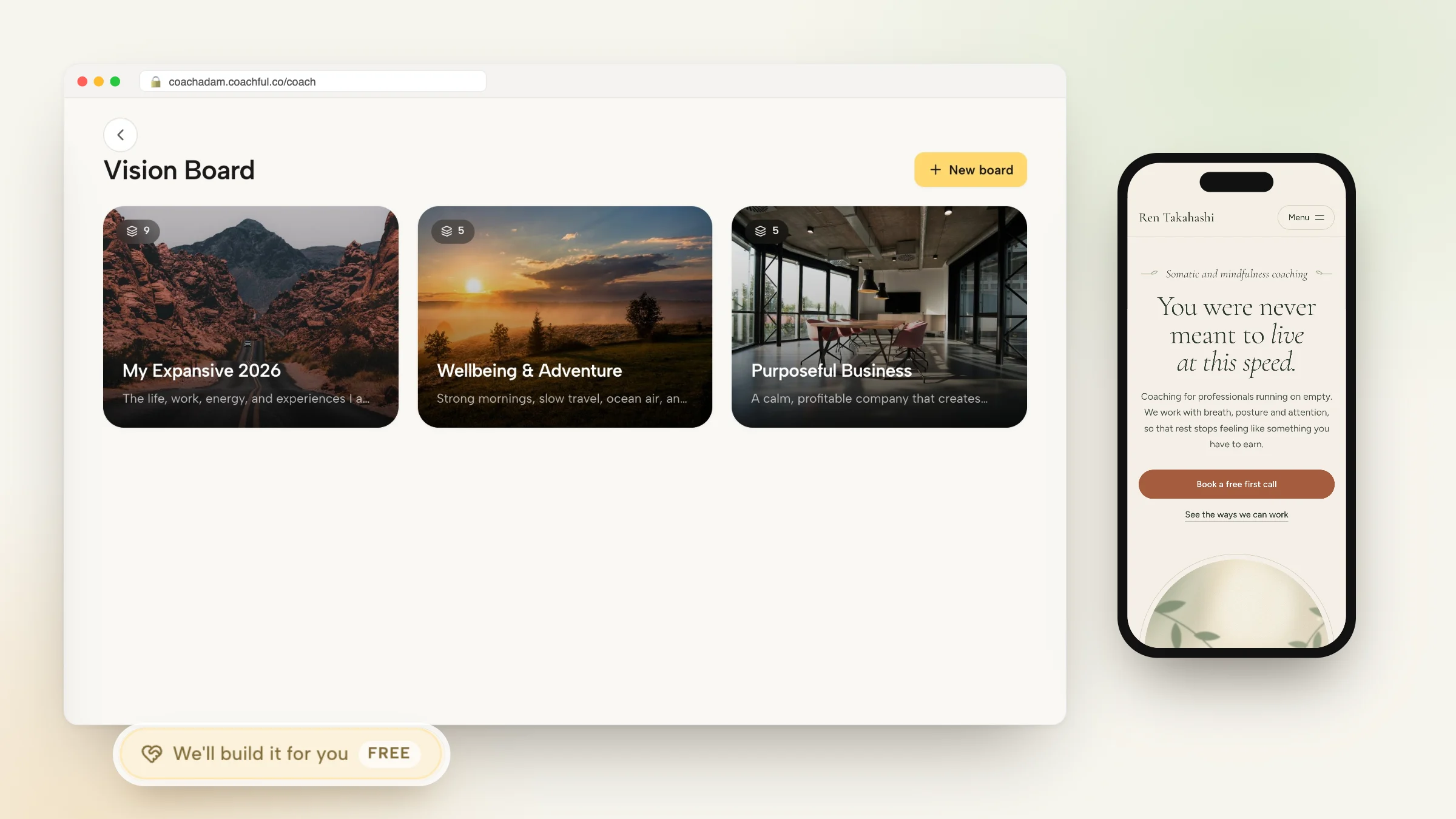
For many coaches, the best next move is to make one short-term goal visible inside a shared system. That might mean one onboarding workflow, one accountability rhythm, or one progress dashboard. If you're using a tool like Coachful, you can keep onboarding, scheduling, goals, notes, messaging, and resources in one place instead of spreading them across disconnected apps. That won't replace your coaching skill, but it can support more consistent delivery.
Small wins matter because they create proof. When clients can see progress, they trust the process more. When you can see progress, you coach with more precision. That's how short-term goals start producing long-term change.
If you want one place to organize short-term goals, milestones, client communication, and program delivery, take a look at Coachful. It's built to help coaches systemize the work around coaching so client progress is easier to manage and easier to see.