One Call Closers: A Coach's Playbook for High-Ticket Sales

Coachful

You're probably in one of two places right now.
You're either getting plenty of discovery calls that feel warm, engaged, even enthusiastic, then end with “I need to think about it,” or you're trying to force a one-call close on leads who were never ready to buy in the first place. Both situations are exhausting. Both make you question your offer, your price, and sometimes your own ability to sell.
Most coaches don't have a closing problem. They have a qualification problem, a call-structure problem, or a systems problem. The fantasy version of one call closers says the right script fixes everything. Real selling doesn't work like that. High-ticket coaching sales reward preparation, timing, trust, and clear decision-making.
That's the good news. A one-call close isn't magic. It's a narrow outcome produced by the right conditions.
The Myth and Math of a One-Call Close
The phrase one call closers gets thrown around like it describes a universal sales superpower. It doesn't. In practice, it means two very different things.
First, it often refers to 1 Call Closers, a specific agency founded in 2019 that focuses on converting low-ticket buyers into high-ticket coaching clients for fitness and supplement companies. According to its LinkedIn company profile, the agency has generated over $325 million in high-margin revenue for clients by working inside a highly specific, pre-qualified niche. That matters because their results come from tight positioning, strong offer-market fit, and controlled lead flow, not from some universal trick.
Second, it refers to the broader idea of closing on a single sales conversation. That's where coaches usually get misled.
Data shows that only approximately 2% of all sales close on the first meeting, according to Thunderbit's sales closing statistics. If you've been blaming yourself because most calls don't close immediately, stop. A first-call close is the exception, not the default.
Why coaches chase the wrong goal
A coach hears “one-call close” and translates it as, “I need to become more persuasive.”
That's rarely the right diagnosis.
Usually the inner dialogue sounds more like this:
- “Maybe I didn't build enough urgency.”
- “Maybe I should've handled the money objection better.”
- “Maybe I talked too much.”
- “Maybe my offer isn't strong enough.”
Sometimes those are true. More often, the actual issue is simpler. The lead didn't arrive ready for a decision. They arrived curious, half-informed, or still comparing options.
Practical rule: If the buyer still needs clarity on the problem, the decision-maker, the budget, or the timeline, you're not on a closing call. You're on a discovery call.
That distinction saves coaches months of frustration.
The antidote is a pre-call audit
If you want more single-call sales, don't start by improving your closing lines. Start by deciding who deserves a call at all.
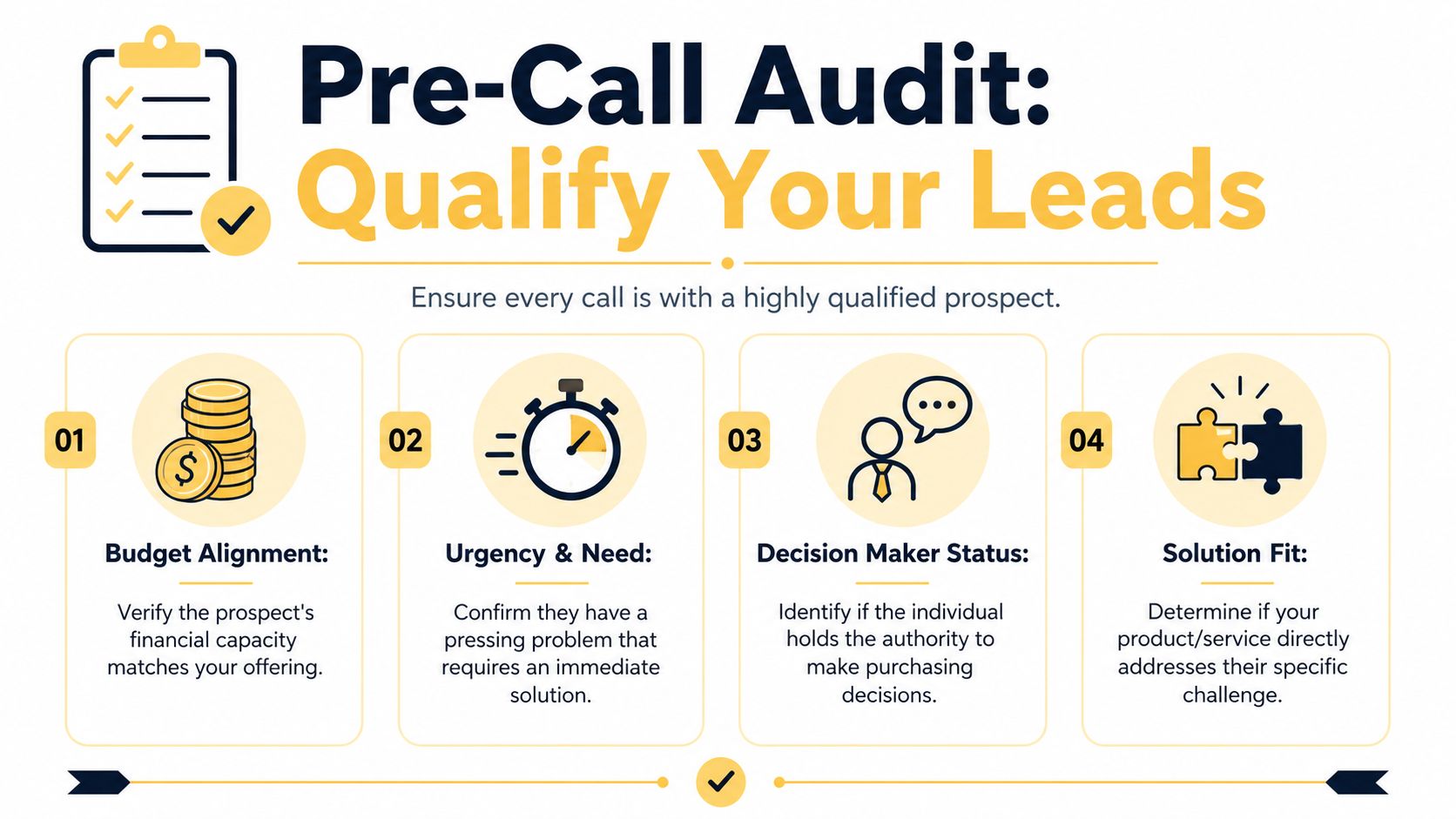
A proper pre-call audit changes the whole game. Instead of hoping the conversation somehow creates readiness, you verify readiness before the calendar invite goes out. That means checking whether the prospect has a real problem, a reason to solve it now, authority to buy, and alignment with the way you solve that problem.
Here's the shift I want coaches to make:
| Old approach | Better approach |
|---|---|
| “Let's get them on Zoom and see what happens.” | “Let's verify whether this should even be a sales call.” |
| “I'll build urgency live.” | “I'll confirm urgency before the call.” |
| “I need to overcome objections.” | “I need fewer low-quality objections.” |
That's what separates practiced closers from hopeful ones. They don't pressure people into buying. They engineer cleaner buying conversations from the start.
The Pre-Call Audit Deciding Who Earns a Call
A one-call close is usually won before the first hello.
Most coaches let the calendar do the filtering. If someone books, they assume the person is qualified. That's how you end up spending an hour with someone who wants free consulting, needs a spouse's approval, or has no concrete problem to solve.
Why pre-call qualification matters more than closing skill
For complex B2B sales, including high-ticket coaching, only 12% of deals under $30K ACV meet the six MEDDPICC prerequisites for a true one-call close, and 88% of attempted closes become discovery sessions when that pre-qualification isn't in place, based on Pulse RevOps analysis of MEDDPICC readiness.
That fits what coaches experience every week. They think they're getting on a decision call. The prospect thinks they're hopping on an exploratory chat.
When those expectations don't match, the close gets pushed.
A coach-friendly audit you can run before the call
You don't need to use every MEDDPICC term exactly as a sales org would. You do need to check the underlying buying conditions.
Use a pre-call form, application, or qualifying DM thread to confirm four things:
- Clear pain with consequences: Ask what's happening now if they don't solve this. Example: an executive coach might ask, “What's the cost of staying stuck at your current leadership level for another quarter?”
- Decision authority: If you sell to founders, executives, or professionals, ask directly who's involved in approving the investment.
- Urgency: Find out why now matters. Not someday. Not “this year.” Now.
- Fit for your delivery model: A solo coaching package and a group cohort are not the same buying decision.
If you want stronger intake questions, a well-built coaching intake form process helps surface buying readiness before the conversation starts.
A lead who can describe the problem, the cost of delay, and the decision process is easier to close because they've already started deciding.
Solo buyers and cohort buyers are not the same
Many coaches inadvertently harm their own close rate.
A solo high-ticket buyer might be able to decide live on the call if they control the budget and the problem is immediate. A cohort or group-program buyer often has extra decision layers. Even when the offer is strong, the sales motion is different.
Here's a useful perspective:
| Buyer type | What to verify before the call | What usually kills the close |
|---|---|---|
| Solo coaching client | Personal ownership of the problem, budget access, urgency | Vague goals, emotional interest without commitment |
| Group or cohort buyer | Who else is involved, how approval works, whether implementation requires internal alignment | Surprise stakeholders, unclear rollout, missing approval steps |
If someone says, “I'm interested for my team,” but can't explain who signs off, you're not on a closing path yet.
Simple examples from real coaching situations
A business coach selling a premium offer to a founder asks, “If we solve this, what changes in the business?” Good answer: “I need a repeatable sales process before our next launch.” Weak answer: “I just know I need support.”
A health coach asks, “What's made now the moment to address this?” Good answer: “My current routine isn't sustainable and I'm ready to commit.” Weak answer: “I'm just exploring options.”
An executive coach asks, “Will anyone else need to weigh in on this investment?” Good answer: “No, I control the budget.” Weak answer: “Probably my partner, maybe finance, and I want to compare two other programs first.”
The pre-call audit isn't sexy. It is profitable. It protects your time, sharpens your positioning, and turns your sales call into what it should be: a decision conversation.
Your 37-Minute High-Ticket Closing Script
Most coaches don't need a more charismatic sales personality. They need a cleaner structure.
The best one-call closers aren't improvising for forty-five minutes and hoping momentum appears. They guide the call with discipline, but they don't sound robotic. The structure creates safety for the buyer and clarity for the coach.
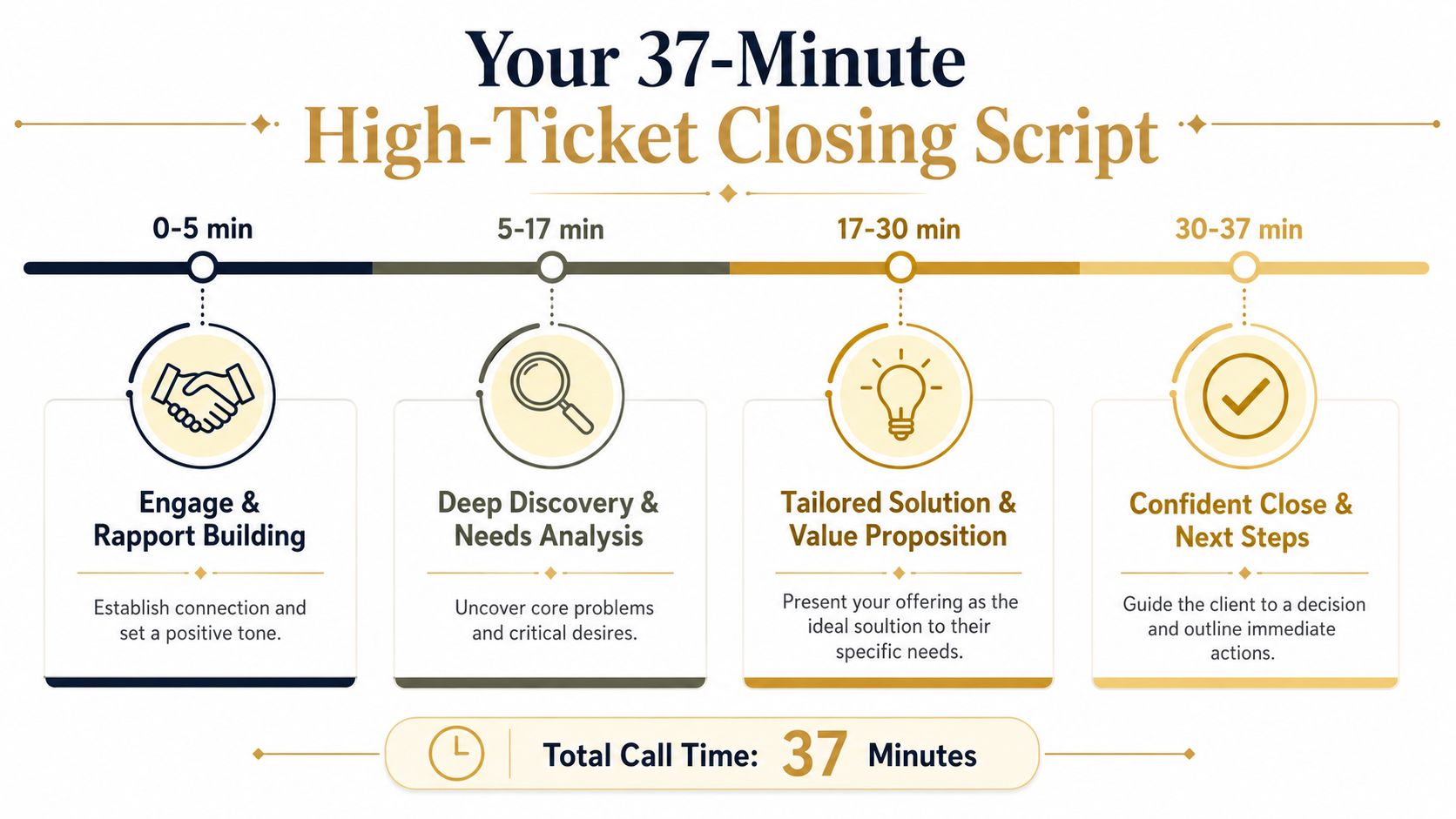
According to M1-Project's summary of Gong analysis, the optimal one-call close lasts about 37 minutes and keeps a 43% talk to 57% listen ratio. Conversion rates drop when reps talk for more than 65% of the call. For coaches, that means your job isn't to perform. It's to diagnose, reflect, and prescribe.
The frame from minute 0 to 5
Open by setting expectations.
Try this:
“Thanks for making the time. I've reviewed what you sent over. I want to understand what's happening, what you want instead, and whether my program is the right fit. If it is, we can talk through next steps today. If it isn't, I'll tell you plainly.”
That script does three things. It lowers pressure, establishes leadership, and tells the prospect this won't turn into a vague coffee chat.
A good frame also gets permission for honesty. If the buyer isn't ready, you want that surfaced early.
The diagnosis from minute 5 to 20
At this stage, coaches either earn the close or lose it.
You're listening for present pain, desired outcome, failed attempts, emotional cost, and decision readiness. You don't need twenty questions. You need the right five.
Use questions like:
- “What pushed this to the top of your list right now?”
- “What have you already tried?”
- “What's that costing you professionally or personally?”
- “What does success look like if we solve this?”
- “What needs to be true for you to move forward today?”
A useful deeper-dive prompt is, “Say more about that.” Coaches forget how powerful that line is. It keeps the buyer talking without making the call feel interrogative.
If you tend to over-explain during discovery, review a few practical prompts on how to ask for the sale without abandoning the consultative tone that works so well in coaching conversations.
The vision from minute 20 to 30
Now you connect the dots. Not with a giant feature dump.
If the prospect told you they're overwhelmed, inconsistent, and tired of self-managing, don't start listing modules. Reflect the problem in their language, then position your offer as the path.
Example:
“You said the issue isn't information. It's execution, accountability, and knowing what to focus on each week. That's exactly where this program fits. We'd work on decision-making, weekly implementation, and real-time correction so you stop spinning.”
That lands because it feels diagnosed, not pitched.
The decision from minute 30 to 37
This part should feel natural if the earlier parts were done well.
You can say:
- “Based on everything you've shared, does this feel like the right solution?”
- “Is there anything you still need clarity on before making a decision?”
- “Would you like to move forward and get started?”
If the prospect says yes, move into next steps immediately. If they hesitate, don't panic. Slow down and identify the actual concern.
Sales coaching truth: Most stalled calls don't fail at the close. They fail in discovery, then reveal the damage at the close.
Handling Objections Before They Derail the Call
Objections aren't proof the call is falling apart. They're proof the buyer is trying to reduce risk.
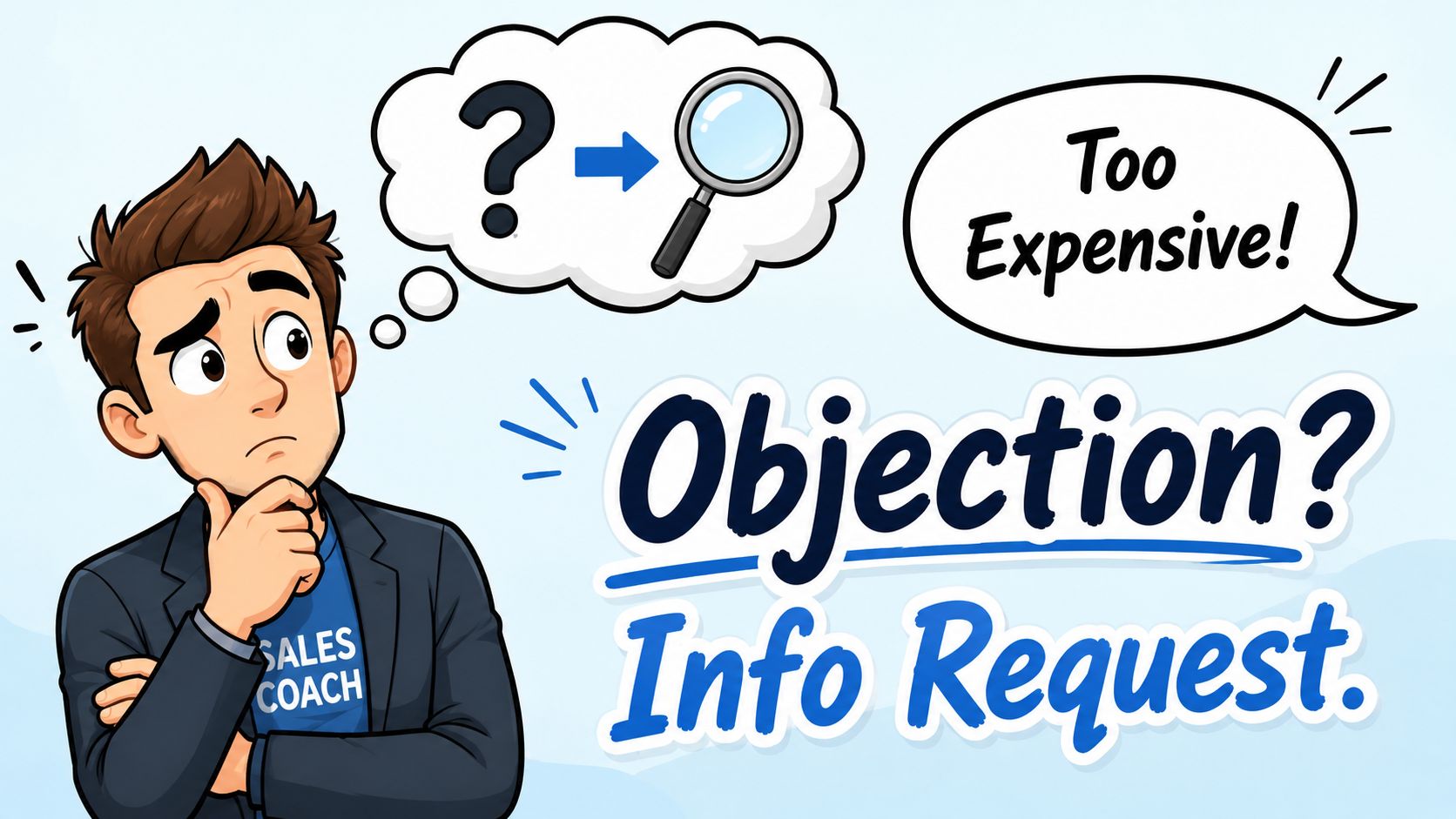
That's a healthier way to see them. A prospect who says, “It's too expensive,” is often saying, “I'm not fully certain this will work for me.” A prospect who says, “I need to think about it,” is often saying, “I haven't resolved one internal concern yet.”
Analysis indicates that using specific closing phrases more than four times in one call can reduce closing rates by as much as 22%, according to Hyperbound's review of the one-call close myth. That's why pushy repetition hurts. It makes the buyer defend themselves instead of evaluate the offer.
The price objection
You don't win this objection by talking faster.
Use a calm variation of feel, felt, found:
“I understand why it feels significant. A lot of people feel that at this point in the conversation. What they usually find is that the bigger cost was staying in the same pattern without support. Let's look at what feels biggest about the investment for you.”
That last sentence matters. It turns the objection into discovery.
A business coach might hear, “I've invested before and it didn't work.” That isn't a price objection. It's a trust objection wrapped in money language.
A health coach might hear, “I can't justify this right now.” That may mean cash flow is tight, or it may mean the pain still isn't urgent enough. Two very different problems.
The think-about-it stall
This one frustrates coaches because it sounds polite and final.
Don't respond with pressure. Isolate it.
Try this:
- Validate: “That makes sense. This is an important decision.”
- Clarify: “When you say you want to think about it, what specifically do you want to think through?”
- Isolate: “If we get clarity on that right now, would you feel able to decide?”
This approach is respectful and direct. It gives the buyer room to be honest.
Sometimes they say, “I need to talk to my partner.” Fine. Then your real issue is stakeholder involvement. Sometimes they say, “I'm not sure I can follow through.” Now you're dealing with self-trust, not offer value.
Buyers rarely object to what they fully understand and fully trust.
Later in your process work, it can help to study adjacent buying psychology too. For example, software buyers often compare offers heavily on framing and perceived value, and these competitive pricing insights for SaaS are surprisingly useful when coaches want to sharpen how they position premium programs without sounding defensive.
Three objection scripts coaches can use today
“I need to talk to my spouse.”
“Of course. How do you usually make decisions like this together? Let's make sure you have the clarity you need before that conversation.”“I'm not ready yet.”
“That's fair. What would need to happen for this to feel like the right time?”“I want to think about it.”
“Absolutely. What part feels unresolved right now?”
Here's a helpful breakdown to watch if you want to hear objection handling in a live-training format.
The goal isn't to bulldoze resistance. The goal is to surface the issue before the call drifts into a vague maybe.
Automate Your Funnel to Enable One-Call Closes
A one-call close usually depends on work the prospect never sees.
The visible part is the Zoom call. The invisible part is the intake form, reminder flow, qualification logic, calendar rules, payment process, and post-call follow-up. When those pieces are sloppy, the call carries too much weight. When those pieces are tight, the conversation gets simpler.
What to automate before the call
If you want more one-call closes, automate the admin friction that weakens buyer commitment.
That usually includes:
- Application capture: Don't let strangers book premium sales calls without context.
- Calendar qualification rules: Only approved leads get access to the call link.
- Reminder sequences: Email and text reminders reduce ghosting and mental drop-off.
- Pre-call confirmation: Ask the prospect to confirm attendance and decision-maker status.
A good funnel shouldn't feel cold. It should feel organized. Buyers often interpret operational clarity as professional credibility.
What the workflow looks like in practice
Here's a clean version for a coach selling a premium program:
| Funnel stage | What happens | Why it matters |
|---|---|---|
| Lead applies | Prospect fills out detailed intake questions | You filter for fit before the calendar opens |
| Lead reviewed | Qualified leads receive booking access | You protect your time |
| Call reminder flow | Automated reminders and prep prompts go out | You increase attendance and readiness |
| Live decision | Payment link is ready if they say yes | You remove post-call friction |
| No decision yet | Follow-up sequence starts automatically | You keep momentum without chasing |
If you're building this from scratch, a practical sales funnel template for coaches can help map the moving parts before you automate them.
What to automate after the call
Not every strong call closes live. That doesn't mean the process failed.
You still need a simple nurture and re-engage system. Keep it tight. No bloated twelve-email saga. Just enough to maintain clarity and reopen the conversation.
A useful sequence might include:
- A recap email: Reflect their goals, the gap, and the recommended path.
- A check-in message: Ask what questions came up after the call.
- A deadline or next-step reminder: Only if there's a real reason for urgency.
- A re-entry prompt: Invite them back when the decision conditions change.
Operational insight: Automation works best when it removes friction, not when it imitates intimacy.
That's the line coaches should watch. Automation should handle logistics, reminders, onboarding, and payment collection. The human conversation should still carry the trust, diagnosis, and recommendation.
When coaches say they want to become one of the rare one call closers, what they often mean is this: they want cleaner calls with buyers who are ready to decide. Systems help create exactly that.
Your Blueprint to Becoming a One-Call Closer
Becoming one of the stronger one call closers in your niche has less to do with charisma than is commonly believed.
It comes from restraint. You stop taking every call. You stop over-explaining your offer. You stop mistaking polite curiosity for buying intent. And you stop treating objections like personal rejection.
What replaces all that is a repeatable process.
The checklist before your next sales call
Use this as your working standard:
- Check buyer readiness: Confirm the problem exists, is current, and costly enough to solve now.
- Confirm authority: Know whether the person is empowered to say yes.
- Match the sales motion to the offer: Solo premium coaching and cohort sales need different expectations.
- Run a structured call: Open with a clear frame, spend most of the conversation in diagnosis, then present the solution in the prospect's language.
- Protect the listening ratio: If you're doing most of the talking, you're probably doing most of the convincing too.
- Treat objections as incomplete clarity: Slow down, isolate, and resolve the core issue.
- Remove admin friction: Have forms, reminders, and payment steps ready before the call starts.
What works and what usually fails
Here's the practical version.
What works is disciplined qualification, buyer-specific diagnosis, and a simple decision process.
What fails is taking underqualified calls, trying to “save” weak leads with better scripts, flooding the close with repeated pressure phrases, and leaving next steps vague.
A coach who says, “I just need more leads,” often needs better filters.
A coach who says, “People love the call but don't buy,” usually needs cleaner diagnosis and stronger qualification before the call ever happens.
Master the process, and the close becomes a byproduct of clarity.
That's the standard. Don't obsess over being able to close anyone in one conversation. Build a system that makes one-conversation decisions possible for the right buyers. That's how you sell high-ticket coaching without sounding pushy, feeling needy, or wasting half your week on calls that were never meant to close.
If you want one place to manage intake, scheduling, reminders, payments, client communication, and program delivery, Coachful gives coaches a cleaner operating system for the sales and delivery side of the business. It helps reduce admin friction so your calls can stay focused on what matters most: qualified buyers, strong conversations, and confident decisions.