Instagram Pinned Posts for Coaches: 3 Examples and a Selection Guide

Nour
Founder, Coachful
Which Instagram posts should I pin so a potential coaching client understands my work before sending another vague DM? Pin a clear introduction, a useful demonstration of your coaching approach, and an explanation of your current offer. Choose them for the questions they answer, not because they collected the most likes.
The three posts have different jobs: establish relevance, make the work tangible, and explain a sensible next step. They do not need to look like a matching jigsaw. A stranger should understand each post independently, including when it appears outside your profile.
This guide gives coaches a selection method, three complete fictional examples, two useful alternatives, and a practical review routine. It does not promise more reach or clients. Pinning changes what you feature on your profile; it is not a substitute for a suitable offer or evidence that someone wants to buy.
What are Instagram pinned posts?
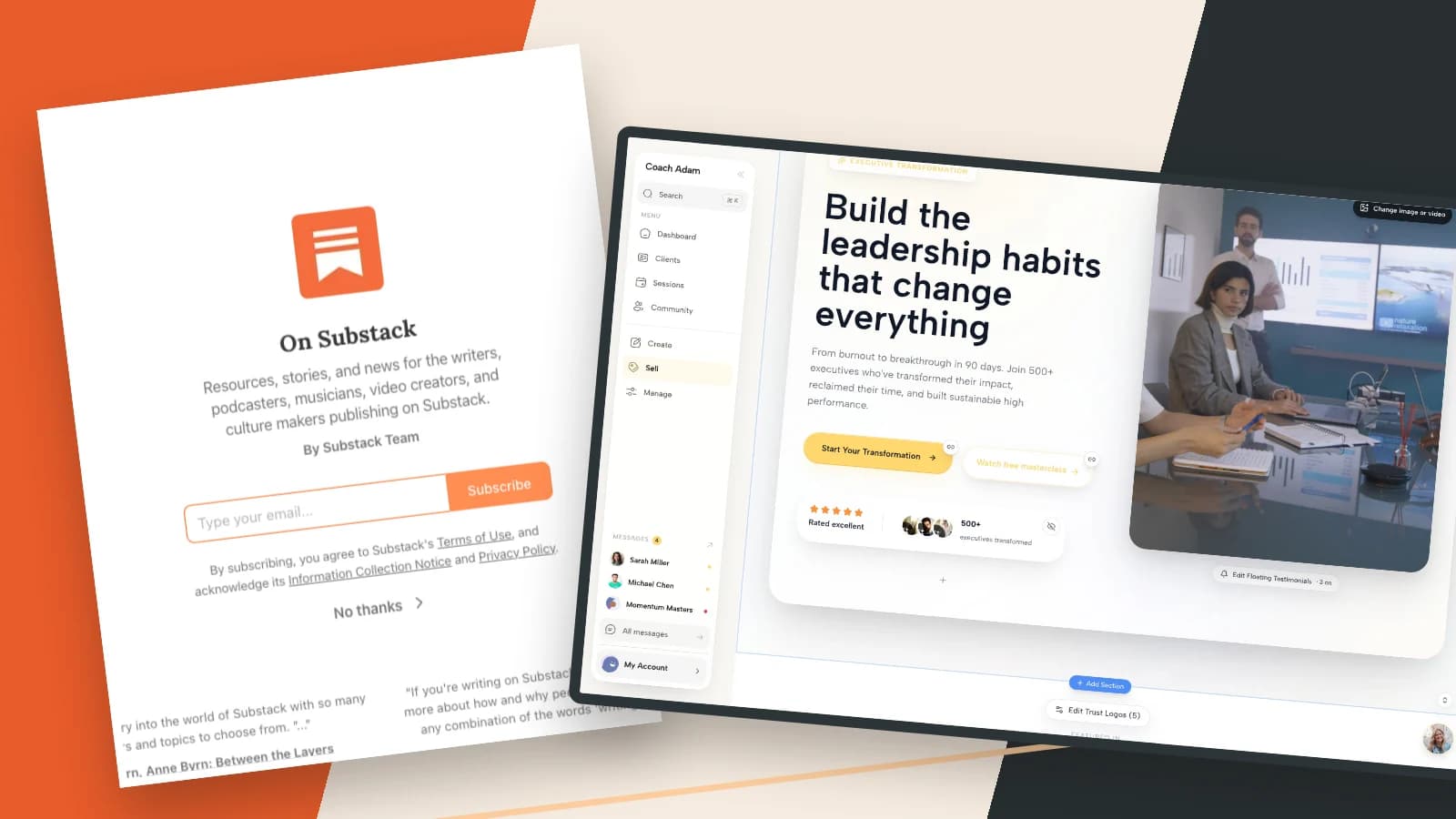
Instagram's Help Center says you can pin up to three posts you have shared to the top of your profile. Its current instructions describe opening a post, choosing its options menu, and selecting “Pin to main grid.” Unpinning returns the post to its original place in your grid. Check the controls available in your account if the wording differs.
That makes a pin a placement decision, not a separate content format. You can choose an existing post rather than creating a new campaign. The useful question is whether the featured material still represents the practice you run today.
Pins also serve a different purpose from saved Story collections. Our guide to Instagram Highlights for coaches covers those collections. Here, the decision is which few feed posts deserve persistent prominence and how they work together as an introduction.
Choose the set by three unanswered questions
- “Is this for someone like me?” Feature an introduction grounded in the situation you coach.
- “What would we actually do?” Feature a practical demonstration or an honest process explanation.
- “What can I do next?” Feature a current offer with understandable scope and an appropriate route to enquire.
Audit what you already have before writing. A popular quotation may answer none of these questions. An older, quieter post that explains your service accurately may deserve the space more. Check its caption, comments you control, cover wording and destination for outdated information.

Do not force every coach into the same three-post formula. If your audience already understands you but repeatedly asks about payment and participation, the set should address those gaps. The following examples are starting points, not a proven conversion sequence.
1. The introduction: help the right person recognise their situation
An introductory pin should say who you work with and what kind of work you support. Your origin story can add warmth, but it should not make a visitor read five paragraphs before learning whether you are relevant to them.
Here is original sample copy for a fictional career coach. It is not a client account or a claim about Coachful's customers:
Changing careers? Start with one decision, not a five-year plan.
I coach professionals who are considering a change of direction and want to investigate their options deliberately.
We can work on clarifying what matters, identifying missing information and designing manageable ways to explore a possible move.
I do not choose your career for you or guarantee employment. My role is to support your thinking and preparation.
Read the career-coaching overview linked on my profile to see the format and decide whether it matches what you need.
Replace the audience, scope and boundary with your own. Specificity does not require inventing a narrow niche. A life coach can describe a recognisable transition or decision without claiming that everyone in that situation needs coaching.
Keep credentials factual and relevant. A training certificate is not a clinical licence, and a demo profile is not evidence of your experience. If the introduction includes personal history, use only the detail you are comfortable keeping public.
When to choose it: people land on your profile but still ask what kind of coach you are. Trade-off: an evergreen introduction may feel less exciting than your newest opinion, but it answers a more basic buying question.
2. The demonstration: show your judgement without exposing a client
A demonstration pin makes your work easier to picture. It might explain how you explore a decision, offer a small non-diagnostic exercise, or show a fictional example of a question becoming more workable. It should be useful without requiring someone to enquire.
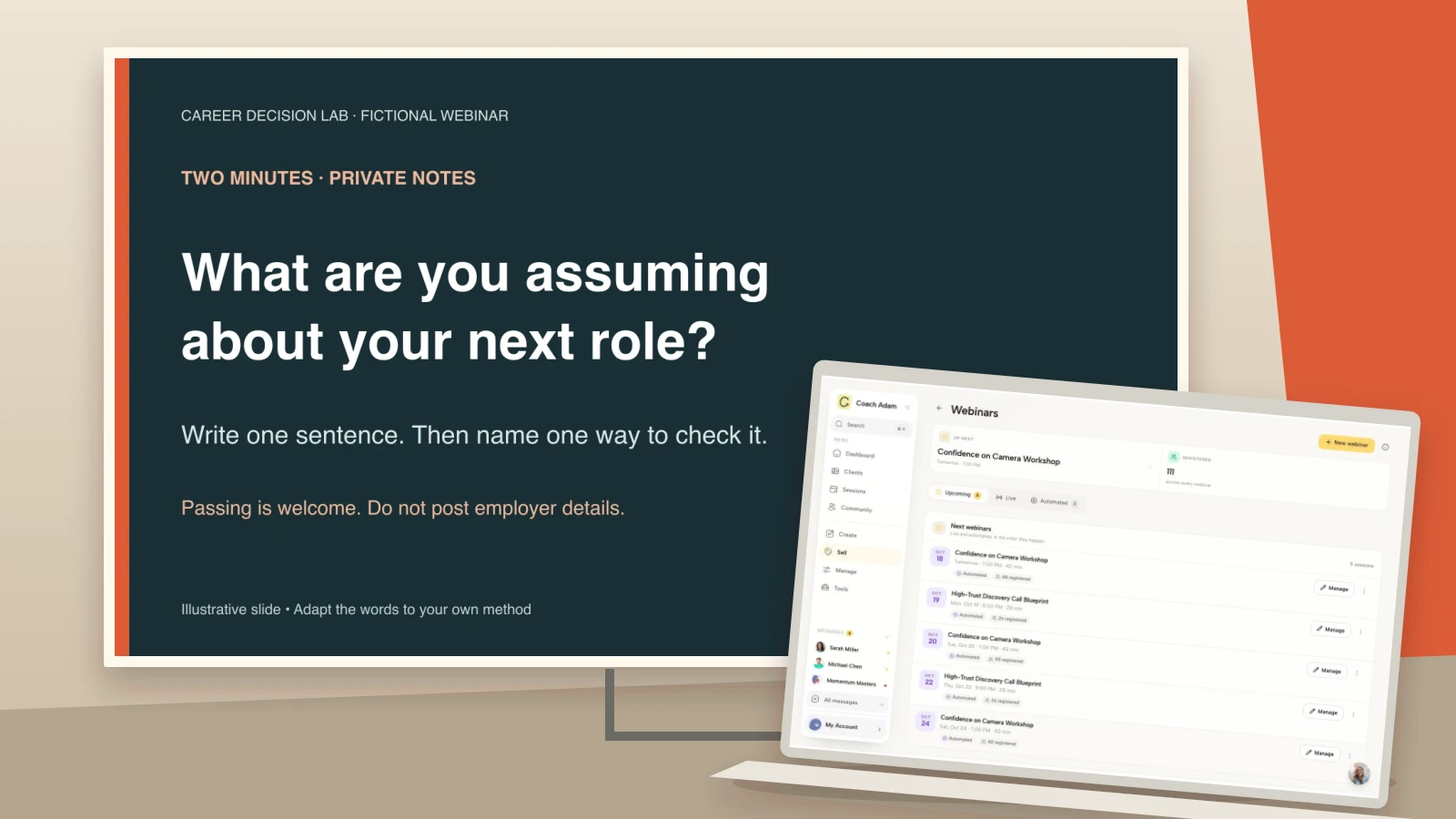
Before deciding whether to change careers, test one assumption.
Write down a role you are curious about. Then finish this sentence: “I think I would enjoy this work because…”
Separate what you know from what you are imagining. Choose one missing piece of information you could investigate through a public resource or an appropriate conversation.
Use what you learn to decide on the next small investigation. You do not need to turn one interesting conversation into a resignation plan.
This is a reflection exercise, not individual career advice. Keep your notes private; you do not need to explain your employment situation in the comments.
The example demonstrates an approach: distinguish an assumption from evidence, then choose a bounded action. It does not claim the exercise works for every person or that a career decision can ignore financial, health, discrimination or contractual concerns.
For other specialties, keep the same discipline. A business coach could demonstrate how to separate a customer observation from an assumption. A leadership coach could explain how to prepare one delegation conversation. Use work within your competence, not a dramatic promise designed to fill the slot.
When to choose it: prospects recognise the problem but cannot picture coaching. Trade-off: a public example needs simplification. State the relevant limits rather than pretending a short post contains your entire method.
3. The offer: explain what is available without disguising the sale
Your offer pin should help someone assess fit. State what you actually sell, who it suits, the participation involved and where the current details live. Do not make a visitor book a call merely to discover that the format cannot work for them.
Considering career-decision coaching? Here is what to check first.
My offer supports professionals who want to explore a career direction through structured reflection and practical investigation.
Before enquiring, read the linked overview for the current session format, package scope, investment, scheduling and cancellation terms.
Coaching is not recruitment, legal advice or a job guarantee. If your main need is one of those services, a different professional may be more useful.
If the scope appears relevant, use the enquiry route on that page. I will explain the next step before you commit to an engagement.
This is deliberately not ready to publish as your own offer. Add the real service name and checked practical details. If you quote a price, specify what it covers and keep it consistent with the destination. If you use a suitability call, explain its purpose and any cost truthfully.

The real Coachful demo offers screen illustrates a place to review what is being sold. The sample products and prices are not recommendations for your practice. Your pin, public offer and eventual agreement should describe the same scope.
When to choose it: you have a current service and want suitable people to understand the route to it. Trade-off: clear terms may discourage unsuitable enquiries. That is not automatically a problem to solve with vaguer copy.
Two alternatives when the standard set does not fit
4. A genuine client experience, with permission and context
A permission-approved client experience can replace the demonstration when it answers a question more convincingly. Explain what the person participated in, what they actually reported and what a reader cannot infer from that experience.
Permission to send you a private thank-you message is not automatically permission to publish it. Agree the exact wording, identifying details and public use. Do not rewrite a modest observation into a dramatic result or leave out a material commercial relationship.
If you cannot share client material appropriately, keep the demonstration. A fictional example labelled honestly is stronger than a manufactured testimonial. Never create a success story simply because you think a pin needs social proof.
5. A time-bound invitation, with an expiry decision
A real workshop or open cohort can temporarily replace the evergreen offer pin. Include the actual date, audience, participation requirements and registration route. Explain what is included without inventing urgency or implying that every visitor needs to attend.
Write down what happens to the pin when registration closes. Unpin it, update it appropriately, or replace it with a clearly labelled replay if that exists. An expired invitation is a maintenance failure, not evidence that you need more content.
Build the destination before giving the pin more visibility
A featured post may explain your service well and still lead to a confusing page. Test the complete route: read the pin, open your profile, find the named link, and check that the page delivers the promised information. Do this on a phone, not just in your editor.

Name the destination in ordinary language. “Read the career-coaching overview in my profile” is more useful than “click the link” when several links are visible. If an offer changes, revisit the pin as well as the page.

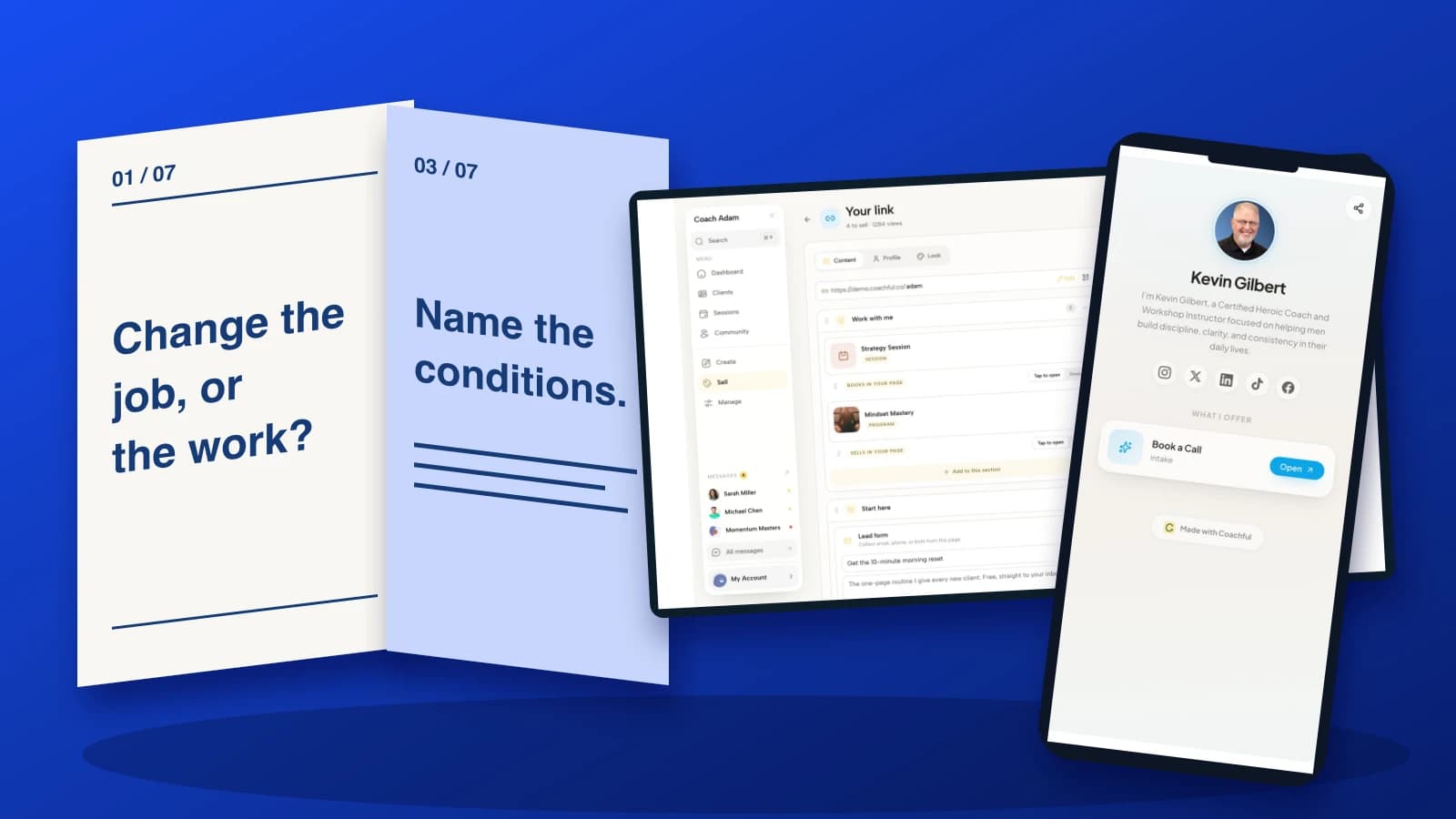
The Coachful link workspace shows editable destinations alongside a public-page preview. It supports the business-side handoff; it does not publish Instagram posts, pin content or automate Instagram messages. Do not describe those as Coachful features.

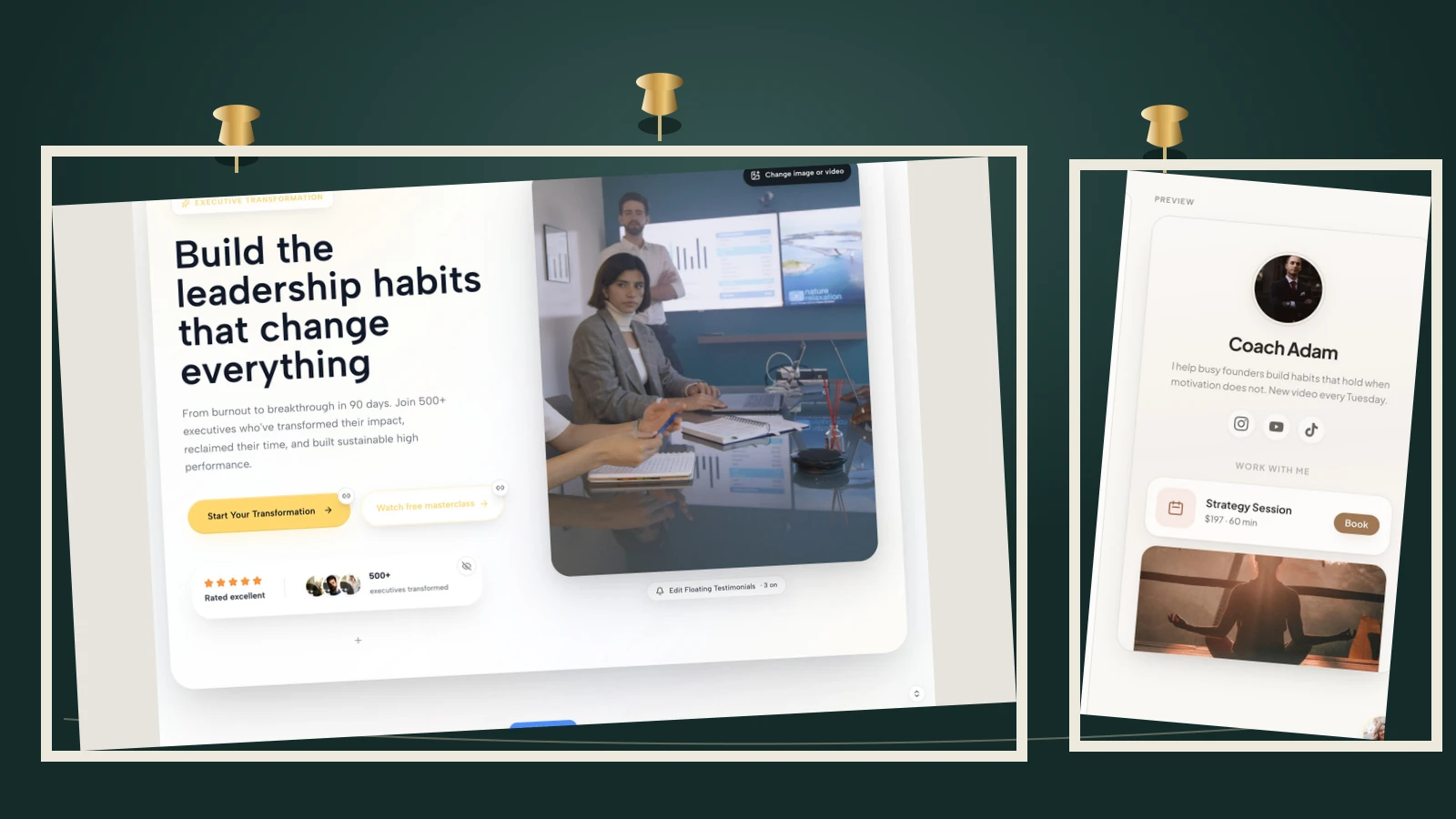
The website editor demonstrates reviewing the page a visitor reaches. Check that its opening confirms the audience and offer described in the pin. Demo marketing wording is not a substantiated claim you can borrow about your own results.
If the visitor should enquire, explain what happens after submission and what information is needed now. A preliminary interest form usually does not need the detail appropriate to a confidential coaching intake. Keep newsletter permission separate from asking about a service.

This real demo form is a client wellness tracker, not a ready-made Instagram lead form. It illustrates why coaches must review a form's purpose and fields before reusing it publicly. Do not turn personal health questions into the price of asking about your offer.
Select and publish the pins without creating a second job
Make a short inventory of candidate posts. For each, note its main question, whether its claims remain accurate, whether you have permission for the material, and whether the destination works. Pick the smallest set that gives a coherent introduction.
- Read without the artwork. Can someone understand the point from the caption and accessible text?
- Check the opening and preview. Can a visitor identify the subject without relying on a three-tile panorama?
- Verify the claims. Remove unsupported outcomes, stale prices and qualifications you do not hold.
- Test the next step. Open the exact public destination and submit a test only through your own authorised process.
- Pin and inspect. Use Instagram's current controls, then review the resulting profile rather than assuming the order.
Use readable contrast, concise wording and meaningful alternative text where available. Caption spoken video information and preserve important qualifications in readable text. Do not put the honest part of the offer in lettering too small for a phone.
Matching design is optional. A visitor might encounter the demonstration in their feed without seeing your introduction. Each post needs enough context to stand alone, and no critical sentence should rely on a neighbouring tile.
Review enquiries, not just applause
Keep a simple note of which posts are pinned, the date you changed them and the question each answers. Review them when your service changes or a repeated misunderstanding appears. There is no need to invent a daily rotation rule.

The Coachful leads workspace illustrates organising follow-up after interest becomes an enquiry. It does not establish which Instagram post caused that interest. Record a source only when you have a legitimate basis, such as a person's voluntary answer.
Where available, consider profile activity and destination visits alongside enquiries and the questions people ask. A save, a like and a qualified conversation mean different things. A small number of sales cannot establish that replacing one pin caused the change.

The demo diagnostics view provides broader business context, not a pinned-post attribution report. Separate a possible content issue from an offer, response-time or booking problem. More prominent posts cannot repair an unavailable service or an unanswered enquiry.
Use an observation to choose a correction. If people repeatedly ask what coaching involves, improve the demonstration. If they ask which link to use, clarify the invitation. If an outdated price causes confusion, correct the claim rather than adding another inspirational post.
Frequently asked questions
Should coaches pin their most popular posts?
Only when those posts still answer an important question accurately. Popularity is one signal of audience response, not a selection rule. A widely shared joke may be less useful to a prospective client than a clear explanation of your current service.
Do I need three pinned posts?
No. Instagram's stated limit is up to three, not a requirement to fill every space. Start with the strongest accurate material you have. Do not manufacture evidence or keep an expired offer visible to complete a matching row.
Should every pinned post ask people to book a discovery call?
No. The introduction can point to an overview, the demonstration can invite private reflection, and the offer can explain an enquiry route. Repeating a booking request does not make each reader equally ready to buy.
How often should I change the pins?
Change them when the information becomes inaccurate, your offer changes or the set no longer answers visitors' main questions. Review a time-bound invitation when its relevant date passes. There is no universal evidence-backed replacement interval.
Make your profile easier to understand before making more content
Choose one introduction, one honest demonstration and one current offer. Read them as a stranger, remove overlap and test the destination. Your aim is not to make three posts perform a sales call; it is to make the next decision less confusing.
If the weak point is the page, public link or form behind your invitation, Try the interactive demo. Inspect the real Coachful surfaces shown here before deciding how to organise your own handoff. The software can support the next step; it cannot supply truthful claims or decide which people your coaching suits.
Source: Instagram Help Center, “Pin a post to the top of your profile on Instagram,” checked for this article. The sample posts and selection method are original editorial recommendations, not measured performance claims. Product images show Coachful demo data. No Instagram account was accessed and no social content or messages were posted.