Substack for Coaches: 5 Decisions Before You Start

Nour
Founder, Coachful
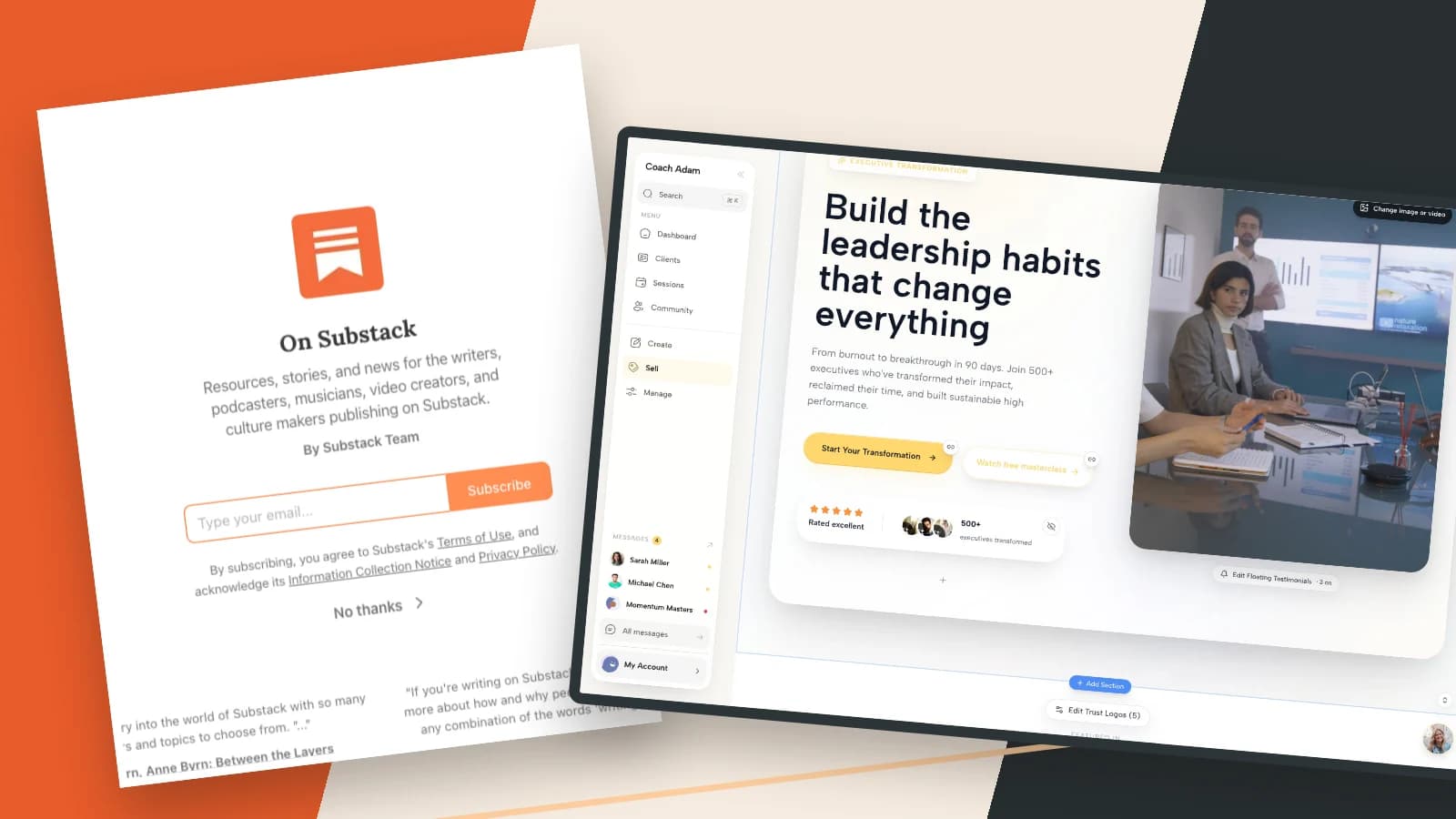
Substack can be a good choice for a coach who wants to publish a useful newsletter and build an audience. It is not, by itself, a plan for turning readers into coaching clients. Before you move a mailing list or announce a paid tier, decide what people are subscribing to, where interested readers will go next, and which system will handle the actual coaching relationship.
The awkward situation is familiar: someone loves your writing, clicks your profile, and still cannot work out what you offer or how to book. More publishing does not fix that missing step. Neither does buying a more elaborate email tool.
This guide helps you make five decisions about Substack for a coaching business: the newsletter's job, the messages you need, the coaching destination, permissions and portability, and a small test worth running. Product details and Substack's official help pages were checked on 18 October 2026. Coachful screens show demo data, not evidence of business results.
1. Decide whether you are selling coaching or selling a publication
Start with the thing you want a reader to buy. A newsletter that supports a career-coaching practice has a different job from a paid publication about career decisions, even if the same coach could write both.
In the first model, the newsletter helps someone assess your thinking before considering a separate service. In the second, the writing is the product: readers pay because they want more of it. Either can be legitimate. Confusing the two creates an ongoing publishing commitment that may not help the practice you meant to build.

If the newsletter supports your coaching practice
Write a one-sentence promise that names a reader and a recurring decision. For a hypothetical career coach, that could be: “A fortnightly note for experienced managers deciding whether to stay, change roles, or change direction.” That is more useful than “Insights to unlock your potential.”
Keep the coaching offer separate but findable. A reader should be able to see who you work with, what your engagement covers, and how to explore fit without becoming a paid newsletter subscriber first. A paid tier is not a required stepping stone to coaching.
If the publication is the product
Specify the paid promise before choosing a price. Is it a monthly research briefing, a library of original exercises, or commentary on a defined professional problem? Name the cadence and what is excluded. Do not casually bundle unlimited personal advice into a low-priced subscription.
Substack's official cost guide says publishing is free regardless of subscriber count. Paid subscriptions carry a 10% Substack fee, with Stripe fees in addition. That makes a free publication inexpensive in platform-fee terms, not free in writing time.
Decision rule: choose a free coaching-support newsletter when your immediate aim is to help suitable people understand your service. Consider paid publishing when you can describe an independent reading product you actually want to keep producing.
2. Separate regular publishing from the follow-up your business needs
“Can I send a newsletter?” is not the same question as “Can I run the reader journey I need?” Write down the messages before judging platforms. Otherwise a feature label such as “email” hides several different jobs.
- Publication issue: a useful piece sent to the people who signed up for it.
- Welcome message: an introduction when someone subscribes.
- Resource follow-up: messages related to a specific guide or workshop.
- Service communication: booking details, preparation instructions, or a change to a session.
Substack documents welcome emails for free, paid, imported, and founding subscribers. You can customize the relevant templates in publication settings. Its welcome-email guide also explains a sending condition for publications using profile mode: welcome emails begin after at least two posts, with a custom-theme alternative described in the documentation.
That is a real capability. Do not dismiss Substack as having “no welcome emails,” and do not assume a welcome template proves that every multi-step workflow you want is available. Check the exact trigger, delay, audience rule, and stopping condition in your own account before committing.

For example, a coach might need a guide-delivery email immediately, an exercise three days later, and a booking explanation the following week. They may also want that follow-up to stop once the person becomes a client. Those requirements are more precise than “I need automation.”

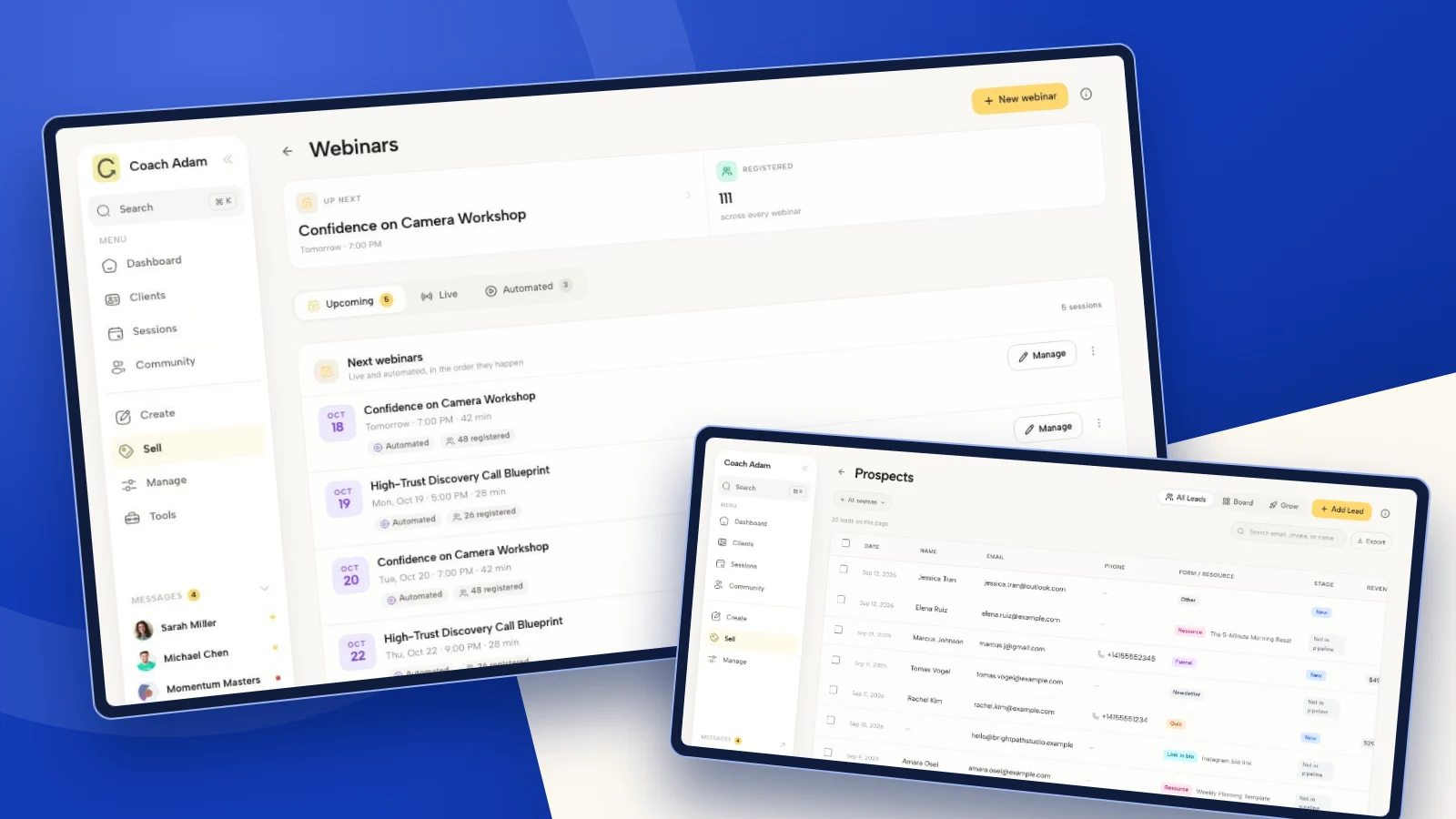
Coachful has separate Broadcasts and sequence-editing surfaces, as the demo screens show. That does not establish a native connection with Substack. This guide recommends a clear link between a publication and a coaching destination, not an unverified subscriber-sync integration.
If you already run email elsewhere, keep that arrangement until you can name a problem moving will solve. A new platform can be a worthwhile editorial choice; it is a poor substitute for deciding what to send. For broader options, see our email marketing tools for coaches comparison.
3. Build the coaching destination before promoting the newsletter
A reader should not have to search three profiles, send an exploratory direct message, and wait for your reply to discover your offer. Give them one stable destination that explains the service. That destination can live outside Substack.
The key is continuity of meaning. If your newsletter helps managers make career decisions, the linked page should discuss that coaching, not land on a generic homepage about wellness, leadership, relationships, and becoming your best self.
What the coaching page needs
- A recognizable situation: who this service is for and what decision brings them to you.
- A defined engagement: the format, scope, and commitments the reader is considering.
- Boundaries: what coaching does not include, especially where clinical, legal, or financial advice could be confused with it.
- A next step: a fit conversation, an application, or an explained purchase path.
- Practical information: relevant fees, location or time-zone constraints, and what happens after the reader acts.

Here is a hypothetical transition a career coach could put after a useful issue about internal promotion:
If you are deciding whether to pursue the role or leave the organization, my career-decision coaching helps you examine the options and choose a practical next step. Read how the engagement works and book a fit conversation if the scope matches what you need.
The transition works because it follows the article's problem. It does not promise that coaching will produce a promotion, and it does not suggest every reader needs a call. Use your real offer and a real link rather than copying the example as a claim about your service.
Make booking match the promise
If the link says “Book a fit conversation,” show the duration, purpose, cost if any, and relevant availability. If you require an application first, say so before the click. Avoid surprising people with a long questionnaire after offering a quick booking.

Test the journey on your phone while signed out. Read one issue, follow its service link, find the next step, and confirm that the destination makes sense without knowing you personally. You can inspect this without sending a campaign or collecting real applicants.
If you are deciding where the service side should live, try the interactive Coachful demo to inspect the website, forms, and scheduling surfaces shown here. Check whether they suit your actual offer before moving any data.
4. Keep newsletter permission separate from client records
Substack says you can export subscribers from the Subscribers page using the menu above the list. Its export instructions describe CSV options for all columns or visible columns, and state that exporting subscribers' full names is not currently supported.
That is useful portability. It is not proof that a CSV contains everything needed to move a business relationship, payment arrangement, or service history. Inspect an actual export before relying on a migration plan. Keep it secure, limit access, and avoid accumulating unnecessary copies.

Permission to receive a publication is not blanket permission for every marketing campaign you might create elsewhere. Equally, someone who books coaching has not necessarily asked to receive your editorial newsletter. Follow applicable marketing and privacy requirements, explain the relevant choices, and keep unsubscribes effective.
Before moving contacts, answer four practical questions: what did they originally agree to receive, what will change, how will you retain the evidence you need, and how will an unsubscribe be honored across the systems you continue using? This is an operating checklist, not jurisdiction-specific legal advice.
Ask less on the public side
A newsletter signup usually does not need a client's personal history. A service application may need a few fit questions. An intake after agreement can have another purpose again. Do not combine all three just because a form builder allows more fields.

For a first coaching inquiry, a name, contact method, short description of the decision, and relevant availability may be enough. Avoid soliciting medical information, detailed trauma histories, or employer-confidential material in a public acquisition form unless you have a specific appropriate basis and suitable safeguards.
Keep confidential session records out of public posts and newsletter chats. A changed name is not automatically anonymization: a combination of role, employer, timing, and circumstances can identify someone. Use clearly fictional teaching examples when you do not have appropriate permission to share a real case.
5. Run a six-issue test before rebuilding your marketing
A bounded publishing test is more useful than a declaration that a platform “works for coaches.” Choose a cadence you can sustain, publish six issues, and evaluate the job you defined in the first decision. Six issues is a planning suggestion, not a proven threshold for getting clients.
For a hypothetical career-coaching newsletter, a test could cover choosing between two job options, recognizing an unhelpful promotion goal, evaluating a role's responsibilities, preparing a manager conversation, comparing career-change constraints, and explaining what career-decision coaching involves.
Give each issue one practical point and a proportionate next step. Some can invite reading another article. Others can link to the service page when it genuinely addresses the problem. Do not withhold the useful answer simply to force a call.
Measure the outcome you actually want
- For coaching demand: record relevant service-page visits where measurable, qualified inquiries, fit conversations, and engagements.
- For a paid publication: track paid subscriptions, cancellations, net receipts, production time, and whether you delivered the promised content.
- For both: note substantive reader questions, unsubscribes, and whether the writing cadence is sustainable.
Open rates can be a diagnostic signal, but they do not tell you that someone is a suitable client. Privacy features and measurement methods also affect reported opens. A thoughtful inquiry from a good-fit reader may matter more to your practice than a larger number of anonymous views.

Use a simple economic check if you plan to charge for writing. At an illustrative $1,000 in monthly paid-subscription revenue, the 10% platform share is $100 before payment-processing charges, taxes, refunds, and your production time. That does not make the model good or bad. It makes the cost legible.
For a free newsletter, do not invent an equivalent subscription revenue number. Instead record the hours required and whether the publication produced the kind of conversations you wanted. A useful audience can take time to develop; that is not a reason to ignore poor audience fit or a broken destination.
A review note you can copy
Our newsletter is for [reader] facing [decision]. We published [number] issues on [cadence], spending [hours]. Readers most often responded to [specific subjects]. We received [number] relevant inquiries, of which [number] matched our service. The next test is [one change]. We will keep, revise, or stop the publication based on [stated reason].
Use your actual counts, including zero. If readers engage but nobody understands the offer, improve the destination or transition. If inquiries are consistently outside your scope, refine the editorial promise. If writing itself is the product readers want, consider whether you want to run a publication business alongside coaching.
Frequently asked questions
Is Substack free for coaches?
Substack's official cost guide says publishing is free regardless of subscriber count. If you enable paid subscriptions, Substack takes 10% of subscription transactions and Stripe fees also apply. Check the current official schedule and your own payment setup before projecting net income.
Can I use Substack and Coachful together?
You can use a Substack publication to link readers to a separate coaching service page. Coachful's demo shows website, forms, email, and scheduling surfaces that can support the coaching side. This guide has not verified a native Substack integration, automatic subscriber sync, or shared unsubscribe system, so do not plan around those assumptions.
Should I charge for my newsletter before selling coaching?
Not by default. A paid reading product and a coaching engagement solve different problems. Offer paid content only when you can define and deliver its own value. Readers should not need to buy a subscription merely to understand your coaching offer.
Can I export my Substack mailing list?
Yes. Substack documents a CSV export from the Subscribers page, with all-column and visible-column options. It also states that full subscriber names are not currently included. Verify the file contents and applicable permissions before using an export elsewhere.
Does this replace a coaching newsletter content plan?
No. This guide answers whether Substack fits your operating model and how to separate publishing from service delivery. For the writing routine itself, use our guide to starting a coaching newsletter.
The practical choice
Choose Substack because you want to publish for a defined readership, not because a discovery network sounds like guaranteed demand. Give the publication a clear promise, give suitable readers a clear route to coaching, and preserve the boundaries between a subscriber and a client.
Before importing a list or launching a paid tier, write the reader promise and test the destination. If the service side is the missing piece, try the interactive Coachful demo and inspect the real workflows before deciding what to build.