Media Kit for Coaches: 7 Sections and a Copyable Template

Coachful
Editorial Team
A useful media kit for coaches is a small, public collection of approved material that helps a journalist, podcast producer or collaborator introduce you accurately. Include a short and longer biography, usable headshots, specific interview topics, verifiable credentials, clear usage notes and a reliable media contact. You do not need a huge following or a glossy brochure.
The practical problem is familiar: someone offers an interview, then asks for a biography, a landscape photograph and three topic ideas by tomorrow. You send six attachments, discover the biography is out of date, and cannot remember whether that photograph can be used publicly. A good kit removes that scramble without turning your coaching practice into a publicity machine.
This guide builds a reusable production resource, not a promise of coverage. Start with the seven sections below, use the copyable template, and test the whole route as someone who has never logged into your systems.
What belongs in a coach’s media kit?
Your kit should answer three questions: who are you, what can you usefully contribute, and which materials may someone use? A simple website page with a clearly labeled asset folder can be enough. A PDF can provide a convenient overview, but it should not be the only way to obtain a photograph or copy a biography.
Keep different documents in their proper jobs:
- Media kit: reusable background and production assets for interviews, features and collaborations.
- Press release: a dated announcement about a particular newsworthy development.
- Speaker one sheet: a concise sales overview of a speaking offer for an event organizer.
- Coaching sales page: information for someone considering becoming a client.
You can link these resources, but do not make a producer decode your coaching packages to find an approved headshot. If an organizer only requests a speaking overview, send your speaker one sheet, not an indiscriminate bundle of everything you have ever made.

1. A clear identity and media contact
Put your professional name, accurate coaching description, practice name and media email at the top. Include name pronunciation if it helps a host introduce you. State the time zone you normally work in; it is useful coordination information, not an invitation to publish your home address.
Choose a description that tells an editor where your expertise belongs. “Career coach working with first-time managers” is more useful than “transformation catalyst.” If you coach in several areas, lead with the expertise relevant to this kit and link elsewhere for the rest.
Keep the public identity consistent with your website and profiles. Differences in a practice name, credential or professional title create avoidable verification work. A media contact can be your normal business email if you monitor it reliably. A special address is unnecessary unless it helps you separate enquiries.

2. Two approved biographies people can copy
Prepare a short introduction for an event listing or podcast description and a longer version for a feature. Agree on the underlying facts before polishing the wording. Both versions should identify your audience, your coaching focus and a relevant piece of verifiable background.
Label the versions by their intended use. Word limits differ by publication, so be prepared to supply an edited version rather than insisting a producer use your text unchanged. Keep your name and the essential description near the beginning.
Illustrative short bio for a fictional coach: “Amara Ellis is a career coach who works with first-time managers preparing for difficult workplace conversations. Her coaching focuses on practical preparation, reflection and follow-through.”
Illustrative longer bio: “Amara Ellis is a career coach who supports first-time managers with workplace conversations and role transitions. Her work helps clients clarify what they want to communicate, rehearse an approach and reflect on what happened afterwards. She offers individual coaching and practical workshops. Interview topics include preparing for a first performance conversation, making a clear request and separating a difficult conversation from a confrontation.”
These are writing examples, not real credentials or client outcomes. Replace them with facts that are true for you. Do not upgrade a course-completion certificate into a professional credential, describe a past credential as current, or imply that coaching qualifies you to provide legal, medical or therapeutic advice.
3. A small set of usable photographs
Offer a portrait and, if you have one, a landscape option with enough space for different crops. Provide the original approved files rather than requiring someone to extract a headshot from a PDF. Give each file a descriptive name containing your professional name and the image type.
For each photograph, record the photographer credit, any required credit wording, the uses you are allowed to authorize and any restrictions. Paying for a photo session does not, by itself, tell you the exact rights granted by your agreement. Check before promising broad reuse.
Do not include client faces, workshop participants or screenshots containing personal information simply because they look credible. Permission for a client to appear in a private session recording is not permission to become part of your public publicity materials.
A logo file can be useful if it is yours to distribute, but make it optional. An interview about your work does not necessarily require a publication to display your company logo. Never populate an “as seen in” strip with outlets you have merely pitched.

4. Three interview angles with honest boundaries
Editors and hosts need a useful conversation, not a menu of vague coaching themes. Supply a few specific angles that fit their audience. For each, state the practical tension, what you can explain and what you are not claiming to diagnose or solve.
- First-time managers: how to prepare for a difficult workplace conversation without scripting every word. Explain a preparation method, not employment-law advice.
- Career transitions: how to compare a job opportunity with the work a person actually wants. Discuss a decision process, not a promise that changing jobs will improve wellbeing.
- Executive communication: how a leader can make a clearer request when a team keeps missing expectations. Offer examples without disclosing identifiable client situations.
These examples illustrate the level of specificity, not subjects every coach should claim. Use your actual competence. Add a few suggested questions if that helps a producer shape the episode, but leave room for independent editorial judgment.
You can also state useful formats: remote interview, recorded conversation or written comment, for example. Do not promise immediate availability unless you can deliver it. A clear availability boundary is better than a public response-time pledge you routinely miss.
5. Verifiable background, not an impressive-looking wall
Include relevant qualifications, credentials, books, publications or previous appearances only when they are accurate and checkable. Where possible, link to the original source rather than relying on a logo or a screenshot. Explain what a credential actually is instead of expecting a producer to interpret a string of initials.
If you include an audience number because a potential collaboration requires it, name the platform, measurement period and date checked. Do not combine followers, email subscribers and website visits into an invented total reach. A producer evaluating your subject expertise may not need audience metrics at all.
Newer coaches can produce a credible kit without press coverage. A precise biography, clear interview angles and professional materials are useful in their own right. Leave an empty press section out rather than filling it with borrowed authority.
Keep testimonials separate from editorial facts. If you use one, obtain specific permission for the wording, attribution and placement. Do not turn a private client email into public evidence because the client wrote something flattering.
6. A public asset index that works without a client account
Your entry page should tell someone what is available and where to find it. Use descriptive links such as “Short biography, plain text” and “Portrait headshot, photographer credit included.” A list of filenames with no explanation makes the recipient do your production work.
Keep the main biography and topic information in live webpage text. If you also provide a PDF overview, check that its text is selectable and its structure is readable. Do not make a giant image of a document the only accessible version.
Provide each file in a practical format for its job and label it. Compress previews so the page is usable on a phone, while retaining an appropriate original image for the recipient’s actual publication requirements. Ask about those requirements rather than claiming one file size suits every outlet.

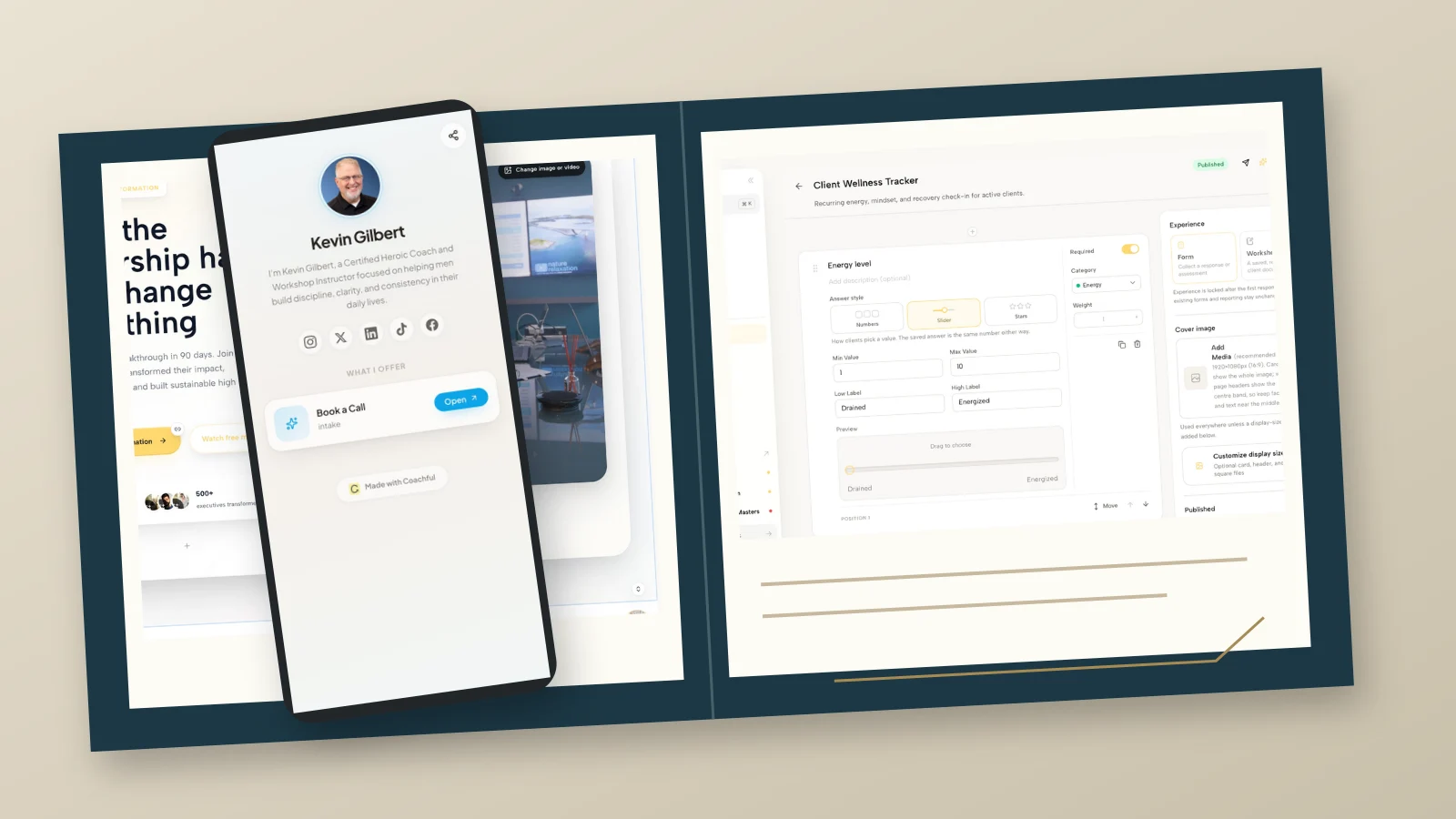
A coaching website can provide the front door to these materials. Coachful’s website editor is a relevant place to inspect how a public page might present that route. The screenshot is not a dedicated media-kit feature, and an editor preview is not proof that your finished page is public.

Check every underlying asset URL while signed out. A file that opens for you may still request access from everyone else. Keep public media resources separate from client folders, internal contracts and private workshop recordings. Do not solve a broken asset link by opening a whole confidential drive to the public.
7. Usage notes, enquiries and a review date
Add a short practical note describing how to contact you about the materials, where credit information lives and which uses need separate approval. Do not write a sweeping legal license you do not understand. If you need formal terms, obtain advice appropriate to your jurisdiction and the assets involved.
Editorial use in a named interview is different from a paid endorsement, an advertising campaign or an unrelated event promotion. Make that distinction visible. A public headshot link is not a blank cheque to imply that you endorse a product.
Use an enquiry route that captures enough information to respond: the publication or show, audience, proposed topic, format, deadline and contact details. Do not ask a journalist to complete a coaching intake questionnaire or disclose personal goals merely to request an interview.

Coachful’s form builder is one relevant surface to evaluate for an enquiry workflow. Check the actual fields, public access and submission behaviour in your account before relying on it. Do not assume a general form automatically provides anonymity, legal consent or a particular notification route.
Give the kit a last-reviewed date and a named person responsible for keeping it current. Recheck it after a credential change, rebrand, new photo agreement or contact-address change. An archive of superseded PDFs should not compete with the current version in your public links.
A copyable media kit template for a coaching practice
Replace every bracketed field, delete any section that does not apply, and keep the public version free of internal notes. This is an editorial planning template, not a legal permissions document.
[Professional name] | [Accurate coaching description]
Practice: [Practice name]
Media enquiries: [Monitored business email or public enquiry link]
Time zone: [Time zone]
Name pronunciation: [Optional]Short biography
[Two or three factual sentences: your audience, coaching focus and relevant verified background.]Longer biography
[Expanded factual background, approach and relevant professional context. No guaranteed outcomes or unsupported titles.]Interview angles
1. [Specific audience problem]: [What you can usefully explain.]
2. [Specific audience problem]: [What you can usefully explain.]
3. [Specific audience problem]: [What you can usefully explain.]
Scope boundary: [Relevant limits of your expertise.]Approved assets
Portrait: [Public file link, credit and usage note]
Landscape photograph: [Public file link, credit and usage note, if available]
Logo: [Optional approved file link]
Biography text: [Copyable page or document link]Verified background
[Relevant credential and verification link]
[Relevant publication or original appearance link, if applicable]Use and contact notes
[Credit instructions and uses you are authorized to offer. Identify uses requiring separate approval.]
For an interview request, include: [Outlet, audience, topic, format, deadline and contact.]
Last reviewed: [Date]
Maintained by: [Person or role]
Test the kit before sharing it
Run a simple producer-path test. Open the page in a signed-out browser on a phone. Find your professional description, copy the short bio, open a photograph and locate its credit. Then use the enquiry route with a clearly labeled internal test, without subscribing anyone or sending an unsolicited pitch.

Check the destination of that test enquiry rather than stopping at a success message. If another person handles enquiries, confirm the handoff. Remove the test from your working process according to your normal data-handling rules. Do not put real client information into the test.

An email workspace can support coordination, but a media enquiry is not automatic permission for promotional broadcasts. Keep the exchange relevant to the request. If the producer asks for an urgent comment outside your scope, a prompt, honest decline protects your reputation better than pretending expertise.
If your biography, public page and enquiry route are currently scattered, inspect the actual website, forms, links and email surfaces in the Coachful interactive demo. The useful next step is to see whether those destinations suit your practice, then test your own published route. The demo does not create a media kit or grant image rights for you.
Media kit FAQs for coaches
Do I need a media kit before pitching podcasts?
No. A clear, relevant pitch and accurate short biography can be enough. Build the kit when you repeatedly supply the same background and files, or when a producer asks for them. Do not delay useful outreach while designing a large packet nobody requested.
Should I include my coaching prices?
Usually not in the core editorial kit. A journalist researching a pricing story may request them, and an organizer booking a workshop may need a separate fee discussion. Keep the kit’s job focused on accurate background and usable production materials.
Can I make the whole kit a PDF?
You can provide a PDF overview, but a public webpage and individually downloadable assets are often more practical. A producer should not have to extract a low-resolution headshot or retype a biography from an image. Offer the format the recipient actually needs.
What if I have no media appearances yet?
Leave that section out. Supply a useful topic, factual background, approved photographs and a working contact route. Do not invent press mentions, imply paid placements were independent endorsements, or borrow authority from client brands without permission.
Where can I see the difference between a kit and an announcement?
The coaching press release guide covers a dated announcement. For a commercial example of a broader media-resource structure, TrueCoach’s media kit separates background and brand assets. Its company metrics are not benchmarks for your practice.
Your media kit is finished when another person can introduce you accurately and obtain the right material without a rescue email. Start with fewer, better-maintained resources. Clear permissions and working links matter more than an impressive page count.