Press Release for a Coaching Business: Template and Example

Nour
Founder, Coachful
Is your coaching announcement actually news, or just a sales page wearing a press-release headline? Write a press release when you can name a verifiable development, explain why a particular publication's readers should care and provide someone who can answer questions. Lead with what changed, not how transformational your coaching is.
A useful press release for a coaching business contains a factual headline, location and date, a concise opening, practical details, an approved quote, a short practice description and a reachable media contact. Below is a copyable template, a complete fictional example and a method for getting the information ready before approaching a journalist.
A release is source material for an editorial decision. It does not guarantee coverage, clients, backlinks or an endorsement. Paying a distribution service to reproduce your announcement is not the same as a reporter independently choosing to cover it.
1. Decide whether you have a story worth announcing
Ask: “What can a reader do, attend, access or understand now that they could not before?” A new community workshop, a confirmed partnership, a new service location or the publication of an original report can provide a concrete answer. An unchanged coaching package with a new adjective usually cannot.
The ICF blog's guide to effective press releases emphasizes identifying a timely news angle and prioritizing the information a journalist needs first. That is a useful test, not a promise that any coaching announcement will interest the media.
- Weak angle: “Coach offers life-changing support.” Nothing identifiable has happened.
- Stronger angle: “Local career coach opens registration for an evening workshop for people considering an internal job move.” The audience, development and practical use are identifiable.
- Check before using it: Is registration genuinely open? Are the date, venue, accessibility arrangements and terms confirmed? Has any named partner approved its involvement?
For a local publication, location and community relevance may be the useful angle. For an employer or professional association publication, a specific workplace decision may matter more. Write for the publication's readers, not for a mythical audience called “everyone interested in personal growth.”

2. Separate the release from your other marketing documents
A press release announces something. A sales page helps someone evaluate a purchase. A media pitch explains to a particular journalist why that announcement might fit their work. A speaker sheet helps an organizer evaluate a session. Combining all four produces a document that is difficult to use.
If nothing new has happened but you can offer a useful expert perspective, a short, relevant source pitch may be more appropriate than inventing a launch. If an event organizer wants your talk topics, use a speaker one sheet instead. If subscribers need an enrollment invitation, use your normal permission-based launch communication.
Choose one primary announcement. A new practice, three programs, a podcast and a retreat do not all need equal space in the opening paragraph. Additional background can live on a linked information page.
3. Use this coaching press release template
The bracketed sections are prompts, not facts to publish. Replace every placeholder, remove unsupported claims and obtain approval for named quotes, partner descriptions and supplied photographs. This structure is original editorial guidance, not an official submission form.
[FOR IMMEDIATE RELEASE, if accurate]
[Release date][Specific organization or coach] announces [verifiable development] for [defined audience]
[Optional subheading adding one practical fact rather than repeating the headline.]
[CITY, REGION], [DATE]: [Practice or coach] has [launched, opened, published or agreed the specific development]. [Explain who it serves, when it is available and the practical reason it may interest this publication's readers.]
[Give the essential details: format, dates and timezone, location or online delivery, eligibility, price or access terms where relevant, and the accurate registration or information deadline.]
“[An approved quote explaining why this particular initiative exists or what participants will actually do],” said [name, accurate role].
[Add relevant context supported by a named source, or explain the method without promising an outcome. State an important limit when readers could otherwise misunderstand the service.]
Information and registration: [verified public destination]. [Explain the next step accurately, including whether an application is reviewed.]
About [practice]
[Short factual description of audience, coaching scope, relevant verified experience and location or delivery format.]Media contact
[Name and role]
[Professional email]
[Phone if genuinely monitored and intended for publication]
[Public information page and approved image resources, if available]
As a working target, try roughly 300 to 500 words for the release itself, then follow the recipient's actual requirements. That range is an editing recommendation, not a rule. Cut repeated promises before cutting information someone needs to attend, verify or report the announcement.

4. A filled example for a fictional career coaching practice
Everything in the following release is invented for teaching purposes. The coach, practice, event, quotation, dates and arrangements do not represent a real business or available workshop. No invented credential or participant result is used as proof.
FOR IMMEDIATE RELEASE
[Insert the actual approved release date]Northline Career Coaching opens registration for an online workshop on internal career moves
Participants will prepare questions for investigating a role before deciding whether to apply.
BRISTOL, UK, [release date]: Northline Career Coaching has opened registration for “Before You Apply,” an online workshop for professionals considering a move within their current organization. The session will focus on comparing a potential role with the information a participant already has, rather than treating every vacancy as an opportunity they should pursue.
The workshop is planned for [confirmed date], from [start time] to [finish time] [timezone]. It will include private writing, an example role comparison and optional discussion. Attendance costs [confirmed price and applicable terms]. Registration closes [confirmed deadline], subject to the published registration conditions.
“People can spend a lot of time polishing an application before checking whether the work itself fits,” said Maya Ellis, founder of the fictional practice. “This session gives participants time to prepare the questions they would want answered first.”
Participants will draft an agenda for an exploratory conversation and identify information they still need about the role. The workshop does not provide recruitment services, employer-specific legal advice or a guarantee of promotion or employment. Participants will not be asked to name their employer or disclose confidential workplace information in the group.
Details, participation requirements and registration terms are available at [insert the verified workshop page]. Anyone with an access requirement can contact [insert the real event contact] before registering to discuss the arrangements.
About Northline Career Coaching
Northline Career Coaching is a fictional practice used in this example. In a real release, this paragraph would briefly state the practice's audience, scope, delivery format and relevant verified background.Media contact
[Real contact name and role]
[Monitored professional email]
[Optional public phone]
[Verified information and approved image links]
The example deliberately leaves operational facts bracketed instead of fabricating a convincing-looking booking link. Its opening identifies the development. Its quote adds a reason. Its limits keep a practical workshop from turning into a promise that attendees will get a better job.
5. Verify your biography and claims before polishing the prose
Keep a short fact sheet beside the draft: professional name, practice name, current role, credential wording, location, service scope and relevant experience. Compare the release with your public biography. A qualification in progress must not become a completed credential because the headline sounds better that way.
Use the credentialing organization's correct terminology. A coach's own credential does not automatically make every workshop accredited, endorsed or eligible for continuing education. Do not describe a partner as a sponsor unless that relationship has actually been agreed.

A quote should add a human explanation, not an untestable superlative. “We created an evening format because the intended participants work during the day” is useful when true. “This revolutionary method unlocks everyone's potential” supplies little information and invites an outcome claim you cannot substantiate.
If you mention research, read the source and describe its population and limits. Do not turn a small internal feedback exercise into a representative industry survey. Never use a client's sensitive situation to make an announcement more interesting without appropriate permission and consideration of confidentiality.
6. Give the announcement a useful public destination
Before sending a release, prepare the page a journalist or reader will open. It should confirm the current announcement, dates, format, access terms and contact route without requiring a login. An expired registration page or vague homepage forces the recipient to reconstruct basic facts.
A readable web version is useful alongside a downloadable document. Keep essential information as selectable text, give images meaningful descriptions and test the destination on a phone. If an event changes, update the page promptly and make a material correction visible rather than quietly leaving contradictory versions online.

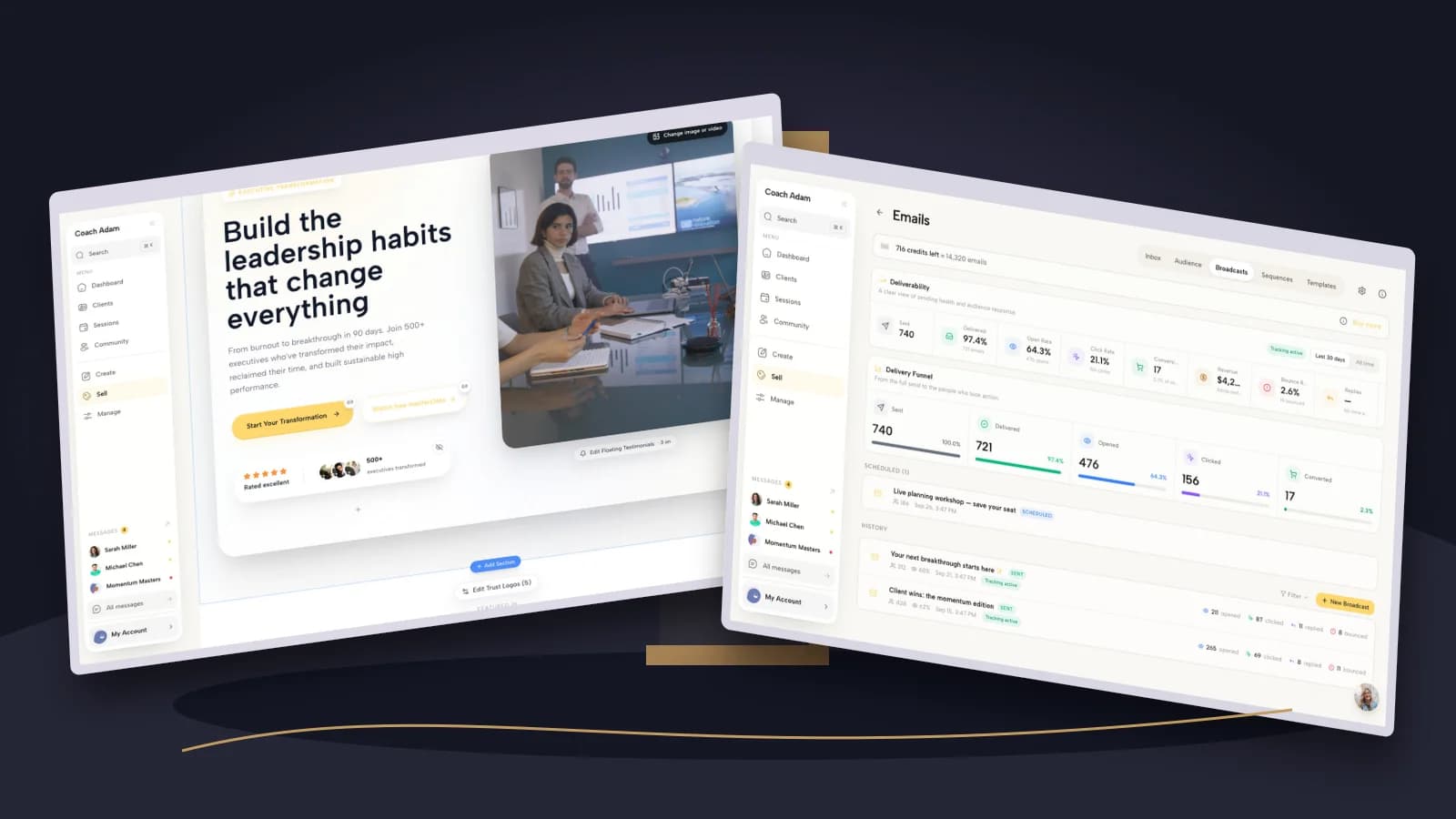
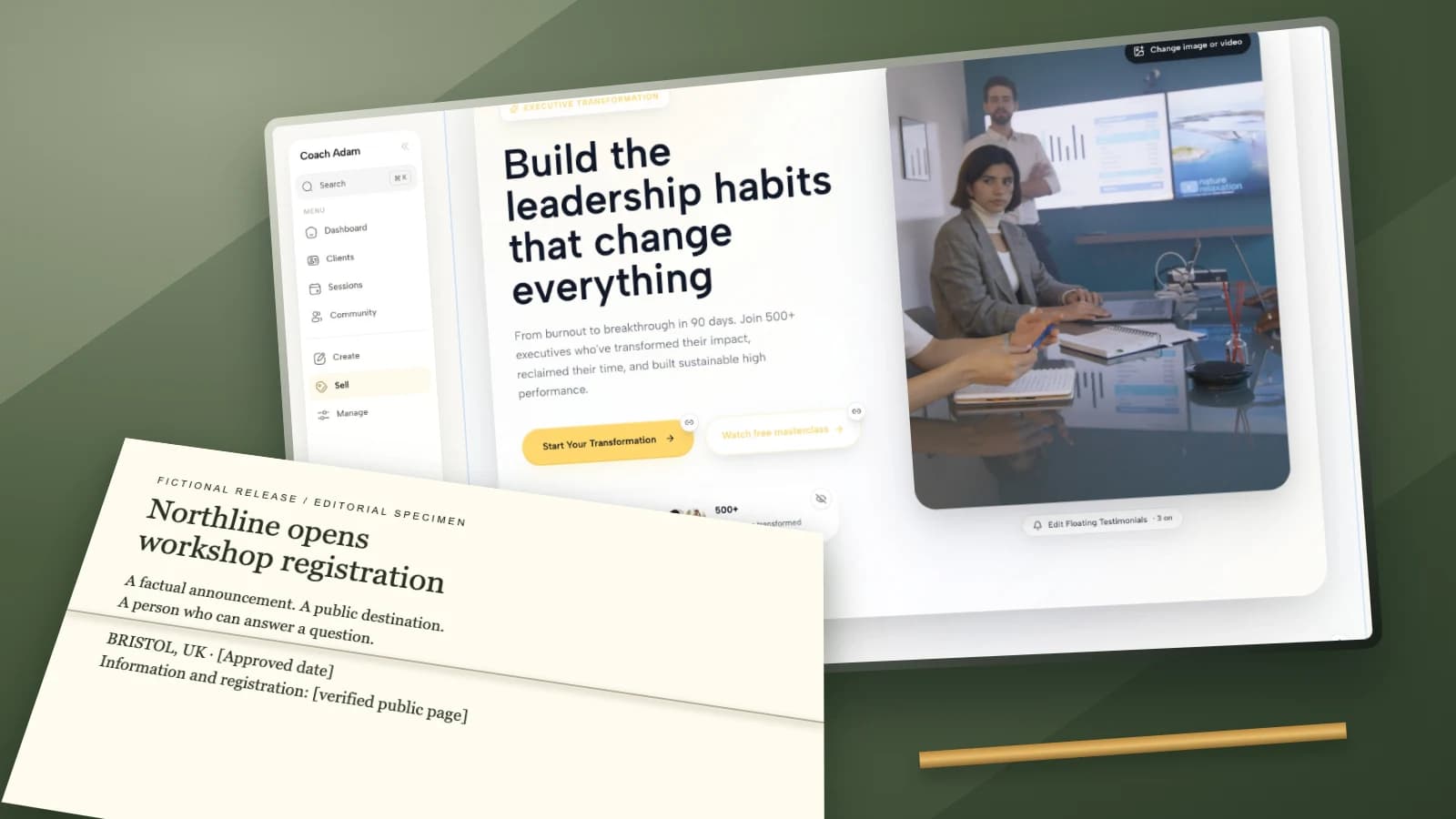
Coachful's real website editor is relevant to this public-information job. It is not evidence that Coachful distributes press releases or creates media coverage. The demo shows a coach website, not the fictional workshop page in this article.
Supply a current headshot or relevant original event photograph only when you have the rights and permissions to share it. Include a factual caption and credit. A generated illustration must not masquerade as a photograph of a real event, client group or venue.

Use consistent practice identity across the release, public page and any approved image resources. Consistency makes verification easier; it does not mean a journalist must use your logo or reproduce your preferred wording. Do not add a publication's logo to your site merely because you sent it a release.
7. Make it easy to ask a media question
Put a monitored contact in the release itself. A journalist should not need to book a paid coaching session, join your newsletter or complete a client intake to ask a factual question. If you include a form, make email available as an alternative.
Useful initial enquiry details are the person's name, publication, deadline and timezone, topic, requested format and a way to reply. Ask only what you need. Do not request confidential sources, sensitive client histories or unnecessary personal data in an initial media form.

The form-builder example illustrates a configurable form surface, not a prebuilt media-enquiry template. Any proposed media fields need to be created and checked separately. In particular, receiving a journalist's enquiry is not permission to subscribe them to promotional emails.
How to send the release without spamming journalists
Start with a small set of relevant publications. Read a recent story and check the current contact or submission instructions. A local community editor, specialist trade reporter and national features desk have different remits. The same mass pitch is unlikely to respect those differences.
Use a brief introduction that connects the news to the outlet's actual audience. Put the main facts in the message or provide the format the publication requests. Avoid large unrequested attachments, compulsory downloads and a link that grants editing access to your working document.
Subject: [Local or specialist angle]: [specific development]
Hello [name],
Your [specific relevant section or accurately described recent coverage] serves [audience]. I thought this announcement might be relevant because [one factual connection].
[Practice] has [specific development], available [when and where]. The practical details and release are here: [verified public information link].
I can answer questions about [bounded relevant topics] and provide [genuinely available approved material]. Please let me know your deadline and preferred format if useful.
[Real name, role and monitored contact]

Do not claim to have read an article you have not read or imply the journalist previously expressed interest when they did not. Respect a refusal and any stated contact preferences. Follow applicable privacy and electronic-communications rules; this guide is not legal advice on whether a particular outreach message is permitted.
If a relevant deadline allows, one concise follow-up can clarify whether the information reached the right desk. That is an editorial suggestion, not permission to keep chasing. Silence is not agreement to publish. A correction to important factual information is a different matter from repeatedly asking for coverage.
Track editorial conversations, not imaginary publicity value
Keep a simple log of publication, contact, story angle, date, response, requested material and next action. Separate an independent editorial story from a paid placement, a syndicated release copy and a mention on your own website. They are different results.

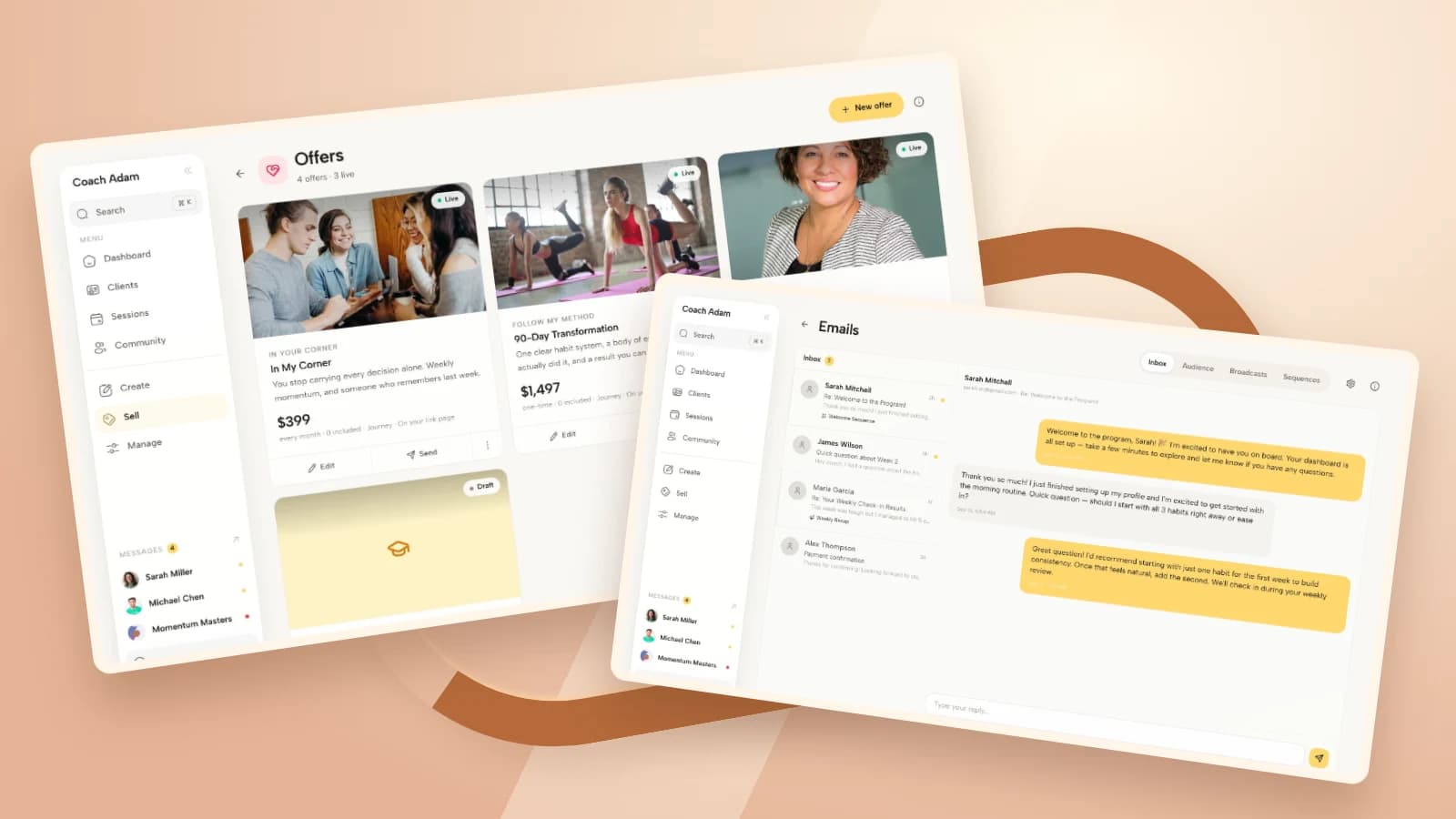
The Coachful leads workspace can illustrate organizing contacts and next actions. It does not identify journalists for you or verify that an article generated a sale. Keep media relationships distinct from potential coaching clients, and never treat a contact record as evidence of marketing permission.
If enquiries follow coverage, ask where the person heard about you and record the answer with appropriate care. Avoid assigning every later sale to a release just because the dates are close. Do not invent reach, advertising-equivalent value or conversion rates.
If you want to evaluate the supporting website, form and contact-management surfaces before choosing your setup, Try the interactive demo. Follow the public-information-to-enquiry path with this announcement in mind. The point is to make a real story easy to verify and respond to, not to replace editorial judgment with software.
Coaching press release FAQs
Should I announce a new coaching certification?
You can announce a genuine professional development, but explain its relevance to the intended readers. A credential may belong in your biography or a client update rather than warranting a media pitch by itself. Check the awarding body's rules and do not imply accreditation of unrelated services.
Do I need a client testimonial in the release?
No. A factual announcement and a useful approved quote from the person responsible can be sufficient. Client confidentiality, permission and accurate attribution matter more than adding social proof. Never invent a quote to complete a template.
Should I pay for press release distribution?
Only after checking the service's actual deliverables, terms, outlets and labeling. Compare them with your purpose and budget. Distribution is not guaranteed independent reporting, and a list of reproduced copies is not proof that prospective clients read the announcement.
Can I put the release on my own coaching website?
Yes, as your own announcement, with accurate labeling. Do not describe self-publication as being featured by an independent outlet. Keep a public version current and preserve a correction when a significant fact changes.
What should I do if there is no coverage?
Review whether the development mattered to that publication's readers, whether your timing and contact were appropriate and whether the necessary facts were available. You can still communicate useful news through your own permitted channels. Do not manufacture a bigger claim to make the next release sound more newsworthy.
The final check
Before sending, read only the headline and opening paragraph. Can a stranger identify what happened, who it is for and why it matters now? Then open every link, verify every named relationship and make sure the contact can actually answer a question.
A press release should make a real development easier to report, not make an ordinary offer sound extraordinary. If there is no defensible development yet, improve the offer or choose a more appropriate communication rather than forcing a news angle.
Sources and limits: The ICF press-release guide and Press Release Zen's life-coach example were reviewed for search intent and common document structure. The template, fictional example, pitch and coach-specific checks here are original editorial guidance. No search volume, coverage rate, business outcome or press-distribution capability is claimed.