LinkedIn Newsletter for Coaches: 5 Decisions Before You Launch

Nour
Founder, Coachful
Should you start a LinkedIn newsletter if you already struggle to turn posts into coaching enquiries? Only if you can name a recurring problem your prospective clients want help thinking through, sustain several useful editions and explain what an interested reader can do next. A longer format will not repair an unclear coaching offer.
A LinkedIn newsletter is a recurring publication hosted on LinkedIn. Readers subscribe there, and LinkedIn provides notifications for new editions. It is not the same as your own email newsletter, and a subscription does not give you permission to add that person to a separate marketing list.
For career, leadership, executive and business coaches, the format can suit questions people already consider in a professional setting. For sensitive personal subjects, the visibility of subscribing deserves more care. Make these five decisions before announcing a publication you will have to keep feeding.
The short answer: start with a publishing test, not a launch announcement
Write two complete sample editions and outline a third before creating the newsletter. This is an editorial test, not a LinkedIn requirement. If you cannot make those editions meaningfully different and useful to the same buyer, narrow the promise before choosing a logo or announcing a weekly schedule.
Your first version needs one reader, one recurring decision and one sustainable cadence. You do not need a huge audience or a new coaching methodology. You do need a reason for someone to want the next edition after reading the first.
- Start: your buyers use LinkedIn, the subject fits a professional public setting and you have specific material to publish.
- Wait: you are still deciding who your coaching serves, or every proposed edition becomes a pitch for the same package.
- Choose another channel: your readers need privacy, rarely use LinkedIn or prefer an existing publication you can already maintain.
For a broader client-acquisition approach, use our guide to getting coaching clients on LinkedIn. This article concerns one particular publishing format, not a requirement to use every LinkedIn feature.
1. Decide whether LinkedIn or email should carry the relationship
The first question is not which platform gets more reach. It is where the reader expects to receive this publication and what relationship they have agreed to.
LinkedIn's official newsletter guidance describes a regular publication with subscribers and notifications for new editions. Those notifications can include push, in-app and email. That does not mean every subscriber reads every edition, receives every notification or becomes a contact in your email software.

A LinkedIn subscription: the person chooses to follow this publication within LinkedIn. LinkedIn manages the platform experience and notification delivery. You remain responsible for what you publish and how you behave toward readers.
A separate email subscription: the person agrees to your stated email offer through an appropriate signup process. You manage that permission, your email service, the sending expectations and the unsubscribe route. For the email-side setup, read how to start a coaching newsletter.
You can run both, but assign them different jobs. For example, a leadership coach might publish one practical management decision on LinkedIn each month and offer an optional worksheet through a separate email signup. The email version needs a reason to exist beyond receiving an identical sales pitch twice.
There is also a privacy consideration. LinkedIn's help says subscribed newsletters can be visible to others and on a member's profile. Do not frame a subscription as a confidential way to disclose burnout, relationship trouble or another sensitive need. Write public professional education, not a disguised diagnostic intake.
Your decision: finish this sentence: “This LinkedIn newsletter helps [reader] think through [recurring decision]; my separate email list, if offered, provides [distinct promise].” If the second promise adds nothing, do not build that extra channel yet.
2. Choose a promise you can deliver repeatedly
“Leadership insights” is a category, not a useful promise. A prospective reader should recognize a situation they encounter and the kind of help each edition supplies. Your coaching credential can support credibility, but it cannot do the job of an editorial angle.
Use this formula: a defined reader + a recurring decision + a repeatable useful output. The output might be a question to ask, a conversation script, a decision checklist or a short worked example.
- Leadership coach: first-time managers deciding what to delegate, with one practical conversation example per edition.
- Career coach: experienced professionals comparing their next move, with one trade-off exercise per edition.
- Business coach: solo service-business owners reviewing an offer, with one worked decision and its limitations.
- Executive coach: leaders navigating a new scope of responsibility, with one reflection framework they can use before a real meeting.
These are hypothetical positioning examples, not claims that a niche or format generates clients. Choose work you are competent to coach and questions your intended reader actually asks.

A fictional first edition you could outline
Suppose a leadership coach chooses “The First-Time Manager Brief.” Its promise is one monthly note on moving from doing the work to leading it. A first edition could be called “Before you take back the task.”
- Situation: a new manager delegates a task, dislikes the proposed approach and takes the work back.
- Distinction: separate an unclear outcome from a method that simply differs from the manager's preference.
- Example question: “Talk me through your approach and where you would want a checkpoint.”
- Action: agree one quality checkpoint before intervening in the next delegated task.
- Optional next step: offer a relevant delegation worksheet, clearly explaining whether accessing it involves email signup.
That edition gives the reader something useful without needing a confession from a coaching client. Do not lift a recognizable session story, change the name and assume confidentiality is solved. Use a clearly labeled fictional example, or obtain appropriate permission for any real material.
Now outline two further editions: agreeing decision authority and giving feedback without redoing the task. If they all collapse into the same lesson, your angle needs more substance. If they address unrelated buyers, your promise needs tighter boundaries.
Choose a cadence from actual writing time
Time yourself producing the two sample editions, including editing and link checks. Then choose a frequency that fits around paid delivery. Monthly is a reasonable starting experiment when you can deliver a substantial useful note; it is not a universal best cadence.
Do not promise weekly publication because a competitor does it. A frequency field is an expectation you set with readers, not a badge of seriousness. A shorter edition that resolves one decision is better than a long article assembled to meet an arbitrary word count.
3. Set up the native publication without inventing platform rules
Work in LinkedIn itself. Coachful can support your separate website and email workflow, but the screenshots in this guide do not show native LinkedIn creation or an automatic integration.
For a personal publication, LinkedIn's current help describes this path: select Write article from the homepage share area, open the publishing tool's Manage menu, and look for Create newsletter. Complete the required newsletter information and review the publication before releasing the first edition.
Interfaces and account access can differ. If you do not see the option, use the current official help and confirm the identity you are publishing as. Do not buy followers or follow an old tutorial that tells you to enable an obsolete setting just to unlock a button.
A practice with a company Page must make a separate identity decision. LinkedIn's Page newsletter guidance specifies the relevant Page administrator roles and access criteria. A solo coach may prefer a personal publication; a multi-coach practice may want the publication to belong to the business identity. Neither choice is automatically better.
- Name: recognizable enough that the intended reader understands the subject.
- Description: who it serves, what each edition provides and the actual planned cadence.
- Publication image: legible, relevant artwork you have rights to use, not a fabricated credential badge.
- First edition: a complete useful answer, not only an announcement that useful answers are coming.
- Links: working destinations with promises that match the wording in the edition.
LinkedIn explains that its newsletter tools can invite connections or followers to subscribe and provide a newsletter page. Review the available invitation and sharing options deliberately. Do not build a launch forecast around an assumed number of notifications, and never interpret an invitation as a booked client.
Before publishing, read the edition on a phone. Check the opening, section lengths, image relevance and destination links. Have someone in the intended audience explain the takeaway back to you. “It sounds professional” is weaker feedback than “I know which conversation to handle differently tomorrow.”
4. Build one honest next step outside the edition
You do not need a booking link at the end of every paragraph. Match the next step to the reader's readiness. A reader learning a new delegation question may want a worksheet. Someone explicitly exploring coaching may want a clear offer page or introductory call.
The transition should complete the lesson: “If you want to use this in your next delegation conversation, the worksheet gives you space to define the outcome, decision authority and checkpoint.” Explain what the destination does before asking for a click.

If that worksheet is offered through your website, the landing page should repeat the specific promise. Explain what the person receives, what information you collect and what happens after submitting. Sending a precise newsletter link to a generic homepage with competing offers creates unnecessary work for the reader.
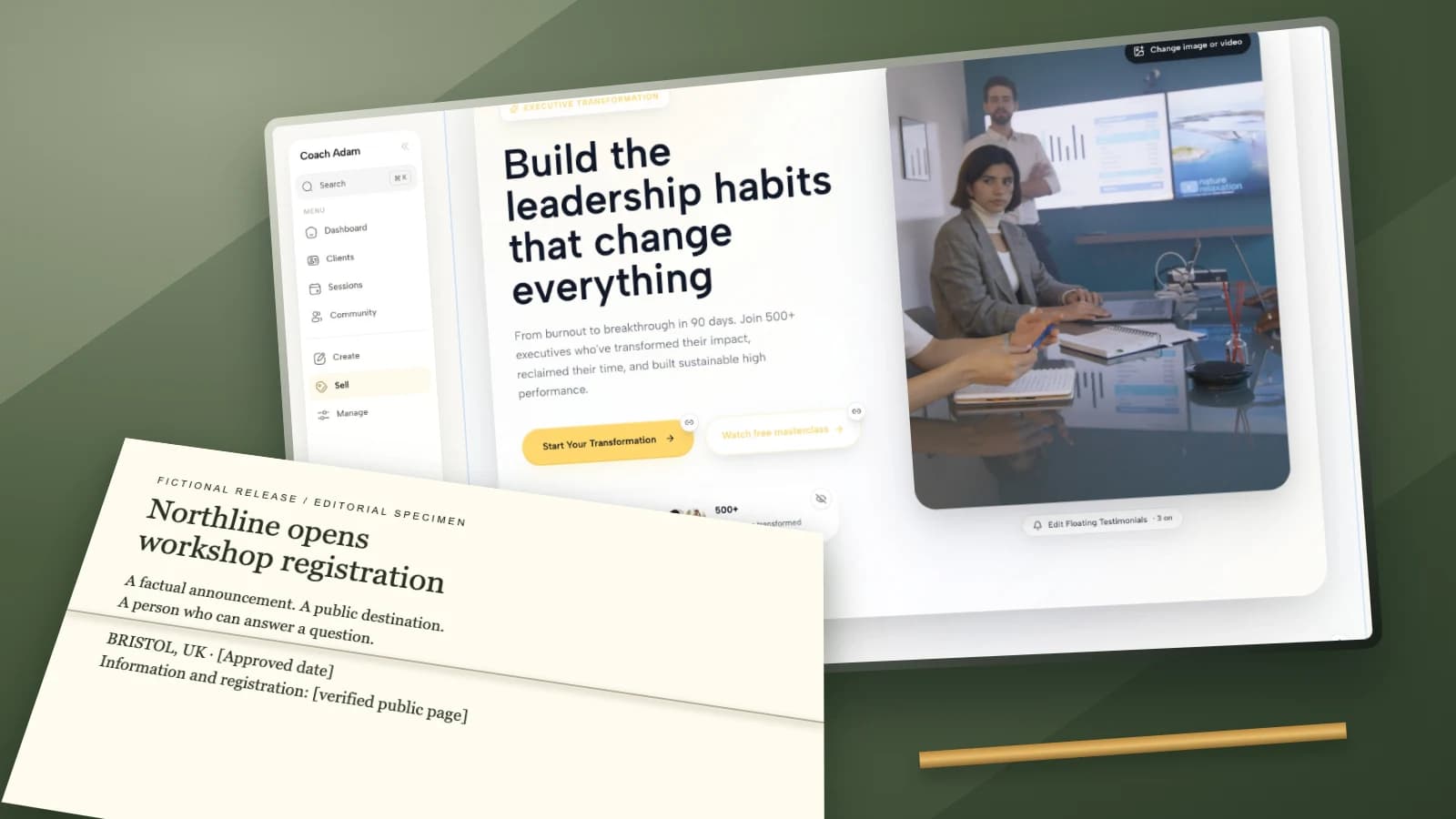
Coachful's real website editor is shown above as an example of the destination you can manage. It is not proof that a LinkedIn visitor has signed up, and the demo website is not a recommended template for every newsletter.

Make the second subscription explicit
A useful illustrative signup statement is: “Get the delegation worksheet by email. You can also choose to receive my monthly Manager Brief email. Unsubscribe from marketing emails at any time.” Adapt the wording and control design to what you actually send and the rules that apply to your business.
Where delivery and ongoing marketing are separate choices, make those choices clear. Do not hide a recurring campaign behind a button that appears to request a single file. A LinkedIn reader should not discover a new subscription only when the third promotional email arrives.
Collect only information needed for the stated purpose. A name and email may be enough for a simple resource. Employer details, health history and a long coaching intake are usually disproportionate for a worksheet download.

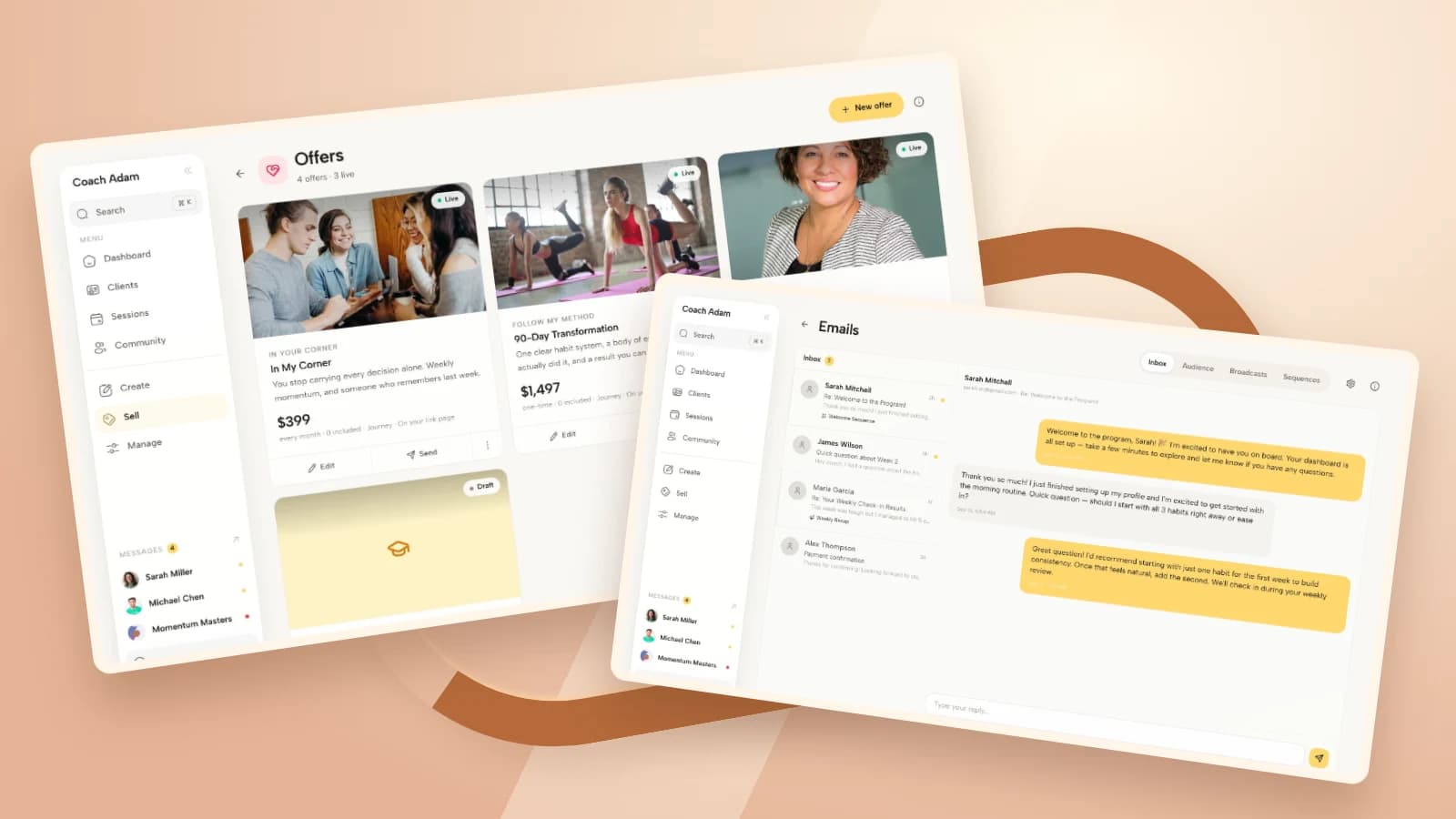
After a legitimate email signup, a welcome message should deliver what you promised and explain what, if anything, follows. The real Coachful sequence editor above illustrates an email workflow. It does not mean LinkedIn subscriptions trigger that workflow or that subscriber details have been imported.
Keep the publications operationally distinct. A LinkedIn edition is published inside LinkedIn. Your independent email edition belongs in your email workflow and goes only to the appropriate audience. No automated cross-posting, audience transfer or social-account access is required for the approach in this guide.

Before promoting that optional path, test it yourself: open the link, read the page on mobile, submit a test signup you control, check the promised delivery and find the unsubscribe route. Do not drive more people into a broken handoff just because the edition is ready.
5. Review relevant readership and enquiries separately
Choose a review point before the launch so you do not redesign everything after one quiet issue. For example, review after three editions at the cadence you selected. That is a bounded learning period, not a promise that clients should arrive within three months.
Use LinkedIn's available publication analytics to understand readership. Separately record visits to your chosen destination, voluntary email signups and coaching enquiries. These are different events with different denominators; do not combine them into a single flattering “engagement” total.

- Readers engage with the idea but ignore the next step: check whether the destination is a natural continuation, not an unrelated sales invitation.
- People visit but do not sign up: check the promise, the form, privacy information and mobile experience before blaming attention spans.
- Many peers subscribe but few prospective clients respond: examine whether you are writing about coaching technique for coaches rather than decisions your buyers face.
- Enquiries arrive but are unsuitable: clarify the audience, scope, service and expectations before increasing distribution.
- Useful conversations appear but production is exhausting: reduce frequency or simplify the format before abandoning the channel entirely.

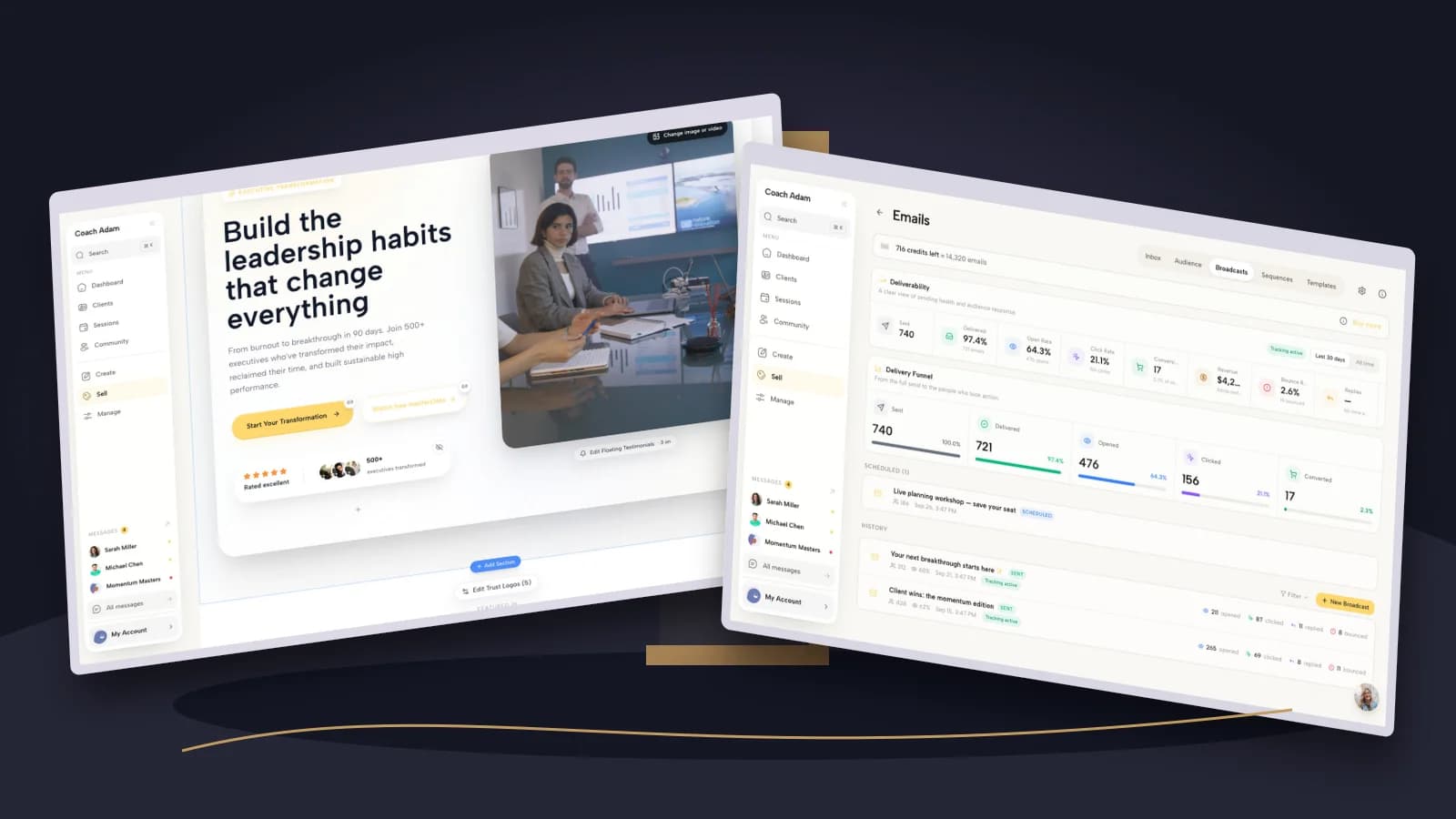
For an actual enquiry, record the context the person voluntarily provides: which topic helped, what support they requested and the agreed next action. The demo lead list illustrates follow-up organization, not permission to scrape subscriber profiles or send every new subscriber a sales sequence.
Ask “What prompted you to get in touch?” rather than assigning the entire sale to the last visible link. A colleague's referral may have created trust before the newsletter reminded someone to act. Honest attribution helps you decide where your limited marketing time belongs.
A practical launch brief to complete
Copy these fields into your own planning document. If several remain vague, finish the editorial work before publishing.
Reader: [specific prospective client or buyer]
Recurring decision: [recognizable situation]
Promise: [what each edition helps them do]
Cadence: [frequency you can sustain]
First three topics: [distinct but connected questions]
Example boundary: [fictional material or appropriately permitted real material]
Optional next step: [one relevant destination]
Email permission: [separate signup explanation, if applicable]
Review point: [date or edition count]
Decision signals: [relevant readership, requests, enquiries and production time]
Frequently asked questions
Is a LinkedIn newsletter worth it for a coach?
It can be when your buyers use LinkedIn, the subject suits public professional reading and you can sustain a specific useful series. It is a poor fix for an unclear audience or offer. Test the editorial promise with sample editions before committing.
Does a LinkedIn newsletter replace an email newsletter?
No. The subscriptions, publishing environments and permissions are different. You can offer a separate email relationship, but readers must understand and choose it. Do not assume a LinkedIn subscription authorizes separate marketing emails.
Should I publish as myself or my coaching business Page?
Choose the identity readers should associate with the publication and consider who will maintain it. Check the current Page roles and access requirements if publishing for a practice. Avoid building under an identity you do not control or cannot responsibly maintain.
How long should each edition be?
Long enough to answer one meaningful question with an example and a usable action. There is no word count in this guide presented as a platform rule or proven conversion optimum. Edit out material that does not advance the reader's decision.
Can Coachful publish my LinkedIn newsletter?
The workflow described here uses LinkedIn's native publishing tools for the LinkedIn edition. Coachful illustrates the separate website, form, email and enquiry workflow. Nothing shown establishes automatic LinkedIn publishing or subscriber synchronization.
The final check
Before launching, make sure the edition earns attention on its own and the optional destination keeps its promise. You should be able to explain the publication without mentioning software, and explain the signup without quietly changing the reader's consent.
If your missing piece is the separate website-to-email handoff, explore those areas in Coachful with your own example in mind. The demo lets you evaluate that next step without pretending it will manufacture a LinkedIn audience.
Source note: native newsletter setup, notifications, subscription visibility and Page publishing roles were checked against the official LinkedIn Help pages linked above. Example topics, issue structures and review periods are editorial suggestions, not platform-endorsed methods or reported client outcomes. Product images contain Coachful demo data, not actual subscriber results.