Meetup for Coaches: 5 Steps to Build a Useful Local Group

Nour
Founder, Coachful
Can Meetup bring you coaching clients without turning every gathering into a sales pitch? It can be worth testing if you can host a genuinely useful, recurring group for people your practice serves. Start with the community experience, make your business affiliation explicit and offer coaching only as an optional next step. A group membership or RSVP is not a sales lead by default.
The hard part is not creating an event listing. It is choosing a purpose people will return for, facilitating it well and deciding whether the commitment makes sense for your practice. If you need clients immediately and dislike running groups, Meetup is unlikely to be your simplest first move.
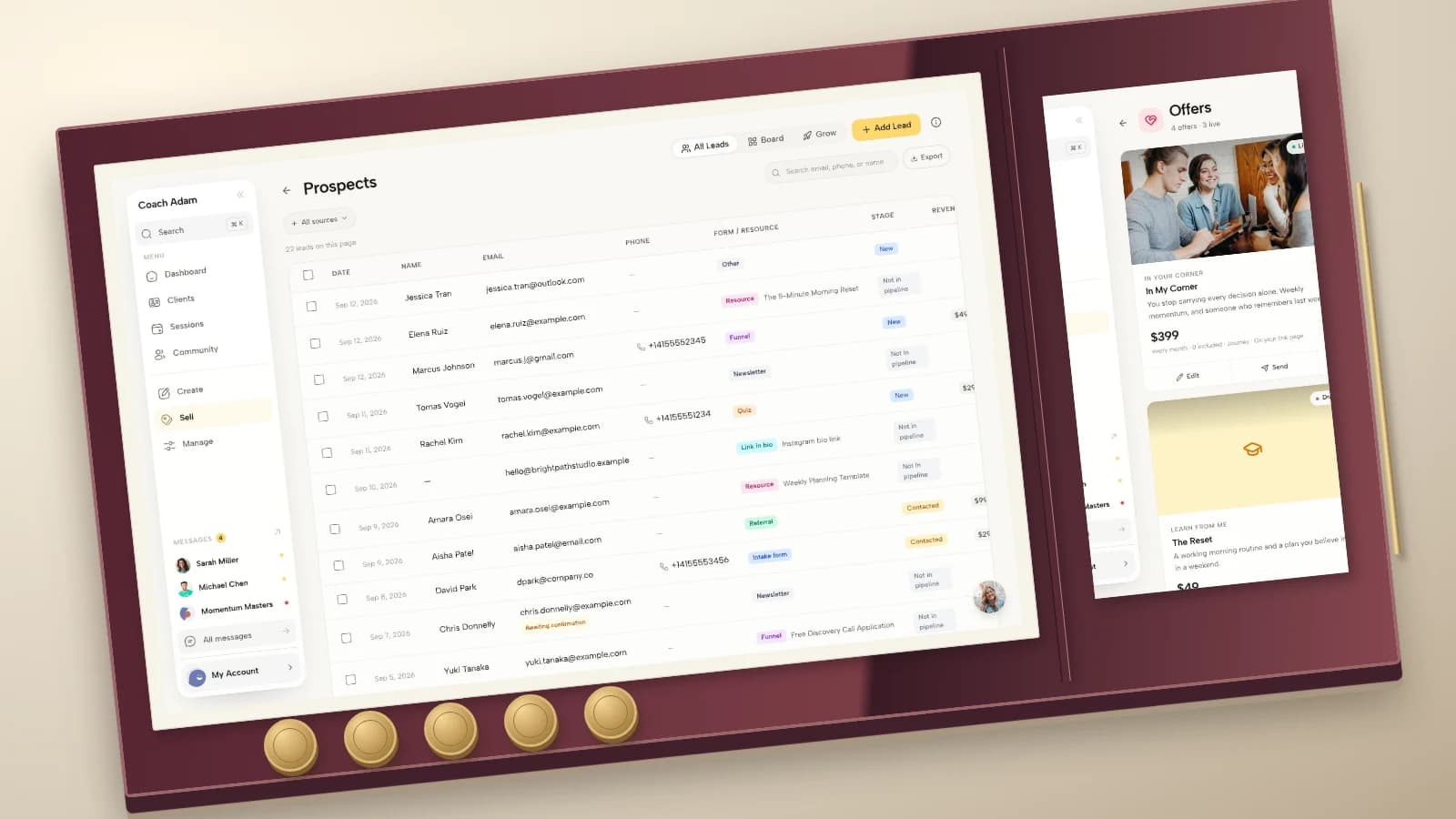
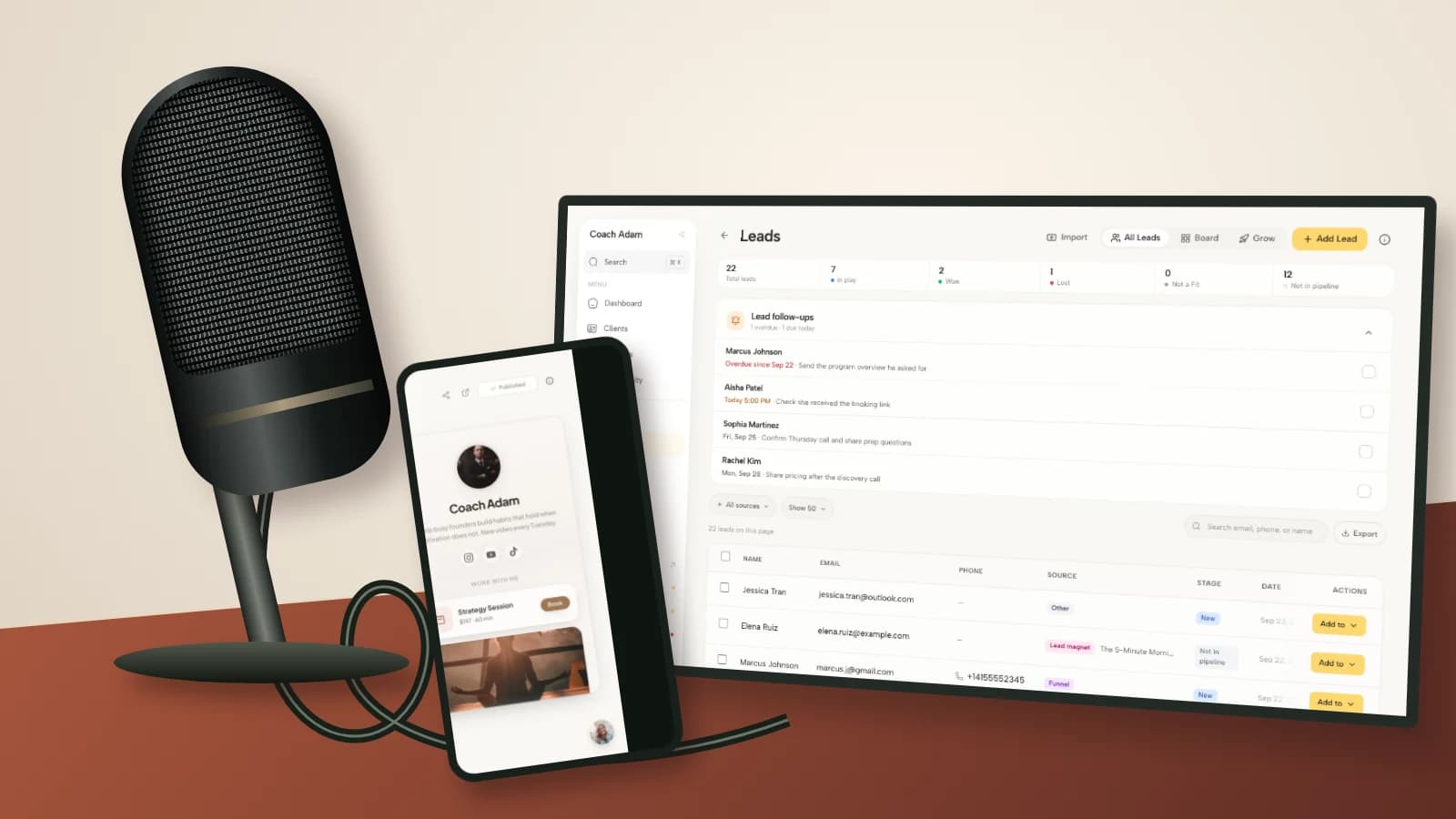
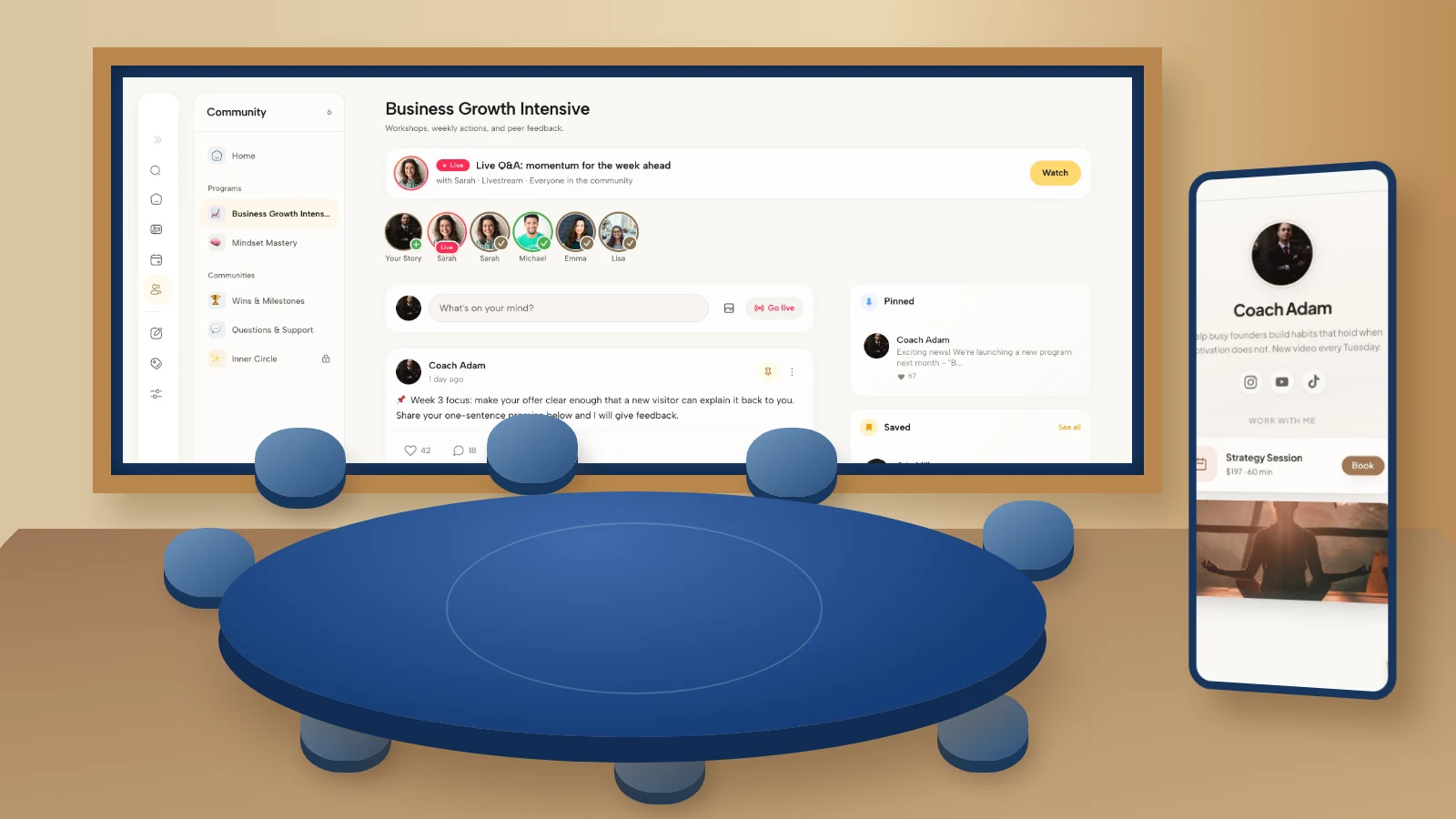
This five-step guide focuses on hosting an in-person Meetup community, not collecting contacts at somebody else's event. The new-manager learning circle below is a hypothetical example. Coachful images show real demo surfaces for optional follow-up and delivery, not Meetup screens or a Meetup integration.
1. Decide whether a community is the right acquisition route
Meetup is a group-and-event platform, not a directory of people waiting to buy private coaching. Its groups and events policies say groups should build meaningful communities rather than focus on one-to-one services. Discussions, workshops and group learning can fit. A recurring advertisement for your consultation calendar does not meet the same purpose.
Ask yourself three questions before becoming an organizer:
- Do these people benefit from meeting one another? Shared professional transitions, practical learning and mutual encouragement can support a group. A highly private issue requiring individual attention may be a poor public-group topic.
- Can I deliver value without anyone buying coaching? The meeting should leave participants with useful learning or connection, even if they never become clients.
- Will I enjoy the recurring work? Hosting means welcoming newcomers, handling logistics, moderating participation and maintaining an honest description, not just giving a presentation.
For example, a leadership coach might host a local New Managers Learning Circle. Its purpose is to help people practise everyday management conversations and learn from peers. That purpose can support several meetings. “Free discovery calls with a leadership coach” is a different service, not a community mission.
Before starting your own group, observe a relevant public event as a participant if its rules permit. Learn what people attend for and where your proposed group would add something different. Do not copy another organizer's materials, extract their member list or treat their discussion as your recruitment channel.
If you only want to meet potential introducers, attending may be enough. Our separate guide to networking events for coaches covers that decision. Hosting makes sense when the group itself is something you want to maintain.

2. Give the group a repeatable purpose and transparent listing
Choose a group name people can understand without knowing your coaching method. Name the people and shared activity, not a promised transformation. “New Managers Learning Circle” says more than “Limitless Leadership Breakthrough Experience.” Add your location where it helps people understand whether they can attend.
The group purpose should be broader than a single session but narrower than general self-improvement. For the manager circle, possible meetings include delegation, setting expectations, giving feedback and managing the move from peer to manager. Those are related reasons to return, not a collection of unrelated workshops.
Meetup's business promotion guidance permits affiliations when member value comes first, promotional elements are secondary and expectations are transparent. State who runs the group, the business connection and any planned promotional or follow-up element. Do not hide your profession until the closing pitch.
Use a short event brief before writing the listing:
- Who: people new to managing a team who want practical peer learning.
- Activity: guided preparation and optional paired practice of a delegation conversation.
- Takeaway: one conversation the participant has prepared to try, not a guaranteed improvement in team performance.
- Format: a 60-minute hosted meeting, with permission to observe rather than share.
- Terms: actual date, venue, access information, capacity, cost and cancellation arrangements.
- Business context: the host is a leadership coach; information about separate coaching is available to people who want it.

A copyable opening could read: “Practise your first delegation conversation with other new managers. We will prepare a real but anonymized situation, try a simple conversation structure and compare what we learned. Sharing and paired practice are optional. Hosted by [name], a leadership coach at [business].”
Then add the factual logistics and any optional invitation. Replace every placeholder with real terms. Do not invent a waitlist, suggest that most members become clients or use somebody else's employer logo to make the group look established.
For health, relationship or other sensitive topics, check the platform rules and your professional scope before proposing the group. Do not promise cures, financial returns or regulated services you are not permitted to provide. This example is adult professional learning, not clinical treatment or a children's program.
3. Design the first meeting around participation, not promotion
A coach-led gathering is not automatically a group coaching engagement. Tell participants whether you are teaching, facilitating discussion or providing coaching, and keep the activities within what you advertised. Do not invite strangers into deep personal disclosure merely because that might create an emotionally memorable event.
For the hypothetical manager circle, a workable 60-minute agenda is:
- Minutes 0 to 10: welcome people, explain the purpose, introduce the host and agree basic participation boundaries.
- Minutes 10 to 20: model a simple delegation conversation using an invented workplace situation.
- Minutes 20 to 40: allow private preparation and optional paired practice, with an observer alternative.
- Minutes 40 to 55: invite general learning, answer questions and let each person choose one action.
- Minutes 55 to 60: close the meeting, explain the next group date if confirmed and briefly mention the optional coaching enquiry route.

Explain that people may pass, avoid naming colleagues and refrain from sharing other participants' stories outside the room. Do not promise that a public group can guarantee confidentiality. Set a no-recording default for this example and explain any different arrangement before someone decides to attend.
Meetup's event policies require a host present in person. Name the actual host and make it easy to identify them at the venue. Check the entrance, seating, access arrangements and contact route. An unattended room with your booking link on a screen is not a hosted experience.
Keep joining and RSVP questions proportionate. The platform's organizer standards specifically caution against requesting sensitive or private personal information. You need enough information to run the event, not a detailed intake assessment before somebody joins a learning circle.
Also prepare for a small turnout. A useful conversation among a few suitable people is possible; pretending that the room is full is not. The same standards prohibit inflating group membership and RSVPs. Never add fake attendees to make an untested group look popular.
4. Build an optional route from interest to coaching
Someone enjoying the discussion may ask about working with you. Prepare for that without designing the whole group around extracting the question. The invitation should connect to a real need your coaching serves and make the distinction between group participation and paid support obvious.
For example: “If you want individual support with the management situation you are working on, I also offer leadership coaching. The page explains the format and who it suits. You are welcome to keep attending this circle without exploring that.” Use the final sentence only if that is genuinely your arrangement.

Keep the destination consistent with the invitation. If you promise a resource, link to the resource. If someone asks about coaching, provide a service page or fit-call route that explains purpose, length and price where applicable. If you require external registration or ticketing for the event itself, disclose that clearly in the event description.

Do not automatically move Meetup members into a newsletter, private chat or client portal. A request for one worksheet is not permission for a promotional sequence. Establish the appropriate permission and privacy basis for the communication you actually intend to send, and honor objections.
When somebody explicitly requests contact, record the minimum useful facts: their name, agreed channel, requested next step and source event. Avoid copying sensitive group disclosures into a prospect record. The useful note is “requested information about individual coaching,” not a transcript of the difficulty they shared.

A resource follow-up could say: “Thanks for joining the manager circle. Here is the delegation preparation sheet you asked for. The first section matches the exercise we practised.” A coaching follow-up should instead identify the service and the agreed enquiry route. Do not quietly turn the first message into the second.

If somebody chooses a paid program, explain its own scope, terms, access and communication arrangements before enrollment. The free circle's friendly atmosphere must not substitute for a proper coaching agreement. Nothing shown here establishes automatic Meetup-to-Coachful synchronization.

5. Review the group as a bounded business commitment
Choose a review point and a maximum commitment before launch. For example, you might test three monthly meetings with a cash cap and a preparation-time cap that you can afford. That is a planning choice, not an evidence-based deadline by which Meetup should produce clients.
Check the actual organizer subscription available to your account before committing. Prices, billing periods and offers can vary. Do not confuse a member subscription with organizer privileges, and include the venue, travel, materials and follow-up workload in your own budget.
Use a simple review record after each meeting:
- Attendance: confirmed RSVPs and actual attendance, kept separate.
- Member value: whether participants completed the activity and what they said would improve the next meeting.
- Repeat interest: requests for another session or later actual attendance, not presumed loyalty.
- Appropriate enquiries: people who independently asked about coaching or agreed to receive service information.
- Commercial outcome: paid engagements actually agreed, with uncertainty about attribution acknowledged.
- Cost: money spent and hours used, including preparation, hosting and administration.
Diagnose the stage that is weak. Few suitable attendees suggest reviewing the purpose, local fit, description or timing. Engaged participants with no coaching interest may mean you have built a worthwhile community but not a useful acquisition channel. Enquiries that stop after reading your offer call for a different review from low attendance.
Do not “fix” disappointing sales by making the next meeting a longer pitch. Decide whether to continue as a community investment, change the format transparently or stop responsibly. If you close, communicate clearly, resolve any outstanding obligations and follow the platform's organizer arrangements. Do not leave people expecting events you no longer intend to host.
A sensible first move
Write one sentence describing why members should meet one another. If you cannot answer without mentioning your coaching package, reconsider the group. Then draft one honest event, name its host, check the venue and prepare a useful activity that stands on its own.
Once the event earns genuine interest in coaching, the next step must work. Try the interactive Coachful demo to inspect the website, links, lead-management and program surfaces against that handoff. The purpose is to make an agreed enquiry easier to handle, not turn every group member into a prospect.
Frequently asked questions
Can coaches promote their business on Meetup?
Meetup allows business affiliations when the event provides clear standalone member value and the affiliation is transparent. Promotional elements should be secondary. A disguised sales presentation or a listing primarily advertising one-to-one services does not follow the community-first purpose described in its policies.
Should I start my own group or speak in an existing one?
Start a group when you want responsibility for a recurring community. Offer a session to an existing organizer when the subject genuinely serves their members and the organizer agrees to the format and any invitation. Neither route permits unsolicited promotion to the member list.
Should the first event be free?
Choose based on your budget, audience and advertised experience. Free admission still costs preparation and hosting time. Charging does not prove demand for private coaching. In either case, disclose the actual terms and deliver an event that is useful without an additional purchase.
Can I email everyone who attends?
Do not assume attendance grants ongoing marketing permission. Keep necessary event communication, requested resources and promotional follow-up distinct. Follow applicable law, platform rules and the permission you established. Do not scrape attendee details or use private disclosures for prospecting.
How many Meetup events does it take to get coaching clients?
There is no reliable universal number. Group fit, local demand, facilitation, offer suitability and the time you can commit all matter. Define an affordable experiment and review actual attendance, member value, appropriate enquiries and paid engagements rather than borrowing somebody else's conversion promise.