Bark for Life Coaches: 5 Checks Before Buying Credits

Nour
Founder, Coachful
“Is Bark worth paying for as a life coach, or am I buying a list of people who will never reply?” Treat Bark as a paid introduction channel, not a source of guaranteed clients. Before buying credits, check the cash commitment, your lead-selection rules, the terms behind any guarantee, your ability to respond and the point at which you will stop.
A credit price is not the price of a coaching client. It is the price of permission to start a sales conversation, and sometimes that conversation goes nowhere. Your decision should be based on what you can afford to learn, not on how reassuring a large number of available leads looks.
This guide is for independent life coaches considering their first Bark credit purchase. It is not a review based on our own lead-buying experiment, and it does not claim an average success rate. The five checks below help you make a purchasing decision with current official information and your own practice economics.
How does Bark work for life coaches?
Bark operates a service marketplace with a life-coaching category. According to its US professional pricing page, professionals receive lead notifications and pay credits to contact selected customers. The credit cost is shown before you respond; Bark says a paid response gives access to the customer's phone number and email, with subsequent contact about that introduction free.
That makes three different events easy to confuse: seeing a request, purchasing contact access and winning paid coaching work. Only the third produces a coaching client. A person can submit a genuine request and still choose another coach, change their mind or decide not to buy.
Bark says it does not charge commission on the job. That does not make acquisition free: credit purchases, optional subscriptions and your sales time still belong in your decision. This article concentrates on buying and evaluating credits. For a wider comparison of fee models, use our coaching marketplace comparison.
1. Price the credit pack in cash, not just credits
Open the purchase screen and record the currency, pack price, number of credits, applicable taxes, any extra product and whether automatic replenishment is enabled. Do not evaluate the pack from a promotional headline alone. Save the actual offer you are accepting so a later discussion concerns the same terms.
Bark's credit help page states that credit pricing varies by country and pack. It also says auto top-up can automatically purchase more credits when the balance runs low. For a bounded first test, leave automatic replenishment off or confirm it is disabled before paying. An intention to spend a fixed amount is not a cap if the account can buy more automatically.
The same help page says credits purchased from November 1, 2025 expire three months after purchase. Check the current rule applicable to your purchase. Do not buy a large pack merely because the unit rate is lower if you cannot use it responsibly before expiry.

Hypothetical example: a coach pays $240 for 120 credits and buys eight introductions at ten credits each. The used credits cost $160, while $80 remains in the balance. If one client signs, the used-credit cost per client is $160, but the coach has paid $240 in cash. Neither number includes sales time, tax or an optional subscription.
Track both figures. Cash paid tells you what has left the business; consumed-credit cost helps compare introductions with different credit requirements. If the remaining credits expire unused, their cost belongs in the final channel result, not in a hopeful future column.
Before buying, write a plain rule: “My first purchase must fit within my cash test budget without auto top-up, and I will not purchase more until I review the result.” If the smallest available purchase exceeds the amount you can comfortably lose, skip the test.
2. Set lead-selection rules before the notifications arrive
Buying credits first and inventing a target client afterwards is an expensive order of operations. Define the coaching problem you can help with, the locations and time zones you serve, your delivery format, your available capacity and the scope you will decline. A platform category is not a substitute for those decisions.
A career-transition life coach might consider requests about clarifying a work decision and reject requests seeking recruitment placement. A confidence coach should not interpret an urgent request for mental-health treatment as a sales opportunity. Declining an unsuitable request protects both the prospective client and the practice.

Use a short purchase filter:
- Problem: does the stated need fit my real experience and coaching scope?
- Format: can I provide the requested online or in-person arrangement?
- Timing: can I respond and offer a suitable next conversation?
- Economics: does the credit cost fit my prewritten maximum for this test?
- Clarity: is there enough relevant information to justify contact without inventing the missing details?
A vague request is not proof of a bad lead, but you do not have to purchase every ambiguous introduction to be fair. Record why you passed. After the test, a high skip rate may tell you the category or service area does not match your offer, rather than that you need a bigger pack.

Be cautious with platform labels such as urgent, verified or high intent. They may describe a useful signal, but they are not your clinical assessment, fit decision or promise that the person will buy. Read what the label means on Bark; do not turn it into your own conversion forecast.
3. Separate a credit-return promise from a cash refund
Do not buy because the word “guarantee” seems to remove the risk. Bark's public pricing page describes returning credits if the first credit pack does not lead to a hire. Returning credits and returning cash are different remedies. Replacement credits keep you in the same channel and still require your time.
Before purchase, read the current terms linked to the offer and ask support to clarify anything material. Establish which pack qualifies, what activity is required, when a claim must be made, what evidence is needed and exactly what is returned. Save the written answer alongside the purchase receipt.

Also distinguish an unsuccessful introduction from an invalid one. “The customer did not choose me” is not the same event as incorrect contact details. Consult the policy that covers the specific problem rather than assuming every non-response qualifies for a return. This guide does not promise that any individual claim will be accepted.
A useful support question is: “For the exact pack shown in my account, if I receive no hire, what must I do, by when, and will the remedy be cash or credits? Please also point me to the separate policy for incorrect contact details.” The question is specific enough to expose a misunderstanding before the purchase.
Optional upgrades deserve their own decision. Do not combine a credit test, a subscription upgrade and a rewritten offer in the same week, then try to identify which change mattered. Keep the initial test simple enough that the result can inform a real choice.
4. Test your response path before paying for introductions
Can you handle a suitable inquiry today? You need a working reply address, an accurate explanation of the service, a booking destination and an available time to speak. Do not pay for contact access while your calendar link points at last month's availability.
Preview the destination on your phone and follow it as a new visitor. Confirm the appointment length, time zone, location or video arrangements, cancellation information and any price the visitor is shown. Never make the prospective client guess whether they are booking a free fit conversation or a paid session.

Prepare a first reply that responds to the actual request. For example: “Hi Sam, I saw your request for help deciding what comes next after a career break. I coach adults on career decisions and returning to work. If that matches the support you want, here are the details of a short fit conversation: [your booking link]. We can check the goal and whether my approach is suitable.”
This is a hypothetical draft, not a message we sent. Replace every claim with something true about your work. If a request lacks important fit information, ask one relevant question instead of presenting yourself as the answer. Do not promise employment, recovery, a certain income or a fixed transformation.
Use a response window you can keep during working hours. A fast irrelevant reply is not better than a considered relevant one, and buying leads does not require becoming permanently available. If your week has no room for inquiries, wait until you can run the test properly.

Keep inquiry handling separate from newsletter permission. Receiving contact details to discuss a requested service is not a blanket invitation to subscribe someone to marketing. Use only the information needed for the inquiry, honor requests to stop and follow the rules applying to your business and the platform.
5. Write the stop rule and review sheet before you spend
A first test is a purchasing experiment, not a verdict on your coaching ability. Choose a cash ceiling, a maximum number of purchased introductions and a review date. Stop buying when the first limit is reached. Allow the inquiries already purchased an appropriate decision window before declaring the final result.
Do not borrow a universal “good conversion rate.” Your offer, market, lead costs and selling process differ from another coach's. Decide how much acquisition cost the actual package can carry after delivery costs, payment fees, overhead and the amount you need to earn for your work. Future renewals should not rescue a first-sale calculation unless you have reliable evidence for them.

For each purchased introduction, record:
- The date, request reference, credit cost and cash equivalent.
- The stated need and the reason it passed your purchase filter.
- Your response date and the next agreed action.
- Whether the person replied, booked, attended and paid.
- The cash received, refund if any and time spent handling the inquiry.
- Any reported contact problem and the outcome of the support request.
In the illustrative log, request A uses ten credits and reaches a booked call; request B uses twelve credits and is awaiting a reply; request C uses eight credits and becomes paid work. A booking is not a sale, and “awaiting reply” is not an invalid contact. Those distinctions prevent a reassuring pipeline from hiding a weak purchasing result.
Cash acquisition cost = cash spent on the channel divided by clients acquired. If the denominator is zero, report the spend and zero clients; do not describe the cost per client as zero. Keep a second view that adds the value of your sales time. Use the same approach when comparing Bark with referrals or other paid channels.

At review, choose among three actions. Continue cautiously if suitable people are becoming paid clients within your limit. Change one thing if the requests fit but a specific part of your reply or booking path is failing. Stop if the spend, fit or time burden does not justify another purchase. A small test does not establish a stable long-term conversion rate.
When Bark is not the right experiment
Skip paid introductions if you cannot afford the smallest useful purchase, cannot explain your coaching scope or have no capacity to respond. Also skip them when your business depends on a type of client or sponsor that the available requests do not represent. A broad life-coaching category cannot manufacture procurement intent from HR teams.
A low-cost single session may have little room for acquisition spend, but there is no universal package-price cutoff. Calculate your own margin rather than declaring all offers below an arbitrary amount unviable. An expensive package is not automatically profitable either if delivery consumes most of what it brings in.
You can compare this experiment with a more suitable alternative: a relevant professional directory, a referral conversation, a local event or useful content with a clear inquiry route. Those alternatives cost time and may also cost cash. Choose deliberately; do not call them free simply because they have no credit balance.
Frequently asked questions
Is Bark free for life coaches?
Bark says setting up a professional profile and receiving leads is free, while contacting selected customers uses paid credits. Optional products can add costs. Check the exact country, account and purchase screen rather than treating “free to join” as “free to acquire clients.”
Does Bark guarantee paying coaching clients?
Do not interpret a credit-return offer as guaranteed revenue. Bark's pricing page describes a first-pack credit remedy, and the applicable terms determine eligibility. A new balance of credits is not a signed coaching agreement or money in your bank account.
Should I buy a large credit pack for the lower unit price?
Only if the total cash commitment, expected responsible use and expiry terms fit your test. A lower per-credit price can still be a worse first purchase when it leaves more cash locked in unused credits. The smallest sensible test matters more than the largest discount.
Can Coachful buy or import Bark leads for me?
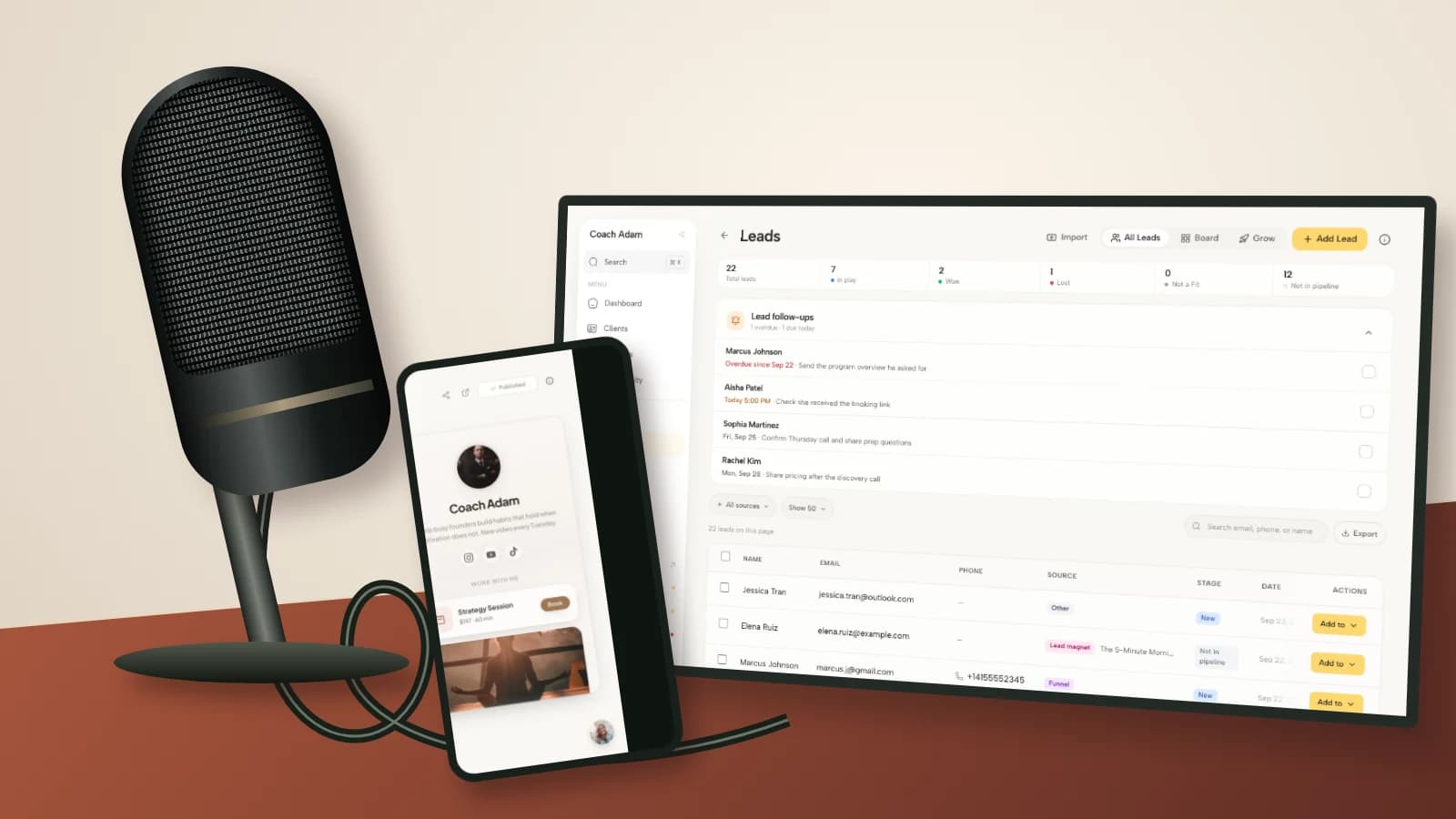
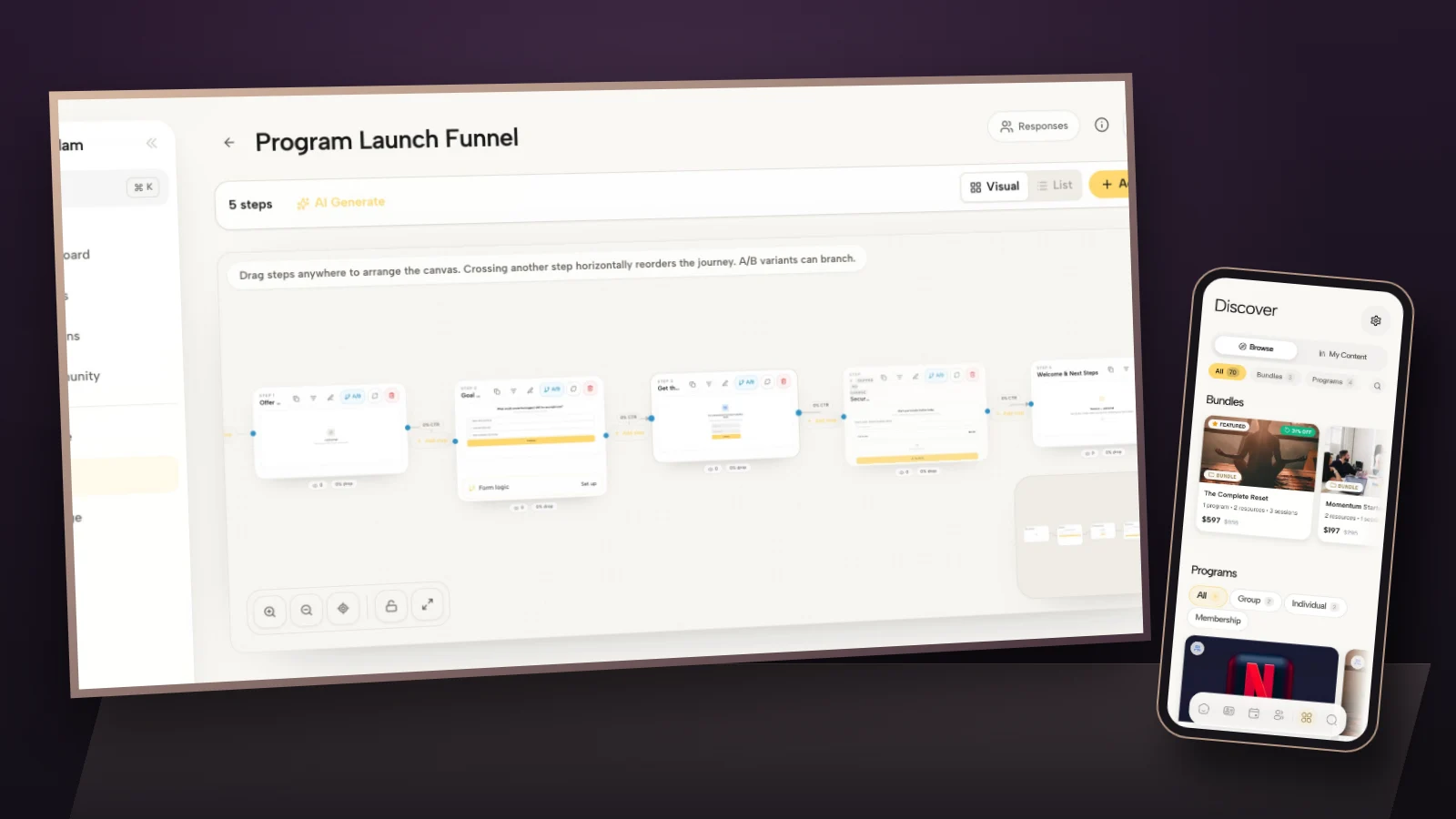
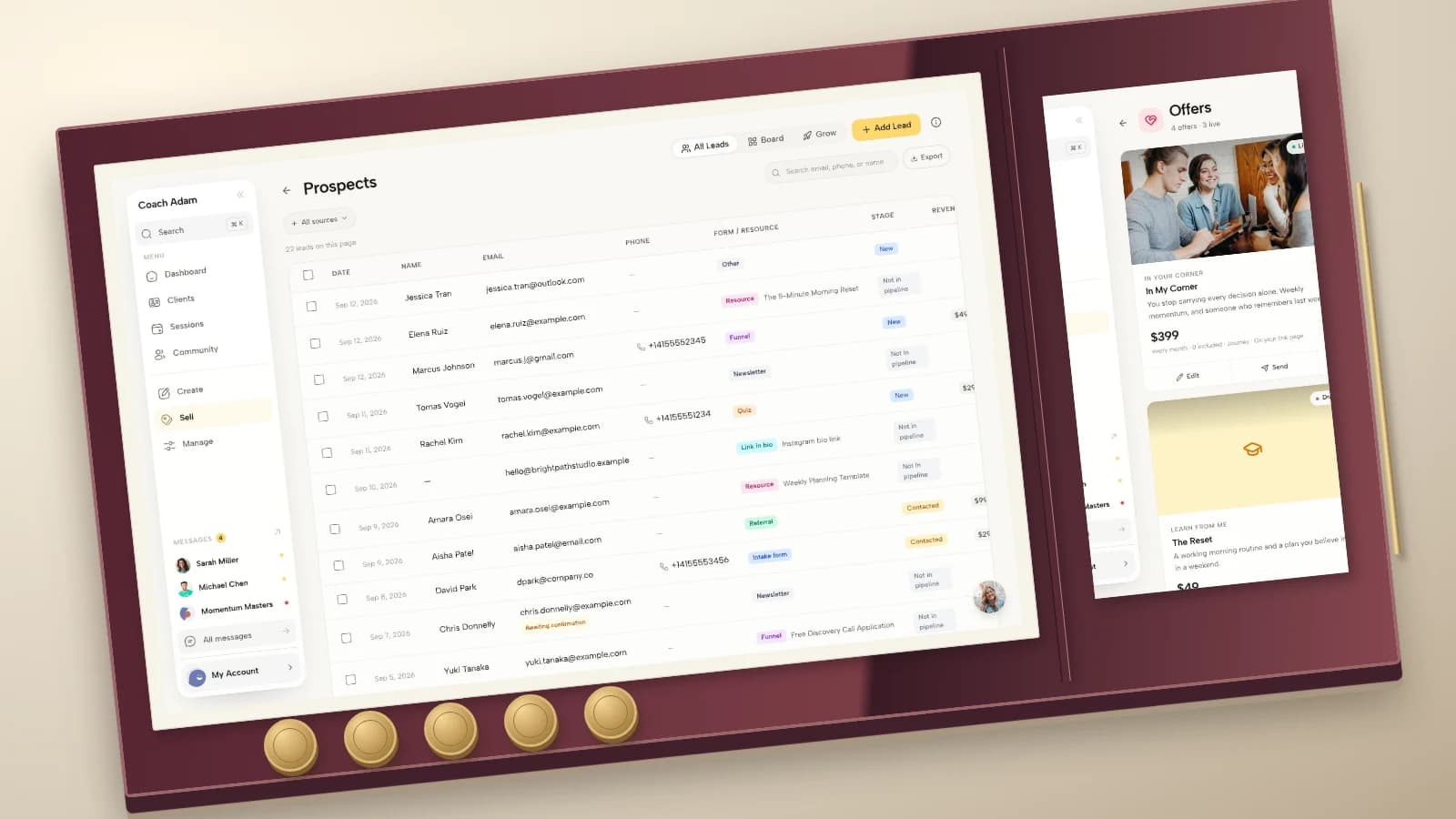
This guide does not claim a Bark integration, automatic lead import or credit-purchasing capability in Coachful. The screenshots show real demo workspaces for your offer, inquiry records and client operations. Handle any transfer of contact information lawfully and within the marketplace's terms.
Make the next purchase a decision, not a reflex
Before buying credits, write one page: your offer, cash ceiling, purchase filter, response window and review date. Then test the inquiry destination. If you cannot complete that page, more lead notifications are unlikely to solve the underlying problem.
If you want to inspect the practice-side workspaces shown here, try the interactive Coachful demo. Look at the offer, discovery-call and prospect records you would use after a suitable introduction. The point is to make your side ready before you pay anyone for the next conversation.