Negative Keywords for Coaches: 5 Lists to Review Before You Spend

Nour
Founder, Coachful
The most useful negative keywords for coaches exclude a different buying intention, not an uncomfortable word. If you sell coaching sessions rather than coach training, searches for becoming certified may be wrong for that campaign. But blocking “career,” “free,” or “training” across your account can also hide your ads from people who genuinely need your service.
Start with five exclusion categories: coach qualifications, coaching employment, unrelated meanings of coach, services you do not offer, and clearly mismatched resource searches. Review actual search terms, choose the narrowest sensible negative match, and test the exclusion against a relevant buyer query before saving it. This guide applies to Google Search campaigns, not an interchangeable set of settings for Display, YouTube or every automated campaign type.
What are negative keywords, and why do coaches need them?
A negative keyword tells Google Ads not to show an ad for searches matching that exclusion. It is different from a positive keyword, which helps determine when your ad can appear. “Life coach” is especially ambiguous: someone might want to hire you, qualify for your profession, find employment, or research what the job involves.
The practical anxiety is not simply wasted clicks. It is paying for a calendar full of people who were never looking for the engagement you sell. A thoughtful exclusion list can reduce clearly irrelevant searches. It cannot guarantee profitable ads, identify every unsuitable prospect, or repair an offer that nobody understands.
Keep the list attached to a particular offer. A career coach selling interview preparation and a trainer selling career-coach certification need almost opposite decisions about some of the same words. Before touching the account, finish this sentence: “This campaign invites [buyer] to consider [specific paid engagement], with [next step].”

Understand negative match types before copying a list
Google’s negative-keyword documentation distinguishes broad, phrase and exact negative matches. These do not behave like the corresponding positive match types. A positive keyword’s ability to reach related searches is not a safe model for how exclusions work.
- Negative broad: coach certification. Blocks searches containing both words, even in a different order. A search containing only “coach” is not blocked by this two-word negative alone.
- Negative phrase: “coach certification”. Blocks searches containing those words together in that order, including searches with extra words around them.
- Negative exact: [coach certification]. Blocks that exact search without additional words. It does not block “online coach certification” merely because the shorter exact negative exists.
In these examples, quotation marks and square brackets indicate match type. Use straight quotation marks when entering phrase negatives. None of these examples means an otherwise eligible ad definitely will show: bidding, positive targeting, budget, policy and other settings still matter.
Do not assume a negative automatically expands to singulars, plurals or related meanings. Google says negatives account for casing and certain corrected misspellings, but do not expand like positive keywords. Review relevant word forms in your report instead of treating one exclusion as a complete semantic filter.

1. Exclude coach-training intent when you sell coaching
Look for searches about becoming the professional rather than hiring one. Candidate phrases include "how to become a life coach", "life coach certification", "coaching certification programs" and "coach training course". These are examples to evaluate, not an instruction to paste them into every account.
Suppose a fictional life coach sells a six-session decision-making package for professionals. Someone comparing certification schools is seeking a different purchase. A specific training-intent phrase is more defensible than a one-word negative such as training, which could also appear in a relevant search about leadership support.
Check your offer portfolio first. If another campaign sells mentor coaching, training or credential support, do not automatically apply the same exclusions there. An exclusion appropriate for one service can remove an entire legitimate buyer group from another.
Before saving: ask whether your wording blocks the alternative purchase only, or also blocks someone checking your qualifications before hiring you. For example, “certified life coach near me” and “life coach certification course” describe very different intentions. Avoid using one blunt word to stand in for that distinction.
2. Separate coaching employment from career-coaching buyers
Candidate employment-intent phrases include "life coach jobs", "executive coach vacancies" and "life coach salary", when your campaign sells coaching rather than recruits coaches. Review the full search before adding a negative.
This category is where generic lists can become expensive. A career coach’s clients may search for help with jobs, interviews, salaries or promotions. Broadly excluding career, salary, interview or jobs can collide with the actual service. “Salary negotiation coach” may be exactly the buyer you want.
Compare the role of the word in the query. “Career coach salary” commonly concerns the coach’s occupation. “Career coach for salary negotiation” concerns the service. If the distinction remains uncertain, keep the term for investigation or exclude only the observed exact query rather than an entire theme.

Do not label every non-converting search “job seeker” after one click. There is a difference between clearly wrong intent and a plausible buyer who has not acted yet. Record your reason in plain language: “seeking employment as a coach,” not “bad lead.” That makes the decision reviewable later.
3. Remove unrelated meanings of coach
The word coach can refer to transport, sports instruction or a retail brand as well as professional coaching. If you provide executive coaching, candidate exclusions might include specific observed phrases such as "coach bus rental" or "coach handbag". Add what the searches actually show rather than inventing hundreds of remote possibilities.
Do not use coach itself as a negative in the campaign trying to sell coaching. Similarly, “football coach” could be irrelevant to a general life coach but relevant to a professional offering leadership coaching to sports coaches. Your buyer definition governs the list.
Distinguish vocabulary problems from location problems. If you only serve a particular market, review location targeting and the location options as well as search terms. A list of city-name negatives is not a complete substitute for configuring where the campaign should reach people.
4. Exclude services outside the actual engagement
A search can concern a real problem and still request something you do not provide. A career coach may help clients prepare their own applications but not write CVs for them. An executive coach may not offer management consulting. A health coach may not provide diagnosis or treatment.
Use specific phrases when the distinction is clear: for example, a fictional interview coach who does not write documents might investigate "cv writing service". Do not automatically exclude every mention of “CV,” because a person asking for interview coaching may mention their CV while describing what they need.
For health, mental-health and other sensitive offers, negative keywords do not replace eligibility, advertising-policy or professional-scope checks. Do not buy treatment-intent traffic and hope a disclaimer will make it appropriate. Refer to qualified professional or platform guidance where your offer requires it.
The landing page needs to make the same boundary visible. Explain what the engagement includes and what it does not include before inviting a booking. If the ad promises done-for-you work while the page offers reflective coaching, exclusions are not the first repair. The message is.

5. Evaluate resource-only searches without banning every free call
Searches explicitly asking for a downloadable worksheet, a definition or a certification exam PDF may not fit a campaign selling a paid engagement. Possible exact-query exclusions might include [life coach certification exam pdf] or [life coaching definition], if the observed searches and your campaign purpose justify them.
However, “free discovery call with a career coach” can be perfectly relevant when that is the next step you offer. So can price-comparison research from a person close to buying. “Free,” “cost,” “reviews,” “best” and “near me” are not universal evidence of someone who will never pay.
Use two questions: does this search seek the thing my campaign sells, and does it fit the next step I advertise? A free worksheet campaign and a paid-package campaign can rationally treat the same phrase differently. Keep their measurement and exclusions separate.

A practical search-term review you can repeat
Google’s search-terms guidance explains how to find negative-keyword ideas from the searches that triggered your ads. Start with that evidence, not a giant internet list. The report does not expose every query, so it is an informative sample rather than a complete transcript of search demand.
- Select one campaign and a meaningful date range. Keep a note of the offer and any recent changes so you know what the searches were responding to.
- Inspect the query, not just the triggering keyword. A sensible positive keyword can still bring a search for a different purchase.
- Classify the intent. Mark relevant, clearly irrelevant or uncertain. Give the irrelevant term one specific reason from the five categories above.
- Choose the smallest useful exclusion. An exact query is narrower than a phrase; a single broad word can affect many different searches.
- Test a good query against it. Write one realistic buyer search you want to keep. Check whether the proposed negative would also block it.
- Apply at the appropriate scope. Use the relevant campaign or ad group unless the exclusion truly belongs everywhere it will apply. Check which campaigns a shared list affects.
- Log the decision and review the next cohort. Watch query relevance and qualified enquiries, not just a drop in clicks.
Google notes that negatives added from the Search campaign’s search terms report default to negative exact match. Check the chosen match type before saving. Interface labels can change; verify the destination and campaign scope in your current account rather than following an old screenshot blindly.

A review can be brief without being careless. Look first at clearly mismatched queries consuming spend, then investigate ambiguous themes. Set a repeatable review rhythm that fits your traffic and budget. There is no universal number of clicks or seven-day window that makes every exclusion statistically sound.
Check lead quality after the click
A cleaner search-term report is useful, but it is not the final result. Keep a short record of whether enquiries concern the advertised service, whether calls happen, and whether suitable prospects buy. Use the same definitions before and after changes.
For instance, label a lead “outside service scope” when they want done-for-you CV writing you do not offer. Do not label them unqualified simply because they decline your price. Separating fit, attendance and purchase prevents your exclusion list from becoming a collection of guesses about people who did not buy.

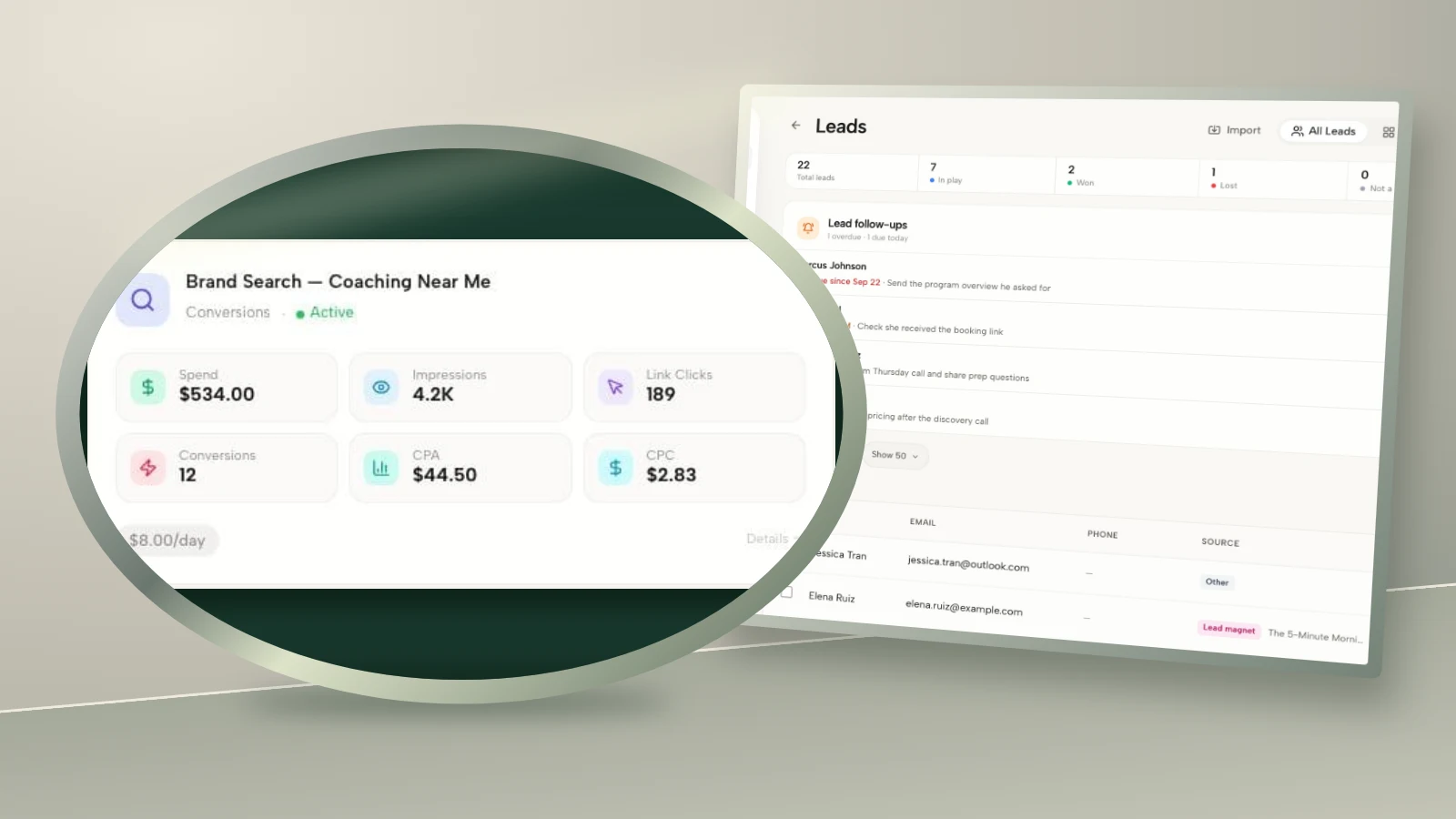
Search data and prospect records answer different questions. Google Ads tells you about campaign delivery and available search terms. A lead record helps you follow an enquiry through a sales conversation. The screenshots here do not establish that Coachful automatically imports Google search terms, edits negative keywords or sends qualified-lead outcomes back to Google.
When several plausible enquiries still want the wrong service, compare the query, ad and landing-page promise before adding more negatives. When relevant people enquire but do not book, investigate the next step. When qualified attendees do not buy, investigate fit, timing and the engagement. One exclusion list cannot solve all three.

If you are deciding whether the campaign is affordable, use our paid-ads and customer-acquisition-cost guide. That is a different decision from identifying irrelevant searches. Lower click volume alone does not establish a lower cost per paying client.
Put the right destination behind the right search
Before the next campaign review, choose one offer, classify your visible searches and make a small set of defensible exclusions. Then check that a relevant buyer can understand the engagement and take the promised next step on a phone.
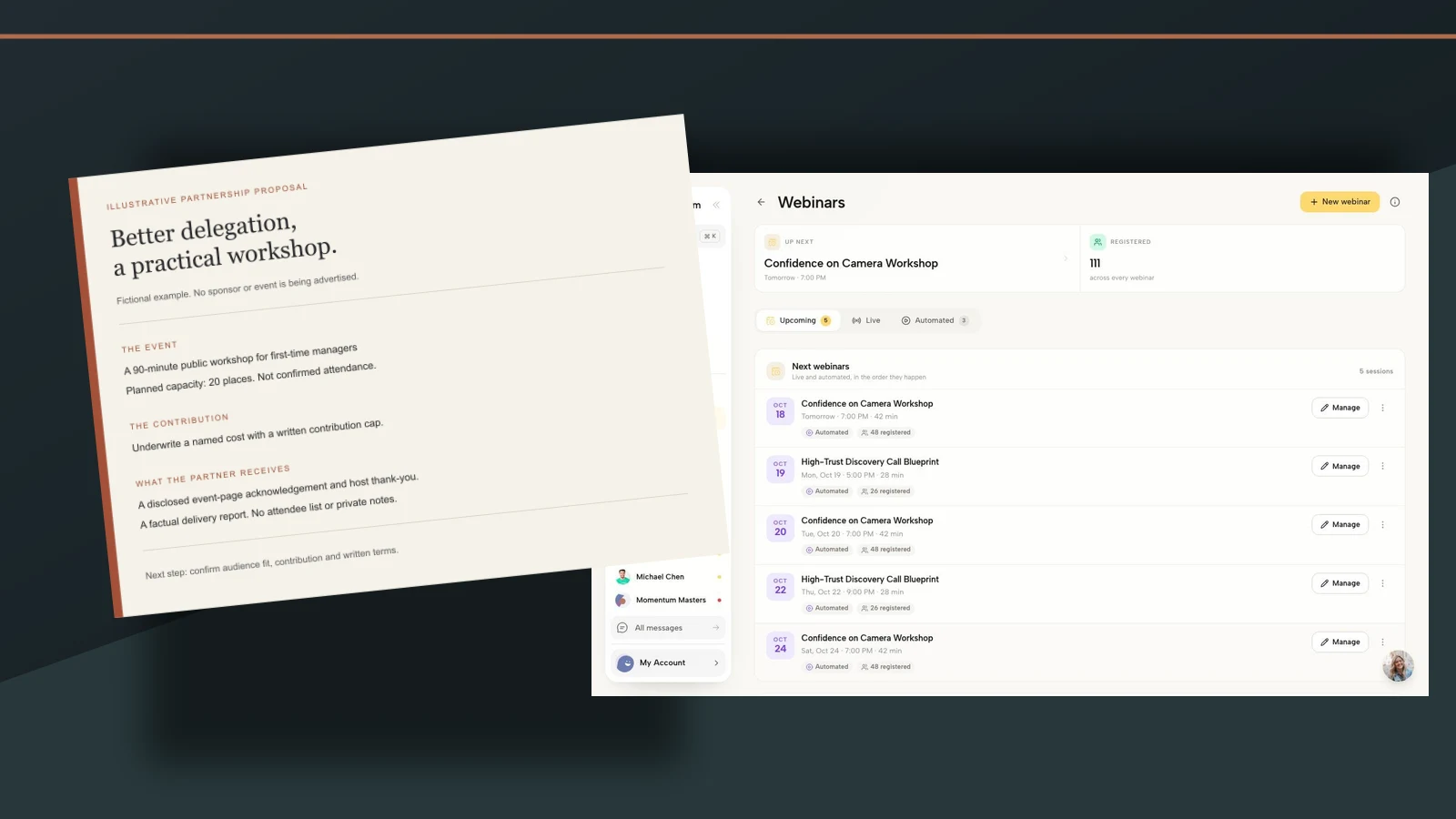
If that destination and follow-through are the part you need to build, Try the interactive demo. Inspect the website editor and Leads workspace illustrated here to see how an offer page and enquiry review could support your process. Make Google Search exclusions in Google Ads; use the coaching workflow to find out what happens after a suitable person arrives.
Frequently asked questions
Should a coach add “free” as a negative keyword?
Not automatically. If you advertise a free discovery call, the word can appear in an appropriate buyer search. Inspect the full query and campaign objective. Excluding a specific resource-only phrase may make more sense than banning every search containing “free.”
Can I use the same negative list for every coaching service?
Only when every exclusion fits every affected offer. A training phrase may be wrong for a client-coaching campaign and valuable for a certification campaign. Keep service-specific exclusions scoped appropriately and review shared-list membership before applying changes.
Do negative keywords include singular and plural variations?
Do not assume so. Google’s guidance says negative keywords do not expand to variants like positive keywords, although casing and certain corrected misspellings are accounted for. Review the actual forms relevant to your campaign rather than relying on one broad term to exclude an entire concept.
Will these negative keywords make my coaching ads profitable?
No list can promise that. Exclusions address mismatched searches. Profitability also depends on the offer, click costs, landing page, sales process, collected revenue and delivery costs. Review actual paying clients and acquisition costs before increasing your budget.
Examples and original diagrams are editorial teaching aids, not campaign results. Coachful images contain real demo interfaces and sample data. Google Ads sources were checked for this article; verify current controls and policies in your own account before making changes.