Podcast Show Notes Template for Coaches: 5 Useful Sections

Nour
Founder, Coachful
What should you put in podcast show notes so listeners can use the episode, not just see that you recorded one? Give them a precise summary, a few useful takeaways, checked timestamps, the resources you actually mentioned and one relevant next step. For a coach, the notes should also make the boundaries of the advice clear.
A podcast show notes template is a repeatable editorial structure, not a transcript with a booking link stapled to it. Your listener may be deciding whether to press play, returning for a worksheet or checking something your guest said. Write for those jobs before promoting your practice.
This guide is for coaches publishing their own episodes. It includes five sections, a fictional worked example and a copyable template. It is not a guide to pitching yourself as a guest; for that, see how to get booked on podcasts.
The five sections your podcast show notes need
- Episode promise: the question, audience and bounded answer.
- Useful takeaways: what someone can understand or try.
- Listening map: verified timestamps and accurate guest context.
- Resources and disclosures: the links, evidence and commercial relationships that matter.
- Next step: one action that follows naturally from the episode.
These are editorial sections, not mandatory podcast-platform fields. Your hosting service controls what it accepts and distributes. Keep a plain-text version for the episode description and a readable web version for your own site. Check both after publication.

1. Write a promise that helps someone choose the episode
Start with the decision your intended listener is facing. “Episode 18 with Alex” identifies an installment but gives a new listener no reason to care. “Preparing your first feedback conversation as a manager” names a situation and a task without guaranteeing a workplace outcome.
The opening summary can be two or three direct sentences. Say who the episode helps, what it covers and where its advice stops. Do not describe a general discussion as a step-by-step method if you never actually teach the steps.
Here is a fictional opening for a leadership coach: “Preparing to give a colleague feedback for the first time? This episode explains how to separate an observation from an interpretation and draft a specific opening request. It covers everyday management conversations, not investigations, harassment complaints or urgent safety concerns.”
That last sentence is not a defensive disclaimer. It helps the reader choose an appropriate resource. A health coach, career coach or relationship coach should make the equivalent distinction where their episode touches medical, legal, therapeutic or regulated professional work.
Check the summary against the finished audio, not your recording outline. Conversations change. If the guest never answered the question in the planned title, change the title or record the missing explanation before publishing. The notes should not advertise an episode you meant to make.

On your own website, make the episode title and opening readable before decorative introductions. A visitor arriving from a link should recognize the topic without scrolling through your biography. Use an accurate excerpt when your publishing tool provides one; do not promise an exclusive worksheet if the episode has none.
2. Turn the conversation into useful takeaways
Write three to five full thoughts rather than a list of nouns. “Confidence, leadership, feedback” is a tag list. “Describe what you observed before explaining what you think it means” is a usable takeaway. The difference matters when the reader is trying to judge whether your approach fits.
Stay faithful to the speaker's level of certainty. If a guest says a method can help in some circumstances, do not turn that into “the proven method that always works.” If a claim depends on research, find and link the actual source or present it clearly as the guest's opinion.
For the fictional feedback episode, three takeaways could be: distinguish the event from your explanation of it; name the work impact without guessing motives; prepare a request that leaves room for the other person's perspective. These describe the teaching, not a promised improvement in team performance.

Choose one short exercise if the recording genuinely supports it. For example: write one sentence describing the event without an adjective, then underline any words that infer intention. That gives the reader something concrete to try. It should not become a surprise assignment required to access the episode.
Do not mine private coaching sessions for attractive material. A story can remain identifiable after names change, especially inside a small employer or community. Use appropriately authorized material or a clearly labeled fictional example. Permission to participate in coaching is not permission to appear in public marketing.
3. Add a listening map and accurate guest context
Timestamps should point to useful moments in the released recording. Add them after editing, including any introduction or inserted advertising. A timestamp copied from the raw recording can become wrong as soon as you remove a long pause.
Use descriptive labels such as “Observation versus interpretation” rather than “Main discussion.” Keep the list short enough to scan. Manually open several timestamps in the final player, including one near the end, to check that they land where the description says.

Plain-text timestamps and interactive chapters are not interchangeable. A visible list can help readers even when the app does not turn it into navigation. Chapter recognition depends on the platform and format. Use your host's current instructions rather than promising that one pasted list will work identically everywhere.
Introduce a guest with their name, relevant role and an approved destination link. Confirm spelling, pronouns where included, credential wording and organization affiliation. A completed training course is not automatically a current professional credential, and working with a company is not permission to imply that company endorses the episode.
If you use a quotation, verify it against the audio. Do not silently rewrite a memorable line and leave quotation marks around it. Paraphrase with attribution when the spoken wording is too tangled to reproduce cleanly. Ask the guest to verify factual details without promising editorial approval you have not agreed to give.
4. Link the resources you actually mentioned
The resources section should spare listeners the annoying hunt for “that thing you said around the middle.” Give each link a descriptive label: the worksheet name, book title, research source or guest website. Avoid a row of bare “click here” links.
Open every destination in a signed-out browser. Check that the link reaches the correct item, not an administrator preview, expired file or generic shop homepage. If access requires an account, payment or email address, say so beside the link rather than letting the reader discover it later.

Disclose relevant sponsorships and affiliate relationships clearly near the recommendation. A broad footer saying “some links may be affiliate links” can be too vague for a reader to understand a particular recommendation. Follow the rules that apply to your audience and jurisdiction; this article is not legal advice.
Keep resource access and newsletter subscriptions distinct. If a listener requests an exercise, explain whether they are receiving only that resource or also choosing further messages. Do not claim a podcast click gives you permission to start an email sequence.

Maintain important older links. If you retire an offer, keep the episode resource useful or explain honestly that it is no longer available. Do not silently redirect an old free worksheet invitation to a paid checkout. A listener should not have to investigate whether you changed the deal.
5. Choose one next step that matches the episode
Your notes do not need a miniature sales funnel at the bottom. Choose the action the episode has earned. An introductory explanation might lead to a related episode. A practical exercise might lead to its worksheet. An episode explaining your coaching process might reasonably invite a fit conversation.
For the fictional feedback episode, a coherent invitation is: “Use the preparation sheet to draft one observation and one request before your next everyday feedback conversation.” It is more specific than “Ready to transform your leadership?” and does not assume the listener needs to buy coaching.
If the next step is a discovery call, explain who it is for, its purpose and whether it is free or paid. If it is a newsletter, say what readers will receive. Do not bundle five equal actions and then blame the audience for not choosing one.

Read the invitation aloud before recording it. The spoken version should be simple enough to remember; the written notes can provide the clickable destination. Neither should promise a resource you have not finished. If a short address or redirect is part of your setup, test it yourself rather than assuming the website creates one automatically.
A filled podcast show notes example for a coach
The following is a fictional editorial example, not a real episode, client case or published resource. The timestamps illustrate structure only. Replace them with verified points in your own final recording.
Title: Prepare your first feedback conversation as a manager
Summary: Unsure how to begin a feedback conversation without guessing what someone intended? This episode separates observation, work impact and a specific request. It is for everyday management conversations, not formal complaints, investigations or safety concerns.
Takeaways: Describe an observable event before interpreting it. Explain the work impact without diagnosing motives. Draft a request that invites the other person's perspective.
Listening map: 00:00 The question; 02:10 Observation versus interpretation; 06:30 Naming the work impact; 10:15 Drafting the request; 14:00 When a formal workplace process is needed.
Resources: Feedback preparation sheet: [verified resource link]. Relevant workplace policy: [appropriate public information, if available].
Next step: Open the preparation sheet and draft one observation and one request. This general exercise does not replace your employer's procedures or professional advice.
For an interview, add a short verified guest introduction and the links agreed with them. For a solo episode, omit the empty guest heading. A template should remove decisions you repeat, not force irrelevant sections into every publication.
Copy this reusable podcast show notes template
Keep this scaffold with your episode production notes. Replace every bracketed field, remove unused lines and confirm the result against the released audio. Brackets below are instructions, not live links.
- Episode title: [specific question or task the recording addresses].
- Episode identity: [number if used], [release date], [host], [guest if applicable].
- Opening: [who this helps]. [what the listener will understand or try]. [important scope boundary].
- Takeaways: [three to five complete, accurate thoughts].
- Listening map: [checked timestamp] [specific section label]. Repeat only where useful.
- Guest context: [verified relevant role and approved website]. Omit for solo episodes.
- Resources: [descriptive name and checked link]. State access conditions.
- Disclosures: [actual sponsorship, affiliate relationship or material limitation].
- Next step: [one bounded action and its verified destination].
- Correction route: [professional contact method for factual or link errors].
Use the same source notes across web, podcast and email
Maintain one checked source version, then adapt it for each destination. Your podcast description can prioritize the summary, timestamps and links. Your website can add accessible headings and a fuller example. Your newsletter can explain one useful idea and link to the episode page.

Do not paste a website layout into a host field and assume all formatting survives. Preview the actual episode description in the listening apps you use. Check headings, line breaks and links on a phone. Keep the essential instructions as text even when you include artwork.
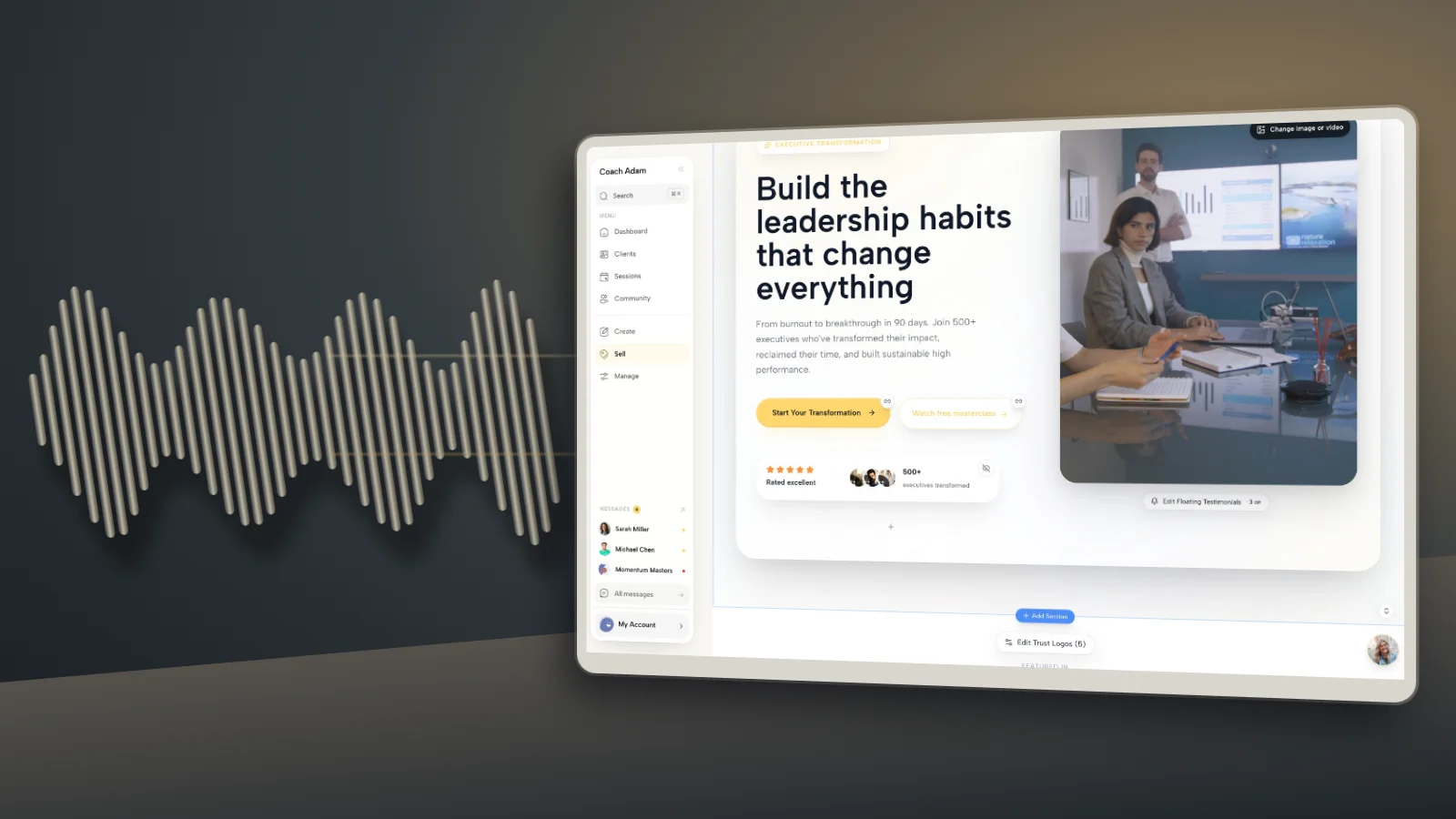
Coachful can provide the coaching website and email surfaces shown here. It is not being presented as a podcast recording tool, audio host, RSS distributor or automatic chapter generator. If you want to explore how the website, public links and email side would support your episode resources, try the interactive Coachful demo and follow the destination a listener would take.
Questions coaches ask about podcast show notes
How long should podcast show notes be?
Long enough to explain the promise, useful ideas, resources and next step without retelling the whole recording. There is no universal word count that guarantees search traffic or clients. Expand when the explanation needs it, not to reach an arbitrary minimum.
Are show notes the same as a transcript?
No. Notes help someone choose, navigate and use an episode. A transcript reproduces the conversation and can support accessibility and reference. If you publish both, label them separately and review transcription errors, especially names and technical claims.
Should every episode link to a discovery call?
Not necessarily. Match the invitation to the listener's likely task and what the episode actually covers. A useful worksheet or related explanation can be a better next step than asking someone to discuss paid coaching immediately.
Can I publish timestamps before editing is finished?
You can draft them, but verify them against the final released file. Cuts, introductions and inserted content can move later sections. Never present illustrative timestamps from a template as if they belong to the real episode.
For more format options, Buzzsprout's show-notes guide provides several templates. Use your hosting provider's current documentation for distribution and formatting behavior. The five-section structure here is an editorial recommendation, not a platform requirement or a promise of audience growth.