Instagram DM Scripts for Coaches: 5 Replies to Adapt

Nour
Founder, Coachful
“Someone has messaged me about coaching. How do I reply without sounding like a closer, giving away a session, or losing a genuine enquiry?”
Answer the message they sent, then offer the smallest appropriate next step. If they ask the price, give the price. If they react to a Story, acknowledge the reaction. If they ask about working together, clarify fit without conducting a coaching session in the inbox. A good Instagram DM script helps a person decide, rather than manoeuvring them towards a call they did not request.
Below are five original Instagram DM scripts for coaches, with alternatives and stopping rules. Every conversation and service detail is hypothetical. Replace bracketed details with your actual terms before sending. These are manual replies to inbound messages, not cold outreach, a bulk messaging plan or a promise of bookings.
Choose the script by the enquiry, not your sales target
An inbox becomes exhausting when every message receives the same sequence: build rapport, uncover pain, amplify urgency, ask for a call. A person who wants to know your fee should not have to explain their childhood to find out.
Use this quick selection rule:
- “How much?” Use the transparent price reply.
- A reaction to a Story: use an acknowledgement, not an automatic pitch.
- “Can we work together?” Use the fit-and-next-step reply.
- “Can you tell me what to do?” Use the free-advice boundary.
- A person who agreed to revisit an enquiry: use one relevant follow-up.

Read the last message again before replying. Separate what you know from what you are assuming. “Loved this post” is appreciation, not evidence that the person needs your programme. An explicit question about your package is a legitimate opening to discuss it.
1. When someone asks how much your coaching costs
The job: provide enough information for a budget decision without forcing a sales call. Asking a useful fit question is reasonable. Withholding an available price until someone reveals more personal information is not necessary.
Incoming message: “Hi, how much is your career coaching?”
“Hi [name], my [package name] is [total price and currency] for [number and length of sessions] over [time period]. It includes [specific support] and does not include [important exclusion]. Here is the details page: [direct HTTPS link]. If you are considering it, what would you want the coaching to help you decide or do?”
That final question is optional. If the person only requested a price, a clear answer and the relevant page may be enough. Do not attach three more qualifying questions to an answer that should take seconds to read.

For a genuinely custom engagement, explain the pricing basis rather than inventing a fixed quote. For example: “Employer-funded programmes are scoped individually. The fee depends on participant numbers, sessions and reporting requirements. If you share the approximate participant count and intended format, I can explain the proposal process.” Give a starting price or range only if it is a real, current part of your pricing.
If they say it is outside their budget:
“Thanks for letting me know. I do not want you to stretch beyond a budget that works for you. [If true: I also offer a lower-cost group option, with details here: link.] No problem if neither option fits.”
Do not turn “I cannot afford it” into a diagnosis about commitment. A financial constraint can be exactly what it sounds like. Mention a payment plan only when it genuinely exists, and disclose the total payable as well as instalment amounts.

2. When someone reacts to a Story or requests a resource
The job: honour the level of interest shown. A heart reaction does not require a qualification sequence. A requested worksheet requires the worksheet, not a surprise application form.
Incoming message: “This is exactly how my week feels.”
“Glad it resonated, [name]. The distinction I was making is between an overloaded plan and a plan you have actually chosen. Hope it gives you something useful to try this week.”
You can end there. Not every warm exchange needs a question to keep it alive. If the person asks something specific, answer within your scope and decide whether further conversation would be useful.
If they requested a resource you offered:
“Here is the [resource] you asked for: [direct HTTPS link]. It includes [brief description]. You do not need to send me personal details to use it.”

If the resource is behind an email signup, explain that before they click. “This page asks for your email to send the worksheet” is more transparent than presenting it as an immediate download. Any ongoing marketing subscription should be made clear and handled in accordance with applicable requirements; a DM request is not blanket permission to add someone to your list.
Avoid: “What is this problem costing you every month?” immediately after a casual reaction. You may have a useful paid service, but the other person has not asked to enter a sales conversation. Our Instagram Story sequences for coaches cover what to publish before the reply arrives. This guide starts after it does.
3. When someone explicitly asks about working with you
The job: establish whether the enquiry belongs in your practice, then explain what happens next. You do not need a lengthy assessment inside Instagram. Ask the one question whose answer would materially change your response.
Incoming message: “I am interested in coaching. Can you help with moving into management?”
“Thanks for asking, [name]. I work with [your actual audience] on [your actual scope]. Are you preparing for a first management role, or already managing a team? A broad answer is enough; please leave out employer names or confidential details.”
After a suitable answer:
“That sounds relevant to the work I offer. The next step is [an enquiry form / a discovery call] so we can check suitability and discuss the format and fee. Here is the link: [direct HTTPS link]. It is [accurate duration or description], and [whether there is a charge or obligation].”

Name the appointment honestly. If it is a sales and suitability conversation, call it that rather than a complimentary coaching session. If an application comes first, explain why and what the applicant can expect after submitting it.
A useful short enquiry asks about the goal, desired format and relevant practical constraints. It does not need a complete medical, financial or relationship history. Collect only what you actually need to determine the appropriate next step.
If it is not a fit: “This sits outside the coaching I provide. I would not be the right person to support you with it. [If appropriate: You may want to look for a professional with expertise in this area.]” Do not imply that you have assessed or diagnosed the person. A polite no is better than expanding your scope to preserve a lead.
4. When an enquiry turns into requests for free coaching
The job: distinguish useful information about your service from individual coaching. You can be generous without taking responsibility for an unfolding problem in a social inbox.
Incoming message: “Can I send you everything that happened with my manager and you tell me whether I should quit?”
“I cannot responsibly advise you on that decision through Instagram messages. My coaching offers a structured space to examine your options, rather than a quick instruction about what you should do. If you want information about that process, it is here: [direct HTTPS link]. Please do not send confidential workplace documents or identifying details in this thread.”
This is a boundary, not a teaser. Do not withhold a simple public fact to manufacture demand for paid support. Conversely, a ten-minute voice note about someone's circumstances is not automatically a harmless marketing interaction.
If a general resource is appropriate, offer it without claiming it resolves the situation: “I can share a general decision worksheet, but it is not a recommendation about your employment.” Do not provide legal, medical, therapeutic or financial advice unless separately qualified and acting within the appropriate professional arrangement.
If the person indicates immediate danger or a crisis, stop treating the thread as a sales enquiry. Follow your relevant safeguarding procedures and point them towards appropriate local emergency or crisis support. Buying coaching is not a crisis-response plan.
If they keep requesting individual advice: “I am not able to continue individual coaching questions here. The service information above explains the support I can offer.” You do not need to keep inventing a softer version of the same boundary.
5. When a suitable prospect goes quiet
The job: follow through on a legitimate conversation without converting silence into permission for persistence. A useful reminder adds context. It does not shame the person for having other priorities.
Where possible, agree the follow-up before the conversation pauses: “Would you like me to check back after your interview on Thursday?” An agreed date is a better reason to message than a generic rule that every prospect needs seven touches.
One follow-up after an agreed pause:
“Hi [name], you said it would be useful to revisit [offer or question] after [agreed event or date]. Here are the details again: [direct HTTPS link]. If you still want to explore it, [specific next step]. If your plans have changed, no problem; I will leave it with you.”

Do not invent a deadline because the person has not replied. If a real cohort enrolment date matters, state it accurately and explain what changes after it. “The live cohort starts on [date]” is information. “I would hate for you to miss your chance to change your life” is pressure.
For an ordinary inbound enquiry without an agreed follow-up, decide whether one short clarification would genuinely help. Do not follow up after a clear refusal or request to stop. If your one reasonable reminder receives no response, close the thread for now. This is an editorial recommendation for a manageable manual process, not a universal legal rule or platform limit.

Keep any business record proportionate: enquiry date, requested offer, broad fit question, agreed next step and follow-up date. “Asked about management package; requested a check-in next week” is more appropriate than copying a sensitive personal story into a sales note. Respect applicable retention, access and deletion requirements.
Build the handoff before you need the script
The most polished reply cannot rescue a broken destination. Before using these scripts, open the link as a visitor on a phone. Check the offer name, price, availability, form, confirmation and next-step explanation. Make sure a supposedly free consultation does not unexpectedly open a paid checkout.
Prepare one route for each action you actually offer: read the package, request a fit conversation, obtain a resource, or book an appointment. You do not need four links in each reply. Select the route that answers this person's question.
If the conversation moves to email, ask first: “Would email be easier for the programme details?” Confirm the address and the purpose. Agreement to receive a requested proposal is not the same as agreement to receive an ongoing newsletter.

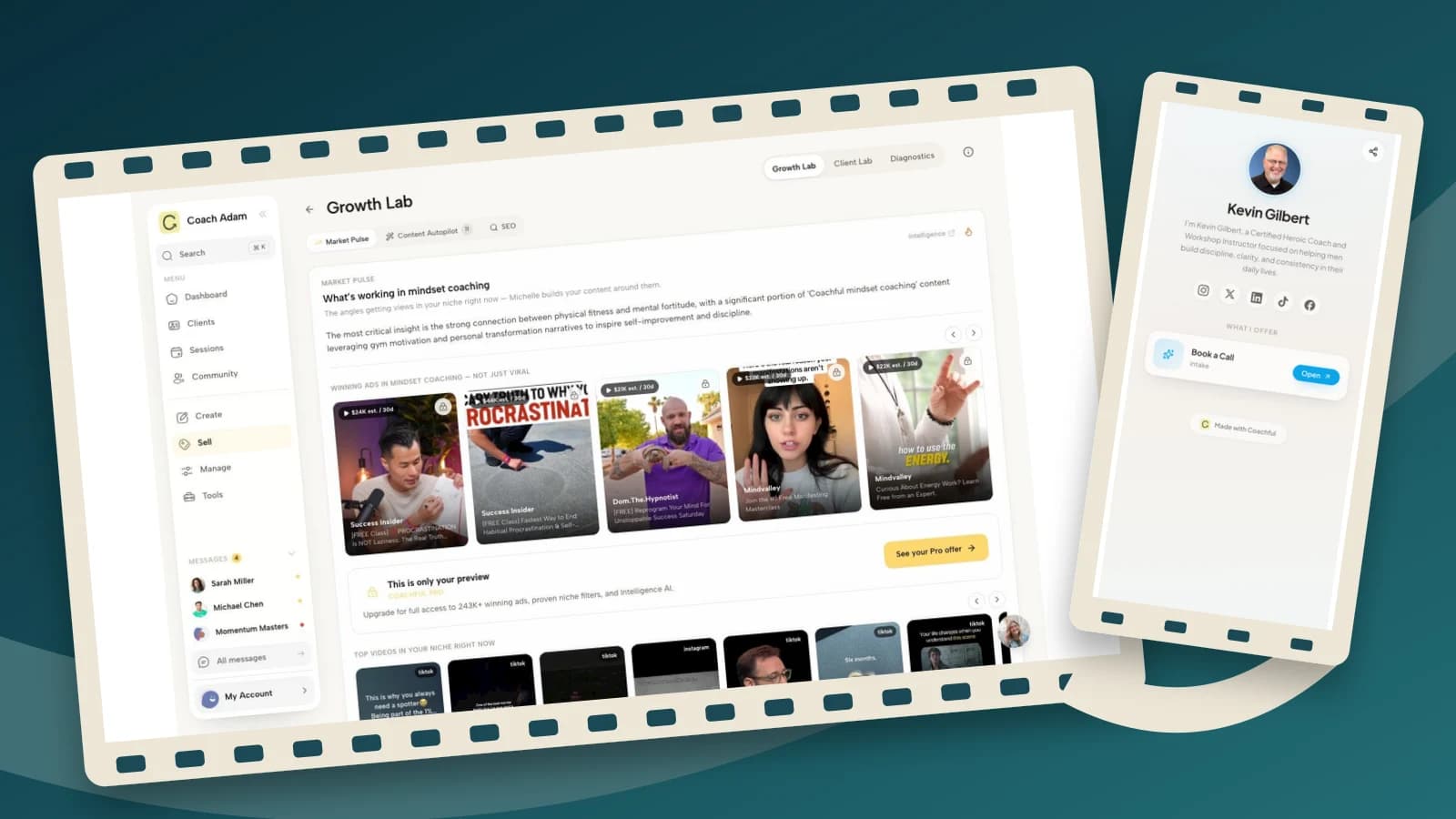
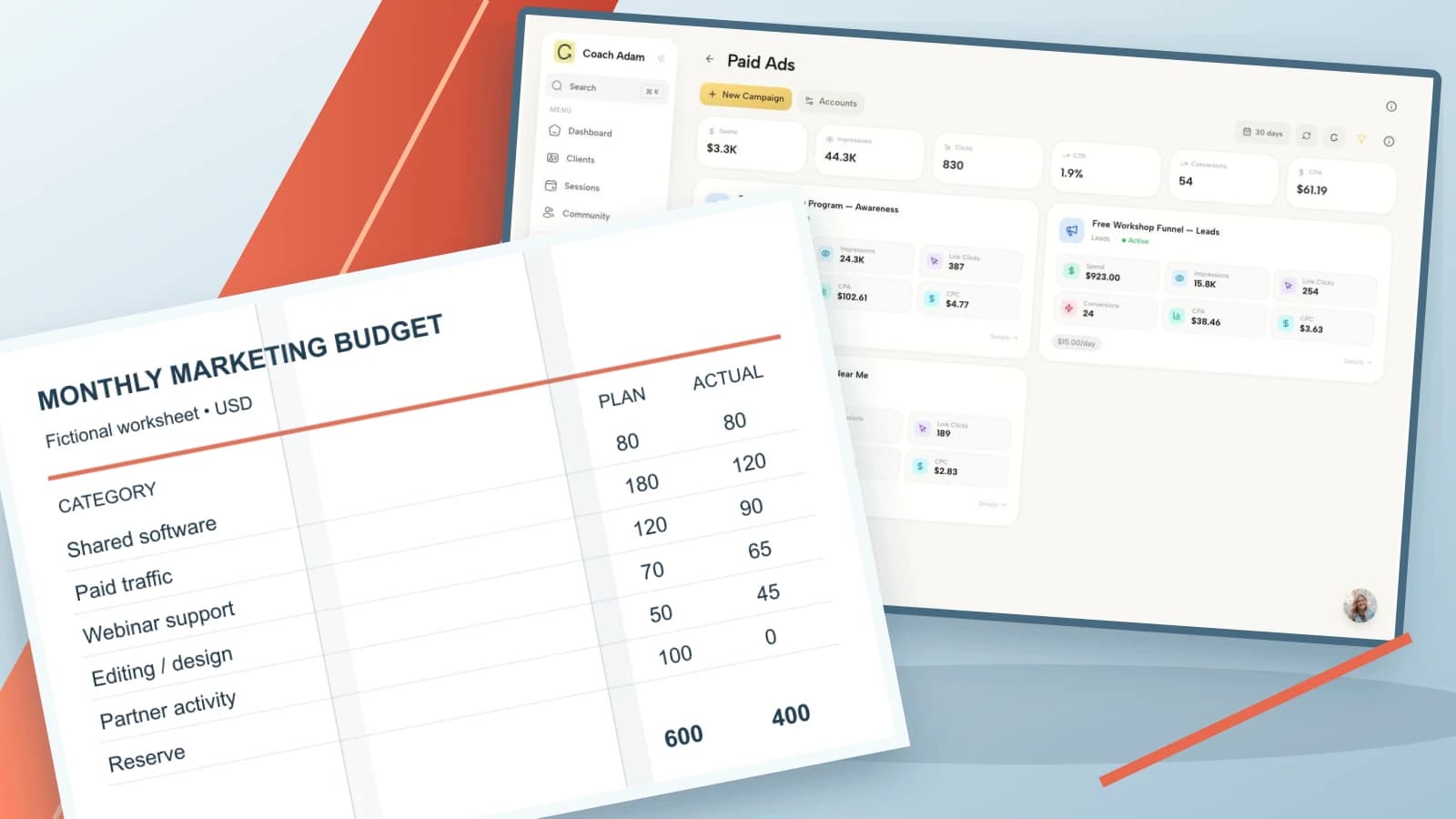
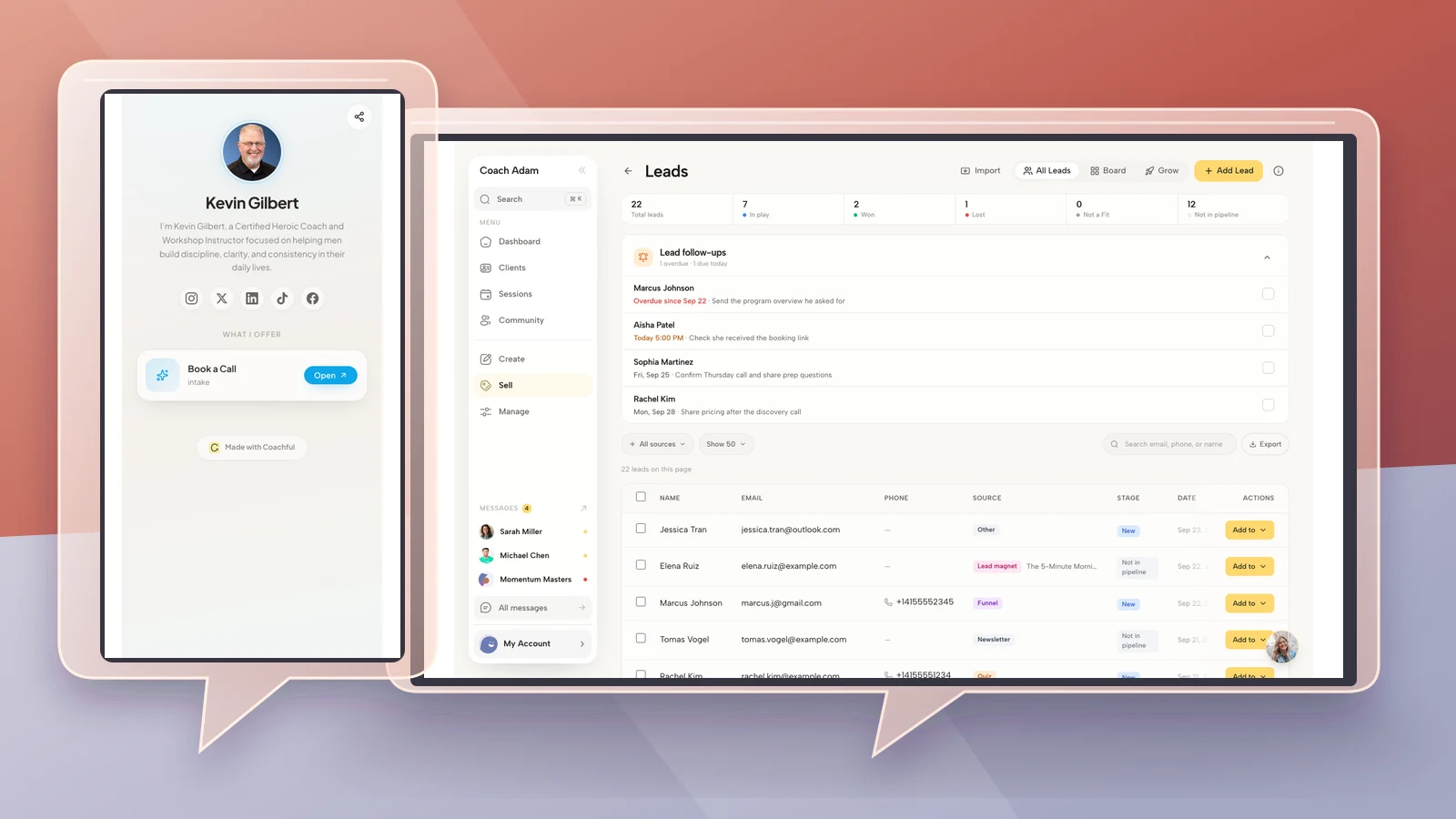
Coachful can provide relevant destinations and administrative surfaces, as the real demo screens above show. They are not evidence that these Instagram conversations are synced, automatically replied to or imported into a lead record. This article recommends a deliberate manual handoff; it does not depend on connecting Instagram or enabling an automation.
Once your replies are ready, try the interactive Coachful demo to inspect the public profile, offers, intake and lead-management experience. The useful test is concrete: could someone understand the next step you just promised in a DM, and could you manage the enquiry without collecting more information than you need?
A five-minute review before sending
- Relevance: does the opening answer the actual message?
- Truth: have you replaced every placeholder with a current, accurate service detail?
- Scope: are you explaining coaching rather than delivering uncontracted advice?
- Permission: has the person requested this information or agreed to the next step?
- Destination: does the single link open the page you described?
- Exit: can the person decline or stop replying without receiving a guilt-inducing sequence?
Save the scripts as editable starting points, not messages to fire at every interaction. Remove any sentence you would not say naturally. A brief specific answer usually reads more like a person than an elaborate message announcing how deeply you understand someone you have never met.
Frequently asked questions
Should coaches send a booking link in the first Instagram DM?
Yes, when it directly answers a request to book or explore coaching. Not every person needs an extra qualification exchange. For a casual reaction, answer normally first. For an unsuitable enquiry, do not send a call link merely to keep the lead alive.
How long should a coaching DM be?
Long enough to answer the question and explain the next step, but short enough to understand on a phone. Start with a few plain sentences. If the reply needs extensive terms, provide the essential answer in the message and link to the relevant detail instead of pasting a contract.
Should I use these scripts for cold outreach?
No. They are written for inbound enquiries and requested follow-ups. Following your account, liking a post or viewing a Story does not mean someone has asked for a coaching sales conversation. This article is not a cold-DM campaign.
Can I automate these replies?
This guide does not verify automation permissions, messaging windows or account eligibility. Check the current Instagram requirements and the specific tool before automating anything. Keep human review for price exceptions, suitability, sensitive disclosures and complaints. A useful script is not permission to send it automatically.
The takeaway: answer honestly, ask less, protect the boundary and make the agreed next step easy. You are helping someone evaluate a coaching service, not trying to win an argument in their inbox.