10 Profitable Work From Home Business Ideas for 2026

Coachful
You’re at home, laptop open, half-reading advice from people who have never sold coaching in their lives, and asking a fair question: which work-from-home business should I build that can still look serious six months from now?
Here’s the right answer. Pick a coaching or consulting model people already understand, already buy online, and can start paying for without a complicated sales process.
Remote work and online buying behavior have already changed the market. Buyers are comfortable hiring experts they may never meet in person. That puts coaches in a strong position, especially if your offer solves a specific problem and your delivery feels organized from day one.
Start simple. Sell one clear outcome to one clear type of client. Then build the systems around it.
If you are still sorting out your offer, pricing, or setup, this guide on how to start a coaching business online will help you get the business foundation right. And if you are comparing lower-ticket service models before committing to coaching, it helps to understand what a virtual assistant is, because some service providers begin there before shifting into higher-value advisory work.
The ideas in this roundup are built for coaches first. Each one can be run from home with low overhead, but that is not the primary advantage. The primary advantage is speed. You can validate demand fast, sign your first clients without a large audience, and improve the offer as you go.
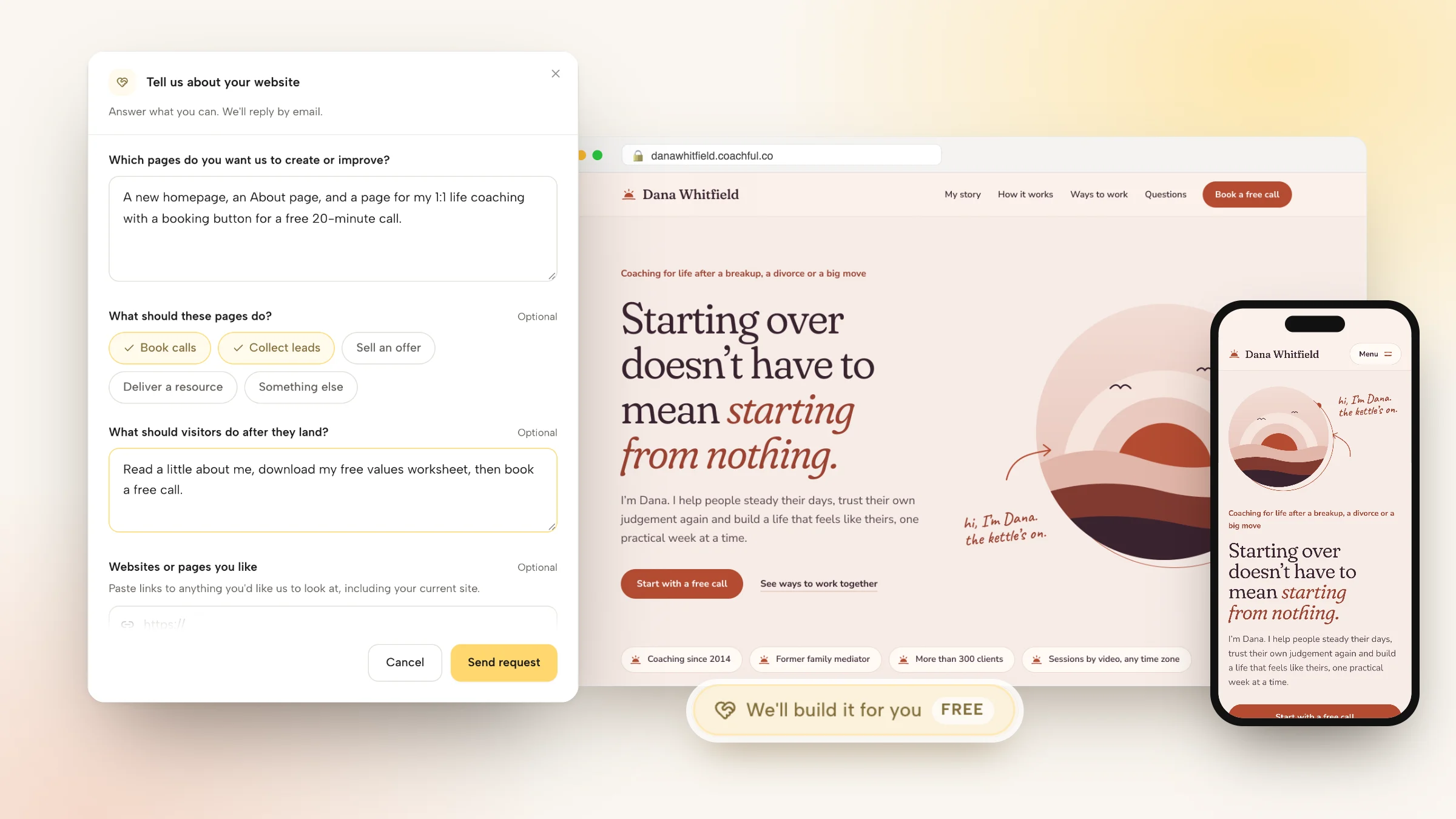
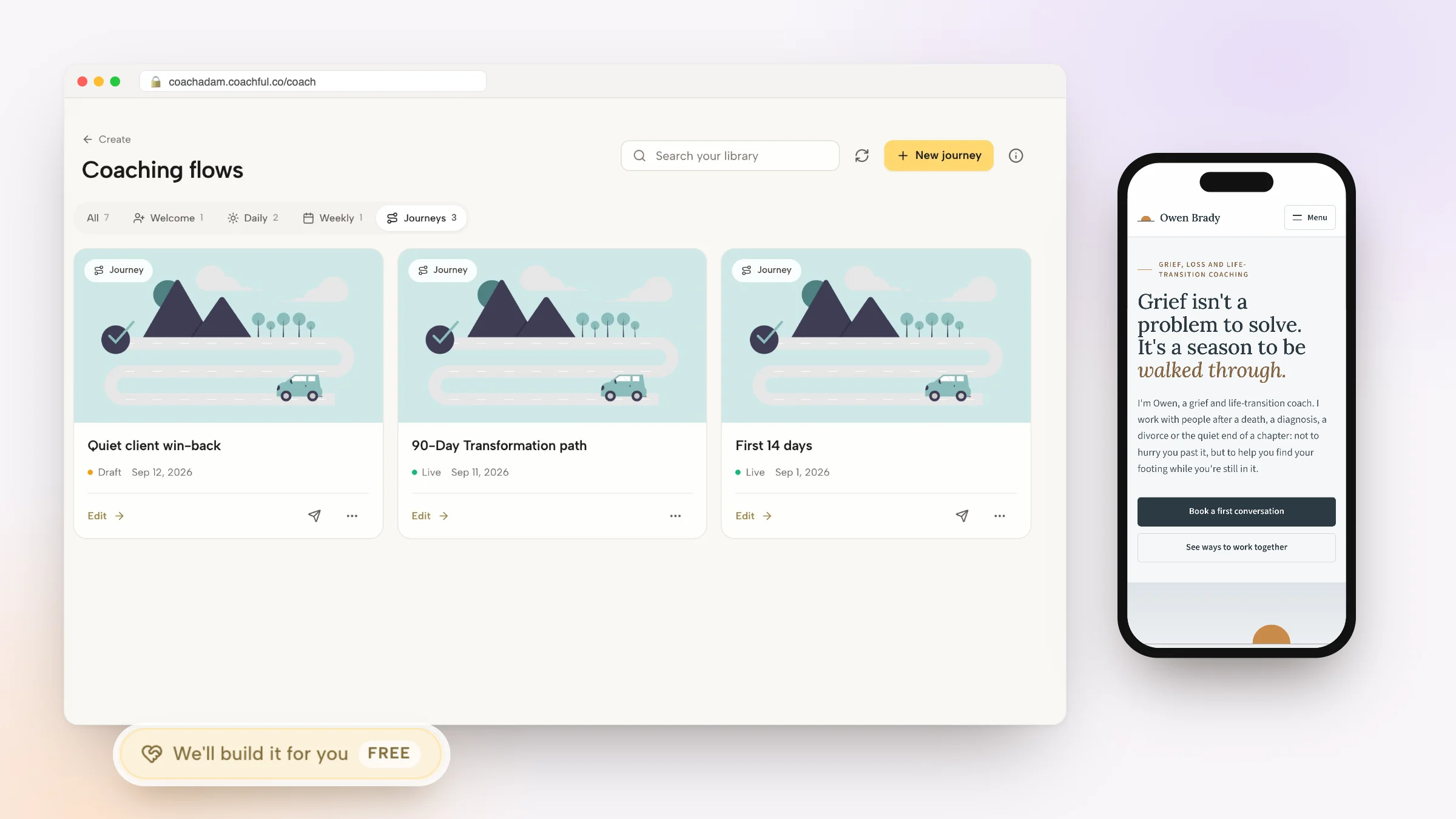
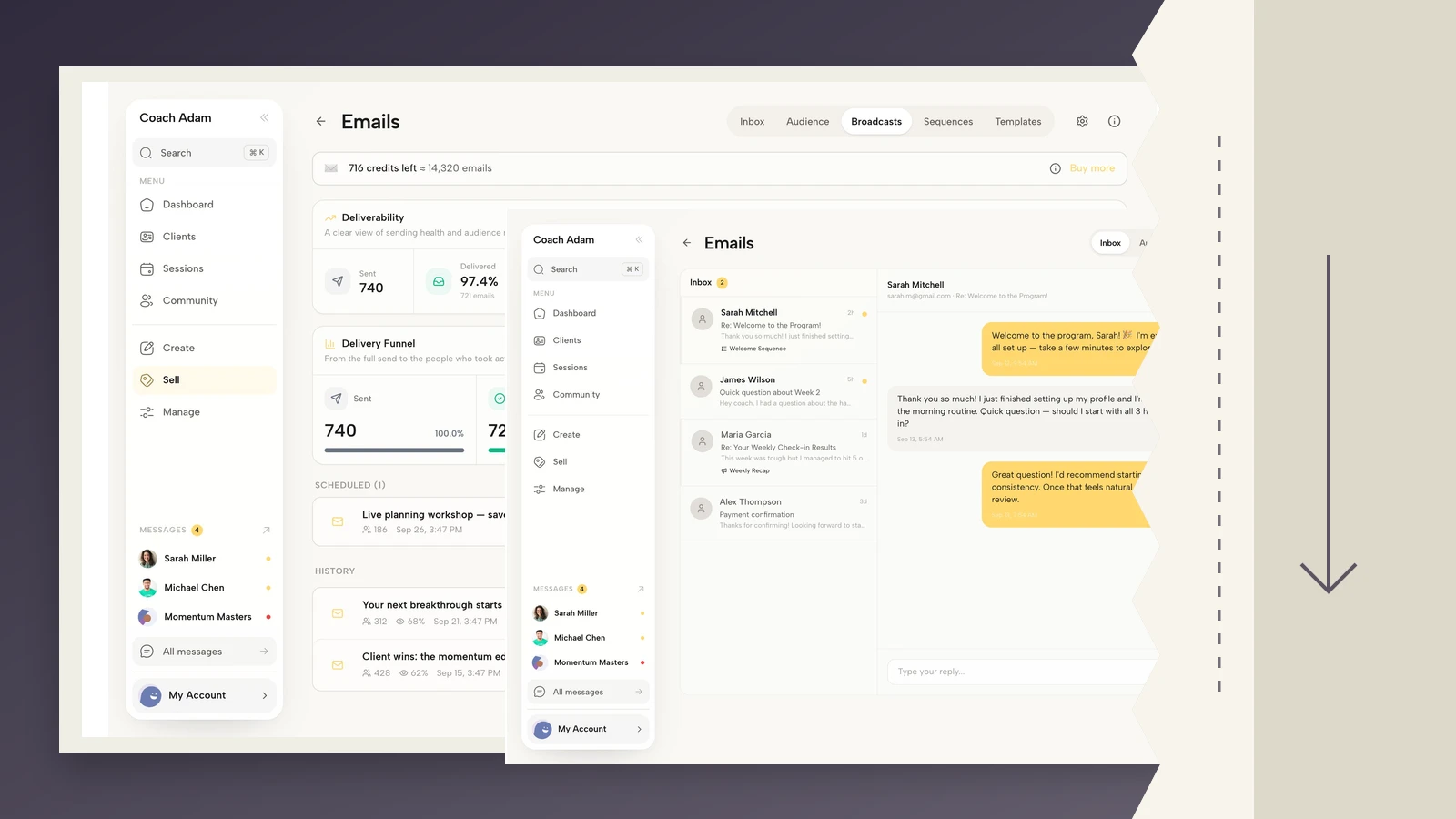
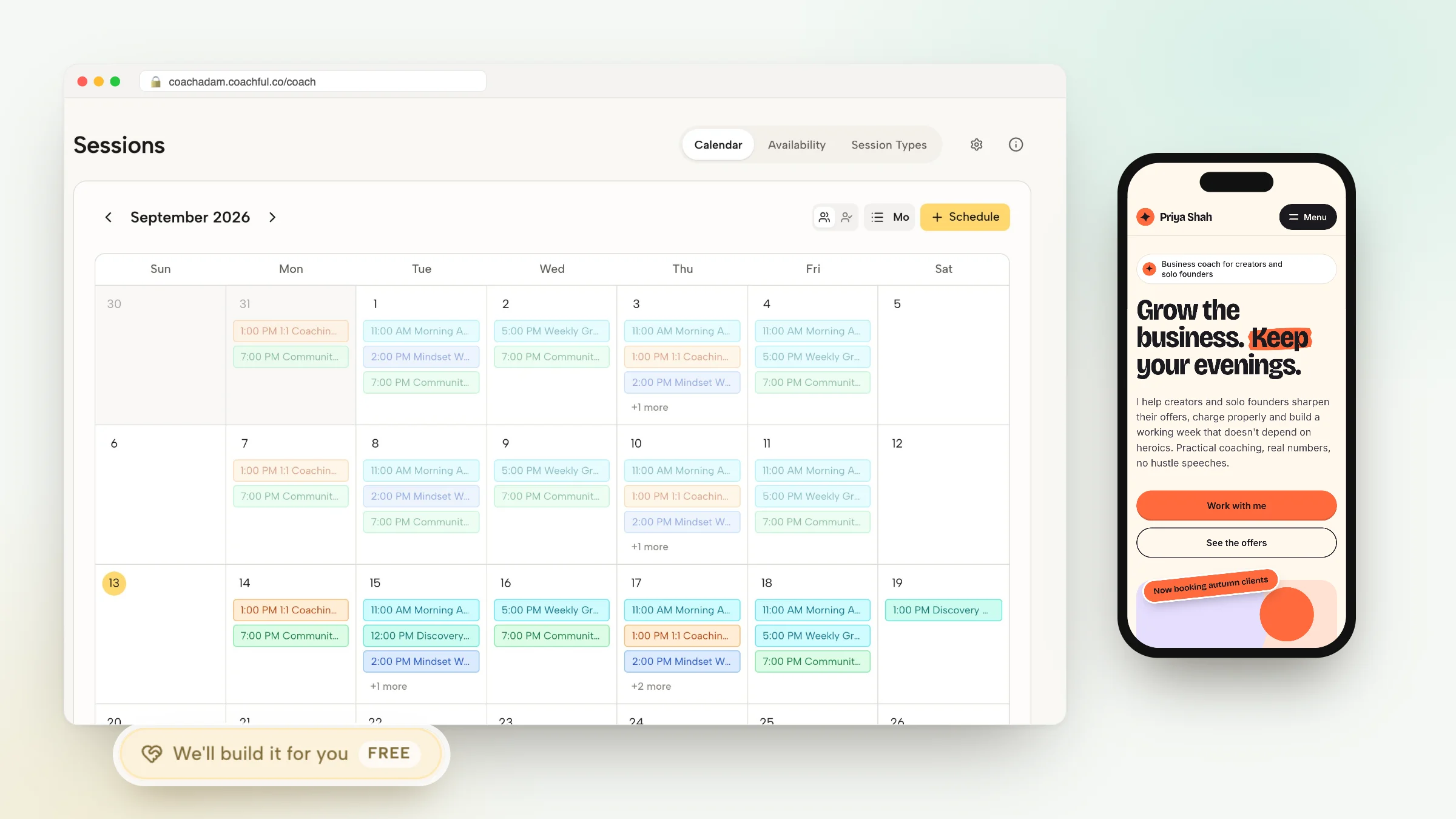
This article also goes further than a basic list. For each model, you’ll see what to do in the first 30 days and where Coachful can save time by handling scheduling, intake, session notes, client tracking, and follow-up in one place. That matters, because coaches do not fail from lack of talent. They stall because admin work eats the week and weak positioning makes the offer hard to buy.
1. One-on-One Executive Coaching
A newly promoted VP logs into Zoom at 7:00 a.m. They have a board update in two hours, tension on their leadership team, and no safe place to think clearly. That is the buyer.
One-on-one executive coaching works from home because the product is judgment, structure, and sharp feedback. Senior clients pay for faster decisions, better leadership behavior, and fewer expensive mistakes. If you can help a leader handle pressure without rambling, overexplaining, or avoiding hard conversations, this is one of the strongest home-based coaching models you can build.
Marshall Goldsmith built a career on behavior change for leaders. BetterUp helped normalize executive coaching inside larger companies. Your opportunity is narrower and simpler. Pick one leadership transition and own it. Good starting lanes include first-time executives, founders leading bigger teams, directors stepping into VP roles, and technical leaders who need stronger communication and people management.

First move
Sell one business problem with a clear outcome.
Choose an offer like:
- New leader acceleration: Help recently promoted executives build trust, delegate well, and lead with authority in the first 90 days.
- Conflict and communication coaching: Help senior leaders handle difficult conversations, team friction, and mixed expectations.
- Founder leadership coaching: Help founders shift from reactive operator to steady leader with better decision-making and clearer priorities.
If your positioning is still fuzzy, fix that before you worry about branding. This guide on starting a coaching business online with the right foundation will help.
Your first 30 days
Month one should end with a sellable offer, a short prospect list, and a delivery process that feels organized.
Start here:
- Write a one-page offer. Name the client, the problem, the process, the length, and the result.
- Build a focused referral list. Contact HR advisors, retained recruiters, fractional people leaders, and leadership trainers who already serve your buyers.
- Set a fixed cadence. Weekly or biweekly calls, between-session reflection prompts, and a simple progress review at the halfway point.
- Set up Coachful from day one. Use it for intake forms, scheduling, session notes, goal tracking, and follow-up so clients see a professional process instead of a patchwork of tools.
Here is the rule. Executives will tolerate high fees. They will not tolerate confusion.
Remote work has made executive coaching easier to deliver and easier to justify. Leaders are managing distributed teams, harder conversations, and performance issues across screens. That creates steady demand for coaches who can improve decision-making, accountability, and communication without wasting time.
Keep your model tight. One buyer. One problem. One clear transformation. That is how you get your first executive clients from home without sounding like every other coach online.
2. Life Coaching Programs
Your laptop is open, your calendar has space, and your offer still feels hard to sell. That usually means you are selling access to you instead of a defined outcome.
Life coaching programs work from home because they fit the way people buy. Clients do not want endless sessions with vague promises. They want a clear result, a timeline, and a process they can trust when their motivation drops and real life gets messy.
Mindvalley proved the demand for guided transformation programs. You do not need their audience or production budget. You need a specific client, a problem with emotional weight, and a program with a finish line. Good starting niches include burnout recovery, life transition support, confidence after divorce, habit rebuilding, or personal direction for professionals who look successful on paper and feel stuck in private.
Sell a method clients can follow
Loose sessions create hesitation. A structured program creates momentum.
Build your offer in three parts:
- Diagnosis: Identify the underlying pattern behind the client’s frustration.
- Behavior change: Set weekly actions, boundaries, habits, and decision rules.
- Stability: Review progress, tighten weak spots, and prevent old patterns from returning.
That format makes your offer easier to explain and easier to buy. It also gives you better delivery discipline, which matters more than inspirational branding.
Here is a simple version. A coach helping burned-out professionals could offer an eight-week reset with weekly calls, a personal audit in week one, habit tracking between sessions, and a closing plan for work, energy, and boundaries. Coachful keeps that model organized with intake forms, session notes, milestone tracking, and between-session resources in one place, so clients feel progress instead of fragmentation.
Your first 30 days
Do not build a giant funnel. Build proof.
- Week 1: Pick one audience and one outcome. Example: “Help mid-career professionals recover from burnout and rebuild a workable weekly routine.”
- Week 2: Write a simple program outline with length, milestones, support format, and price.
- Week 3: Test the offer in a live workshop, small group session, or direct outreach conversations.
- Week 4: Enroll your first clients, deliver the program manually if needed, and document what questions, objections, and wins show up.
Coachful is useful early because life coaching programs fall apart when delivery lives across email, notes apps, calendars, and random PDFs. Use one system for onboarding, scheduling, action items, and progress tracking from day one.
The market is crowded with coaches. It is not crowded with coaches who can say, with precision, who they help, what the program includes, and what changes by the end.
Clarity sells. Structure keeps clients.
3. Corporate Wellness and Team Coaching Programs
A people manager is missing deadlines, snapping in meetings, and burning out. HR sees the pattern. The team feels it. What they buy is not “wellness.” They buy a program that solves a specific workplace problem without creating more admin.
That is why this model is strong for coaches who want a work from home business with higher contract value. Companies already pay for leadership development, communication training, manager support, and employee wellbeing. Your job is to package coaching into something easy to approve, easy to run, and easy to report on.
Google’s Search Inside Yourself is a well-known example of structured workplace wellbeing and self-awareness training. Cisco has also invested in internal coaching initiatives. The lesson is simple. Corporate buyers already understand the category. You do not need to educate the market from zero. You need to present a focused offer with clear scope.
Start with a pilot tied to one business problem
Sell a pilot to one team, one department, or one leadership cohort. Do not pitch a company-wide transformation on day one.
Good pilot angles include manager burnout, communication problems in distributed teams, team friction after reorganization, and resilience during rapid growth. If your positioning still sounds broad, use this guide on finding your coaching niche and narrow the promise before you start outreach.
A practical starter package could include:
- Stakeholder intake: One call with HR or a department lead to define the problem, audience, and success markers.
- A short cohort program: Three to six sessions on stress, communication, feedback, boundaries, or team norms.
- Light reporting: A simple summary of attendance, recurring themes, and recommended next steps.
- Optional manager support: Office hours or short follow-up coaching for team leads.
Coachful helps because corporate delivery breaks down fast when onboarding, scheduling, resources, notes, and follow-ups live in different tools. Keep participant intake, session tracking, shared resources, and action items in one place. That reduces friction for both the buyer and the coach.
Corporate buyers care about clarity. They also care about risk. Define confidentiality boundaries, reporting limits, meeting cadence, and exactly who the program is for.
Your first 30 days
Start small and make it easy to say yes.
- Week 1: Choose one corporate problem and one buyer. Example: “Help first-time managers in remote teams improve communication and reduce overload.”
- Week 2: Build a one-page pilot. Include format, number of sessions, delivery timeline, what gets measured qualitatively, and price.
- Week 3: Reach out to HR consultants, people ops leaders, founders, and department heads. Ask for short conversations, not large proposals.
- Week 4: Close one pilot and deliver it tightly. Capture feedback, refine the language buyers repeat back to you, and turn the result into a repeatable offer.
This model works well from home because delivery is remote-friendly, cohort-based, and easier to systematize than scattered one-off sessions. If you can solve one costly people problem with a clear process, you have a real business.
4. Niche Specialist Coaching Health Fitness Nutrition
General wellness advice is easy to ignore. Specialized coaching isn’t.
If you have real expertise in fitness, nutrition, habits, recovery, or behavior change, this can become one of the strongest work from home business ideas you can build. Precision Nutrition created a recognizable model around guided change. Noom and MyFitnessPal normalized app-supported habit tracking. James Clear made habit change feel practical and actionable. The lesson is obvious. Buyers respond when a coach helps them apply a system to a narrow outcome.

Pick a niche with a clear boundary
Don’t say you help “everyone get healthy.” Pick a specific lane.
Examples:
- Busy professionals: Meal consistency, movement, and stress recovery.
- Postpartum clients: Habit rebuilding and support.
- Men over 40: Strength, accountability, and sustainable routines.
- Desk workers: Mobility, energy, and nutrition structure.
You’ll also need clear boundaries. Coaching isn’t medical treatment. Be explicit about scope and disclaimers.
A useful next step is finding your niche, especially if your offer still sounds broad.
How to launch without confusion
In your first month, build one visible offer around a simple transformation challenge. That could be a habit reset, a nutrition accountability sprint, or a consistency program.
Then set up:
- A client intake form: Capture goals, constraints, and readiness.
- Weekly tracking: Use Coachful milestones, notes, and shared resources.
- Between-session accountability: Check-ins matter more than perfect session content.
The operational side matters because this category often involves sensitive personal information. One overlooked issue with home-based service businesses is compliance. According to InCorp’s article on home-based business ideas, 40% of home-based businesses face local zoning restrictions or permit requirements, and digital models avoid many physical-home setup issues while raising data privacy considerations. If you’re coaching online only, you simplify a lot of those headaches. Keep your client data organized and protected.
5. Coaching School or Academy Operations
If you’ve already built a repeatable coaching method, teaching coaches can become the business.
This model isn’t just “run a course.” It’s build an academy with curriculum, student support, assessments, faculty workflows, and a professional learning experience. Coach U and university-affiliated coaching certifications show what this can look like at different scales.
Think like an operator, not just a teacher
Most coaching schools fail because they stay stuck in founder energy. The founder teaches brilliantly, but onboarding is clunky, student progress is invisible, and support depends on whoever happened to answer email that day.
An academy needs:
- A defined learning path: Foundation, advanced, and specialty tracks.
- Clear student milestones: Not just lessons consumed.
- Consistent support: Office hours, feedback, and resource access.
Coachful fits well here because academies need more than video hosting. They need progression, assignments, cohort management, notes, and messaging in one environment.
Your first 30 days
Month one is not the time to build twenty modules.
Start with one core certification or intensive. Outline the student transformation from enrollment to completion. Then map exactly where learners tend to stall.
A practical example: if you train aspiring life coaches, your first cohort might include live instruction, practice sessions, feedback loops, and resource libraries. Coachful can hold student records, milestone completion, and communication threads so no one falls through the cracks.
If you’re hearing the voice in your head say, “I’m not ready to teach other coaches yet,” ask a better question. Do you already have a method people ask you to explain? If yes, you may be closer than you think.
6. Business and Entrepreneurship Coaching
This is the category many coaches want to enter because the buyer problem is obvious. Entrepreneurs are overwhelmed, inconsistent, and often isolated. They’ll pay for clarity if you can help them make decisions and follow through.
The problem is that too many business coaches sound identical.
They all promise scale, freedom, and growth. Very few explain what they help a client do next Monday morning.
Sell the stage, not the dream
Choose the stage of business you serve.
Examples:
- Startup founders trying to validate an offer
- Service providers trying to package expertise
- Plateaued owners trying to simplify operations
- Coaches trying to sell premium programs consistently
Alex Hormozi and Chalene Johnson both built recognizable business education brands by being highly specific in how they teach. SCORE also remains a practical example of business guidance through mentorship.
Your buyer doesn’t need another business coach. They need someone who understands the exact mess they’re in.
Month-one plan
Write one signature framework. Keep it simple. Three to five steps is enough.
Then:
- Create one authority asset: A workshop, guide, or diagnostic.
- Offer one focused package: Avoid custom proposals for everyone.
- Track client execution: Coachful helps with milestones, homework, and follow-up notes.
This category also benefits from the broader shift toward AI use in small business. AI tool adoption among small businesses rose to 51% by Q4 2024, up from 26% in Q2 2023, and more than 75% of adopters use AI for marketing tasks like lead generation and content creation, according to BizBuySell’s small business AI adoption trends. That creates a strong opening for business coaches who help owners use AI practically instead of chaotically.
A real offer could be “AI-assisted marketing workflows for solo service businesses,” with coaching around offer messaging, content planning, and follow-up systems.
7. Performance and Sports Coaching
Your client is 10 minutes from the event that matters. A tryout. An audition. A final round presentation. Their problem is not motivation. Their problem is execution under pressure.
That is why performance coaching sells. You are helping people perform on command, not just feel better in theory.
Performance coaching reaches far beyond sports. It fits athletes, performers, musicians, students facing high-stakes exams, and professionals who need composure in public. Michael Gervais and Jim Afremow both show the demand for coaching built around focus, preparation, and mental control when the stakes rise.
Here’s a relevant conversation starter for this kind of work:
Coach repeatable performance
Clients ask for confidence because they do not yet trust their process. Fix the process first.
Build your program around four things: preparation routines, recovery habits, pressure rehearsal, and post-performance review. Keep it concrete. If your coaching sounds vague, clients will treat it like inspiration instead of training.
A good offer looks specific. A vocal coach can sell a 6-week audition readiness program with warm-up routines, mock performance reviews, and reset techniques for nerves. A sports mindset coach can run remote sessions for youth athletes, then include parent updates, weekly tracking, and between-session practice prompts.
Coachful fits this model well because performance clients need structure between calls. Use it to assign drills, track goals, store session notes, and keep one running record of what worked under pressure and what failed.
First 30 days
Start narrower than you want.
- Choose one pressure environment: Pick one lane such as tennis, auditions, public speaking, exams, or sales performance.
- Create one readiness assessment: Score habits, stress triggers, and pre-event routines.
- Build one fixed program: Four to eight weeks is easier to explain, price, and deliver than open-ended coaching.
- Collect one proof point fast: Run a beta with three to five clients and document changes in routine, consistency, and self-review quality.
Remote delivery also works in your favor here, as noted earlier. Geography is no longer a serious constraint for this business. You can coach a runner, a founder, and a violinist from the same home office if your method is clear and your client management is tight.
8. Career Transition and Job Search Coaching
A client gets laid off on Tuesday, updates a resume on Wednesday, sends 40 applications by Friday, and hears nothing back. By week two, the underlying problem is no longer just job search strategy. It is confidence, positioning, and decision-making under stress. That is why career transition coaching sells.
This model works best when you coach a specific kind of transition instead of trying to help every job seeker. Pick the moment where people feel stuck and need a clear plan. Mid-career professionals changing industries. Parents returning after a career gap. Individual contributors trying to become managers. Senior leaders trying to tell a sharper story.
Specificity wins here.
A coach who helps product managers move into leadership can offer a far stronger service than a general career coach. The offer can include resume rewriting for leadership roles, promotion-story positioning, mock interviews, and weekly application reviews tied to a target role list. That is a business people understand and buy.
Coachful helps you run this model without losing clients between sessions. Use it to collect intake details, organize resumes and job target notes, assign weekly outreach goals, track applications, and keep all feedback in one place. Career clients need momentum. A scattered process kills momentum fast.
First 30 days
Start with one audience and one measurable outcome. Do not build for everyone.
- Choose one transition: Examples include tech layoffs, return-to-work clients, first-time managers, or industry switchers.
- Package one clear offer: A 4-week or 6-week program is easier to sell than open-ended calls. Include resume positioning, interview prep, and weekly accountability.
- Create three practical content pieces: Write short posts or record quick videos on one interview mistake, one networking message template, and one resume positioning fix.
- Run a small beta: Sign three to five clients at a starter rate. Track what objections they raise, where they stall, and which exercises create visible progress.
- Build your workflow in Coachful: Set up onboarding forms, a session cadence, a job search tracker, and a simple library of templates clients can use right away.
As noted earlier, flexible and remote roles continue to shape what candidates want. A good career transition coach does not tell clients to apply everywhere. You help them target the right roles, tell a stronger story, and run a search process that does not fall apart after the first rejection.
9. Relationship and Communication Coaching
This model is powerful, but only if you respect the boundaries.
Relationship and communication coaching isn’t therapy. It’s structured support for better conversations, conflict handling, emotional awareness, and interpersonal behavior. Esther Perel and The Gottman Institute have both shaped how many people think about relational patterns and communication skills. Their influence also shows that buyers are willing to invest in this area when the framing is practical and trustworthy.
Safety matters more than clever marketing
If you coach couples, co-founders, family members, or professionals in conflict, your value comes from creating structure and emotional safety.
That means you need:
- Clear expectations: Confidentiality, logistics, and scope.
- A strong intake: Understand what’s happening before the first session.
- Firm boundaries: Know when a client needs therapy, legal help, or another specialist.
Protect privacy first. A smooth coaching process means nothing if the client doesn’t feel safe enough to tell the truth.
A practical example: a communication coach for managers might help leaders handle feedback conversations, conflict with peers, and team tension. A couples coach might run a structured communication reset program with pre-session reflection forms and weekly practice assignments. Coachful supports this well because private notes, permissions, shared resources, and secure communication matter a lot in sensitive work.
How to start
For the first month, resist the urge to market to everyone with “relationship issues.”
Pick a scenario. Newly married couples. Co-founders in conflict. Professionals avoiding difficult conversations. Parents trying to communicate better under stress.
Then build one structured offer with a beginning, middle, and end. That’s what makes this business easier to trust and easier to buy.
10. Consulting and Done-For-You Services for Coaches
Not every coach should coach end clients forever. Some should build businesses serving other coaches.
This is one of the smartest work from home business ideas if you’re more operational, strategic, or technical. Many coaches are good at transformation but weak at setup. They struggle with packaging, sales flow, client onboarding, messaging, and systems. If you can solve that, you become valuable fast.
Examples include coach business consultants, launch strategists, implementation partners, and platform specialists.
Sell outcomes coaches can feel immediately
A coach buying done-for-you help usually wants one of four things:
- A cleaner offer
- A better sales process
- A smoother client journey
- A system that saves time
That could mean setting up Coachful workspaces, creating program templates, building onboarding sequences, tightening messaging, or designing delivery systems for cohorts and private clients.
If your consulting skews toward premium sales and offer packaging, high-ticket sales training is a useful reference point for sharpening your positioning.
You can also sharpen your client acquisition approach by studying actionable marketing for consulting firms.
First month execution
Start with an audit offer. That’s the easiest entry point.
Review a coach’s current setup and identify where clients get confused, where admin eats time, and where delivery feels inconsistent. Then offer implementation.
Use Coachful as the backbone for the fix. You can create onboarding flows, milestone tracking, resource libraries, session notes, scheduling structures, and client communication systems in one place.
A realistic example looks like this: a consultant helps a life coach replace scattered forms, calendar links, and email threads with one organized client portal. The result isn’t just convenience. It’s a more professional business the coach can scale.
Top 10 Work‑From‑Home Coaching & Consulting Comparison
| Coaching Type | Implementation Complexity 🔄 | Resource Requirements ⚡ | Expected Outcomes ⭐ | Ideal Use Cases 💡 | Key Advantages 📊 |
|---|---|---|---|---|---|
| One-on-One Executive Coaching | Moderate, credentialing, tailored session design | Low startup, high time per client; video/CRM tools | High-impact leadership change, measurable KPIs | C-suite development, leadership transitions | High fees, strong retention, direct ROI |
| Life Coaching Programs | Low–Moderate, program design + marketing | Low–Medium: content, community platforms | Moderate personal growth, habit formation | Personal development, cohort programs | Scalable groups, course/membership potential |
| Corporate Wellness & Team Coaching | High, enterprise sales, customization, integration | High: multi-coach teams, LMS, assessment tools | Improved engagement, retention, performance metrics | HR/L&D initiatives, large-scale change programs | Large contracts, predictable revenue, expansion potential |
| Niche Specialist Coaching (Health/Fitness/Nutrition) | Moderate, domain protocols, scope limits | Medium: tracking apps, content, possible in-person | Clear, measurable health & behavior outcomes | Weight loss, fitness goals, chronic condition support | High client motivation, premium pricing, strong referrals |
| Coaching School / Academy Operations | Very High, curriculum, accreditation, staff mgmt | Very High: LMS, instructors, compliance, marketing | Scalable cohorts, certified graduates, industry influence | Training aspiring coaches, certifying professionals | Recurring cohorts, alumni network, licensing options |
| Business & Entrepreneurship Coaching | Moderate, frameworks, case studies, advisory skills | Medium: business tools, masterminds, metrics tracking | Revenue growth, operational scaling, clearer strategy | Startups, scaling businesses, founders | Clear ROI, high-value clients, retainer opportunities |
| Performance & Sports Coaching | Moderate–High, technical & psychological expertise | Medium–High: video analysis, on-site sessions, tech | Measurable performance gains, resilience improvement | Athletes, performers, competitive teams | Premium rates, sponsorships, visible outcomes |
| Career Transition & Job Search Coaching | Low–Moderate, structured processes, industry knowledge | Low: resume/LinkedIn tools, recruiter networks | Faster placements, salary increases, role fit | Job changers, displaced workers, graduates | Short engagements, measurable success metrics |
| Relationship & Communication Coaching | Moderate, emotional sensitivity, clear boundaries | Low–Medium: assessments, training materials, safe space | Better communication, conflict reduction, stronger bonds | Couples, professionals, teams with conflict | Large market, high engagement, scalable workshops |
| Consulting & Done‑For‑You Services for Coaches | High, multi-domain expertise, tailored solutions | Medium–High: templates, platform integrations, staff | Faster business setup, higher client acquisition, optimized ops | Established coaches seeking scale or platform launch | Productized offerings, recurring contracts, affiliate opportunities |
Map Your First 30 Days to Success
Don’t leave this article feeling inspired and still undecided. Pick one path and commit to it for the next 30 days.
That’s the move that separates coaches who build real businesses from coaches who keep collecting ideas.
They fail here for predictable reasons. They pick three offers, rewrite their bio every week, overthink logos, and avoid talking to buyers. Then they conclude the market is saturated. It isn’t. They were unfocused.
Your first 30 days should be simple.
In days one through seven, choose the business model that matches your actual strengths. If you’re strong in leadership conversations, executive coaching makes sense. If you’re better at behavior change and personal support, life coaching or wellness coaching may fit better. If you’re highly organized and enjoy systems, consulting for coaches or academy operations could be a better lane.
In days eight through fourteen, define one buyer and one result. Not five. One.
Say it plainly: I help newly promoted managers lead with confidence. I help career changers land roles in a new industry. I help coaches clean up their delivery systems. I help busy professionals rebuild healthy routines.
If you can’t say your offer in one sentence, your buyer won’t understand it either.
In days fifteen through twenty-one, build the minimum business infrastructure. You need intake, scheduling, payments, session notes, goal tracking, and a place to share resources. Coaches waste energy stitching together too many tools. Coachful solves that problem by bringing the core workflows into one workspace. That matters more than people think. Administrative drag kills consistency. Consistency builds trust.
By days twenty-two through thirty, start conversations. Reach out to referral partners. Post helpful content. Invite people to a short workshop. Offer a pilot. Ask former colleagues who already know your work to introduce you to the right buyers.
You do not need a huge audience to start.
You need proof that someone wants the problem solved badly enough to get on a call.
There’s another issue you need to face directly. A lot of coaches secretly want certainty before they begin. They want to know the niche will work, the messaging will land, and the price will feel right before they ever make an offer. That’s not how this gets built. The first version of your business will be clarified by real client conversations, not private overthinking.
The broader environment supports this move. Remote work and home-based business models are firmly established, AI adoption is rising among small businesses, and digital service delivery is normal for buyers. You’re not trying to convince the world that online coaching or consulting is legitimate. That battle is already over. Your job is to present a clear offer and deliver it professionally.
So choose the model that fits your strengths. Build one offer. Launch before you feel polished. Use your first month to create movement, not perfection.
The coaches who grow aren’t always the most talented. They’re usually the ones who got organized early, stayed visible, and made it easy for clients to say yes.
Coachful gives you the structure most home-based coaching businesses need from day one. You can onboard clients, schedule sessions, track goals, capture notes, share resources, manage payments, and run programs without duct-taping together a dozen tools. If you’re ready to turn one of these work from home business ideas into a real practice, start with Coachful and build on a platform designed for how coaches work.